- In stock
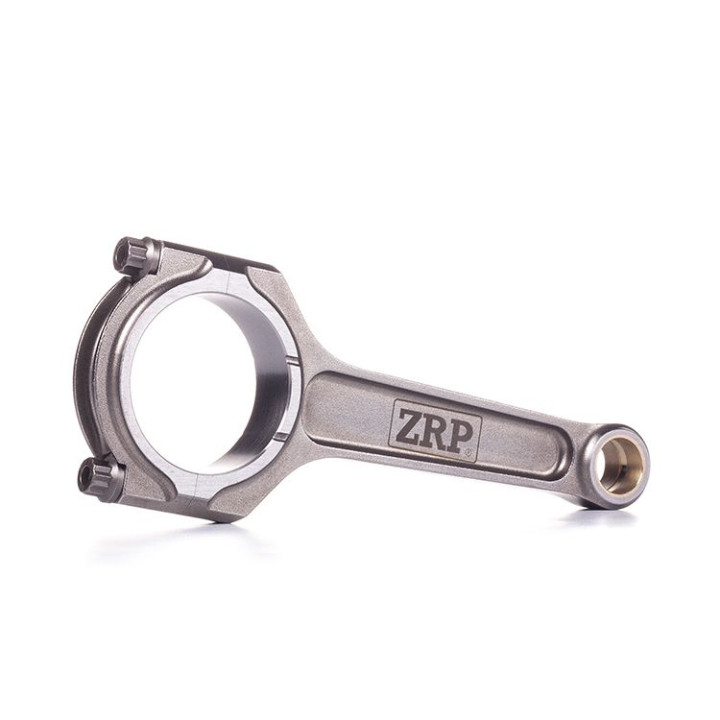


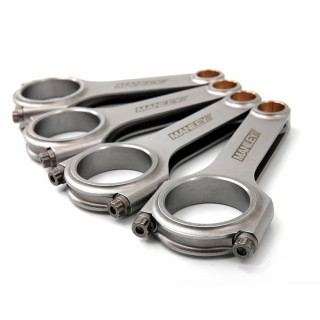
Forged connecting rods Volkswagen - 1.4L 16V - AFH / AFK / AHW for forged pistons
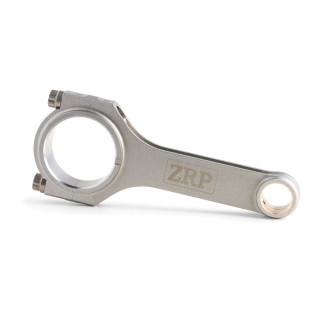
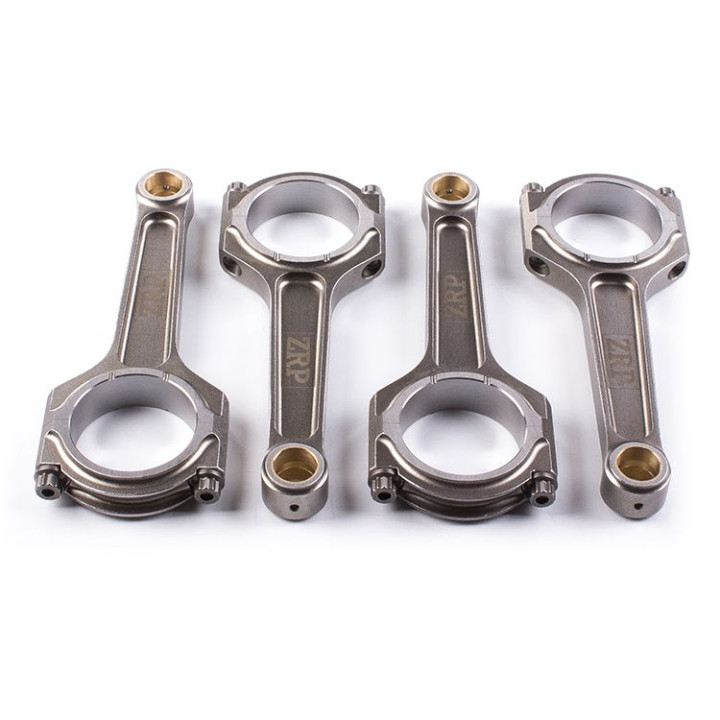
Set of 4 forged 4340 steel connecting rods for Volkswagen 1.4L 16V AFH AFK AHW.
- Brand: ZRP
- Compatibility: Polo 6N, Ibiza 6K, Cordoba 6K
- Engine codes: AFH, AFK, AHW
- Bolts included: ARP 2000
The Volkswagen 1.4 16V engine (AFH AFK AHW)
Volkswagen’s 1.4 16V, codes AFH, AFK and AHW, is a naturally aspirated 1,390 cc four-cylinder with a sixteen-valve head. Its almost square dimensions (76.5 mm bore, 75.6 mm stroke) and careful breathing give it a willing character high up; between 1996 and 2002 it powered the small-capacity cars of the VAG group, Polo III, Lupo, SEAT Ibiza and Cordoba, with 100 to 101 hp depending on the version.
This compact unit is a classic tuning base: intake, exhaust line, more generous camshafts, reworked head, up to a turbo or supercharger conversion. The engine follows willingly, but its reciprocating assembly was not designed for that: the original rods are made from sintered metal, an economical process perfectly suited to production, whose strength falls away as soon as cylinder pressure and engine speed leave the intended envelope.
The rod then becomes the most likely breaking point, ahead of the crankshaft and ahead of the block. A forged 4340 set, machined and matched, puts the margin back where it belongs: it allows more rpm, takes the load of added boost and carries the extra weight of forged pistons without ageing the bearings early.
Forged connecting rods
A forged rod starts from a steel billet compressed under a press: the grain of the metal follows the outline of the part and gives it strength no cast or sintered rod can match. The beam is then machined on every face, weighed and balanced individually, so that inertia and combustion loads are spread evenly across the four cylinders.
The set offered for this 1.4 16V keeps the original dimensions, 144 mm centre distance and a 17 mm pin: it fits without reworking the crankshaft or the pistons while clearly raising the admissible load. The I-Lite profile chosen by ZRP favours light weight, which suits a small engine that likes high revs.
These rods cover the sporting uses of the 1.4 16V: rallying, circuit and track days, drift, drag racing, hillclimb and time attack. They secure Stage 2, Stage 3 and Stage 4+ builds, in other words as soon as forged pistons, aggressive camshafts, a raised rev limit or an added blower push cylinder pressure beyond what the standard rod can take.
Technical specifications of the AFH AFK AHW forged connecting rods
| Reference | Brand | Profile | Bolts | Pin diameter OEM 17 mm | Small-end width | Big-end diameter OEM n.p. | Big-end width | Center-to-center OEM 144 mm | Weight per rod |
|---|---|---|---|---|---|---|---|---|---|
| R-VW-003-I | ZRP | I-Lite | ARP 2000-5/16"-38mm | 17 mm | 50.6 mm | 20 mm | 144 mm | 425 g |
ZRP: Lightweight design.
Torque and bolt stretch
| Rod | Bolts | Torque | Recommended stretch |
|---|---|---|---|
| ZRP (R-VW-003-I) | ARP 2000 | 40.7 N·m | 0.140 – 0.152 mm |
Manufacturers favor measuring bolt stretch (stretch gauge) over torque alone: the instructions supplied with the kit always take precedence. The figures above assume bolts coated with ARP lubricant.
Technical guide
4340 forged steel: what is it?
| 4340 steel is a nickel-chromium-molybdenum alloy steel used in aerospace as well as in motorsport. Forged and then heat-treated (quench and temper), it combines a high yield strength, excellent fatigue resistance and good ductility. Compared with an original rod made of sintered metal, optimized for mass-production cost, a 4340 forged rod gains about 19% in yield strength, 8% in tensile strength and 19 to 37% in fatigue resistance: its service life under repeated loads is several times longer. That is why forged 4340 is the reference material as soon as boost or engine speed climb. |
Connecting rod profiles
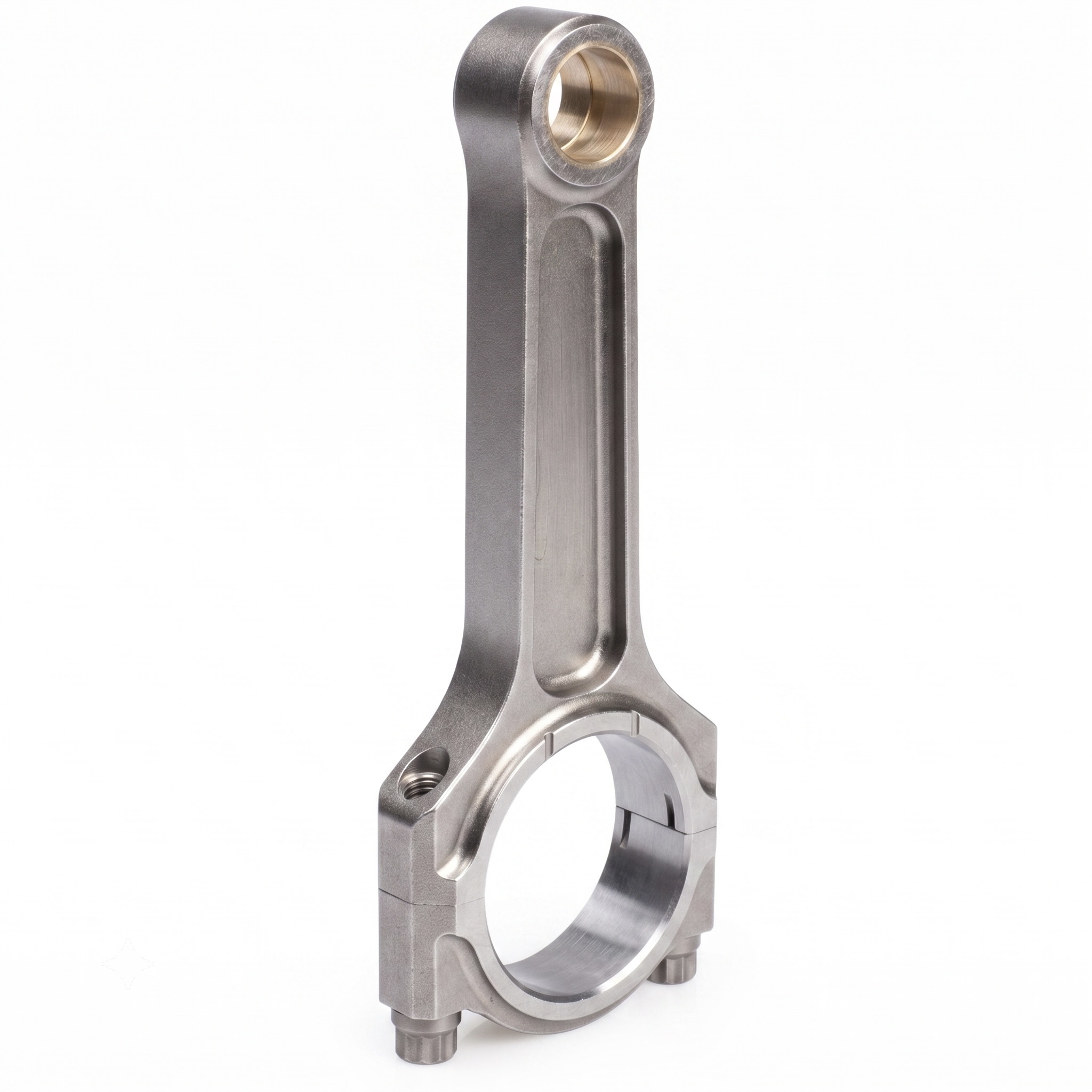 |
I-Lite profile. A lightened version of the I profile, this rod keeps its I-shaped section while reducing its mass, which eases the load on the reciprocating assembly. ZRP reserves it for high-revving naturally aspirated engines such as this 1.4 16V, where lightened moving parts help the engine pick up revs and stay reliable at the top of the rev range. |
How to choose your rod bolts?
The rod bolt is among the most heavily loaded parts of the rotating assembly: it holds the cap clamped onto the crankpin on every cycle. The kit comes with ARP hardware, a guarantee of reliability.
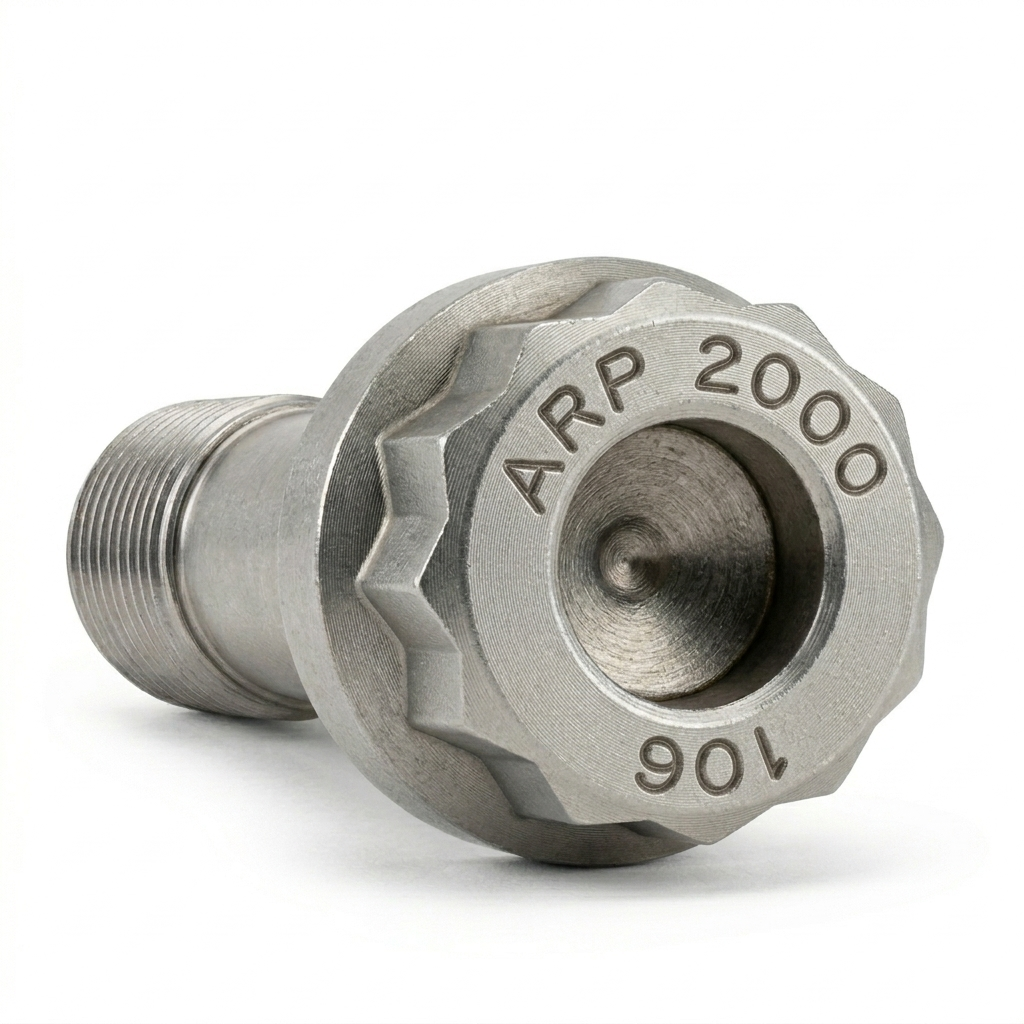 |
ARP 2000 (tensile strength around 220,000 psi, nearly 1,517 MPa) is the high-performance standard. In 5/16" diameter it is suitable up to 150 hp per cylinder and 8,500 rpm: a very comfortable margin on this 1.4 16V. It is the most common grade in circuit racing, track days, drift, rally, drag and hillclimb, with no particular storage constraints. |
Measuring bolt stretch
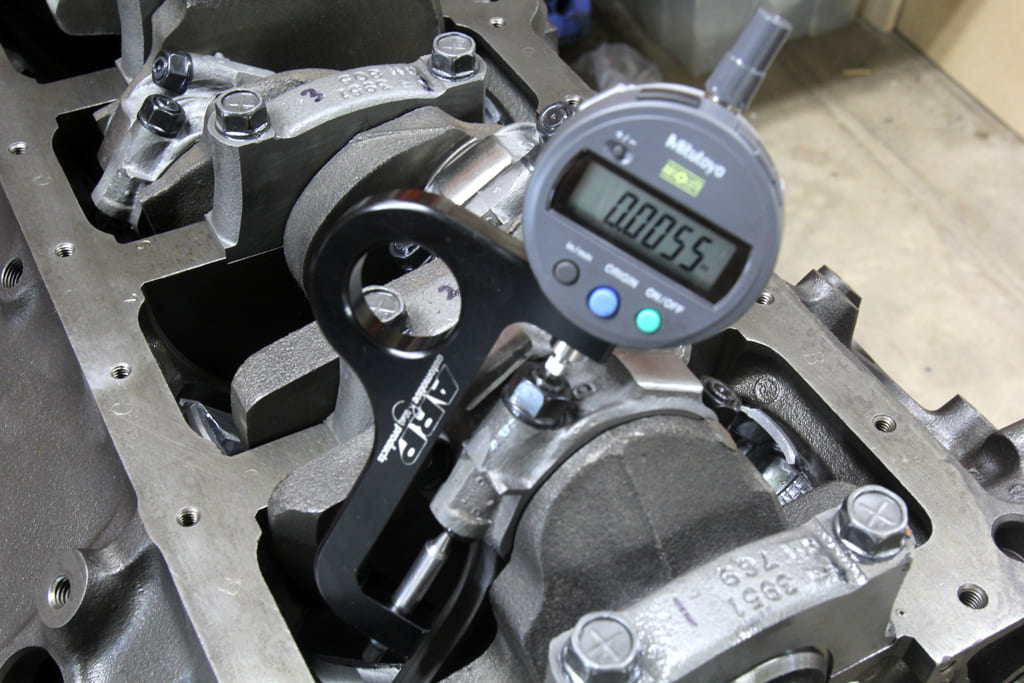
| In addition to torque tightening, measuring bolt stretch at assembly is the most reliable check of a correct, repeatable preload. With the bolt fitted, a measuring gauge (dial indicator) is placed on the two ends of the bolt and its actual stretch is read, which must match the recommended value (see the torque and stretch table above). By freeing itself from the friction scatter inherent in torque tightening alone, this method ensures an even preload and secures the bottom end, even on a small 1.4 16V taken to high rpm. |
The brands offered
 |
ZRP is a Greek brand of high-performance forged connecting rods, designed by Alex Drakos in Athens. Each rod is forged from 4340 steel, precision-machined and balanced to ±1 g to stay reliable at high rpm. The kit offered here comes in I-beam profile (lightweight I-Lite version) with ARP 2000 hardware. Designed and inspected in Greece, these rods are proven in rally, on circuit and in drift. |
Glossary
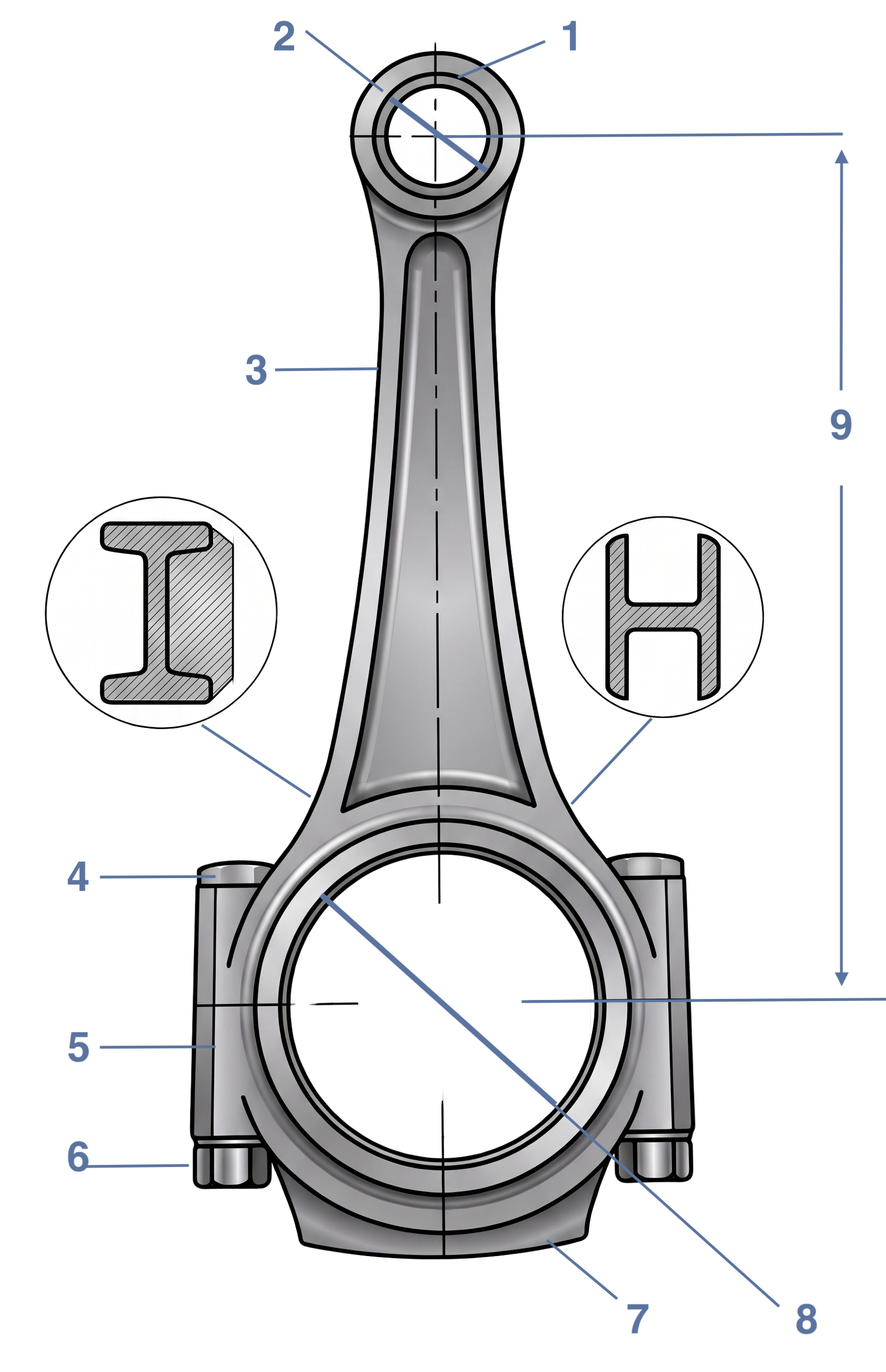 |
1) Small end 2) Small-end diameter 3) Rod beam 4) Rod bolt 5) Big end 6) Rod nut / bolt 7) Rod cap 8) Big-end diameter 9) Center-to-center |
Vehicle compatibility for the Volkswagen 1.4 16V engine (AFH AFK AHW)
These forged connecting rods are compatible with VAG group vehicles fitted with the 1.4 16V (codes AFH, AFK, AHW). Here are the main models concerned:
| Brand | Model (chassis) | Engine code | Power | Years |
|---|---|---|---|---|
| SEAT | Cordoba (6K1, 6K2) | AFH / AQQ / AUB | 101 hp | 1996–2002 |
| SEAT | Ibiza (6K) | AFH / AQQ / AUB | 101 hp | 1997–2002 |
| Volkswagen | Polo III (6N) | AFH | 100 hp | 1996–1999 |
OEM reference:
Why it’s the most cost-effective solution?
When the bottom end lets go in the middle of a build, the bill is never limited to the rod: a scored or holed block, a crankshaft to regrind, sometimes the head and the turbocharger to replace, and the car off the road. A set of forged rods costs a fraction of that repair.
The maths is better still when the rods go in while the engine is already open: labour is shared with the rest of the build. On a 1.4 16V intended for track or competition, this is the expense that protects all the others and lets you drive without watching the tachometer.
-
Brand
-
ReferenceR-VW-003-I
-
EAN131