Product successfully added to your shopping cart
Quantity
Total
There are 0 items in your cart. There is 1 item in your cart.
Total products
Total shipping To be determined
Total

1.8L 16v - B18C1
Manufacturers
1.8L 16v - B18C1
Warning: Last items in stock!
New product
Set of 4 forged 4340 steel rods for the naturally aspirated Honda B18C 1.8 16V VTEC, 21 mm piston pin.
The B18C is Honda's 1.8 L (1797 cc) 16-valve, twin-cam, VTEC four-cylinder, fully naturally aspirated. An 81 mm bore and 87.2 mm stroke give it a strong high-rpm character, with a redline near 8,400 rpm. Built from 1993 to 2001 under the B18C and B18C1 to B18C7 codes, it powers the Acura and Honda Integra GS-R and Type R (DC2 and DB8 chassis) as well as the Civic VI. Its VTEC head, careful breathing and reliability make it one of the finest naturally aspirated four-cylinders Honda ever produced, and a hugely sought-after tuning base: raised compression, remapping, turbo conversion or swap. As soon as power, cylinder pressure and rpm rise, the factory sintered rods become the weak point of the rotating assembly. Replacing them with weight-matched forged rods is the first safeguard of a reliable, durable B18C.
Drop-forged then precision-machined, these rods absorb bending, compression and fatigue loads far beyond what the factory sintered B18C rods tolerate. They suit every discipline: circuit, time attack, drift, drag, rally and hillclimb. Depending on the build, they support a high-rpm naturally aspirated Stage 2 as readily as a Stage 3 or a Stage 4 pushed in compression and, when the engine runs a turbo, in boost, up to about 200 to 250 hp per cylinder depending on the chosen bolts. Supplied as a complete set of 4, weight-matched, they preserve the balance of the rotating assembly and the very high-rpm resistance typical of the VTEC head. All adopt the B18C's 21 mm piston pin, for a 138 mm center-to-center length.
| Reference | Brand | Profile | Steel | Bolts | Pin Ø (mm) | Small-end width (mm) | Big-end Ø (mm) | Big-end width (mm) | Center-to-center (mm) | Weight (g) |
|---|---|---|---|---|---|---|---|---|---|---|
| HN5433-827 | Boostline | I-3P | Forged 4340 steel | ARP 2000-3/8"-38mm | 21 | 22,86 | 48,01 | 21,72 | 138 | 588 |
| HN5433-827+ | Boostline | I-3P | Forged 4340 steel | ARP CA625+-3/8"-38mm | 21 | 22,86 | 48,01 | 21,72 | 138 | 588 |
| 14026-4 | Manley | H | Forged 4340 steel | ARP 2000-3/8"-38mm | 21 | 48,01 | 21,79 | 138 | 500 | |
| 14414-4 | Manley | I-HD | Forged 4340 steel | ARP 2000-3/8"-41mm | 21 | 48,01 | 21,79 | 138 | 565 | |
| 14414R6-4 | Manley | I-HD | Forged 4340 steel | ARP CA625+-3/8"-41mm | 21 | 48,01 | 21,79 | 138 | 565 | |
| R-HON-003H | ZRP | H | Forged 4340 steel | ARP 2000-3/8"-38mm | 21 | 48 | 21,79 | 138 | 486 | |
| R-HON-003HL | ZRP | H-Lite | Forged 4340 steel | ARP 2000-3/8"-38mm | 21 | 48 | 21,79 | 138 | 405 | |
| R-HON-003I | ZRP | I | Forged 4340 steel | ARP 2000-3/8"-38mm | 21 | 48 | 21,79 | 138 | 516 | |
| R-HON-003-I | ZRP | I-HD | Forged 4340 steel | ARP 2000-3/8"-38mm | 21 | 48 | 21,79 | 138 | 534 | |
| R-HON-003H-L19 | ZRP | H | Forged 4340 steel | ARP L19-3/8"-38mm | 21 | 48 | 21,79 | 138 | 486 | |
| R-HON-003HL-L19 | ZRP | H-Lite | Forged 4340 steel | ARP L19-3/8"-38mm | 21 | 48 | 21,79 | 138 | 405 | |
| R-HON-003I-L19 | ZRP | I | Forged 4340 steel | ARP L19-3/8"-38mm | 21 | 48 | 21,79 | 138 | 516 | |
| R-HON-003-I-L19 | ZRP | I-HD | Forged 4340 steel | ARP L19-3/8"-38mm | 21 | 48 | 21,79 | 138 | 534 | |
| R-HON-EN24-003 | ZRP | I-HD | EN24T billet steel | ARP 2000-3/8"-38mm | 21 | 48 | 21,79 | 138 | 518 | |
| R-HON-EN24-003-L19 | ZRP | I-HD | EN24T billet steel | ARP L19-3/8"-38mm | 21 | 48 | 21,79 | 138 | 518 |
R-HON-003-I, R-HON-003-I-L19, R-HON-003I, R-HON-003I-L19: Recommended for forced induction engines.
R-HON-003H, R-HON-003H-L19: Recommended for naturally aspirated engines.
R-HON-003HL, R-HON-003HL-L19: Recommended for naturally aspirated engines.
R-HON-EN24-003, R-HON-EN24-003-L19: Recommended for forced induction engines.
On these rods, tightening is controlled by bolt stretch, measured with a gauge, rather than by torque alone. The values below are given as a guide: always follow the bolt manufacturer's instructions.
| Rod | Bolts | Tightening torque | Recommended stretch (mm) |
|---|---|---|---|
| Boostline I-3P | ARP 2000 | 75 N·m | 0,130 – 0,140 |
| Boostline I-3P | ARP CA 625+ | 115 N·m | 0,170 – 0,180 |
| Manley H / I-HD | ARP 2000 | 81,3 N·m | 0,147 – 0,157 |
| Manley I-HD | ARP CA 625+ | 88,1 N·m | 0,165 – 0,190 |
| ZRP H / H-Lite / I / I-HD | ARP 2000 | 61 N·m | 0,140 – 0,152 |
| ZRP H / H-Lite / I / I-HD | ARP L19 | 67,8 N·m | 0,152 – 0,165 |
These rods are forged from 4340 low-alloy nickel-chromium-molybdenum steel, the benchmark for high-performance rods. Forged, then quenched and tempered, it keeps a continuous grain flow that gives high tensile strength and excellent fatigue life, two decisive qualities on a B18C run close to 8,400 rpm. Compared with a cost-optimised sintered factory rod, a forged 4340 rod gains about +19% yield strength, +8% tensile strength and +19 to +37% in fatigue endurance. It is this margin that lets a prepared B18C absorb VTEC over-revs and torque increases without breakage.
The range covers three profiles: the H, by ZRP and Manley; the I and its reinforced I-HD version, by ZRP and Manley; and finally the three-piece I-3P by Boostline. The H remains the all-round choice for a high-rpm naturally aspirated or mildly boosted B18C; the I-HD targets hard turbo builds and high compression; the I-3P is for extreme power. The specification table gives, for each reference, the center-to-center length, big-end diameter, big-end width and weight.
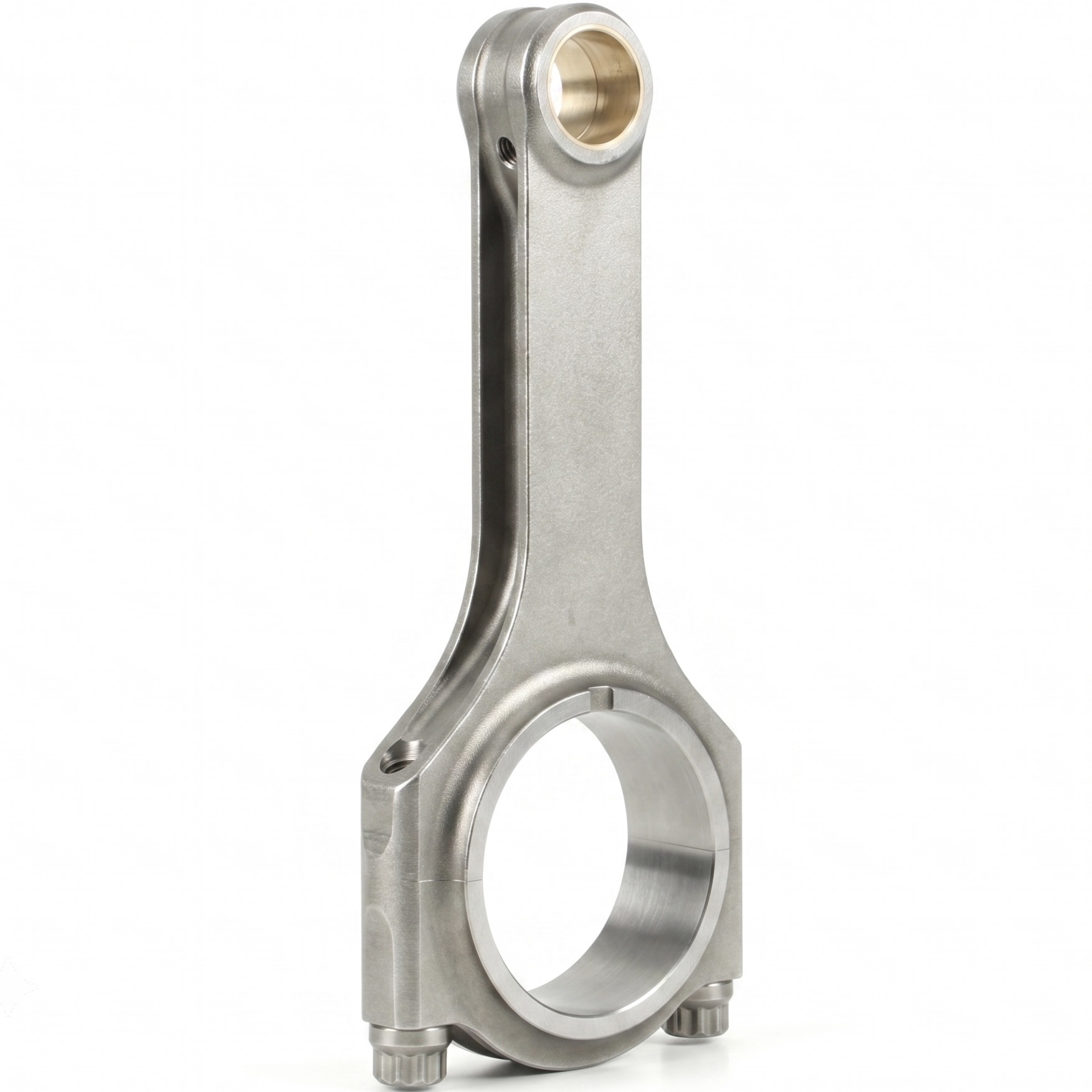 | H profile: H-beam offering a large bearing surface and a remarkable stiffness-to-weight balance; it is perfectly suited to high-revving naturally aspirated engines such as the B18C and to moderate turbo builds, where its bending stability excels. Offered by ZRP and Manley. |
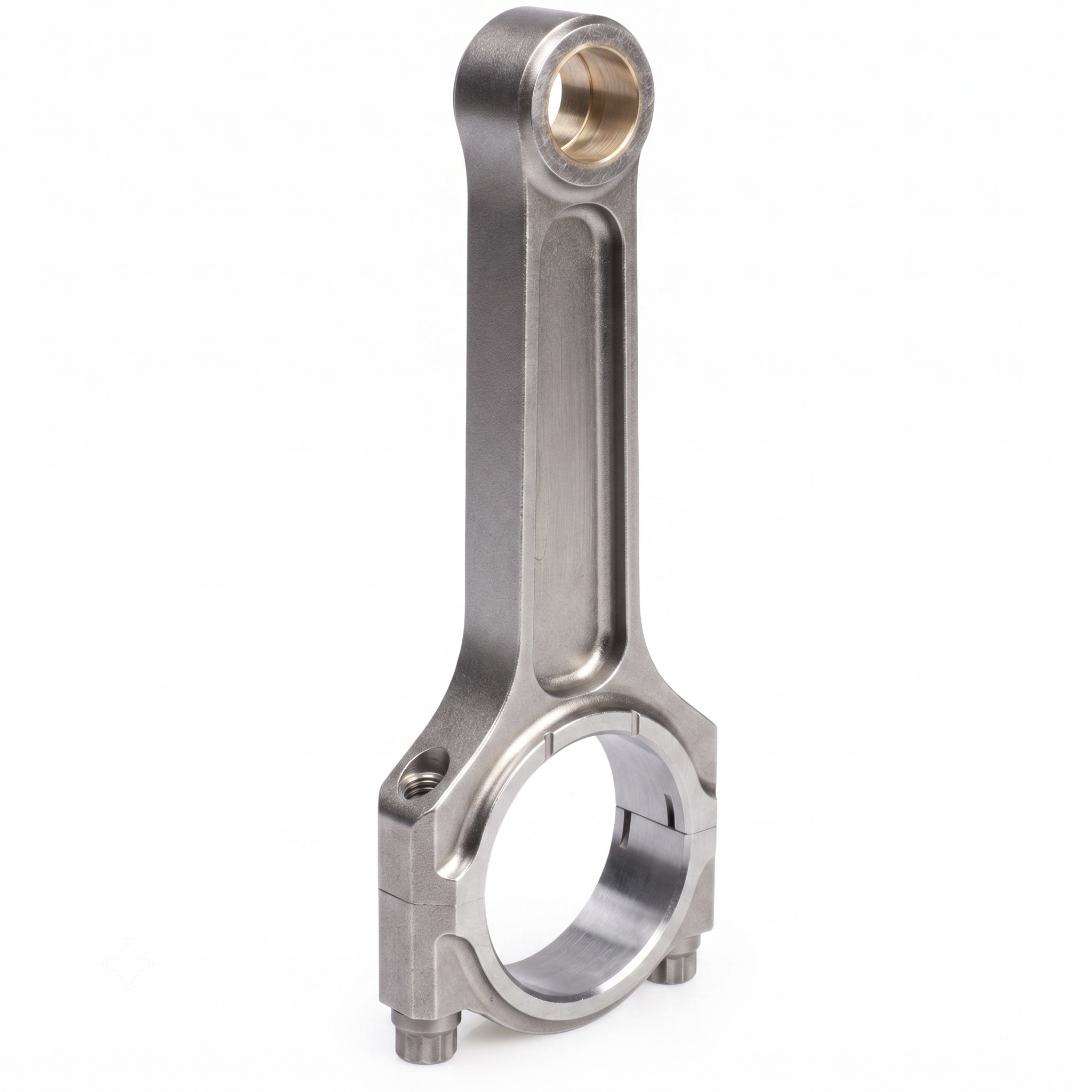 | I / I-HD profile: I-beam, available in a reinforced Heavy Duty version (Manley Pro Series "Turbo Tuff"); its optimised section resists buckling under the heavy loads of a turbo or high-compression B18C, for a weight/stiffness ratio aimed at the most demanding builds. |
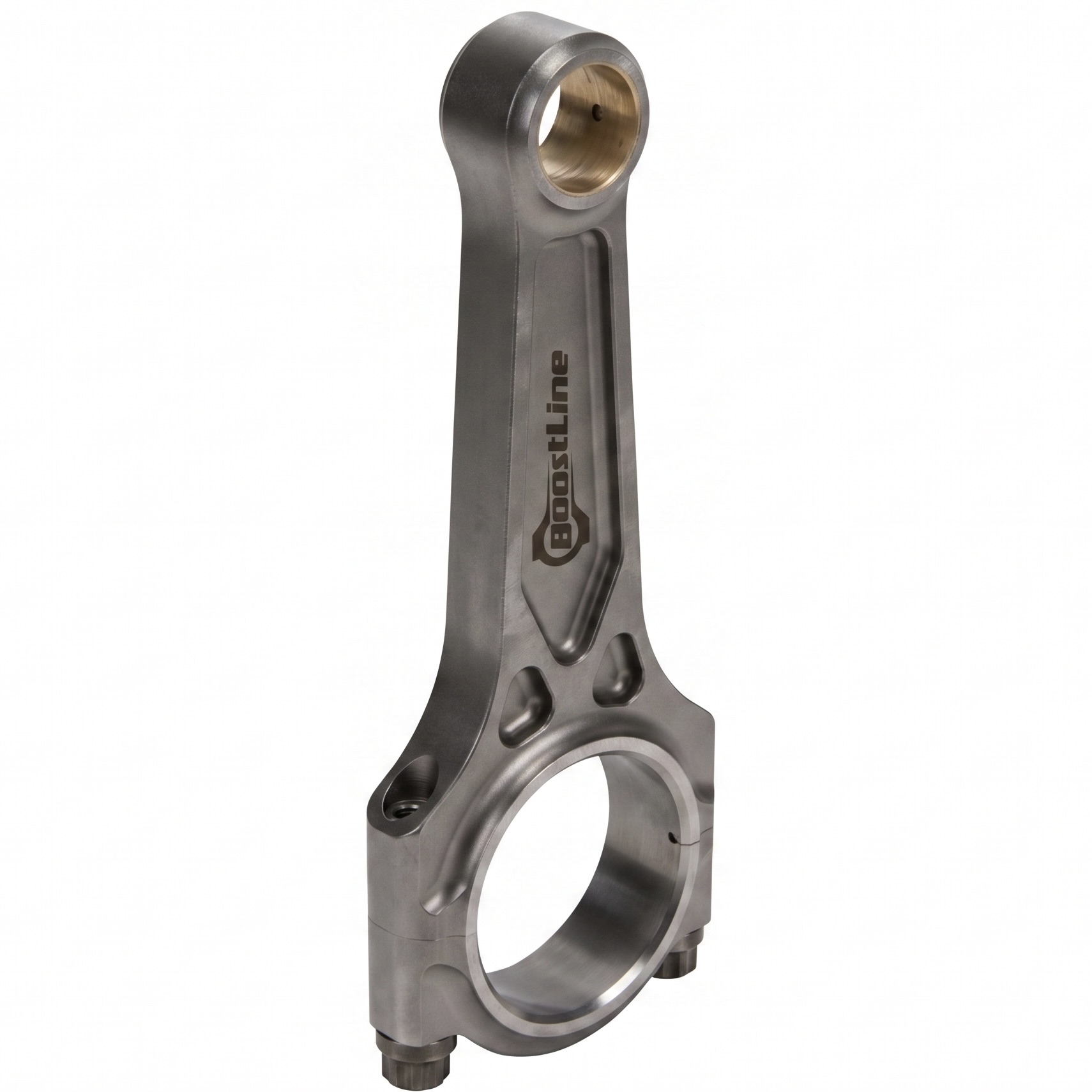 | I-3P profile: three-piece Boostline rod, with a cap bolted by capscrews, offering maximum stiffness; it is reserved for engines developed toward very high power. |
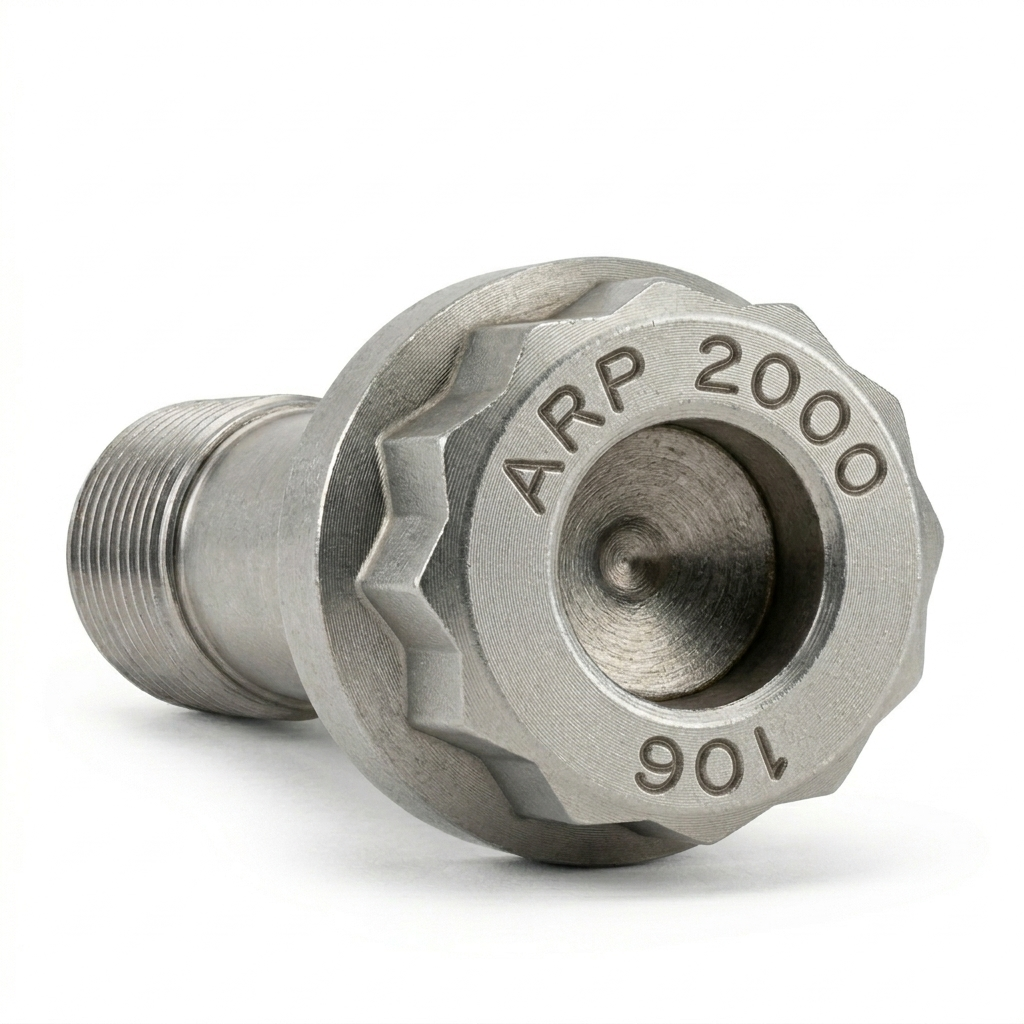 | ARP 2000: the all-round benchmark alloy, with a tensile strength of about 220,000 psi (1,517 MPa). Offered here in 3/8" diameter, it covers the vast majority of B18C builds, up to about 200 hp per cylinder, at speeds reaching 8,500 rpm. It is the default choice for a reliable B18C, high-rpm naturally aspirated as much as mild turbo. Disciplines: circuit, drift, drag, rally, hillclimb and time attack. |
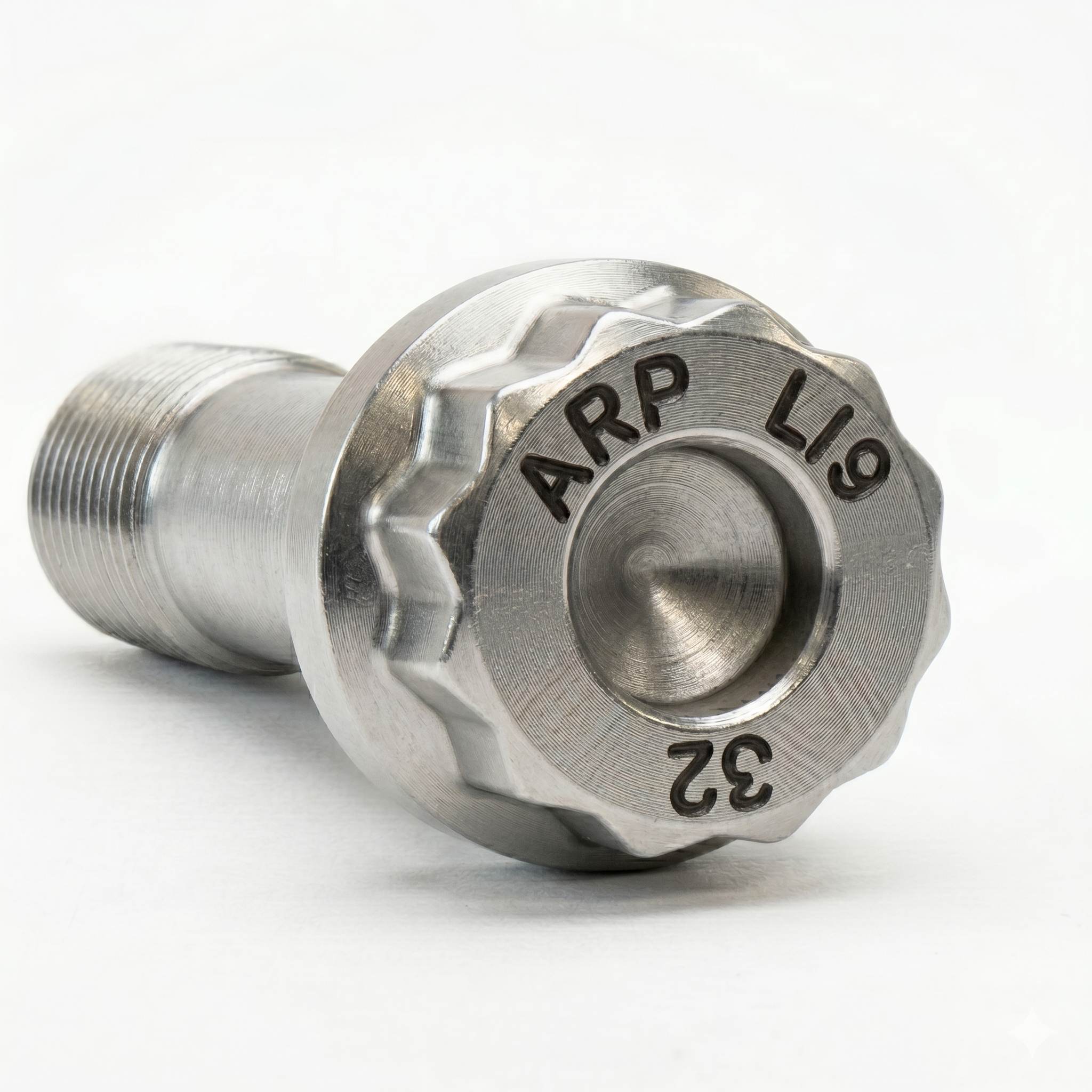 | ARP L19: a superior alloy (approx. 260,000 psi / 1,793 MPa), for the B18Cs most stressed in torque and rpm, up to about 250 hp per cylinder and rpm up to 10,000, in 3/8". More sensitive to corrosion and hydrogen embrittlement, it must be oiled and stored dry. |
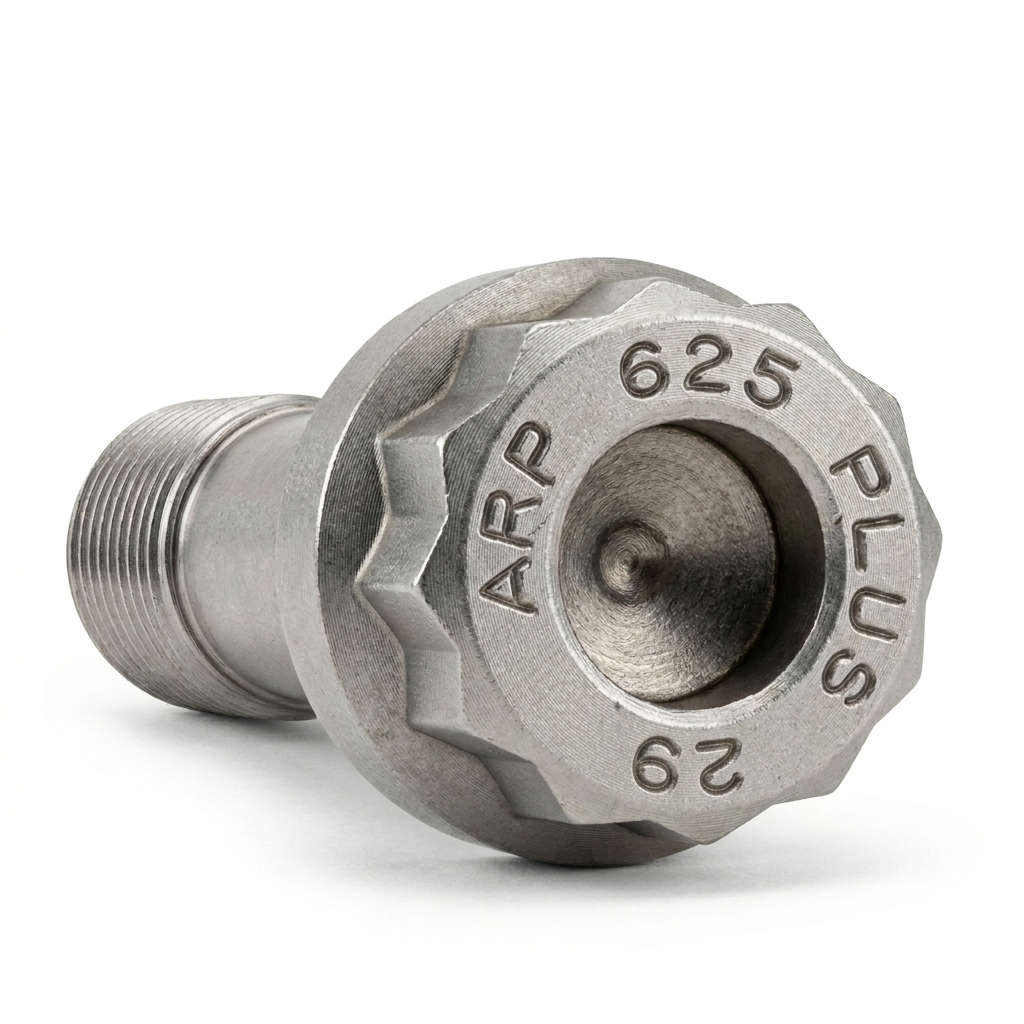 | ARP Custom Age 625+: the ultimate grade (approx. 260,000 to 280,000 psi / 1,793 to 1,931 MPa), immune to hydrogen embrittlement and therefore free of the L19's storage precautions; it is reserved for extreme builds, beyond 250 hp per cylinder and beyond 10,000 rpm. |
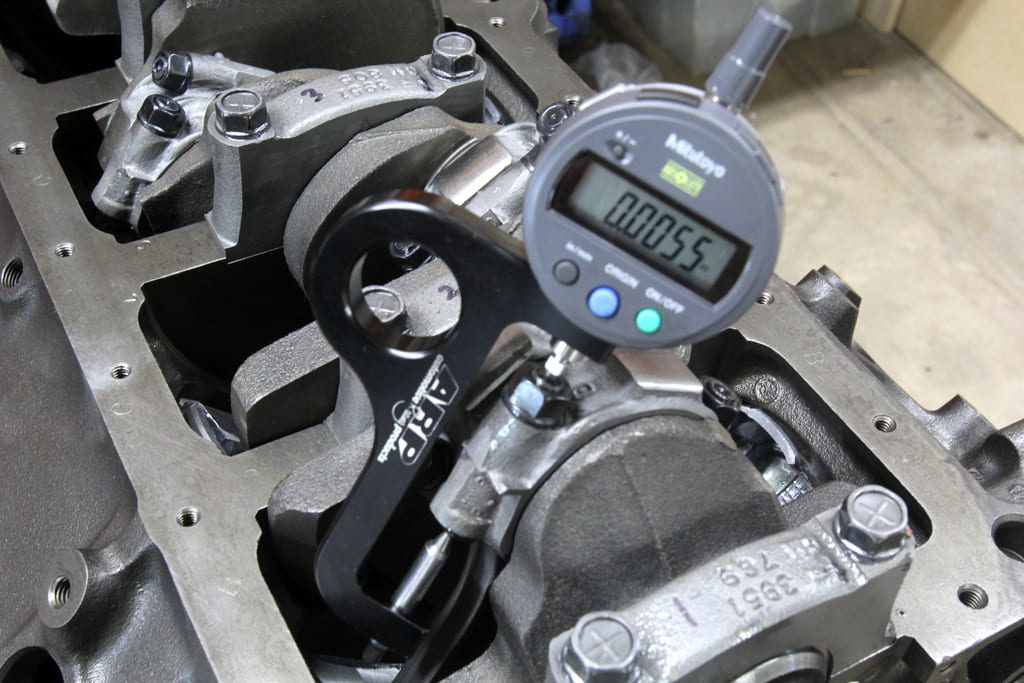
Discover the ARP stretch gauge
This B18C range brings together three race forged-rod manufacturers.
 | Boostline is the forged connecting rod range of the American Wiseco group. Its patented three-pocket design combines the light weight of an I-Beam rod with the strength of an H-Beam, and the cap is clamped by integrated ARP capscrews, which removes the nuts and gives the assembly maximum rigidity. Forged from 4340 steel and machined in the United States, these rods are built for heavily tuned B18C engines, high-revving naturally aspirated builds as much as boosted ones, and supplied as a complete set of four with their bolts. |
 | Manley Performance, an American manufacturer, has been a reference in engine building for decades. For the B18C it offers the H-Beam profile and the Pro Series I-HD "Turbo Tuff" line, well known on heavily tuned engines for its localised reinforcement and machining quality. The rods are forged, machined and inspected in the United States, weight-matched, then supplied as a complete set of four with their dedicated ARP bolts. |
 | ZRP is the Greek workshop of Alex Drakos, based in Athens. Every rod is forged from 4340 steel, precision machined, inspected and then weight-matched to ±1 g across the complete set, an essential step on a four-cylinder that lives at high rpm. For the B18C the range covers the H, I and I-HD profiles, which makes it possible to match the choice to the intended build, from a naturally aspirated track engine to a boosted one. Design, machining and inspection all take place in Greece. |
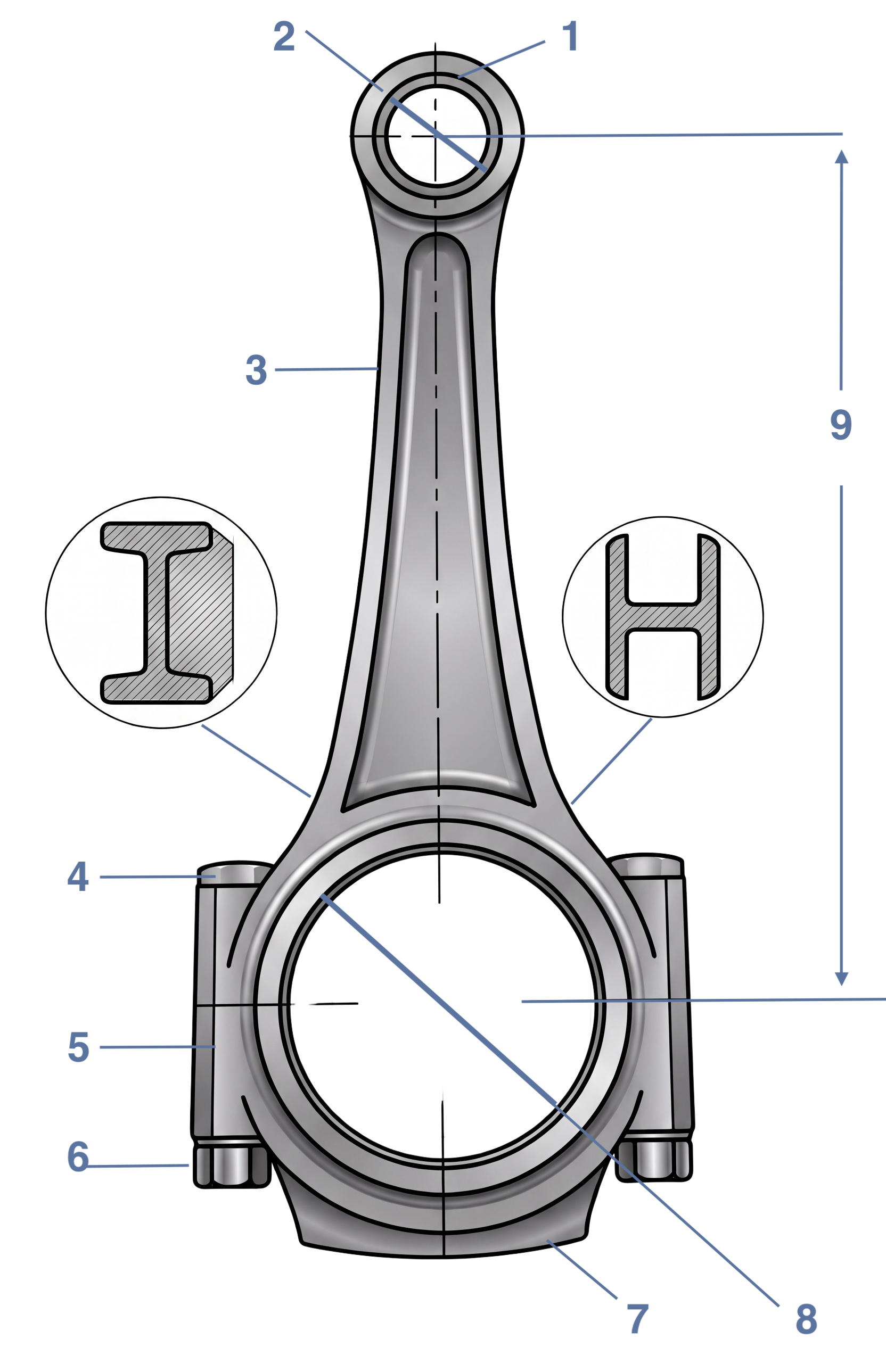 | 1) Small end 2) Small-end diameter 3) Rod beam 4) Rod bolt 5) Big end 6) Rod nut / bolt 7) Rod cap 8) Big-end diameter 9) Center-to-center |
These forged rods equip the Acura and Honda models powered by the 1.8 L 16V VTEC B18C engine, foremost the Integra GS-R and Type R (DC2, DB8) and the Civic VI:
| Brand | Model (chassis) | Engine code | Power | Years |
|---|---|---|---|---|
| Acura | Integra 1.8 (3/5 portes) | B18C5 | 145 kW (197 ch) | 1996–2001 |
| Acura | Integra Coupé 1.8 | B18C6 | 140 kW (190 ch) | 1998–2001 |
| Honda | Civic VI Aerodeck (MB, MC) 1.8 16V (MC2) | B18C4 | 124 kW (169 ch) | 1998–2001 |
| Honda | Civic VI Fastback (MA, MB) 1.8 16V (MB6) | B18C4 | 124 kW (169 ch) | 1997–2001 |
| Honda | Integra (DB6–DB9) 1.8 (DB7) | B18C3 | 147 kW (200 ch) | 1993–2001 |
| Honda | Integra (DB6–DB9) 1.8 VTEC (DB8) | B18C | 132 kW (180 ch) | 1993–2001 |
| Honda | Integra Coupé (DC2) 1.8 SiR | B18C | 132 kW (180 ch) | 1993–2001 |
| Honda | Integra Coupé (DC2) 1.8 Type-R | B18C1 | 147 kW (200 ch) | 1993–2001 |
| Honda | Integra Coupé (DC2) 1.8 Type-R | B18C6 / B18C7 | 140 kW (190 ch) | 1997–2001 |
| Honda | Integra Coupé (DC2) 1.8 VTiR | B18C1 | 127 kW (173 ch) | 1993–1999 |
| Honda | Integra Coupé (DC2) 1.8 VTiR | B18C2 | 125 kW (170 ch) | 1993–1999 |
OEM reference: 13210-P72-000 (set of 4 rods).
A set of forged rods costs incomparably less than a blown engine: on a B18C pushed in compression, rpm or boost, a factory rod that breaks takes the block, the crankshaft and often the VTEC head with it. By fitting weight-matched forged rods from the start, you make your build lastingly reliable and spare yourself a full rebuild, for a negligible extra cost against the price of a new engine.