Product successfully added to your shopping cart
Quantity
Total
There are 0 items in your cart. There is 1 item in your cart.
Total products
Total shipping To be determined
Total

BMW 5 Series E60
Manufacturers
BMW 5 Series E60
Warning: Last items in stock!
New product
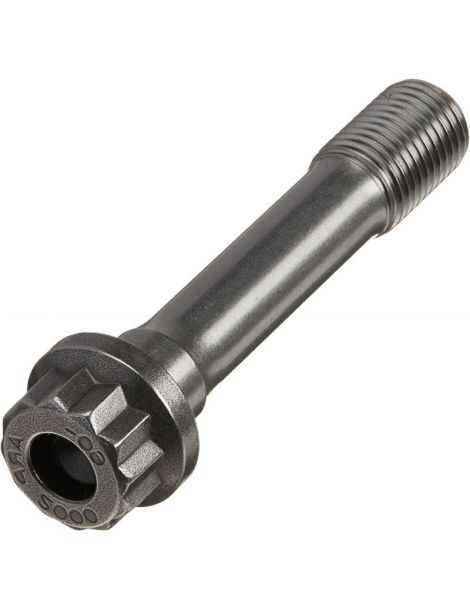
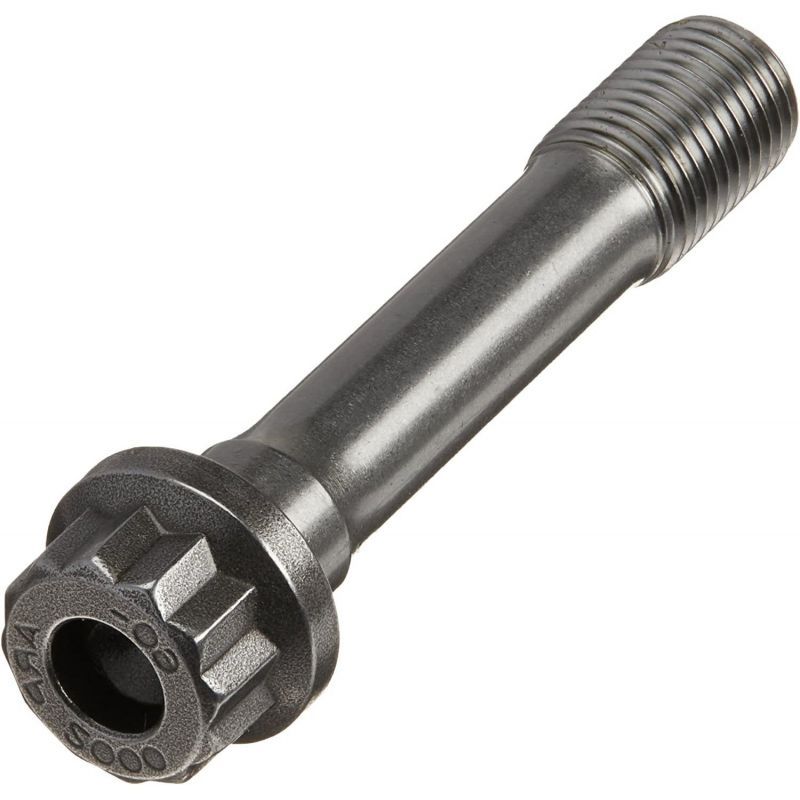
This reinforced connecting rod bolt kit for BMW M5 E60 and M6 E63 consists of 20 ARP bolts.
Coming from the aerospace industry, Gary Holzapfel created the ARP brand (Automotive Racing Products) in the early 70s to address a major problem in motorsports: engine failure related to insufficiently strong bolts/studs. At that time, there was no manufacturer capable of meeting these needs. Today ARP offers thousands of references in different ranges and types of products such as cylinder head bolts, main bearing bolts, connecting rod bolts. Depending on the application, ARP offers different ranges (materials) of fasteners:
* 8740: This is a chrome-molybdenum steel which has standard strength properties perfectly adequate for tuned engines. This steel offers a tensile strength between 1240 and 1447 N/mm2.
* ARP2000: More resistant than 8740, the ARP2000 alloy is capable of supporting clamping/tensile loads of up to 1516 N/mm2. This range of bolts is frequently used on track and drag cars and can be used with hydrogen.
* L19: This is a treated superior quality steel offering tensile and fatigue strength properties significantly superior to 8740 and ARP2000 ranges. Its tensile strength can reach up to 1792 N/mm2. This material is more sensitive to corrosion and must therefore remain oiled and not exposed to humidity. It is not recommended to use hydrogen with this range.
* CA625+ (Custom Age 625 More): This "super-alloy" has significantly superior technical properties while being resistant to corrosion and oxidation. Its tensile strength can reach 1930 N/mm2.
All ARP fasteners are designed and manufactured in the United States. ARP fastener manufacturing begins with cold or hot forging, then heat treatment (different depending on the range) is applied and shot peening is then performed to eliminate irregularities. Next comes precision grinding to achieve perfect concentricity, then threading is performed. And finally the finishing during which a coating is applied such as black chrome-molybdenum oxide or stainless steel polishing depending on the product range.
Each kit comes with assembly lubricant and instructions which indicate:
* Installation steps
* Torque specifications
* Tightening procedure