Product successfully added to your shopping cart
Quantity
Total
There are 0 items in your cart. There is 1 item in your cart.
Total products
Total shipping To be determined
Total

1.5L 16v - 1NZ-FE
Manufacturers
1.5L 16v - 1NZ-FE
 View larger
Warning: Last items in stock!
New product
ARP2000 crankshaft main studs for the Toyota 1NZ-FE 1.5-litre four-cylinder engine.
This kit is made for the 1NZ-FE, the 1.5-litre double overhead camshaft four-cylinder of Toyota's NZ family. It sits under the bonnet of the Yaris, Echo, Corolla, Auris, Probox, Succeed and Sienta.
The bearing caps of this block are held by bolts as standard; with this kit, ARP2000 studs take their place.
The bottom end rests on its main bearings: combustion after combustion, the loads coming from the connecting rods end up on them. Under this stress the main cap tries to move on its parting line, which eventually brinells the mating faces and distorts the bearing bore.
The studs are screwed into the block by hand, then the caps are fitted and the nuts tightened in three equal passes, in the order set by the manufacturer. The ARP instruction sheet details the procedure. Material: ARP2000, an alloy steel developed by ARP, rated at 220,000 psi tensile strength. Against classes 10.9 and 12.9 of standard fasteners, between 150,800 and 176,900 psi minimum, it offers 24 to 46% more strength. The ARP2000 studs in M10 x 1.5 hold up to 1,000 hp on this four-cylinder engine (calculated estimate).
| Part number | Brand | Grade / material | Nut | Thread |
| ARP-203-5408 | ARP | ARP2000 | Nut | M10 x 1.5 |
| Reference | Pass 1 | Pass 2 | Pass 3 |
| ARP-203-5408 | 29 Nm | 59 Nm | 88 Nm |
No torque is applied to the stud as it goes into the block: it is screwed in by hand. For a permanent assembly, ARP's instructions permit a Loctite thread locker.
The nuts are tightened following the order set by the manufacturer for the caps; every step is given in the ARP instruction sheet.
Moving to reinforced fasteners changes the clamping force on the caps. After installation, the size and roundness of the bores are checked, then the bores are line-honed if needed, always with the final fasteners and lubricant.
The final torque comes from the ARP 203-5408 instruction sheet, revision applicable at publication; the intermediate passes are calculated in equal parts. The official instruction sheet is authoritative in the event of any difference. Read the ARP 203-5408 instruction sheet
The torque figures given only apply with ARP assembly grease, never with engine oil.
| Buy the ARP assembly grease → |
 | Founded in the early 1970s by Gary Holzapfel, who came from the aerospace industry, ARP (Automotive Racing Products) set out to prevent fastener-related engine failures in motorsport. Its thousands of part numbers are designed and manufactured in California, in materials chosen for each use. |
| Criterion | Original main bolts | Reinforced ARP studs |
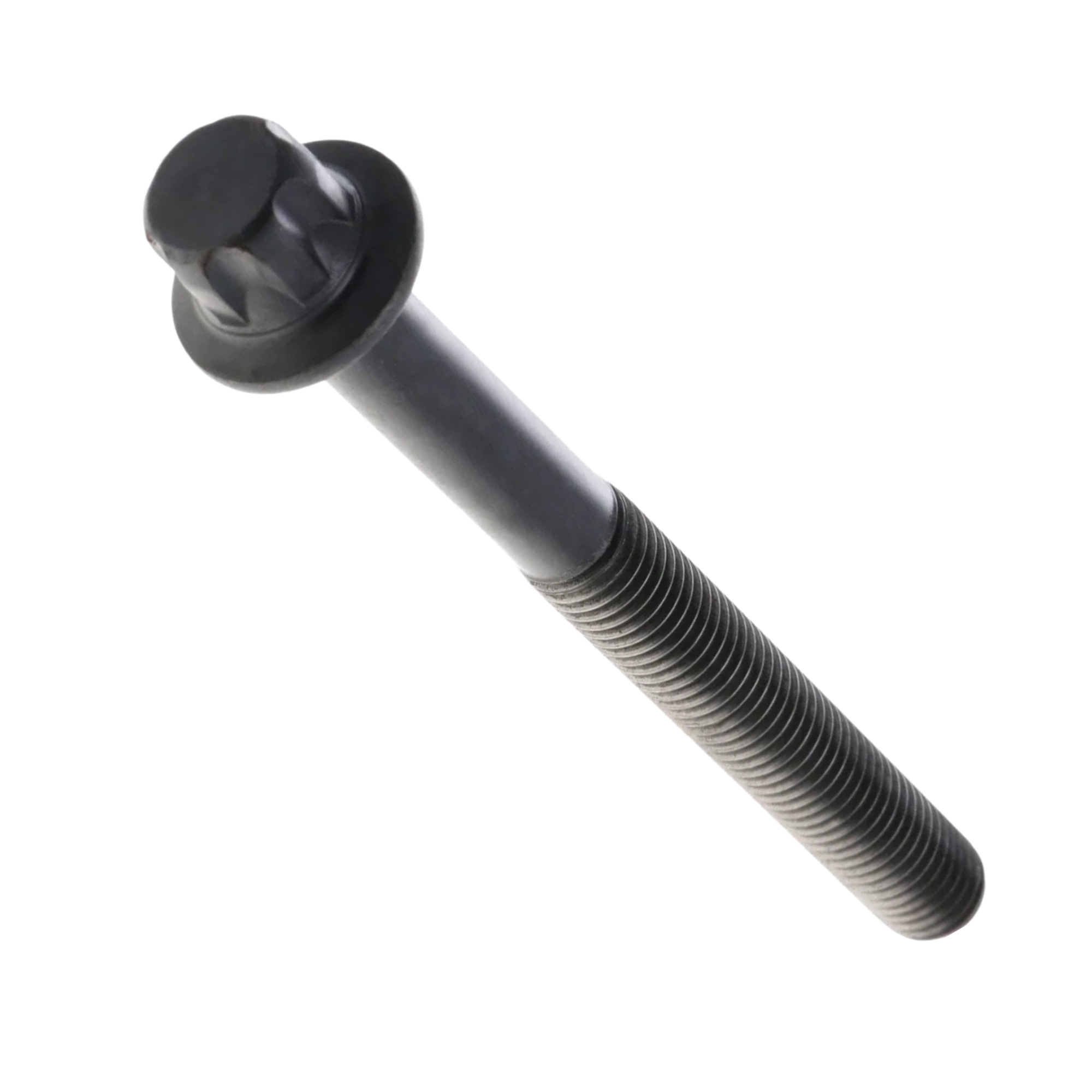 | 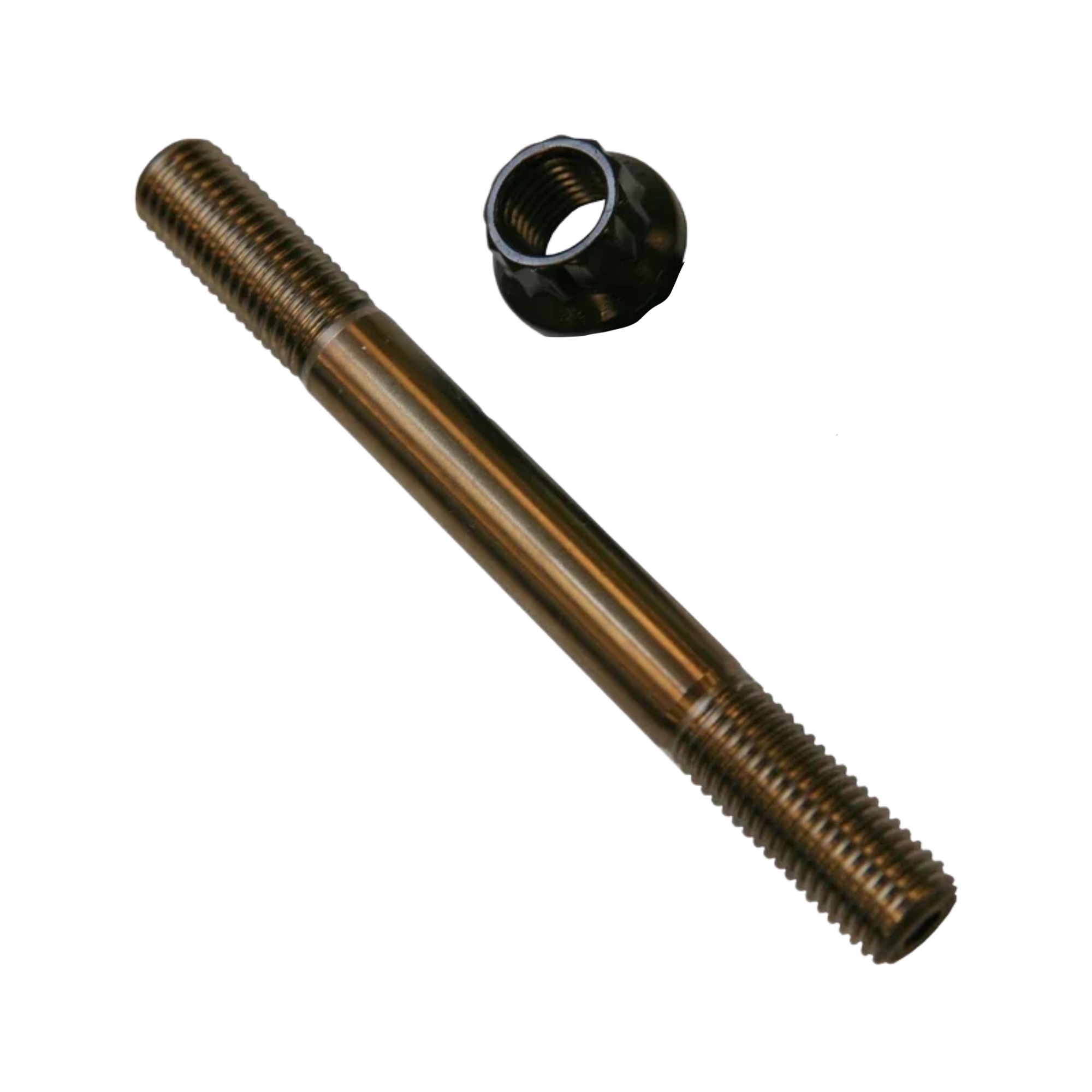 | |
| Cap fitting | Bolts to be started in the block at every fitting | Studs that guide each cap |
| Block threads | Stressed at every reassembly | Preserved once the studs are in place |
| Tightening | Torque applied to the bolt inside the block | Torque applied to the nut, without turning the stud |
| Model | Engine code | Power | Years |
| Toyota Yaris / Echo (P1) 1.5 | 1NZ-FE | 105-150 hp | 1999-2005 |
| Toyota Yaris (P9) 1.5 | 1NZ-FE | 107-110 hp | 2005-2014 |
| Toyota Yaris (P13, P15) 1.5 | 1NZ-FE | 107-109 hp | since 2010 |
| Toyota Yaris Verso (P2) 1.5 | 1NZ-FE | 105-110 hp | 2000-2005 |
| Toyota Corolla (E12, E15, E16) 1.5 | 1NZ-FE | 103-110 hp | since 2001 |
| Toyota Auris (E15, E18) 1.5 | 1NZ-FE | 105-110 hp | 2006-2018 |
| Toyota Probox / Succeed (P5, P16) 1.5 | 1NZ-FE | 103-109 hp | since 2002 |
| Toyota Sienta (P8, P17) 1.5 | 1NZ-FE | 103-110 hp | since 2003 |
A 1NZ-FE pushed beyond its original specification puts the bearing caps under heavy strain. ARP2000 studs keep the crankshaft in place at a cost far below that of reconditioning the block.