Product successfully added to your shopping cart
Quantity
Total
There are 0 items in your cart. There is 1 item in your cart.
Total products
Total shipping To be determined
Total

1.0L 12v - CB-70/CB-80
Manufacturers
1.0L 12v - CB-70/CB-80
Warning: Last items in stock!
New product
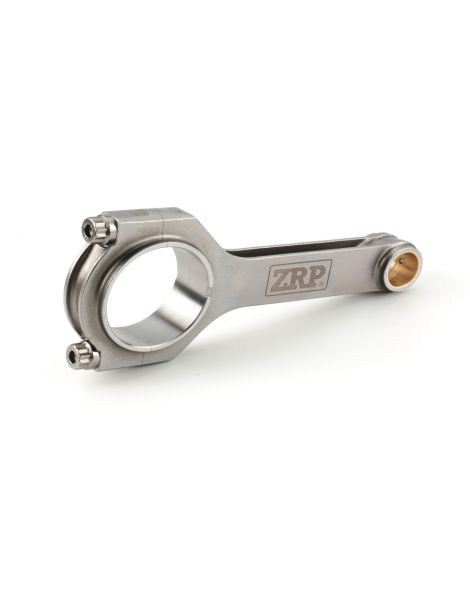
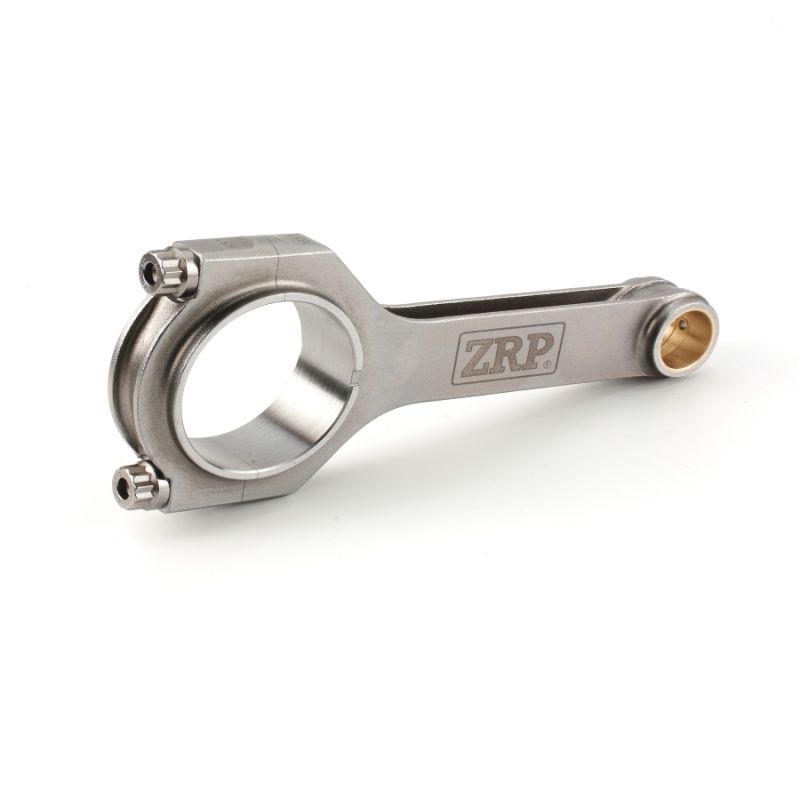
Set of 3 forged 4340 steel connecting rods for Daihatsu 1.0L 12V Turbo CB-70 / CB-80.
The Daihatsu CB is an inline three-cylinder of 993 cc (76 mm bore, 73 mm stroke) with 12 valves and a turbocharger, built from 1987 to 1993. Its calling card remains the Charade GTti: with less than one litre of displacement, this small boosted engine with four valves per cylinder delivered a specific output that was rare at the time and made the Japanese hatchback one of the most compact turbo sports cars of its generation. A short block, low weight and a small-diameter turbo gave it a keenness few engines of similar capacity could claim.
Campaigned in rallying and in small-capacity classes, the CB-70/CB-80 is still a sought-after tuning base, but its rotating assembly was calculated for standard power. On a three-cylinder that revs high, every increase in boost pressure translates into higher cylinder pressure and more violent alternating loads: the original connecting rod is the first part to let go. Forged 4340 rods remove that weak point, open the door to forged pistons and give the bottom end a real safety margin.
Forged from high-strength 4340 steel, these rods are machined to the dimensions of the CB-70 / CB-80 three-cylinder: 19 mm pin, 125 mm centre-to-centre length, 387 g per rod. They make a compact bottom end reliable as soon as boost pressure, rpm or displacement increase, and become essential when fitting forged pistons.
Developed for built engines, turbocharged as well as supercharged, they cover every discipline: rally, drift, drag racing, circuit and track use, hillclimb, time attack. They follow Stage 2, Stage 3 and Stage 4+ builds up to a fully rebuilt competition engine, on an H profile that favours rod stiffness.
| Reference | Brand | Profile | Bolts | Pin diameter OEM 19 mm | Small-end width | Big-end diameter OEM n.p. | Big-end width | Center-to-center OEM 125 mm | Weight per rod |
|---|---|---|---|---|---|---|---|---|---|
| R-DAI-001H | ZRP | H | ARP 2000-5/16"-38mm | 19 mm | 46.1 mm | 24.8 mm | 125 mm | 387 g | |
| R-DAI-001H-L19 | ZRP | H | ARP L19-5/16"-38mm | 19 mm | 46.1 mm | 24.8 mm | 125 mm | 387 g |
| Rod | Bolts | Torque | Recommended stretch |
|---|---|---|---|
| ZRP (R-DAI-001H) | ARP 2000 | 40.7 N·m | 0.140 – 0.152 mm |
| ZRP (R-DAI-001H-L19) | ARP L19 | 54.2 N·m | 0.127 – 0.140 mm |
This three-cylinder engine works with small-section bolts: the smaller the bolt, the more the gap between applied torque and resulting preload matters, because friction then accounts for a large share of the effort. The table above illustrates this: the two ARP grades on offer show neither the same torque nor the same stretch range, and one cannot be deduced from the other. These figures come from the bolt manufacturer and are to be respected with no rounding and no personal margin. In practice, on the six bolts of the CB-70/CB-80: tapped holes blown out and degreased, bolt threads brushed then wiped, ARP assembly lubricant laid as a continuous film on the thread and on the bearing face, bolts run down by hand until contact, then tightened in two or three stages, alternating the bolts of a given cap. Checking with a stretch gauge validates the result by measuring the real elongation of the bolt, that is the preload installed: this is the manufacturers’ reference method. The ZRP instructions supplied with the kit override any other indication.
| 4340 steel is a nickel-chromium-molybdenum alloy steel used in aerospace and motorsport alike. Forged then heat-treated (quench and temper), it offers excellent tensile strength, high fatigue resistance and real ductility. Compared with an original rod (often sintered/powder metal, optimised for series-production cost), a 4340 forged rod shows roughly +19% higher yield strength, +8% higher tensile strength and above all +19% to +37% higher fatigue strength, i.e. a fatigue life under cyclic loading several times longer. This is what makes forged 4340 the reference material as soon as boost and rpm climb. |
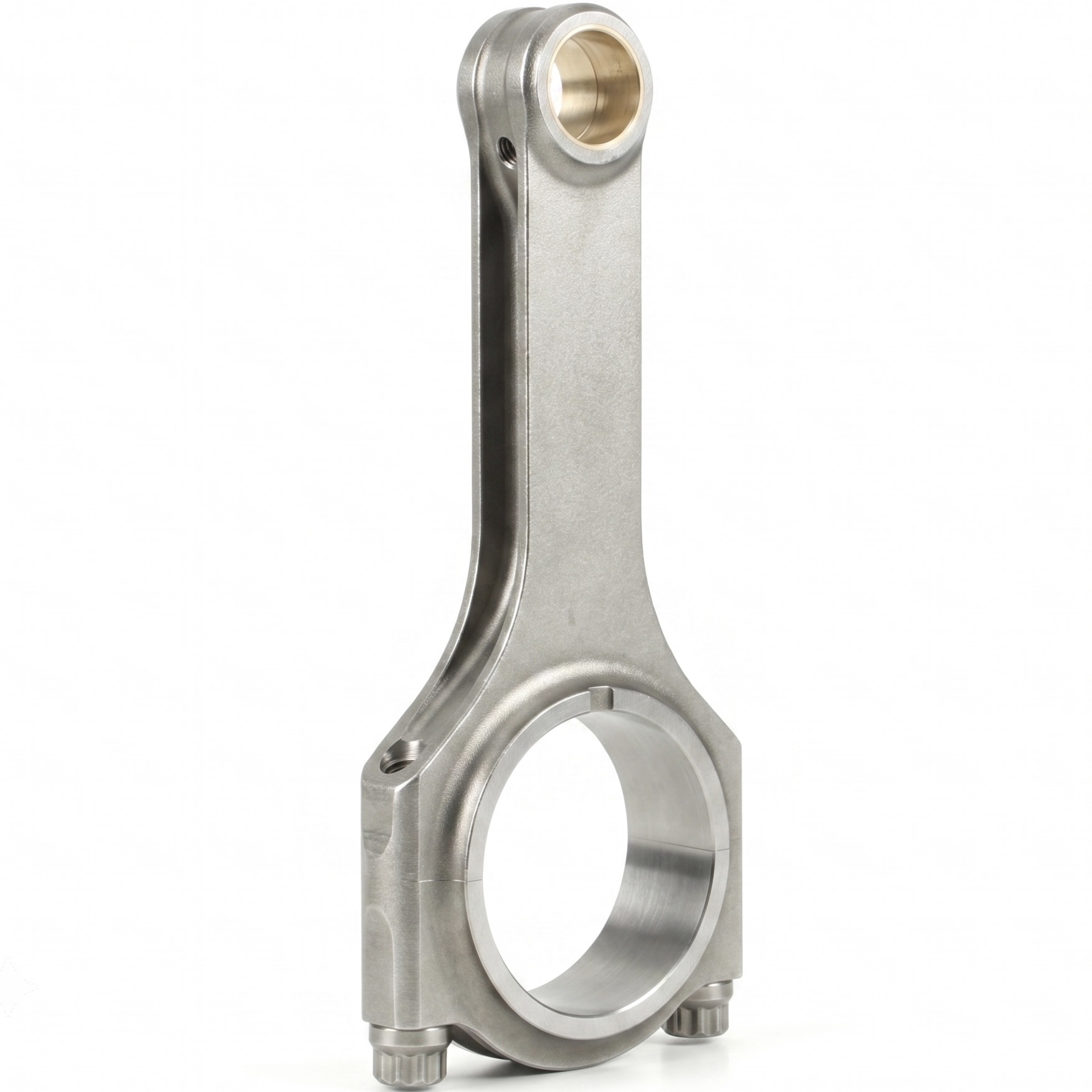 | H-Beam profile. The H-beam rod, with two flat faces joined by a central web, offers maximum bending rigidity and excellent resistance to high loads. It is the preferred profile for heavily stressed, highly boosted engines such as the CB turbo. |
On a small turbocharged three-cylinder such as the CB, the rod bolt remains the compulsory checkpoint: it sets the maximum rpm and the cylinder pressure that can be tolerated. The grade is chosen from real use, from torque taken up low down in rally to rpm held high on circuit, up to the very short peaks of drag racing, then from the target power per cylinder. Here the bolts are in 5/16"-38 mm and are fitted to the torque and stretch given in the table.
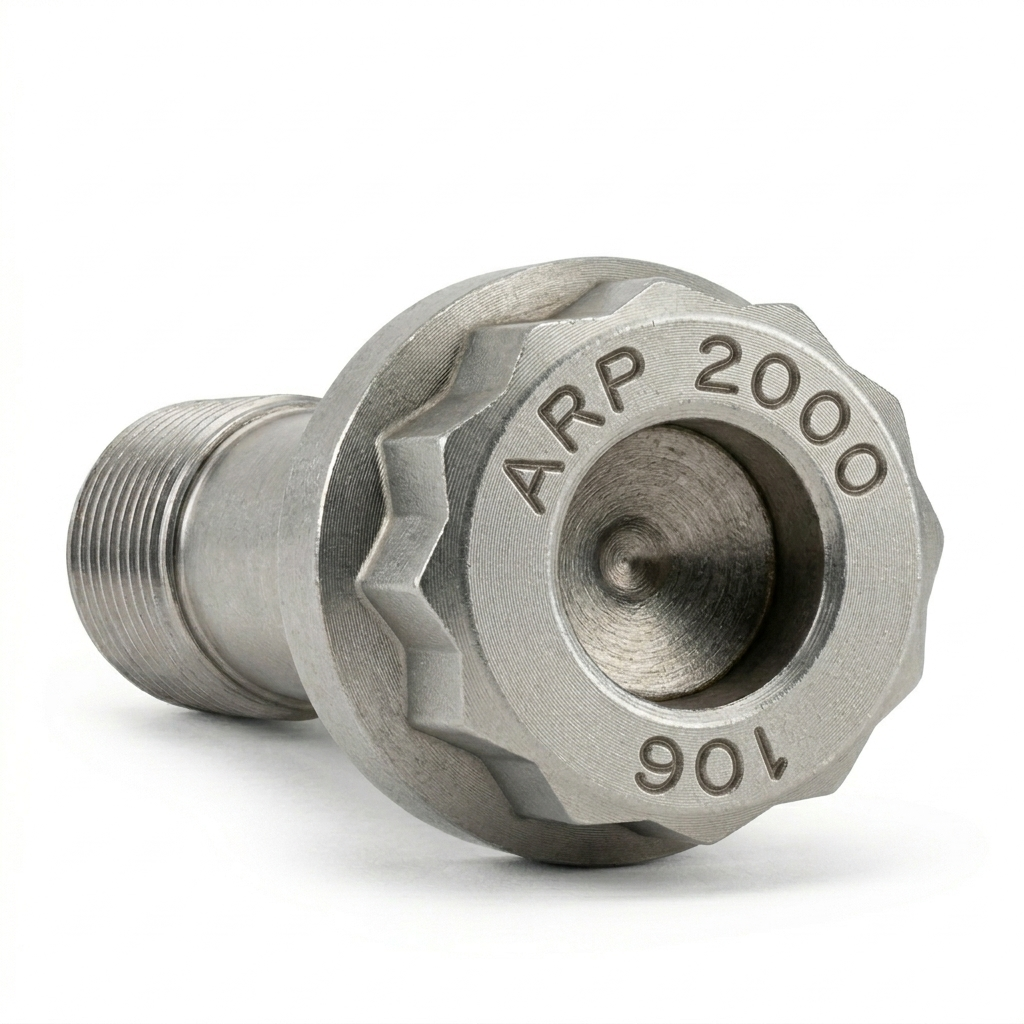 | ARP 2000, whose tensile strength reaches ~220,000 psi (~1,517 MPa), is the high-performance standard: the grade is rated up to 150 hp per cylinder for a 5/16" bolt and up to 8,500 rpm. It is found in circuit racing, track days, drift, rally, drag racing and hillclimb; here it is offered in the 5/16" diameter. No particular storage constraint to observe. The bolts simply wait for assembly, with no special care. |
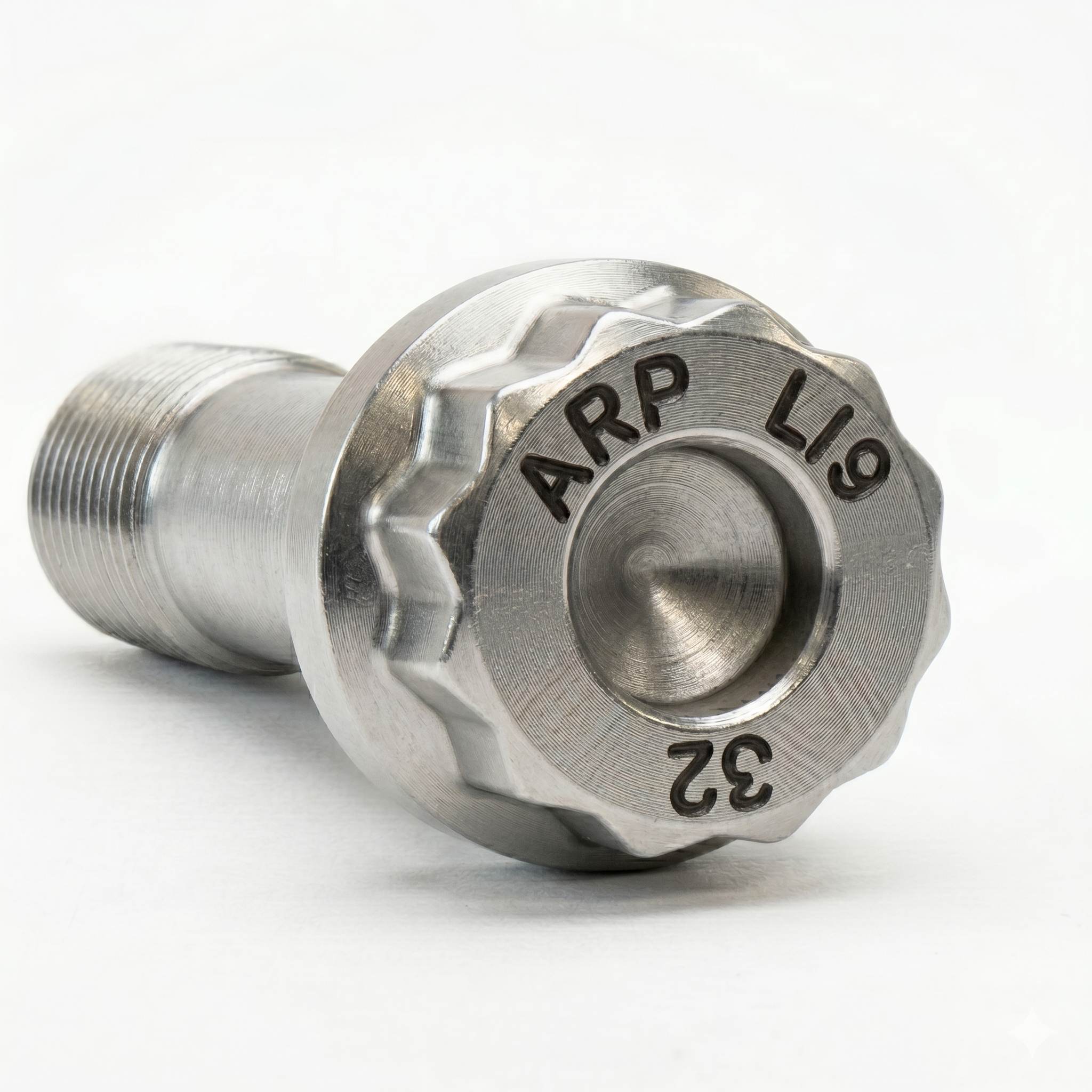 | L19 (tensile strength ~260,000 psi, i.e. ~1,793 MPa) is designed for engines pushed to the extreme, up to 200 hp per cylinder with 5/16" bolts, and up to 10,000 rpm: very high boost pressure, sustained high rpm and high cylinder pressure. It is the choice for big-power builds: drag racing, drift, rally and circuit use. Caution: sensitive to corrosion and hydrogen embrittlement, it must always be stored and fitted oiled, away from moisture. |
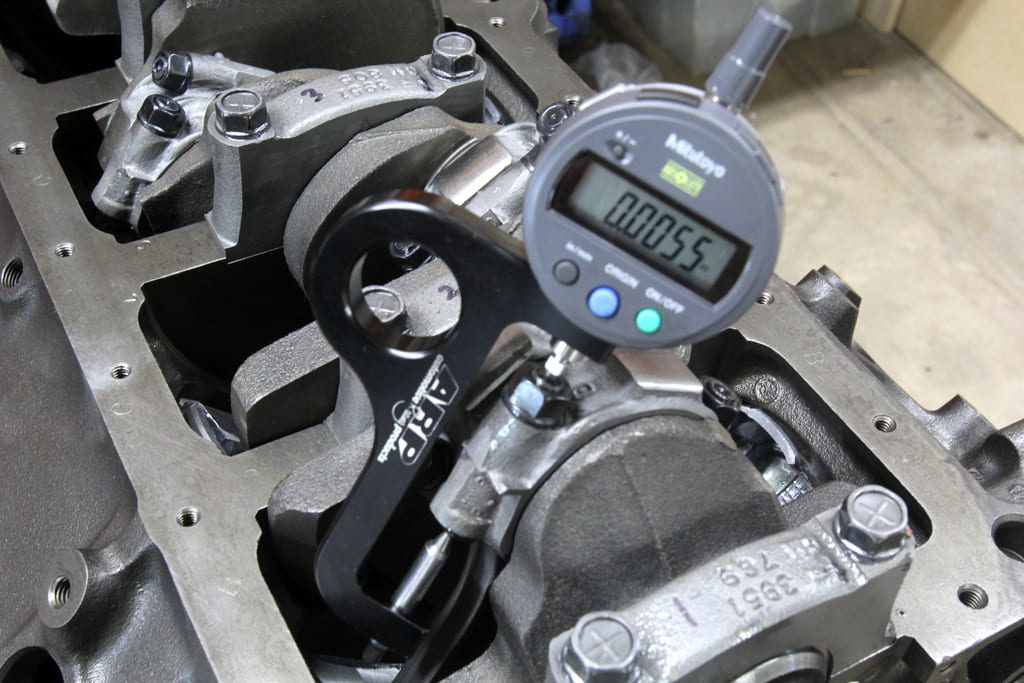
In addition to torque tightening, measuring rod-bolt stretch is the most reliable check for optimal preload. The check is done with the bolt fitted: place the gauge (dial indicator) on the two ends of the bolt and read its actual stretch, which must match the recommended value (see the torque & stretch table above). This method removes the friction variations inherent in torque tightening and secures the assembly on heavily stressed engines. |
 | ZRP is a Greek manufacturer of high-performance forged connecting rods, designed by Alex Drakos in Athens for competition use. Every rod is forged from 4340 steel, precision-machined and then balanced to ±1 g so it stays healthy at high rpm. For the CB-70/CB-80 the range is limited to the H profile, supplied with either ARP 2000 or ARP L19 bolts depending on the intended level of tune. |
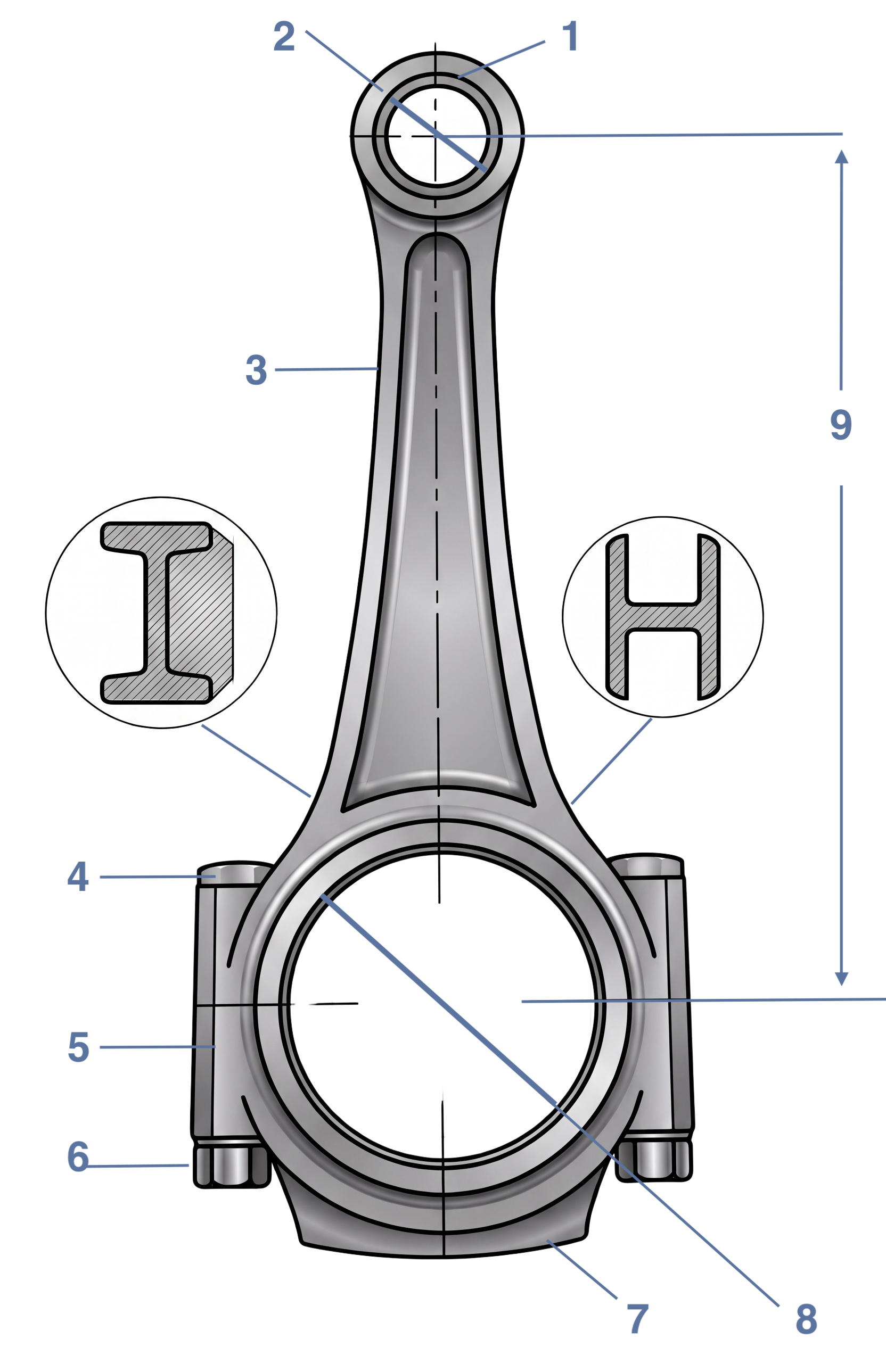 | 1) Small end 2) Small-end diameter 3) Rod beam 4) Rod bolt 5) Big end 6) Rod nut / bolt 7) Rod cap 8) Big-end diameter 9) Center-to-center |
These forged connecting rods are compatible with vehicles fitted with the Daihatsu CB-70 / CB-80 engine (1.0L 12V Turbo):
| Brand | Model (chassis) | Engine code | Power | Years |
|---|---|---|---|---|
| Daihatsu | Charade III (G100) 1.0 GTti | CB-80 | 101 hp | 1987–1992 |
| Daihatsu | Skywing III 1.0 | CB-80 | 101 hp | 1987–1990 |
OEM reference: 13201-87705-000 (CB-80, set of 3 rods; CB-70 not disclosed)
On a CB-70 or a CB-80, a standard rod that breaks destroys the matching piston and calls for a check of the block. Rebuilding the engine with standard parts therefore means buying rods and pistons, a high outlay for such a displacement, for an engine that will stay just as fragile.
For a comparable, often lower budget, a set of forged 4340 steel rods with forged pistons brings far greater reliability and safety margin, and leaves room for a later power increase. This is the logic European engine builders have applied for more than 15 years, including on small boosted displacements.
For the same budget: more reliability, more potential, more service life, on an engine that only asks to be revved.