This page gathers the parts held for the Renault 812, the 1.3 8v four-cylinder of the R8 Gordini and the Alpine A110. One WÖSSNER forged piston kit covers it, and it covers it fully: 75mm at 12.7:1, 75.7mm at 12.5:1 or 12.9:1 for a sharper build, and 82.5mm at 11.5:1. Three bores and four compression ratios, so a rebuild and every common oversize are served by a single reference. Forging is what a naturally aspirated engine taken well beyond standard asks for, and that is where the 812 lives in historic competition. Camshafts, big end bearings and head studs for other Renault engines are listed on their own engine code pages.
The 840 725 is the naturally aspirated member of the Renault 1.4 8v family, the engine of the R5 Alpine, and this page is built around it. WÖSSNER supply one forged piston kit in five steps: 76mm at 11:1, 76.6mm at 11.2:1, 77mm at 11.3:1, 78mm at 11.5:1 and 80mm at 12.1:1. Read the compression ratios and the engine names itself: 11:1 and above belongs to a unit breathing on its own, not to a blown one. Each step up in bore raises the ratio with it, so capacity and compression are chosen together rather than one against the other. The blown 840 726 and 840 730 have their own pages.
The 840 726 is the turbocharged 1.4 8v of the R5 Alpine Turbo, also carried as C6J 750, and its compression ratios say so: the WÖSSNER forged piston kit runs 7.5:1 at 76mm, 7.6:1 at 76.6mm, 7.7:1 at 77mm and 7.9:1 at 78mm and 80mm, figures that belong to a blown engine. This is also the only 840 page that carries valve timing. CATCAMS supply a sport camshaft and an adjustable cam gear, so the timing can be dialled in on the bench rather than left where the factory put it. Bottom end and valve timing are therefore prepared together here.
The 840 730 is the 1.4 8v of the R5 Turbo, found on some records under the C1J code, and it is the only page in this family where two piston makers are offered on the same bore. WÖSSNER and JE PISTONS both run 76mm, 77mm and 78mm: JE hold 7:1 across all three, WÖSSNER go 7:1, 7.2:1 and 7.3:1. Those are the lowest compression ratios of the three 840 pages, which is what a heavily boosted engine asks for. CATCAMS sport camshafts complete the page. The choice between two forging houses is therefore a real one, made on matching bores.
Everything needed to build the 1.4 8v C1J of the Renault Super 5 GT Turbo sits on this page, from the bottom end to the valvetrain. WÖSSNER forged pistons in 76mm bore at 8:1 compression, ACL Race big end bearings and main bearings, and an ATHENA head gasket in 77mm bore with 1.80mm compressed thickness all account for the boost the C1J runs. The cylinder head is covered too: CAT CAMS sport camshaft and adjustable cam pulley, valve springs with collets, inlet and exhaust valves. VIBRA-TECHNICS engine and gearbox mounts hold the unit steady.
The naturally aspirated K4J 1.4 16v fitted to the Renault Clio and Megane is served here by a single reference, and that is a deliberate choice: WÖSSNER forged pistons in 79.5mm bore, cut for a 12.6:1 compression ratio. That figure belongs to a hard-worked naturally aspirated build, aimed at entry-level rally preparation where compression does the work boost would otherwise do. No other component is offered for this engine at present. For a full range, with camshafts, adjustable pulleys, cam followers and valve springs, see the page 1.6L 16v - K4M, the 1.6-litre sibling of the same engine family.
The 807.12 block, a 1.6-litre 8-valve, is covered here by a WÖSSNER forged piston kit offered in four bore sizes, from 77 to 80mm. That is what this page is for: it does not stop at the standard size but follows the engine through its successive rebores, right up to blocks already opened out that need catching up. Pick the option matching the bore measured on your block after machining. For the 807 727 variant, built only at the standard 77mm bore, the page 1.6L 8v - 807 727 carries the matching reference.
On the 807 727 the answer comes down to one reference: WÖSSNER forged pistons at the standard 77mm bore, calculated for an 8.6:1 compression ratio. That low figure is no accident, it marks a boosted version of the 1.6-litre 8-valve block, where compression is dropped to leave room for boost pressure. The logic is the opposite of the page 1.6L 8v - 807.12, which offers four bore sizes from 77 to 80mm to follow rebored blocks without lowering compression. One size here, one clearly defined use.
The K4M page covers two versions of the same 1.6-litre 16-valve block: the naturally aspirated K4M 708 of the Renault Clio and Megane, and the turbocharged K4M 854 of the Twingo 2 RS. It is above all a valvetrain and cylinder head page: CATCAMS sport camshafts for both, adjustable cam pulleys, mechanical cam followers, valve springs and rockers, with springs by SUPERTECH or CATCAMS depending on the option. The bottom end comes down to one WÖSSNER forged piston kit, 79.5mm bore at 12.7:1. VIBRA-TECHNICS mounts target the Twingo 2 RS. The head parts are listed by the maker as shared between the K4M 708 and F4R heads.
The M5M, also known by its Nissan code MR16DDT, is the only modern direct-injection turbo engine in this run of pages: it powers the Renault Clio 4 RS and the Megane 4 TCe. Two references serve it here, and they belong together. WISECO forged pistons, 79.7 to 80mm bore depending on the option, keep compression at the 9.5:1 that boost demands. The COMETIC multi-layer steel head gasket, 81.0mm bore and just 0.71mm thick, holds boost pressure without adding chamber volume. This is the only page in the run where WISECO and COMETIC appear.
The only 1.8-litre page of this Renault range: the naturally aspirated F7P of the Clio 16S, the early Clio Williams and the R19 16S. Forged pistons by WISECO, WÖSSNER and JE PISTONS share one 82mm bore and span compression ratios from 8.3:1 to 12:1, covering a high-revving naturally aspirated build as well as a boosted one. Also listed: KENT CAMS timing belt, COMETIC head gasket, CATCAMS camshafts, cam followers, valve springs and adjustable pulleys, ARP rod bolts, ZRP, WÖSSNER and MANLEY rods, ACL RACE and KING RACING tri-metal bearings, VIBRA-TECHNICS mount. No forged crankshaft here: see 2.0L 16v - F7R for the 2.0-litre step.
The F4R 730/732 is the naturally aspirated engine of the Clio II RS 172 and 182bhp, built from 2000 to 2005. This is the busiest page of the range and the one where the chassis matters as much as the engine: four ROHNCOR mounts, a VIBRA-TECHNICS Clio 2 RS set and a POWERFLEX insert hold the driveline. On the engine side, WÖSSNER and JE PISTONS forged pistons run 82 to 82.7mm bore for compression ratios of 11.8:1 to 12.9:1, with CATCAMS camshafts, SUPERTECH valves and springs, a KENT CAMS belt, COMETIC gasket, ARP studs, forged rods and forged crankshafts.
The F4R 830/832 is the next generation of the Renault 2.0 16V naturally aspirated engine: Clio III RS and Megane from February 2006, 197bhp and above. What separates it from the F4R 730/732 is the sizing. Here the WÖSSNER forged pistons come in a single precise 82.72mm bore for compression ratios of 11.9:1 to 12.7:1, where the 730/732 page offers a 82 to 82.7mm range from two makers. The VIBRA-TECHNICS Clio 3 RS 02/2006- mount belongs to this page alone. CATCAMS camshafts, SUPERTECH valves and springs, COMETIC gasket, ARP studs, forged rods, ACL RACE bearings and forged crankshafts follow.
The F4RT 774 is the first generation of the turbocharged F4R, fitted to the Megane II RS from 2004 to 2009. The VIBRA-TECHNICS Megane 2 RS 2004-2009 mount and the CATCAMS 774 camshafts belong to this page alone. Its reinforced exhaust valves come from SUPERTECH and CATCAMS: Inconel only arrives with the following generation. The page is completed by a COMETIC head gasket, ARP head and main studs, forged rods, ACL RACE and KING bearings, forged crankshafts, CATCAMS pulleys and cam followers. Two ROHNCOR mounts are listed here, specified for the Megane III RS Phase 1. For forged pistons, see 2.0L 16v - F4RT 776/874.
The F4RT 776 and 874 is the 2.0 turbo of the Megane III RS, Phases 1, 2 and 3. It is the only page of this Renault range to carry SUPERTECH exhaust valves in Inconel, an alloy that holds the highest exhaust temperatures, together with matching SUPERTECH intake valves. The WISECO and WÖSSNER forged pistons run an 82.7mm bore for a deliberately low compression ratio of 8.6:1 to 9:1, the signature of high boost pressure. Four ROHNCOR mounts for Phases 2 and 3, a VIBRA-TECHNICS Megane 3 RS mount and the CATCAMS 874 camshafts complete it, with COMETIC gasket, ARP studs, forged rods and crankshafts.
The F7R is Renault's road-going 2.0 16V naturally aspirated engine: Clio Williams, Clio 16S 2.0 and R19 16S, built in the 1990s. It takes the 1.8-litre F7P to full capacity, and this page carries a complete valvetrain and bottom end. The KENT CAMS belt is listed for the Clio Williams 2.0 16V, as are the SUPERTECH and CATCAMS intake and exhaust valves. WÖSSNER and JE PISTONS forged pistons cover 82.7 to 82.73mm bore for compression ratios of 11.2:1 to 12.7:1. Camshafts, cam followers, springs and pulleys from CATCAMS and KENT CAMS, a COMETIC gasket, ACL RACE and KING RACING bearings, ARP bolts, forged rods and crankshafts and a VIBRA-TECHNICS mount complete it.
The F7RR is the competition and rally evolution of the F7R: Clio Maxi, Group A and Kit Car. This is a short page and it says so: two references, but the two that decide a competition bottom end. The WÖSSNER and JE PISTONS forged pistons are sized 84 to 84.5mm, the largest bore of the whole Renault range on this site, well above the 82.7mm of the F7R, for a 12.7:1 compression ratio that belongs to a racing engine. ACL and KING RACING tri-metal big end bearings complete the rotating assembly. For the valvetrain, the cylinder head and the mounts, see 2.0L 16v - F7R.
This page gathers the Renault J7R 752 engine parts stocked by NSB Concept. The range is deliberately narrow and we say so plainly: one active reference, a WÖSSNER forged piston kit for the 2.0 turbo fitted to the Renault 21 Turbo 175hp of 1987-1990. Forged pistons rebuild the bottom end of a factory-boosted block and hold the loads a cast piston no longer takes once boost is raised. If you would rather start from the car than from the engine code, the RENAULT 21 page opens onto the RENAULT 21 Turbo 175cv J7R 752 1987-1990 sub-category.
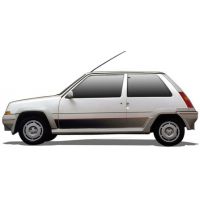
RENAULT 5 is a junction page covering the first generation, 1980 to 1985. Two sub-categories split it by engine: RENAULT 5 Alpine Turbo 108cv 840 726 / C6J 750 1981-1985, and RENAULT 5 Turbo 160cv 840 730 1980-1985, the mid-engined homologation car. Two 1.4 blocks, and in both cases the work starts at the bottom end. Held here: CATCAMS performance camshafts for the 840 726 and for the 840 730, a CATCAMS adjustable cam pulley, and forged piston kits from WÖSSNER and JE PISTONS. For the following generation, 1985 to 1990, see the Super 5 page.
Super 5 is a single-car page, and the most completely equipped of this section. Its one sub-category, RENAULT Super 5 GT Turbo 120cv C1J 1985-1990, covers the 1.4 C1J turbo from the bottom end up to the cylinder head and the mountings. Held here: WÖSSNER forged pistons, ACL Race tri-metal big end and main bearings, an ATHENA reinforced head gasket, a CATCAMS camshaft with its adjustable pulley, uprated valve springs with collets, inlet and exhaust valves, and VIBRA-TECHNICS engine and gearbox mounts. Five makers, one engine, nothing left to source elsewhere.
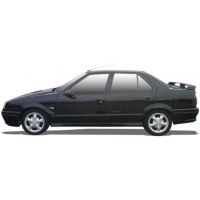
RENAULT 19 opens onto a single sub-category, RENAULT 19 1.8 16V 135cv F7P 704 1989-1996, and it is the page of this section where you weigh up makers rather than hunt for one reference. Connecting rods come from ZRP, WÖSSNER and MANLEY; bearings from ACL Race and KING RACING; head gaskets from COMETIC and ATHENA; adjustable cam pulleys from KENT CAMS and CATCAMS. Add CATCAMS camshafts, mechanical cam followers and uprated valve springs, plus ARP big end bolts. The F7P 704 is shared with the Clio 16S, so the 1.8L 16v - F7P page is worth a look.
You start from the car here, not from the engine code. RENAULT 21 is the way in for owners of the R21 Turbo, the 175hp saloon built between 1987 and 1990 and the only factory-boosted 2.0 of this section. One sub-category carries it, RENAULT 21 Turbo 175cv J7R 752 1987-1990, and it holds one active reference: a set of forged pistons signed WÖSSNER. That is the honest measure of the page, the tightest we have. Preparers who already know the block and browse by engine code will find the same set on the 2.0L 16v - J7R 752 page.
RENAULT Clio 1 opens on the two naturally aspirated F7 engines of the nineties: Clio 1 1.8 16V 135hp F7P 722 1991-1996 and Clio Williams 147hp F7R 700 1994-1998. It is the Clio page where rival makers meet on the same part: forged pistons from WISECO, WÖSSNER and JE PISTONS, forged rods from ZRP, WÖSSNER and MANLEY, tri-metal big end bearings from ACL Race and KING RACING, reinforced head gaskets from ATHENA and COMETIC. Around them sit CATCAMS camshafts, valve springs and cam followers, SUPERTECH valves, KENT CAMS timing belts, ARP rod bolts, POWERFLEX and VIBRA-TECHNICS mounts, F7RR pistons and two forged crankshafts, one destroked to 90mm. Pick your version, then arbitrate between makers.
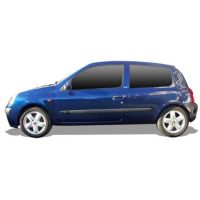
RENAULT Clio 2 is the widest generation of the range, with three entries: RS 172hp F4R 730 2000-2004, RS 182hp F4R 738 2004-2009 and 1.6 16V 107hp K4M 1998-2005. It is the only Clio here to cover a high-volume engine beside the RS versions: the K4M has its own WÖSSNER forged pistons, adjustable cam pulleys, valve springs and CATCAMS camshafts. It is also the generation that made Clio building mainstream, with ROHNCOR Group N engine and gearbox mounts, POWERFLEX bushes and VIBRA-TECHNICS mounts joining the bottom end: F4R 730/732 forged pistons from WÖSSNER and JE PISTONS, forged rods, ACL Race bearings, ARP head and main studs, SUPERTECH and CATCAMS valves, KENT CAMS belts.
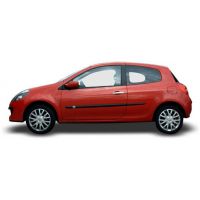
RENAULT Clio 3 lists RS versions only: F4R 830 197hp 2006-2012 and F4R 832 200hp 2008-2014. Same F4R block as the Clio 2, but the following generation, with its own piston size: WÖSSNER forged pistons part number K9288 are cut for the 830 and 832 indexes and do not exist for the 730/738. Around them you will find CATCAMS camshafts, cam followers, valve springs and adjustable pulleys, SUPERTECH and CATCAMS valves, ACL Race big end and main bearings, forged rods and forged crankshafts, ARP head and main studs, and VIBRA-TECHNICS engine mounts. No non-RS version here: this is the last naturally aspirated Clio RS before the turbo era.
RENAULT Clio 4 is the break: the M5M engine, the turbocharged MR16DDT of the Renault-Nissan alliance, replaces the naturally aspirated F4R of the earlier generations. Two entries: RS 200hp M5M since 2013 and RS Trophy 220hp M5M 401 since 2015, which share exactly the same bottom end references. The catalogue is short and targeted: WISECO forged pistons for the 1.6L 16v M5M MR16DDT, cut for boost pressure, and the reinforced COMETIC head gasket for the M5M. Nothing here is shared with the Clio 1, 2 and 3: the block changes and so do the sizes. To start from the engine code rather than the car, use the 1.6L 16v - M5M page.
RENAULT Megane 1 is the only Megane here that covers two different engine families. The 2.0 16V Coupe runs the 147hp F7R 710/714, the same block as the Clio Williams, while the 1.6 16V of 1998-2003 runs the 107hp K4M 708. Both entries are on this page: 2.0 16V 147hp F7R 710/714 1996-2003 and 1.6 16V 107hp K4M 1998-2003. This is also where you pick your piston maker, Wössner, JE Pistons or Wiseco, and your head gasket, ATHENA or COMETIC. Add KENT CAMS timing belts, CATCAMS camshafts, cam followers and valve springs, ARP big end bolts, ACL and KING RACING tri-metal bearings, ZRP forged rods and crankshafts. To start from the engine code, see 2.0L 16v - F7R.
RENAULT Megane 2 has a single entry, RS 225hp F4R 774 2004-2009, and that is exactly its strength. It is the first turbocharged Megane: where the previous generation stayed naturally aspirated, the F4R 774 gains boost, and the hardware follows. Gathered here: CATCAMS sport camshafts and reinforced valve springs, SUPERTECH exhaust valves, ARP cylinder head studs, main cap studs and big end bolts, ACL and KING RACING tri-metal main and big end bearings, the reinforced ATHENA or COMETIC head gasket, VIBRA-TECHNICS engine and gearbox mounts, forged rods and crankshafts. To enter by the engine code, see 2.0L 16v - F4RT 774.
RENAULT Megane 3 is the most segmented page of this Renault range: four versions of one and the same F4R 874 turbo block. GT 220hp, RS 250hp, RS Trophy 265hp and RS Trophy R 273hp, from 2008 to 2016. Where the previous generation stopped at 225hp, this block is pushed four steps further and the hardware follows: WISECO and WOSSNER forged pistons at 82.70mm, from 8.6:1 to 9.3:1 depending on target boost, a TURBOSMART TS-0646-1072 wastegate for the RS 250hp, SUPERTECH reinforced valves, NGK spark plugs, nine ROHNCOR mounts, VIBRA-TECHNICS mounts, CATCAMS camshafts, ARP studs, ACL and KING RACING bearings, ZRP forged rods and crankshafts.
RENAULT Megane 4 leaves behind the F7R and F4R line of the three earlier generations. It runs the M5M 450, the 1.6 direct injection turbo born of the Renault-Nissan alliance and listed at Nissan as the MR16DDT: either code leads to the same block. One entry, 1.6 TCe 165/205hp M5M 450 2015-, and two bottom end references chosen one by one rather than inherited: forged pistons by WISECO and the reinforced cylinder head gasket by COMETIC. Neither brand appears directly on the Megane 1, 2 and 3, and not a single part is shared with them. For the engine code route, see 1.6L 16v - M5M.
RENAULT Twingo 2 is the smallest car in this Renault range, and its engine is found nowhere else in this form: the K4M 854 of the Twingo 2 RS, 133hp, to be told apart from the 107hp K4M 708 of the Megane 1 and the Clio. One entry, RS 133hp K4M 854 2008-2014, and exactly two references: CATCAMS sport camshafts and reinforced VIBRA-TECHNICS engine and gearbox mounts. This page is therefore about the top end and about holding the drivetrain steady, with no bottom end parts at all: no pistons, no rods, no bearings. For the bottom end, see 1.6L 16v - K4M.