Product successfully added to your shopping cart
Quantity
Total
There are 0 items in your cart. There is 1 item in your cart.
Total products
Total shipping To be determined
Total

2.0L 8v - L20/L20A/L20B/L20E/L20ET
Manufacturers
2.0L 8v - L20/L20A/L20B/L20E/L20ET
 View larger
Warning: Last items in stock!
New product
ARP 8740 crankshaft main studs for the Nissan L20B four-cylinder engine.
ARP lists this kit as "L20 Series 4-cylinder": it matches the L20B, Nissan's 2.0-litre in-line four, fitted from 1973 to 1987, according to the NGK catalogue, to the 200SX, 510, 610, 620, 710, 720, 810, Bluebird and Skyline R30. A single main stud part number, 202-5401, covers it.
From the factory, the main caps of these engines are held by the manufacturer's original fasteners; the 10 mm studs in this kit take their place.
Each main bearing takes a share of the loads the connecting rods pass on at every combustion. Pulled downwards, the main cap tends to slide on its parting line: over time the mating faces brinell and the bearing bore loses its shape.
Kit 202-5401 contains ARP 8740 steel studs, 10 mm. Once the block threads are cleaned, the studs are screwed in by hand only; the caps then go on, with the washers and nuts lubricated with ARP Ultra-Torque rather than engine oil. Tightening is done in three equal passes, in the manufacturer's recommended order, up to 81 Nm (60 ft-lb): 27, 54 then 81 Nm. 8740 is a chrome-moly steel heat treated by ARP to 200,000 psi tensile strength, with threads rolled after heat treatment. To put this figure in context, standard engine fasteners mostly belong to property classes 10.9 and 12.9, i.e. 150,800 to 176,900 psi minimum tensile strength. On this four-cylinder engine, the 8740 studs in 10 mm are rated for 1,000 hp at most (calculated estimate).
| Part number | Brand | Grade / material | Nut | Thread |
| ARP-202-5401 | ARP | 8740 steel | Nut | 10 mm |
| Reference | Pass 1 | Pass 2 | Pass 3 |
| ARP-202-5401 | 27 Nm | 54 Nm | 81 Nm |
The studs are screwed into the block by hand, with no torque. If the assembly is to remain permanent, the ARP instruction sheet accepts a Loctite thread locker, with tightening carried through before the product cures.
Follow the cap tightening sequence recommended by the manufacturer when bringing the nuts up to torque; the kit's instruction sheet details each step.
Moving to reinforced fasteners changes the clamping force on the caps. After installation, the size and roundness of the bores are checked, then align honed if needed, always with the final fasteners and lubricant.
Values taken from the ARP 202-5401 instruction sheet in force at the date of publication; the official instruction sheet prevails should any difference appear. Read the ARP 202-5401 instruction sheet
Tightening is done with ARP assembly grease: the torque figures in the table were established with it, not with engine oil.
| Buy the ARP assembly grease → |
 | Founded in the early 1970s by Gary Holzapfel, who came from the aerospace industry, ARP (Automotive Racing Products) set out to prevent fastener-related engine failures in motorsport. Its thousands of part numbers are designed and manufactured in California, in materials chosen for each use. |
| Criterion | Original main bolts | Reinforced ARP studs |
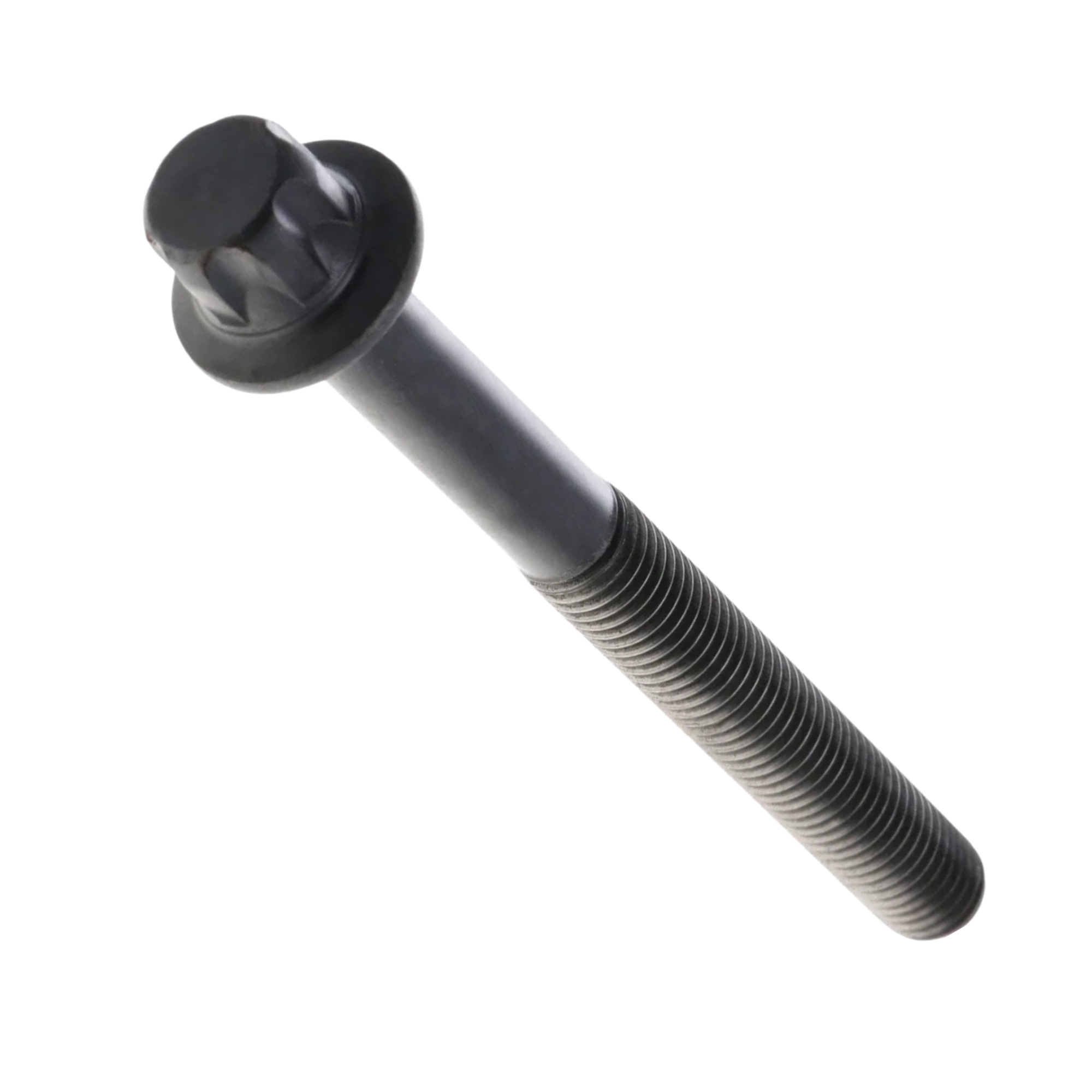 | 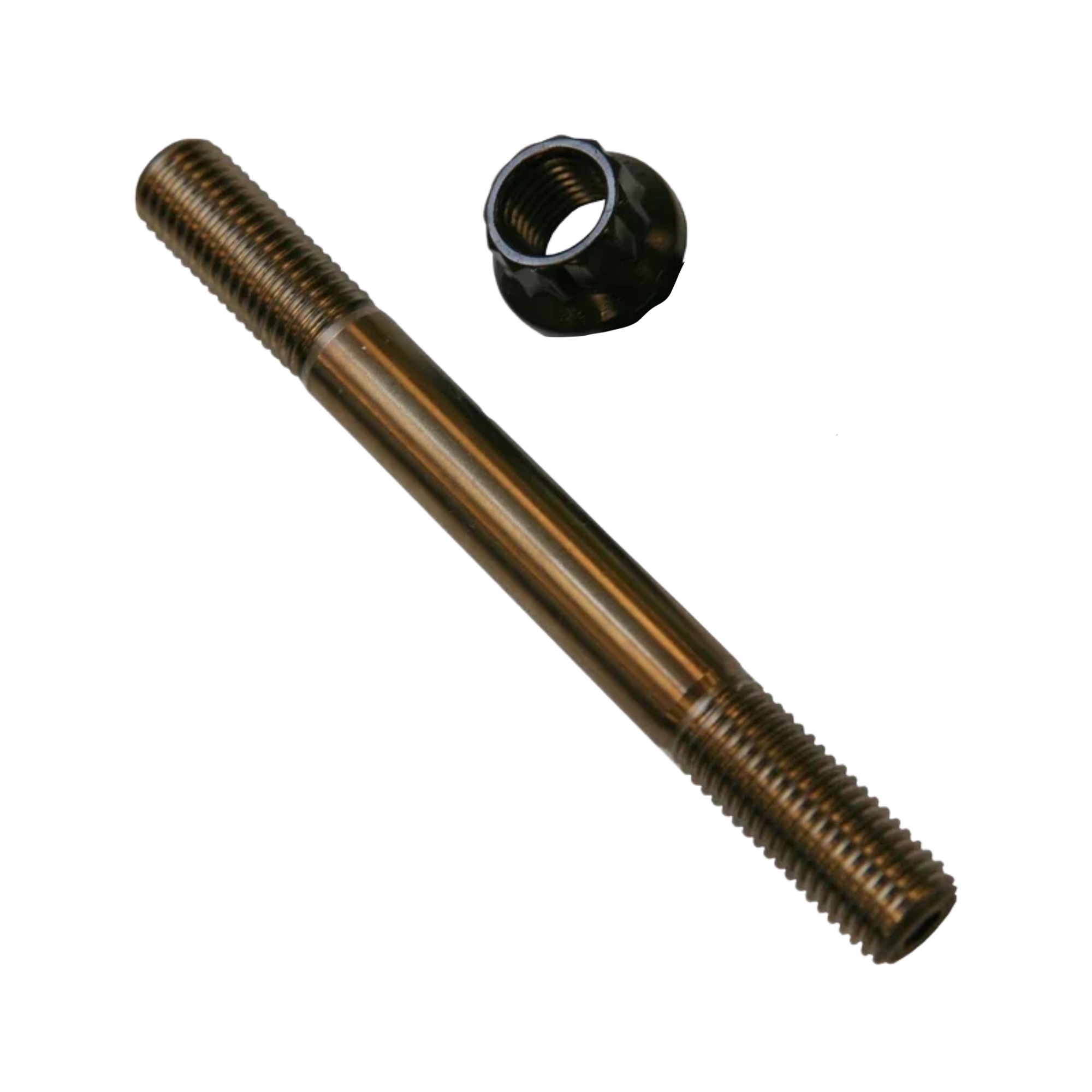 | |
| Where the load goes | The bolt works in the block thread at every tightening | The stud stays fixed, the nut takes the load |
| Block threads | Marked by repeated screwing in and out | Kept intact while the stud stays in the block |
| Fitting the caps | Cap to be lined up by hand over the bolts | Cap guided by the studs already in place |
| Model | Engine code | Power | Years |
| Nissan 200SX Coupe 2.0 | L20B | 94 hp | 1976-1979 |
| Nissan 510 2.0 (saloon, hatchback, estate) | L20B | 94 hp | 1977-1981 |
| Nissan 610 2.0 (coupe, saloon, estate) | L20B | 112 hp | 1973-1976 |
| Nissan 620 Pick-up 2.0 | L20B | 98 hp | 1974-1979 |
| Nissan 710 2.0 (Hardtop, estate) | L20B | 98 hp | 1974-1977 |
| Nissan Bluebird (B610) 2.0 | L20B | 98 hp | 1974-1977 |
| Nissan Bluebird (910) 2.0 (saloon, Traveller W910) | L20B | 98 hp | 1981-1985 |
| Nissan 720 Extended Cab Pick-up 2.0 | L20B | 98 hp | 1979-1986 |
| Nissan 810 2.0 (saloon, Hardtop, estate) | L20B | 95 hp | 1977-1981 |
| Nissan Skyline (R30) 2.0 | L20B | 94 hp | 1982-1987 |
An L20 pushed on revs or boost loads its main caps harder. Securing them with ARP studs costs little compared with a crankshaft or a block to replace.