Product successfully added to your shopping cart
Quantity
Total
There are 0 items in your cart. There is 1 item in your cart.
Total products
Total shipping To be determined
Total

2.5L 24v - M50B25 (without VANOS)
Manufacturers
2.5L 24v - M50B25 (without VANOS)
Warning: Last items in stock!
New product
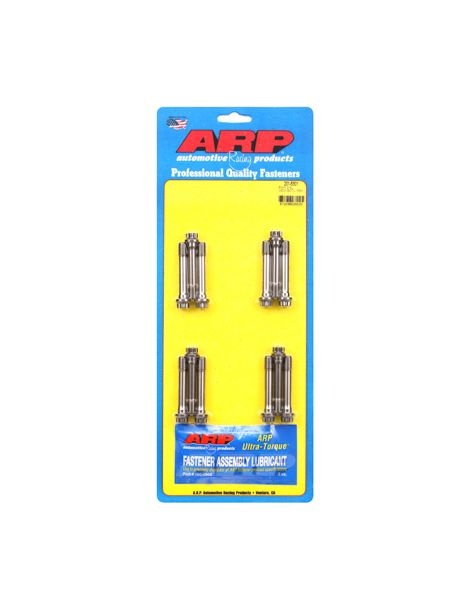
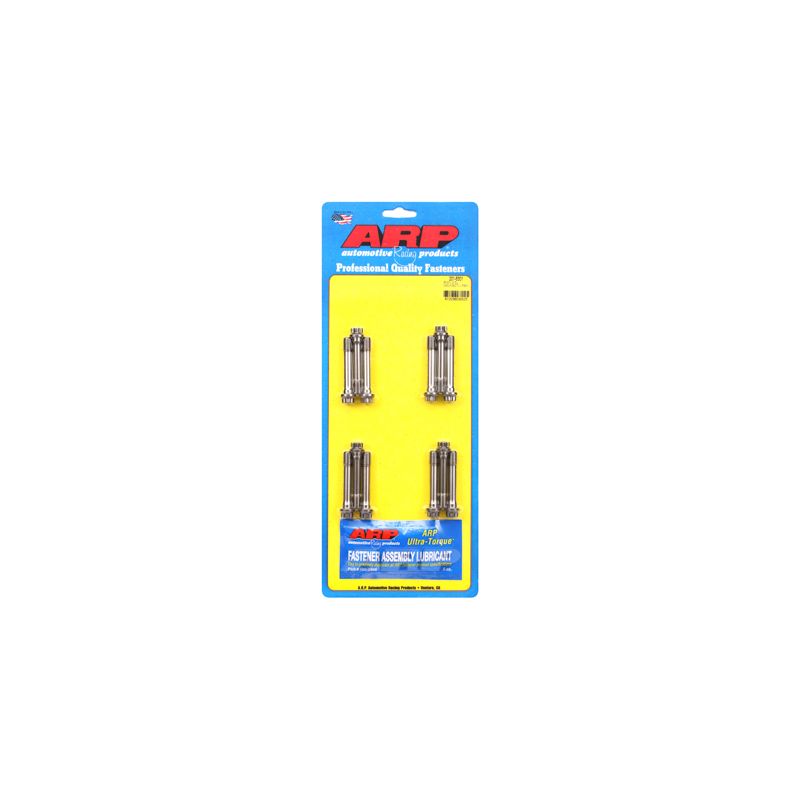
Kit of 12 ARP2000 rod bolts replacing the original bolts on the OEM rods of BMW inline-six M50 / M50TU and M20B25 engines.
The BMW M50 (2.0 and 2.5 litres) and the earlier M20B25 (2.5 litres) are the petrol inline-sixes fitted to the 3 Series (E36), 5 Series (E34), E30 and the Z1 roadster.
The original rod bolt of the M50 and M20B25 is a steel bolt with an M9 thread and a 53 mm under-head length (reference 11 24 1 713 342), tightened by torque then angle: this method takes it to its yield point and makes it single-use, BMW requiring replacement whenever the rods are dismantled.
The connecting rod bolt is one of the most heavily loaded parts of the bottom end: on every revolution it holds the cap against the inertia loads of the whole rod and piston assembly. As originally fitted it is sized for series power only and allows a single installation.
This kit replaces the original bolts with ARP2000 bolts, tightened by torque or preferably by stretch, the method ARP recommends for this part. ARP2000 is an alloy steel developed by ARP, heat-treated to 220,000 psi tensile strength, with threads rolled after heat treatment. Standard engine fasteners commonly fall into property classes 10.9 and 12.9, that is 150,800 to 176,900 psi minimum tensile strength: ARP2000 therefore sits 24 to 46% above that. These bolts hold up to 11,750 rpm (calculated estimate).
| Brand | Grade / material | Head | Thread | Under-head length |
|---|---|---|---|---|
| ARP | ARP2000 | 12-point | M9 | 53 mm |
| Reference | Tightening torque | Stretch |
|---|---|---|
| ARP-201-6301 | 48.8 Nm | 0.203 - 0.216 mm |
In addition to torque tightening, ARP recommends checking by stretch measurement, which ensures an accurate preload. These torque and stretch values apply to tightening carried out with the ARP lubricant.
Figures taken from the ARP 201-6301 instruction sheet, in the revision in force at the date of publication. In the event of any discrepancy, the official instruction sheet prevails. Read the ARP 201-6301 instruction sheet
The ARP instruction sheet for this kit provides for no thread locker: assembly is done with ARP Ultra-Torque grease, applied to the threads and under the bolt head.
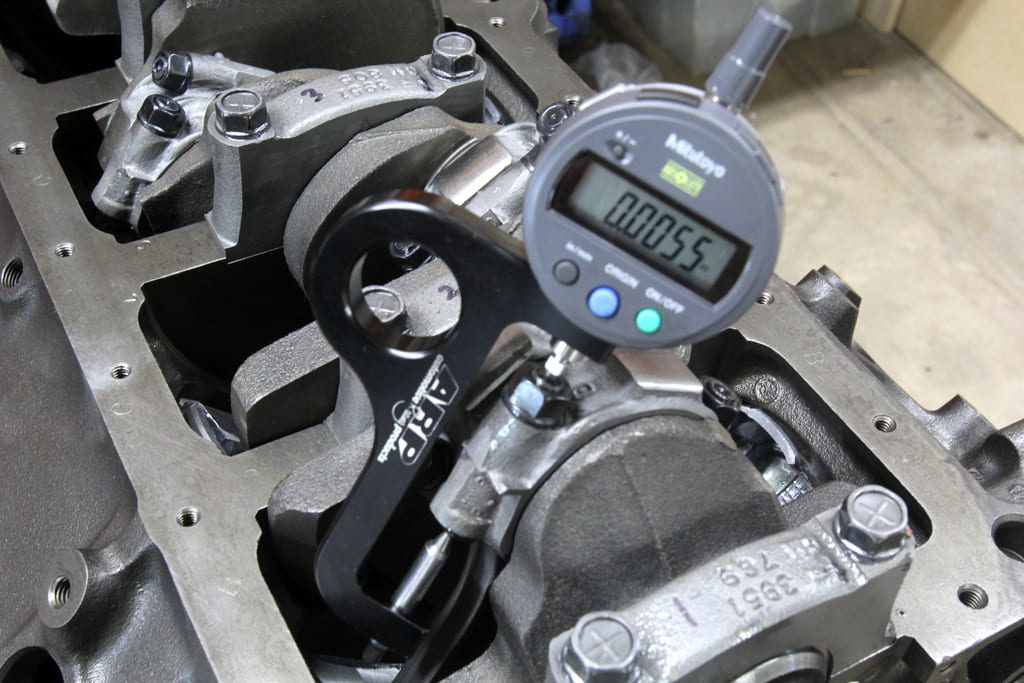
In addition to torque tightening, measuring stretch is the most reliable check for optimal preload. It is done with the bolt fitted: a gauge (dial indicator) is placed on both ends of the bolt and the actual stretch is read, which must match the recommended value (see the torque and stretch table above). This method eliminates the friction scatter of torque tightening and secures the assembly on heavily loaded engines.
The torque and stretch figures given here only apply with ARP assembly grease, applied to the threads and under the bolt head.
Coming from the aerospace industry, Gary Holzapfel founded ARP (Automotive Racing Products) in the early 1970s to tackle a scourge of motorsport: engine failure caused by insufficiently strong fasteners. Today ARP designs and manufactures in the USA (California) thousands of references (head bolts, main bolts, rod bolts) in several material grades depending on the application, recognised for their manufacturing consistency and fatigue resistance. Each kit ships with its assembly lubricant and instructions detailing the steps, torque and tightening procedure.
| Brand | Model (chassis) | Engine code | Power | Years |
|---|---|---|---|---|
| BMW | 325i (E30) | M20B25 | 170 hp | 1983-1993 |
| BMW | 325iX (E30) | M20B25 | 170 hp | 1986-1991 |
| BMW | 525i (E34) | M20B25 | 170 hp | 1988-1990 |
| BMW | Z1 Roadster | M20B25 | 170 hp | 1988-1991 |
| BMW | 320i (E36) | M50B20 / M50B20TU | 150 hp | 1991-1995 |
| BMW | 520i 24V (E34) | M50B20 / M50B20TU | 150 hp | 1990-1996 |
| BMW | 325i (E36) | M50B25 / M50B25TU | 192 hp | 1990-1995 |
| BMW | 525i 24V (E34) | M50B25 / M50B25TU | 192 hp | 1990-1996 |
| BMW | 525iX 24V (E34) | M50B25 / M50B25TU | 192 hp | 1991-1996 |
OEM reference (rod bolt): 11 24 1 713 342 (M9 x 53 mm)
The original rod bolt is tightened to a torque value and then through an angle, which takes it to its yield point and stretches it permanently. Reinforced and therefore stronger, ARP2000 bolts withstand much higher engine speeds and inertia loads: the risk of a fastener-related failure goes down, and with it the risk of an engine repair costing far more than the kit.
A forged connecting rod is hot-formed from a steel billet (typically 4340) under very high pressure, which makes it far denser and more homogeneous than a production rod. Compared with an original rod (often sintered metal, optimised for series cost), a forged 4340 rod shows about +19% yield strength, +8% tensile strength and, above all, +19% to +37% fatigue strength, meaning a fatigue life several times longer under cyclic load. It is the foundation of a reliable high-power build. For your engine:
| Forged rods M20B25 / M50B25 (no VANOS) → |
| Forged rods M50B25TU (with VANOS) → |