Product successfully added to your shopping cart
Quantity
Total
There are 0 items in your cart. There is 1 item in your cart.
Total products
Total shipping To be determined
Total

2.0L 16v - XU10J4RS
Manufacturers
2.0L 16v - XU10J4RS
Warning: Last items in stock!
New product
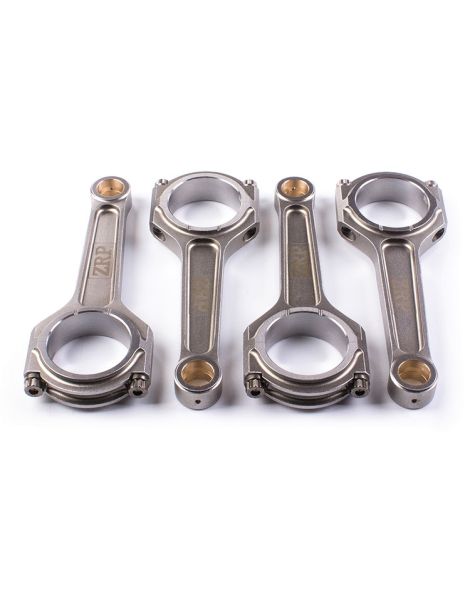
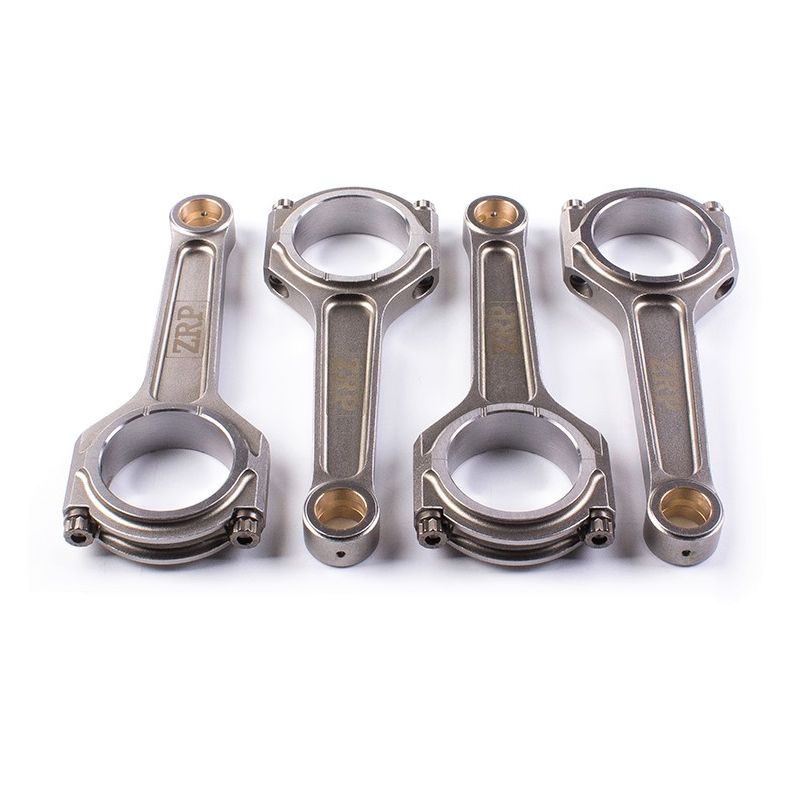
Set of 4 forged 4340 steel connecting rods for Citroën / Peugeot 2.0L 16V XU10J4RS (20 mm pin).
The XU10J4RS is the high-performance version of the 2.0-litre 16-valve engine from the PSA group's XU family. Naturally aspirated, it displaces 1,998 cc with bore and stroke both set at 86 mm, a square layout that allows high revs without an excessively long stroke. Its 16-valve cylinder head gives it a lively character clearly biased towards the top end, with output reaching 167 hp in its most highly tuned form. It is the culmination of a line of XU engines that built the sporting reputation of the marque through the 1990s.
It is found in the Peugeot 306 S16, Citroën ZX 16V and Xsara VTS built between 1996 and 2005, compact cars that became benchmarks in rallying and on the track. That very usage exposes the limit of the engine: designed for road use, the standard rotating assembly copes poorly with long sessions at high rpm, with wilder camshafts, a freer intake or forced induction. Forged 4340 connecting rods provide the missing reserve of strength, protect the crankshaft and make fitting forged pistons a fully consistent choice.
Forged and then machined from high-strength 4340 steel, these rods answer the needs of built XU10J4RS engines: making the bottom end reliable as soon as power, rpm or cylinder pressure leave the factory figures. Replacement becomes unavoidable when fitting forged pistons, when raising the rev range, when increasing boost pressure or when adding displacement, situations in which the standard rod, with its 158 mm centre-to-centre length and its 20 mm pin, has no reserve left.
Designed for built engines, highly tuned naturally aspirated as well as turbocharged or supercharged, they cover every discipline: rally, drift, drag racing, circuit and track use, hillclimb, time attack. They support Stage 2, Stage 3 and Stage 4+ builds up to a fully rebuilt competition engine, at 610 g per rod and in I profile.
| Reference | Brand | Profile | Bolts | Pin diameter OEM 20 mm | Small-end width | Big-end diameter OEM n.p. | Big-end width | Center-to-center OEM 158 mm | Weight per rod |
|---|---|---|---|---|---|---|---|---|---|
| R-CIT-002-I | ZRP | I | ARP 2000-3/8"-38mm | 20 mm | 53.7 mm | 24.2 mm | 158 mm | 610 g | |
| R-CIT-002-I-L19 | ZRP | I | ARP L19-3/8"-38mm | 20 mm | 53.7 mm | 24.2 mm | 158 mm | 610 g |
| Rod | Bolts | Torque | Recommended stretch |
|---|---|---|---|
| ZRP (R-CIT-002-I) | ARP 2000 | 61 N·m | 0.140 – 0.152 mm |
| ZRP (R-CIT-002-I-L19) | ARP L19 | 67.8 N·m | 0.152 – 0.165 mm |
Over-tightening does not only break the bolt: it can also damage the thread in the rod, and a rod with a ruined thread is scrap. Before that stage, exceeding the specified range yields the bolt, which keeps a permanent elongation and no longer applies the expected preload, while the overload distorts the bearing bore and makes the big end oval: the shell is pinched, the oil film thins out and bearing temperature climbs. The opposite fault, under-tightening, simply lets the cap move: lift at every load reversal, a degrading parting face, a hammered shell, opening clearance, falling oil pressure. On this XU10J4RS, the figures to apply to the four ZRP rods are those in the table below, published by the fastener manufacturer, with values specific to ARP 2000 and to ARP L19 in 3/8". Stretch checking with a dial gauge remains the reference method; assemble with ARP lubricant, the kit instructions taking priority.
| 4340 steel is a nickel-chromium-molybdenum alloy steel used in both aerospace and motorsport. Forged then heat-treated (quenched and tempered), it combines high tensile strength, excellent fatigue life and real ductility. Compared with a factory rod (often made of sintered metal, optimised for mass-production cost), a 4340 forged rod gains roughly +19% yield strength, +8% tensile strength and above all +19 to +37% fatigue strength, i.e. a service life under cyclic loading several times longer. This is exactly what makes forged 4340 the reference material as soon as engine speed and load rise. |
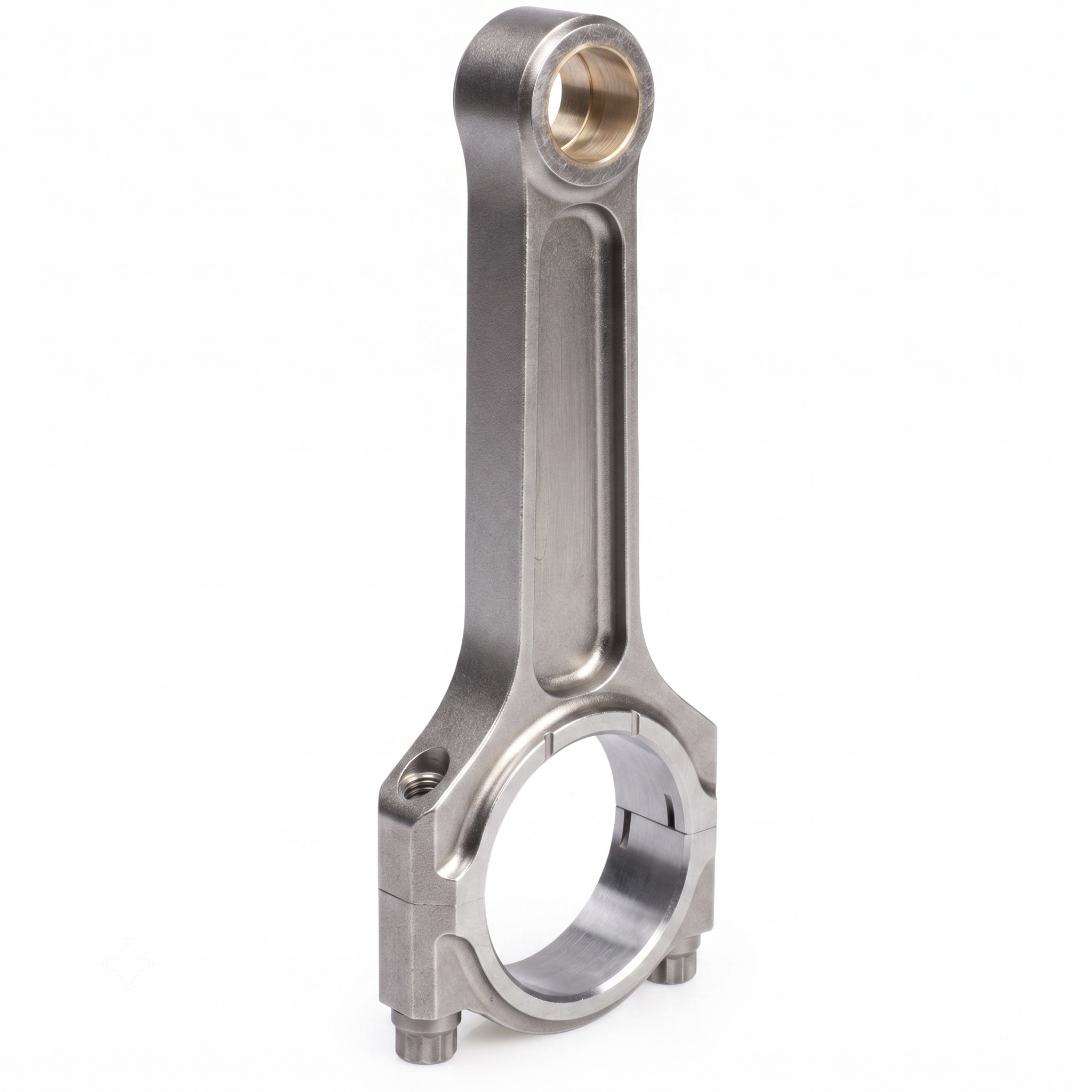 | I-Beam I profile (reinforced I). The I-beam rod, with its thinner central section, is lighter: less inertia and freer revving, an asset on a lively, high-revving engine like the XU10J4RS. Forged from 4340 steel, its reinforced structure handles higher loads without a weight penalty. |
On a 2.0 16V that revs, the rod bolt is the part that decides everything: it limits the maximum rpm and the acceptable cylinder pressure. The grade is therefore chosen according to the discipline and the load pattern, from torque taken up at low rpm in rally to rpm held for long minutes on circuit, by way of the very short peaks of drag racing, then according to the target power per cylinder. The two grades offered here in 3/8"-38 mm demand the same care on assembly: torque and stretch followed to the letter.
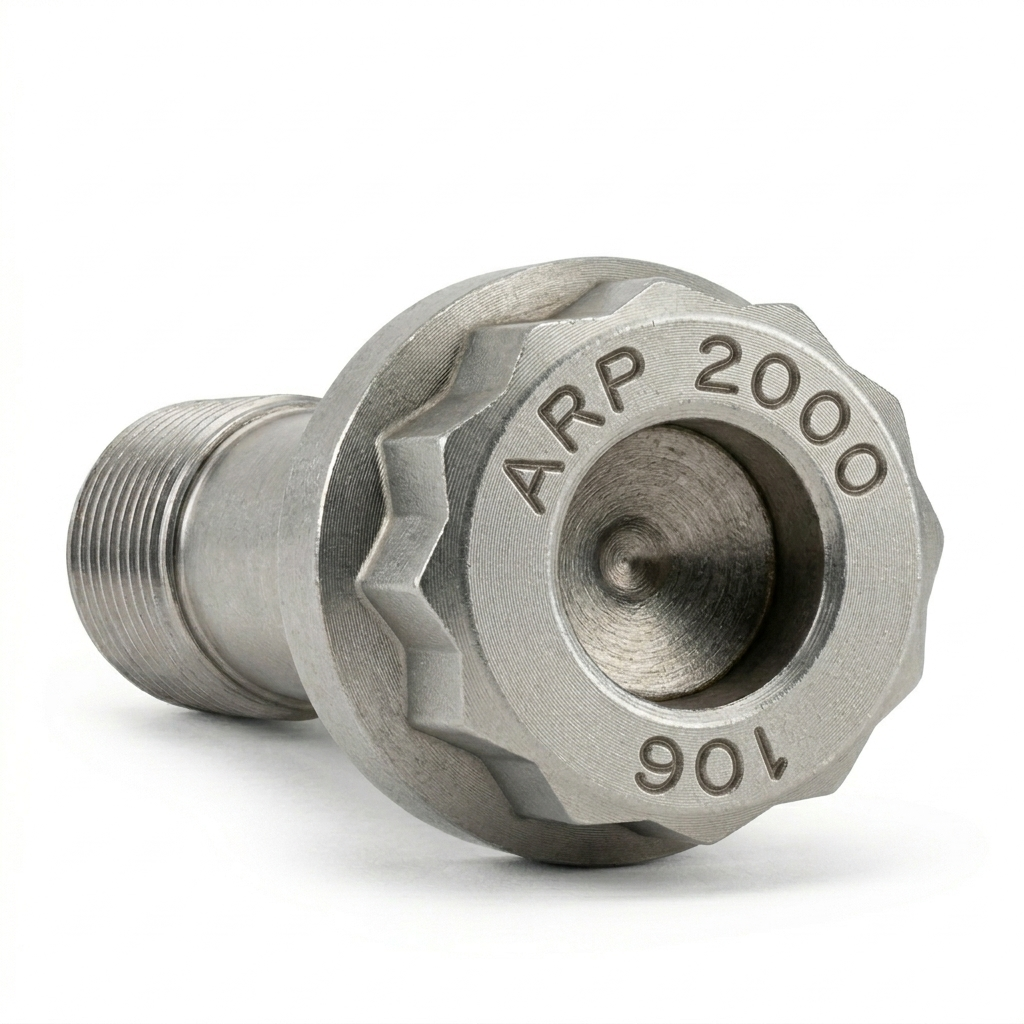 | ARP 2000, with its ~220,000 psi (~1,517 MPa) of tensile strength, matches the real needs of the vast majority of competition XU10J4RS engines: up to 200 hp per cylinder in 3/8" and 8,500 rpm. It is the grade met in circuit racing and track days, in drift, rally, drag racing and hillclimb, and it demands no particular storage constraint, which makes life simpler in the workshop as well as at the track. |
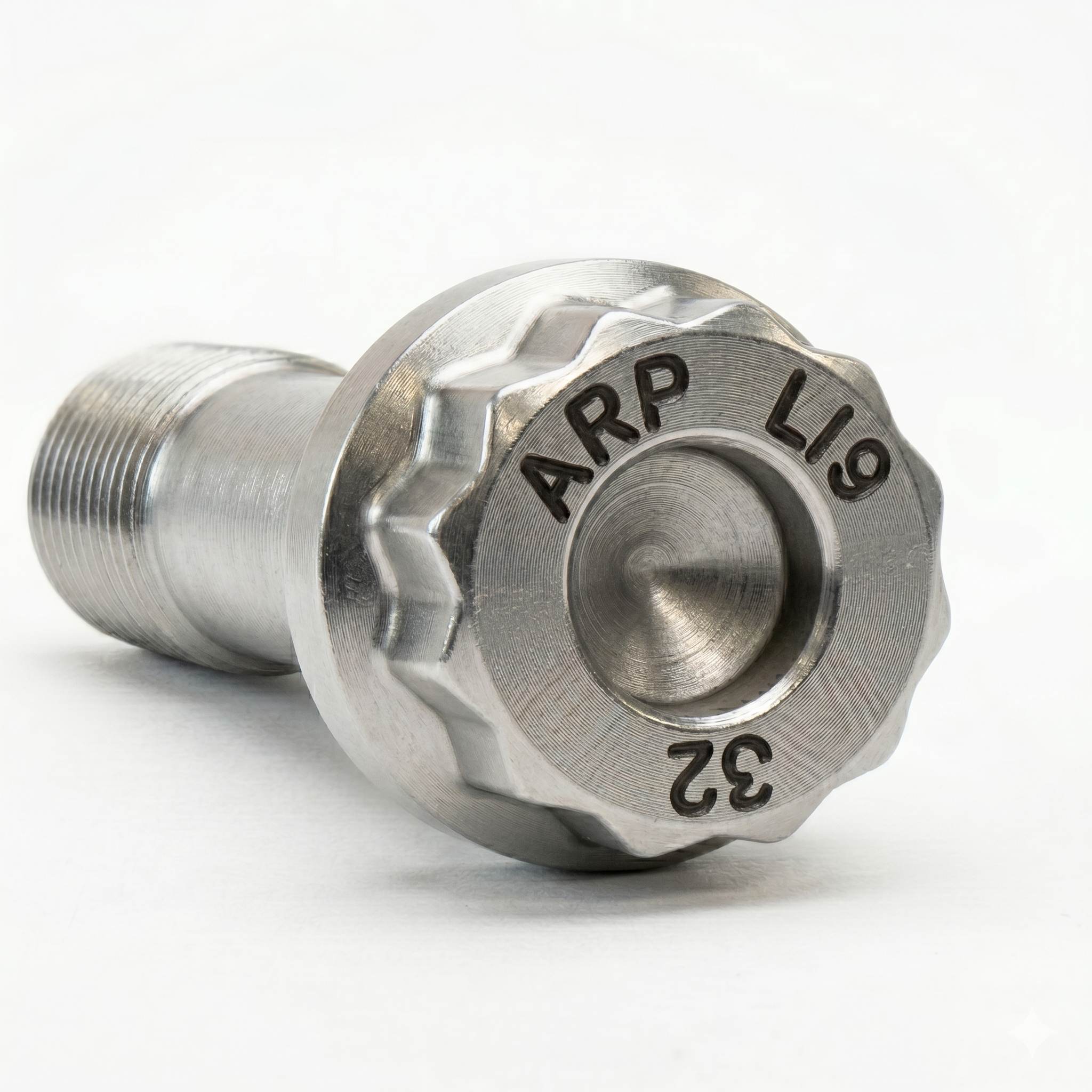 | L19 rises to ~260,000 psi (~1,793 MPa) and covers up to 250 hp per cylinder in 3/8" as well as 10,000 rpm. It is aimed at XU10J4RS engines working under very high boost pressure, with high cylinder pressure and sustained high rpm, and at the big power levels in drag racing, drift, rally and circuit. Its trade-off must be known before buying: the alloy is sensitive to corrosion and to hydrogen embrittlement, it is stored and fitted oiled, away from moisture, never bare in a toolbox. |
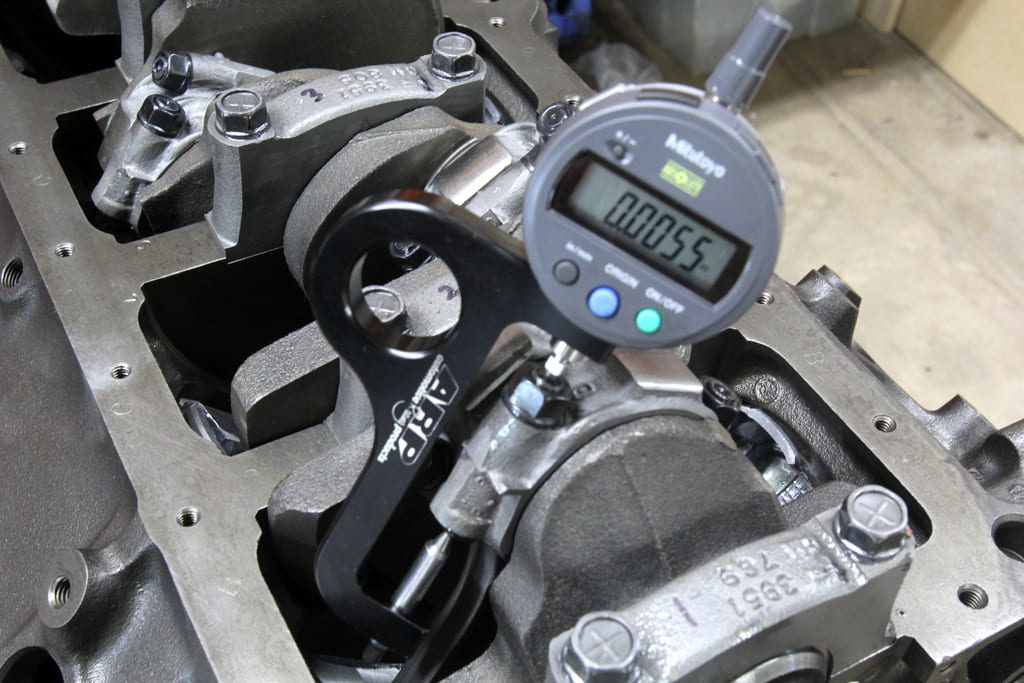
| Beyond torque tightening, measuring rod-bolt stretch remains the most reliable check for achieving correct preload. The measurement is taken with the bolt fitted: place the dial gauge (stretch gauge) on both ends of the bolt and read its actual stretch, which must match the recommended value (see the torque & stretch table above). This method removes the friction variations inherent to torque tightening and secures the assembly on heavily stressed engines. |
 | ZRP is a Greek brand of high-performance forged connecting rods, designed by Alex Drakos in Athens. Each rod is forged from 4340 steel, precision-machined and balanced to ±1 g to stay reliable at high rpm. On this XU10J4RS application they are offered in an I (reinforced I-beam) profile with ARP 2000 or L19 hardware, designed and inspected in Greece, and proven in rallying, on circuit and in drift. |
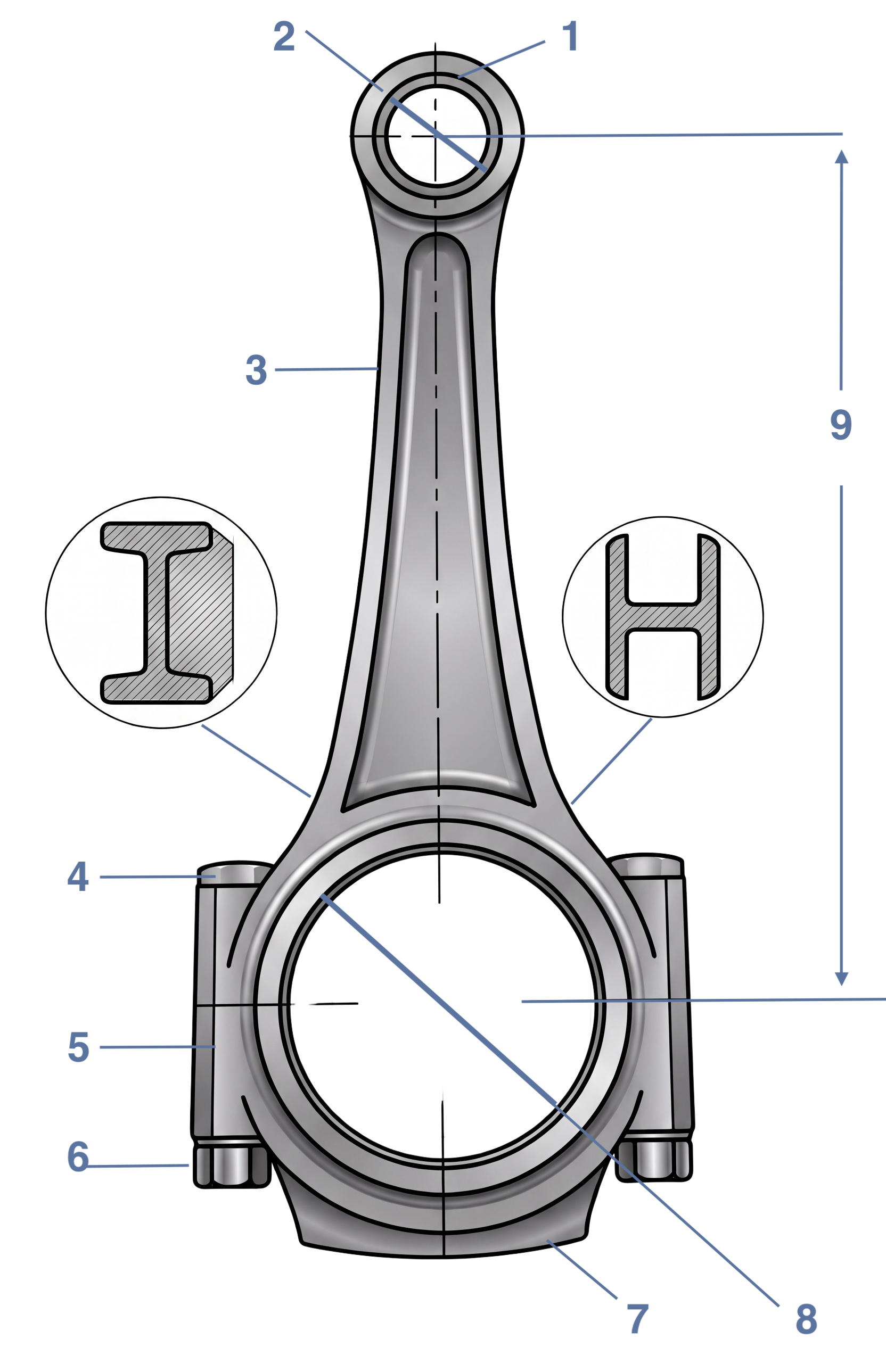 | 1) Small end 2) Small-end diameter 3) Rod beam 4) Rod bolt 5) Big end 6) Rod nut / bolt 7) Rod cap 8) Big-end diameter 9) Center-to-center |
These forged rods fit every vehicle equipped with the 2.0 16V XU10J4RS, with its 20 mm piston pin and its 158 mm centre-to-centre length. The table below lists the Citroën and Peugeot models concerned.
| Brand | Model (chassis) | Engine code | Power | Years |
|---|---|---|---|---|
| Citroën | Xsara VTS | XU10J4RS | 167 hp | 1998–2005 |
| Citroën | ZX 16V | XU10J4RS | 163 hp | 1996–1997 |
| Peugeot | 306 S16 | XU10J4RS | 163 hp | 1996–2001 |
OEM reference: 0603 60 (set of 4 rods).
On a XU10J4RS, a broken standard rod nearly always takes the matching piston with it and calls for a full check of the block. Restoring the factory configuration therefore means buying standard rods and pistons again, a high bill for a simple return to the initial state, with the same fragility as before.
For an equivalent, often lower budget, forged 4340 steel rods combined with forged pistons bring far greater reliability and safety margin, and above all real room to increase power later in the build. This is the route European engine builders have chosen for more than 15 years on the 2.0 16V engines of the PSA group.
For the same budget the conclusion is unchanged: more reliability, more potential, more service life.