- On order
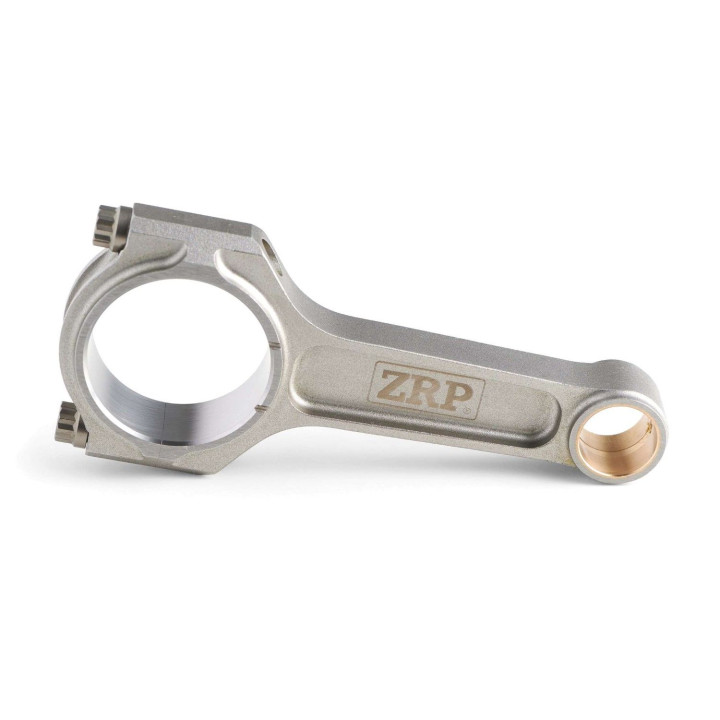
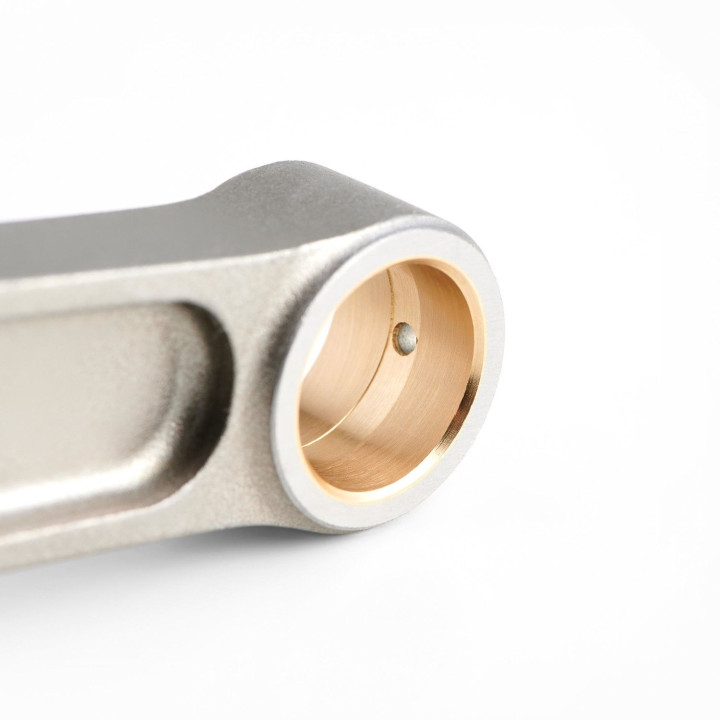
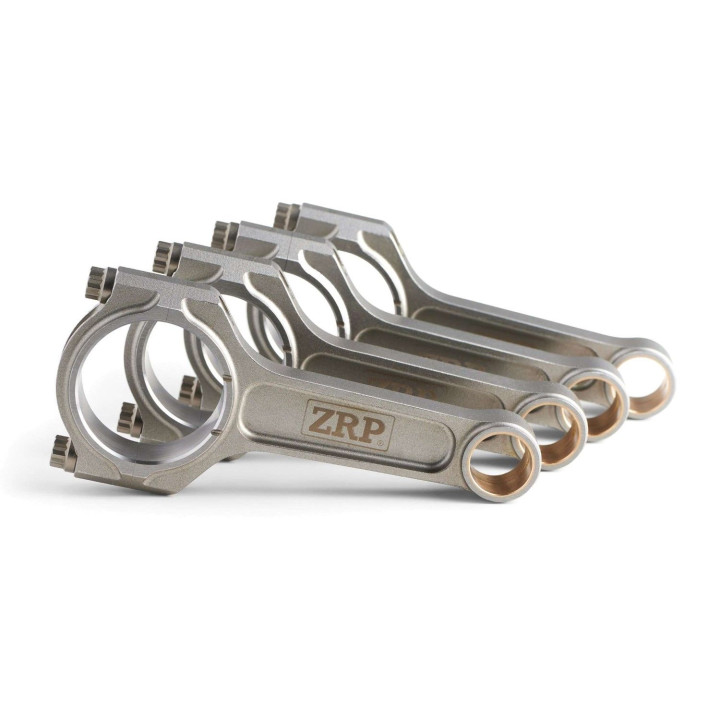
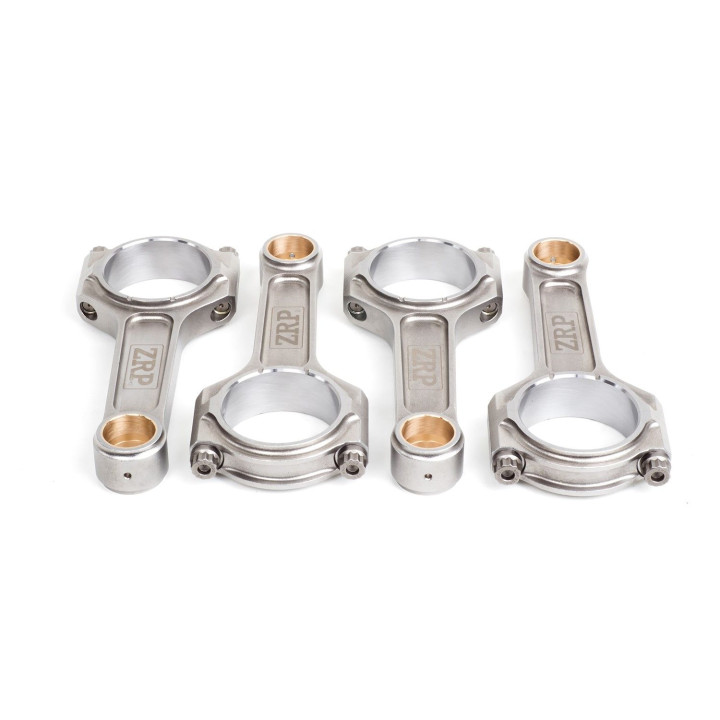


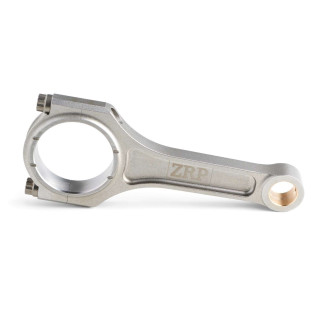
Forged connecting rods Ford RS Cosworth - 2.0L 16V Turbo - Cosworth YB long rods 133.5 mm for forged pistons
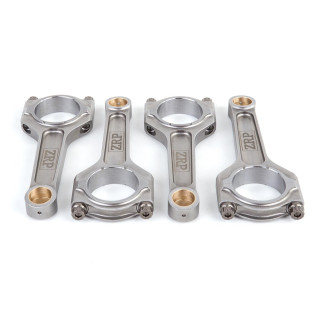
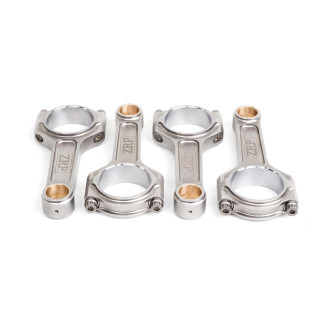
Set of 4 forged 4340 steel connecting rods for Ford 2.0L 16V Turbo Cosworth YB.
- Brands: ZRP
- Compatibility: Ford Sierra
- Engine codes: Cosworth YB
- Bolts included: ARP 2000 or L19
The Ford Cosworth YB engine
Signed by Cosworth, the YB is a turbocharged inline four of 1,993 cc with sixteen valves, born at the end of the 1980s. Its recipe rests on Ford’s Pinto cast-iron block, a sixteen-valve Cosworth head, a 90.8 mm bore and a 77 mm stroke. It was fitted to the Sierra RS Cosworth, the Sierra Sapphire RS Cosworth and the Escort RS Cosworth, and founded the brand’s Group A and rally homologations. From one code to another (YBB, YBG, YBT, YBP), original power sits between about 204 and 220 hp, before any tuning.
The YB was drawn for forced induction: a solid cast-iron block and a forged crankshaft. The weak point arrives with boost pressure, because beyond factory figures the rod sees alternating loads and a cylinder pressure unrelated to those of the standard engine. This listing is dedicated to the long-rod variant, with a 133.5 mm centre-to-centre length instead of the original 128.5 mm, a 24 mm pin and a mass of 545 g per rod: a configuration built with pistons suited to that new length.
Forged connecting rods
Forged connecting rods are among the key parts of any engine build. Forged from steel and then precision-machined, they offer mechanical strength and fatigue resistance far above the stock sintered-metal rods, which quickly reach their limits as power rises.
Each rod is balanced and supplied with its ARP high-performance hardware. Offered in I-Beam profile with ARP 2000 or ARP L19 hardware, they secure high-boost setups and sustained high rpm, where the stock rod eventually bends or breaks.
On the Cosworth YB they become essential the moment the engine switches to forged pistons, climbs in rpm, runs higher boost or gains displacement, every case where the standard rod reaches its limits. Built to absorb the heavy loads of tuned engines, whether turbocharged or supercharged, these rods suit every discipline (rally, drift, drag, circuit and track days, hillclimb, time attack) and follow Stage 2, Stage 3 and Stage 4+ builds, all the way to the competition engine.
Technical specifications of the Cosworth YB forged connecting rods
| Reference | Brand | Profile | Bolts | Pin diameter OEM 24 mm | Small-end width | Big-end diameter OEM n.p. | Big-end width | Center-to-center OEM 128.5 mm | Weight per rod |
|---|---|---|---|---|---|---|---|---|---|
| R-FOR-003-I | ZRP | I | ARP 2000-3/8"-38mm | 24 mm | 55 mm | 25.85 mm | 133.5 mm | 545 g | |
| R-FOR-003-I-L19 | ZRP | I | ARP L19-3/8"-38mm | 24 mm | 55 mm | 25.85 mm | 133.5 mm | 545 g |
ZRP: Centre-to-centre length increased by 5.00 mm over stock.
Torque and bolt stretch
| Rod | Bolts | Torque | Recommended stretch |
|---|---|---|---|
| ZRP (R-FOR-003-I) | ARP 2000 | 61 N·m | 0.140 – 0.152 mm |
| ZRP (R-FOR-003-I-L19) | ARP L19 | 67.8 N·m | 0.152 – 0.165 mm |
Correct tightening starts with a clean thread, free of any residue, then coated with the recommended lubricant: that is the only way to reach the expected tension without falling into either extreme. If the bolt ends up tightened below the range, the long rod and its cap no longer form a rigid assembly: the joint opens at every load reversal, the shell is hammered, its edges deform, clearance grows and the oil no longer carries the load. If it is tightened above the range, stress exceeds the elastic limit of the steel: the bolt stays stretched, preload falls, the bearing bore closes unevenly and the big end goes oval, pinching the shell and raising local temperature. The table below gives, for the ARP 2000 version as well as the ARP L19 version, the fastener manufacturer's values: they are neither negotiable nor interchangeable. Stretch checked with a dial gauge remains the reference method, and the instructions supplied with the kit are authoritative.
Technical guide
4340 forged steel: what is it?
| 4340 steel is a nickel-chromium-molybdenum alloy steel used in aerospace and motorsport alike. Forged then heat-treated (quench and temper), it offers excellent tensile strength, high fatigue resistance and real ductility. Compared with an original rod (often sintered/powder metal, optimised for series-production cost), a 4340 forged rod shows roughly +19% higher yield strength, +8% higher tensile strength and above all +19% to +37% higher fatigue strength, i.e. a fatigue life under cyclic loading several times longer. This is what makes forged 4340 the reference material as soon as boost and rpm climb. |
Connecting rod profiles
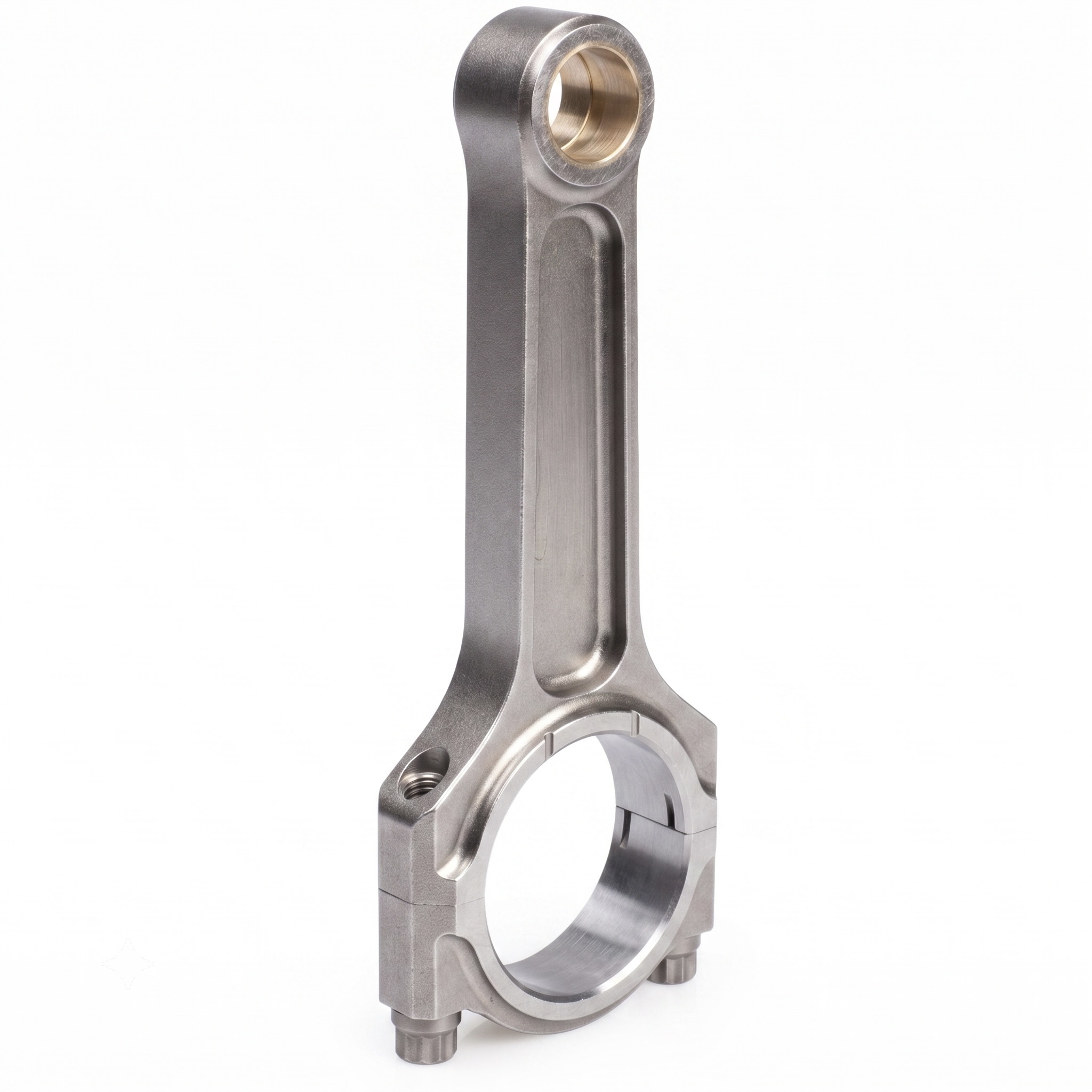 |
I-Beam profile. With its slimmer central section, the I-Beam rod is lighter: less inertia and freer rev pickup. It is the most common profile on modern turbo engines and the natural choice for a Cosworth YB build focused on revs. |
How to choose your rod bolts?
On a long-rod YB, the acceptable rpm and cylinder pressure are read first in the rod bolt. The reasoning therefore starts from use: torque used early in rally, rpm held high on circuit and track, short but very violent peaks in drag racing, before setting the target power per cylinder. The two grades below are offered in 3/8"-38 mm; in both cases torque and stretch are checked on assembly, without exception.
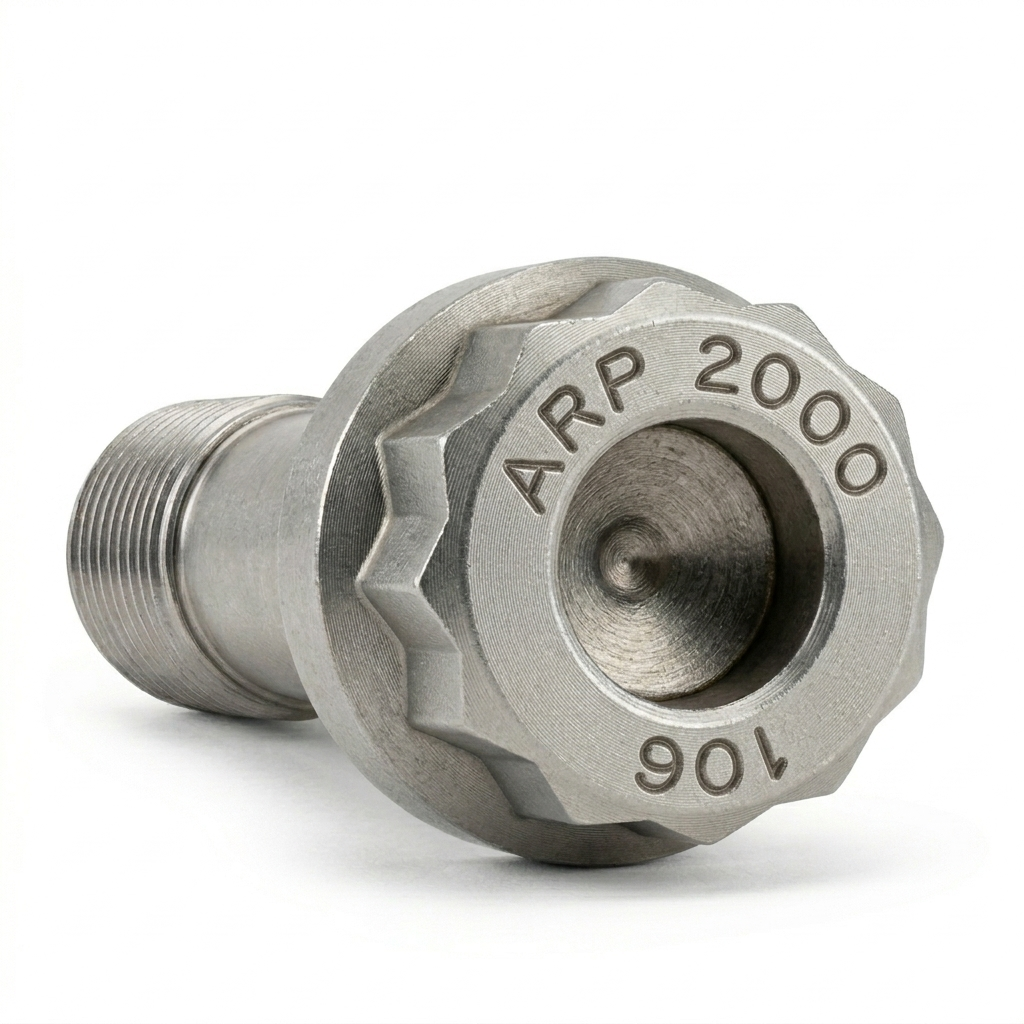 |
ARP 2000, quoted at ~220,000 psi (~1,517 MPa) in tension, is enough for most long-rod YB engines: up to 200 hp per cylinder in 3/8" and up to 8,500 rpm. It is the dominant grade in circuit racing, track days, drift, rally, drag racing and hillclimb, the one fitted without hesitation on a build that stays within those limits. It imposes no particular storage constraint. |
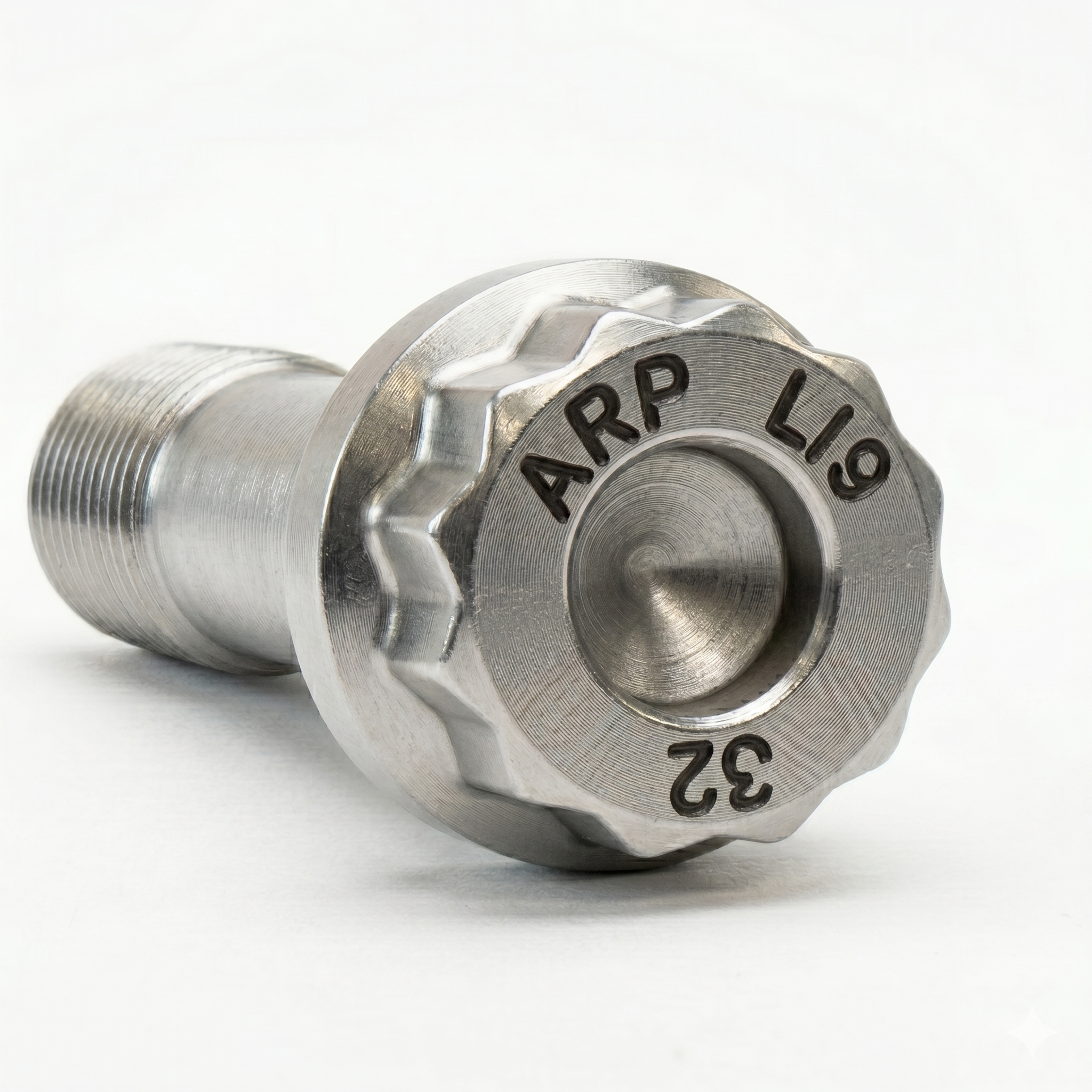 |
L19 rises to ~260,000 psi (~1,793 MPa) and covers up to 250 hp per cylinder in 3/8" as well as 10,000 rpm. It is the grade for YB engines with very high boost pressure, high cylinder pressure or rpm held high for a long time, and for every big power level in drag racing, drift, rally and circuit. Its only requirement is workshop discipline: sensitive to corrosion and to hydrogen embrittlement, it is stored and fitted oiled, away from moisture, and never bare in a box. |
Measuring bolt stretch
|
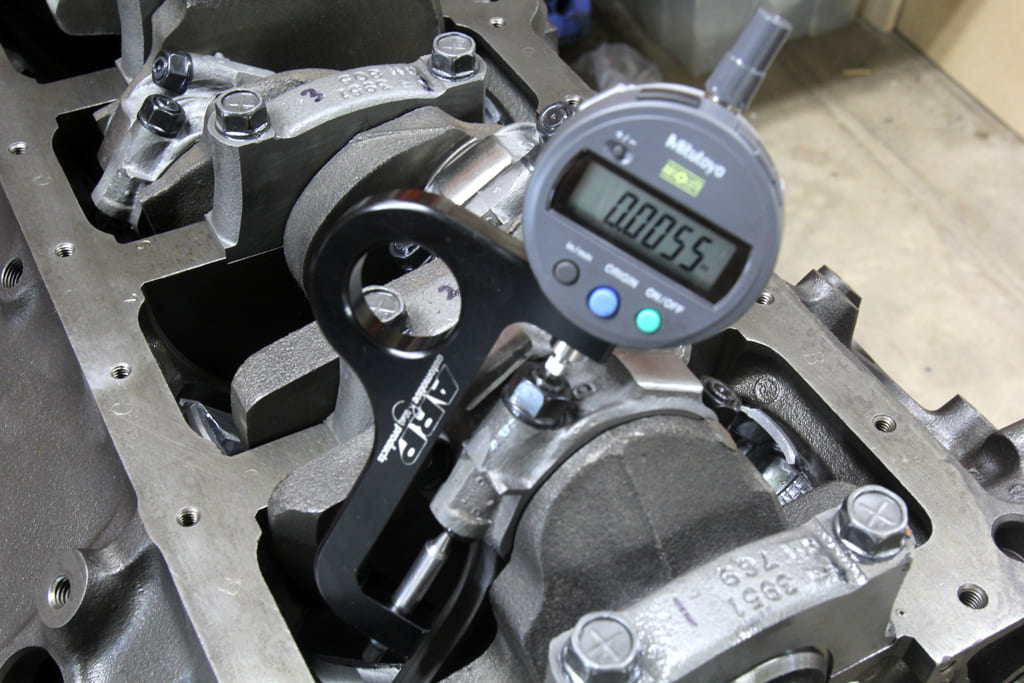
In addition to torque tightening, measuring rod-bolt stretch is the most reliable check for optimal preload. The check is done with the bolt fitted: place the gauge (dial indicator) on the two ends of the bolt and read its actual stretch, which must match the recommended value (see the torque & stretch table above). This method removes the friction variations inherent in torque tightening and secures the assembly on heavily stressed engines. |
The brands offered
 |
A Greek brand founded by Alex Drakos in Athens, ZRP designs high-performance forged connecting rods in 4340 steel, precision-machined and balanced to ±1 g to stay reliable at high rpm. Designed and inspected in Greece, proven in rally, on track and in drift, they come here for the Cosworth YB in the long 133.5 mm centre-distance version, in I-Beam profile with ARP 2000 or ARP L19 bolts. |
Glossary
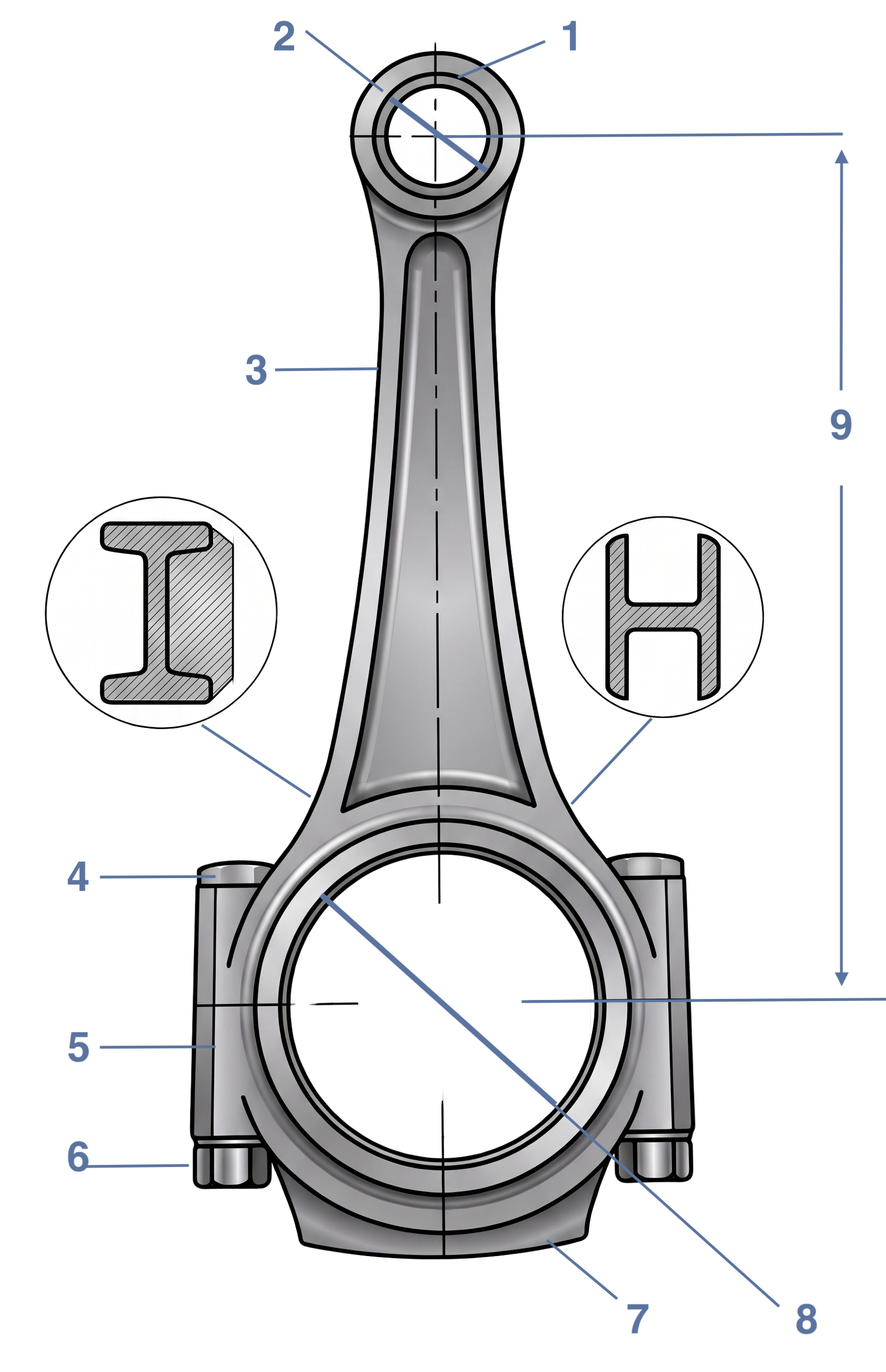 |
1) Small end 2) Small-end diameter 3) Rod beam 4) Rod bolt 5) Big end 6) Rod nut / bolt 7) Rod cap 8) Big-end diameter 9) Center-to-center |
Vehicle compatibility for the Ford Cosworth YB engine
These forged connecting rods are compatible with every version of the Ford Cosworth YB 2.0 16V Turbo engine. The long rods, 5 mm longer center-to-center (133.5 mm versus 128.5 mm stock), are aimed at builds seeking an optimised stroke / rod-length ratio.
| Brand | Model (chassis) | Engine code | Power | Years |
|---|---|---|---|---|
| Ford | Sierra RS Cosworth | YBB | 204 hp | 1986–1990 |
| Ford | Sierra Sapphire RS Cosworth | YBB / YBG | 204–220 hp | 1988–1992 |
| Ford | Escort RS Cosworth | YBT / YBP | 220 hp | 1992–1996 |
OEM reference:
Why it’s the most cost-effective solution?
A standard rod that breaks on a YB takes the piston with it and calls for a check of the block: repair with original parts is counted in new rods and pistons, for an engine that will have gained nothing.
For an equivalent, often lower budget, a set of forged 4340 steel rods and forged pistons offer clearly higher reliability and safety margin, with power potential available for later. European engine builders have worked this way on Cosworth engines for more than 15 years.
For the same budget the outcome is the same: more reliability, more potential and more service life, plus a reciprocating assembly genuinely matched to the 133.5 mm centre-to-centre length used here. Nothing is lost along the way.
-
Brand
-
ReferenceR-FOR-003-I
12 other products in the same category
Viewed products