Product successfully added to your shopping cart
Quantity
Total
There are 0 items in your cart. There is 1 item in your cart.
Total products
Total shipping To be determined
Total

2.0L 16v - Cosworth YB N5
Manufacturers
2.0L 16v - Cosworth YB N5
Warning: Last items in stock!
New product
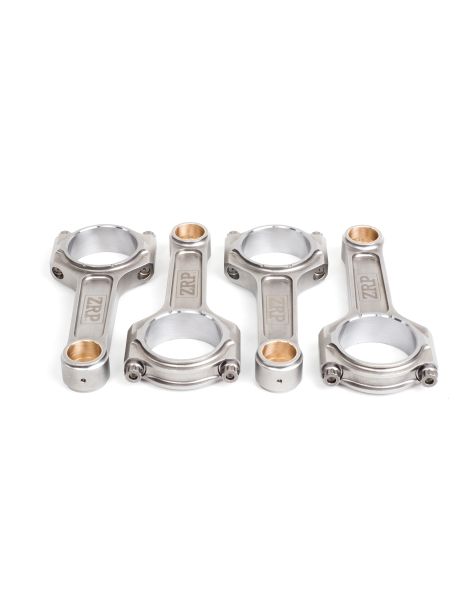
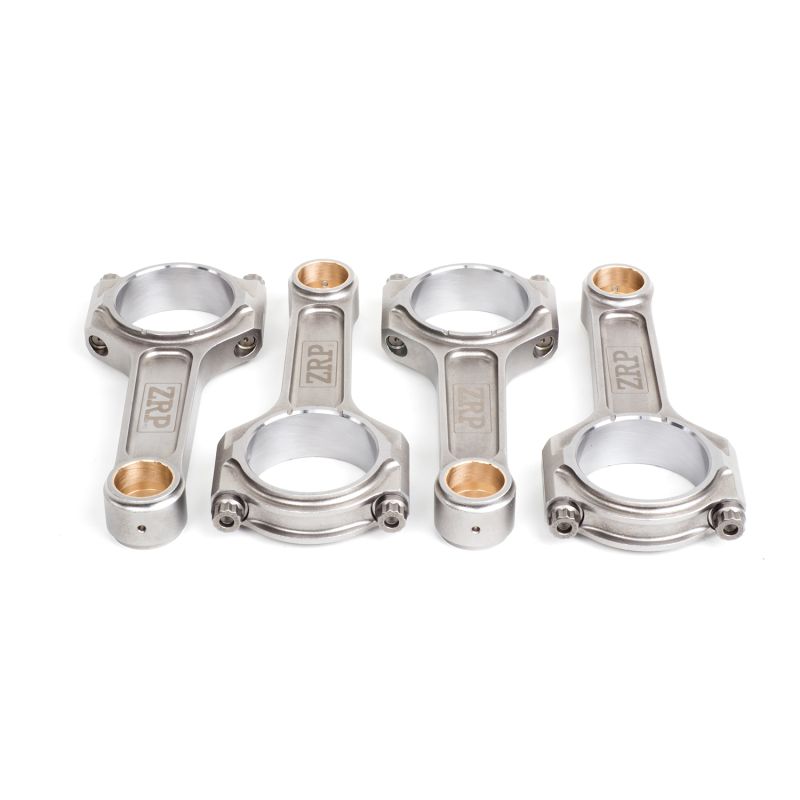
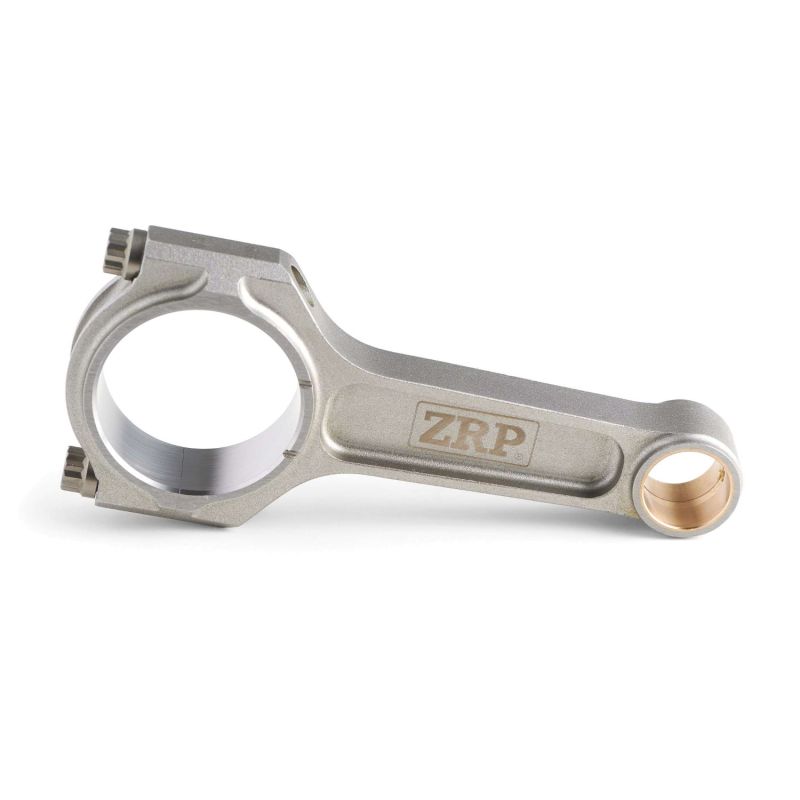
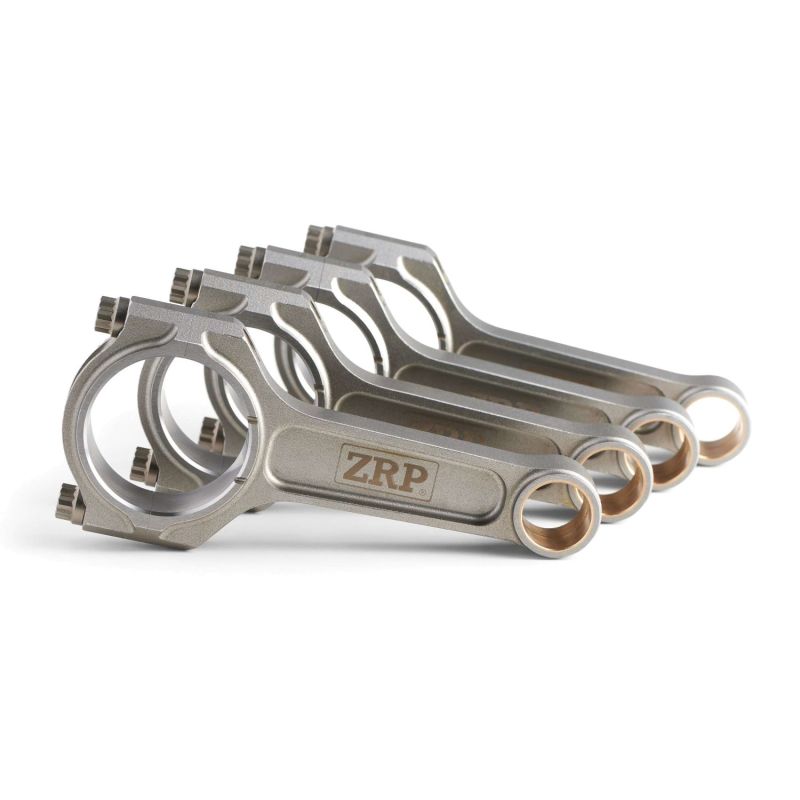
Set of 4 forged 4340 connecting rods for Ford 2.0L 16V Turbo Cosworth YB, stock 128.5 mm center-to-center.
The Cosworth YB is an inline four of 1,993 cc with sixteen valves and a turbocharger, introduced at the end of the 1980s. It uses the Ford Pinto cast-iron block, topped by a sixteen-valve head designed by Cosworth, with a 90.8 mm bore and a 77 mm stroke. It powered the Sierra RS Cosworth, the Sierra Sapphire RS Cosworth and the Escort RS Cosworth, and served as a homologation base in Group A as well as in rally. Depending on the codes (YBB, YBG, YBT, YBP), factory power ranges from about 204 to 220 hp.
Designed from the outset for high boost pressure, the YB combines that cast-iron block with a forged crankshaft. As soon as boost goes beyond factory figures, it is the reciprocating assembly that becomes the sensitive part: the rod takes alternating loads and a cylinder pressure well above those of the standard engine. This listing covers the original centre-to-centre length, 128.5 mm, with a 24 mm pin, which allows a direct fit without touching the crankshaft.
Forged connecting rods are among the key parts of any engine build. Forged from steel and then precision-machined, they offer mechanical strength and fatigue resistance far above the stock sintered-metal rods, which quickly reach their limits as power rises.
Each rod is balanced and supplied with its ARP high-performance hardware. Offered in I-Beam profile with ARP 2000 or ARP L19 hardware, they secure high-boost setups and sustained high rpm, where the stock rod eventually bends or breaks.
| Reference | Brand | Profile | Bolts | Pin diameter OEM 24 mm | Small-end width | Big-end diameter OEM n.p. | Big-end width | Center-to-center OEM 128.5 mm | Weight per rod |
|---|---|---|---|---|---|---|---|---|---|
| R-FOR-001-I | ZRP | I | ARP 2000-3/8"-38mm | 24 mm | 55 mm | 25.85 mm | 128.5 mm | 527 g | |
| R-FOR-001-I-L19 | ZRP | I | ARP L19-3/8"-38mm | 24 mm | 55 mm | 25.85 mm | 128.5 mm | 527 g |
| Rod | Bolts | Torque | Recommended stretch |
|---|---|---|---|
| ZRP (R-FOR-001-I) | ARP 2000 | 61 N·m | 0.140 – 0.152 mm |
| ZRP (R-FOR-001-I-L19) | ARP L19 | 67.8 N·m | 0.152 – 0.165 mm |
The preload installed at assembly is not a fixed value: it decreases as the engine warms up and the parts expand, which is precisely why the tightening window of the YB Cosworth is anything but indicative. Too low at the start, and residual tension when hot falls below the separating force: the cap lifts, the rod to cap seating degrades through micro-sliding, the shell is hammered and its clearance drifts away. Too high, and the bolt has already used up its elastic reserve during assembly: it stretches permanently, no longer compensates for expansion and loses its preload, while the distorted bore and the oval big end stop the shell from bearing over its whole surface. The four ZRP rods are therefore tightened to the values in the table below, which differ depending on whether the fasteners are ARP 2000 or ARP L19, and which are published by the fastener manufacturer. The stretch gauge remains the reference tool for validating every bolt; ARP assembly lubricant and kit instructions take priority.
| 4340 steel is a nickel-chromium-molybdenum alloy steel used in aerospace and motorsport alike. Forged then heat-treated (quench and temper), it offers excellent tensile strength, high fatigue resistance and real ductility. Compared with an original rod (often sintered/powder metal, optimised for series-production cost), a 4340 forged rod shows roughly +19% higher yield strength, +8% higher tensile strength and above all +19% to +37% higher fatigue strength, i.e. a fatigue life under cyclic loading several times longer. This is what makes forged 4340 the reference material as soon as boost and rpm climb. |
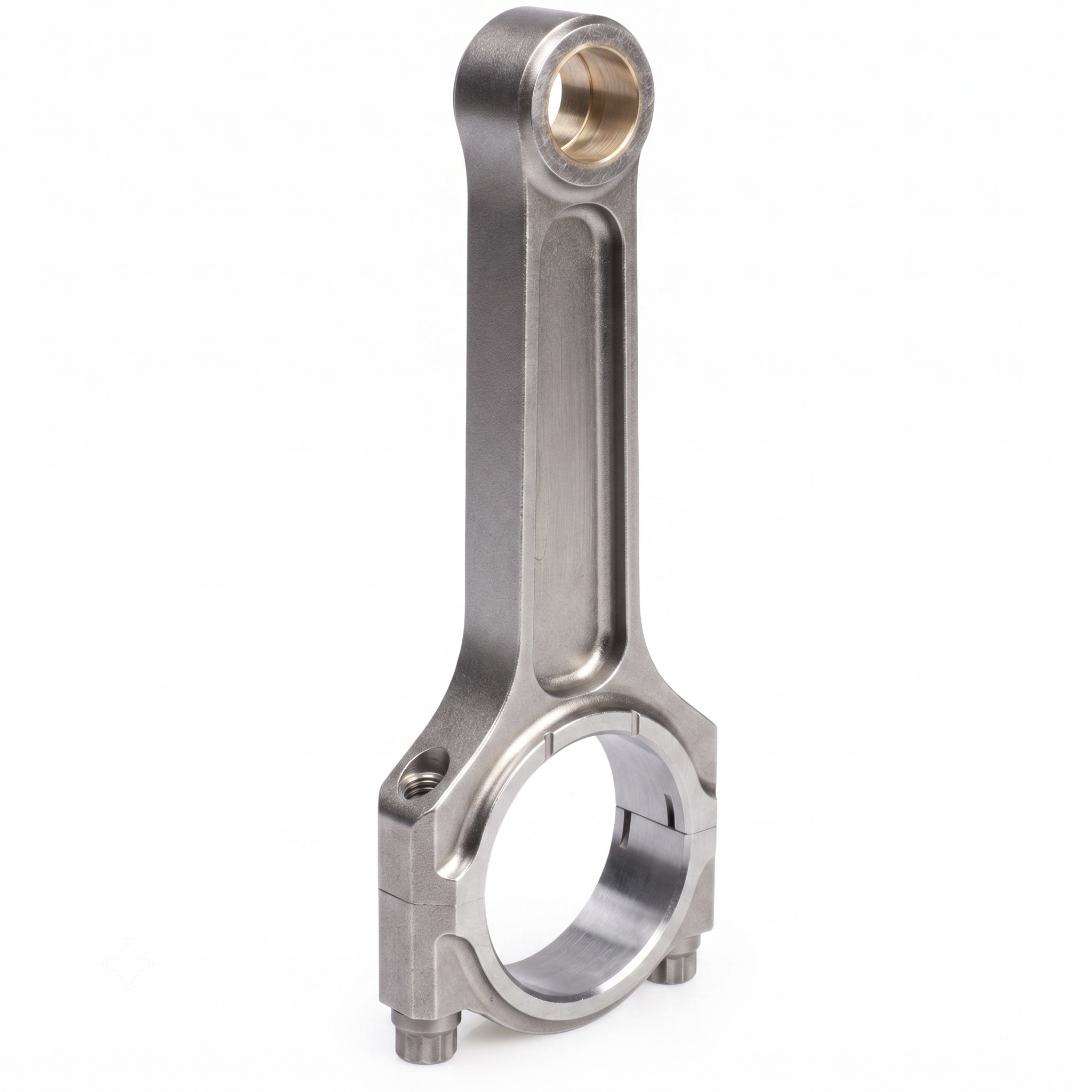 | I-Beam profile. With its slimmer central section, the I-Beam rod is lighter: less inertia and freer rev pickup. It is the most common profile on modern turbo engines and the natural choice for a Cosworth YB build focused on revs. |
On a YB, everything the build gains in boost pressure ends up in the rod bolt: it is what limits the usable rpm and the cylinder pressure. The grade is decided by discipline, from torque used low down on a rally stage to rpm held high on circuit, up to the few seconds of full load of a drag run, then by the target power per cylinder. The two grades below are offered in 3/8"-38 mm and are fitted to the torque and stretch of the table.
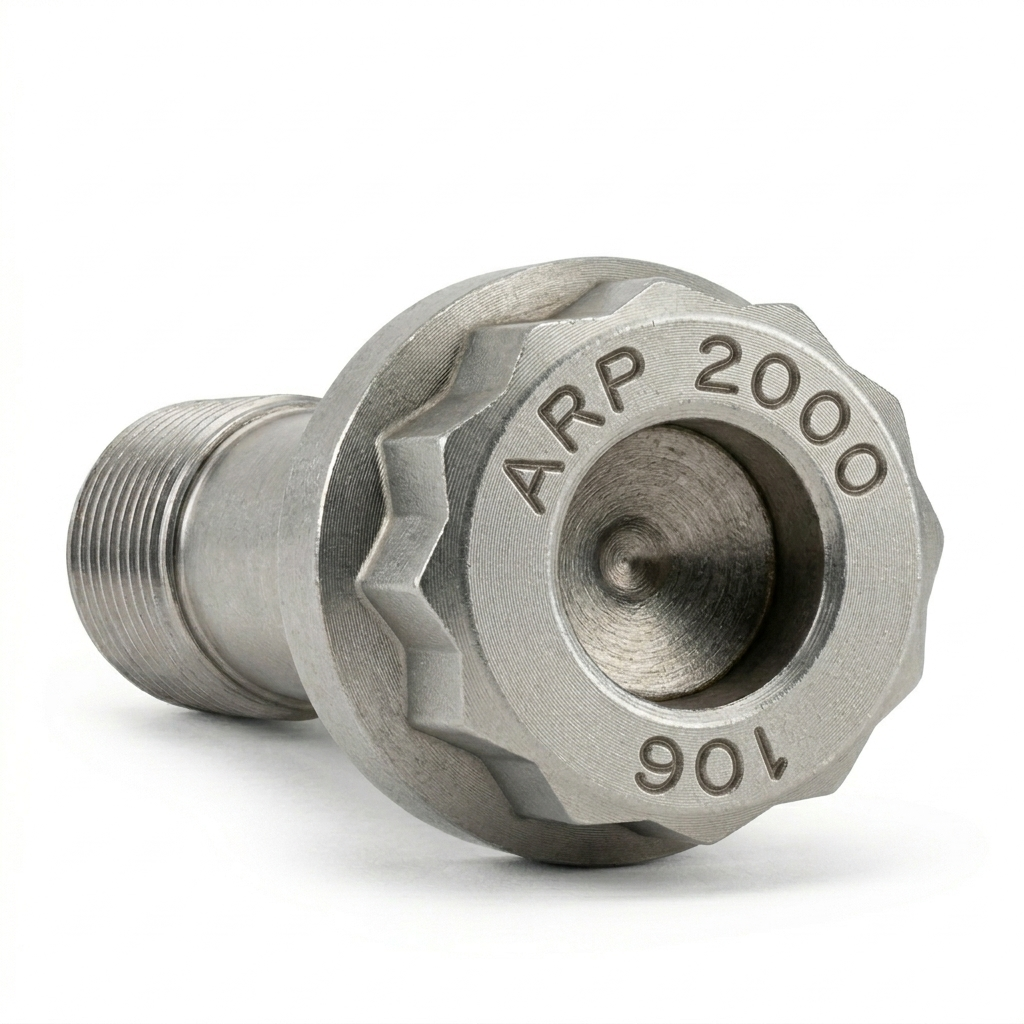 | ARP 2000, with ~220,000 psi (~1,517 MPa) tensile strength, covers the vast majority of built YB engines: up to 200 hp per cylinder in 3/8" and up to 8,500 rpm. On a Cosworth used in rally, on circuit or in hillclimb, the reserve remains wide; it is also the most widespread grade in track days, drift and drag racing. It moreover requires no particular storage constraint. |
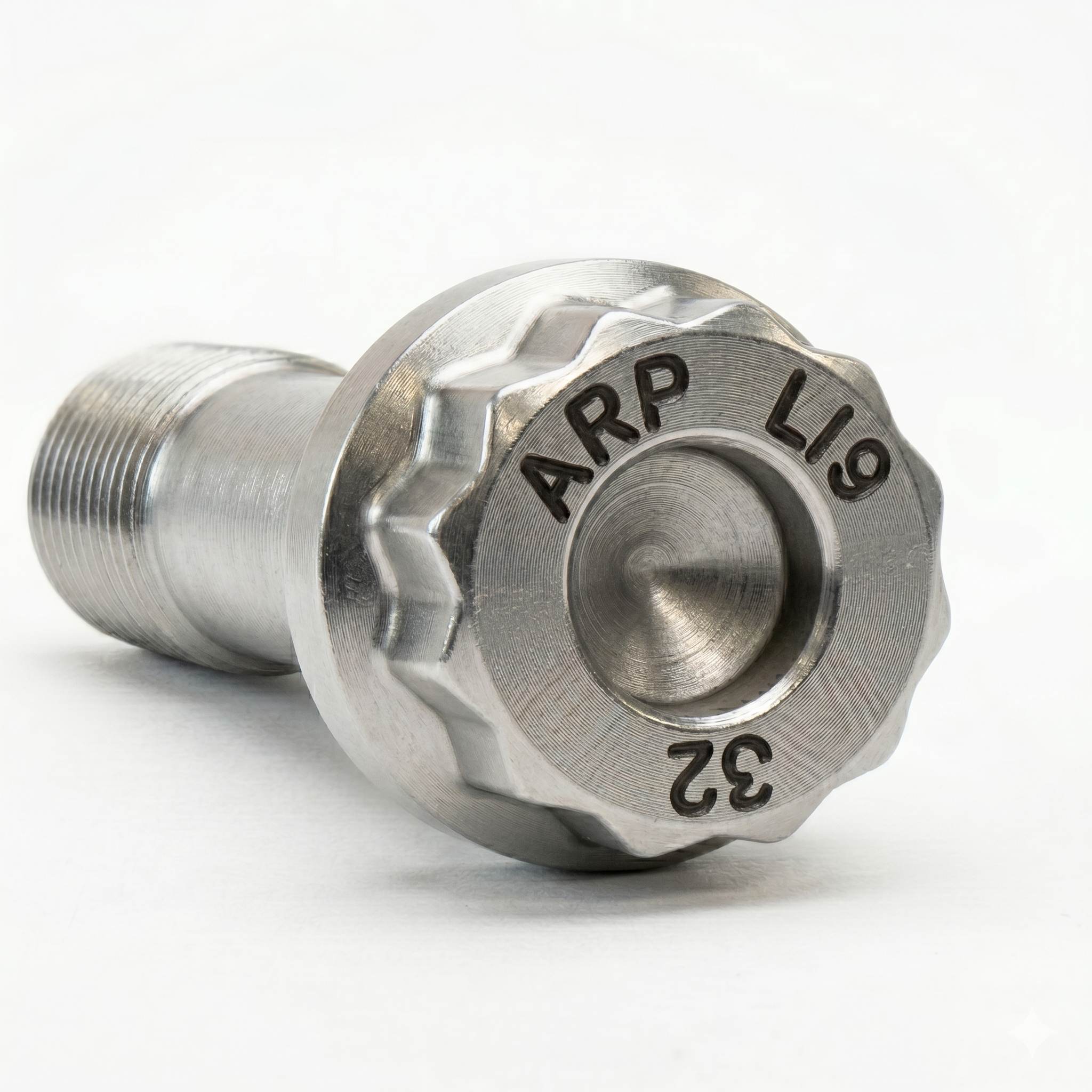 | L19 moves to ~260,000 psi (~1,793 MPa) and allows up to 250 hp per cylinder in 3/8" as well as 10,000 rpm. It is the choice for YB engines taken a long way: very high boost pressure, high cylinder pressure, sustained high rpm, as on the big power levels in drag racing, drift, rally and circuit. In exchange, the alloy is sensitive to corrosion and to hydrogen embrittlement: the bolts are stored and fitted oiled, away from moisture, never bare in a workshop. |
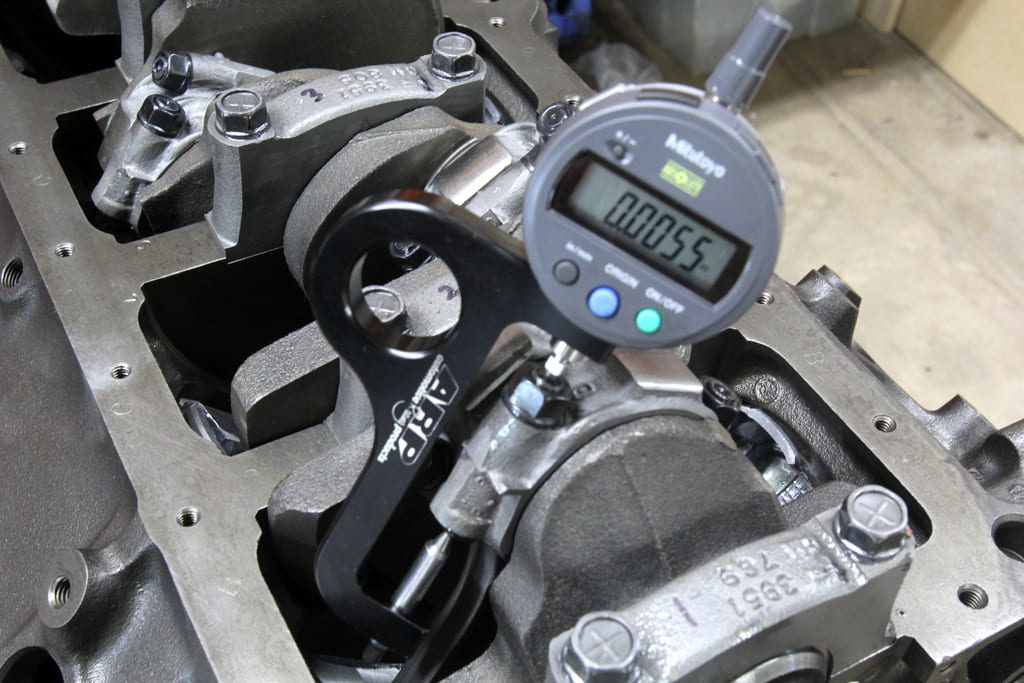
In addition to torque tightening, measuring rod-bolt stretch is the most reliable check for optimal preload. The check is done with the bolt fitted: place the gauge (dial indicator) on the two ends of the bolt and read its actual stretch, which must match the recommended value (see the torque & stretch table above). This method removes the friction variations inherent in torque tightening and secures the assembly on heavily stressed engines. |
 | ZRP is a Greek brand of high-performance forged connecting rods designed by Alex Drakos in Athens. Each rod is forged in 4340 steel, precision-machined and balanced to ±1 g to stay reliable at high rpm. Designed and inspected in Greece, proven in rally, on track and in drift, they are offered here for the Cosworth YB in I-Beam profile with ARP 2000 or ARP L19 bolts. |
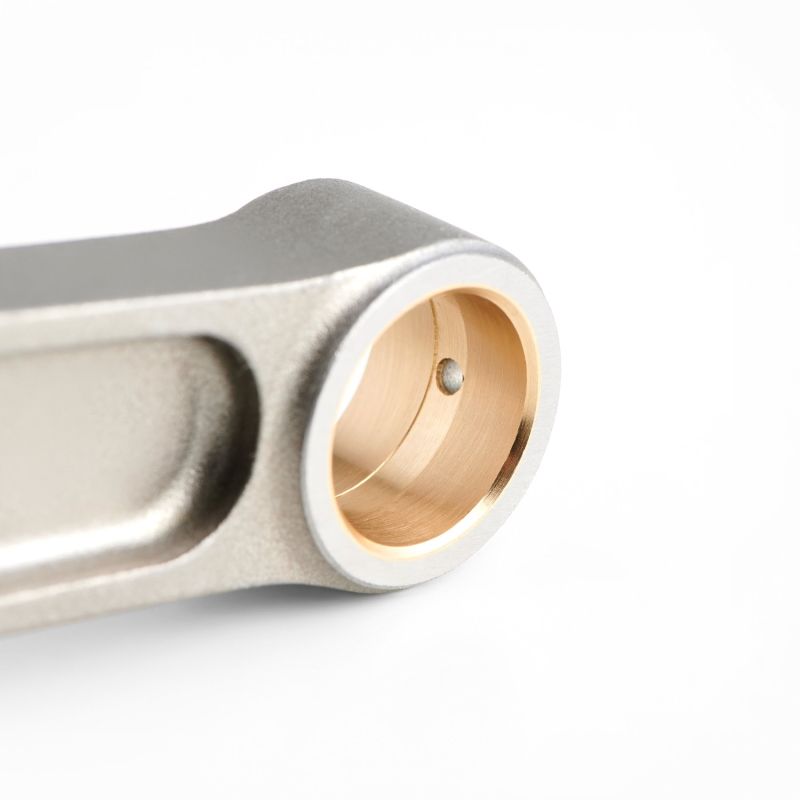
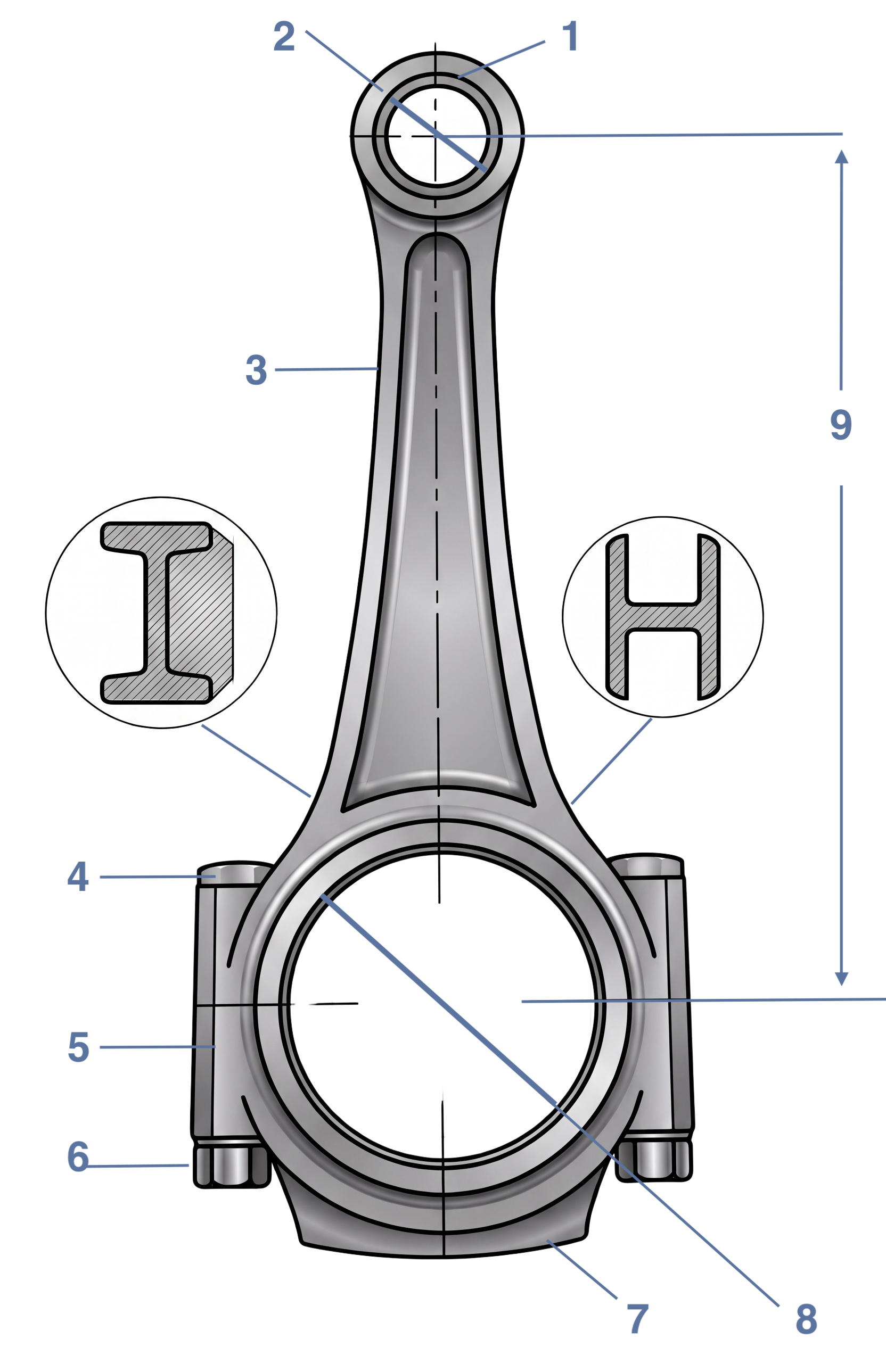 | 1) Small end 2) Small-end diameter 3) Rod beam 4) Rod bolt 5) Big end 6) Rod nut / bolt 7) Rod cap 8) Big-end diameter 9) Center-to-center |
These forged connecting rods are compatible with every version of the Ford Cosworth YB 2.0 16V Turbo engine. At the stock center-to-center length (128.5 mm), they are a direct replacement for the original rods while handling far more power.
| Brand | Model (chassis) | Engine code | Power | Years |
|---|---|---|---|---|
| Ford | Sierra RS Cosworth | YBB | 204 hp | 1986–1990 |
| Ford | Sierra Sapphire RS Cosworth | YBB / YBG | 204–220 hp | 1988–1992 |
| Ford | Escort RS Cosworth | YBT / YBP | 220 hp | 1992–1996 |
OEM reference:
When a standard rod gives way on a YB, the matching piston is nearly always destroyed and the block has to be checked: returning to standard therefore means paying for rods and pistons.
For a comparable, often lower budget, forged 4340 steel rods and forged pistons bring far greater reliability and safety margin, with power potential that stays open for later. This has been the practice of European engine builders on Cosworth engines for more than 15 years.
For the same budget the reasoning is simple: more reliability, more potential and more service life, including on an engine that is already several decades old and whose original parts are becoming scarce.