Product successfully added to your shopping cart
Quantity
Total
There are 0 items in your cart. There is 1 item in your cart.
Total products
Total shipping To be determined
Total

2.0L 16v - Cosworth YB N5
Manufacturers
2.0L 16v - Cosworth YB N5
Warning: Last items in stock!
New product
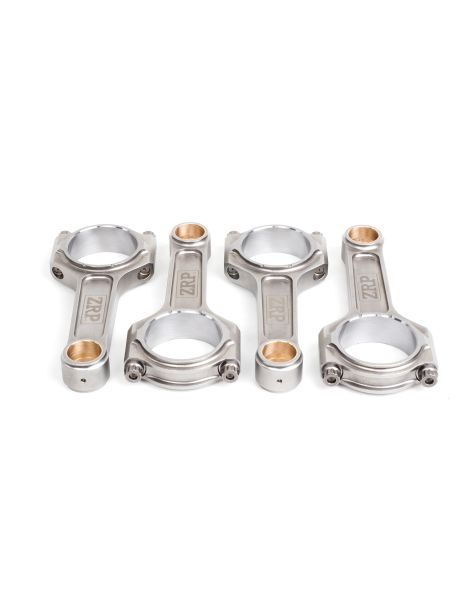
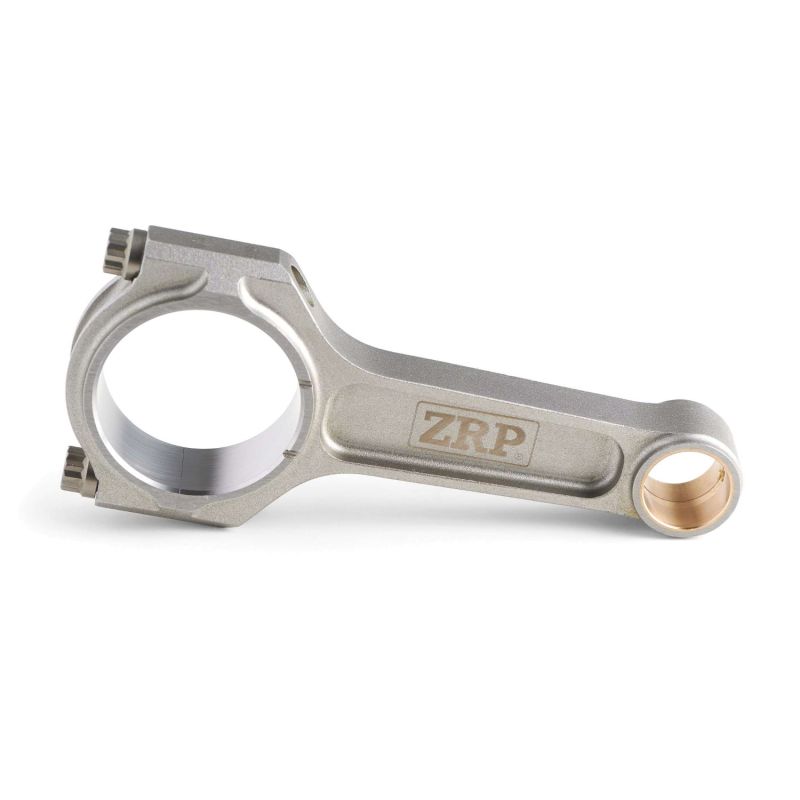
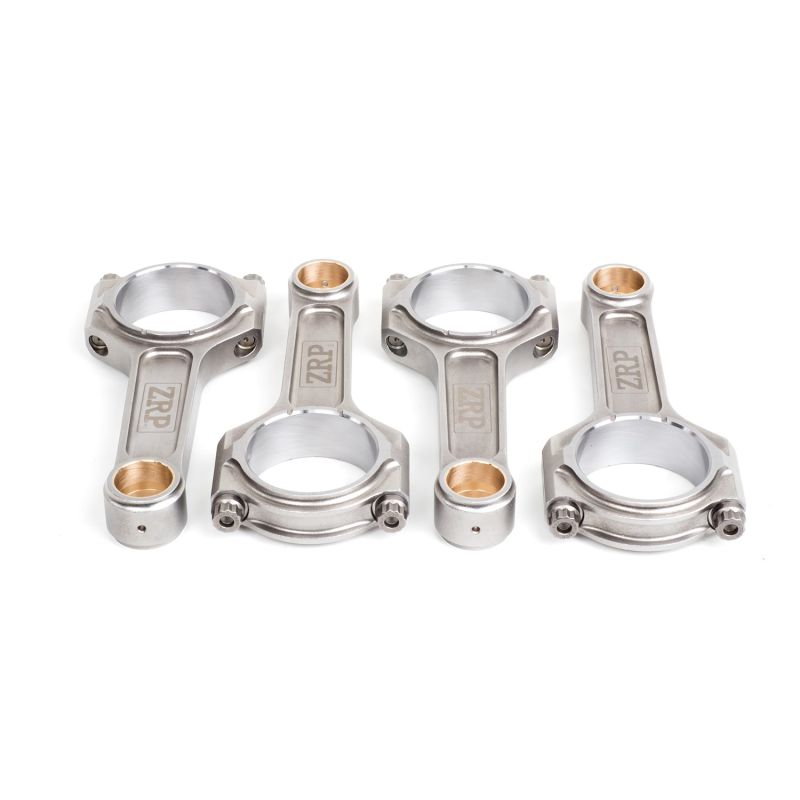
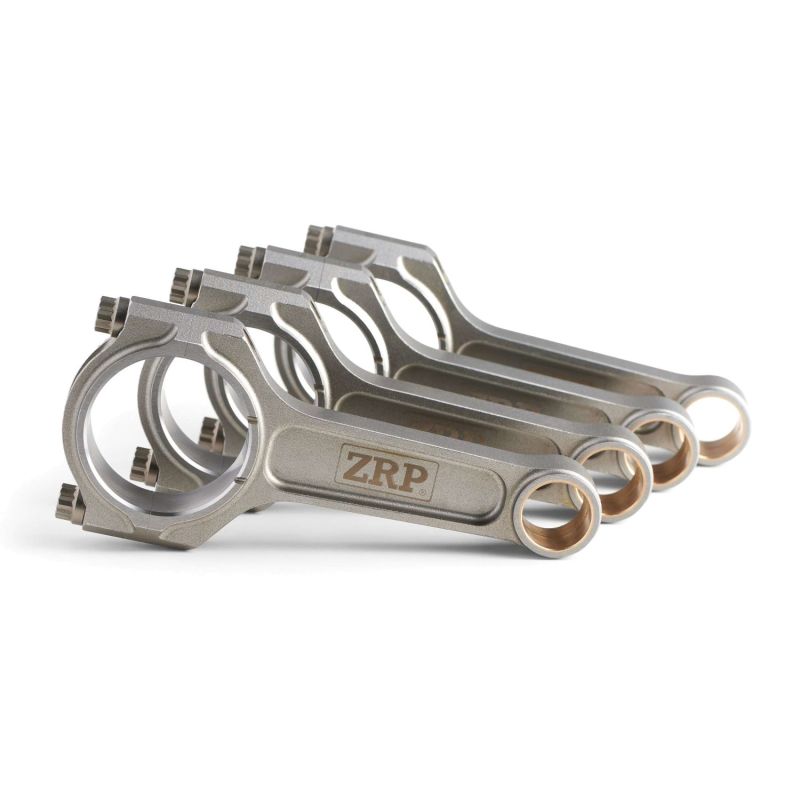
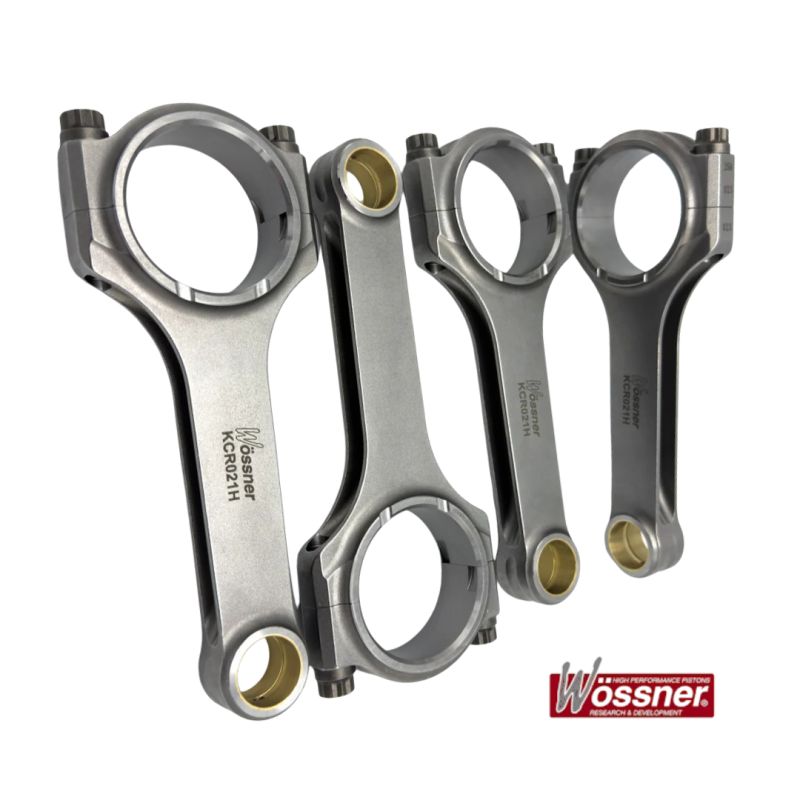
Set of 4 forged 4340 connecting rods for Ford 2.0L 16V Turbo Cosworth YB, long rods (136 mm center-to-center).
Born in the late 1980s, the Cosworth YB is built on the cast-iron Ford Pinto block, bored to 90.8 mm with a 77 mm stroke for 1,993 cc across four in-line cylinders. Cosworth added a light-alloy sixteen-valve cylinder head and a turbocharger, an architecture that earned the engine its Group A and rally homologations. Offered as YBB, YBG, YBT and YBP, it powered the Sierra RS Cosworth, the Sierra Sapphire RS Cosworth and the Escort RS Cosworth with factory output of roughly 204 to 220 hp. The mix of a mass-production iron block and a competition head explains how far a YB build can be taken.
Designed from the outset for high boost pressure, the YB relies on a cast-iron cylinder block and a forged crankshaft. As soon as boost and power move past factory figures, the rotating assembly becomes the weak link: the rod takes alternating loads and cylinder pressures far above standard, and the metallurgy of a mass-production part no longer has the required margin. Forged rods secure the build and unlock the YB potential in sustained hard use. This listing covers the long rods, 136 and 136.5 mm centre-to-centre against 128.5 mm as standard, intended for bottom ends rebuilt with pistons matched to that geometry.
Machined from high-strength 4340 forged steel, these reinforced rods secure the bottom end of the Cosworth YB as soon as power climbs beyond the factory target. They become essential when fitting forged pistons, raising the rev limit, increasing boost pressure or chasing more torque, situations where the sintered-metal original rod eventually bends or breaks. Available in I or H profile depending on the build, balanced and supplied with their ARP bolts, these long 136 mm centre-to-centre rods cover every discipline (rally, drift, drag, circuit and track days, hillclimb, time attack) and support Stage 2, Stage 3 and Stage 4+ builds, right up to full competition engines.
| Reference | Brand | Profile | Bolts | Pin diameter OEM 24 mm | Small-end width | Big-end diameter OEM n.p. | Big-end width | Center-to-center OEM 128.5 mm | Weight per rod |
|---|---|---|---|---|---|---|---|---|---|
| KCR023A | Wössner | I | ARP 2000-3/8"-38mm | 24 mm | 25.8 mm | 55 mm | 25.8 mm | 136 mm | 659.86 g |
| KCR023H | Wössner | H | ARP 2000-3/8"-38mm | 24 mm | 25.8 mm | 55 mm | 25.8 mm | 136 mm | 696.98 g |
| R-FOR-002-I | ZRP | I | ARP 2000-3/8"-38mm | 24 mm | 55 mm | 25.85 mm | 136.5 mm | 553 g | |
| R-FOR-002-I-L19 | ZRP | I | ARP L19-3/8"-38mm | 24 mm | 55 mm | 25.85 mm | 136.5 mm | 553 g |
ZRP: Centre-to-centre length increased by 8.00 mm over stock.
| Rod | Bolts | Torque | Recommended stretch |
|---|---|---|---|
| Wössner (KCR023A) | ARP 2000 | 74.6 N·m | 0.1397 – 0.1524 mm |
| Wössner (KCR023H) | ARP 2000 | 74.6 N·m | 0.1397 – 0.1524 mm |
| ZRP (R-FOR-002-I) | ARP 2000 | 61 N·m | 0.140 – 0.152 mm |
| ZRP (R-FOR-002-I-L19) | ARP L19 | 67.8 N·m | 0.152 – 0.165 mm |
Overtightening is not a safety margin: past the intended range the bolt leaves its elastic domain and, more importantly, the bearing bore distorts, pinches the oil film and ruins the running surface. On a built Cosworth YB that upper limit matters as much as the lower one, which is why the table above gives a range rather than a single figure to be exceeded. These values are the bolt manufacturer’s, different for ARP 2000 and for ARP L19, and the line to use is the one for the rod actually ordered, since several makers are offered here. Checking stretch with a dial gauge is the only way to know where you stand inside that range, on each of the eight bolts. Clean threads, ARP assembly lubricant, progressive tightening and never any extra pull beyond the value reached. The kit instruction sheet remains the reference document.
| 4340 steel is a nickel-chromium-molybdenum alloy steel used in aerospace and motorsport alike. Forged then heat-treated (quench and temper), it offers excellent tensile strength, high fatigue resistance and real ductility. Compared with an original rod (often sintered/powder metal, optimised for series-production cost), a 4340 forged rod shows roughly +19% higher yield strength, +8% higher tensile strength and above all +19% to +37% higher fatigue strength, i.e. a fatigue life under cyclic loading several times longer. This is what makes forged 4340 the reference material as soon as boost and rpm climb. |
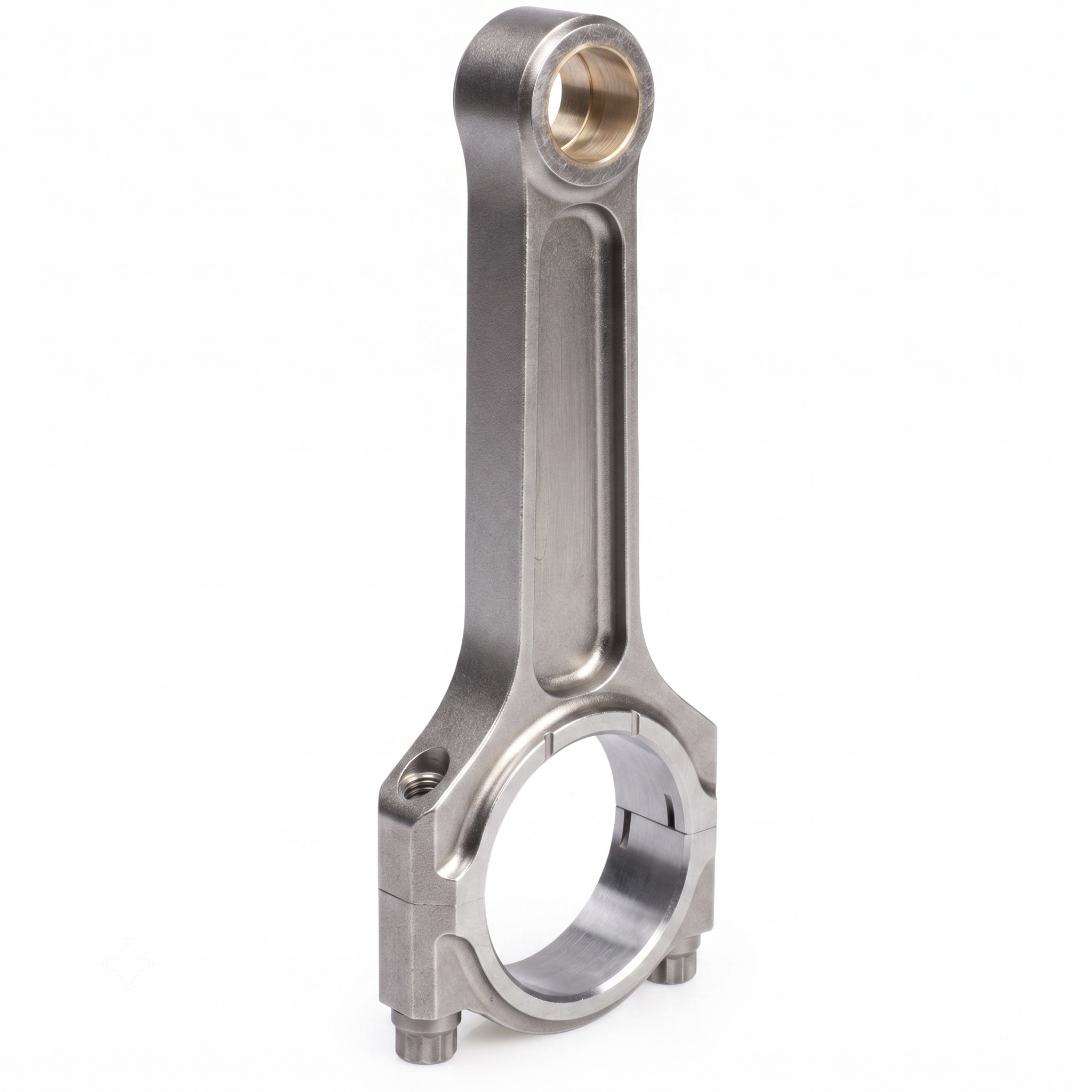 | I-Beam profile. With its slimmer central section, the I-Beam rod is lighter: less inertia and freer rev pickup. It is the most common profile on modern turbo engines and the natural choice for a Cosworth YB build focused on revs. |
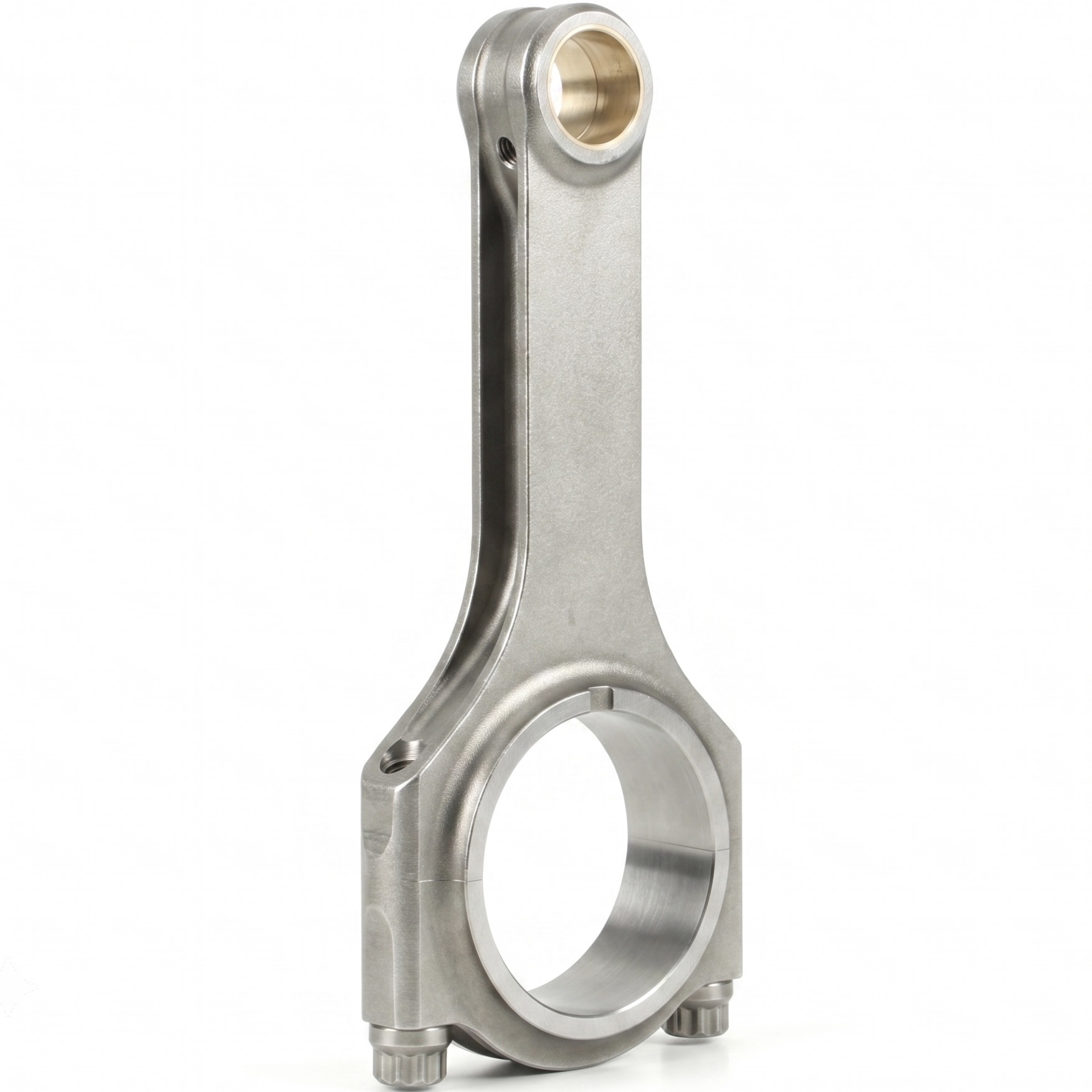 | H-Beam profile. The H-shaped section offers high rigidity and excellent resistance to bending and compression. Slightly heavier than an I-Beam rod, it favours strength: the choice for high-torque engines and high boost pressure, such as a heavily tuned Cosworth YB. |
The rod bolt is the most heavily loaded part of the bottom end: it works in pure tension on every revolution, over cycles counted in hundreds of millions. What separates the ARP grades is therefore not only a tensile figure, but the alloy itself, the control of the heat treatment and the fact that the threads are rolled after hardening, which closes the crack initiation sites at the thread root and lifts fatigue life. On this four-cylinder YB both grades come in 3/8"-38 mm: pick according to the boost pressure and engine speed you are targeting, then respect the specified torque and above all the stretch figure, the only way to obtain a consistent preload from one bolt to the next.
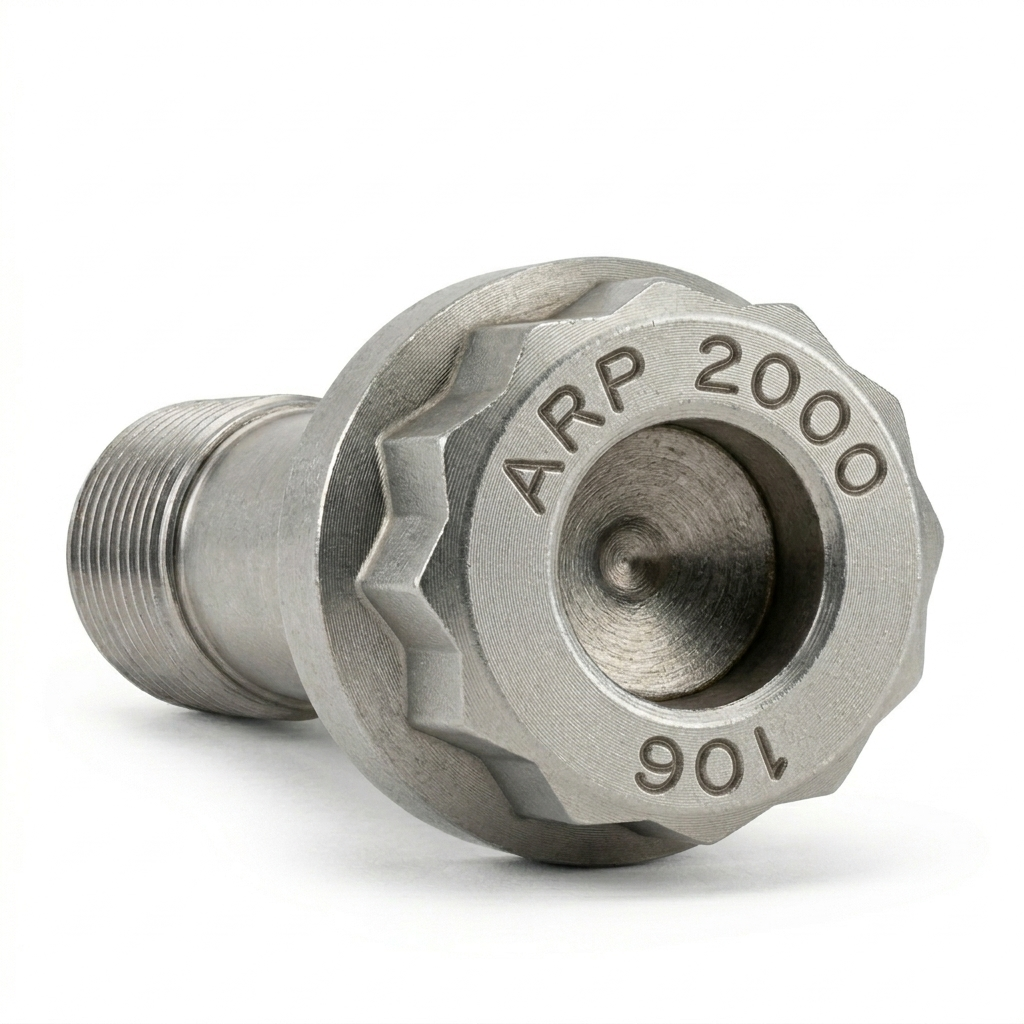 | ARP 2000 is a wrought, through-hardened alloy whose tensile strength reaches about 220,000 psi, i.e. ~1,517 MPa, with threads rolled after heat treatment for excellent cyclic fatigue life. It covers builds up to 200 hp per cylinder in 3/8" and up to 8,500 rpm, which makes it the most common grade in circuit racing, trackdays, drift, rally, drag and hillclimb. On the Wössner and ZRP rods for this YB it is fitted in 3/8"-38 mm and calls for no particular storage precautions. |
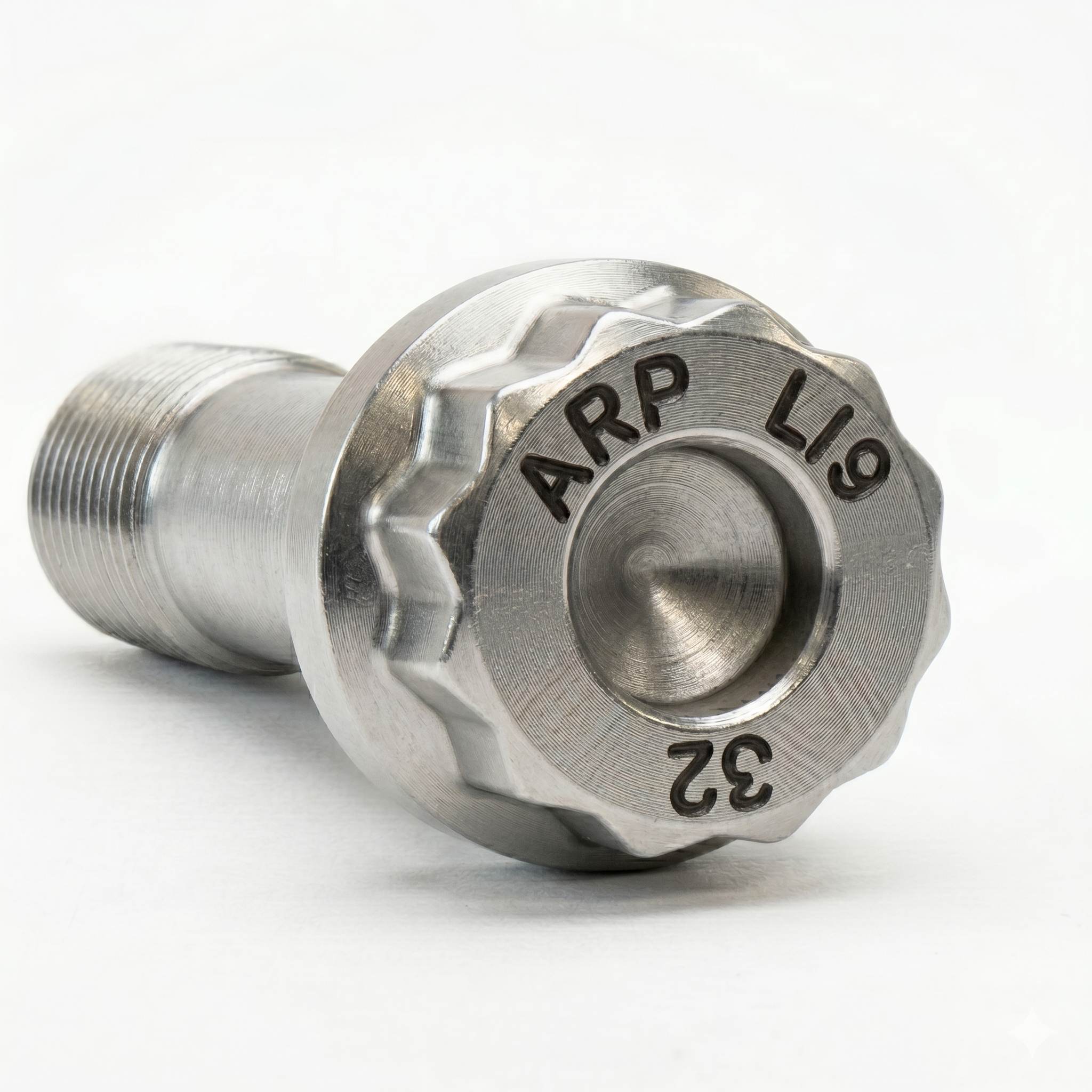 | L19 raises tensile strength to about 260,000 psi, i.e. ~1,793 MPa, through a more heavily alloyed steel and a more demanding quench and temper cycle; it is rated to 250 hp per cylinder in 3/8" and up to 10,000 rpm, so to very high boost pressure, sustained high engine speeds and high cylinder pressure. It is the big-power grade for drag, drift, rally and circuit, here on the ZRP I-profile rod in 3/8"-38 mm. The trade-off of that metallurgy: L19 is sensitive to corrosion and to hydrogen embrittlement, and must be stored and fitted oiled, away from moisture. |
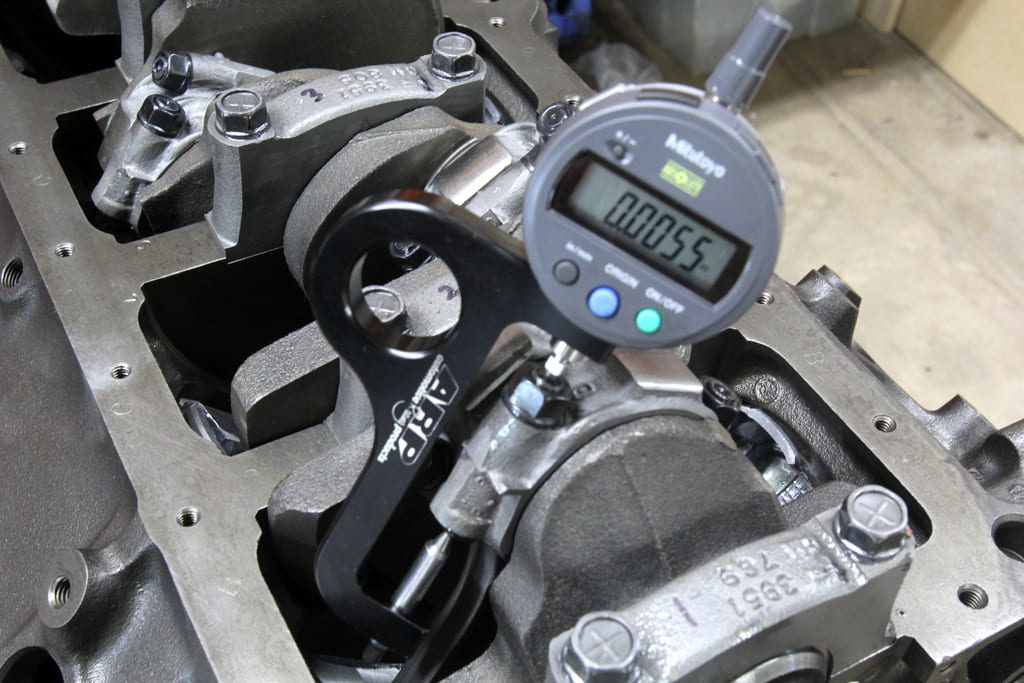
In addition to torque tightening, measuring rod-bolt stretch is the most reliable check for optimal preload. The check is done with the bolt fitted: place the gauge (dial indicator) on the two ends of the bolt and read its actual stretch, which must match the recommended value (see the torque & stretch table above). This method removes the friction variations inherent in torque tightening and secures the assembly on heavily stressed engines. |
 | Wössner, a German manufacturer renowned for its high-performance forged pistons and connecting rods, offers long rods for the Cosworth YB in I-Beam or H-Beam profile, fitted with ARP 2000 hardware. |
 | ZRP is a Greek brand of high-performance forged connecting rods, designed in Athens by Alex Drakos. Each rod is forged from 4340 steel, precision-machined and balanced to ±1 g to stay reliable at high rpm. Designed and inspected in Greece, proven in rally, on track and in drift, they are offered here in I profile with ARP 2000 or ARP L19 bolts. |
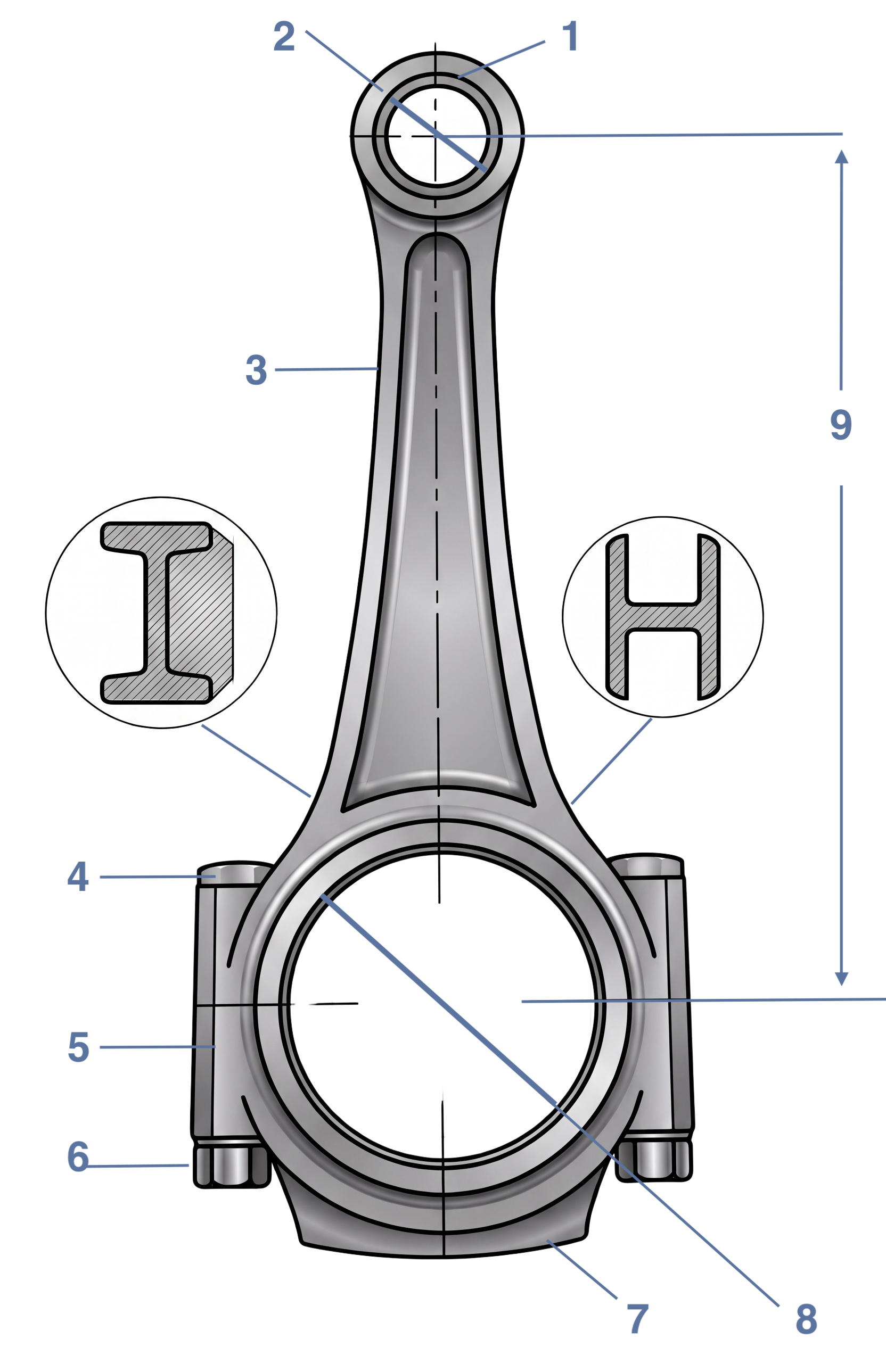 | 1) Small end 2) Small-end diameter 3) Rod beam 4) Rod bolt 5) Big end 6) Rod nut / bolt 7) Rod cap 8) Big-end diameter 9) Center-to-center |
These forged connecting rods are compatible with every version of the Ford Cosworth YB 2.0 16V Turbo engine. The long rods, with an extended center-to-center length (136 mm versus 128.5 mm stock), are aimed at builds seeking an optimised stroke / rod-length ratio.
| Brand | Model (chassis) | Engine code | Power | Years |
|---|---|---|---|---|
| Ford | Sierra RS Cosworth | YBB | 204 hp | 1986–1990 |
| Ford | Sierra Sapphire RS Cosworth | YBB / YBG | 204–220 hp | 1988–1992 |
| Ford | Escort RS Cosworth | YBT / YBP | 220 hp | 1992–1996 |
OEM reference:
Investing in forged connecting rods means, above all, protecting the whole engine. A stock rod that lets go almost always destroys the block, the crankshaft and the cylinder head.
For the Cosworth YB, the extra cost of forged rods is nothing compared with the price of a full rebuild after a failure. It is the guarantee of a reliable build, able to handle the added power over time.
With their included ARP hardware and a profile matched to each use, these forged connecting rods offer the best balance of performance, mechanical safety and durability for your Ford Cosworth YB.