Product successfully added to your shopping cart
Quantity
Total
There are 0 items in your cart. There is 1 item in your cart.
Total products
Total shipping To be determined
Total

1.6L 16v - EP6D THP Gen1 2006-2010 (without valvetronic)
Manufacturers
1.6L 16v - EP6D THP Gen1 2006-2010 (without valvetronic)
Warning: Last items in stock!
New product
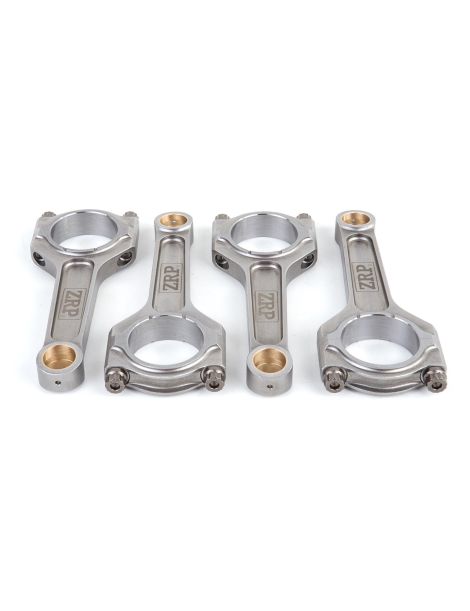
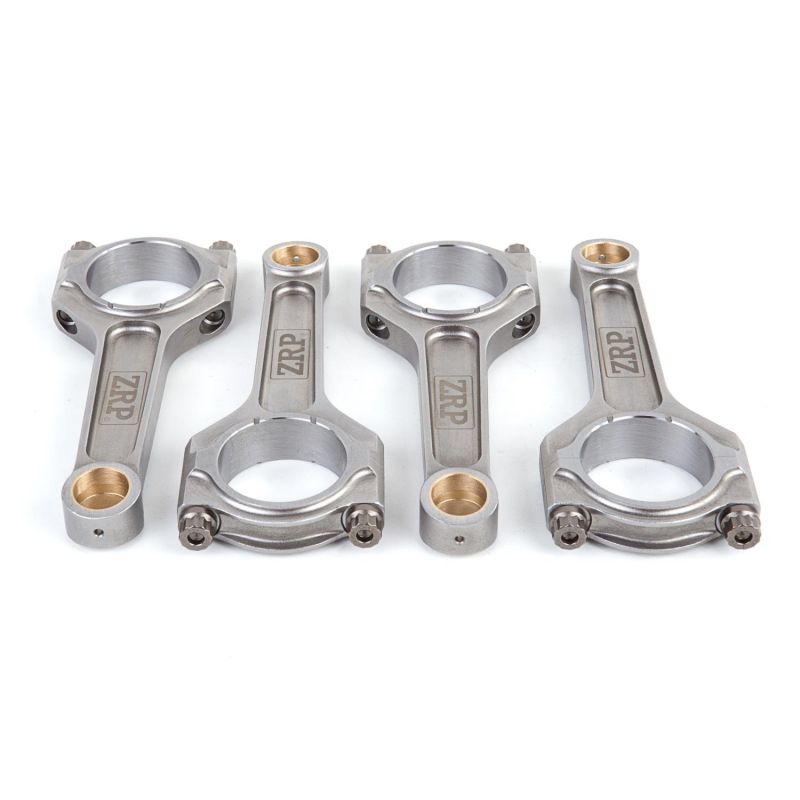
Set of 4 forged 4340 steel connecting rods for Citroën / Peugeot 1.6L 16V Turbo EP6.
The Citroën / Peugeot EP6 is a 1.6L 16V inline four-cylinder with double overhead camshafts, jointly developed by BMW and the PSA group and unveiled in 2006. It shares its architecture with the Prince engine fitted to the Mini (N12/N14). In its forced-induction versions (EP6DT, EP6CDT and EP6DTS), it combines a turbocharger with direct petrol injection, for a displacement of 1,598 cc (bore 77 mm × stroke 85.8 mm). Depending on the version, output ranges from about 150 hp to 207 hp, with torque markedly raised by forced induction.
Widely used in the Peugeot 207 RC, 308, 3008 and 5008, as well as the Citroën DS3 (up to the 207 hp DS3 Racing), DS4 and DS5, the turbocharged EP6 is a popular tuning base. As soon as boost pressure or engine speed rises, the original connecting rod becomes one of the first parts to reinforce: that is exactly the role of these forged rods, designed to withstand the stresses of built engines over the long term.
A forged connecting rod is machined from a hot-forged steel billet: the metal grain follows the shape of the part, giving it far higher mechanical strength and fatigue resistance than an original sintered-metal rod. On an EP6 with raised boost, engine speed or displacement, this guarantees a bottom end able to handle the power increase reliably; they become essential when fitting forged pistons.
Designed for built engines (turbocharged as well as highly tuned naturally aspirated), these forged rods cover every discipline, from rally to drift through drag, circuit, hillclimb and time attack, and support Stage 2, Stage 3 and Stage 4+ builds, all the way to a competition engine.
| Reference | Brand | Profile | Bolts | Pin diameter OEM 20 mm | Small-end width | Big-end diameter | Big-end width | Center-to-center OEM 138.55 mm | Weight per rod |
|---|---|---|---|---|---|---|---|---|---|
| R-PEU-002-I | ZRP | I | ARP 2000-3/8"-38mm | 20 mm | 48 mm | 20.87 mm | 138.55 mm | 450 g | |
| R-PEU-002-I-L19 | ZRP | I | ARP L19-3/8"-38mm | 20 mm | 48 mm | 20.87 mm | 138.55 mm | 450 g |
| Rod | Bolts | Torque | Recommended stretch |
|---|---|---|---|
| ZRP (R-PEU-002-I) | ARP 2000 | 61 N·m | 0.140 – 0.152 mm |
| ZRP (R-PEU-002-I-L19) | ARP L19 | 67.8 N·m | 0.152 – 0.165 mm |
Everything starts before the torque wrench comes out: on the EP6, a dirty thread, a bore marked by the previous bolts or even a trace of degreaser will distort the result far more than a misread scale. Bolt and cap threads must be brushed, blown out and dried, mating faces free of burrs, before the ARP assembly lubricant goes on. Only then do the values in the table above, defined by the bolt manufacturer, deliver the stated preload: they apply with no rounding and no adaptation, whether the rod carries ARP 2000 or ARP L19 bolts. And because torque never reports the installed tension directly, checking stretch with a dial gauge remains the reference method across the engine’s eight bolts, with load applied progressively rather than in a single pull. The instruction sheet supplied with the kit is authoritative.
| 4340 steel is a nickel-chromium-molybdenum alloy steel, prized for its exceptional balance of strength, ductility and fatigue resistance. Forged then heat-treated (quench and temper), it offers, compared with the sintered metal of original rods, a yield strength roughly 19% higher, a tensile strength roughly 8% higher and fatigue endurance increased by 19 to 37%. This aerospace-grade material lets the rod withstand the cylinder-pressure peaks of forced-induction engines without flexing. |
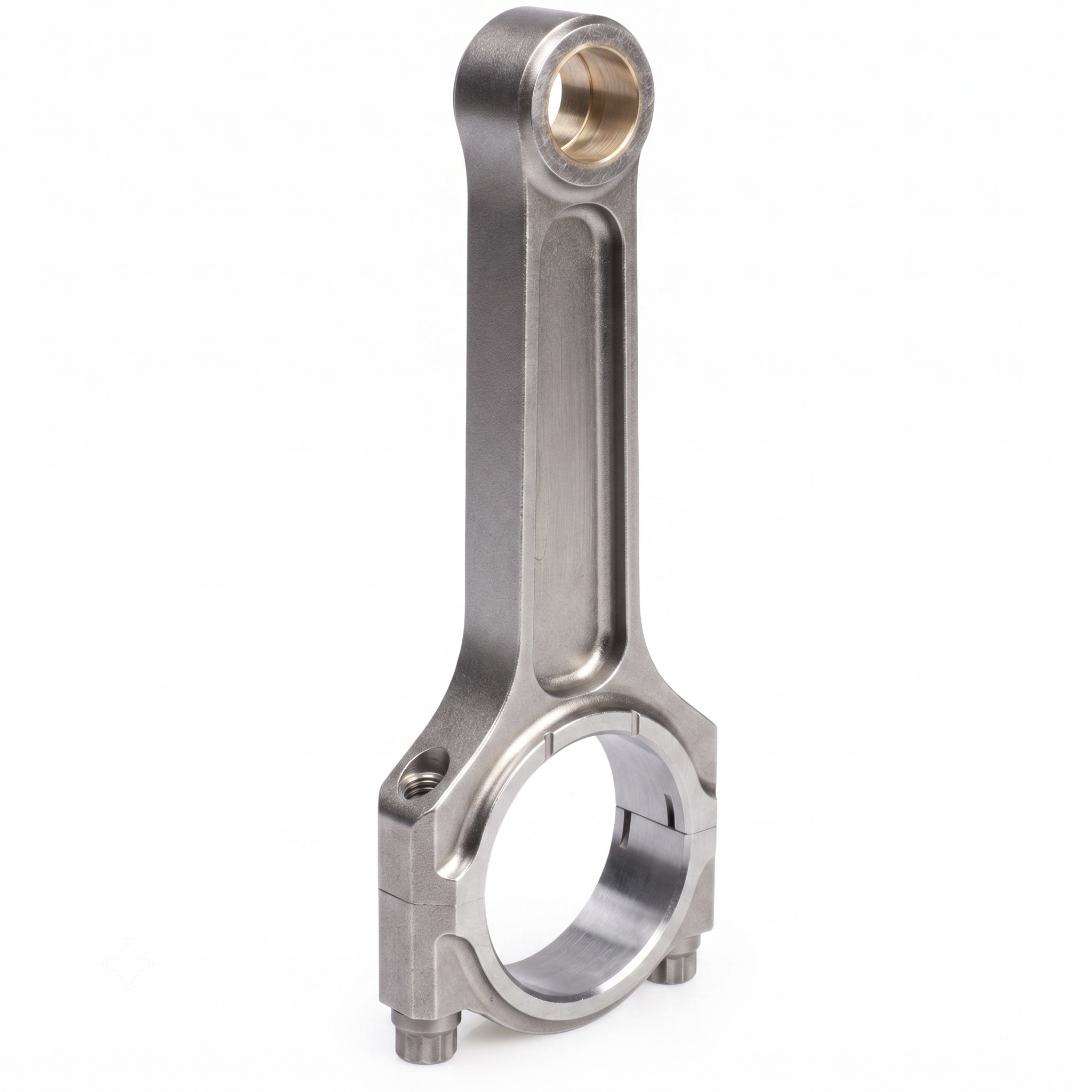 | I-Beam profile. Its central section, shaped like an « I », favours light weight while retaining excellent rigidity. It is the most common profile on modern turbocharged engines such as the EP6: low reciprocating mass, hence reduced inertia and easier revving, for an ideal compromise between weight, strength and reliability. |
On the turbocharged EP6, rod bolt preload has to cope with high combustion pressure at low and medium engine speed: a properly tensioned bolt no longer moves, whereas a bolt torqued onto dirty threads can lose tension within a few sessions. Before assembly, clean the threads of the cap and of the rod, blow out the holes, check that the seats are free of burrs, then apply the recommended assembly lubricant along the whole thread and under the head. Tightening is carried out in several passes and preload is validated through stretch measured with a dial gauge, a reading taken bolt by bolt. The two grades available, ARP 2000 and ARP L19 in 3/8"-38 mm, are chosen according to the power per cylinder targeted and the operating engine speed, keeping a margin for repeated sessions.
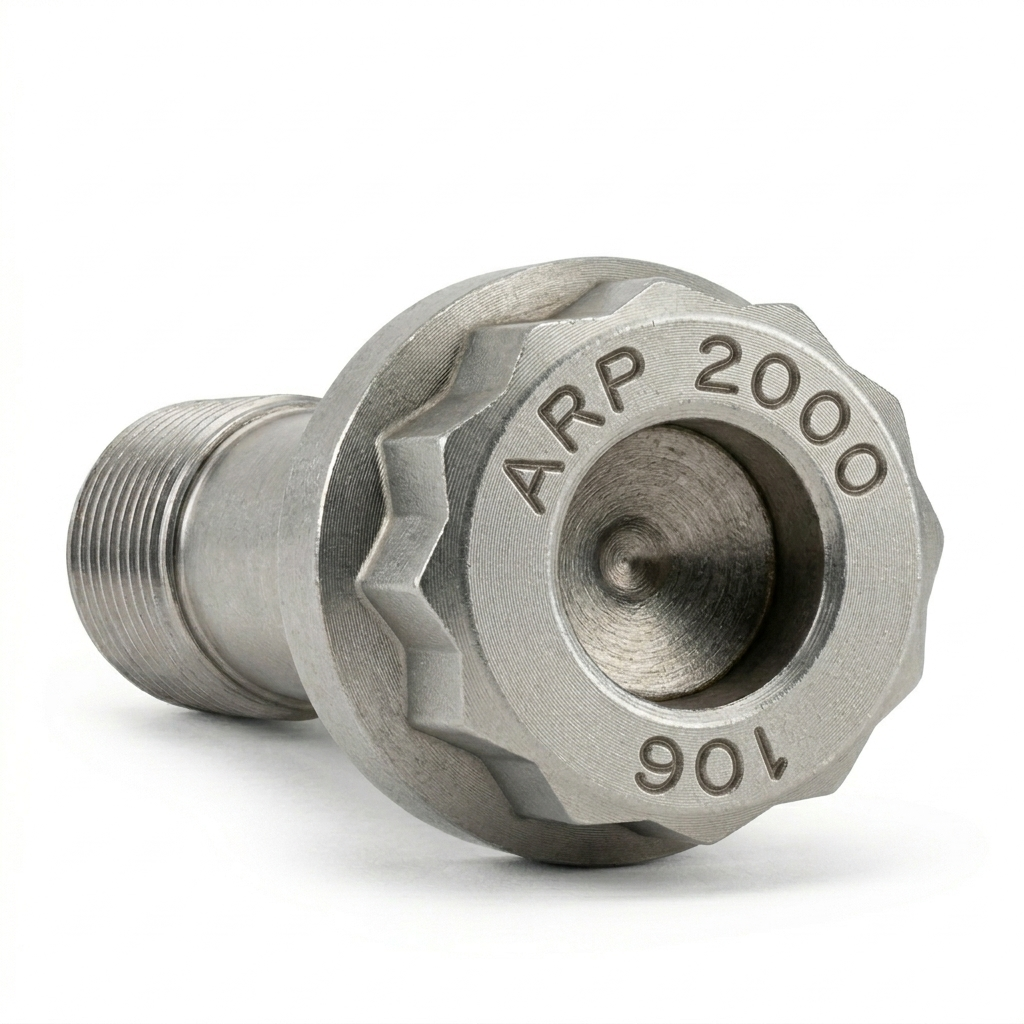 | ARP 2000 (tensile strength around 220,000 psi, i.e. ~1,517 MPa). Versatile high-performance hardware with no storage constraints: it handles up to 200 hp/cylinder in 3/8", at speeds up to 8,500 rpm. The robust, reliable choice for circuit, track day, drift, rally, drag and hillclimb. |
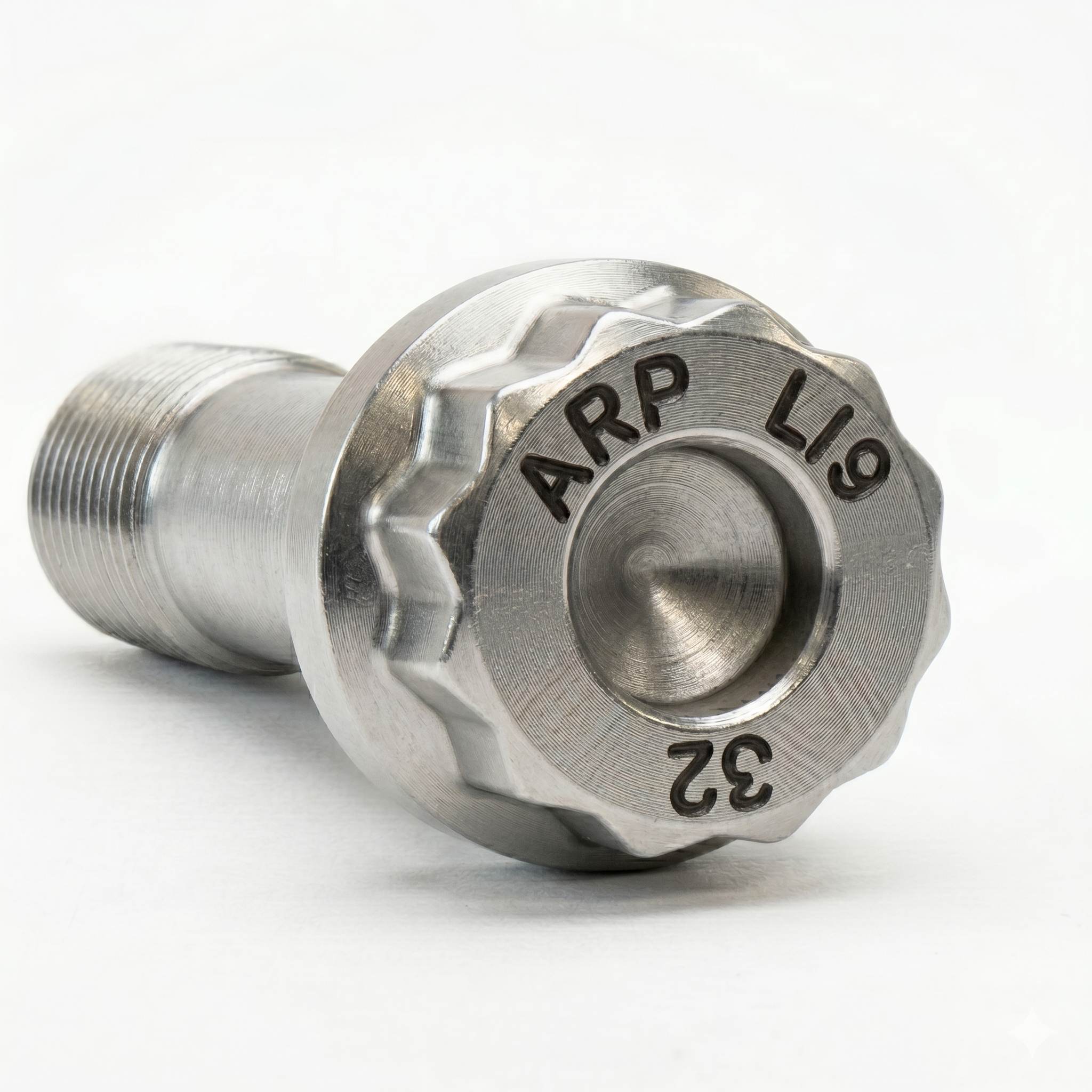 | ARP L19 (tensile strength around 260,000 psi, i.e. ~1,793 MPa). Designed for engines pushed to the extreme, high boost pressure and sustained high revs: up to 250 hp/cylinder in 3/8", up to 10,000 rpm. Sensitive to corrosion and hydrogen embrittlement, it is stored and fitted oiled. The choice for big-power builds in drag, drift, rally and circuit. |
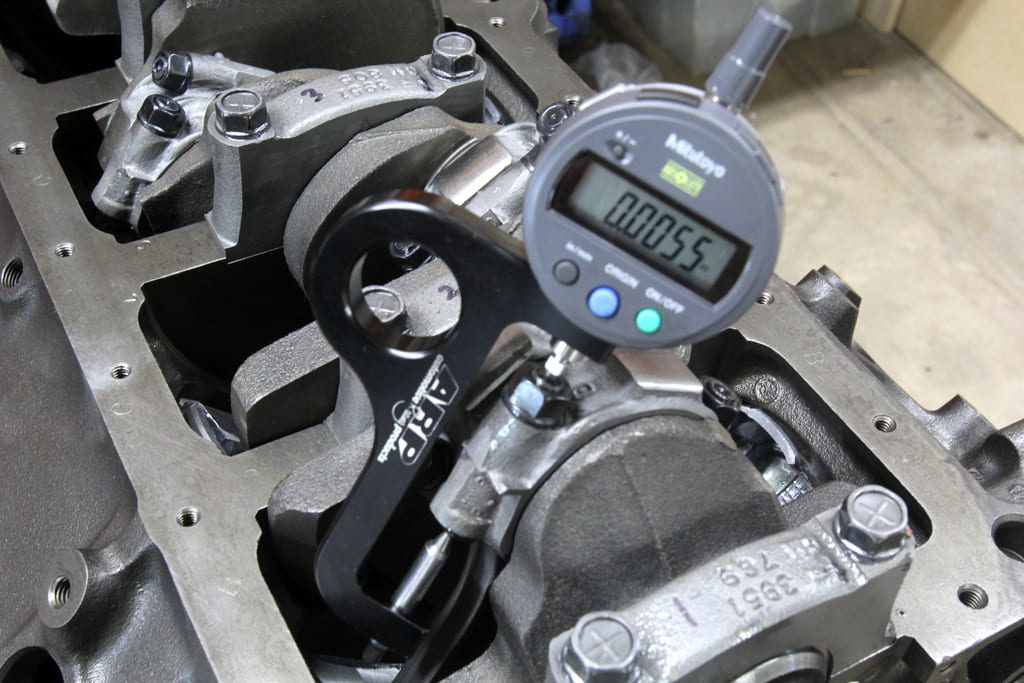
| In addition to torque tightening, measuring bolt stretch (with a dial indicator, or stretch gauge) is the reference method: it ensures consistent preload from one rod to the next, regardless of thread friction. Always refer to the stretch value recommended by the manufacturer, with the bolt fitted and lubricated with ARP grease. |
 | ZRP, a Greek forged connecting rod brand created by Alex Drakos (Drakos Engineering, Athens). A recognised specialist in forged engine parts, ZRP machines its rods from high-strength 4340 steel and balances them to ±1 g to stay reliable at high rpm. Offered here in I-Beam profile with ARP 2000 or ARP L19 hardware, they are designed and inspected in Greece, and proven in rally, on circuit and in drift. |
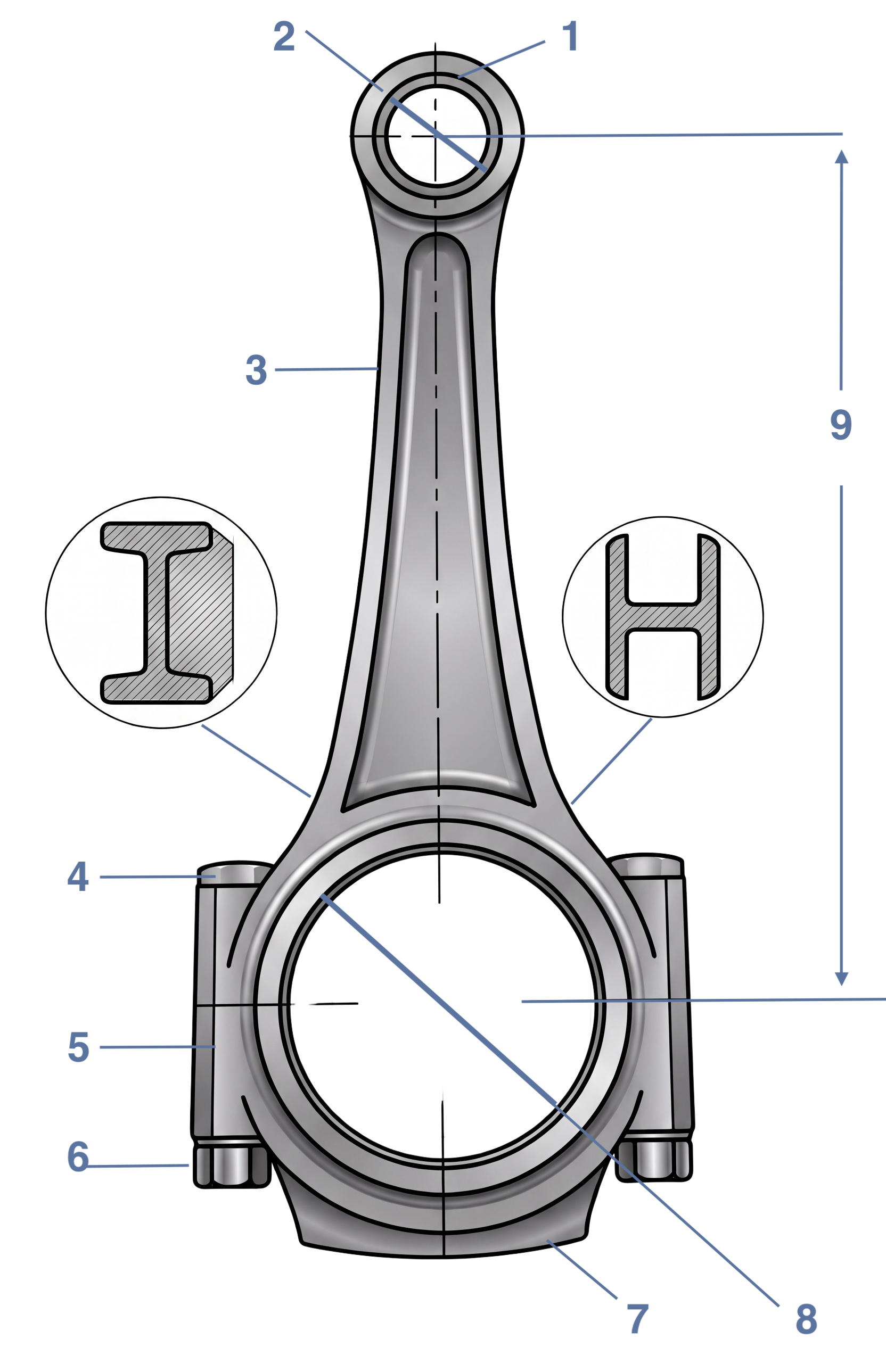 | 1) Small end 2) Small-end diameter 3) Rod beam 4) Rod bolt 5) Big end 6) Rod nut / bolt 7) Rod cap 8) Big-end diameter 9) Center-to-center |
These forged connecting rods are compatible with all vehicles fitted with the Citroën / Peugeot EP6 turbo engine (1.6L 16V THP):
| Brand | Model (chassis) | Engine code | Power | Years |
|---|---|---|---|---|
| Citroën | C4 / C4 Coupé (LA, LC) 1.6 THP | EP6DT | 140–150 hp | 2008–2011 |
| Citroën | C4 Picasso / Grand Picasso (UD, UA) 1.6 THP | EP6DT | 140–150 hp | 2008–2013 |
| Citroën | C5 III (RD) 1.6 THP | EP6DT | 163 hp | 2011–2014 |
| Citroën | DS3 (SA) 1.6 THP / Racing | EP6DT / EP6CDT / EP6DTS | 150–207 hp | 2010–2015 |
| Citroën | DS4 (NX) 1.6 THP 200 | EP6DTX / EP6CDTX | 200 hp | 2011–2015 |
| Citroën | DS5 1.6 THP | EP6CDTM / EP6DTX | 165–200 hp | 2011–2015 |
| Peugeot | 207 / 207 CC / 207 SW (WA, WC, WD, WK) 1.6 THP / RC | EP6DT / EP6DTS | 150–174 hp | 2006–2013 |
| Peugeot | 308 / 308 CC / 308 SW (4A, 4B, 4C) 1.6 THP | EP6DT / EP6DTS | 140–174 hp | 2007–2014 |
| Peugeot | 3008 I (0U) 1.6 THP | EP6CDTM | 150 hp | 2009–2016 |
| Peugeot | 5008 I (0U) 1.6 THP 150 | EP6DT | 150 hp | 2012–2017 |
OEM reference:
When an original bottom end fails (a broken, bent or scored rod), returning to the factory configuration means replacing both the connecting rods and the pistons, which are often damaged at the same time. The bill rises quickly for a mere restoration. For a comparable budget, sometimes less, fitting forged rods brings far greater reliability and safety margin, and opens up genuine potential for more power. It has been the choice of European tuners for over fifteen years: for the same budget, more reliability, more potential and more longevity.