Product successfully added to your shopping cart
Quantity
Total
There are 0 items in your cart. There is 1 item in your cart.
Total products
Total shipping To be determined
Total

3.0L 24v - CTMA
Manufacturers
3.0L 24v - CTMA
Warning: Last items in stock!
New product
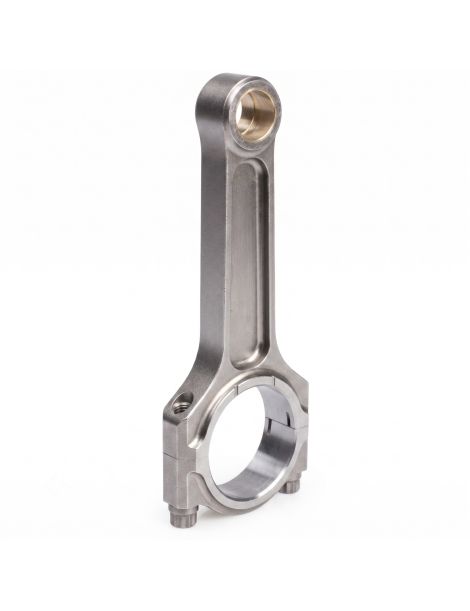
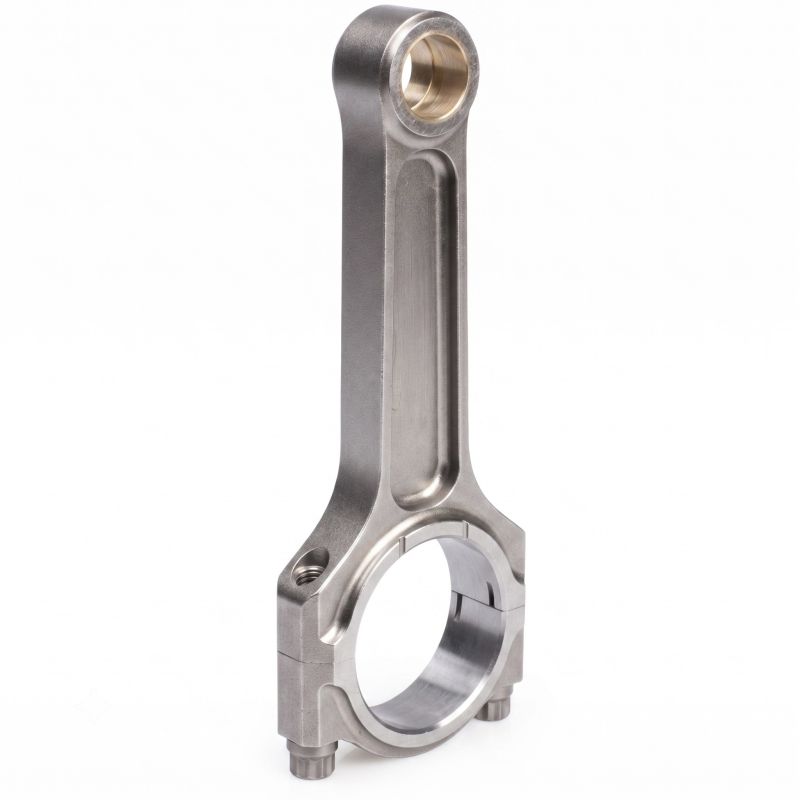
Set of 6 forged 4340 steel connecting rods for Porsche Macan S 3.0 V6 Biturbo.
The Porsche Macan S introduces a 3.0-litre petrol V6 fed by two turbochargers nested inside the vee (hot-vee layout), for sharp response and torque available low in the rev range. With a displacement of 2,997 cc (96 mm bore, 69 mm stroke), it delivers 340 hp in the Macan S and 360 hp in the Macan GTS (95B, 2014-2018).
As soon as boost pressure is raised or the ECU is remapped, the rotating assembly takes loads far beyond those it was designed for. Forged 4340-steel connecting rods then secure the bottom end and make power gains durable, safe from failure.
A key wear part of the engine, the connecting rod links the piston to the crankshaft and turns the piston’s travel into rotation. With every combustion it is firmly compressed, then stretched as the piston heads back up. On a stock engine these stresses stay within a safe range; in a build, as boost pressure and engine speed rise, they grow and the factory rod, generally sintered for mass production, becomes the likely failure point.
Hot-forged from an alloy steel, the reinforced rod has a continuous grain flow that multiplies its resistance to fatigue and breakage. Ground, balanced and completed by high-performance hardware, it brings lasting bottom-end reliability. Fitting it becomes unavoidable with forged pistons, raised boost, higher revs or a displacement increase. Designed for built engines, these forged rods suit every discipline (rally, drift, drag racing, circuit and track days, hillclimb, time attack) and support Stage 2, Stage 3 and Stage 4+ builds, up to full competition engines.
| Reference | Brand | Profile | Bolts | Pin diameter | Small-end width | Big-end diameter | Big-end width | Center-to-center | Weight per rod |
|---|---|---|---|---|---|---|---|---|---|
| R-POR-003-I | ZRP | I | ARP 2000-3/8"-38mm | 23 mm | 55.6 mm | 21.9 mm | 162.4 mm | 515 g | |
| R-POR-003-I-L19 | ZRP | I | ARP L19-3/8"-38mm | 23 mm | 55.6 mm | 21.9 mm | 162.4 mm | 515 g |
| Rod | Bolts | Tightening torque | Recommended stretch |
|---|---|---|---|
| ZRP (R-POR-003-I) | ARP 2000 | 61 N·m | 0.140 – 0.152 mm |
| ZRP (R-POR-003-I-L19) | ARP L19 | 67.8 N·m | 0.152 – 0.165 mm |
On the Macan S CTMA, cleanliness governs the measurement: threads blown out and brushed, cap seating faces wiped, no sealant residue and no carbon left behind. A dirty thread absorbs part of the torque and will distort the stretch reading, with nothing visible when it is stripped down again. So you work rod by rod, keeping the gauge within reach rather than at the end of the run. The torque and stretch figures in the table come from the bolt manufacturer, ARP 2000 or ARP L19 in 3/8" 38 mm depending on the variant, and are to be followed scrupulously: stretch measured on the gauge remains the reference, torque acting as a safeguard.
4340 is a low-alloy steel with nickel, chromium and molybdenum, chosen in aerospace and motorsport for its blend of strength and impact tolerance. Forged and then hardened by quenching and tempering, it offers high tensile strength, top-tier fatigue life and the flexibility needed to take brutal loads without breaking. Against the sintered metal of a stock rod, designed for production cost, forged 4340 adds about 19% more yield strength, nearly 8% more tensile strength and 19 to 37% more fatigue endurance: its life under repeated loading is multiplied. That is why it stands as the reference material when pressure and engine speed rise. |
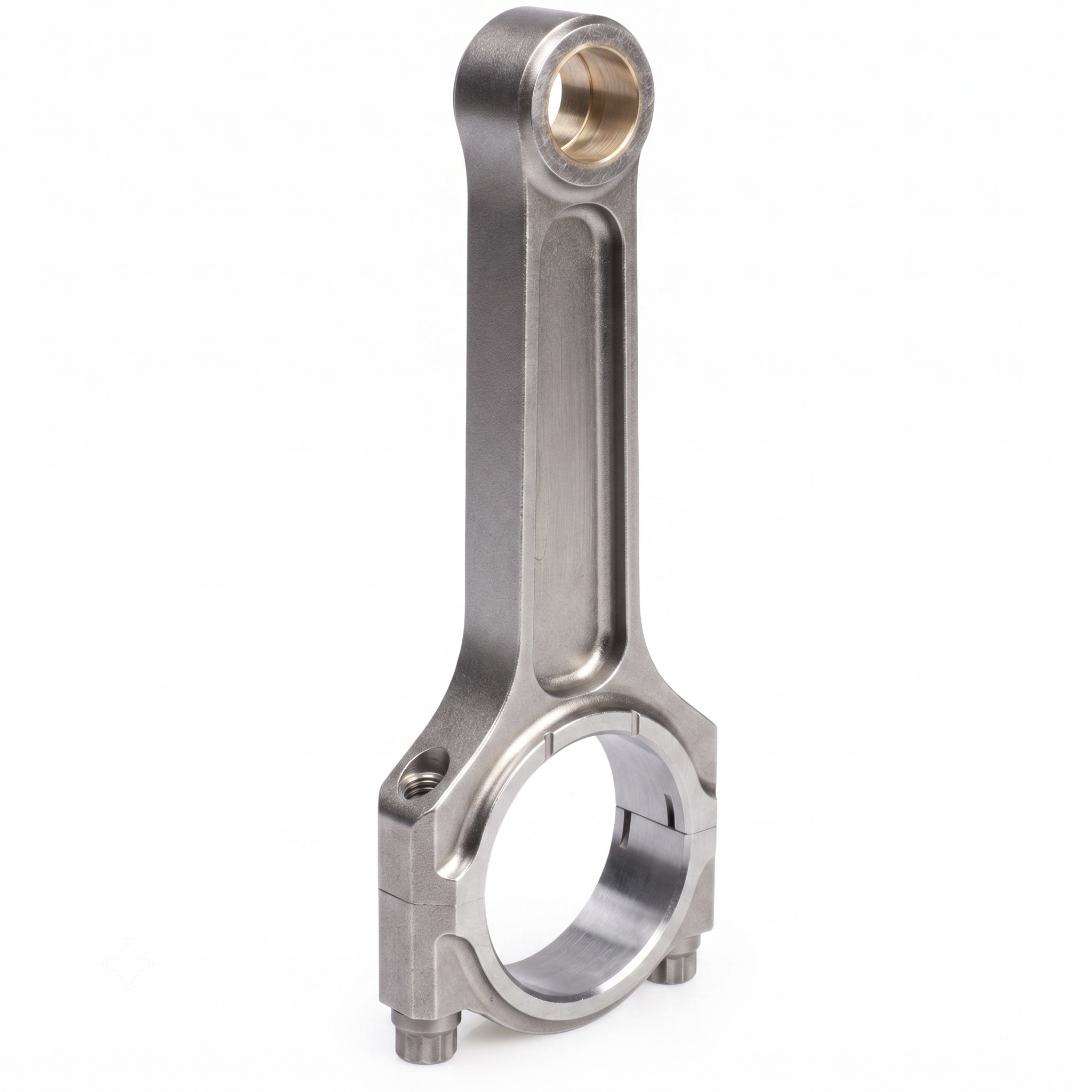 | I-beam profile: the body has an I-section, thinner in the middle. Compared with an H-beam it lowers reciprocating mass, lightens the assembly and favours crisp pickup. On a modern 3.0 biturbo V6 such as the Macan S unit, this profile is the best compromise between lightness and strength, from spirited road use to the track. It is the profile chosen for these rods. |
The rod bolt endures relentless load cycles to keep the cap fast to the big end: its quality decides the reliability of the whole. The right move is to choose the ARP grade according to the intended build, then to follow tightening torque and stretch to the letter. Two ARP grades are available for this engine:
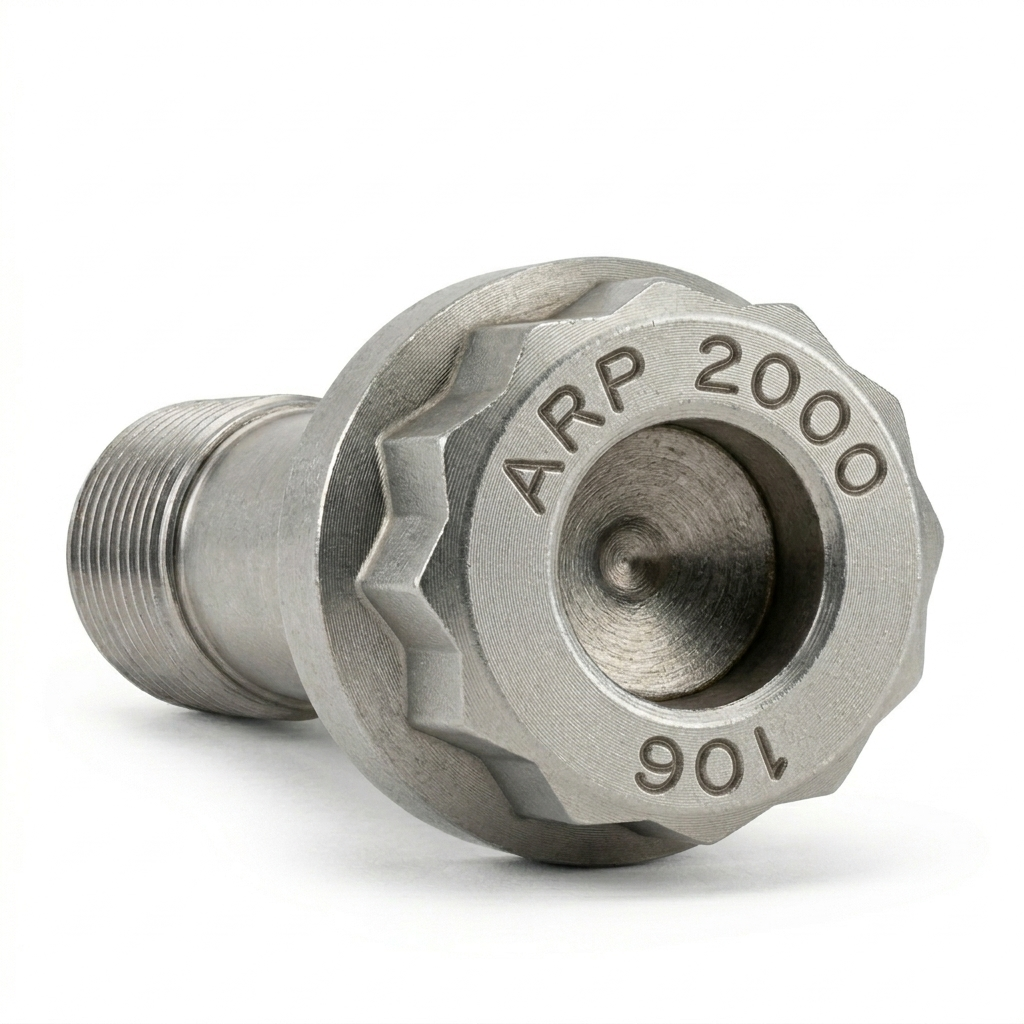 | ARP 2000 (tensile strength around 220,000 psi, i.e. ~1,517 MPa) is the benchmark high-performance grade. It covers builds up to 200 hp per cylinder in 3/8″, up to 8,500 rpm. Widely used in circuit racing, track days, drift, rally, drag and hillclimb, it combines robustness, reliability and versatility, with no particular storage constraint. |
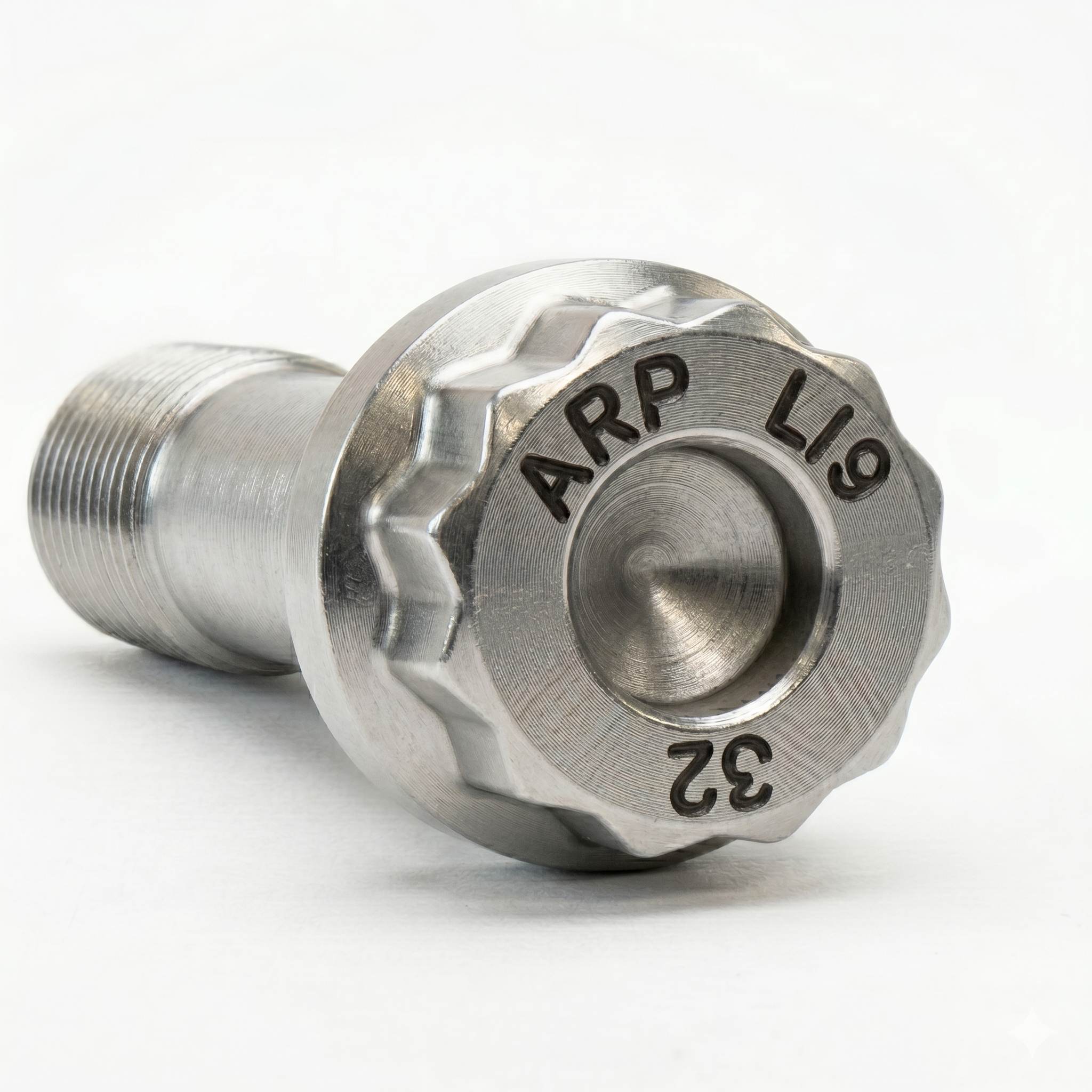 | ARP L19 (tensile strength around 260,000 psi, i.e. ~1,793 MPa) is aimed at extreme builds: up to 250 hp per cylinder in 3/8″, up to 10,000 rpm, under high boost pressure and sustained high revs. More specialised, the alloy fears corrosion and hydrogen embrittlement: it must be stored and fitted oiled, away from moisture. |
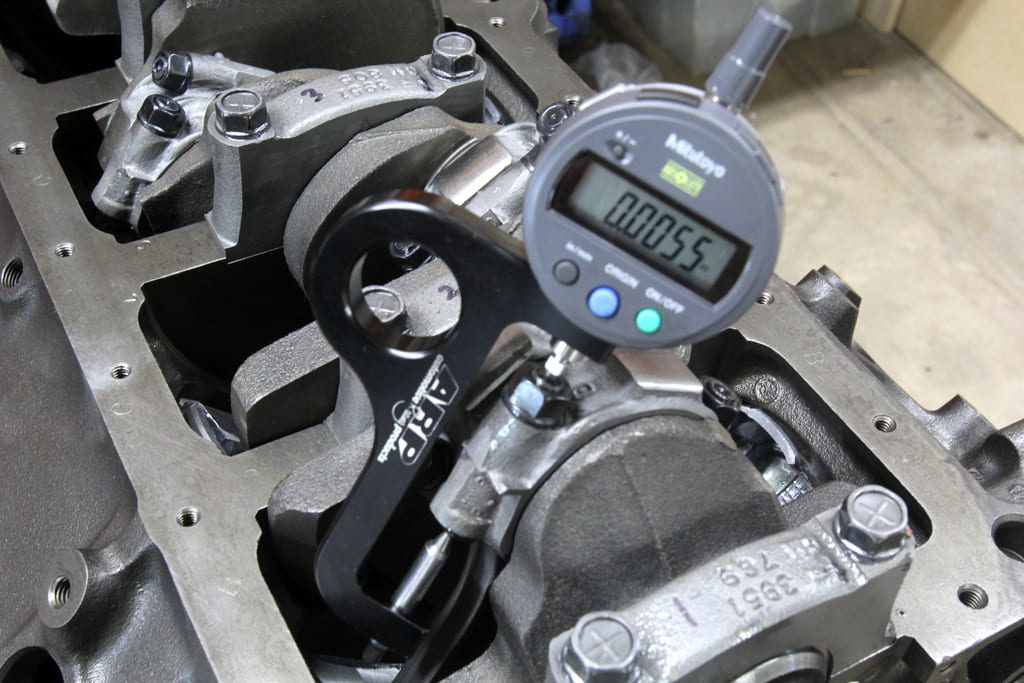
| More precise than torque tightening alone, measuring bolt stretch guarantees the intended preload. It is carried out with the bolt fitted: a gauge applied to both ends gives the actual stretch, to be matched against the recommended value (see the torque and stretch table above). By setting aside the friction uncertainties of torque tightening, it secures the assembly of highly built engines. |
 | ZRP is a Greek brand specialising in high-performance forged connecting rods, conceived in Athens by Alex Drakos. Forged from 4340 steel, each rod is meticulously machined and balanced to ±1 g to stay reliable at the top of the rev range. Developed and inspected in Greece, validated in rally, on track and in drift, they come here in I-beam profile with ARP 2000 or ARP L19 hardware. |
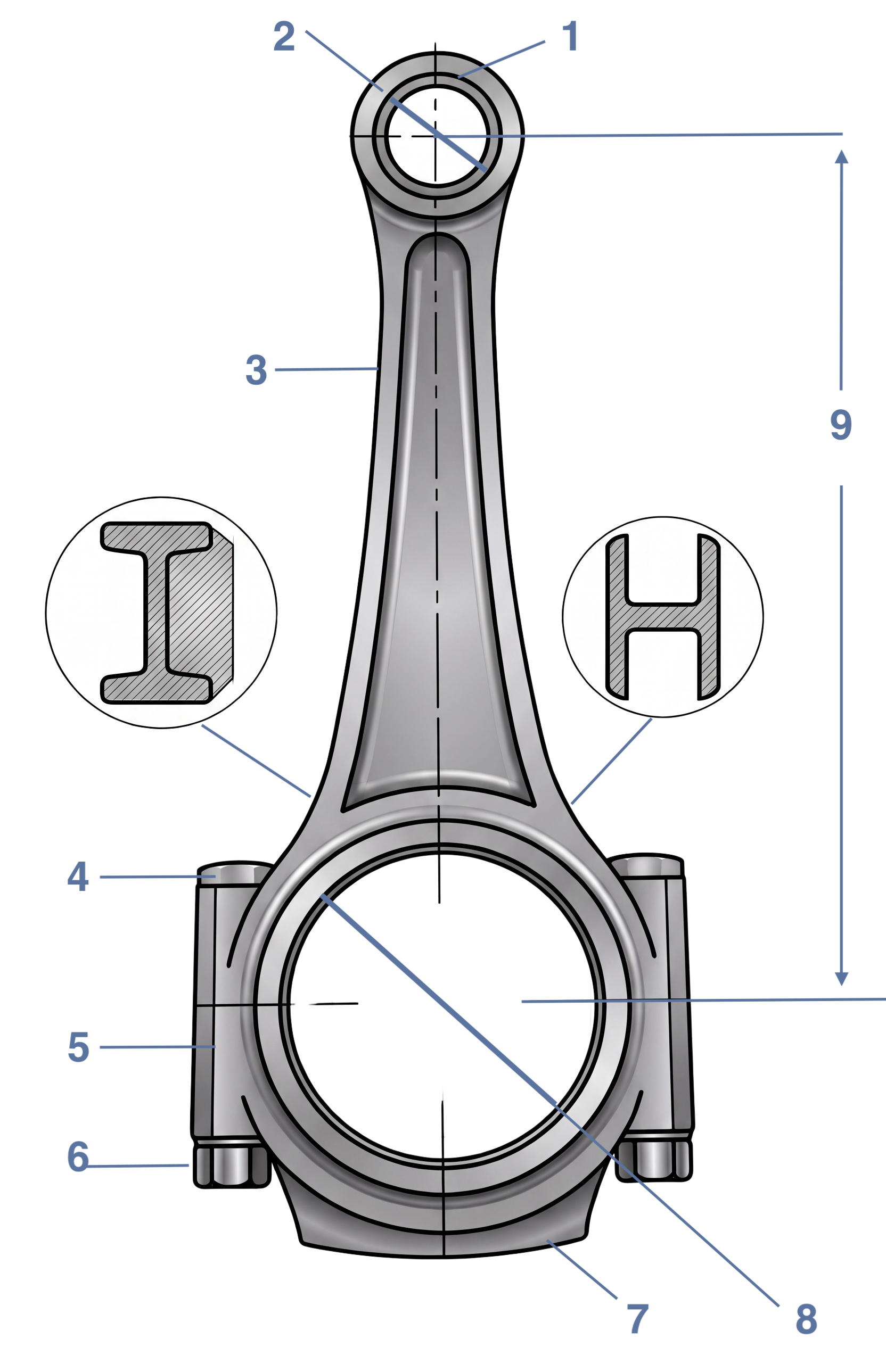 | 1) Small end 2) Small-end diameter 3) Rod beam 4) Rod bolt 5) Big end 6) Rod nut / bolt 7) Rod cap 8) Big-end diameter 9) Center-to-center |
These forged rods fit vehicles powered by the Porsche Macan S 3.0 petrol biturbo V6, listed below.
| Make | Model (chassis) | Engine code | Power | Years |
|---|---|---|---|---|
| Porsche | Macan S (95B) | CTMA | 340 hp | 2014 – 2018 |
| Porsche | Macan GTS (95B) | CTMA | 360 hp | 2016 – 2018 |
OEM reference:
Repairing a stock bottom end after a failure (a rod broken, deformed or scored) forces you to replace rods and pistons together, almost always damaged at the same time, just to get back to standard. The bill climbs fast, with no progress to show for it.
For a close, sometimes lower budget, choosing forged 4340 rods and forged pistons right at the build stage brings far higher reliability and safety margin, and unlocks real headroom for power gains. It is the choice European engine builders have made for more than fifteen years.
For the same budget: more reliability, more potential, more longevity.