Product successfully added to your shopping cart
Quantity
Total
There are 0 items in your cart. There is 1 item in your cart.
Total products
Total shipping To be determined
Total

2.5L 20v - CEPA CEPB
Manufacturers
2.5L 20v - CEPA CEPB
Warning: Last items in stock!
New product
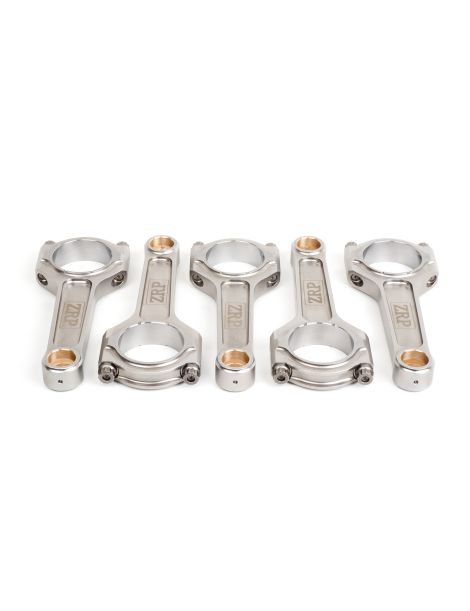
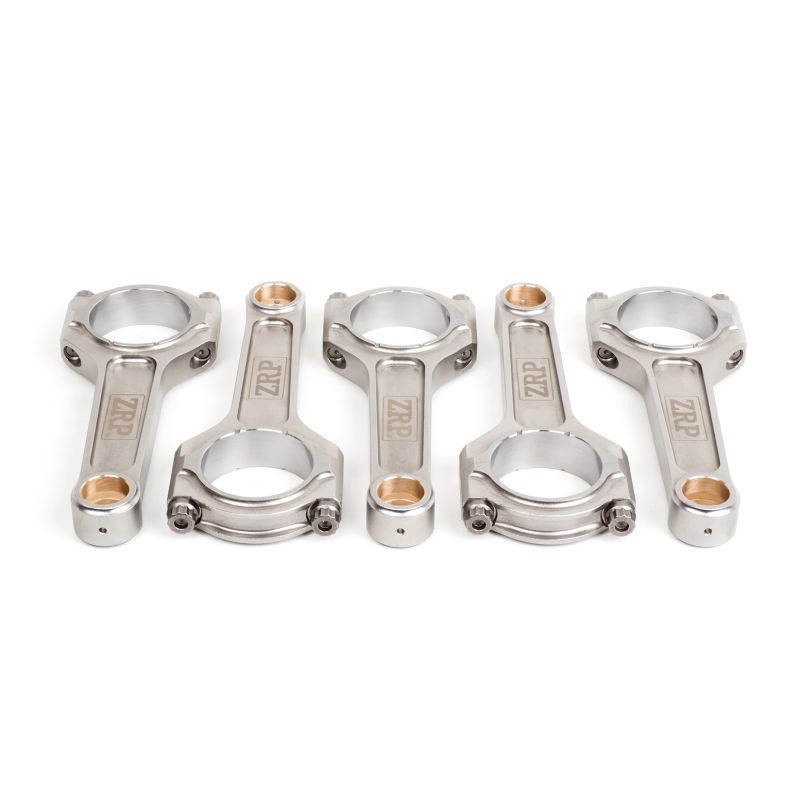
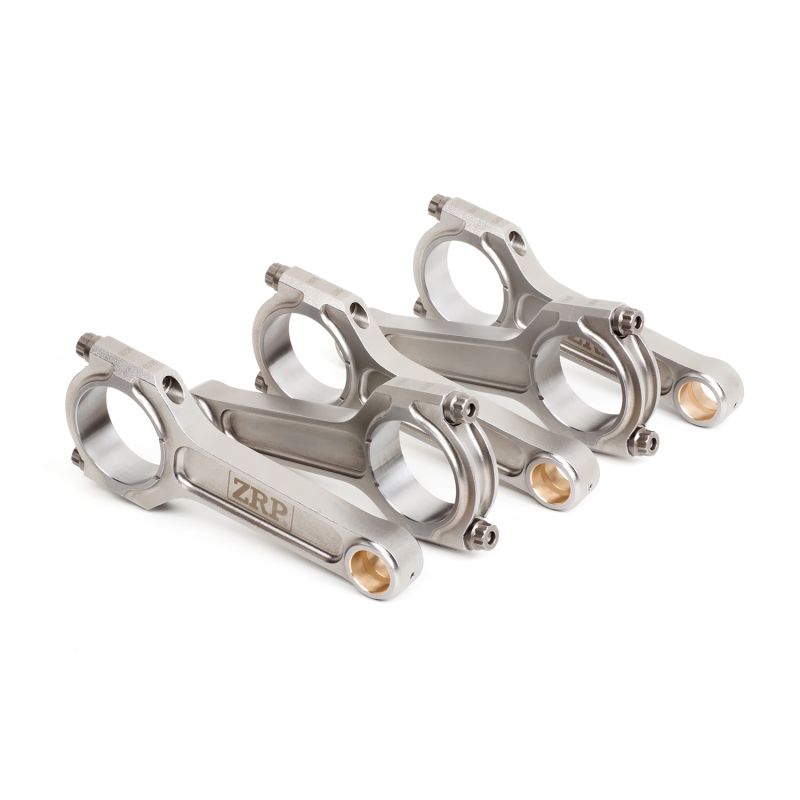
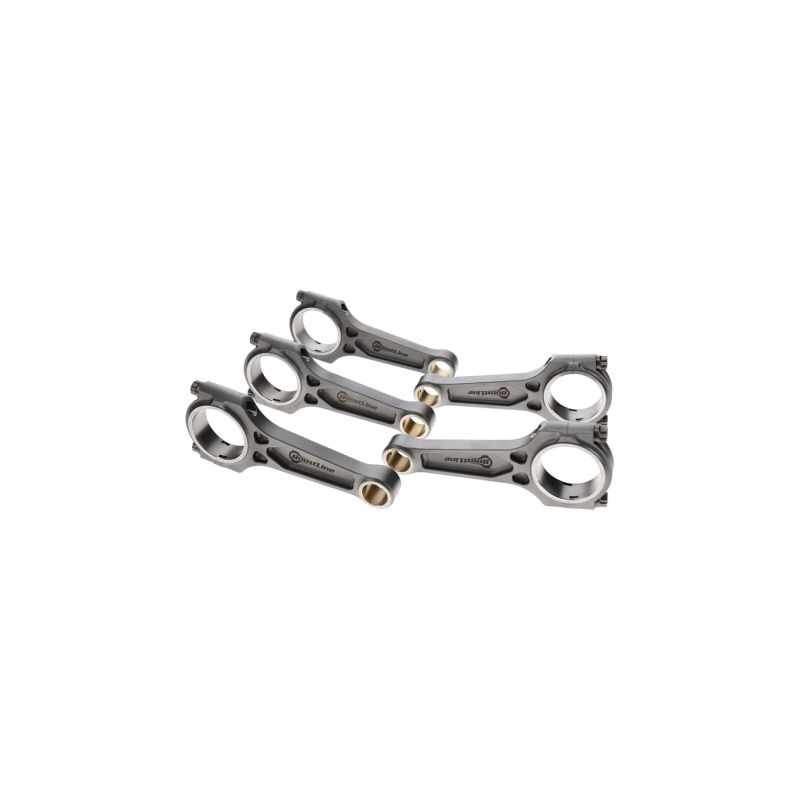
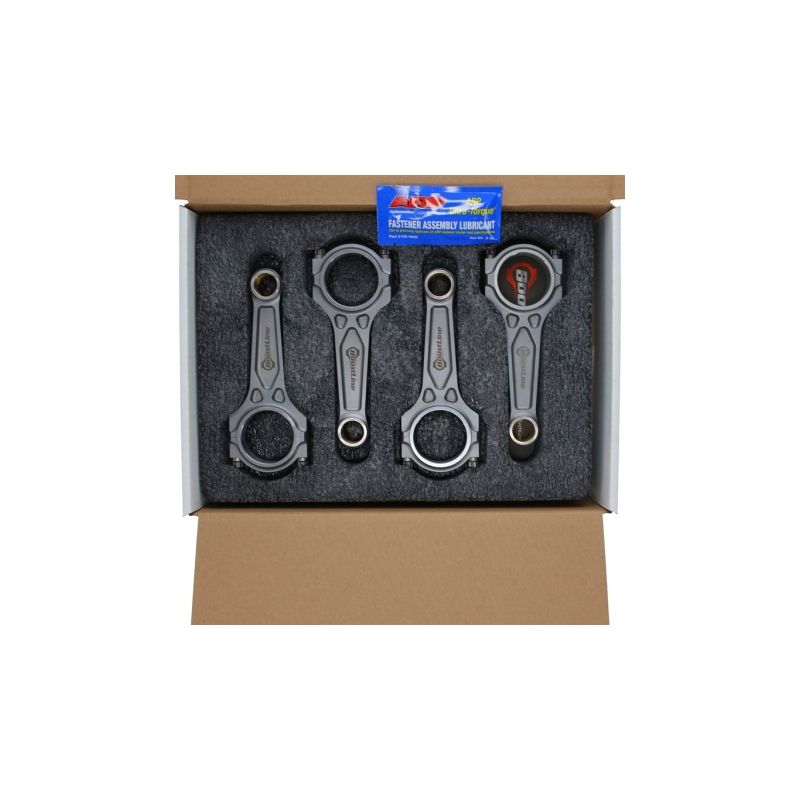
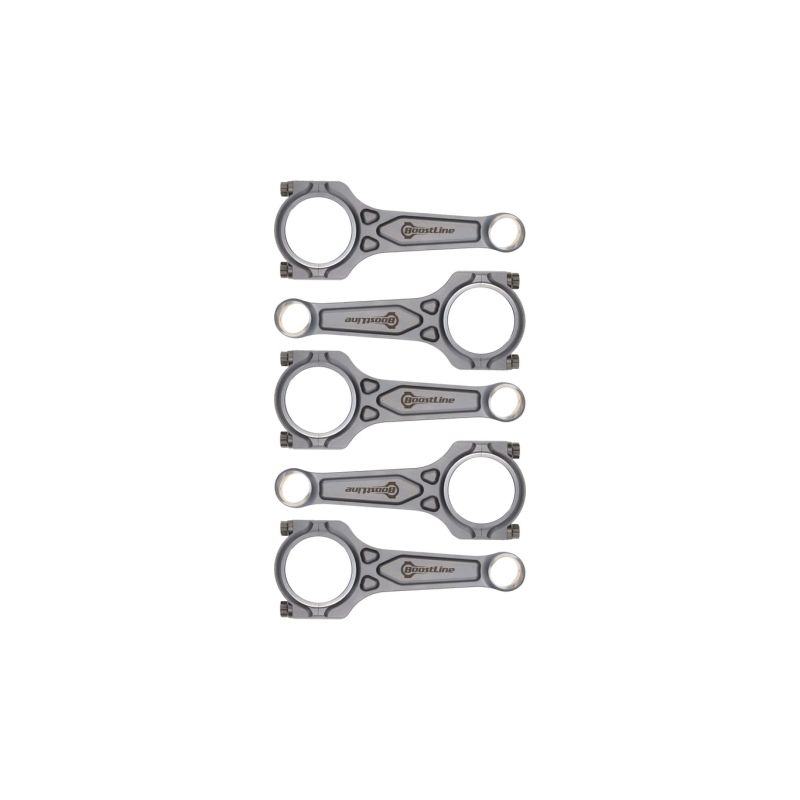
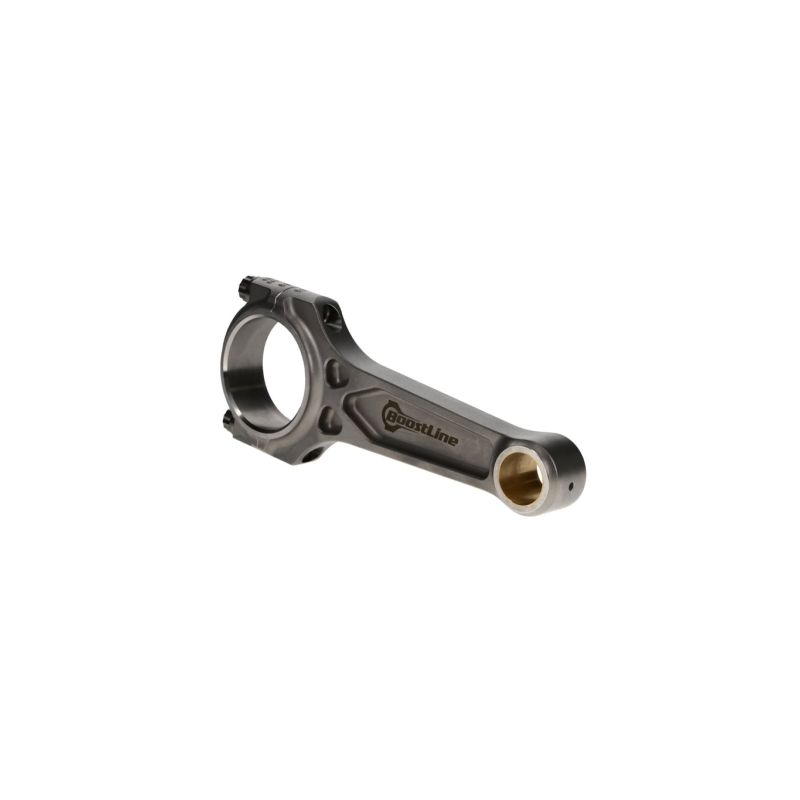
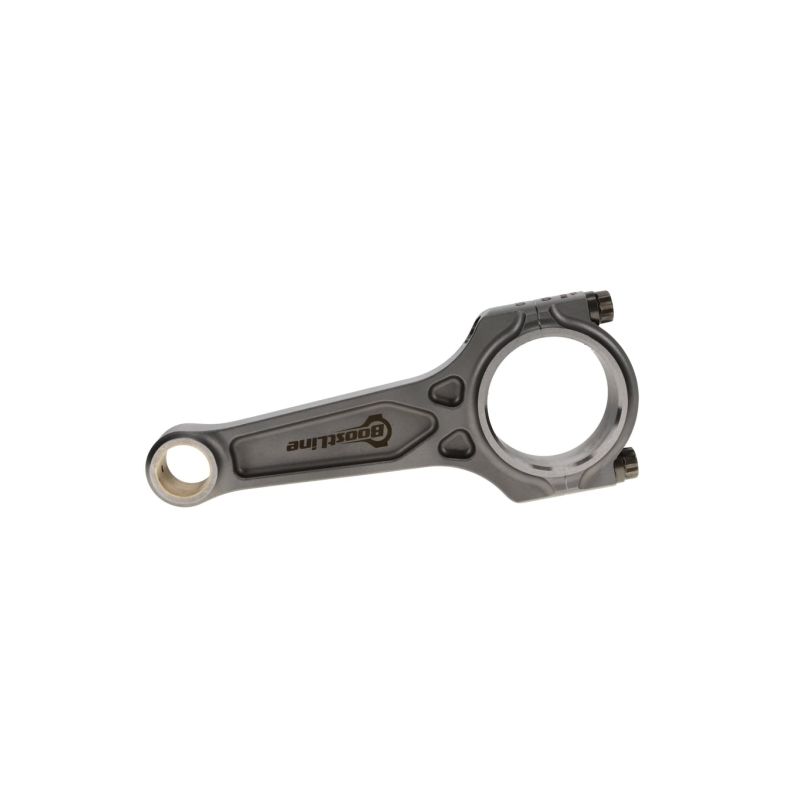
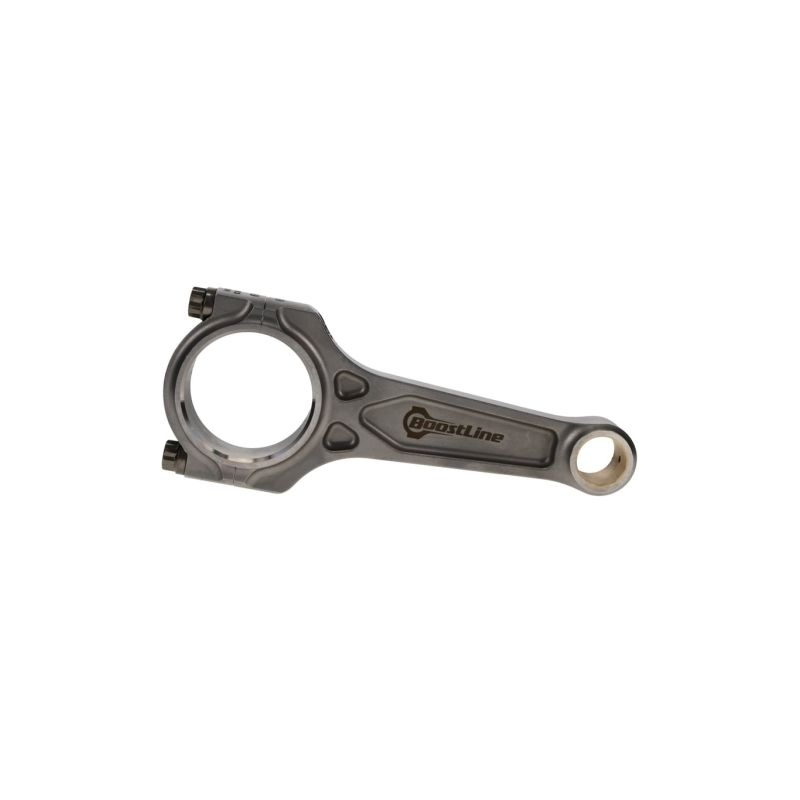
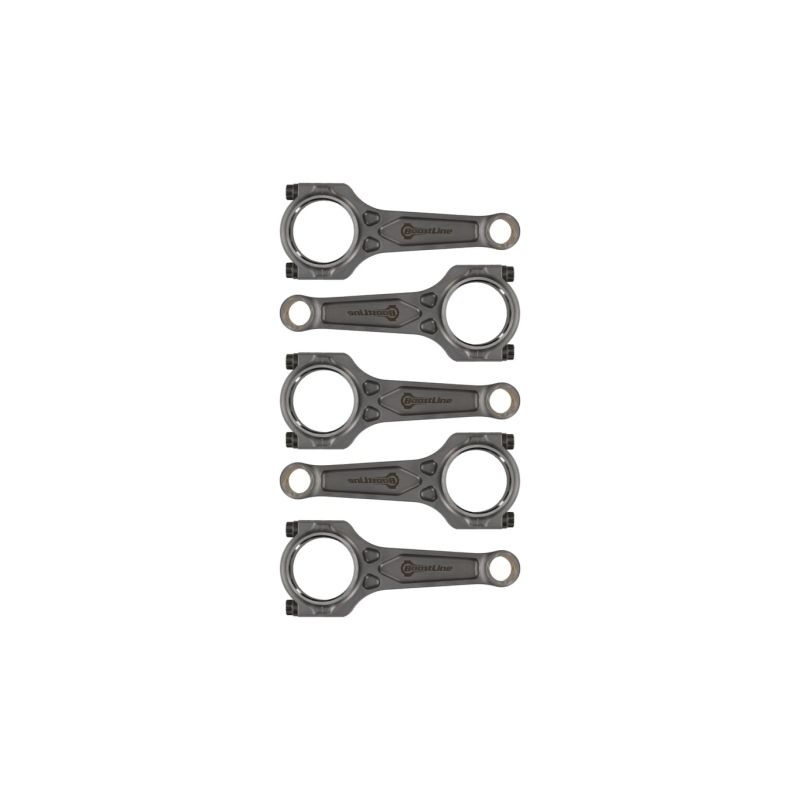
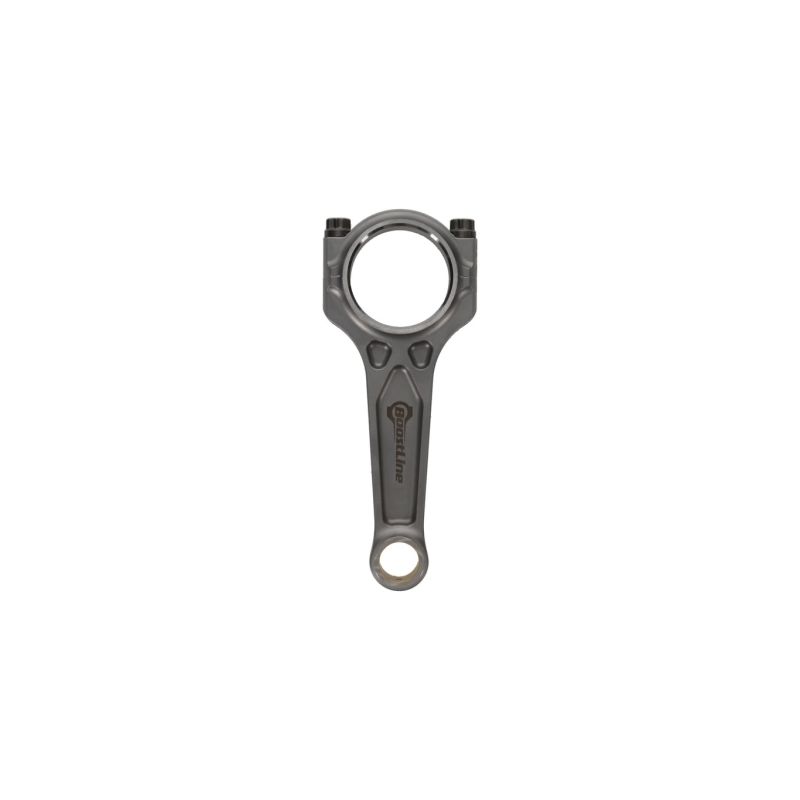
Kit of 5 ZRP and Boostline 4340 forged connecting rods for the Audi 2.5 TFSI EA855 (22 mm piston pin).
The 2.5 TFSI (engine code EA855) is a 2,480 cc inline five-cylinder with turbocharging and direct injection, launched by Audi in 2009 in the TT RS (8J). A direct descendant of the five-cylinders that built Audi's rally legend, it stands out for its 1-2-4-5-3 firing order and unmistakable soundtrack. With a twin-cam 20-valve head and a sturdy cast-iron block, its architecture was designed to withstand high boost pressures.
Also fitted to the RS3 (8P) and RS Q3 (8U), it produces 310 to 360 hp in stock form and has repeatedly won its class at the International Engine of the Year awards. Its strong torque and high tuning potential make it a favourite platform for performance builds; in return, the stock rotating assembly becomes the weak link as soon as power climbs, which is why race-grade forged connecting rods are worthwhile.
Forged and then machined from high-strength 4340 steel, these rods secure the bottom end as soon as power moves beyond standard. They become unavoidable when fitting forged pistons, raising the rev limit, increasing boost pressure or adding displacement, all cases where the standard EA855 rod, with its 22 mm pin and its 144 mm centre-to-centre length, reaches its endurance limit.
Designed for built engines, turbocharged as well as supercharged, they cover every discipline: rally, drift, drag racing, circuit and track use, hillclimb, time attack. They support Stage 2, Stage 3 and Stage 4+ builds, up to a fully rebuilt competition engine, and take the sustained rpm of racing in their stride.
| Reference | Brand | Profile | Bolts | Pin Ø | Small-end width | Big-end Ø | Big-end width | Center-to-center | Weight/rod | Oil hole |
|---|---|---|---|---|---|---|---|---|---|---|
| VW5670-866 | Boostline | I-3P | ARP 2000-3/8"-38mm | 22 mm | 50,6 mm | 144 mm | 614 g | No | ||
| VW5670-866+ | Boostline | I-3P | ARP CA625+-3/8"-38mm | 22 mm | 50,6 mm | 144 mm | 614 g | No | ||
| R-AUD-010-I-5 | ZRP | I-HD | ARP 2000-3/8"-38mm | 22 mm | 50,6 mm | 21,9 mm | 144 mm | 492 g | No | |
| R-AUD-010-I-5-L19 | ZRP | I-HD | ARP L19-3/8"-38mm | 22 mm | 50,6 mm | 21,9 mm | 144 mm | 492 g | No |
ZRP: Straight, non-tapered pin end.
| Rod | Bolts | Torque | Recommended stretch |
|---|---|---|---|
| Boostline (VW5670-866) | ARP 2000 | 75 N·m | 0,130–0,140 mm |
| Boostline (VW5670-866+) | ARP CA 625+ | 115 N·m | 0,170–0,180 mm |
| ZRP (R-AUD-010-I-5) | ARP 2000 | 61 N·m | 0,140–0,152 mm |
| ZRP (R-AUD-010-I-5-L19) | ARP L19 | 67,8 N·m | 0,152–0,165 mm |
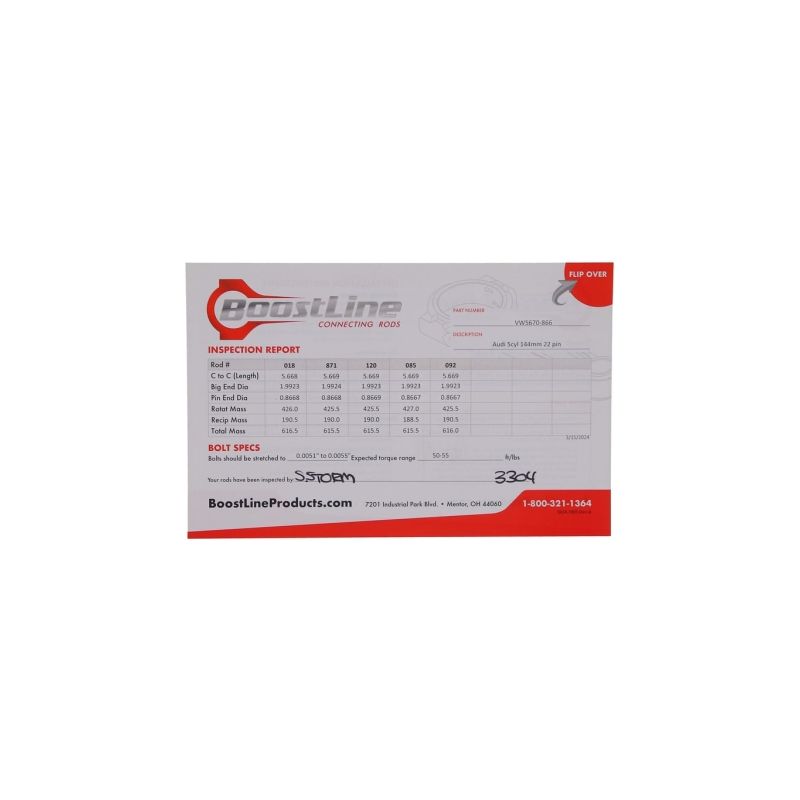
Rod preload cannot be corrected afterwards: once the engine is closed up, no inspection and no re-torque is possible, and there is no post-run-in retightening as there is on a head gasket. Everything is decided at assembly, which is what justifies the discipline required on the EA855: read the line of the table above matching the grade actually installed, ARP 2000 or ARP L19, and apply the bolt manufacturer’s value without rewording it. Torque helps you approach the target, but it splits the effort between friction and tensioning; it is stretch measured with a dial gauge that confirms the preload obtained, and it is the only check that will still be available later, once the engine is together. Clean threads, an even film of ARP assembly lubricant, tightening in alternating stages across the ten bolts. The kit instruction sheet is the final reference.
| 4340 steel is a nickel-chromium-molybdenum alloy steel used in aerospace and motorsport alike. Forged then heat-treated (quench and temper), it offers excellent tensile strength, high fatigue resistance and real ductility. Compared with an original rod (often sintered/powder metal, optimised for series-production cost), a 4340 forged rod shows roughly +19% higher yield strength, +8% higher tensile strength and above all +19% to +37% higher fatigue strength, i.e. a fatigue life under cyclic loading several times longer. This is what makes forged 4340 the reference material as soon as boost and rpm climb. |
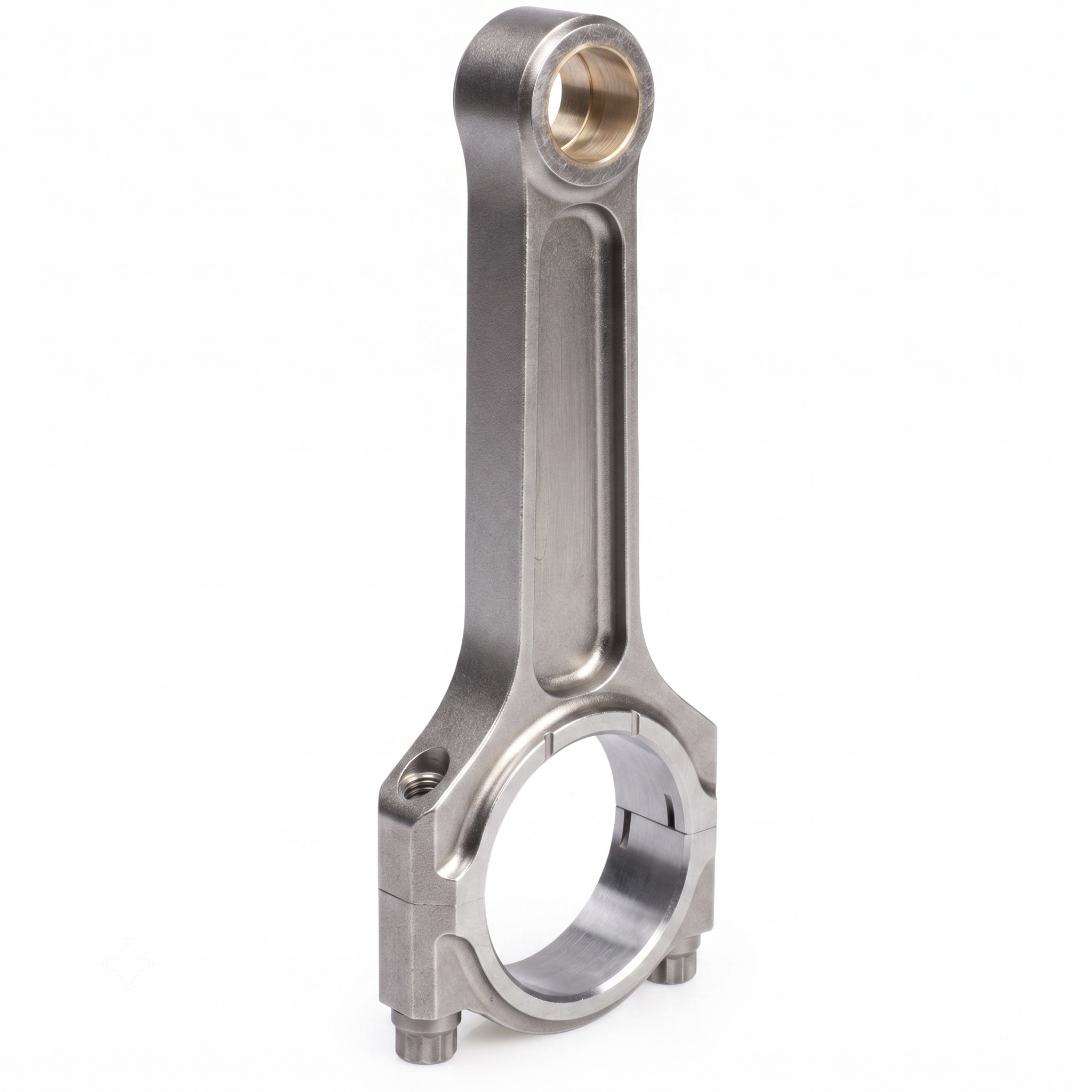 | I-beam profile. Its slimmer central section makes the I-beam the lighter of the two: less inertia at the end of the stroke, crisper pick-up and reduced load on the bearings, exactly what a five-cylinder that has to rev high needs. It is the reference profile on modern turbo engines such as the EA855. The I-HD (Heavy Duty) version offered here by ZRP keeps the same design with reinforced sections, to take the loads of high-boost builds. |
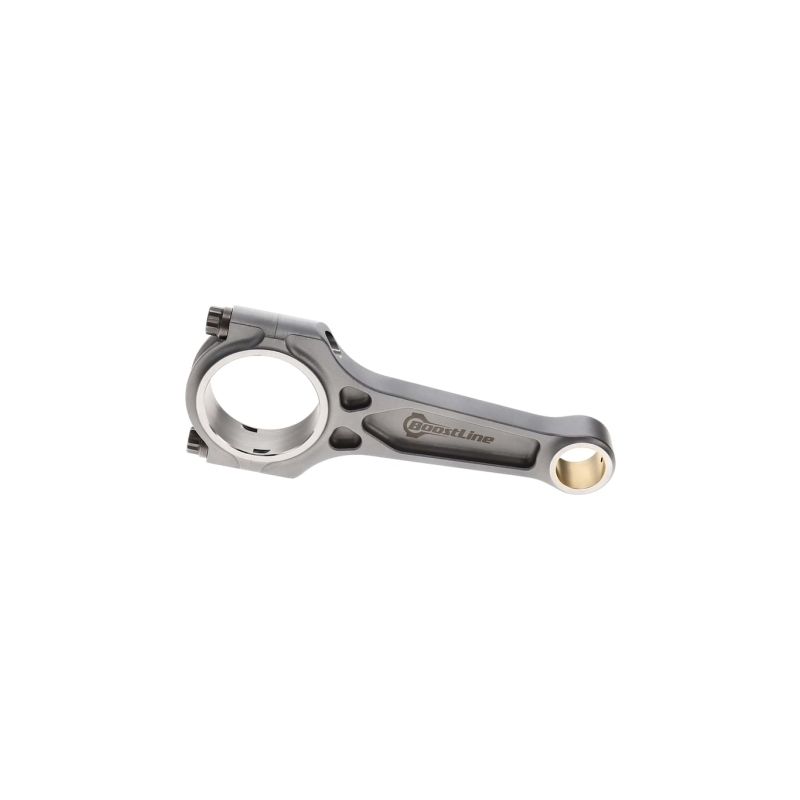
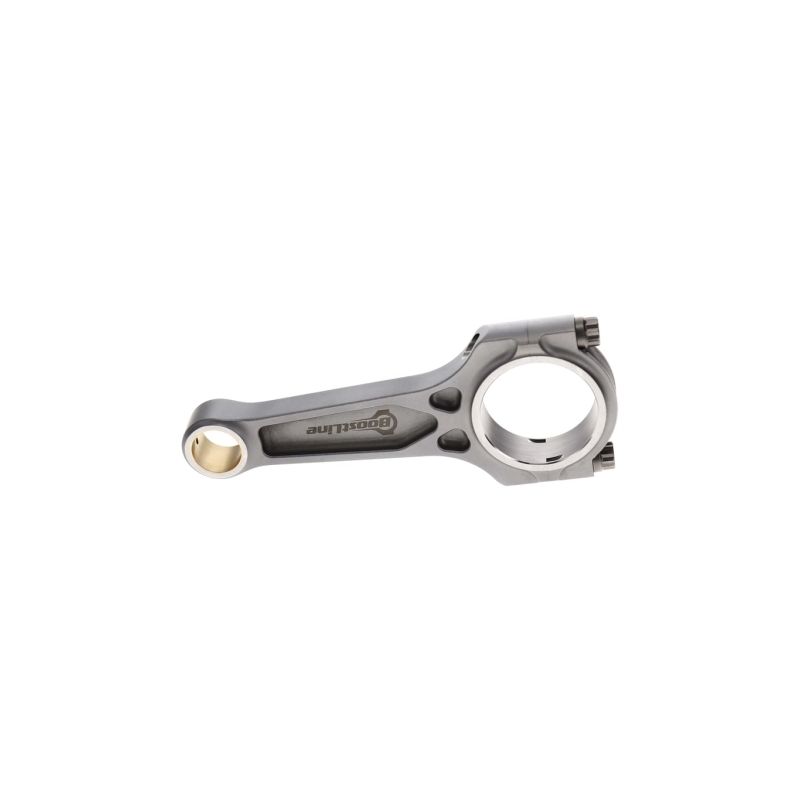
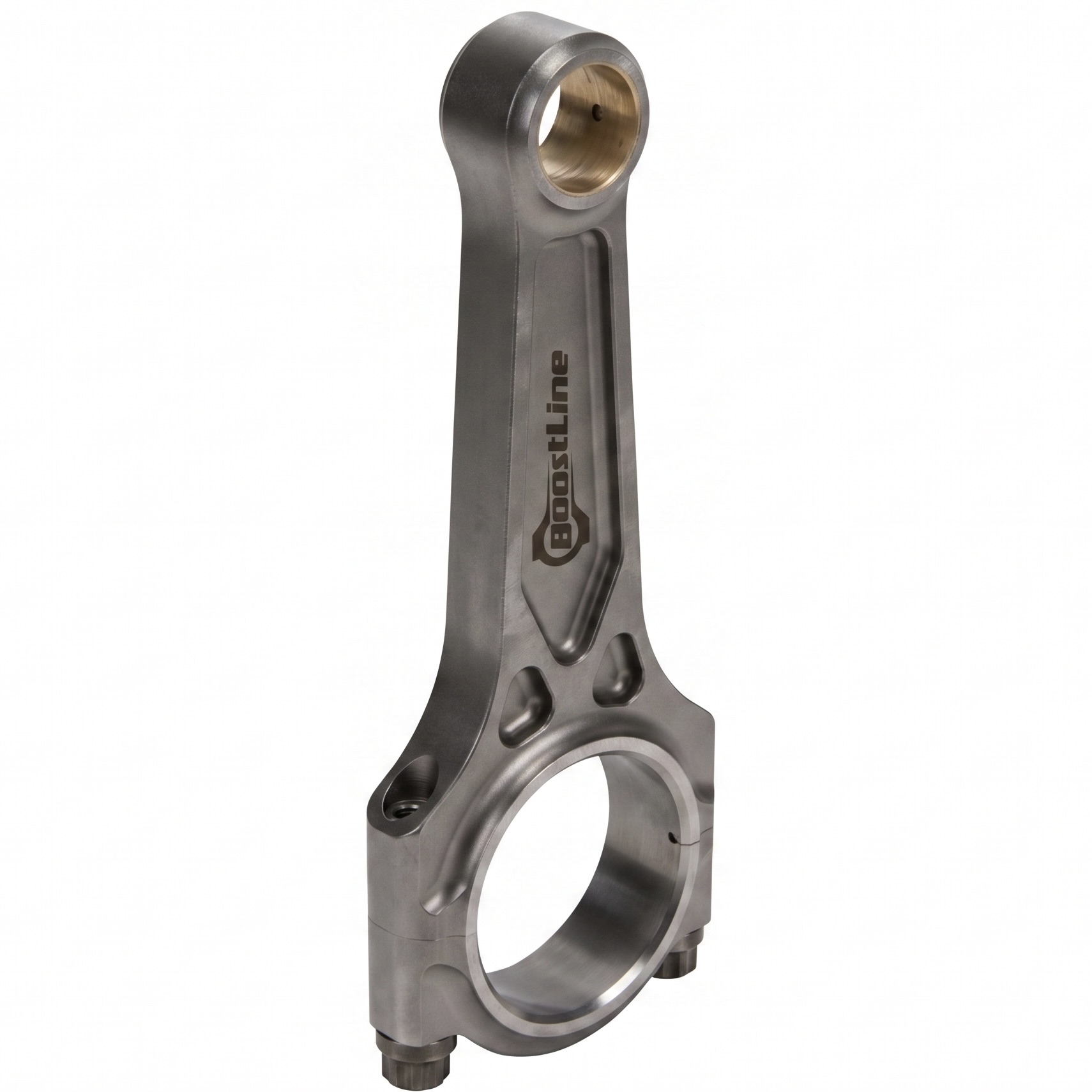 | I-3P profile (3-pocket I-beam, Boostline). A patented Boostline profile that keeps the lightness of an I-beam while triangulating the reinforcements around the big end: stiffness increases where the rod works hardest, without the weight penalty of an H-Beam. In practice it is the compromise chosen for builds that run repeated full-load pulls (drag, time attack, circuit) on this 2.5 TFSI. |
Drilled body or solid body: the rods on this page come with an oil hole (rifle drilled), a solution we recommend up to around 600 hp, where the oil passage does not penalise the strength of the beam. Beyond that 600 hp mark we point customers towards rods without an oil hole: the solid body, with no through drilling, keeps its full section and offers maximum strength.
The rod bolt works in pure tension at the end of every cycle: in practice it is what limits the rpm and the cylinder pressure the engine can accept. The choice is therefore made from real use rather than from a catalogue, according to the target power per cylinder, the working rpm and the type of load (low-rpm torque in rally, sustained rpm on circuit, brutal peaks in drag racing). On this 2.5 TFSI five-cylinder the three grades below are offered in 3/8"-38 mm; whichever grade you choose, the tightening torque and the bolt stretch must be followed exactly.
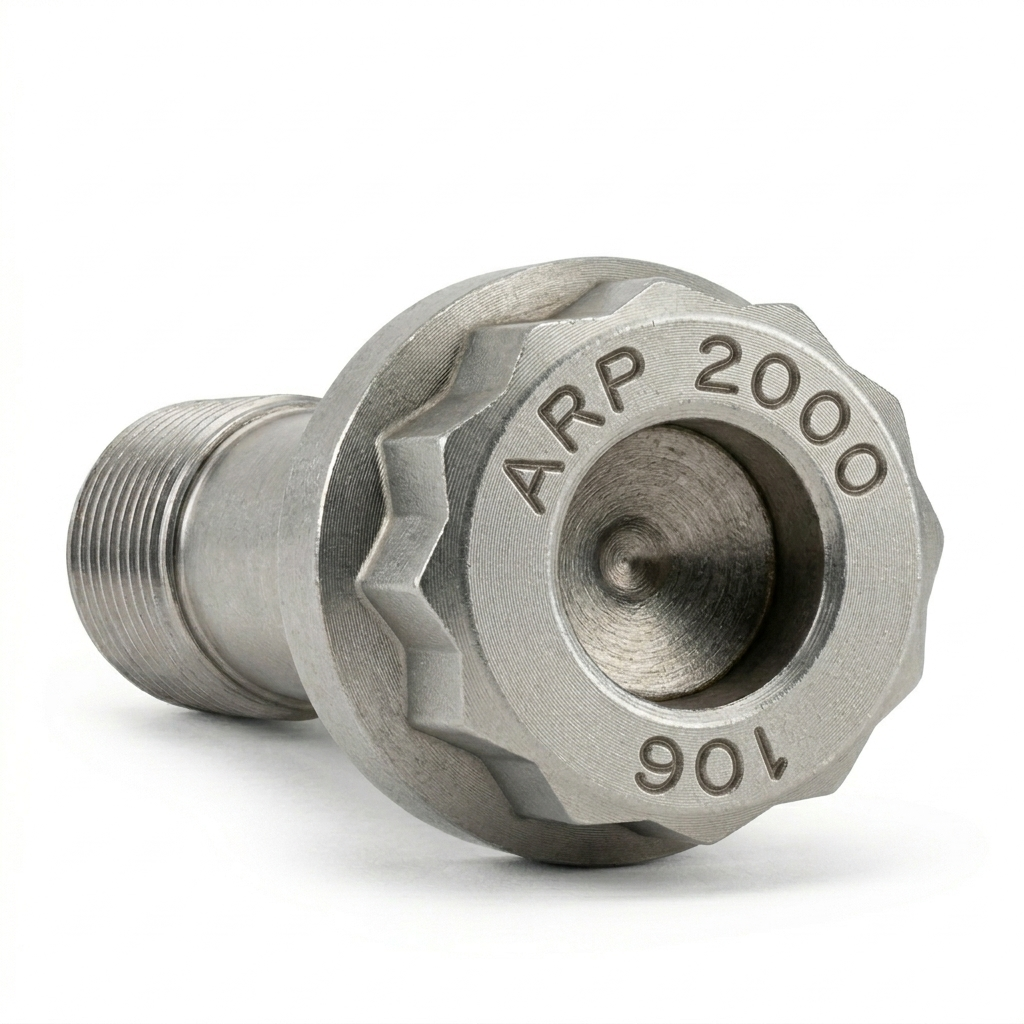 | ARP 2000, with a tensile strength of ~220,000 psi (~1,517 MPa), matches everyday competition use: up to 200 hp per cylinder in 3/8" and up to 8,500 rpm, which covers the vast majority of Stage 2 and Stage 3 EA855 builds. It is the grade found in circuit racing and track days, in drift, rally, drag racing and hillclimb, on ZRP I-HD rods as well as on the 144 mm Boostline I-3P. No particular storage constraint: fit it, check the stretch and forget it. |
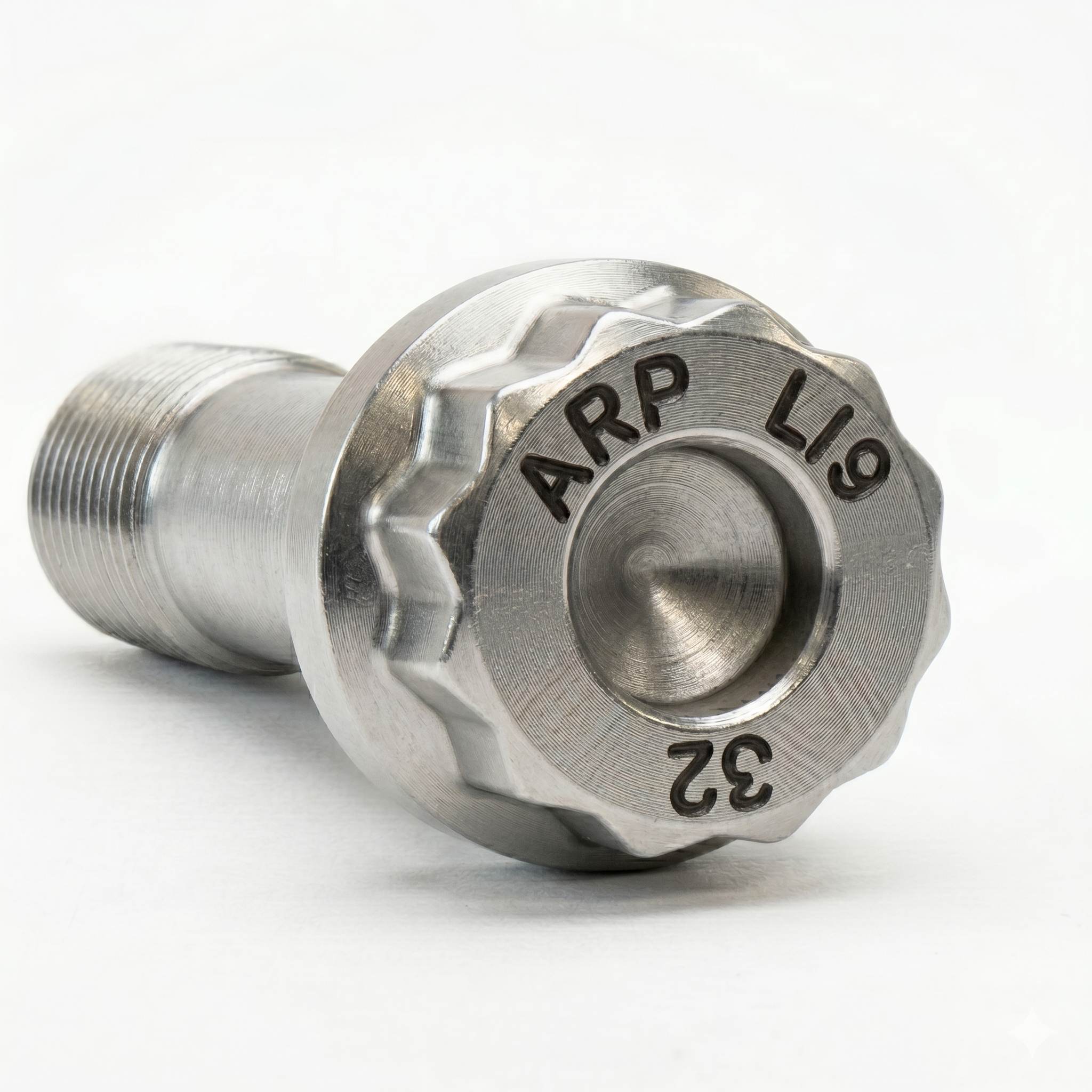 | L19 raises the bar to ~260,000 psi (~1,793 MPa), good for up to 250 hp per cylinder in 3/8" and up to 10,000 rpm. On a 2,480 cc five-cylinder running very high boost pressure, with high cylinder pressure and sustained high rpm, this is the grade that gives the necessary margin: drag, drift, rally and high-power circuit work. In return, the alloy is sensitive to corrosion and to hydrogen embrittlement: the bolts must be stored and fitted oiled, away from moisture, and never left bare on the workshop shelf. |
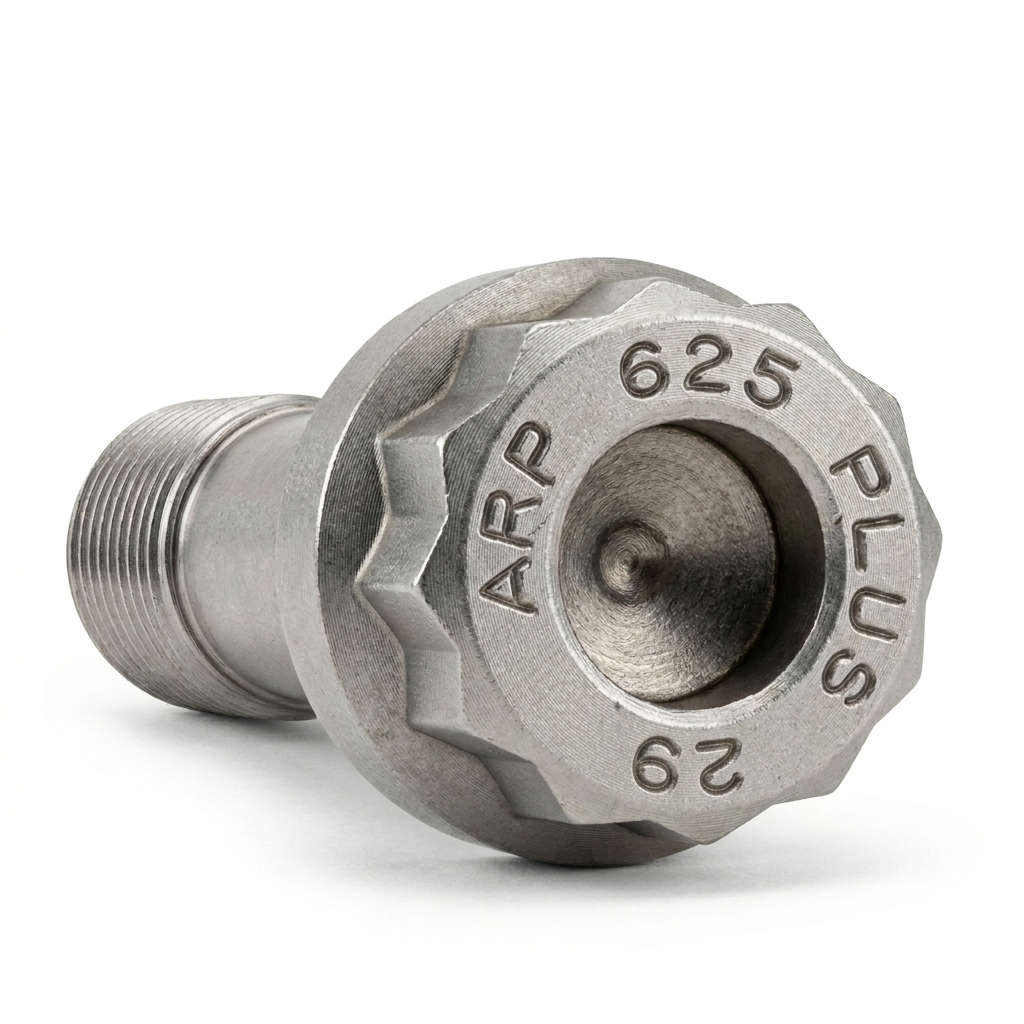 | CA625+ (Custom Age 625+) is ARP’s premium alloy: 260,000 to 280,000 psi (~1,793 to 1,931 MPa). It is aimed at the most extreme builds, beyond 250 hp per cylinder in 3/8" and beyond 10,000 rpm, typically a drag or time attack EA855 whose working rpm never drops. It withstands atmospheric corrosion and oxidation better than ARP 2000 and remains immune to hydrogen embrittlement: you get the level of the L19 without its storage constraints. On this listing it equips the Boostline I-3P. |
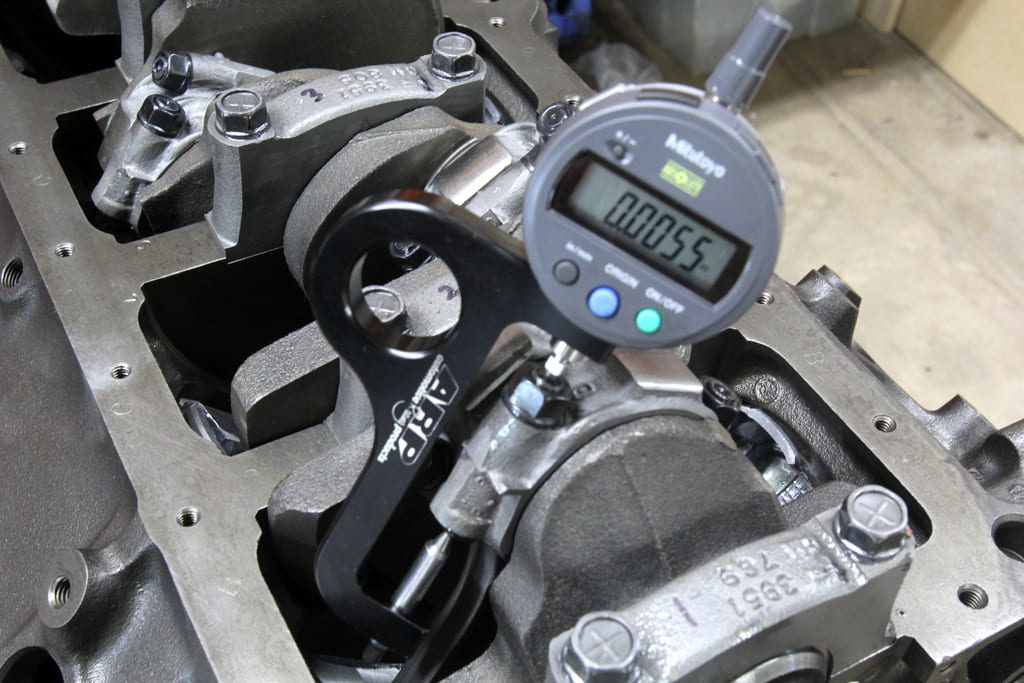
In addition to torque tightening, measuring rod-bolt stretch is the most reliable check for optimal preload. The check is done with the bolt fitted: place the gauge (dial indicator) on the two ends of the bolt and read its actual stretch, which must match the recommended value (see the torque & stretch table above). This method removes the friction variations inherent in torque tightening and secures the assembly on heavily stressed engines. |
 | BOOSTLINE (Wiseco group), a forged connecting rod range from the American Wiseco group, a benchmark since 1941. Its patented 3-pocket design combines the rigidity of an I-beam with the robustness of an H-beam. Forged from 4340 steel and machined in the USA, they come with ARP 2000 bolts (Custom Age 625+ optional) and are built for boosted engines. |
 | ZRP, a Greek brand of high-performance forged connecting rods, designed by Alex Drakos in Athens. Each rod is forged from 4340 steel, precision-machined and balanced to ±1 g to stay reliable at high rpm. Available in I-beam or H-beam profile with ARP 2000, L19 or Custom Age 625+ bolts, they are designed and inspected in Greece, and proven in rally, on circuit and in drift. |
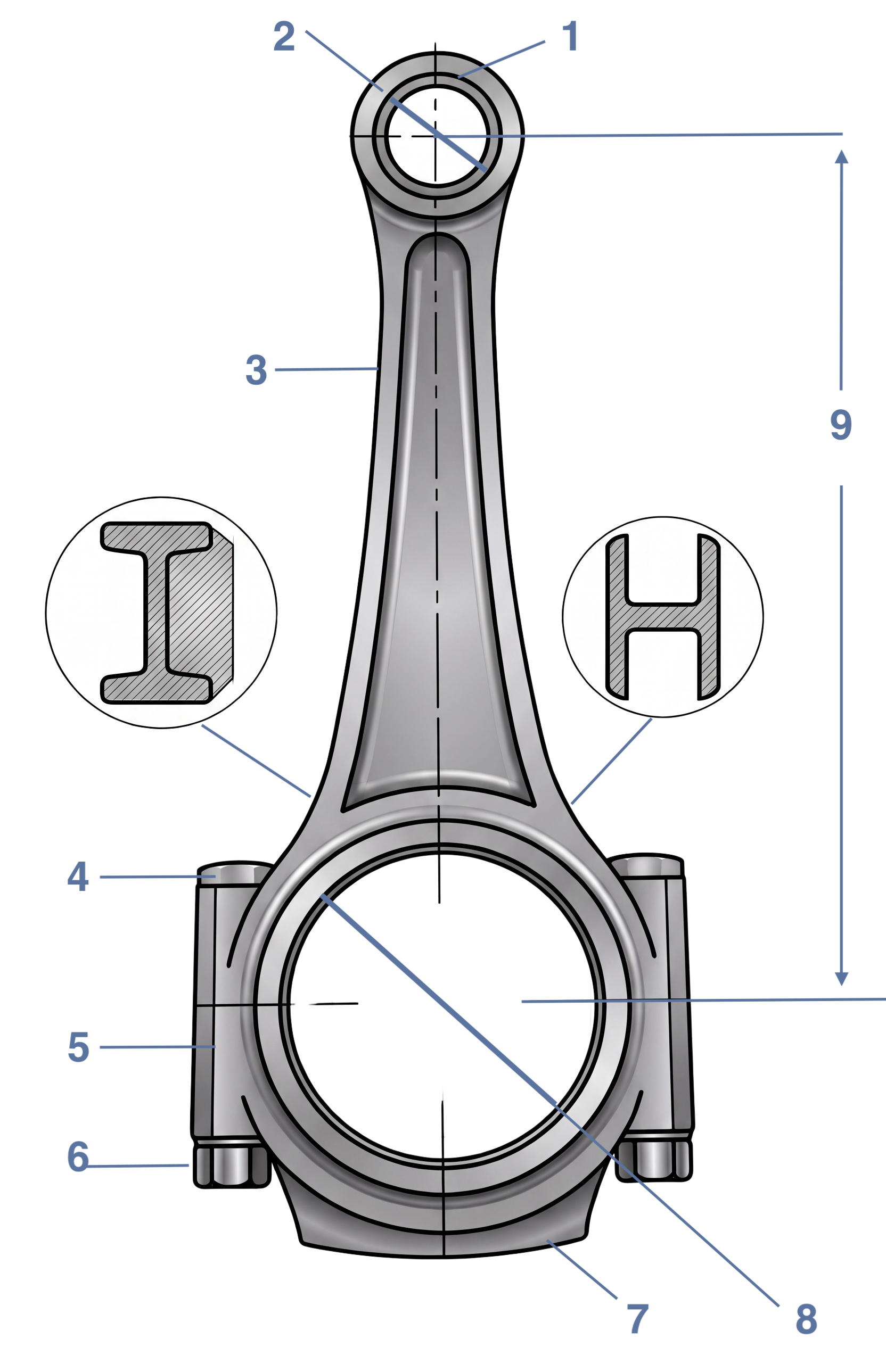 | 1) Small end 2) Small-end diameter 3) Rod beam 4) Rod bolt 5) Big end 6) Rod nut / bolt 7) Rod cap 8) Big-end diameter 9) Center-to-center |
These forged connecting rods fit the following Audi 2.5 TFSI engines (22 mm piston pin):
| Make | Model (chassis) | Engine code | Power | Years |
|---|---|---|---|---|
| Audi | TT RS (8J) | CEPA | 340 hp | 2009–2014 |
| Audi | RS3 (8P) | CEPA | 340 hp | 2011–2012 |
| Audi | TT RS Plus (8J) | CEPB | 360 hp | 2012–2014 |
| Audi | RS Q3 (8U) | CTSA | 310 hp | 2013–2015 |
| Audi | RS Q3 (8U) | CZGA | 340 hp | 2015–2018 |
Bottom-end damage never stops at the rod: when a standard rod on a 2.5 TFSI breaks, bends or scores, the matching piston is usually scrap as well. Going back to the factory configuration therefore means buying both rods and pistons, and the bill climbs fast for what is only a return to standard.
For an equivalent, often lower budget, a set of 4340 forged steel rods combined with forged pistons changes the nature of the bottom end: far greater reliability and safety margin, plus real room to increase power instead of starting again from scratch. This is what European engine builders have been doing for more than 15 years on boosted five-cylinders.
For the same budget the maths is simple: more reliability, more potential, more service life.