Product successfully added to your shopping cart
Quantity
Total
There are 0 items in your cart. There is 1 item in your cart.
Total products
Total shipping To be determined
Total

2.0L 16v - Cosworth YB N5
Manufacturers
2.0L 16v - Cosworth YB N5
Warning: Last items in stock!
New product
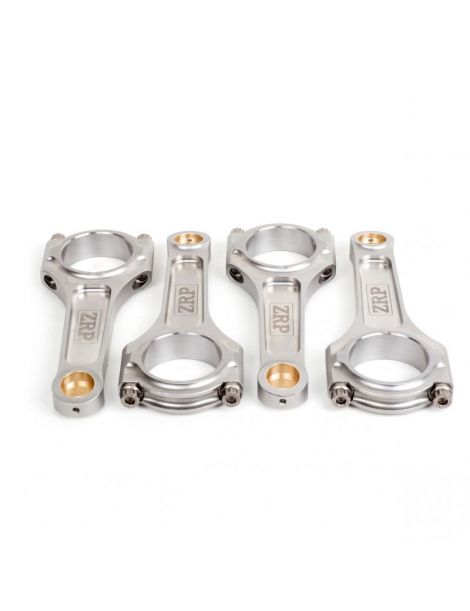
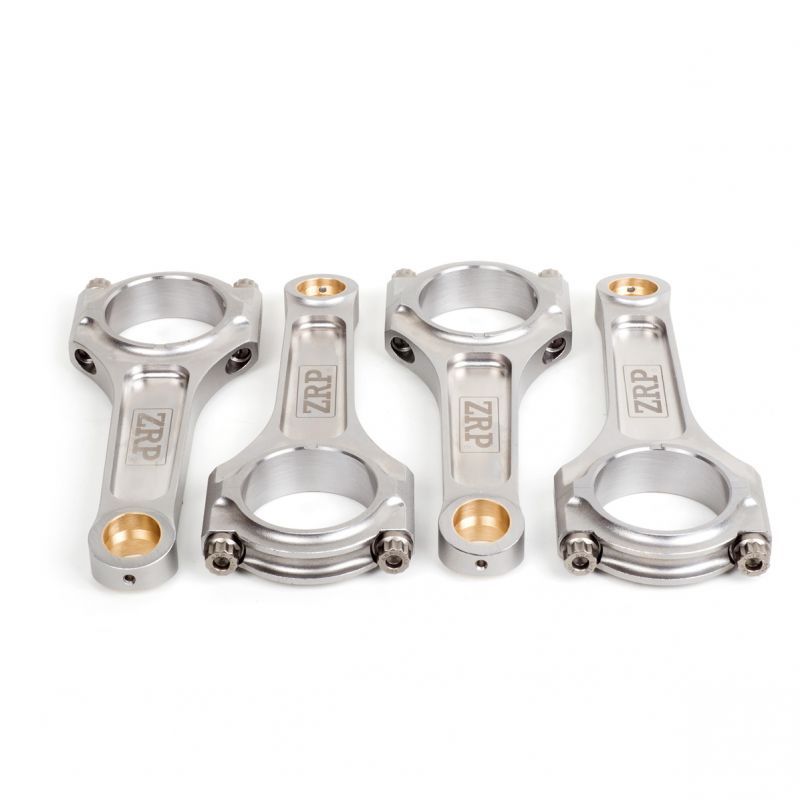
Set of 4 forged connecting rods in EN24T steel for the Ford 2.0 16V Turbo Cosworth YB, 24 mm pin.
Designed by Cosworth from the Ford « Pinto » block, the YB (internal code YB / N5B) is a 2.0-litre inline-four (1,993 cm³) topped by an aluminium twin-cam 16-valve head and fed by a Garrett turbocharger. With a 90.8 mm bore and a 77 mm stroke, it is a short, sturdy and highly responsive block, built from roughly 1985 to 1996.
This is the engine that built the legend of the Ford Sierra RS Cosworth and then the Escort RS Cosworth, on the road and in rallying alike. As soon as boost pressure, engine speed or load exceed factory values, the stock connecting rods become the weak link of the rotating assembly. Replacing them with forged rods is the decisive step to make a tuned YB reliable for the long term.
Our forged rods for the Cosworth YB are machined from wrought EN24T steel, the benchmark alloy in motorsport. They suit every discipline (circuit, rally, drift, drag, time attack and hillclimb) and are equally at home on a strong road build or an engine pushed to Stage 2, Stage 3 and beyond. Supplied as a weight-matched set of 4, they retain the 24 mm piston pin and the 133.5 mm centre-to-centre length.
Compared with an original rod designed above all for mass-production cost, a forged EN24T rod offers a far greater mechanical reserve: forging aligns the metal fibres with the load paths and closes internal porosity. It is this margin that lets a boosted YB withstand cylinder-pressure peaks and inertia loads without failure. The entire range offered here is made from this same forged EN24T steel.
| Reference | Brand | Profile | Bolts | Pin Ø (mm) OEM 24 mm | Small-end width (mm) | Big-end Ø (mm) OEM 55 mm | Big-end width (mm) | Centre-to-centre (mm) OEM 128,5 mm | Weight (g) |
|---|---|---|---|---|---|---|---|---|---|
| R-FOR-EN24-003 | ZRP | I | ARP 2000-3/8"-38mm | 24 | 55 | 25.85 | 133.5 | 545 | |
| R-FOR-EN24-003-L19 | ZRP | I | ARP L19-3/8"-38mm | 24 | 55 | 25.85 | 133.5 | 545 |
Torque and stretch figures refer to the ARP bolts supplied with the kit; please refer to the accompanying data sheet. Checking with a stretch gauge remains the most reliable method to guarantee preload.
| Reference | Brand | Bolts | Max torque (no gauge) | Stretch (gauge check) |
|---|---|---|---|---|
| R-FOR-EN24-003 | ZRP | ARP 2000-3/8"-38mm | 61 N·m | 0.140 to 0.152 mm |
| R-FOR-EN24-003-L19 | ZRP | ARP L19-3/8"-38mm | 67.8 N·m | 0.152 to 0.165 mm |
| EN24T is a low-alloy steel with nickel, chromium and molybdenum. Forging aligns the metal fibres with the loads, closes internal porosity and delivers mechanical strength far above that of an original rod. It reaches high tensile strength together with excellent fatigue endurance, essential as soon as the engine gains torque, power or rpm. This is the material used throughout our Cosworth YB range. |
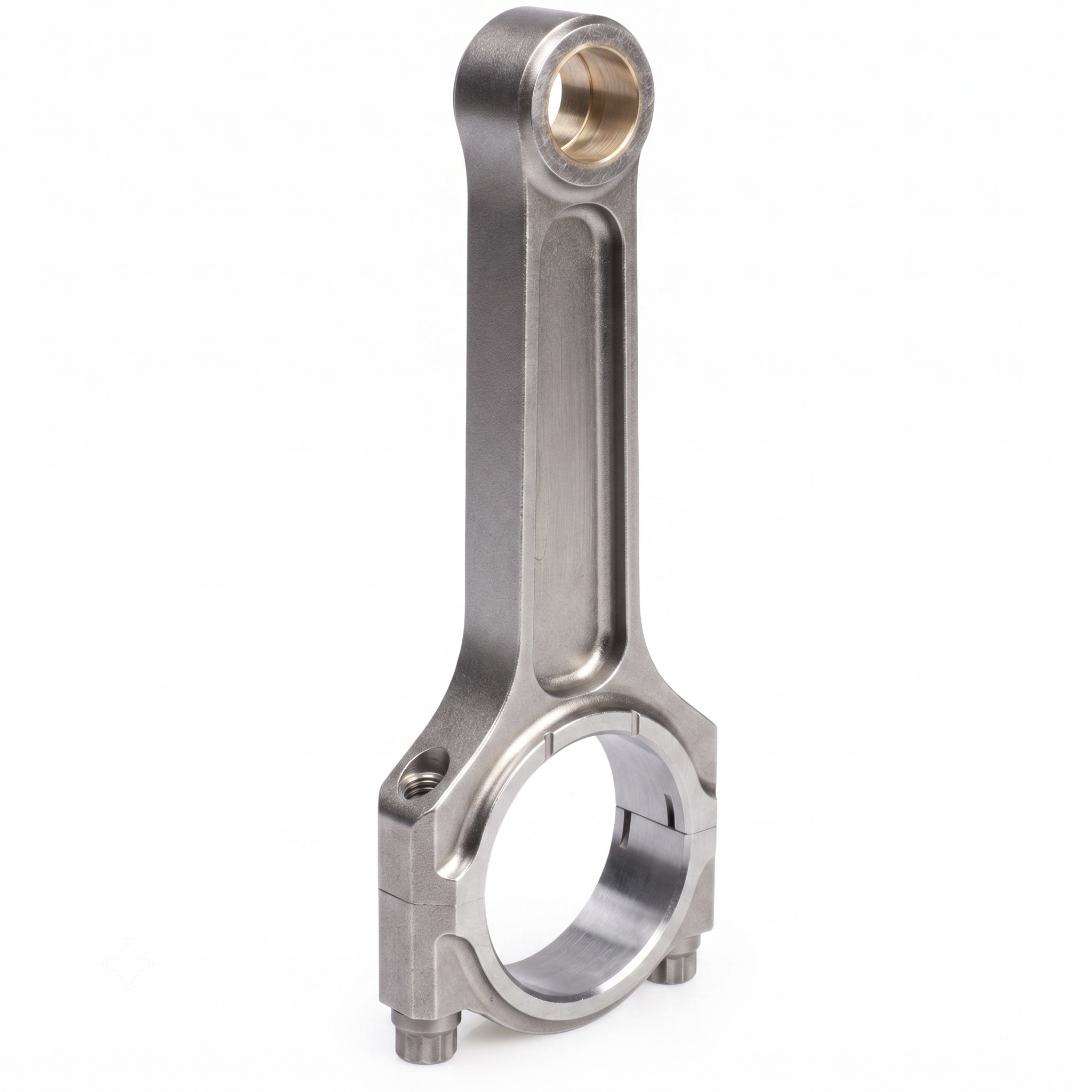 | The I-Beam profile (ZRP), recognisable by its I-shaped section, concentrates material along the compression load path and lightens the central web: less inertia, less load on the bearings and a sharper response when the turbo comes back on boost. Machined from EN24T steel and supplied with 3/8" ARP bolts, it aims at a controlled reciprocating assembly (545 g) and lasting reliability, which makes it the logical compromise on a boosted YB, from rally to circuit racing. It is the only profile offered for this engine. |
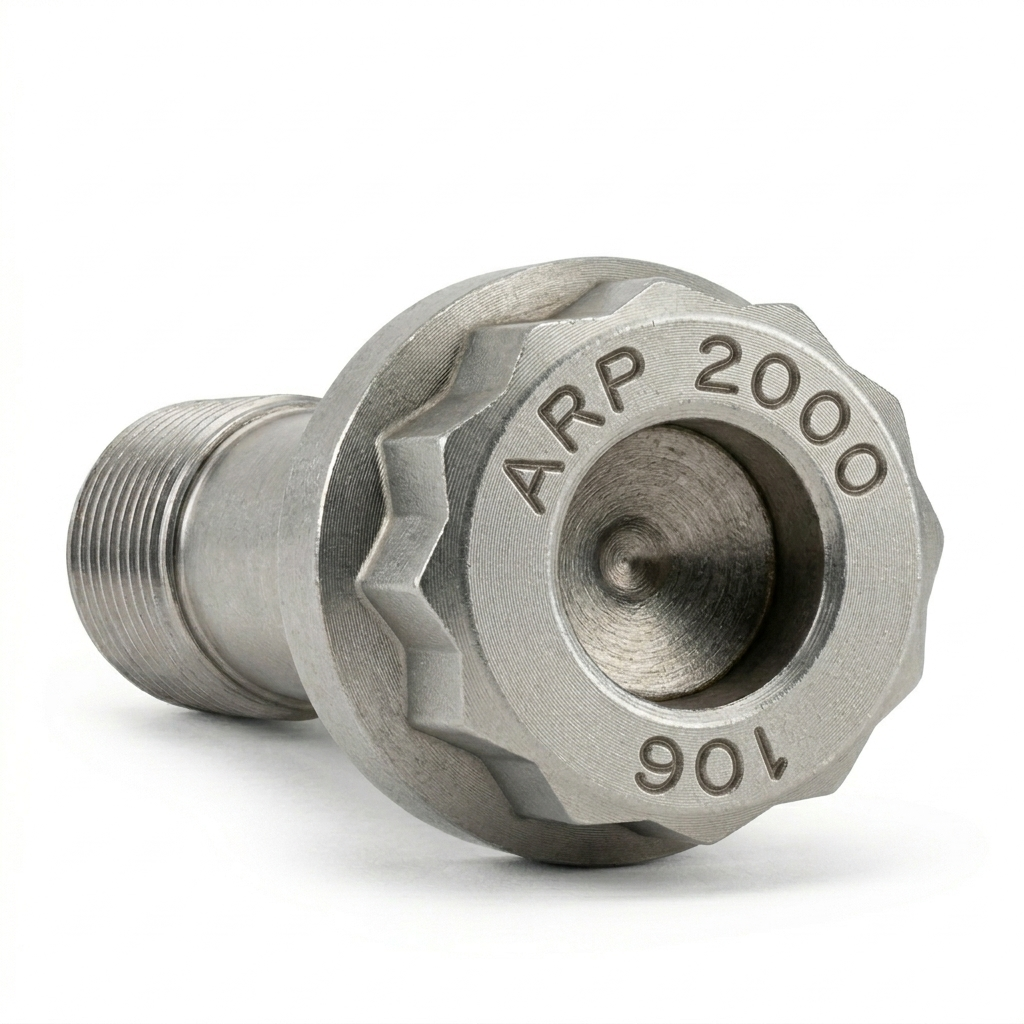 | ARP 2000: ARP’s high-performance standard, with tensile strength around 220,000 psi (about 1,517 MPa). In 3/8" it covers builds up to 200 hp per cylinder and 8,500 rpm, which takes in the vast majority of tuned YB engines. Strong, versatile and free of special storage requirements, it is the most common grade in rally, circuit racing and track days, hillclimb, drift and drag. |
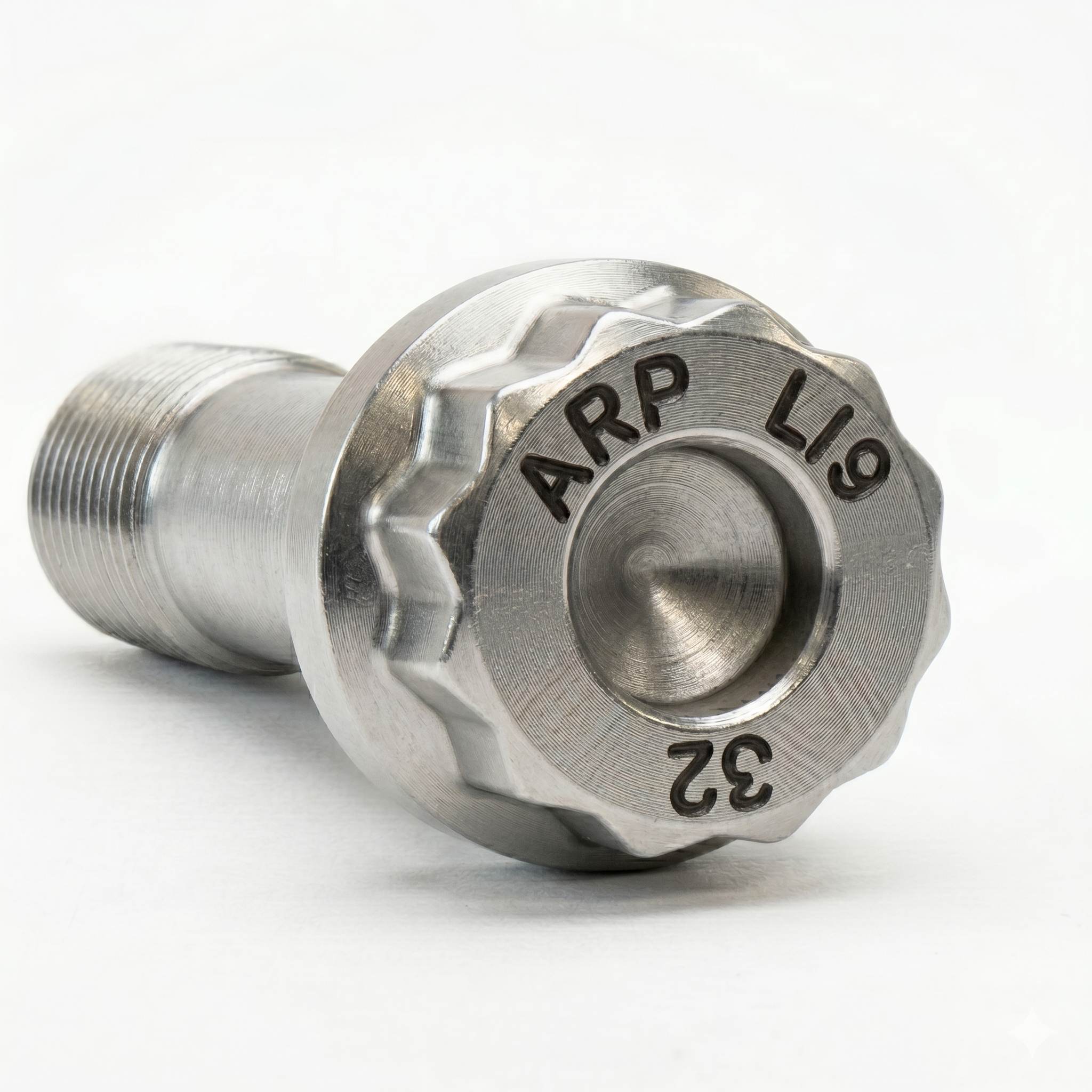 | ARP L19: the grade for engines pushed to the extreme, with tensile strength around 260,000 psi (about 1,793 MPa). In 3/8" it allows up to 250 hp per cylinder and 10,000 rpm, making it the choice for YB engines running very high boost and for big-power builds, where cylinder pressure becomes the limiting factor. The trade-off: the alloy is sensitive to corrosion and hydrogen embrittlement, and must be stored and fitted oiled, away from moisture. |
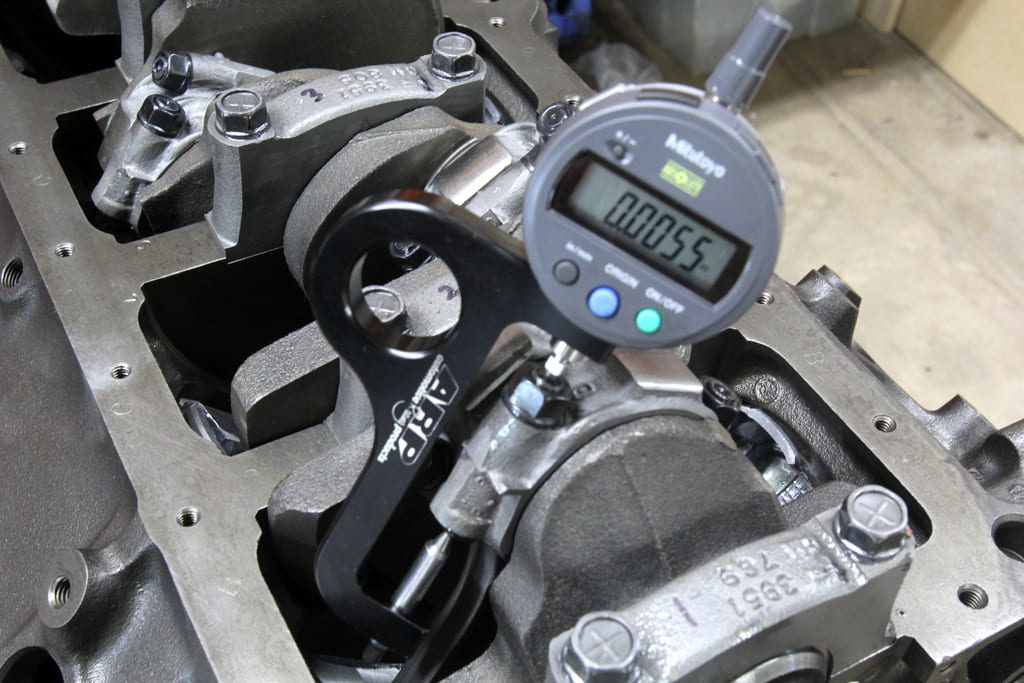
| On a forged rod, the exact bolt preload is verified by its stretch, measured with a dial gauge (stretch gauge), and not by torque alone: lubrication and run-in distort the torque reading. Always refer to the stretch values provided by the bolt manufacturer. |
 | This Cosworth YB range is made by ZRP, the Greek manufacturer of forged competition connecting rods run by Alex Drakos in Athens. Every rod in the YB programme is forged from EN24T steel, precision machined, inspected and then weight-matched across the full set of four, and supplied with its 3/8" ARP bolts (ARP 2000 or ARP L19 depending on the power targeted). Design, machining and inspection all take place in Greece, and the rods are proven in rally, drift and circuit racing, the YB’s natural territory. |
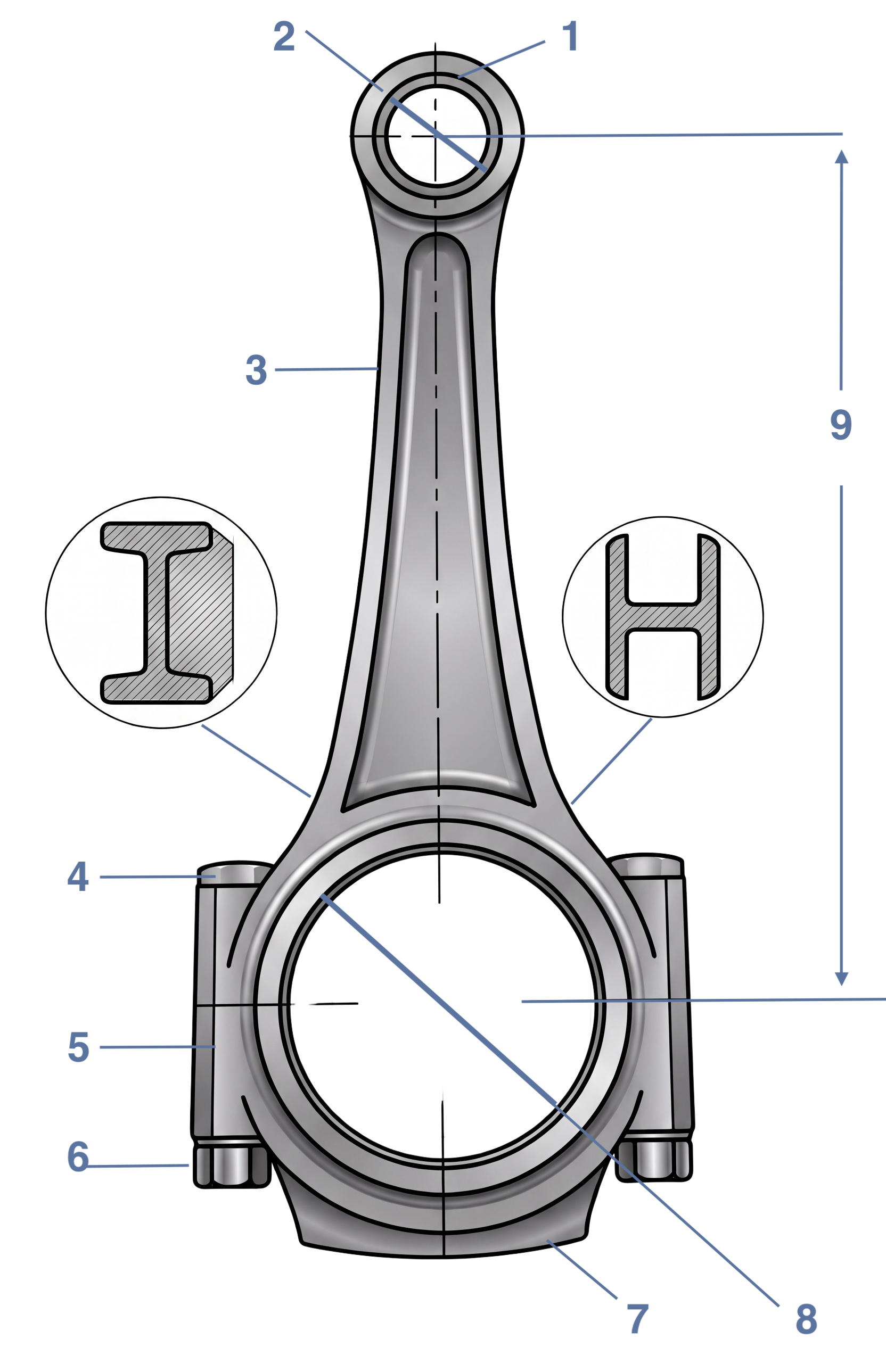 | 1) Small end 2) Small-end diameter 3) Rod beam 4) Rod bolt 5) Big end 6) Rod nut / bolt 7) Rod cap 8) Big-end diameter 9) Center-to-center |
These forged rods fit Fords powered by the 2.0 L 16v turbo Cosworth YB, with a 24 mm piston pin and 133.5 mm centre-to-centre:
| Brand | Model (chassis) | Engine code | Power | Years |
|---|---|---|---|---|
| Ford | Sierra RS Cosworth / Sapphire RS Cosworth | YB | 204 ch | 1986–1992 |
| Ford | Escort RS Cosworth | YB | 227 ch | 1992–1996 |
On a YB, a broken rod almost never stops at the rod: a marked crankshaft, a scored bore and, in the worst cases, a holed block. Returning the engine to standard specification then means buying rods and pistons again, with specialist labour and a long period off the road, for an engine that ends up back at exactly its original limits.
For a comparable budget, sometimes less, a set of forged EN24T steel rods combined with forged pistons brings a far greater margin of strength, lasting fatigue life under high boost and the freedom to develop the build without opening the bottom end again. This is how YB builders have worked for decades, in rally as much as on circuit.
For the same budget: more reliability, more potential, more longevity.