Product successfully added to your shopping cart
Quantity
Total
There are 0 items in your cart. There is 1 item in your cart.
Total products
Total shipping To be determined
Total

2.0L 16v - 175A1
Manufacturers
2.0L 16v - 175A1
Warning: Last items in stock!
New product
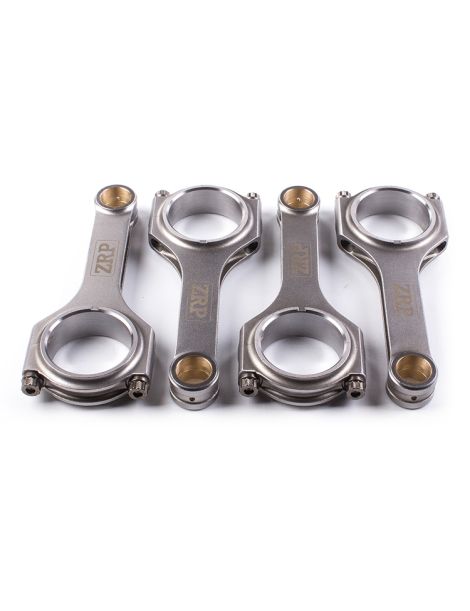
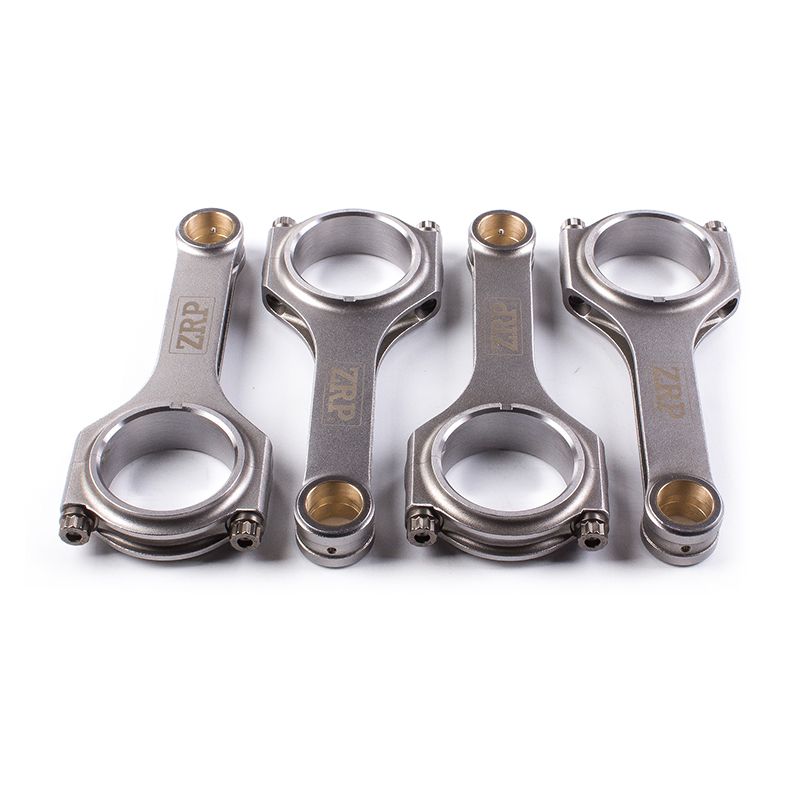
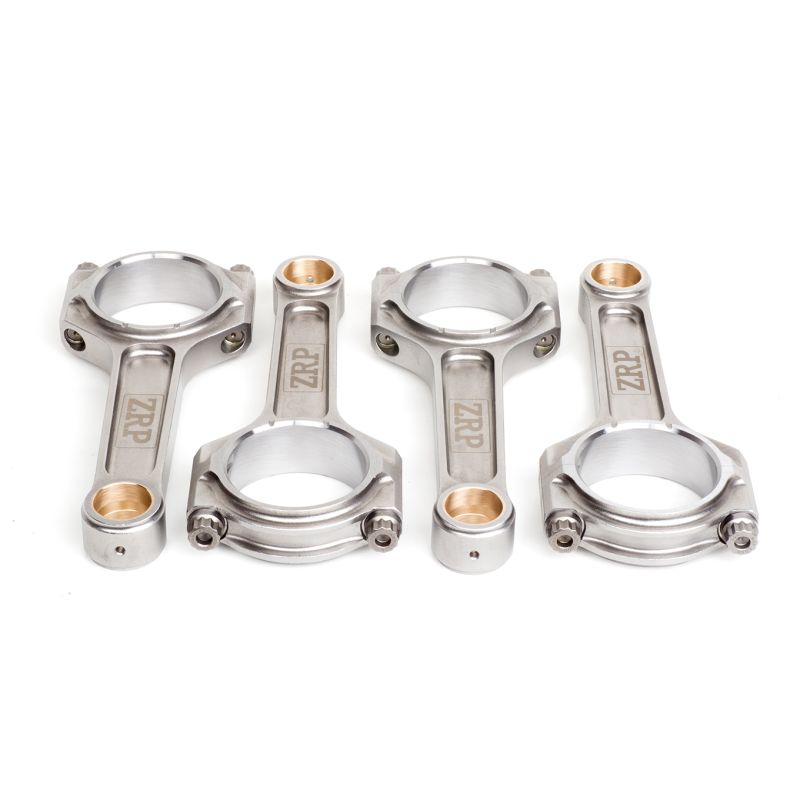
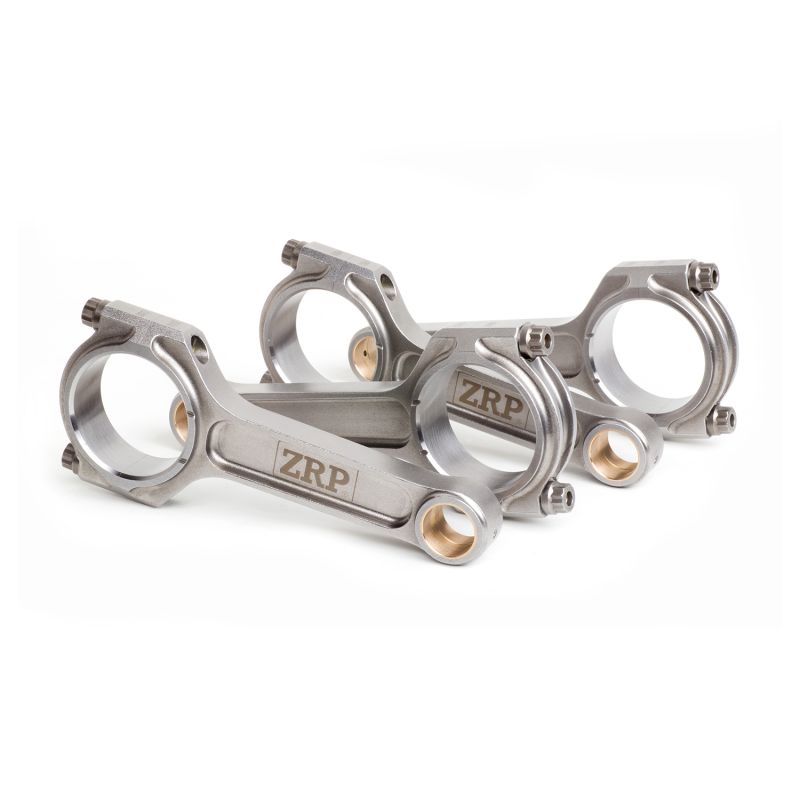
Set of 4 forged 4340 steel connecting rods for the Lancia Delta Integrale and Fiat Coupé 2.0 16V Turbo.
The Lancia Delta HF Integrale 16V is built around an inline four-cylinder of 1,995 cc (codes 831, 832CS, M16AT), turbocharged, with a 16-valve head, an 84 mm bore and a 90 mm stroke. Produced from 1989 to 1994, this engine took the Delta to the top of the World Rally Championship and made the Integrale one of the most decorated all-wheel-drive sports cars of its era.
It powers the Delta HF Integrale 16V, its Evoluzione and Evoluzione II versions, as well as the Fiat Coupé 16V Turbo, with factory outputs from 190 to 215 hp depending on the version. Its strength makes it a sought-after tuning base: as soon as boost pressure rises, the standard rotating assembly becomes the weak link, which forged connecting rods built for high-performance use correct.
Machined from 4340 nickel-chromium-molybdenum steel, forged connecting rods replace the sintered-metal original rods with a far more durable part. Forging aligns the metal grain along the rod: at equal dimensions, it withstands loads and engine speeds the standard assembly cannot follow.
Designed for tuned engines (higher boost pressure, remapping, higher revs), these rods secure the bottom end where the sintered rod fails. Each rod is shot-peened, inspected and balanced, then supplied with its high-performance bolts, ready to fit.
| Reference | Brand | Profile | Bolts | Pin diameter OEM 22 mm | Small-end width | Big-end diameter | Big-end width | Center-to-center OEM 145 mm | Weight per rod |
|---|---|---|---|---|---|---|---|---|---|
| R-LAN-001-H | ZRP | H | ARP 2000-3/8"-38mm | 22 mm | 53.9 mm | 25.7 mm | 145 mm | 564 g | |
| R-LAN-001-H-L19 | ZRP | H | ARP L19-3/8"-38mm | 22 mm | 53.9 mm | 25.7 mm | 145 mm | 564 g | |
| R-LAN-001-I | ZRP | I | ARP 2000-3/8"-38mm | 22 mm | 53.9 mm | 25.7 mm | 145 mm | 557 g | |
| R-LAN-001-I-L19 | ZRP | I | ARP L19-3/8"-38mm | 22 mm | 53.9 mm | 25.7 mm | 145 mm | 557 g |
| Rod | Bolts | Torque | Recommended stretch |
|---|---|---|---|
| ZRP (R-LAN-001-H) | ARP 2000 | 61 N·m | 0.140 – 0.152 mm |
| ZRP (R-LAN-001-H-L19) | ARP L19 | 67.8 N·m | 0.152 – 0.165 mm |
| ZRP (R-LAN-001-I) | ARP 2000 | 61 N·m | 0.140 – 0.152 mm |
| ZRP (R-LAN-001-I-L19) | ARP L19 | 67.8 N·m | 0.152 – 0.165 mm |
Manufacturers favour the stretch-gauge method over torque alone: the instructions supplied with the kit always take precedence. The torque figures assume assembly with ARP lubricant.
| 4340 steel is a nickel-chromium-molybdenum alloy used in both aerospace and motorsport. Forged and then heat-treated by quenching and tempering, it combines high tensile strength, excellent fatigue endurance and preserved ductility. Compared with an original sintered-metal rod, optimised for series-production cost, a forged 4340 rod gains around 19% in yield strength, 8% in tensile strength and 19 to 37% in fatigue resistance, giving a service life under cyclic load several times longer. That is what makes 4340 the reference material as soon as boost pressure and engine speed rise. |
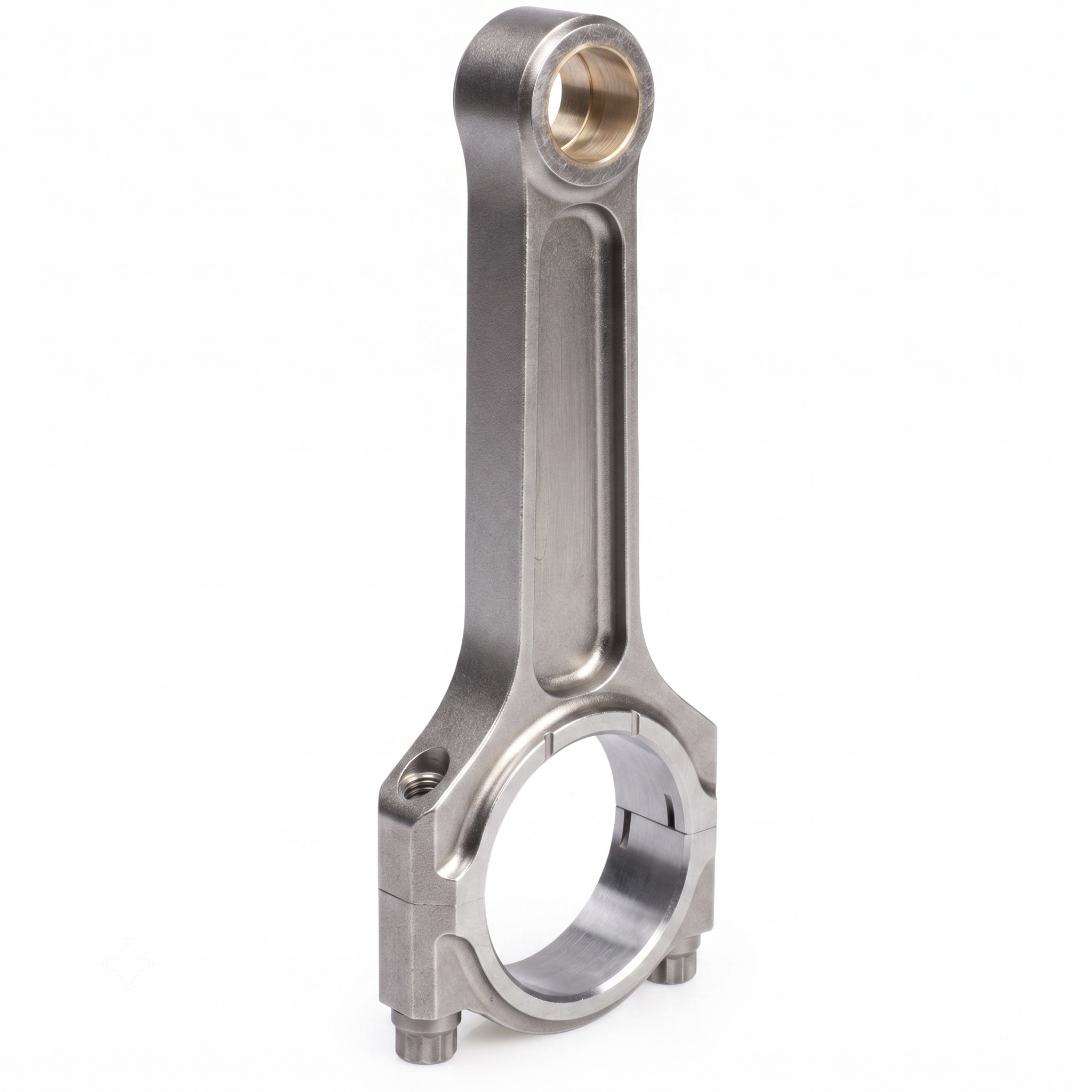 | I-Beam profile. With its thinner central section, the I-Beam rod is the lightest: less inertia, freer revving and a lighter reciprocating assembly. It is the profile of choice on modern turbo engines and an excellent weight/stiffness compromise on a heavily boosted Delta Integrale, handling high torque without blunting the rev pick-up. |
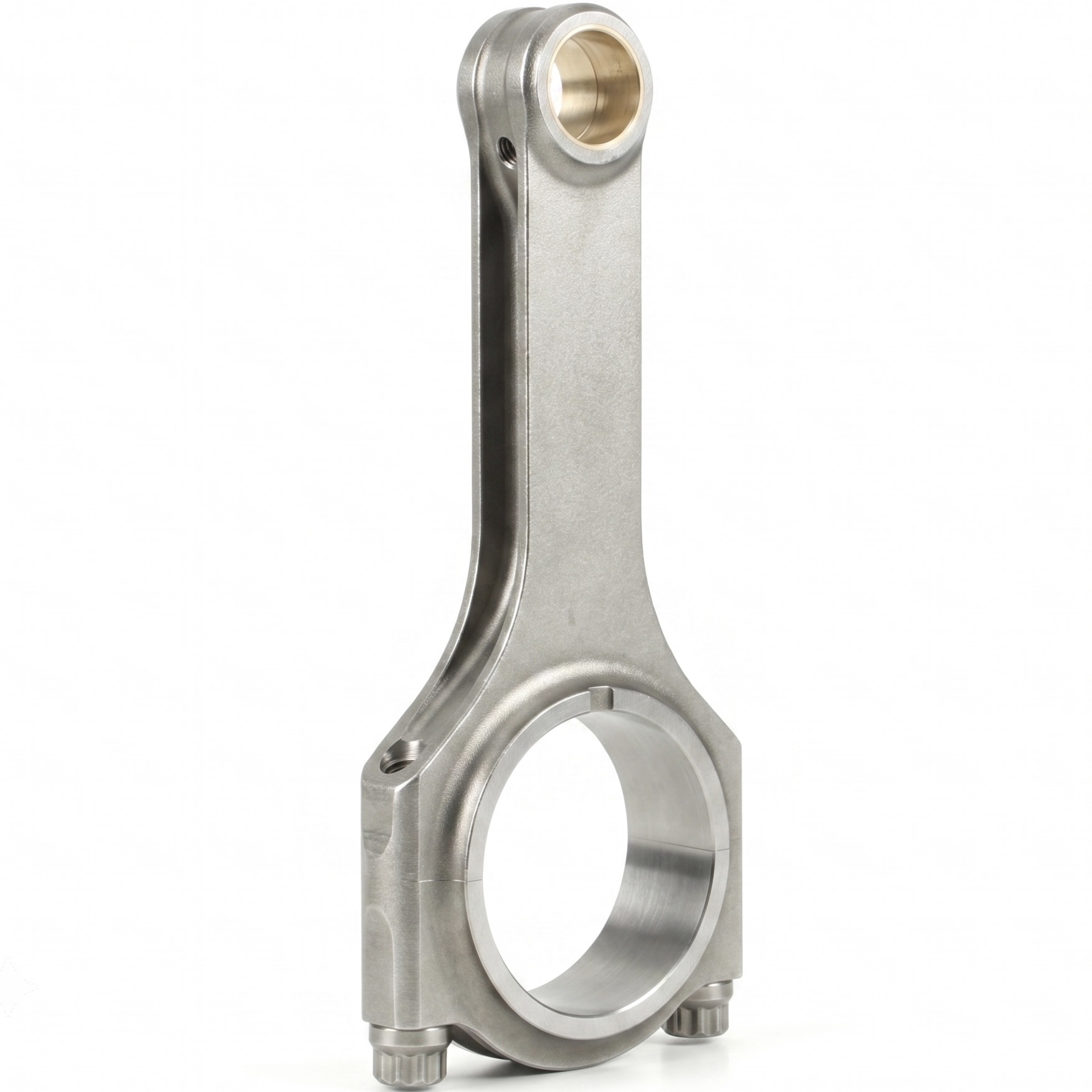 | H-Beam profile. Its two wide flanks give it great rigidity and excellent resistance to both bending and compression. Slightly heavier than an I-Beam rod, it favours strength: the choice for high-torque engines, very high cylinder pressures and drag use, where ruggedness comes before lightness. |
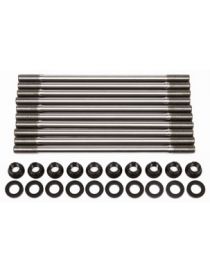
The rod bolt is among the most heavily stressed parts of the engine: it must keep the cap closed despite inertial forces. The kit comes with two ARP grades, to choose according to the build level.
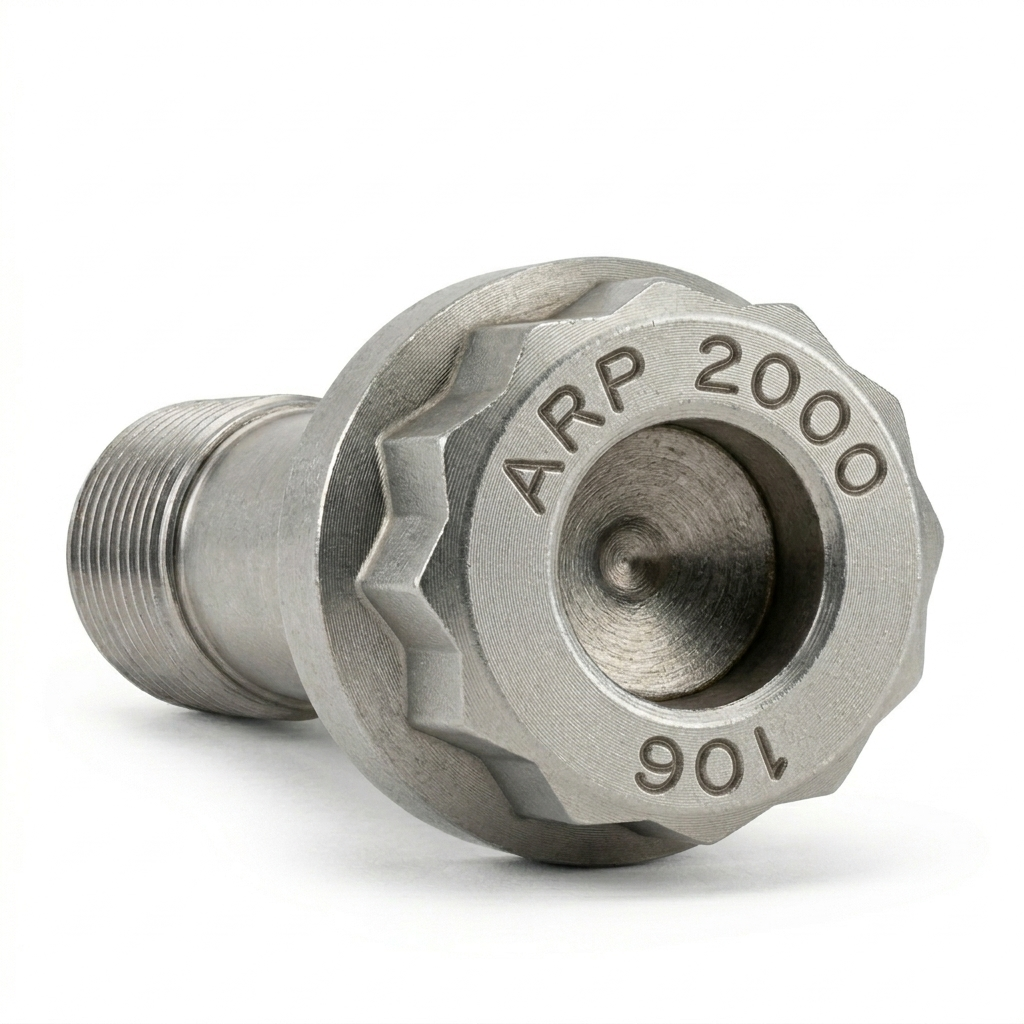 | ARP 2000 (tensile strength around 220,000 psi, i.e. ~1,517 MPa). A high-performance standard suited to up to 200 hp per cylinder in 3/8", and up to 8,500 rpm. It is the most versatile grade, valued for its ruggedness and reliability in track, trackday, drift, rally, drag and hill climb, with no particular storage constraints. |
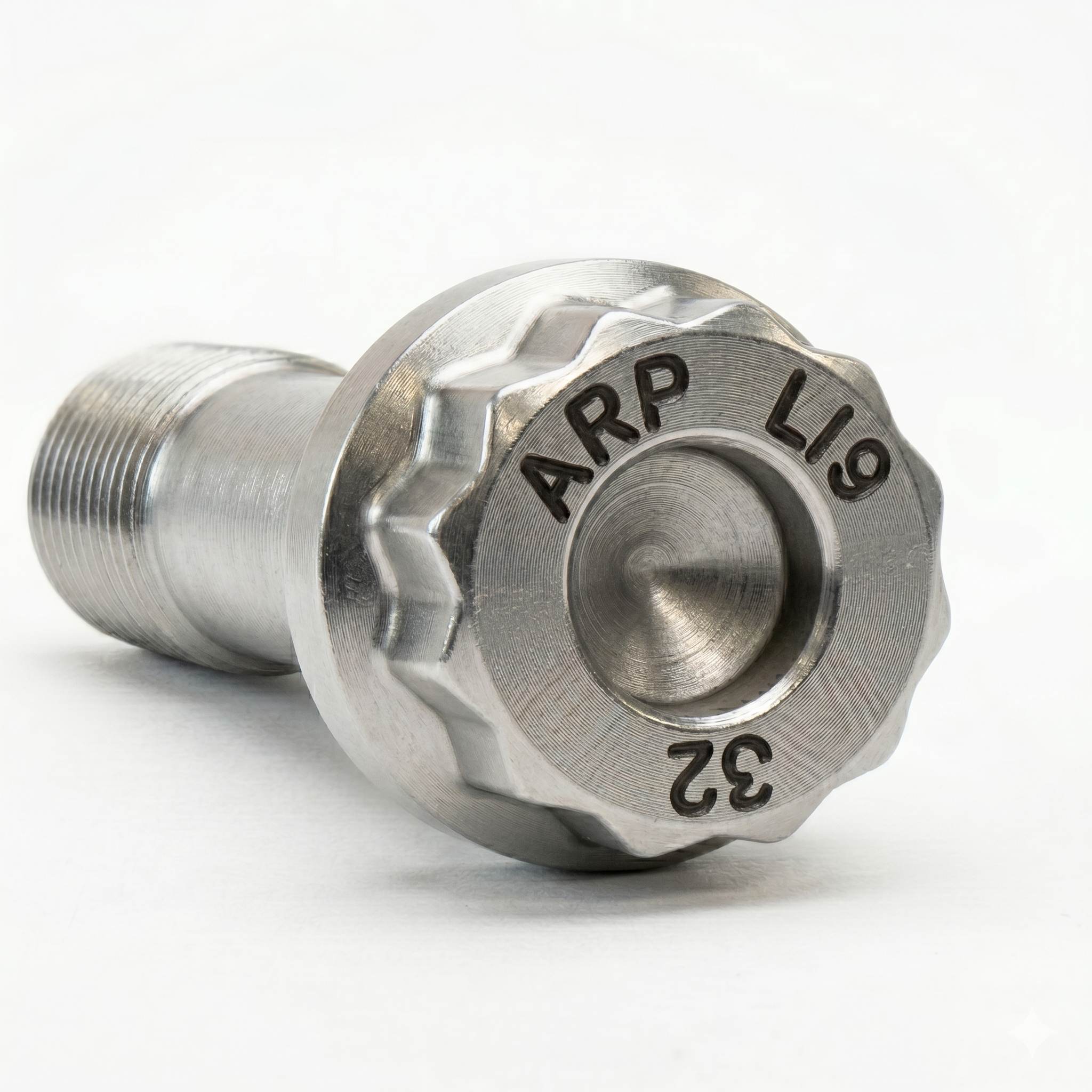 | ARP L19 (tensile strength around 260,000 psi, i.e. ~1,793 MPa). Designed for engines pushed to the extreme, it accepts up to 250 hp per cylinder in 3/8", and up to 10,000 rpm: high boost pressure, high cylinder pressure and sustained high revs. Sensitive to corrosion and hydrogen embrittlement, it must be fitted and stored oiled, away from moisture. |
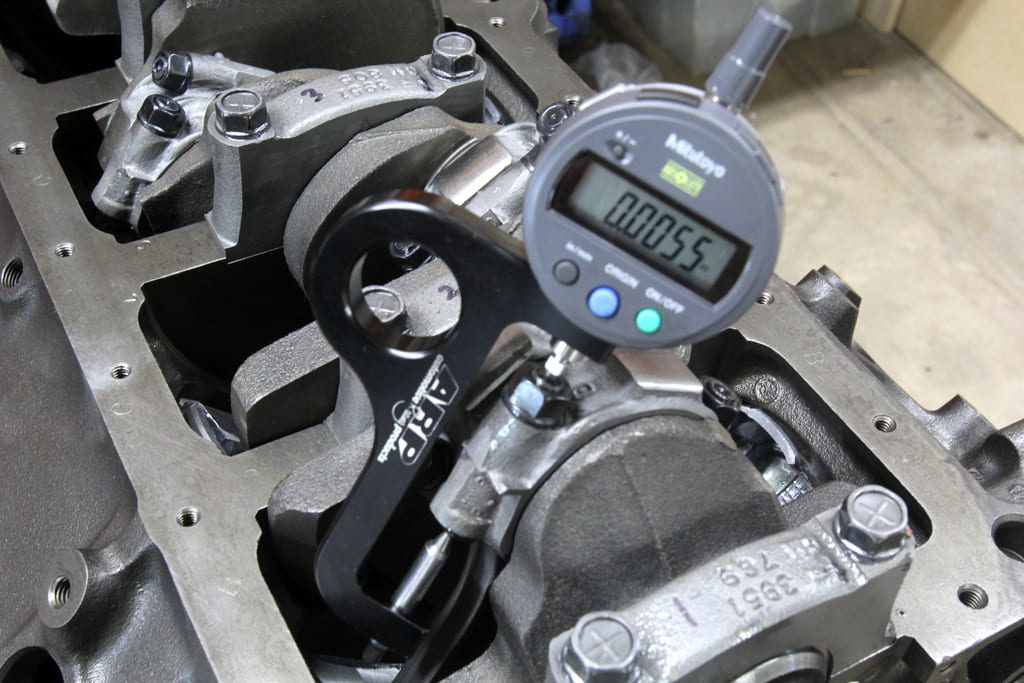
| In addition to torque tightening, measuring connecting-rod bolt stretch remains the most reliable check for an optimal, repeatable preload. The check is carried out with the bolt fitted: a measuring gauge (dial indicator) is placed on the two ends of the bolt and its actual stretch is read, which must match the recommended value (see the torque and stretch table above). This method frees itself from the friction scatter inherent in torque tightening alone and secures the bottom-end assembly on heavily loaded engines, such as a tuned Delta Integrale 16V. |
 | ZRP is a Greek brand of high-performance forged connecting rods, designed and manufactured by Alex Drakos in Athens. Each rod is forged in 4340 steel, precision-machined and balanced to ±1 g to stay reliable at high rpm. For the Delta Integrale 16V and the Fiat Coupé Turbo, the range comes in I-Beam or H-Beam with ARP 2000 or ARP L19 bolts; the rods are designed and inspected in Greece and proven in rally, on track and in drift. |
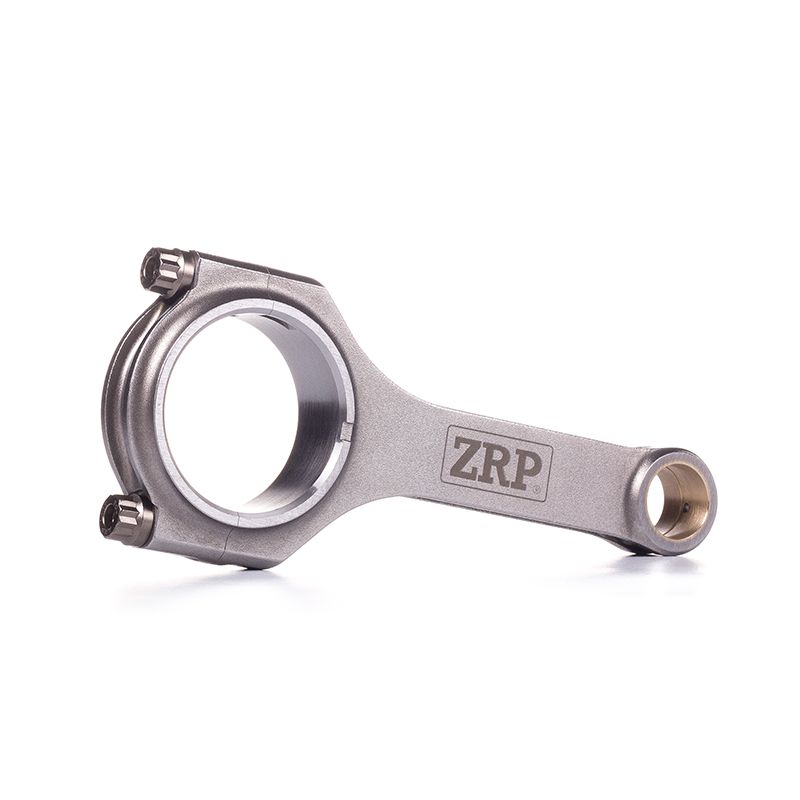
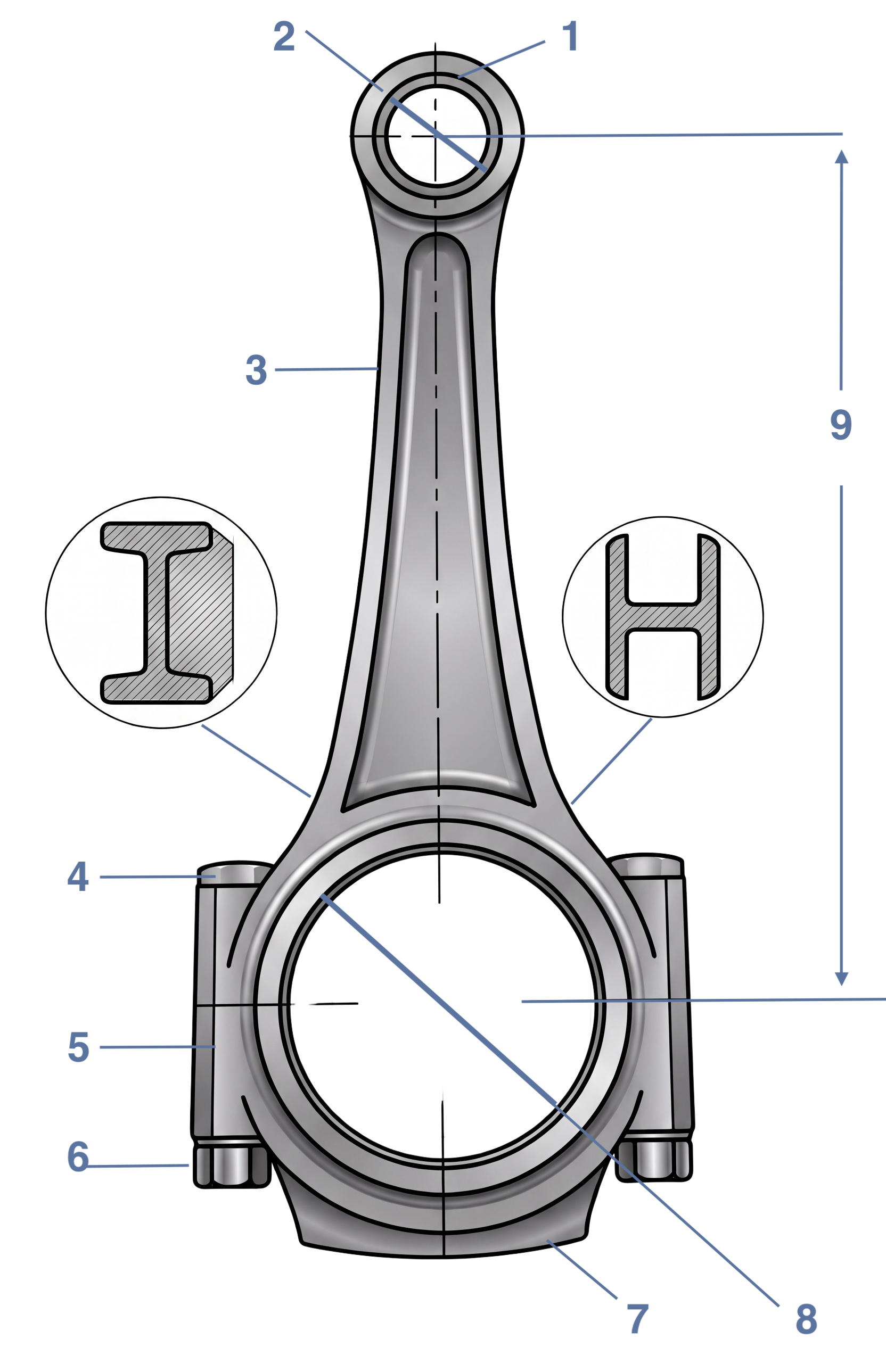 | 1) Small end 2) Small-end diameter 3) Rod beam 4) Rod bolt 5) Big end 6) Rod nut / bolt 7) Rod cap 8) Big-end diameter 9) Center-to-center |
These forged connecting rods fit vehicles equipped with the 2.0 16V Turbo engine of the Delta Integrale and the Fiat Coupé Turbo. Check your vehicle's engine code before ordering.
| Brand | Model (chassis) | Engine code | Power | Years |
|---|---|---|---|---|
| Lancia | Delta HF Integrale 16V (831) | 831 | 200 hp | 1989–1991 |
| Lancia | Delta HF Integrale Evoluzione (831) | 831 | 210 hp | 1991–1992 |
| Lancia | Delta HF Integrale Evoluzione II (831) | 831 | 215 hp | 1993–1994 |
| Fiat | Coupé 2.0 16V Turbo (175) | 175 A1.000 | 190 hp | 1993–1996 |
OEM reference: 4 641 3825 (set of 4 rods).
When the original bottom end gives up (a broken, bent or scored rod), going back to the standard configuration often means replacing both the rods and the pistons, frequently damaged at the same time: the bill climbs fast for a mere reset, and the original weakness remains as soon as boost rises again.
For a comparable budget, or even lower, 4340 forged connecting rods combined with forged pistons bring lasting reliability and a real safety margin, with genuine power-evolution potential, without having to reopen the engine at every upgrade. It is the solution chosen by European tuners for over 15 years.
For the same budget: more reliability, more headroom, more longevity. The most rational basis for confidently building a Delta Integrale engine.