Product successfully added to your shopping cart
Quantity
Total
There are 0 items in your cart. There is 1 item in your cart.
Total products
Total shipping To be determined
Total

1.8L 16v - B18A1/B1
Manufacturers
1.8L 16v - B18A1/B1
Warning: Last items in stock!
New product
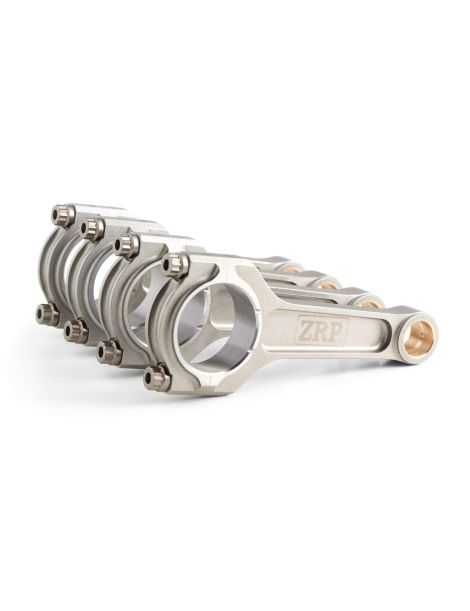
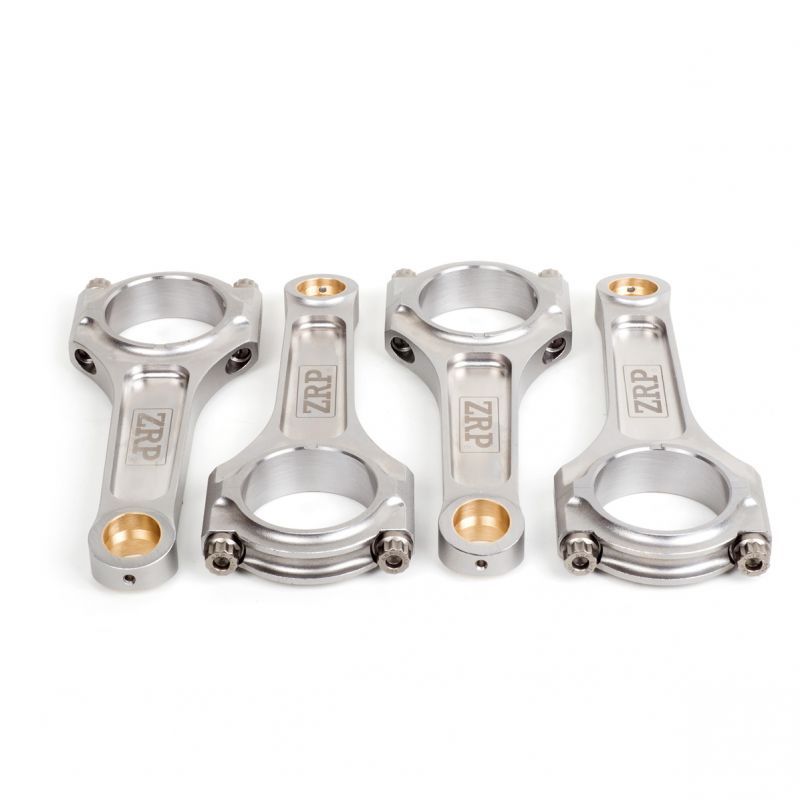
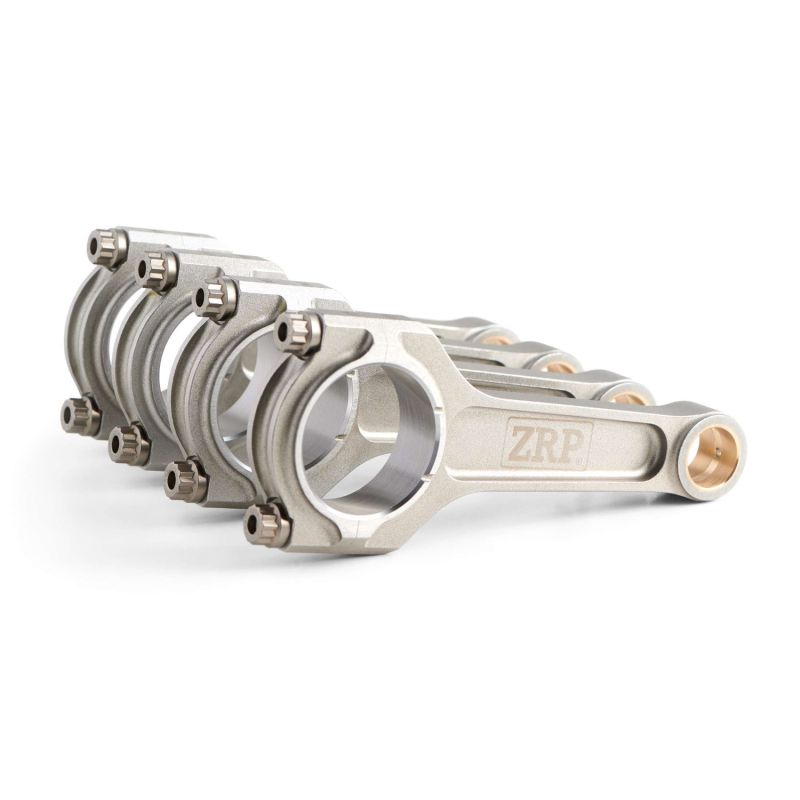
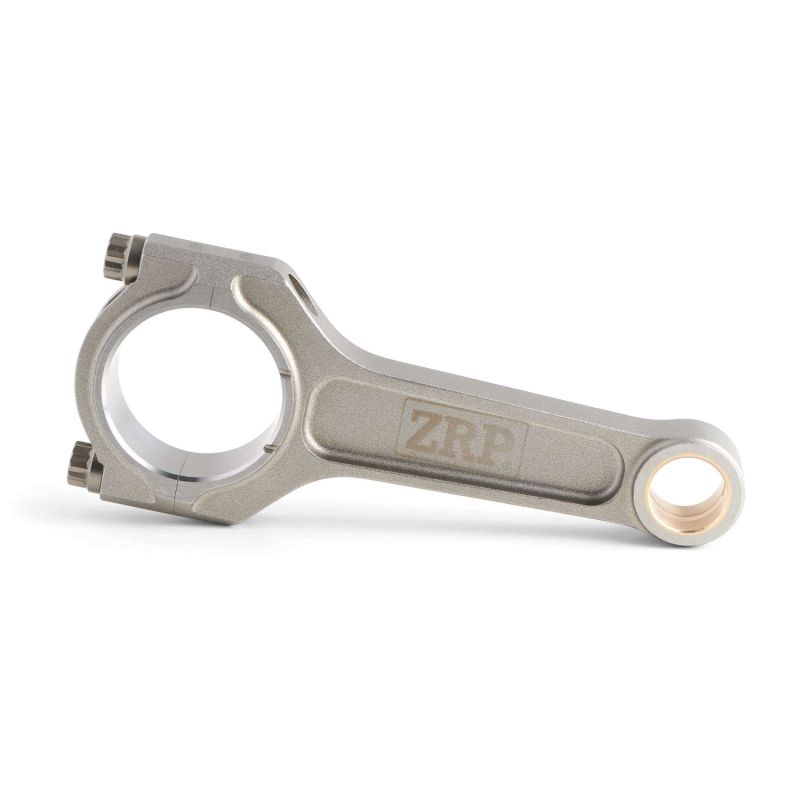
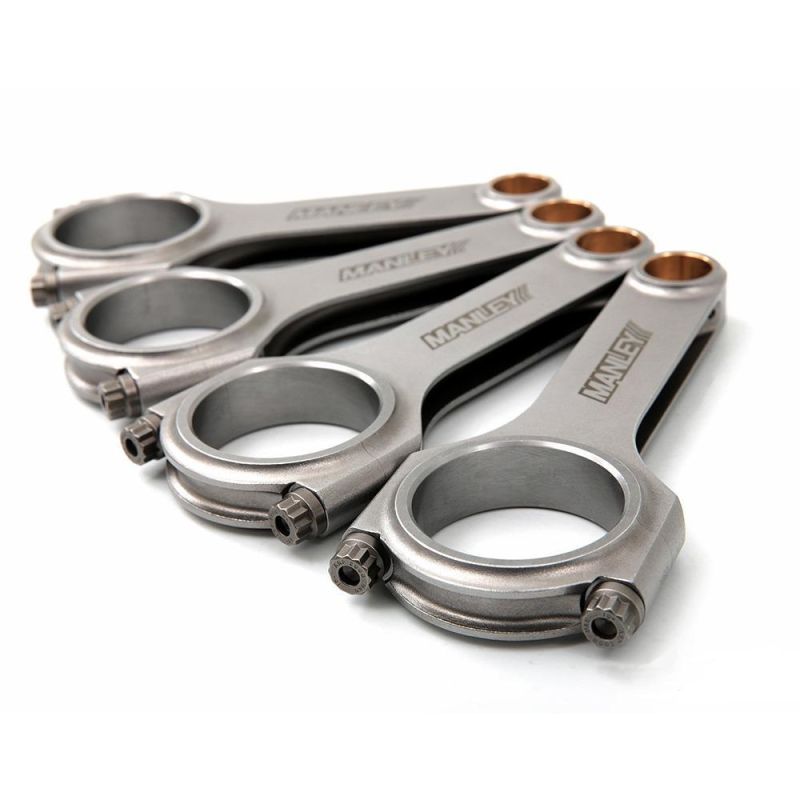
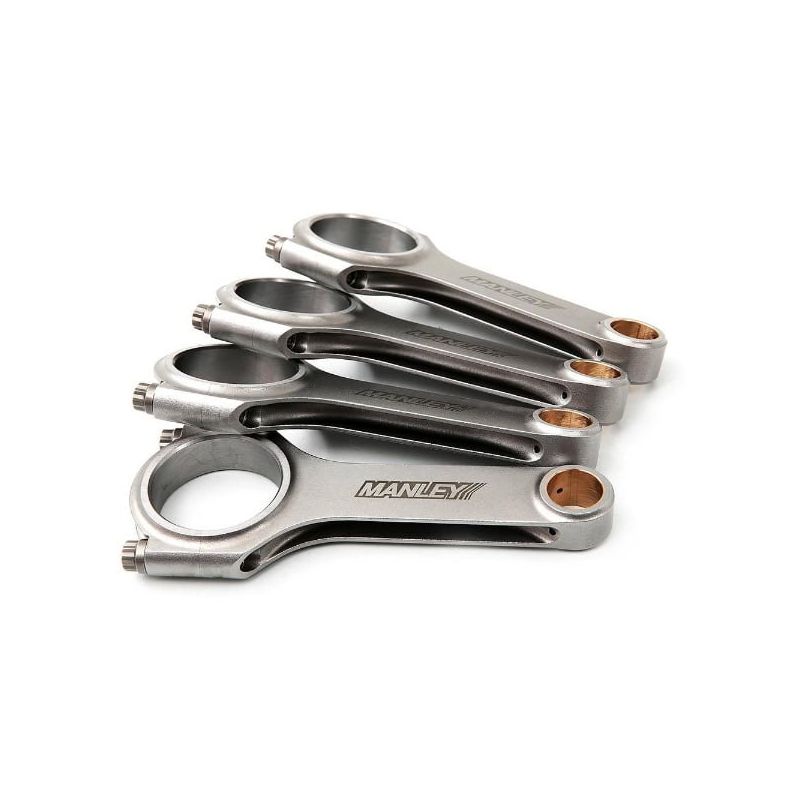
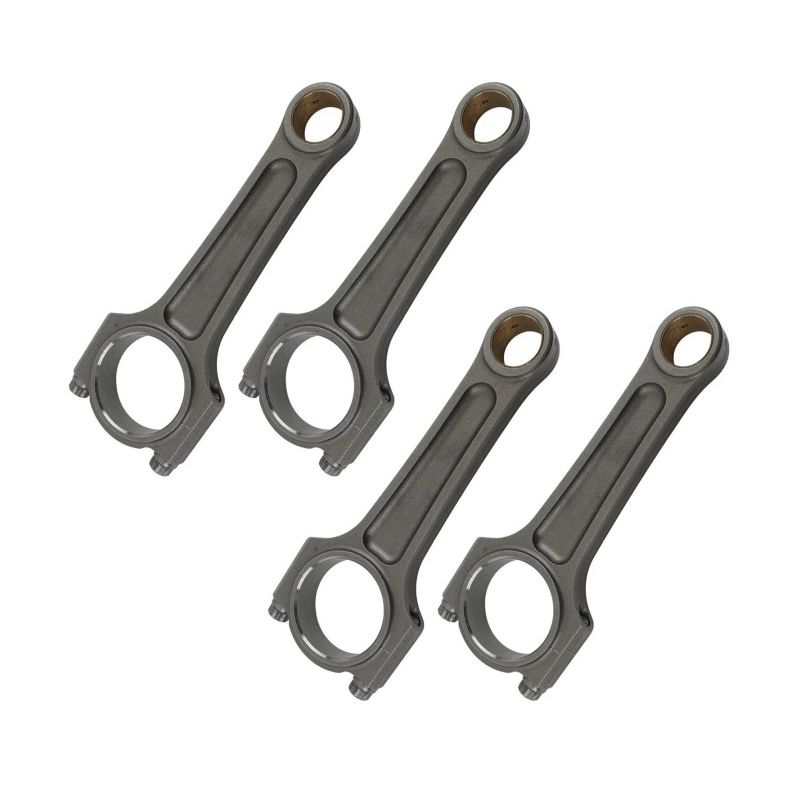
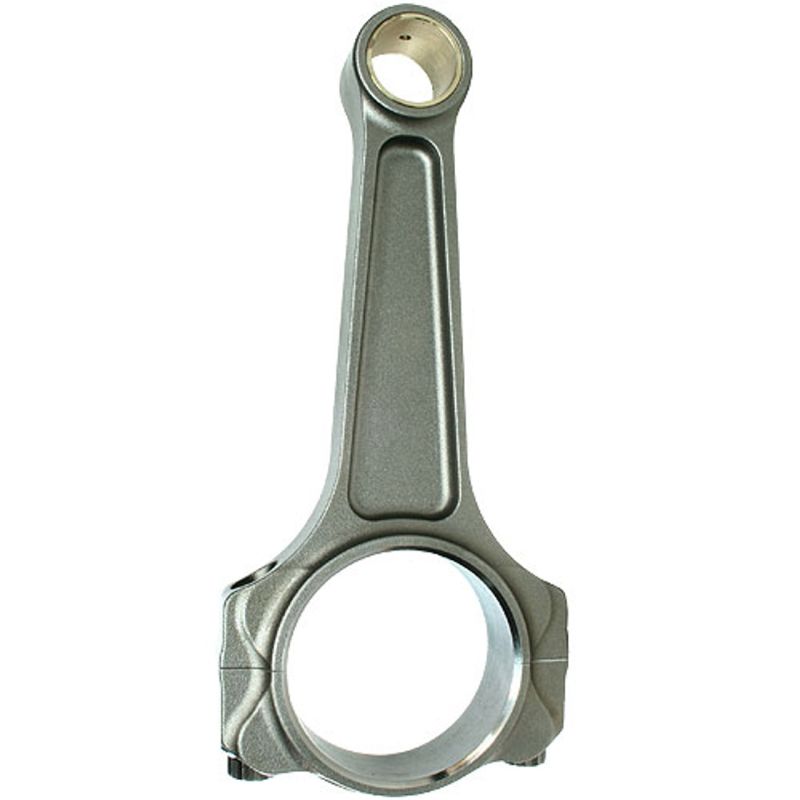
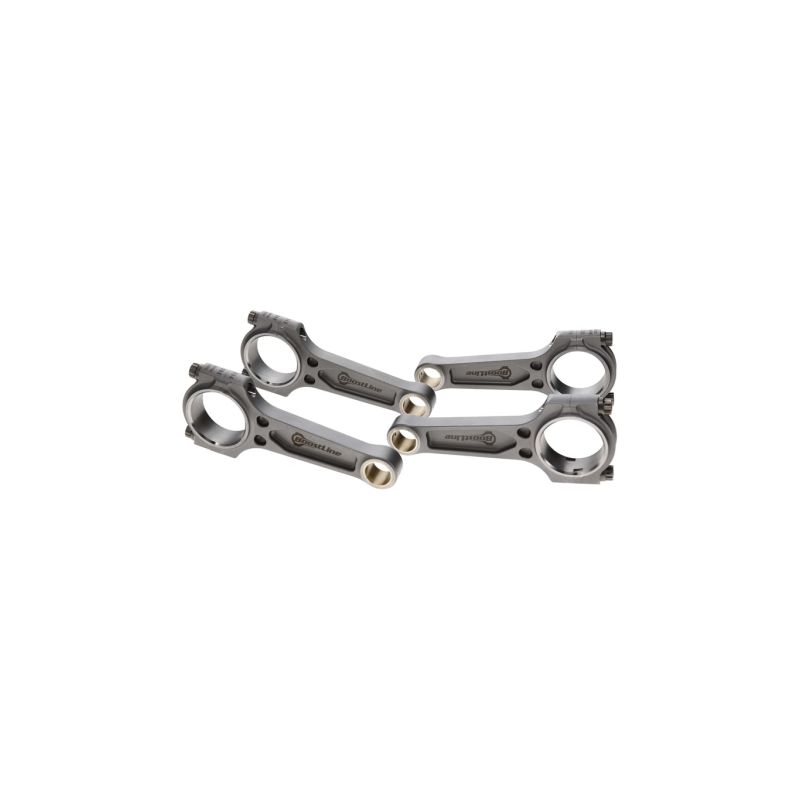
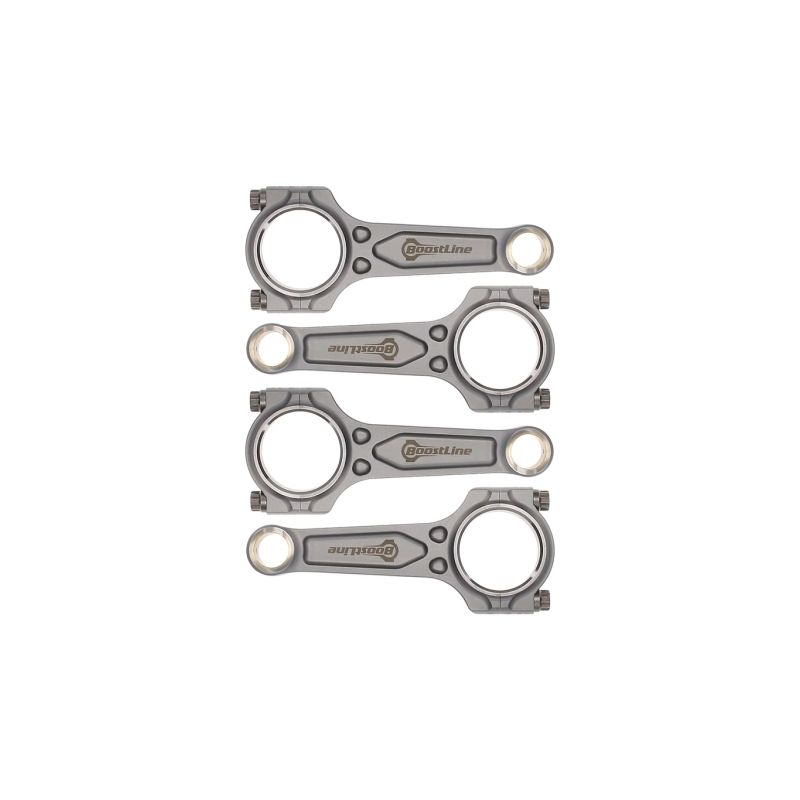
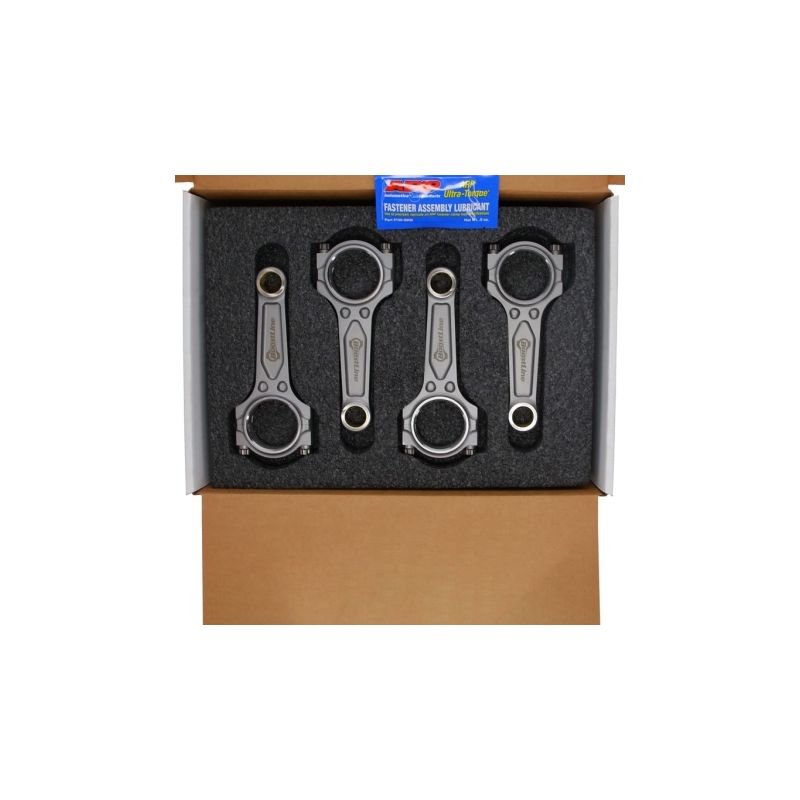
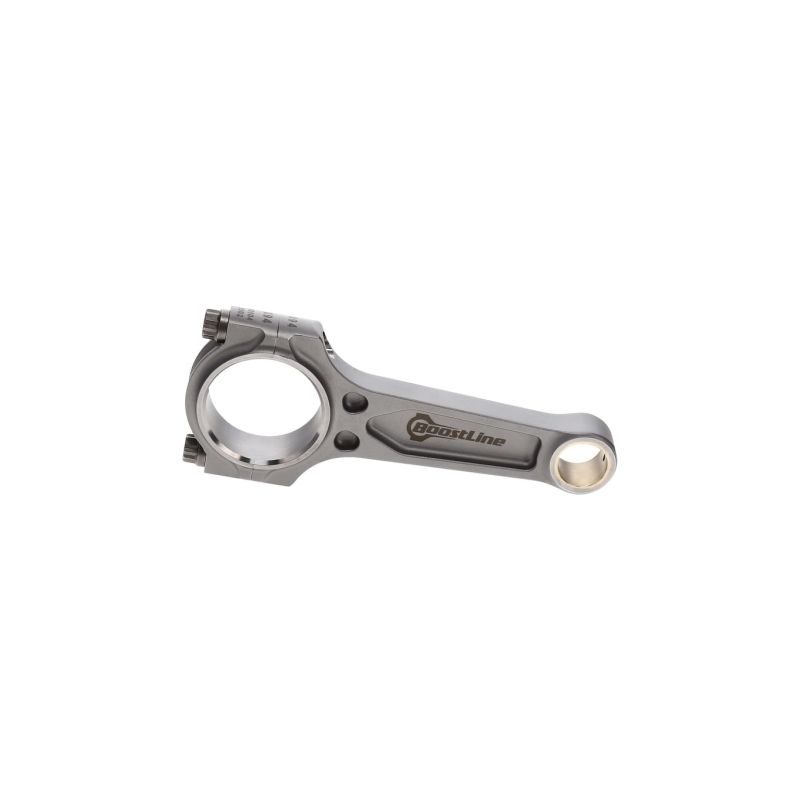
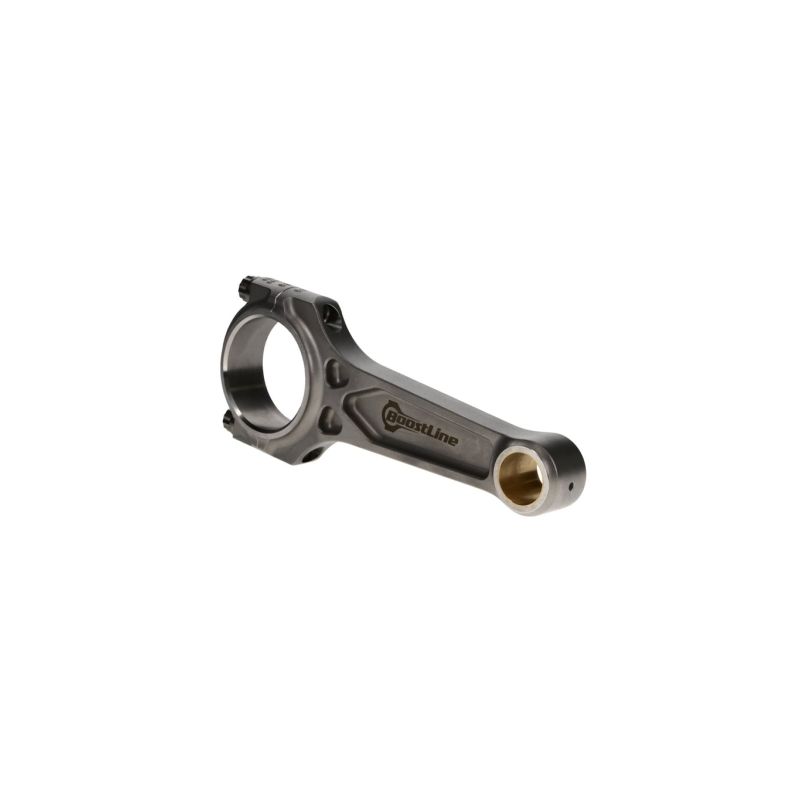
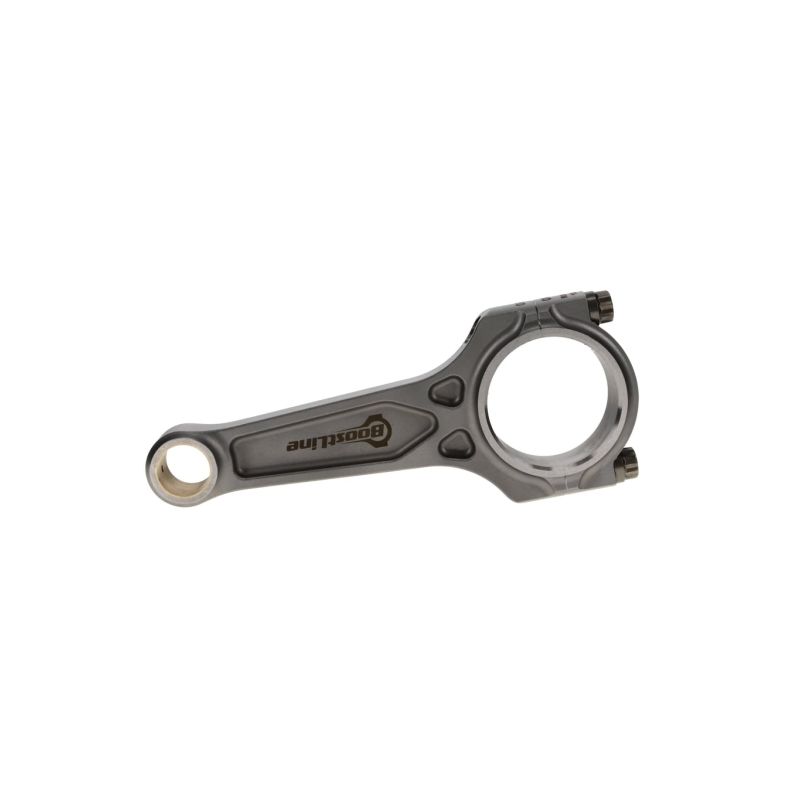
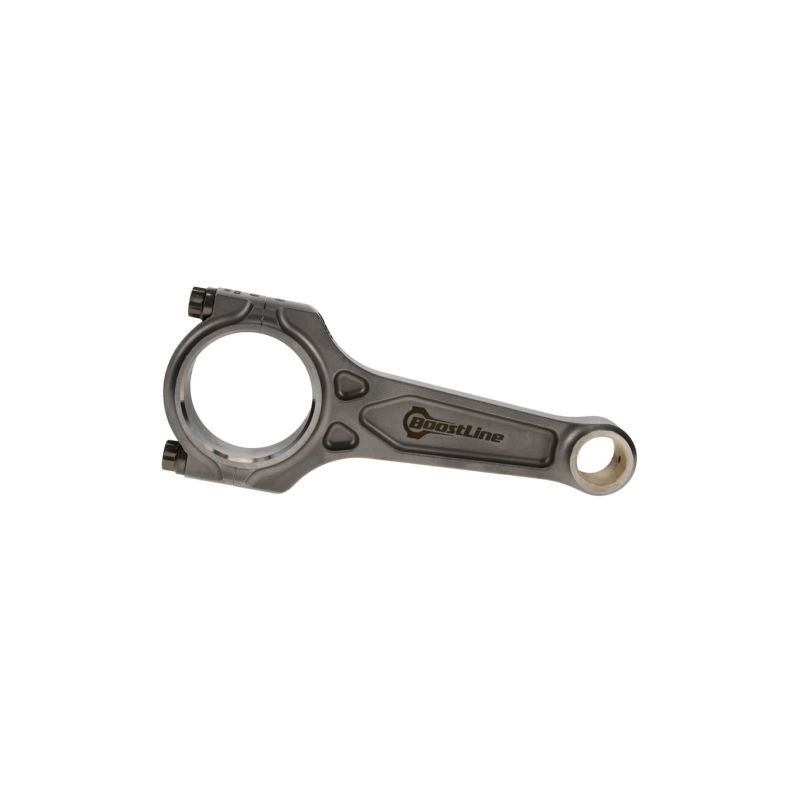
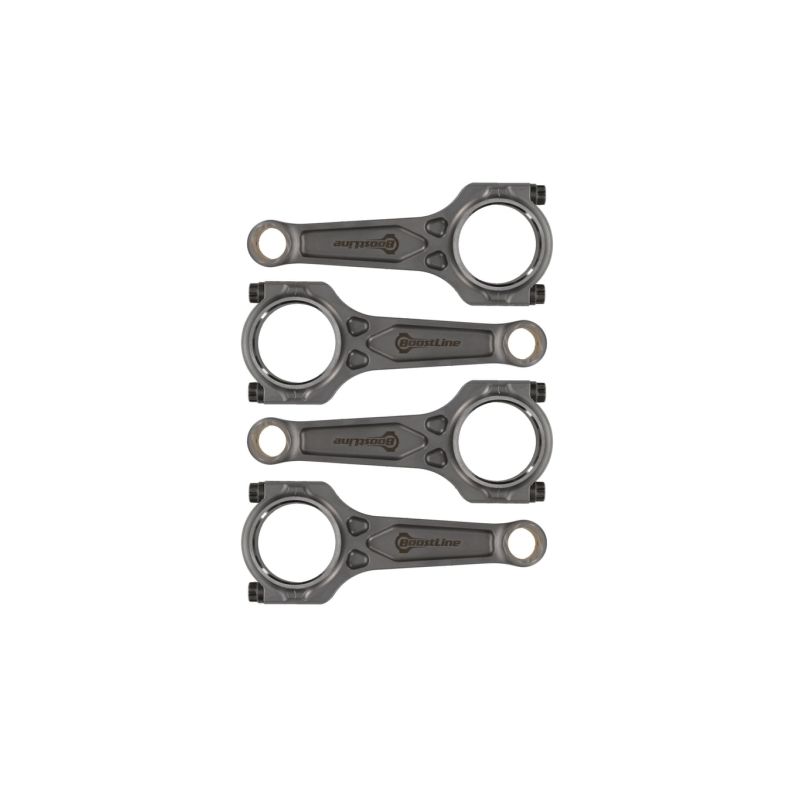
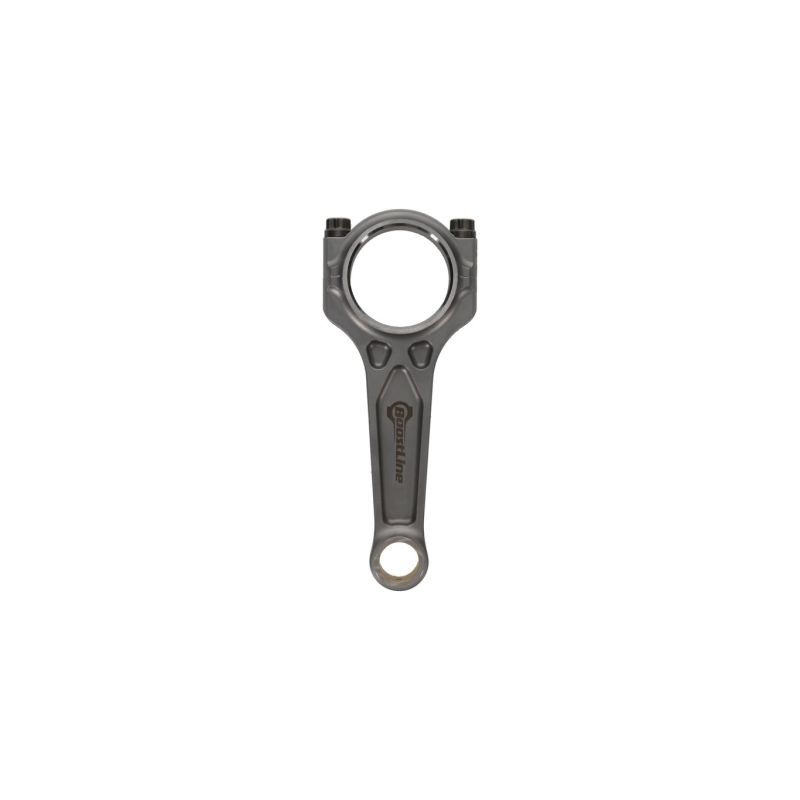
Set of 4 forged connecting rods in 4340 steel for the Honda-Acura B18 / B20 16V.
Introduced in 1988, Honda’s B-series is a family of double overhead cam (DOHC) 16-valve four-cylinders famous for their strength and tuning potential. The non-VTEC versions covered here are the B18A and B18B (1.8 L, 1,834 cc, 81 mm bore × 89 mm stroke) fitted to the Acura Integra RS / LS / GS, and the B20B and B20Z (2.0 L, 1,973 cc, 84 mm × 89 mm) used in the first-generation Honda CR-V. All are naturally aspirated and produce 126 to 147 hp from the factory depending on the model year.
With a cast-iron block, a counterweighted crankshaft and an aluminium DOHC cylinder head, the B18 / B20 is one of the most popular bases on the Honda scene for turbo conversions, high-compression naturally aspirated builds and engine swaps. The factory forged-steel rods cope with stock use, but become the weak link as soon as boost pressure, engine speed or compression are raised significantly. Replacing the reciprocating assembly with high-strength forged rods is the key step to reliably build a prepared B-Series.
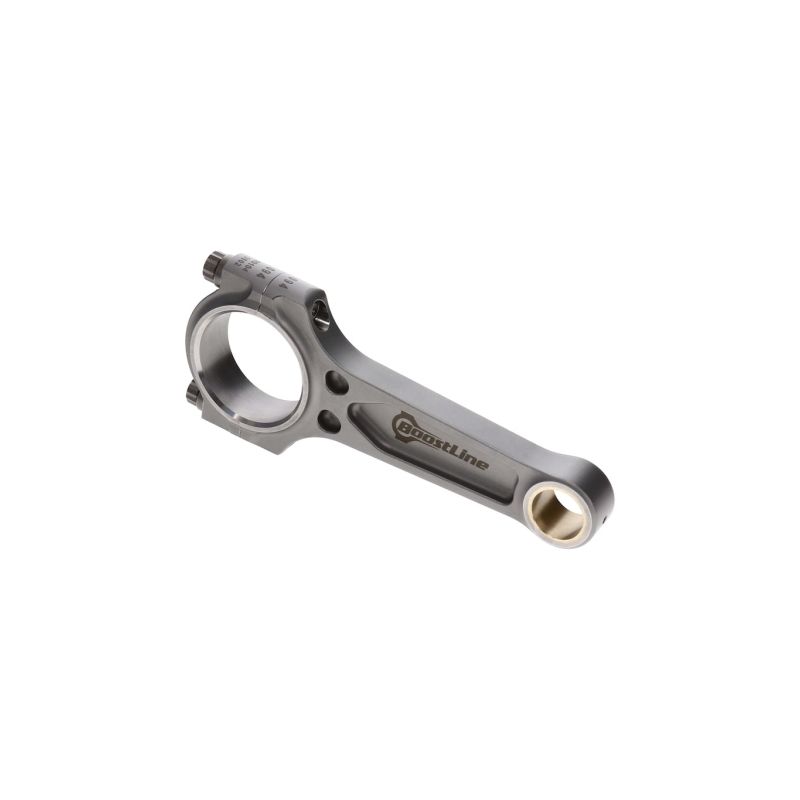
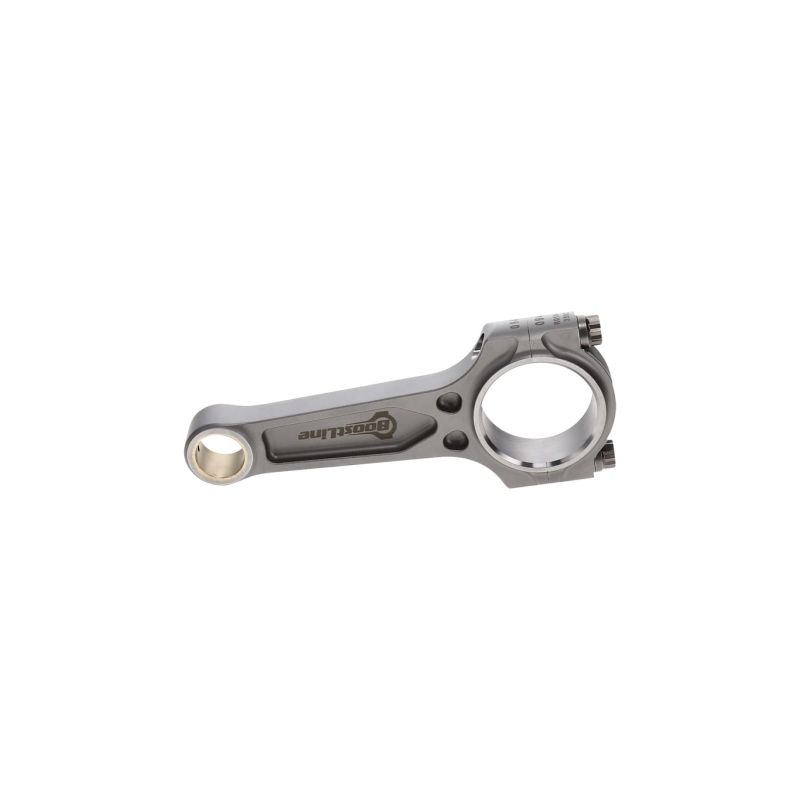
This kit gathers 4 connecting rods forged from 4340 steel, machined from solid then heat-treated to deliver a clear strength gain over the stock rods. You choose the profile (I-HD, three-pocket I-3P or H) and the bolt grade (ARP 2000, ARP L19 or ARP CA 625+) according to your power target and discipline. Each rod is balanced and weight-matched to limit mass scatter and preserve the balance of the rotating assembly.
Designed for both motorsport and sporty road use, these rods suit rally, drift, drag, circuit, hillclimb and time attack. They support Stage 2, Stage 3 and Stage 4 and beyond builds, and are an essential prerequisite once you fit forged pistons, raise the rev limit, increase boost pressure or torque. Depending on the profile and bolts chosen, the set easily handles the power levels targeted by strongly built B18 / B20 engines.
| Reference | Brand | Profile | Hardware | Pin diameter OEM 21 mm | Small-end width | Big-end diameter | Big-end width | Center-to-center OEM 137 mm | Weight per rod |
|---|---|---|---|---|---|---|---|---|---|
| HN5394-827 | Boostline | I-3P | ARP 2000-3/8"-38mm | 21 | 21 | 48 | 23,8 | 137 | 605 g |
| HN5394-827+ | Boostline | I-3P | ARP CA 625+-3/8"-38mm | 21 | 21 | 48 | 23,8 | 137 | 605 g |
| 14025-4 | Manley | H | ARP 2000-3/8"-38mm | 21 | 48 | 23,8 | 137 | 515 g | |
| 14412-4 | Manley | I-HD | ARP 2000-3/8"-41mm | 21 | 48 | 23,8 | 137 | 575 g | |
| 14412R6-4 | Manley | I-HD | ARP CA 625+-3/8"-41mm | 21 | 48 | 23,8 | 137 | 575 g | |
| R-HON-002-I | ZRP | I-HD | ARP 2000-3/8"-38mm | 21 | 48 | 23,8 | 137 | 525 g | |
| R-HON-002-I-L19 | ZRP | I-HD | ARP L19-3/8"-38mm | 21 | 48 | 23,8 | 137 | 525 g |
ZRP: Recommended for forced induction engines.
| Connecting rod | Hardware | Torque | Recommended stretch |
|---|---|---|---|
| Boostline (HN5394-827) | ARP 2000-3/8"-38mm | 75 N·m | 0,130 – 0,140 mm |
| Boostline (HN5394-827+) | ARP CA 625+-3/8"-38mm | 115 N·m | 0,170 – 0,180 mm |
| Manley (14025-4) | ARP 2000-3/8"-38mm | 81,3 N·m | 0,147 – 0,157 mm |
| Manley (14412-4) | ARP 2000-3/8"-41mm | 81,3 N·m | 0,147 – 0,157 mm |
| Manley (14412R6-4) | ARP CA 625+-3/8"-41mm | 88,1 N·m | 0,165 – 0,190 mm |
| ZRP (R-HON-002-I) | ARP 2000-3/8"-38mm | 61 N·m | 0,140 – 0,152 mm |
| ZRP (R-HON-002-I-L19) | ARP L19-3/8"-38mm | 67,8 N·m | 0,152 – 0,165 mm |
Connecting-rod bolts can be torqued (without a gauge) or, the method recommended by the manufacturers, tightened by stretch control using a gauge. Stretch control guarantees a consistent preload from one bolt to the next, regardless of thread friction, and is the reference for high-performance use. Always refer to the recommended stretch value shown above for the bolt grade fitted.
| A low-alloy nickel-chrome-molybdenum steel (4340) used in aerospace and motorsport for its exceptional toughness. Hot forging (oriented grain flow) then quench and temper, whereas the stock rod is often produced by powder metallurgy (sintered metal). Against a stock sintered steel, forged 4340 offers roughly +19 % yield strength, +8 % tensile strength and +19 % to +37 % fatigue life. Greater resistance to bending, compression and cyclic fatigue, hence a far higher safety margin at high engine speed and torque. |
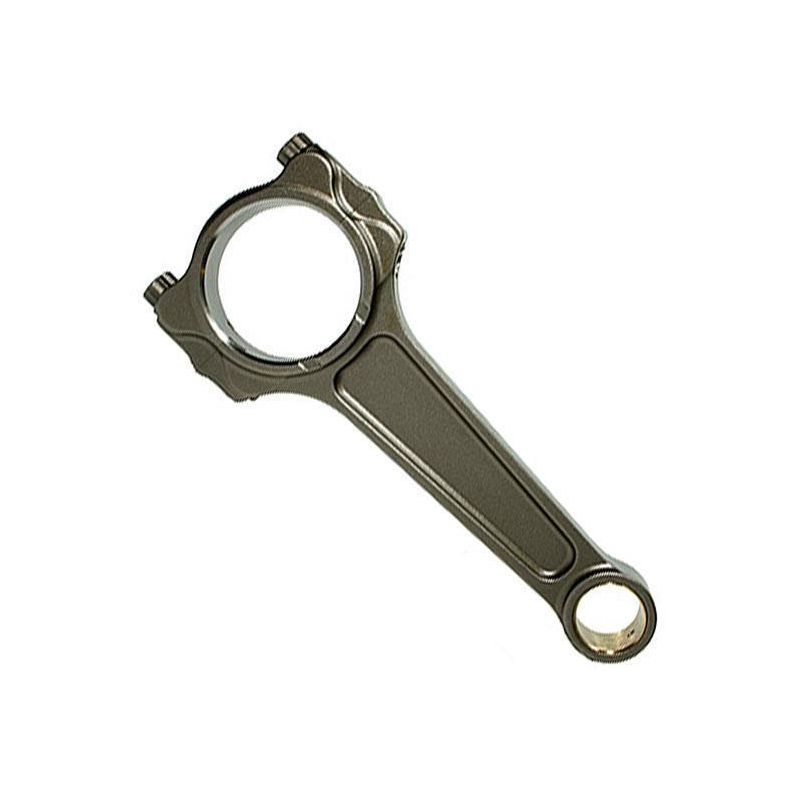
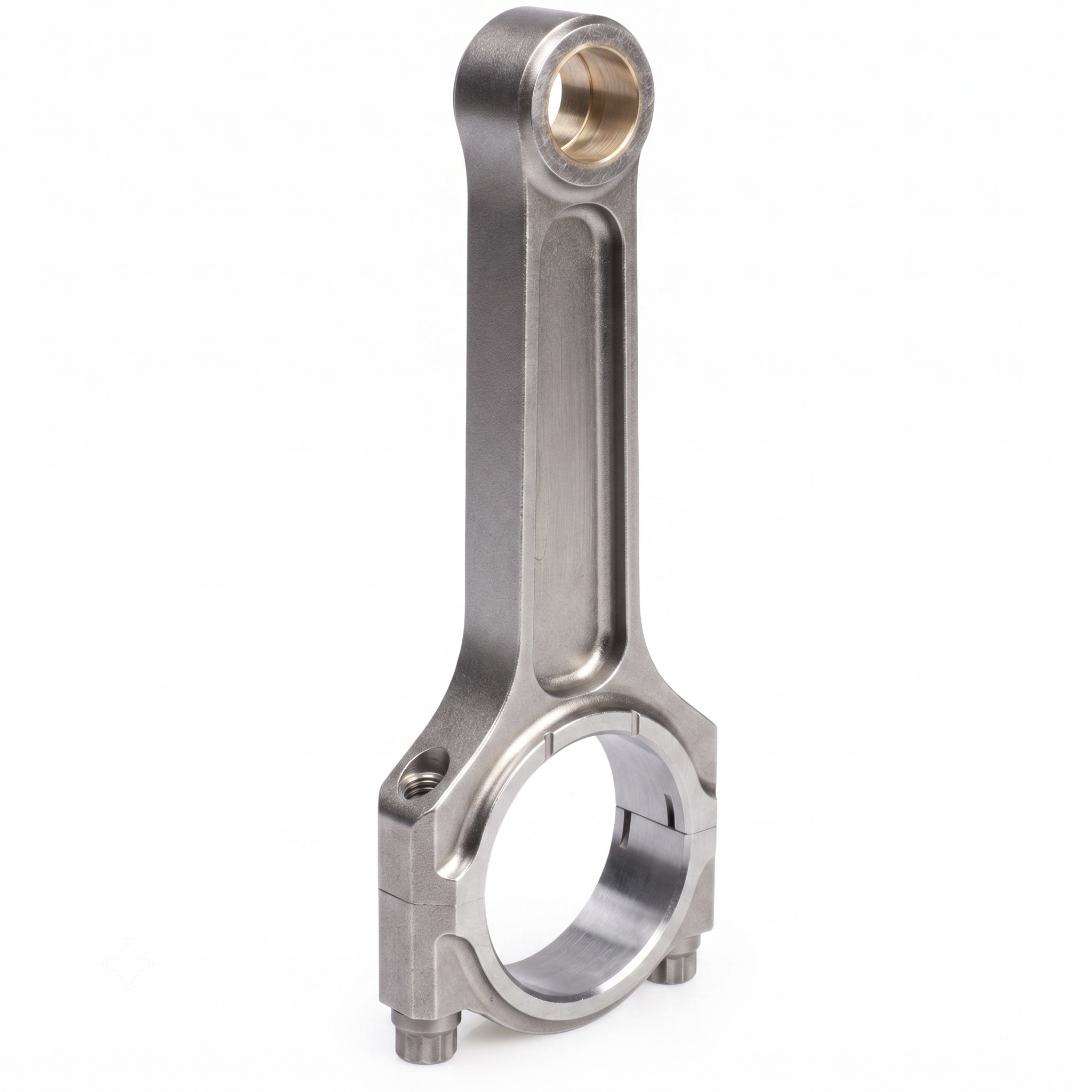 | I profile (I-HD): an optimised, reinforced (Heavy Duty) I-beam section. It is the best weight / stiffness compromise, perfectly suited to aggressive naturally aspirated builds as well as moderate to high boost. This is the profile chosen by ZRP and Manley on this kit. |
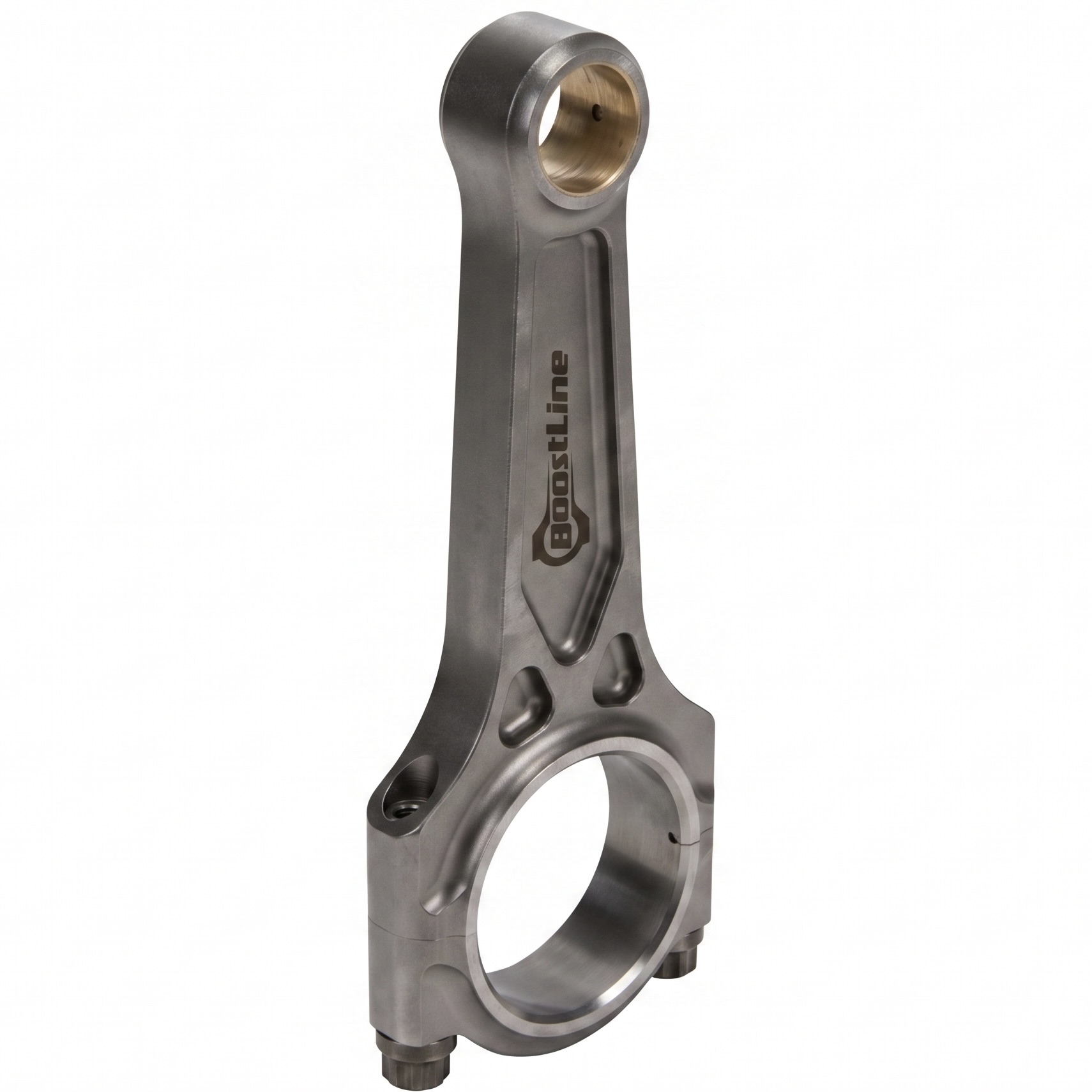 | I-3P profile (Boostline): a three-pocket I-beam geometry (patented three-dimensional body) that stiffens the rod without adding weight. Engineered for high torque and sustained boost, it is the Boostline reference to make a strongly turbocharged B-Series reliable. |
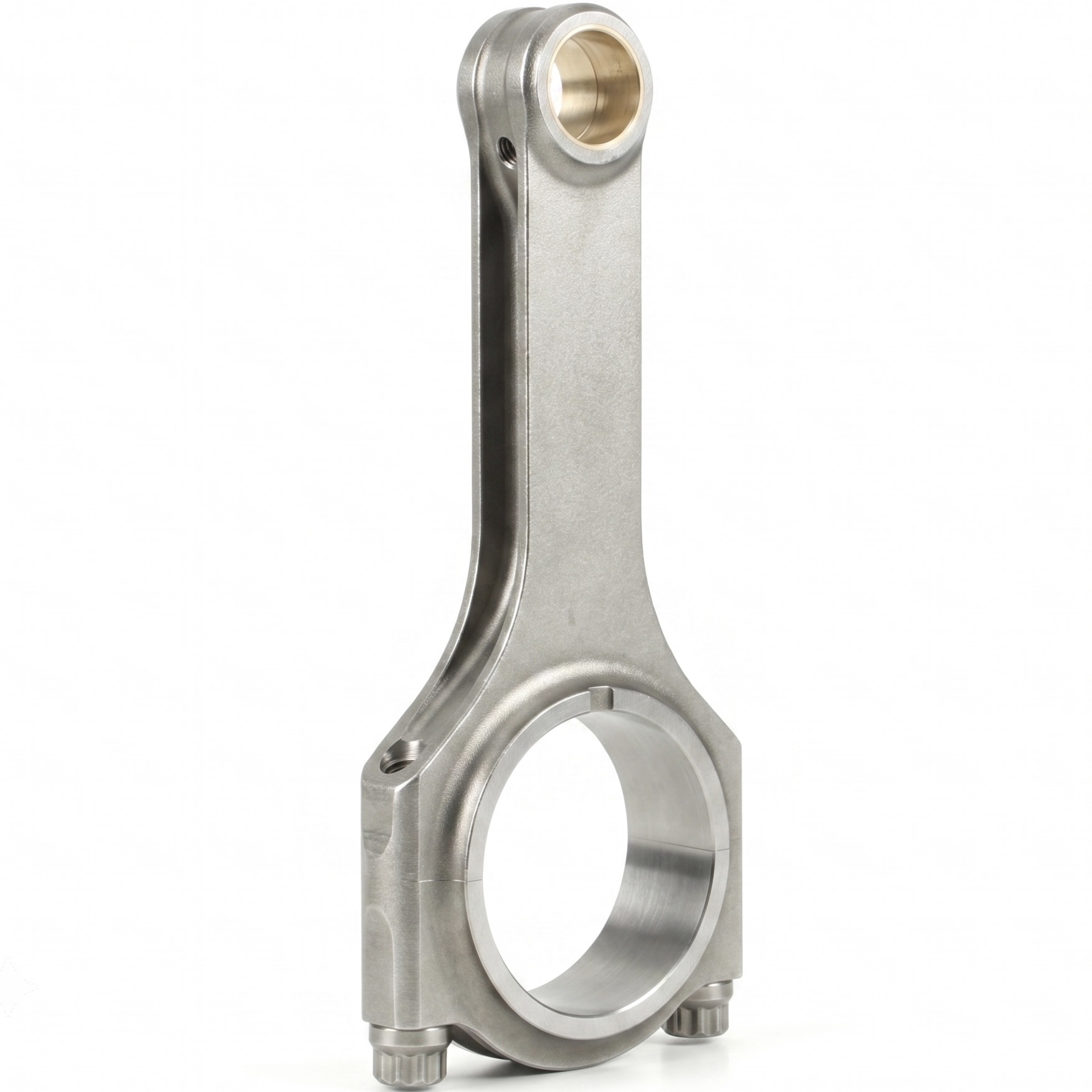 | H profile: an H-beam body favouring resistance to bending and compression. Ideal for very high torque and drag use, it offers excellent behaviour under load on the most violent builds. Profile offered in the Manley version. |
The bolts are the most stressed part of the rod: they hold the cap in place on every cycle. NSB Concept offers three ARP grades, from the most versatile to the most extreme, to be chosen according to torque, engine speed and power per cylinder.
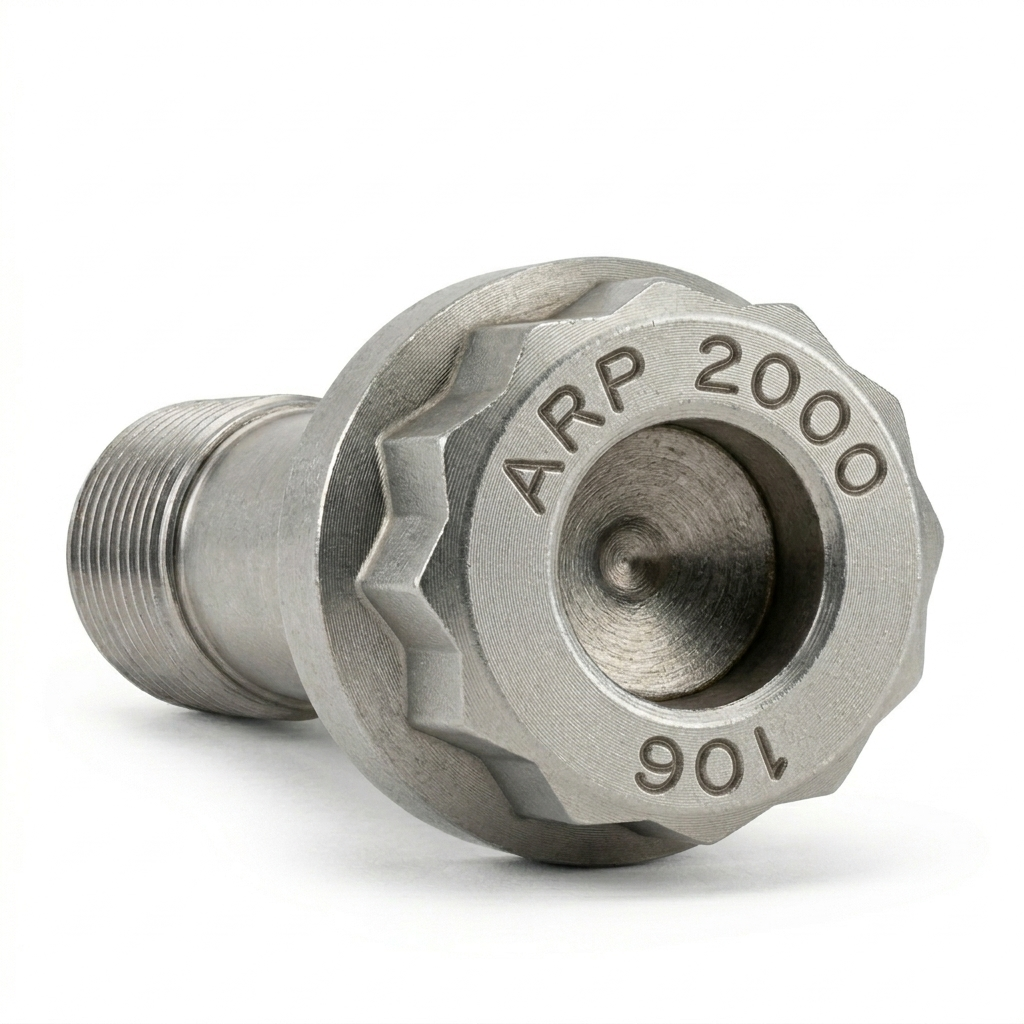 | ARP 2000: tensile strength of about 220,000 psi (~1,517 MPa). An excellent performance / versatility ratio, it holds up to roughly 200 hp per cylinder in 3/8", at engine speeds up to 8,500 rpm. Suited to circuit, trackday, drift, rally, drag and hillclimb. |
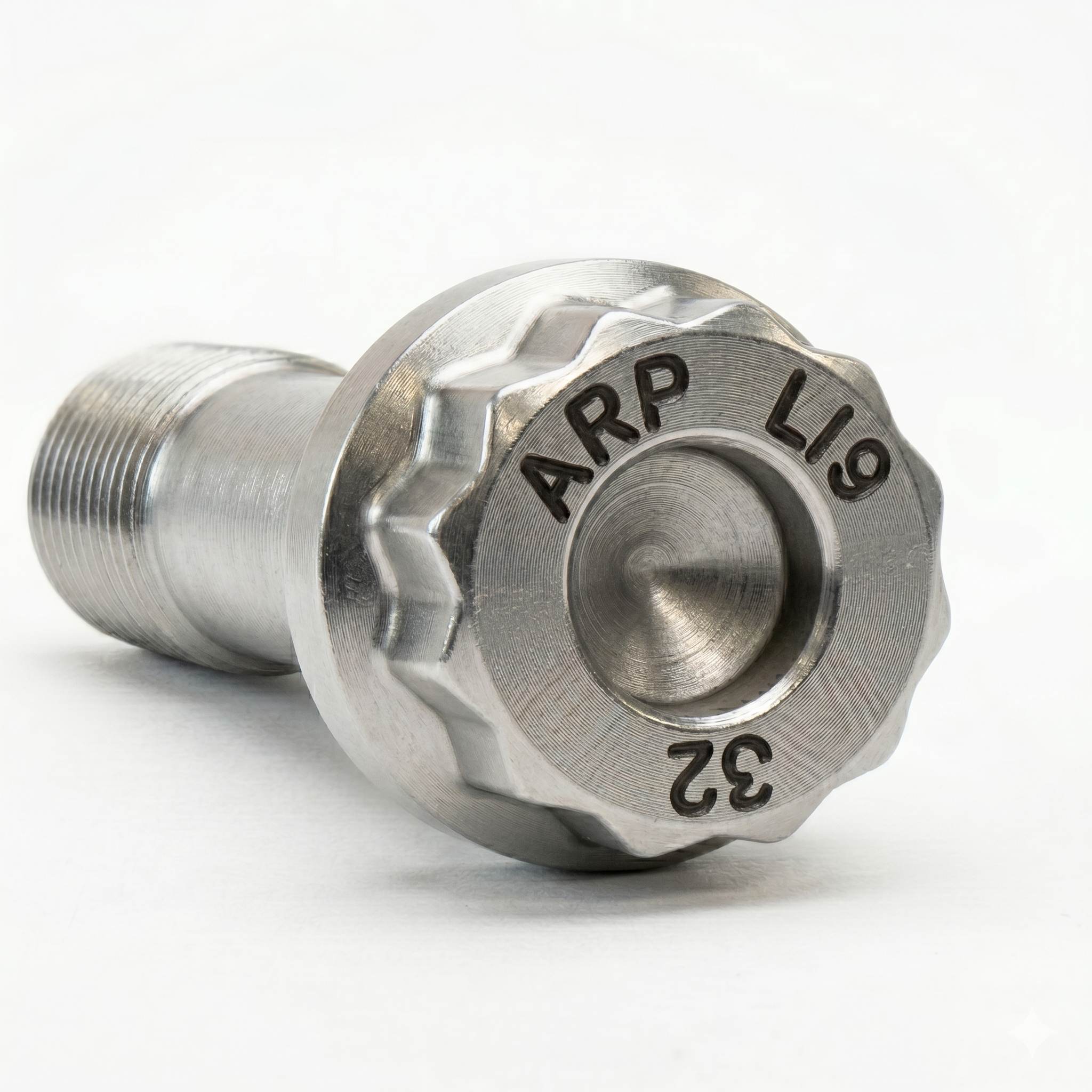 | ARP L19: tensile strength of about 260,000 psi (~1,793 MPa). For power and engine speeds beyond the ARP 2000 range, it holds up to 250 hp per cylinder in 3/8", at engine speeds up to 10,000 rpm. L19 steel is more sensitive to corrosion and hydrogen embrittlement: it must be kept away from moisture and handled cleanly (oiled). |
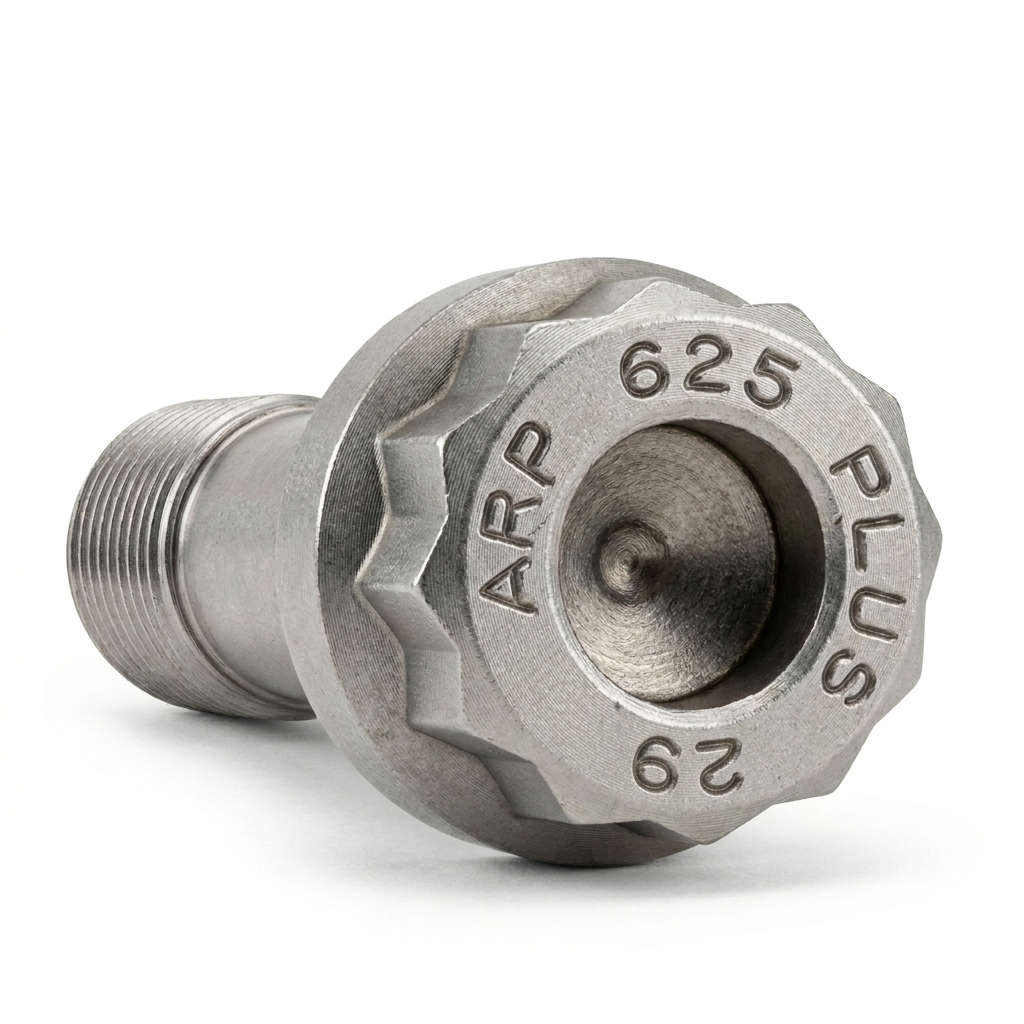 | ARP Custom Age 625+: tensile strength of about 260,000 to 280,000 psi (~1,793 to 1,931 MPa). It is the highest-performing grade, immune to hydrogen embrittlement and with no particular storage constraint, reserved for extreme builds beyond 250 hp per cylinder in 3/8", and beyond 10,000 rpm (very high engine speeds and boost pressure). |
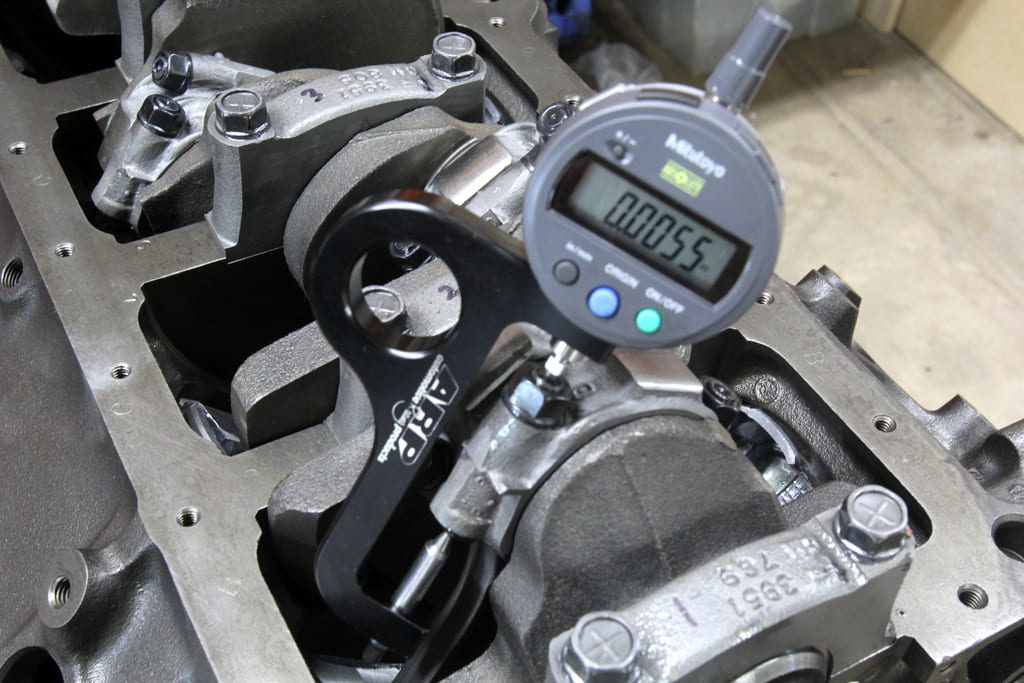
| To guarantee optimal preload, connecting-rod bolts are checked by stretch rather than torque alone. You measure the bolt length at rest, then under tightening: the difference (the stretch) must match the value recommended by the manufacturer for the bolt grade fitted. This method neutralises thread-friction variations and ensures a perfectly repeatable clamp from one rod to the next. |
Discover the ARP stretch gauge
 | Boostline (Wiseco): a specialist in the three-pocket I-3P profile for strongly boosted applications. Careful manufacturing, a robust pin and a geometry designed to handle high turbo torque. |
 | Manley Performance (Wiseco group, USA): Pro Series Turbo Tuff rods forged from 4340, weighed and matched, offered in H and I-HD profiles. A historic motorsport reference, renowned for its strength under heavy load. |
 | ZRP: rods designed by Alex Drakos (Athens, Greece). Forged from 4340 steel, precision-machined and weight-matched to about ±1 g, they deliver an outstanding balance of performance and versatility and cover most disciplines (circuit, drift, rally, drag). |
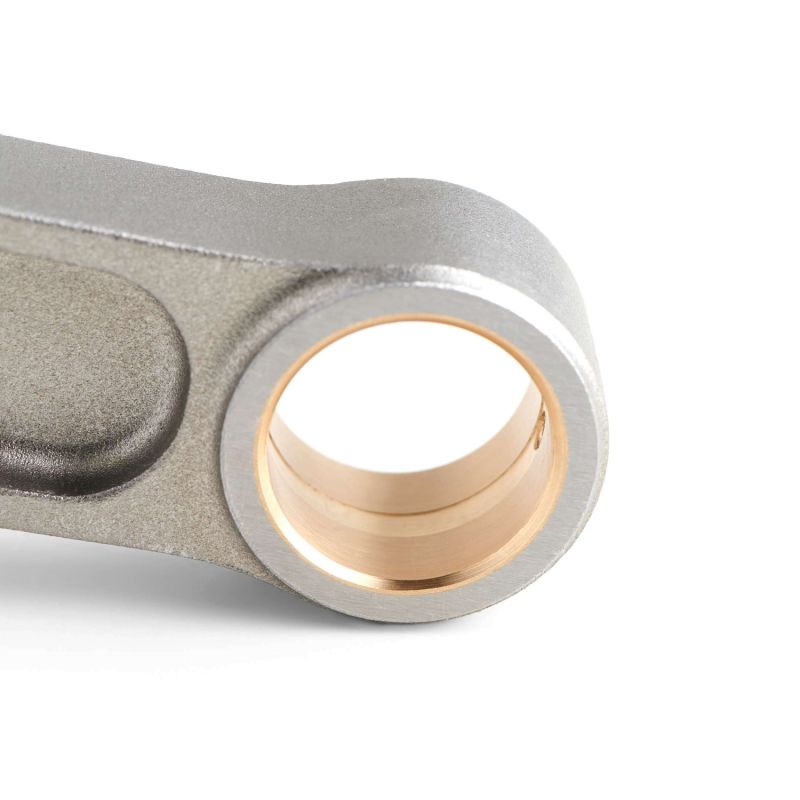
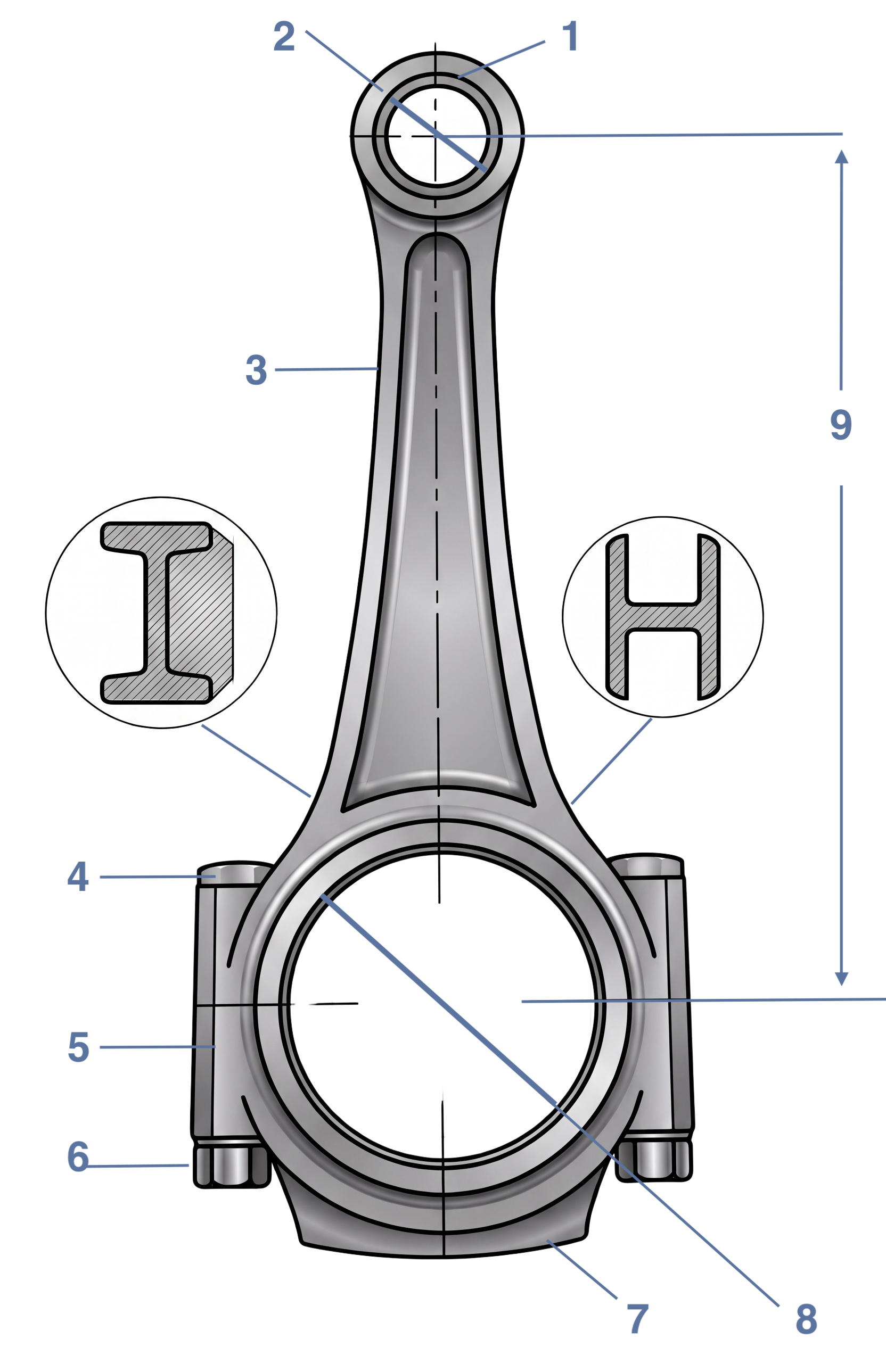 | 1) Small end 2) Small-end diameter 3) Rod beam 4) Rod bolt 5) Big end 6) Rod nut / bolt 7) Rod cap 8) Big-end diameter 9) Center-to-center |
These forged connecting rods fit the Honda and Acura B18 / B20 DOHC non-VTEC blocks listed below. Check the exact engine code of your vehicle before ordering.
| Make | Model (chassis) | Engine code | Power | Years |
|---|---|---|---|---|
| Acura | Integra RS / LS / GS (DA) | B18A1 | 130 – 140 hp | 1990 – 1993 |
| Acura | Integra RS / LS / GS (DB / DC) | B18B1 | 142 hp | 1994 – 2001 |
| Honda | CR-V (RD1) | B20B | 126 hp | 1996 – 1998 |
| Honda | CR-V (RD1) | B20Z | 147 hp | 1999 – 2001 |
OEM reference: 13210-PR4-A00 (set of 4 rods).
When a stock bottom end fails (broken or bent rod, marked big end), fitting stock parts again often reproduces the same fragility, for a comparable cost.
For an equivalent or even lower budget, fitting 4340 forged rods at rebuild time saves you a second strip-down and opens the way to a more ambitious build, with no further parts to change afterwards.
For the same budget: more reliability, more power potential and more longevity. It is the most rational investment for a B18 / B20 meant to last or to gain power.