Product successfully added to your shopping cart
Quantity
Total
There are 0 items in your cart. There is 1 item in your cart.
Total products
Total shipping To be determined
Total

1.6L 16v - TU5J4 TU5JP4
Manufacturers
1.6L 16v - TU5J4 TU5JP4
Warning: Last items in stock!
New product
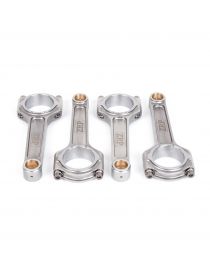
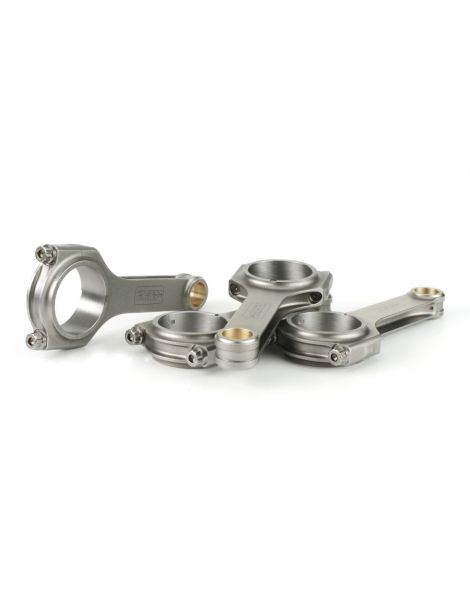
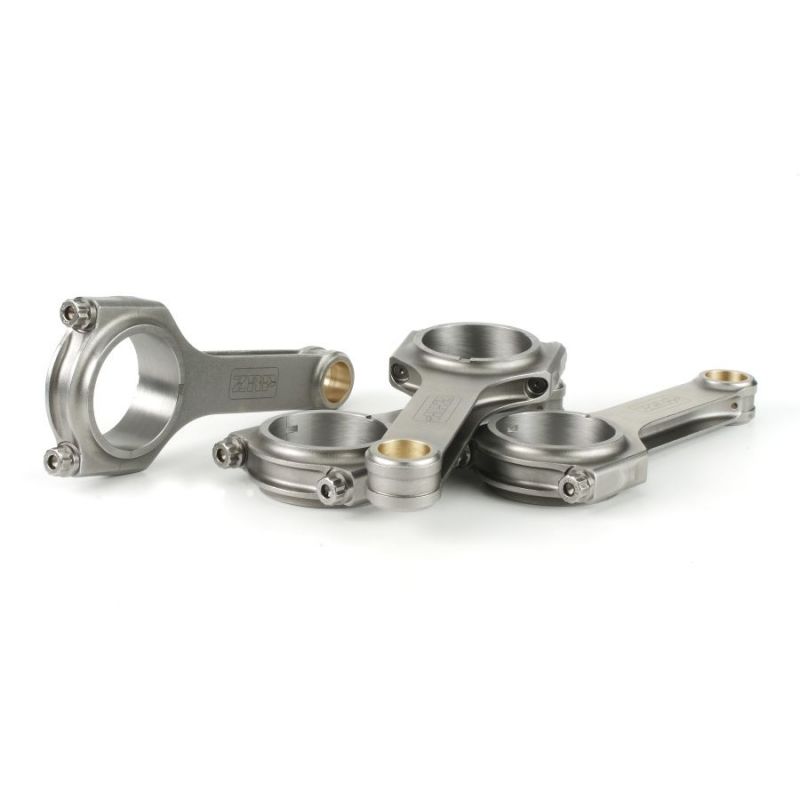
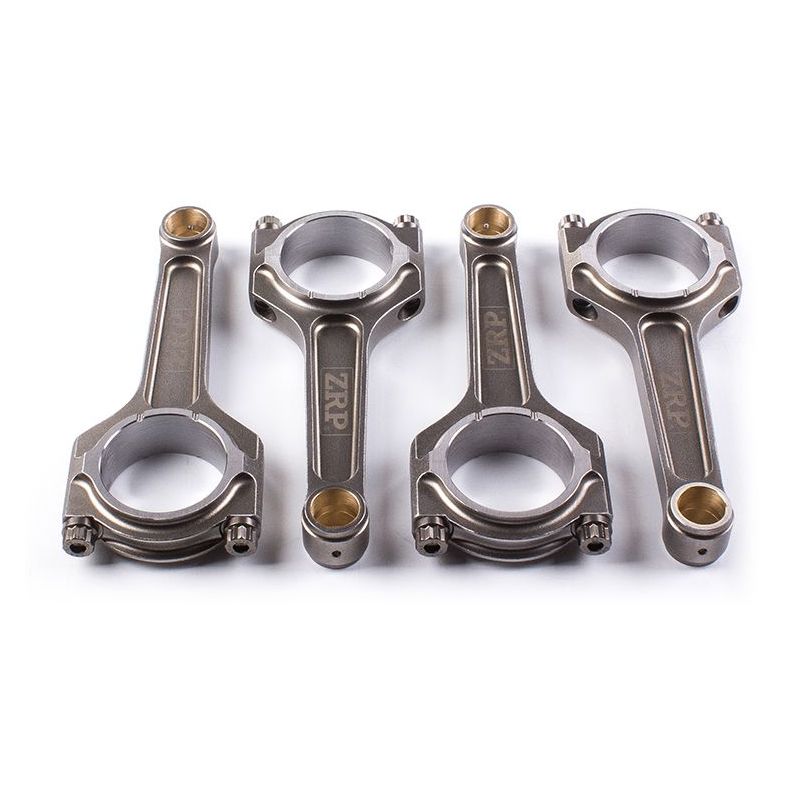
Set of 4 forged 4340 steel connecting rods for Citroën / Peugeot 1.6L 16V TU5J4 / TU5JP4 (19.46 mm pin).
The TU5J4 and its TU5JP4 variant make up PSA’s family of sporting 1.6-litre 16-valve inline fours. Naturally aspirated, the engine combines a 78.5 mm bore with an 82 mm stroke for 1,587 cc, and was built from 1995 to 2007. Its multi-valve head and compact architecture made it a lively unit, particularly at home at high rpm, which explains its long competition career.
It powers the group’s sportiest versions: Peugeot 106 S16 and 206 S16, Citroën Saxo VTS and C2 VTS. These light hatchbacks built the reputation of the TU5 in rally, on circuit and in hillclimb, where the engine spends most of its time near the red line. Very responsive to tuning (intake, exhaust, camshafts, even forced induction), it quickly puts the standard rod at its limit as soon as power, rpm or cylinder pressure rise, all the more so as the piston pin measures only 19.46 mm.
Forged from high-strength 4340 steel, these rods bring the bottom end of the TU5 up to the level of the rest of the build. They are called for as soon as forged pistons go in, as soon as the red line is raised, as soon as forced induction is added or displacement increased: all cases where the standard rod, with its 19.46 mm pin and its 133.6 mm centre-to-centre length, runs out of reserve.
Intended for built engines, highly tuned naturally aspirated as well as boosted, they serve every discipline: rally, drift, drag racing, circuit and track use, hillclimb, time attack. They follow Stage 2, Stage 3 and Stage 4+ builds, up to a fully rebuilt competition engine, without fearing long spells at high rpm.
| Reference | Brand | Profile | Bolts | Pin diameter OEM 19.5 mm | Small-end width | Big-end diameter OEM n.p. | Big-end width | Center-to-center OEM 133.6 mm | Weight per rod |
|---|---|---|---|---|---|---|---|---|---|
| R-CIT-001HL | ZRP | H-Lite | ARP 2000-3/8"-38mm | 19.46 mm | 48.66 mm | 23.91 mm | 133.6 mm | 461 g | |
| R-CIT-001HL-L19 | ZRP | H-Lite | ARP L19-3/8"-38mm | 19.46 mm | 48.66 mm | 23.91 mm | 133.6 mm | 461 g | |
| R-CIT-001-I | ZRP | I-HD | ARP 2000-3/8"-38mm | 19.46 mm | 48.66 mm | 23.91 mm | 133.6 mm | 498 g | |
| R-CIT-001-I-L19 | ZRP | I-HD | ARP L19-3/8"-38mm | 19.46 mm | 48.66 mm | 23.91 mm | 133.6 mm | 498 g |
ZRP: Lightweight design.
| Rod | Bolts | Torque | Recommended stretch |
|---|---|---|---|
| ZRP (R-CIT-001HL) | ARP 2000 | 61 N·m | 0.140 – 0.152 mm |
| ZRP (R-CIT-001HL-L19) | ARP L19 | 67.8 N·m | 0.152 – 0.165 mm |
| ZRP (R-CIT-001-I) | ARP 2000 | 61 N·m | 0.140 – 0.152 mm |
| ZRP (R-CIT-001-I-L19) | ARP L19 | 67.8 N·m | 0.152 – 0.165 mm |
Both bolts of the same cap must be tensioned in the same way: if one is left behind, the cap tilts slightly, the bearing bore loses its roundness on one side and the shell bears at an angle, with an uneven oil film across its width. That asymmetry is the most discreet form of under-tightening; the most common one is simply staying below the range: preload no longer covers the separating force, the cap lifts intermittently, the shell is hammered and clearance opens. At the other end, crossing the upper limit yields the bolt, which keeps a permanent elongation and loses its tension, while the bore distorts and the big end goes oval. The values in the table below are those the fastener manufacturer specifies for each ZRP rod of this TU5, in ARP 2000 as in ARP L19 in 3/8": they apply to every single bolt, without exception. Stretch measurement with a dial gauge remains the reference method, with ARP assembly lubricant and the kit instructions as the governing documents.
| 4340 steel is a nickel-chromium-molybdenum alloy steel used in both aerospace and motorsport. Forged then heat-treated (quenched and tempered), it combines high tensile strength, excellent fatigue life and real ductility. Compared with a factory rod (often made of sintered metal, optimised for mass-production cost), a 4340 forged rod gains roughly +19% yield strength, +8% tensile strength and above all +19 to +37% fatigue strength, i.e. a service life under cyclic loading several times longer. This is exactly what makes forged 4340 the reference material as soon as engine speed and load rise. |
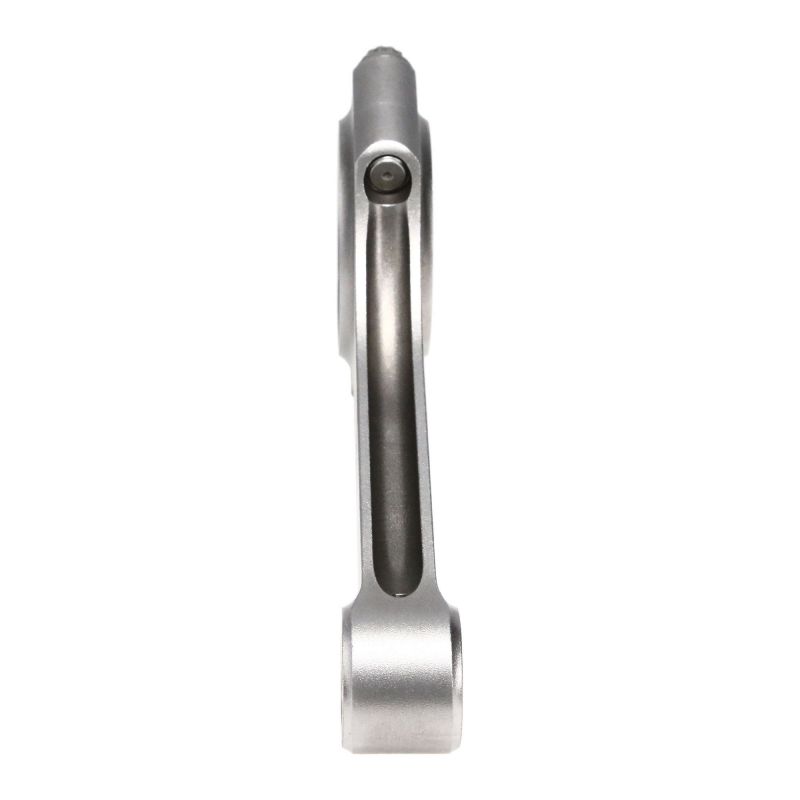
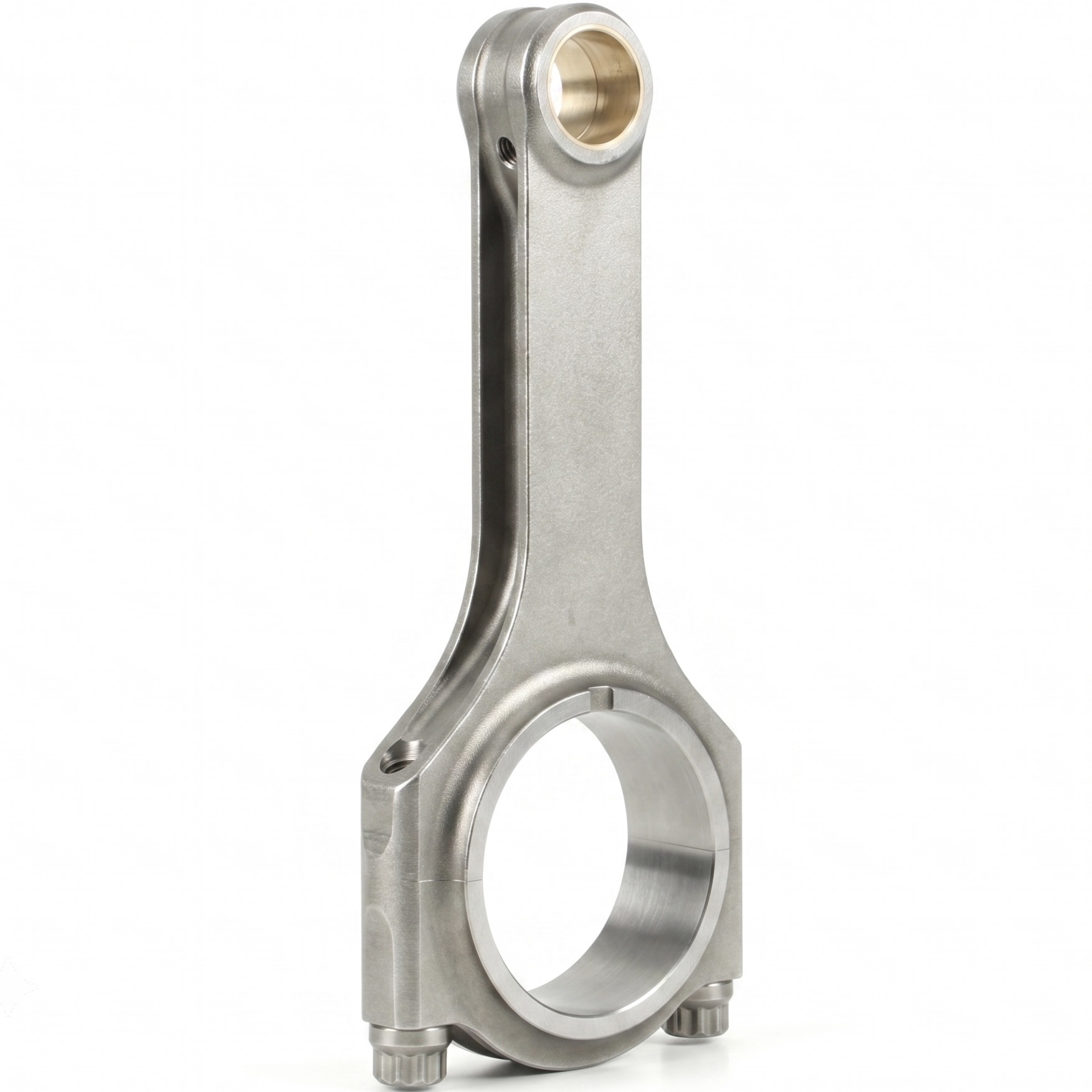 | H-Beam H-Lite profile (lightened H). The H section offers great rigidity and excellent resistance to bending and compression. Its H-Lite version cuts mass to limit inertia while keeping the strength of the H profile: a good compromise for torque- and reliability-oriented engines. |
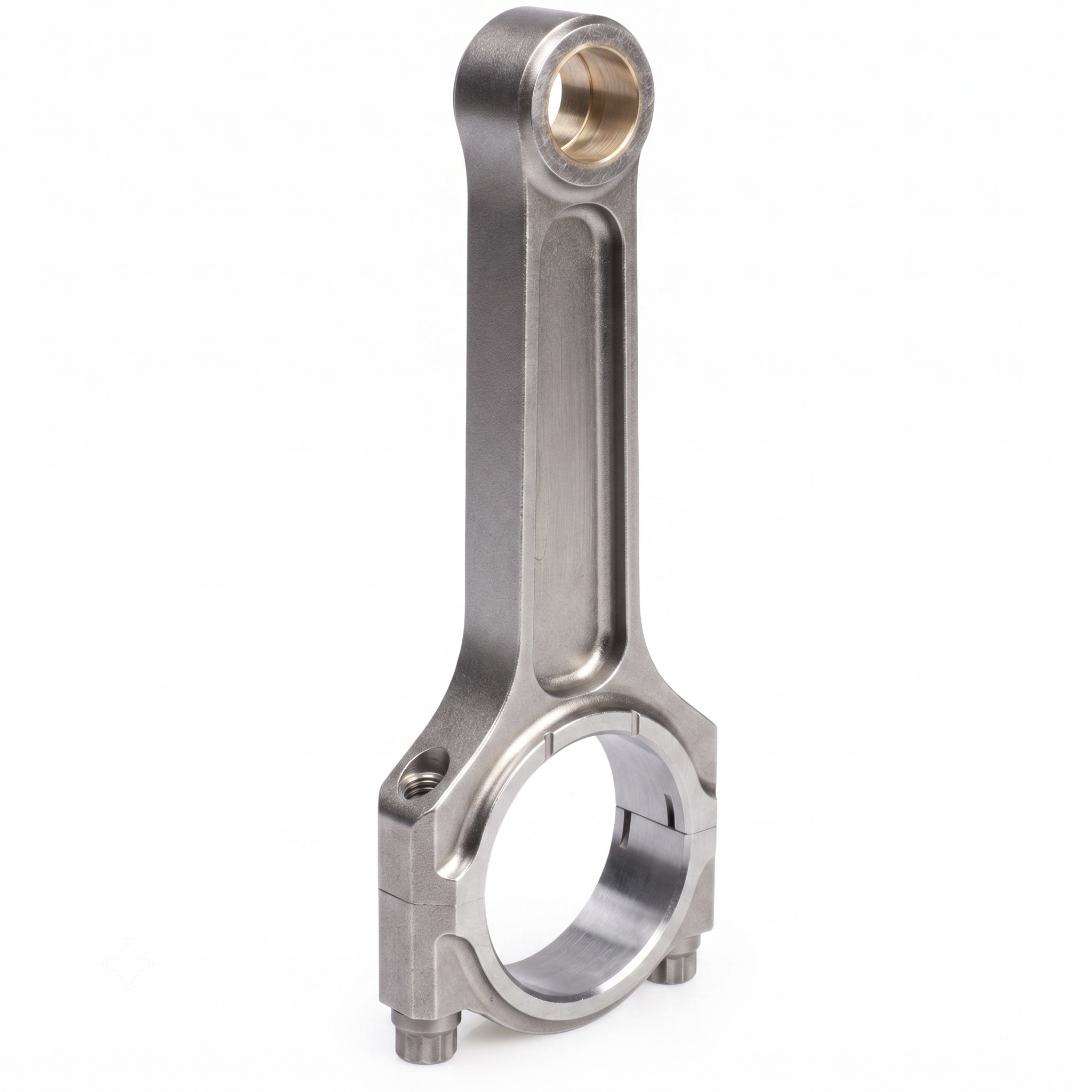 | I-Beam I-HD profile (reinforced I). The I-beam rod, with its thinner central section, is lighter: less inertia and freer revving, an asset on a lively engine like the TU5. Its I-HD (Heavy Duty) version reinforces the structure to handle higher loads without a weight penalty. |
On a 1.6 16V that revs hard, the rod bolt takes a tension cycle on every revolution: it is what sets the real limit in rpm and in pressure. The grade is therefore chosen according to the intended use (rally and hillclimb with torque pick-up at low rpm, circuit with rpm held for tens of minutes, drag racing with very short but violent peaks) and to the target power per cylinder. The two grades offered here in 3/8"-38 mm are fitted to the stated torque and stretch, with no approximation.
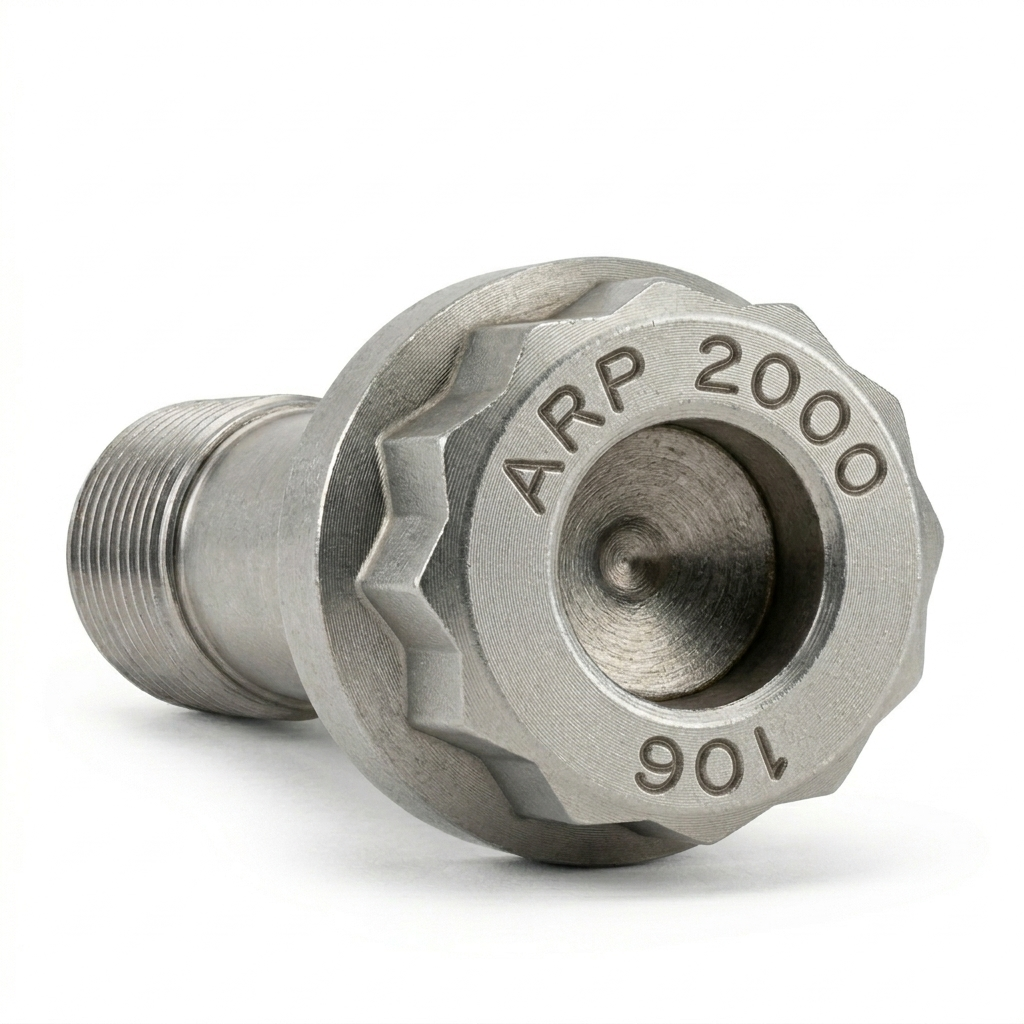 | ARP 2000, with a tensile strength of ~220,000 psi (~1,517 MPa), is the high-performance standard: up to 200 hp per cylinder in 3/8" and up to 8,500 rpm. On a 1,587 cc naturally aspirated engine used in rally, on circuit or in hillclimb, that leaves a very comfortable margin, including after a move to moderate forced induction. It is the most common grade in circuit racing, track days, drift, rally, drag racing and hillclimb, and it calls for no particular storage constraint. |
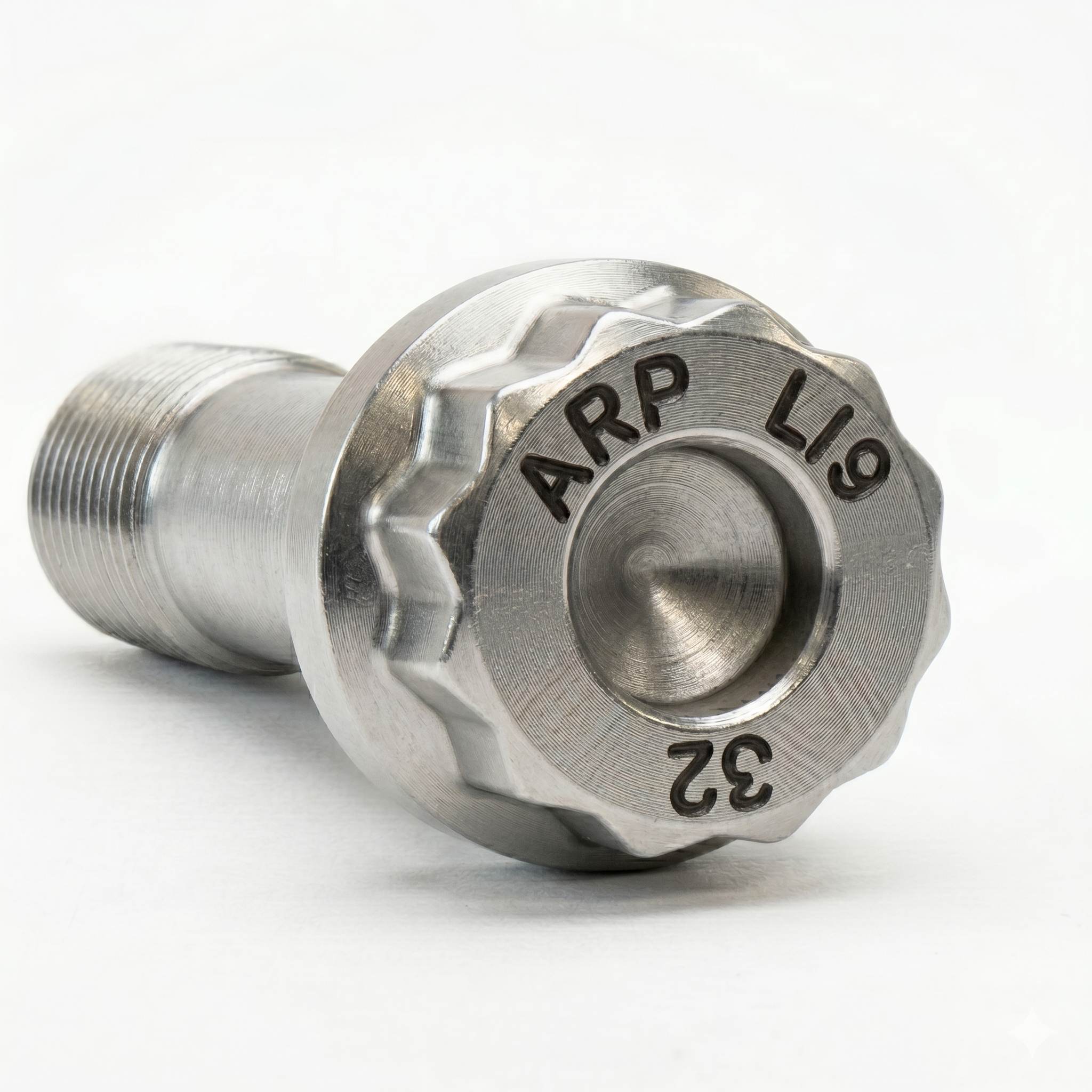 | L19 climbs to ~260,000 psi (~1,793 MPa), that is up to 250 hp per cylinder in 3/8" and up to 10,000 rpm. It is the choice for the most highly developed TU5 engines: very high boost pressure, sustained high rpm in hillclimb or circuit racing, high cylinder pressure, and more generally the big power levels in drag racing, drift, rally and circuit. Beware however of its sensitivity to corrosion and to hydrogen embrittlement: L19 bolts are stored and fitted oiled, away from moisture, and must never sit bare in a damp workshop. |
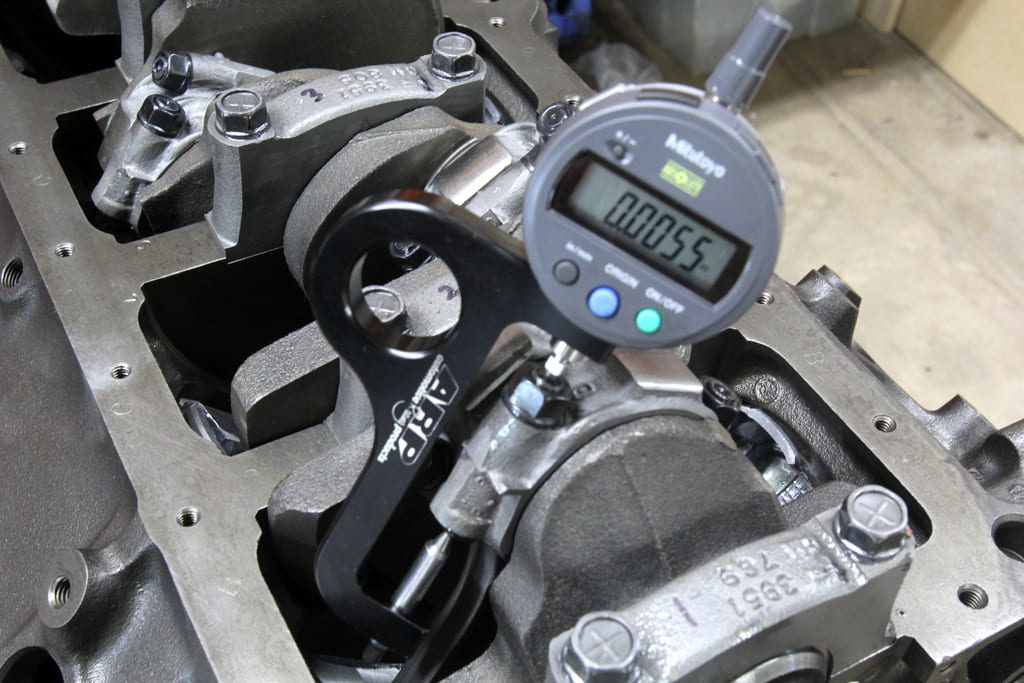
| Beyond torque tightening, measuring rod-bolt stretch remains the most reliable check for achieving correct preload. The measurement is taken with the bolt fitted: place the dial gauge (stretch gauge) on both ends of the bolt and read its actual stretch, which must match the recommended value (see the torque & stretch table above). This method removes the friction variations inherent to torque tightening and secures the assembly on heavily stressed engines. |
 | ZRP is a Greek brand of high-performance forged connecting rods, designed by Alex Drakos in Athens. Each rod is forged from 4340 steel, precision-machined and balanced to ±1 g to stay reliable at high rpm. On this TU5 application they are offered in H-Lite (lightened H) or I-HD (reinforced I) profile with ARP 2000 or L19 hardware, designed and inspected in Greece, and proven in rallying, on circuit and in drift. |
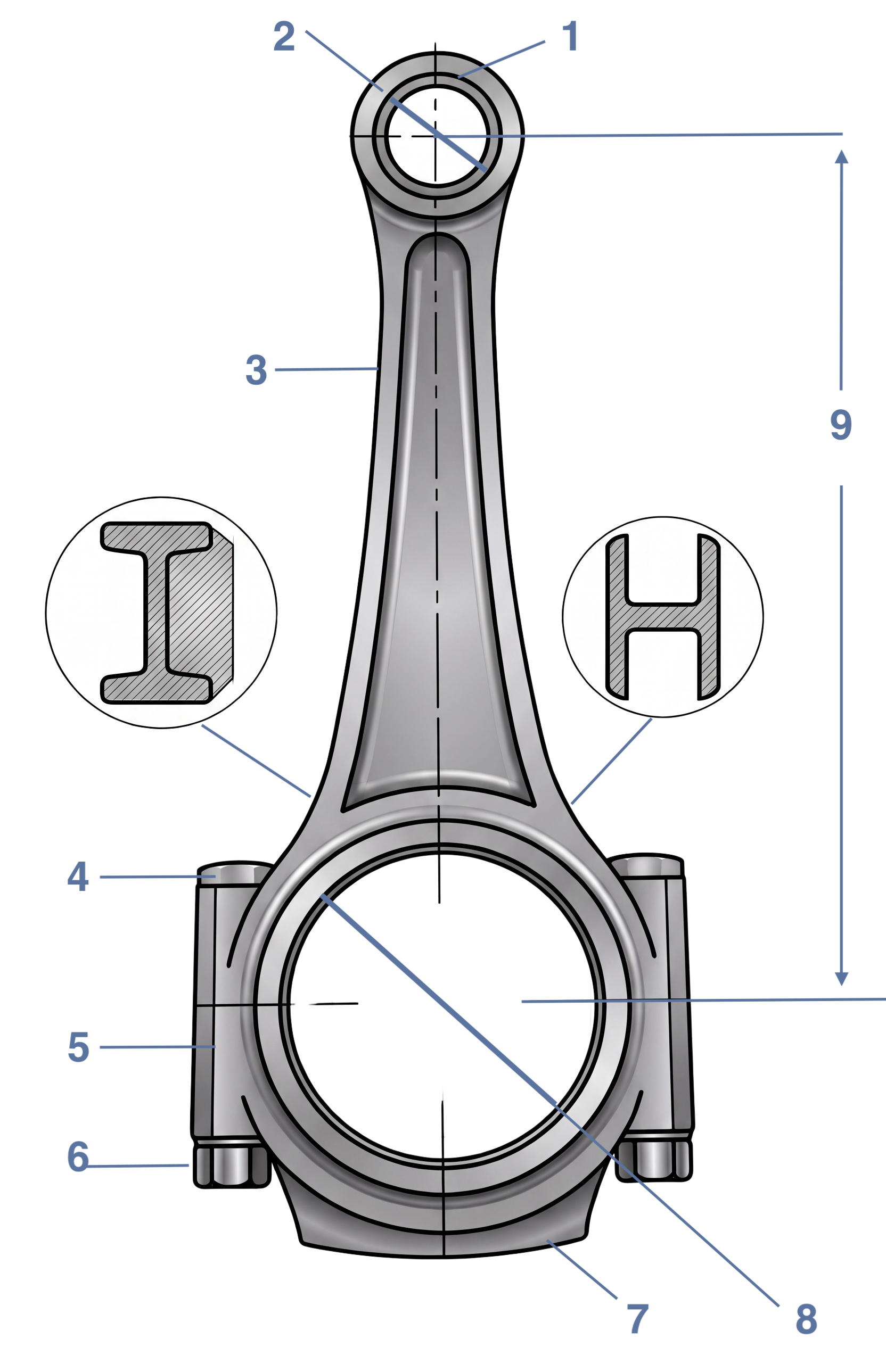 | 1) Small end 2) Small-end diameter 3) Rod beam 4) Rod bolt 5) Big end 6) Rod nut / bolt 7) Rod cap 8) Big-end diameter 9) Center-to-center |
These forged rods suit every vehicle fitted with the 1.6 16V TU5J4 or TU5JP4 in its 19.46 mm piston pin version. The table below details the Citroën and Peugeot models concerned.
| Brand | Model (chassis) | Engine code | Power | Years |
|---|---|---|---|---|
| Citroën | Saxo VTS | TU5J4 | 118 hp | 1996–2003 |
| Citroën | C2 VTS | TU5JP4S | 122 hp | 2004–2009 |
| Citroën | C2 1.6 16V | TU5JP4 | 109 hp | 2003–2010 |
| Citroën | C3 1.6 16V | TU5JP4 | 109 hp | 2002–2010 |
| Citroën | C4 1.6 16V | TU5JP4 | 109 hp | 2004–2011 |
| Citroën | Xsara 1.6 16V | TU5JP4 | 109 hp | 2000–2005 |
| Peugeot | 106 S16 | TU5J4 | 120 hp | 1996–2004 |
| Peugeot | 206 S16 | TU5JP4 | 109 hp | 2000–2009 |
| Peugeot | 207 1.6 16V | TU5JP4 | 109 hp | 2006–2013 |
| Peugeot | 307 1.6 16V | TU5JP4 | 109 hp | 2000–2009 |
| Peugeot | 308 1.6 16V | TU5JP4 | 109 hp | 2008–2014 |
OEM reference: 0603 86 (set of 4 rods).
When a TU5 breaks a rod, the repair never stops at the broken part: the matching piston nearly always has to be replaced, sometimes along with the liner. Going back to the original configuration therefore means buying standard rods and pistons again, for an engine that will remain exactly as fragile as before.
For a comparable, often lower budget, a set of 4340 forged rods fitted with forged pistons brings incomparable reliability and safety margin, and opens the door to a more ambitious build instead of a simple return to factory condition. European engine builders have worked this way for more than 15 years on competition PSA engines.
For the same budget the sum is quickly done: more reliability, more potential, more service life.