Product successfully added to your shopping cart
Quantity
Total
There are 0 items in your cart. There is 1 item in your cart.
Total products
Total shipping To be determined
Total

3.8L 24v - VR38DETT
Manufacturers
3.8L 24v - VR38DETT
Warning: Last items in stock!
New product
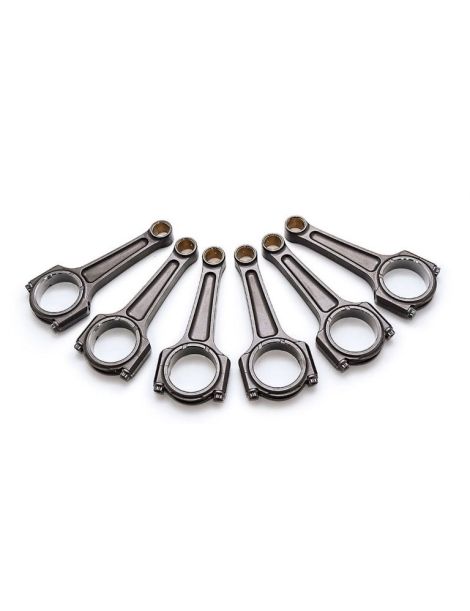
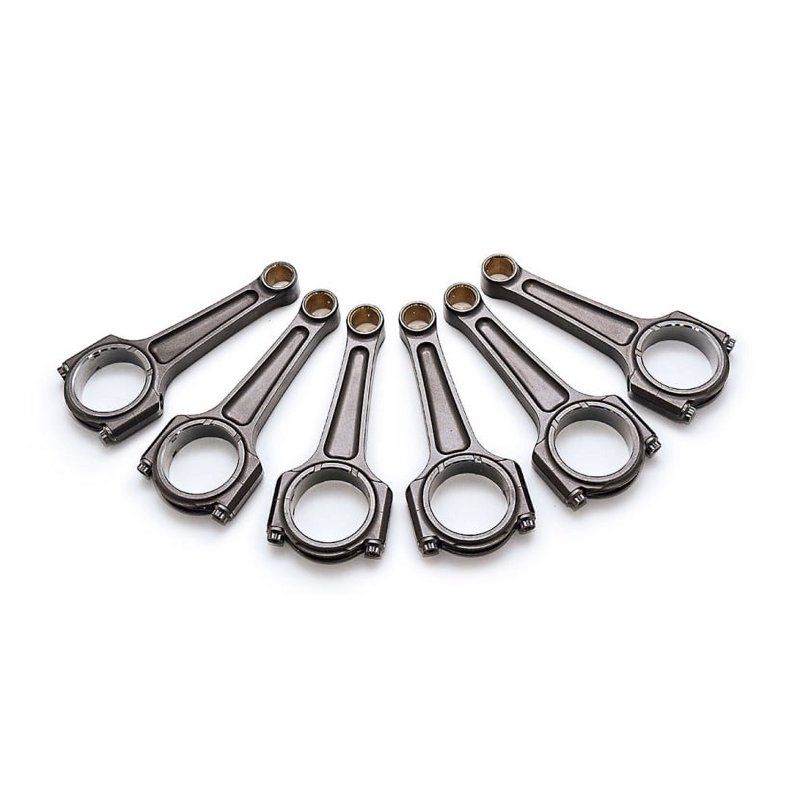
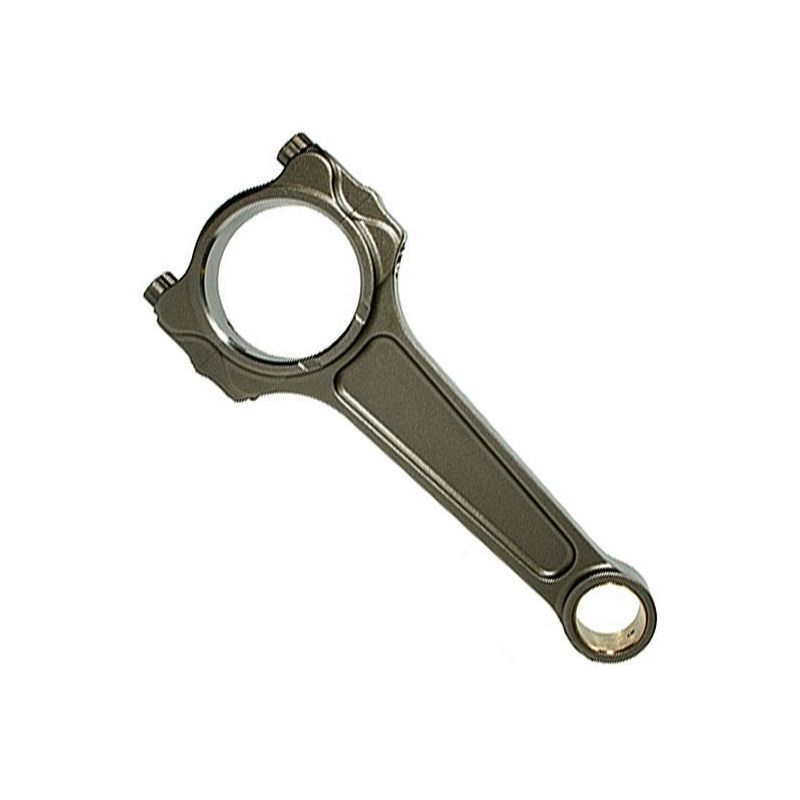
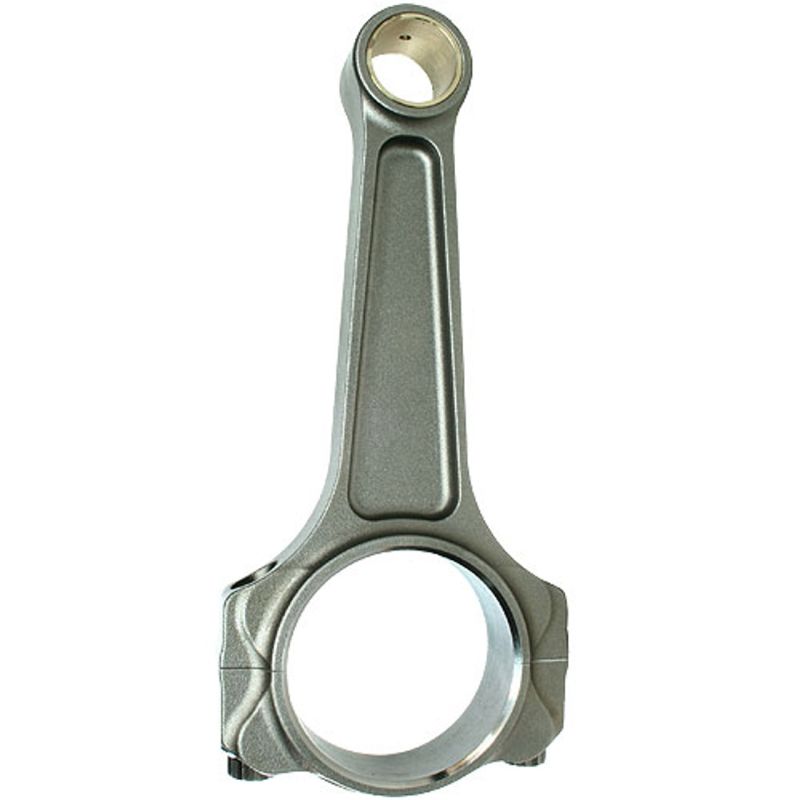
Set of 6 forged connecting rods in 300M steel for the Nissan GT-R R35 3.8 V6 biturbo (VR38DETT), 25.15 mm piston pin.
The VR38DETT is the 3.8 L 24-valve twin-turbo V6 that has powered the Nissan GT-R R35 since 2007. Hand-assembled in a controlled environment, it delivered 485 hp originally, rose to 570 hp, and up to 600–608 hp on NISMO versions. Its twin turbochargers, generous fuelling and low-end torque make it one of tuning's favourite platforms: exceeding 800 or even 1,000 hp at the wheels with larger turbos and proper management is common. At that level of boost and torque, the factory rods become the weak link: replacing them with forged rods is the first safeguard of a hard, lasting build.
Drop-forged and precision-machined, these rods withstand bending, compression and fatigue loads far beyond the factory sintered rods. They cover every sporting use of the GT-R: circuit, time attack, drift, drag, rally and hillclimb, and support builds from Stage 2 to Stage 4 and beyond on a VR38DETT pushed in boost, rpm and torque. Supplied as a complete set of 6, weight-matched, they preserve the balance of the rotating assembly and reliability at high rpm. This version keeps the 165.1 mm center-to-center length and adopts an enlarged 25.15 mm piston pin, intended for custom forged-piston builds.
| Reference | Brand | Profile | Steel | Bolts | Pin Ø (mm) | Big end Ø (mm) | Big end width (mm) | Center-to-center (mm) | Weight (g) |
|---|---|---|---|---|---|---|---|---|---|
| 15444-6 | Manley | I-HD-300M | 300M | ARP 2000-7/16"-42mm | 25,15 | 59 | 22,78 | 165,1 | 760 |
This 25,15 mm pin variant comes with a single set of hardware, ARP 2000 in 7/16" 42 mm: the table gives only one torque figure and one stretch range, valid for all twelve bolts in the engine. With a bolt of this length, make sure the gauge has enough travel and zero the instrument on a standard of similar length, otherwise the reading starts out with a constant offset. These values are the ones specified by the bolt manufacturer and must be followed scrupulously; stretch measured before and after tightening is the reference method, torque serving only to confirm.
| Rod | Bolts | Tightening torque (N·m) | Recommended stretch (mm) |
|---|---|---|---|
| Manley I-HD-300M (15444-6) | ARP 2000 | 135,6 | 0,163 – 0,173 |
This rod is forged from 300M, an ultra-high-strength steel derived from 4340 enriched with silicon and vanadium, chosen for the most heavily stressed engines. Forged, then quenched and tempered, it keeps a continuous grain flow giving high tensile strength and excellent fatigue life. Compared with a cost-optimised sintered factory rod, a forged rod gains about +19% yield strength, +8% tensile strength and +19 to +37% in fatigue, with an even greater margin for 300M on extreme engines.
This rod uses Manley's I-HD 300M profile: a reinforced Heavy Duty I-beam (Pro Series I-Beam Turbo Tuff) forged from 300M, chosen for the best stiffness / weight compromise on heavily boosted VR38DETT builds. The specification table gives the steel, center-to-center length, big-end diameter and weight.
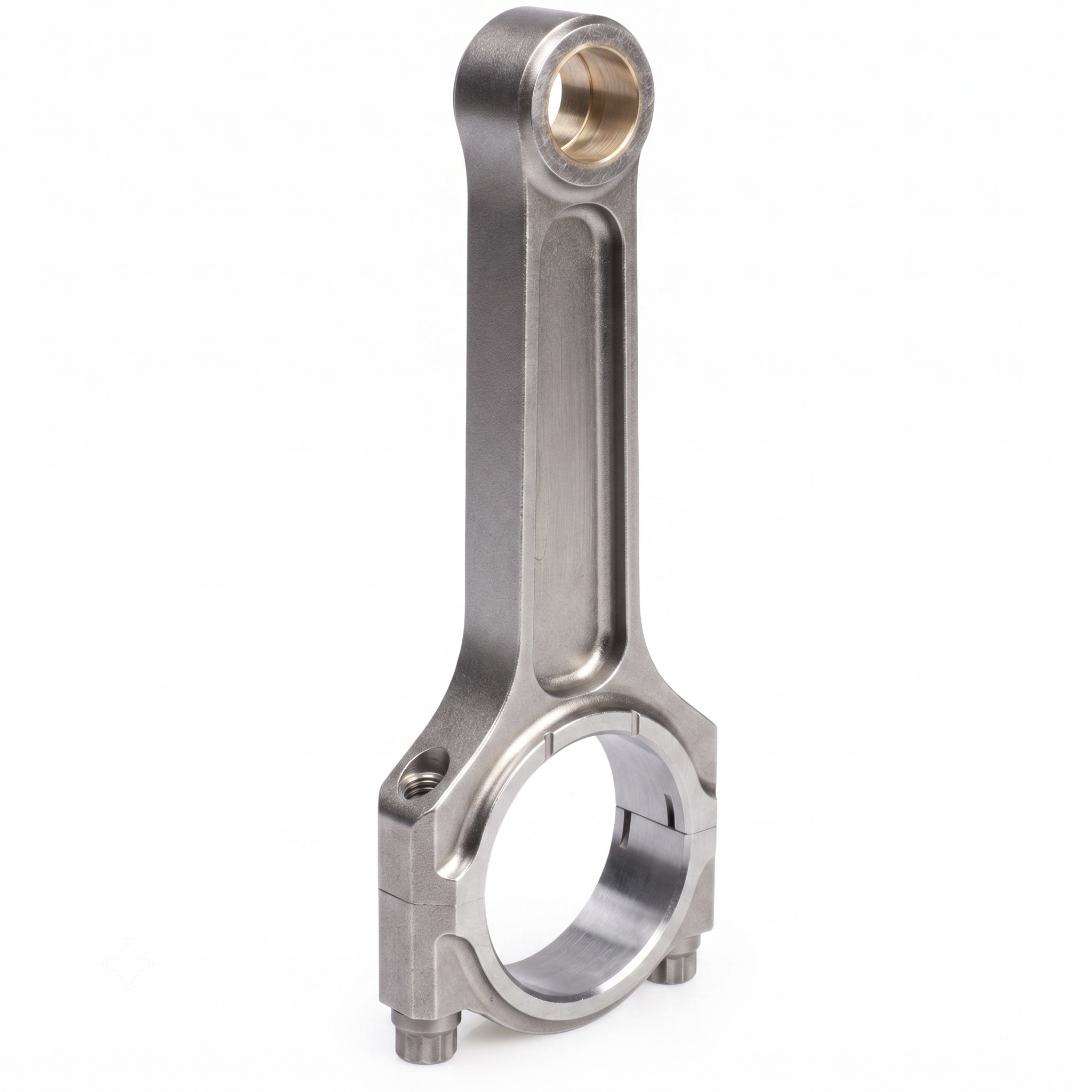 | I-HD 300M profile: a Heavy Duty reinforced I-Beam body from the Manley Pro Series I-Beam Turbo Tuff range, forged in 300M steel. The I-Beam section keeps reciprocating mass in check, while the Heavy Duty reinforcement thickens the critical areas of the shank and small end to cope with the cylinder pressure of a heavily boosted twin-turbo. It is the profile for the hardest-worked VR38DETT engines, in drag racing, circuit use and time attack as well as big-power builds, where the standard rod becomes the limiting factor. |
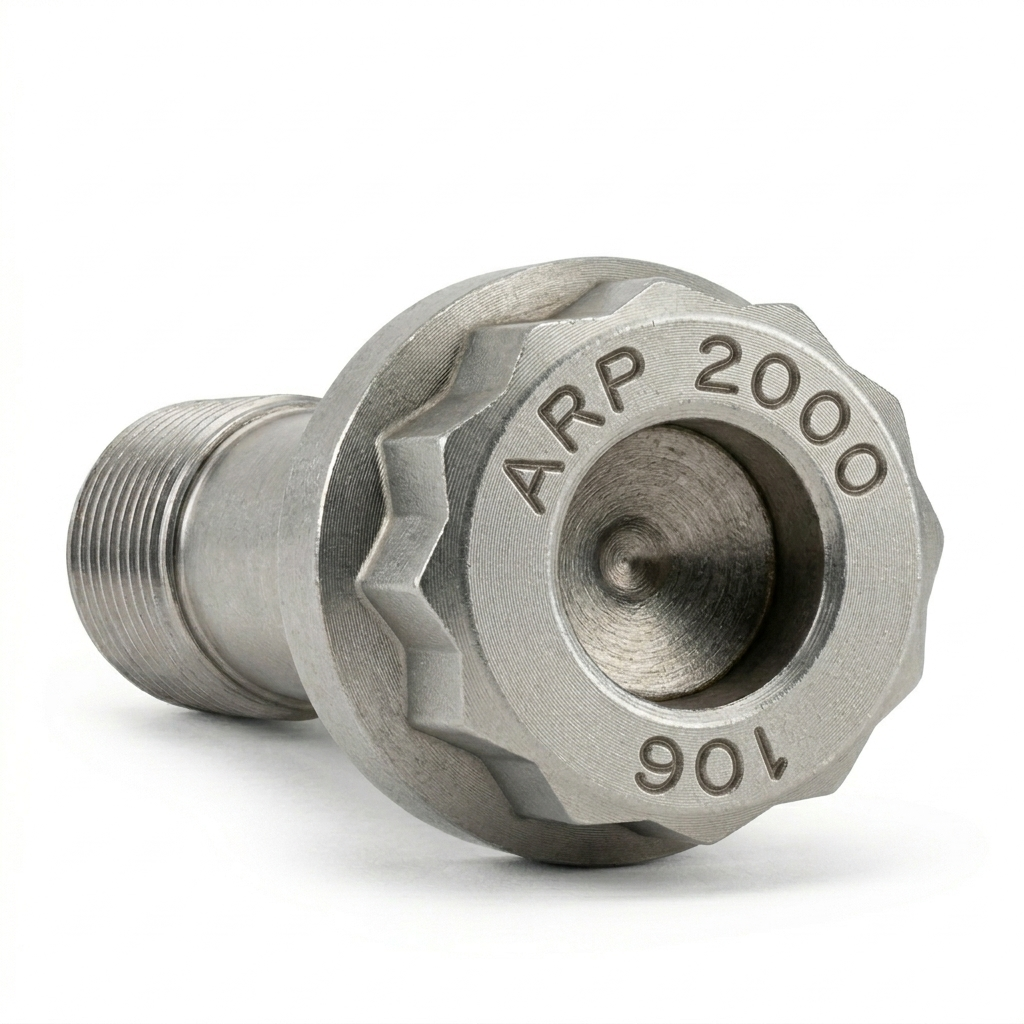 | ARP 2000: ARP’s high-performance standard, with tensile strength around 220,000 psi (about 1,517 MPa). Here it comes in 7/16", a more generous section than the usual 3/8", which raises the available clamping load and the margin on a heavily boosted VR38DETT. It is the most widely used grade in circuit racing and track days, drag, drift, rally and hillclimb, valued for its strength and versatility, with no special storage requirements: the specified torque and stretch figures simply have to be followed exactly. |
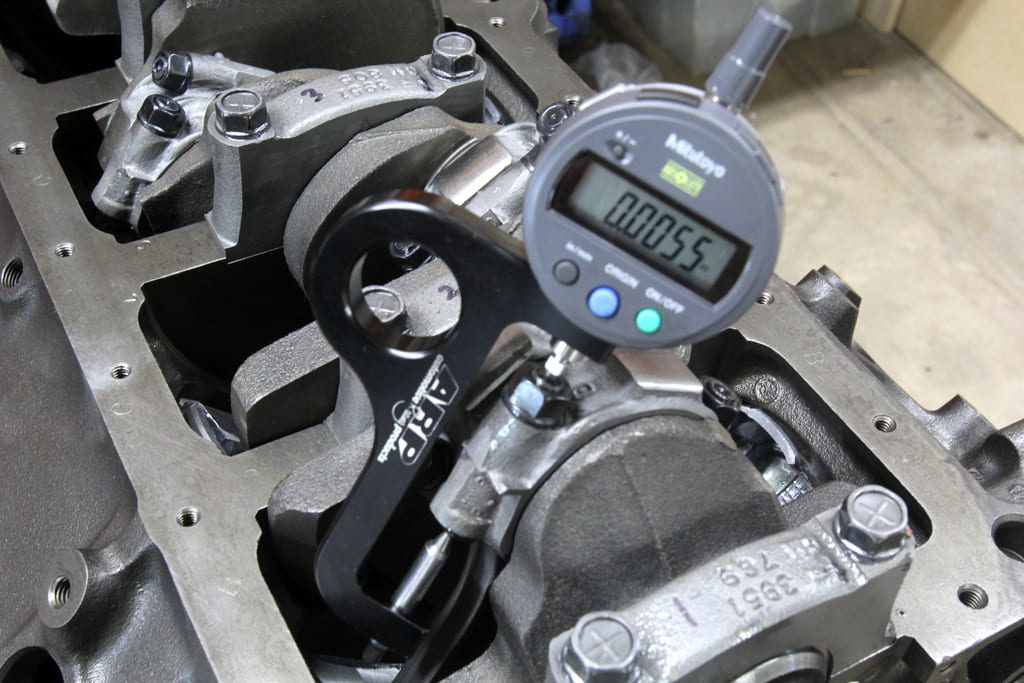
Discover the ARP stretch gauge
 | This rod is made by Manley Performance, the American manufacturer of forged connecting rods and a long-standing reference in engine building. Its Pro Series and Turbo Tuff ranges are known for reinforced I-Beam profiles and very high strength steels, including the 300M used here. Every rod is forged, machined and inspected in the United States, then supplied as a complete weight-matched set of six with its dedicated 7/16" ARP 2000 bolts. A name found in drag racing as much as in circuit use and time attack on tuned GT-Rs. |
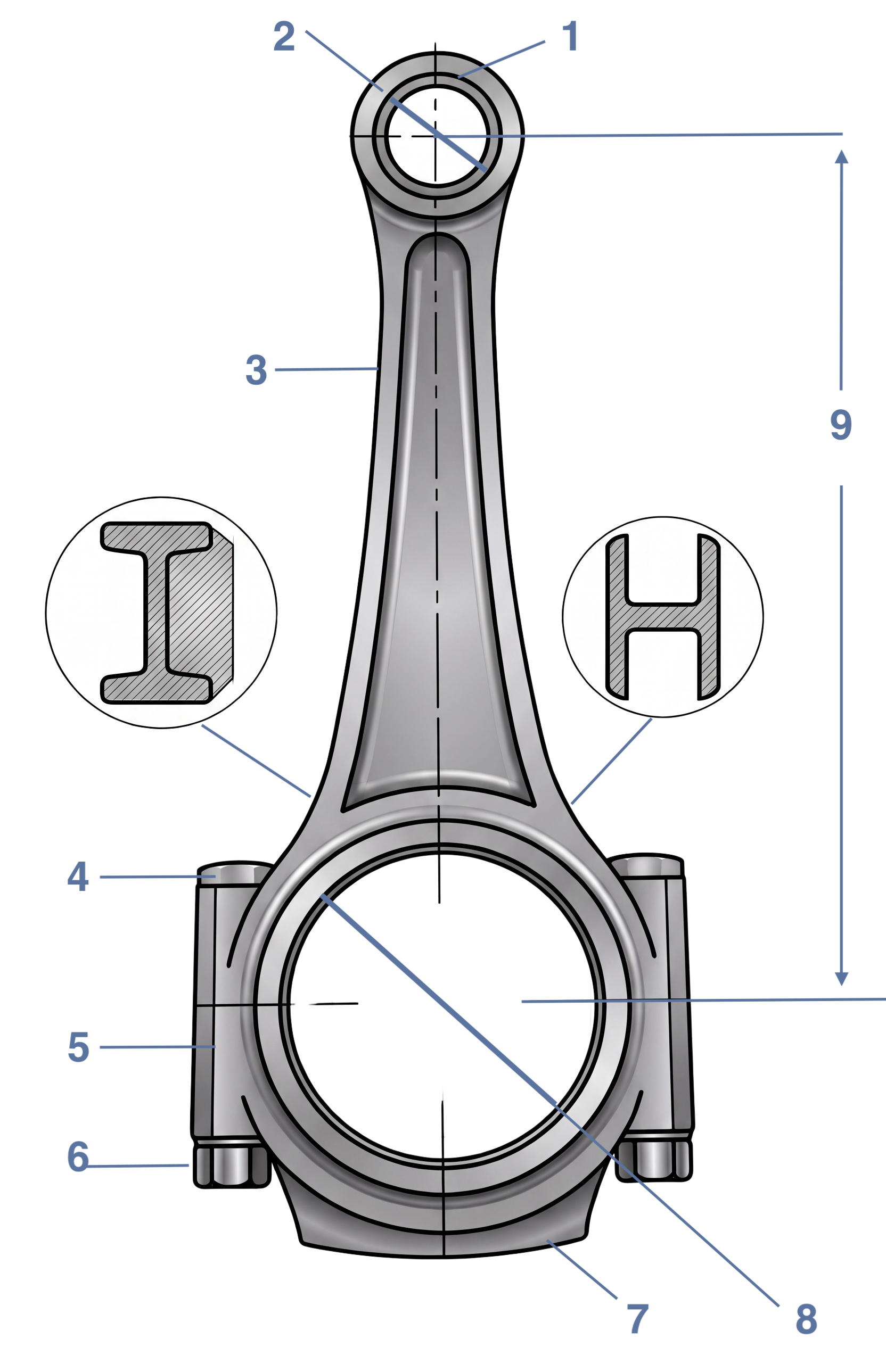 | 1) Small end 2) Small-end diameter 3) Rod beam 4) Rod bolt 5) Big end 6) Rod nut / bolt 7) Rod cap 8) Big-end diameter 9) Center-to-center |
Rods compatible with the Nissan VR38DETT engine (25.15 mm piston pin version), which powers every version of the Nissan GT-R R35:
| Brand | Model (chassis) | Engine code | Power | Years |
|---|---|---|---|---|
| Nissan | GT-R (R35) | VR38DETT | 357–419 kW (485–570 ch) | 2007–2016 |
| Nissan | GT-R (R35) | VR38DETT | 419–447 kW (570–608 ch) | 2016–présent |
| Nissan | GT-R (R35) NISMO | VR38DETT | 441–447 kW (600–608 ch) | 2014–présent |
A set of forged rods costs incomparably less than an engine failure. On a boosted VR38DETT, a standard rod that breaks does not just destroy the rod: it marks the crankshaft, scores the bores and often takes a cylinder head with it, so the repair amounts to rebuilding the engine. Returning to factory specification then means buying rods and pistons again, only to end up back at exactly the original limits. Fitting a weight-matched set of forged 300M rods from the outset, together with forged pistons, represents a fraction of that bill and gives the engine a real safety margin, with the freedom to raise power later without opening the bottom end again.