Product successfully added to your shopping cart
Quantity
Total
There are 0 items in your cart. There is 1 item in your cart.
Total products
Total shipping To be determined
Total

3.3L 24v - EG33
Manufacturers
3.3L 24v - EG33
Warning: Last items in stock!
New product
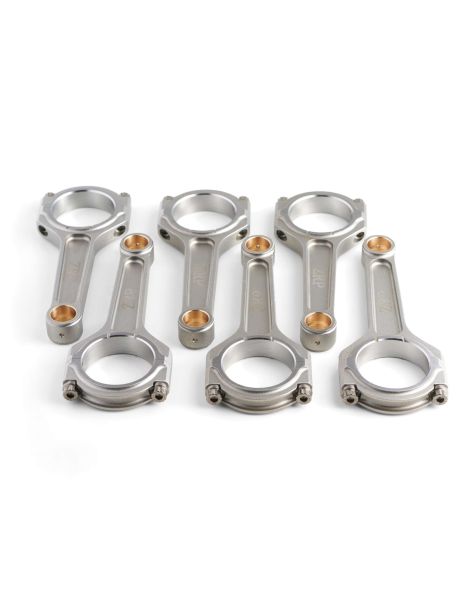
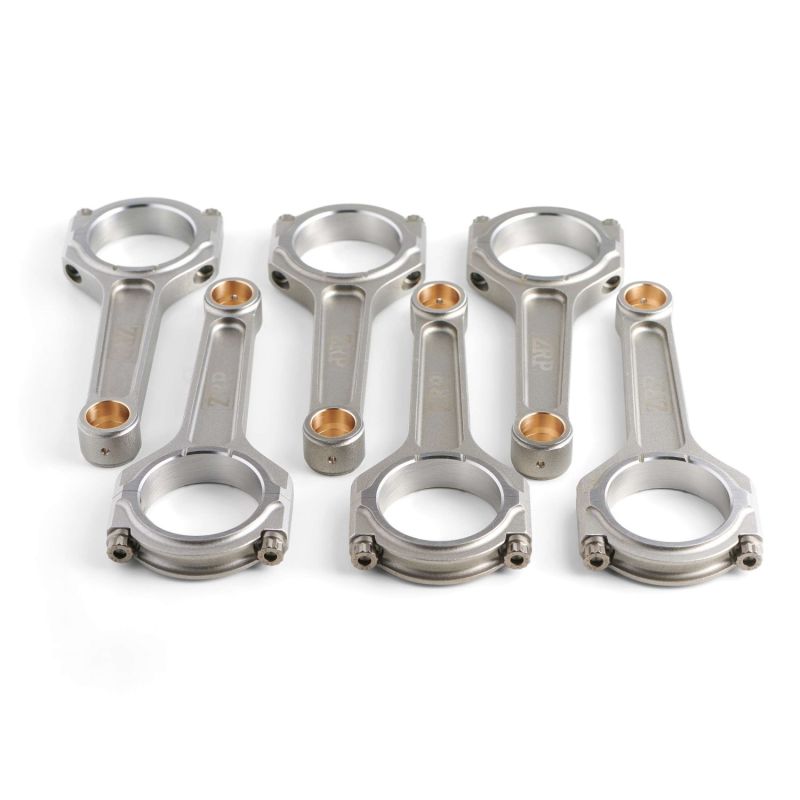
Set of 6 forged connecting rods in 4340 steel for the Subaru 3.3L 24V EG33.
The Subaru EG33 is a 3.3-litre, 24-valve flat-six (boxer) unveiled in 1991 to power the Alcyone SVX coupé. Naturally aspirated and largely built from aluminium, it follows the H6 architecture Subaru is known for: double overhead camshafts per bank (DOHC), four valves per cylinder and a crankshaft carried on four main bearings. It displaces 3,318 cc (bore 97 mm × stroke 75 mm), runs a 10.1:1 compression ratio and delivers around 231 hp at 5,400 rpm with roughly 309 Nm of torque at 4,400 rpm; some Japanese versions reach up to 250 hp.
The only engine ever fitted to the SVX, the EG33 was produced from 1991 to 1997 and powered that model alone, which removes any fitment ambiguity. A smooth, torque-rich boxer prized for its refinement and distinctive sound, it remains sought after by restoration and engine-swap enthusiasts. As soon as power rises or the engine spends long periods at high rpm, its original connecting rods become the first link to reinforce.
Machined from high-strength 4340 steel, forged connecting rods reinforce the bottom end as soon as power or engine speed increase. They become essential when fitting forged pistons, raising the rev ceiling, increasing displacement or running an aggressive build, all cases where the original rod quickly reaches its limit. Engineered to withstand the heavy mechanical loads of prepared engines, naturally aspirated as well as forced-induction, they cover every discipline (rally, drift, drag, circuit and track use, hillclimb, time attack) and support Stage 2, Stage 3 and Stage 4+ builds, up to full competition engines.
| Reference | Brand | Profile | Bolts | Pin diameter OEM 23 mm | Small-end width | Big-end diameter OEM n.p. | Big-end width | Center-to-center OEM 130.5 mm | Weight per rod |
|---|---|---|---|---|---|---|---|---|---|
| R-SUB-002-I | ZRP | I-HD | ARP 2000-3/8"-38mm | 23 mm | 55 mm | 17 mm | 130.5 mm | 555 g | |
| R-SUB-002-I-L19 | ZRP | I-HD | ARP L19-3/8"-38mm | 23 mm | 55 mm | 17 mm | 130.5 mm | 555 g |
| Rod | Bolts | Torque | Recommended stretch |
|---|---|---|---|
| ZRP (R-SUB-002-I) | ARP 2000 | 61 Nm N·m | 0.140 – 0.152 mm |
| ZRP (R-SUB-002-I-L19) | ARP L19 | 67.8 Nm N·m | 0.152 – 0.165 mm |
On this flat-six the difficulty is not reaching a figure but reaching it twelve times over, identically. A torque wrench, even a calibrated one, only reports the effort needed to turn the bolt: depending on the condition of the thread, the nature of the lubricant and the speed of the movement, the preload actually obtained varies noticeably from one bolt to the next. The values in the table above are therefore not ballpark figures but the bolt manufacturer’s instructions, to be followed without deviation, keeping ARP 2000 and ARP L19 clearly apart since their tightening levels differ. The procedure never changes: threads scrubbed clean and dried, ARP assembly lubricant applied as an even coat, bolts started by hand, then brought up in two or three alternating stages. The stretch gauge closes the loop: it gives the real elongation of each bolt, the only quantity directly linked to preload, and lets you check consistency across all twelve bolts of the EG33. The ZRP instructions supplied with the kit remain the final reference.
4340 is a low-alloy nickel-chromium-molybdenum steel used in aerospace as well as in motorsport. Forged and then heat-treated (quench and temper), it combines high tensile strength, excellent fatigue endurance and genuine ductility. Compared with an original rod (often made of sintered powder metal, designed for production cost), a forged 4340 rod gains around +19% in yield strength, +8% in tensile strength and, above all, +19 to +37% in fatigue strength, meaning a service life under cyclic loading several times longer. That is why forged 4340 is the reference material as soon as engine speed and load increase. |
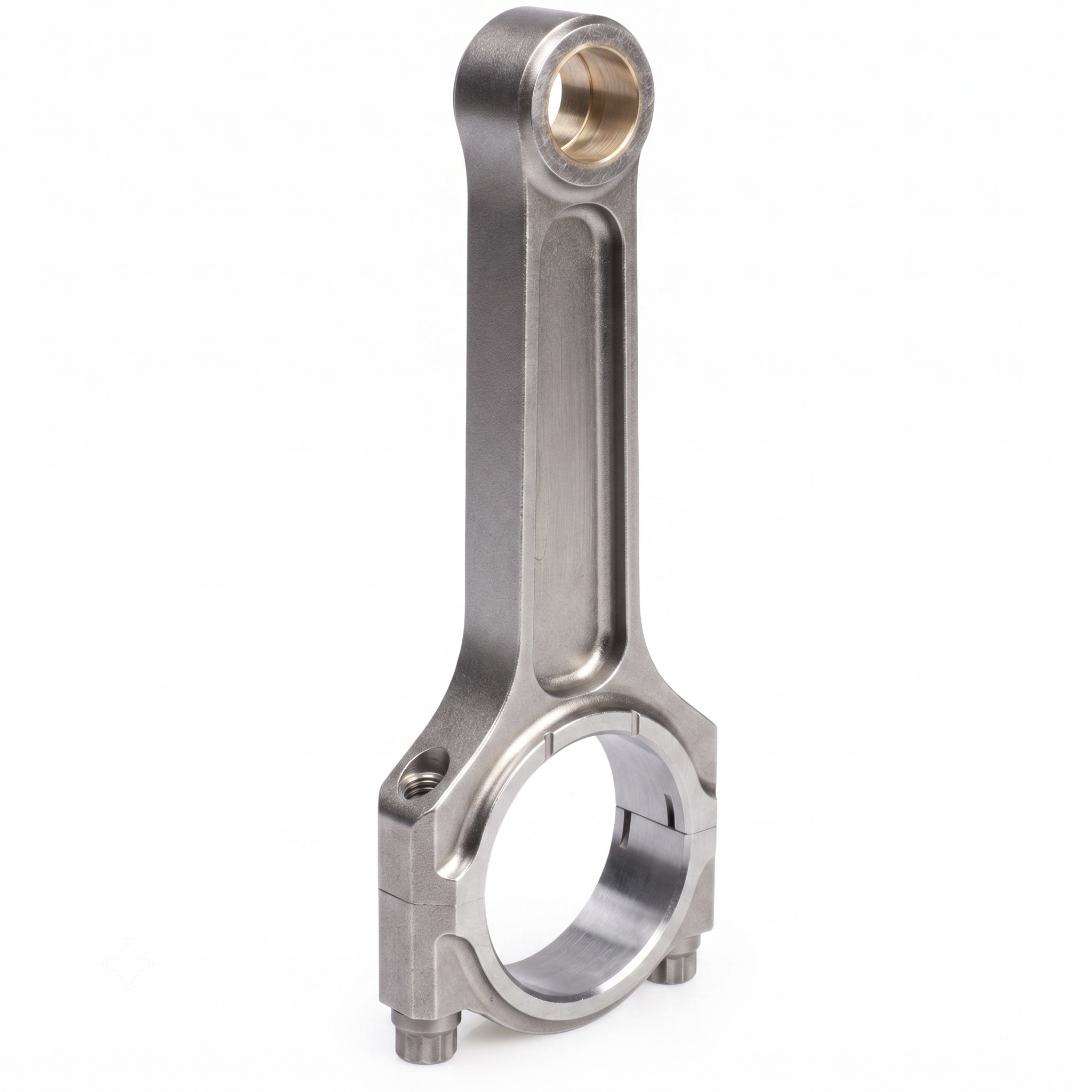 | I-beam profile. Its slimmer central section makes the rod lighter: less reciprocating inertia and freer-revving response. It is a versatile profile, appreciated across a wide range of engines. Its I-HD (Heavy Duty) variant is a reinforced version with a thicker beam, designed to handle higher loads and cylinder pressures: this is precisely the profile chosen here for the EG33, built for reliability under intensive use. |
The rod bolt is the hardest-worked part of the bottom end: it takes one tension cycle per revolution, that is several million cycles over a season. On this EG33 flat-six, the twelve bolts of the six ZRP I-HD rods are fitted with the same discipline whatever the grade chosen: threads and seats degreased then coated with assembly lubricant, tightening in several alternating passes, preload checked through stretch measured with a dial gauge and not through torque alone, free length recorded before and after. The choice between ARP 2000 and ARP L19, both in 3/8"-38 mm, then depends on the power per cylinder and the engine speed targeted, with a safety margin for repeated track use; the table below details each grade.
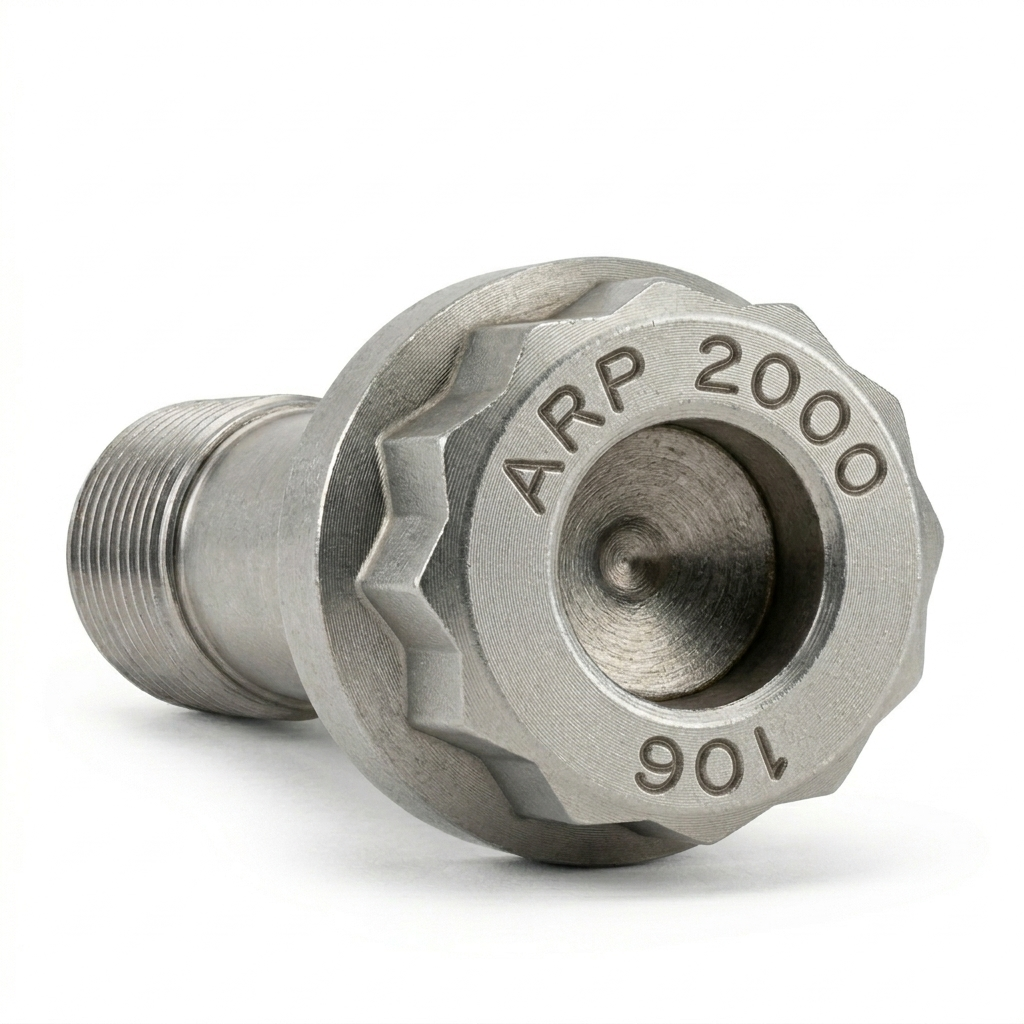 | ARP 2000 (tensile strength around 220,000 psi, i.e. ~1,517 MPa) is the high-performance standard. It suits builds up to 200 hp per cylinder in 3/8", and up to 8,500 rpm. It is the most common grade in circuit, trackday, drift, rally, drag and hillclimb use, valued for its strength, reliability and versatility, with no particular storage constraints. |
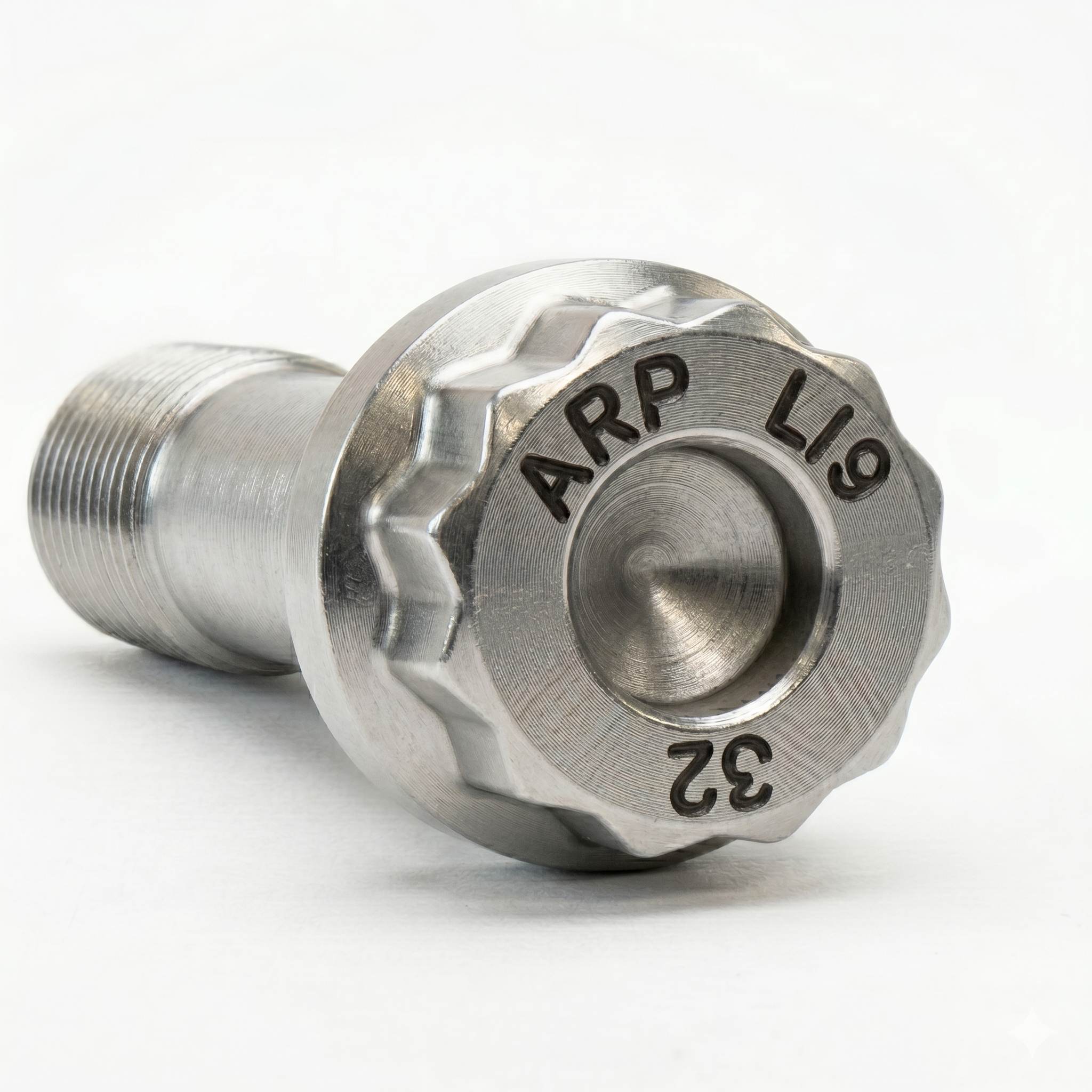 | ARP L19 (tensile strength around 260,000 psi, i.e. ~1,793 MPa) targets engines pushed to the extreme, up to 250 hp per cylinder in 3/8", and up to 10,000 rpm. It is reserved for very high boost pressure, sustained high rpm and high cylinder pressure: the choice for big-power builds in drag racing, drift, rally and circuit. More sensitive to corrosion and hydrogen embrittlement, it is stored and fitted oiled. |
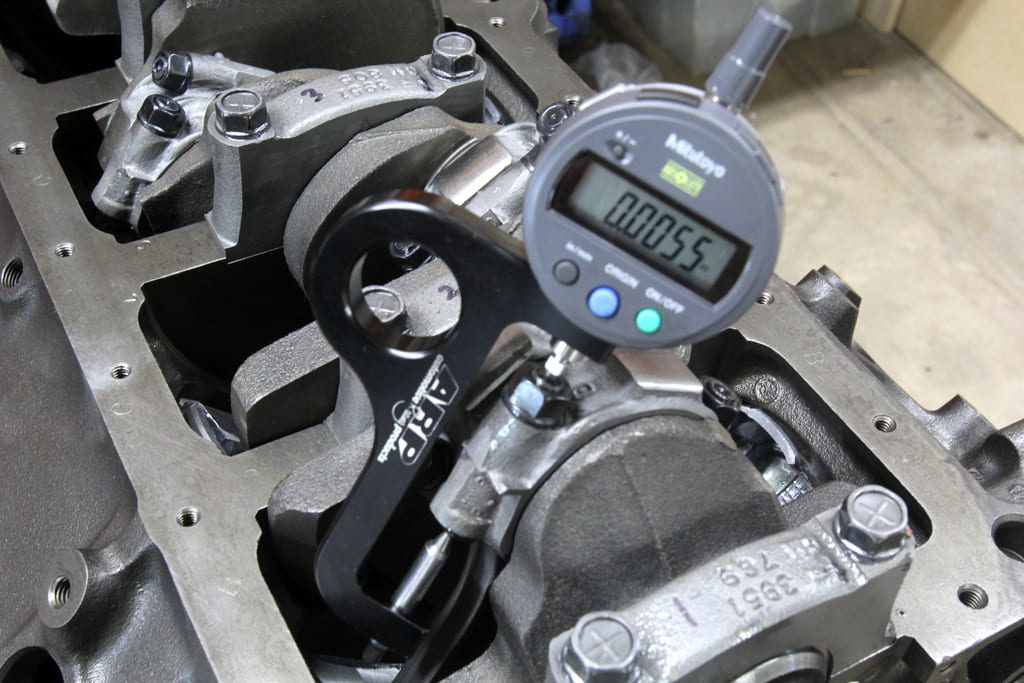
| In addition to torque tightening, measuring rod-bolt stretch is the most reliable check for achieving the target preload. The check is carried out with the bolt fitted: a dial indicator is placed on both ends of the bolt to read its actual stretch, which must match the recommended value (see the torque & stretch table above). This method eliminates the friction variations inherent to torque tightening and secures the assembly on heavily stressed engines. |
 | ZRP is a Greek brand of high-performance forged connecting rods, designed by Alex Drakos in Athens. Each rod is forged from 4340 steel, precision-machined and balanced to ±1 g to stay reliable at high rpm. Offered here in the I-HD profile with ARP 2000 or ARP L19 bolts, the range is designed and inspected in Greece, and proven in rally, on circuit and in drift. |
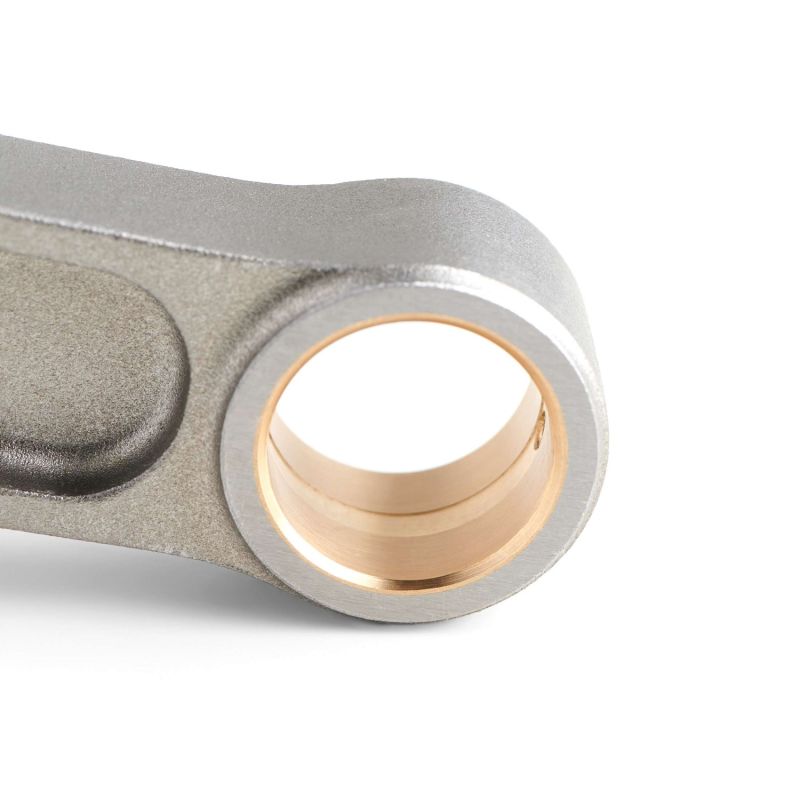
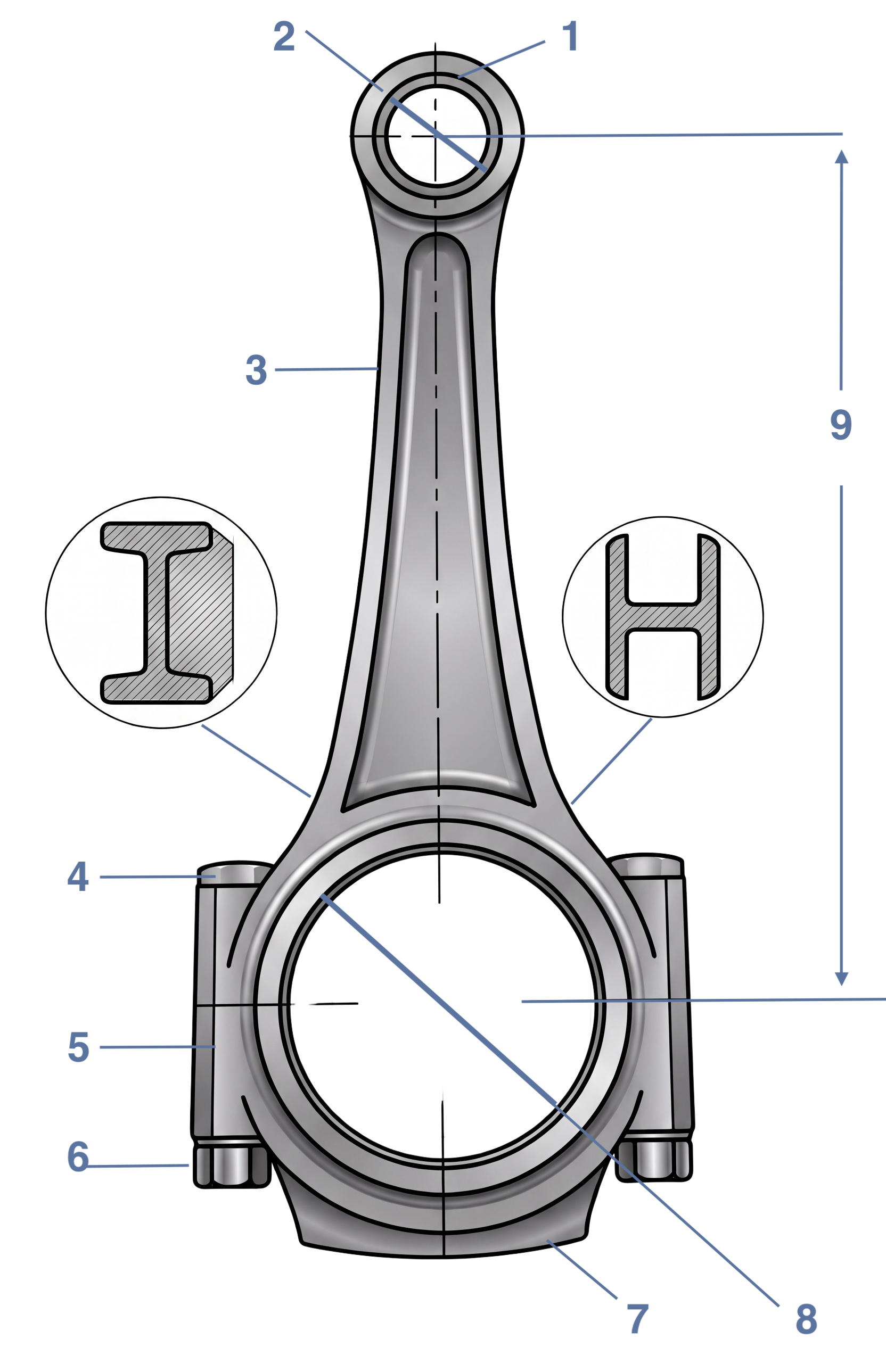 | 1) Small end 2) Small-end diameter 3) Rod beam 4) Rod bolt 5) Big end 6) Rod nut / bolt 7) Rod cap 8) Big-end diameter 9) Center-to-center |
These forged connecting rods are compatible with vehicles fitted with the Subaru EG33 engine (3.3 L 24V naturally aspirated):
| Brand | Model (chassis) | Engine code | Power | Years |
|---|---|---|---|---|
| Subaru | SVX (CX) | EG33 | 231–250 hp | 1991–1997 |
OEM reference: 12100AA080 / 12100AA031 (set of 6 rods).
When an original bottom end fails (a broken, bent or scored rod), returning to the factory configuration means replacing the rods and, very often, the pistons damaged at the same time: the bill climbs quickly for a mere restoration to standard. For an equivalent, sometimes lower budget, fitting 4340 forged connecting rods together with forged pistons provides markedly higher reliability and safety margin, plus real headroom for power increases. It is the solution chosen by European engine builders for more than fifteen years: for the same outlay, more reliability, more potential and more longevity.