Product successfully added to your shopping cart
Quantity
Total
There are 0 items in your cart. There is 1 item in your cart.
Total products
Total shipping To be determined
Total

2.0L 16v - C20XE
Manufacturers
2.0L 16v - C20XE
Warning: Last items in stock!
New product
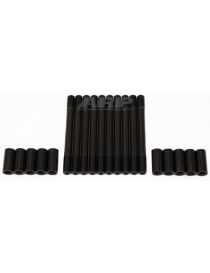
ARP 8740 steel crankshaft main studs for the Opel and Vauxhall 2.0 16V C20XE and C20LET.
ARP lists this kit for the 2.0-litre 16-valve engine of Opel and Vauxhall, in naturally aspirated C20XE or turbo C20LET form. According to the NGK catalogue, the C20XE makes 150 hp and the C20LET 204 hp; they power the Calibra, Vectra A, Astra F and Kadett E, sold at Vauxhall as Calibra, Cavalier and Astra.
On the original engine, cap bolts hold the crankshaft in the block; their part number is not published in our manufacturer data, and this kit replaces them with 10 mm ARP studs fitted with their nuts.
Each main bearing takes a share of the loads the connecting rods pass on at every combustion. Pulled downwards, the main cap tends to slide on its parting line: over time the mating faces brinell and the bearing bore loses its shape.
This page offers the 209-5401 kit in 8740 steel, made up of 10 mm studs and their nuts. The studs are run into the block by hand, the caps go on, then washers and nuts, lubricated with the ARP Ultra-Torque product supplied, are tightened in three equal steps in the manufacturer's order. No bolt turns in the block thread any more, and the caps are guided by the studs. 8740 is a chrome-moly steel heat treated by ARP to 200,000 psi tensile strength, with threads rolled after heat treatment. To put this figure in context, standard engine fasteners mostly belong to property classes 10.9 and 12.9, i.e. 150,800 to 176,900 psi minimum tensile strength. The 8740 studs in M10 hold up to 1,000 hp on this four-cylinder engine (calculated estimate).
| Part number | Brand | Grade / material | Nut | Thread |
| ARP-209-5401 | ARP | 8740 steel | Nut | M10 |
| Reference | Pass 1 | Pass 2 | Pass 3 |
| ARP-209-5401 | 27 Nm | 54 Nm | 81 Nm |
The studs are screwed into the block by hand, with no torque. A Loctite thread locker may be used for a permanent installation according to the ARP instructions; tightening must then be completed before the product hardens.
Follow the cap tightening sequence recommended by the manufacturer when bringing the nuts up to torque; the kit's instruction sheet details each step.
Moving to reinforced fasteners changes the clamping force on the caps. After installation, the size and roundness of the bores are checked, then align honed if needed, always with the final fasteners and lubricant.
Values taken from the ARP 209-5401 instruction sheet in force at the date of publication; the official instruction sheet prevails should any difference appear. Read the ARP 209-5401 instruction sheet
All the torque values on this page assume ARP assembly grease; with engine oil they are no longer correct.
| Buy the ARP assembly grease → |
 | Founded in the early 1970s by Gary Holzapfel, who came from the aerospace industry, ARP (Automotive Racing Products) set out to prevent fastener-related engine failures in motorsport. Its thousands of part numbers are designed and manufactured in California, in materials chosen for each use. |
| Criterion | Original main bolts | Reinforced ARP studs |
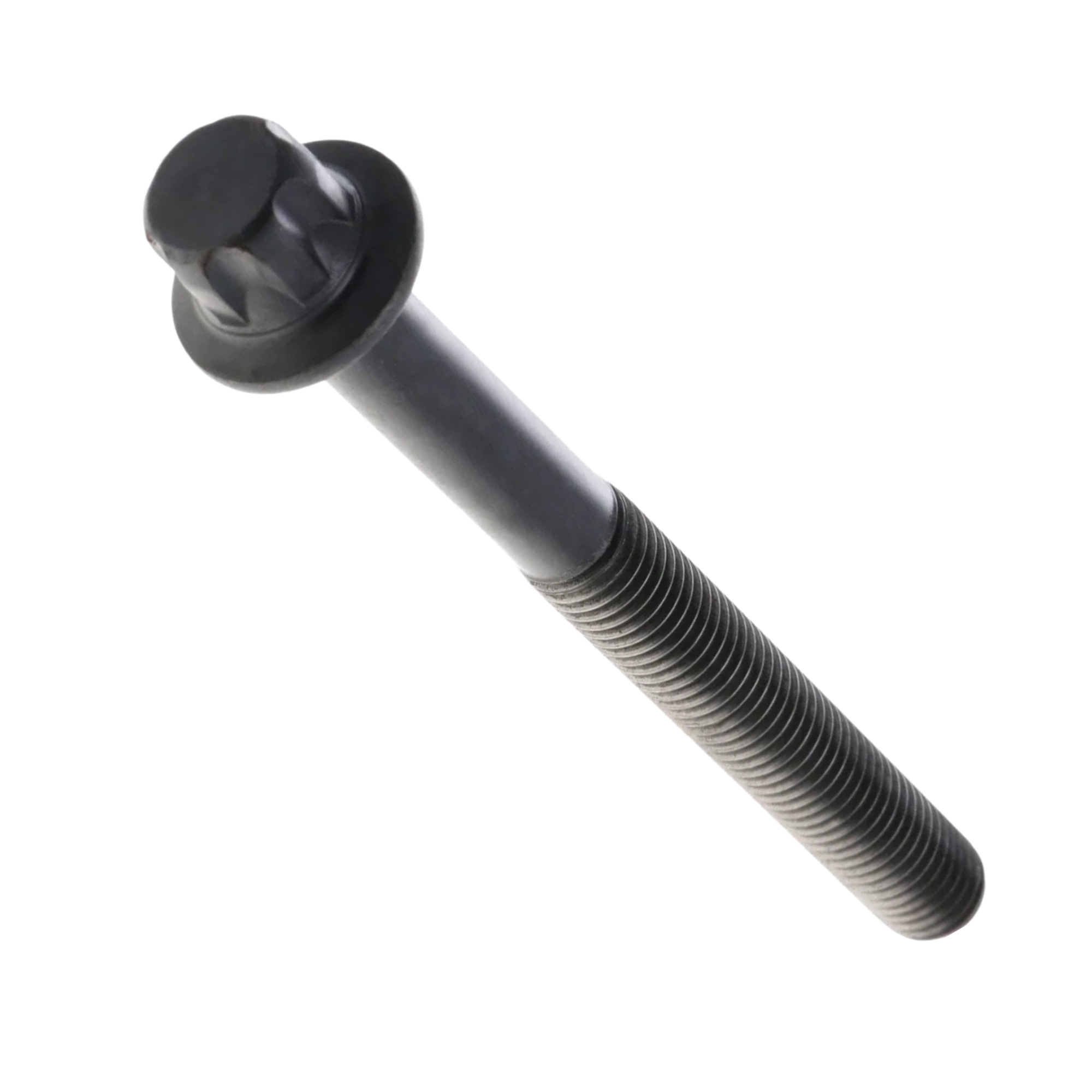 | 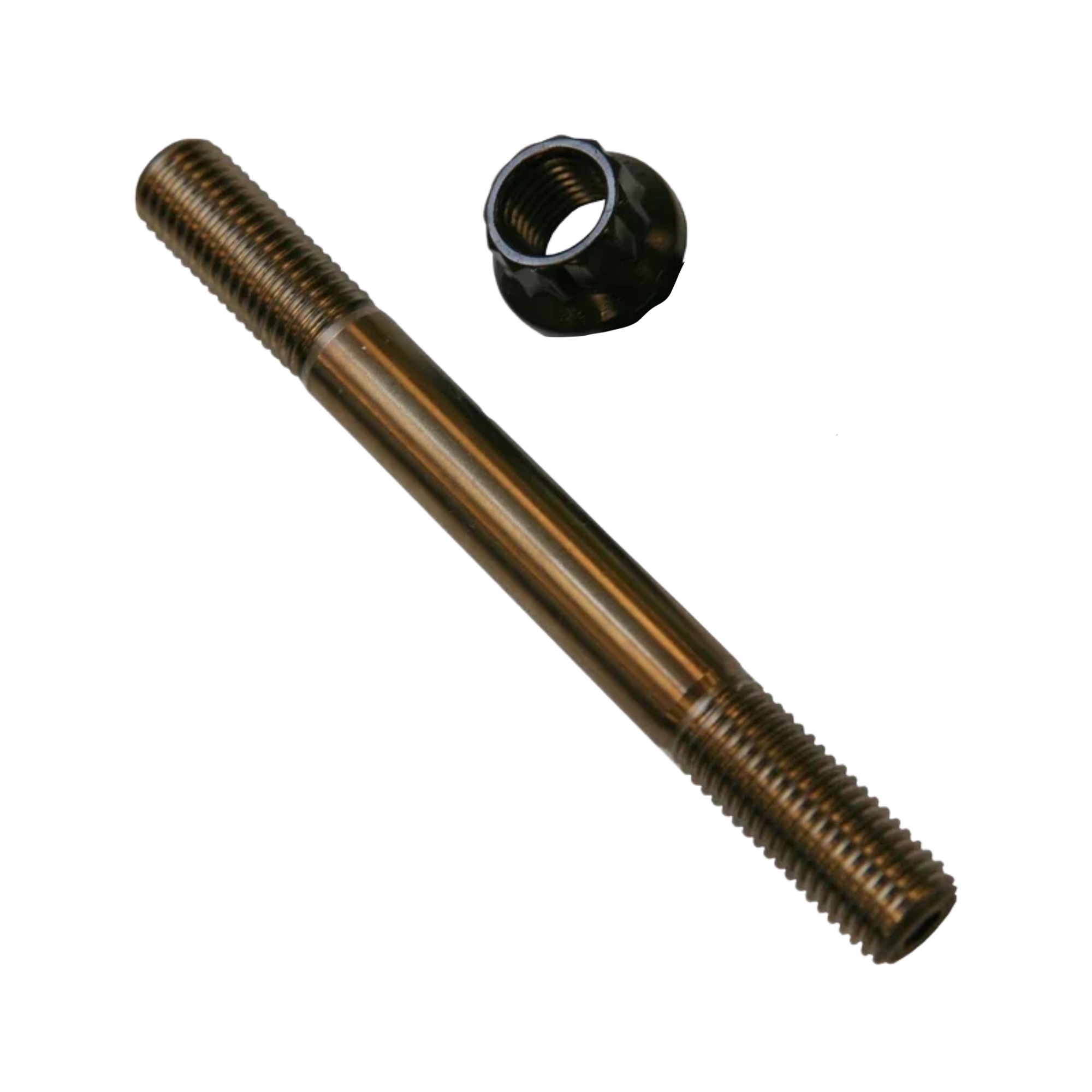 | |
| Fixing a cap | Two bolts tightened one after the other | Two studs, each with its nut and washer |
| Contact with the block | Bolt turning in the tapped hole | Stud stays still, nut turns on the cap side |
| Fitting the cap | Cap held by hand before tightening | Cap guided by the studs already fitted |
| Model | Engine code | Power | Years |
| Opel Calibra A (C89), Vauxhall Calibra, 2.0 16V et 4x4 | C20XE | 150 hp | 1990-1994 |
| Opel Astra F GSI 2.0 16V, Vauxhall Astra Mk III 2.0 16V | C20XE | 150 hp | 1991-1998 |
| Opel Kadett E GSI 2.0 16V, berline à hayon, break et cabriolet | C20XE | 150 hp | 1988-1993 |
| Vauxhall Astra Mk II 2.0 16V | C20XE | 149 hp | 1988-1991 |
| Opel Vectra A (J89) 2.0 16V et 4x4 | C20XE | 150 hp | 1989-1995 |
| Vauxhall Cavalier Mk III (J89) 2.0 16V et 4x4 | C20XE | 150 hp | 1988-1995 |
| Opel Calibra A (C89) 2.0 Turbo 4x4, Vauxhall Calibra Turbo 4x4 | C20LET | 204 hp | 1991-1997 |
| Opel Vectra A (J89) 2.0 Turbo 4x4 | C20LET | 204 hp | 1994-1995 |
| Vauxhall Cavalier Mk III (J89) 2.0 Turbo 4x4 | C20LET | 204 hp | 1992-1994 |
| Opel Astra F 2.0 TS | C20LET | 204 hp | 1994-1997 |
A C20XE or a C20LET raised beyond its original output loads the bottom end harder. A stud kit costs little next to a block and a crankshaft to replace, and it keeps the caps more firmly in place.