Product successfully added to your shopping cart
Quantity
Total
There are 0 items in your cart. There is 1 item in your cart.
Total products
Total shipping To be determined
Total

2.0L 16v - 4G63 6-bolt
Manufacturers
2.0L 16v - 4G63 6-bolt
Warning: Last items in stock!
New product
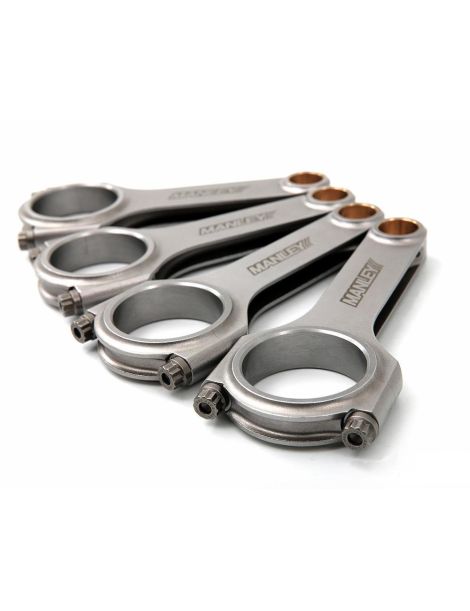
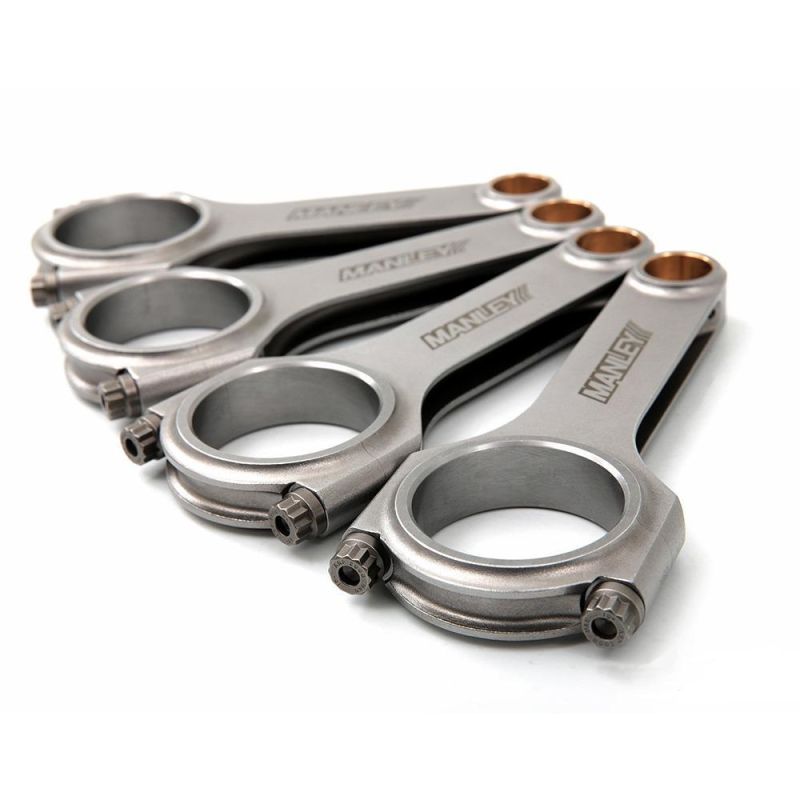
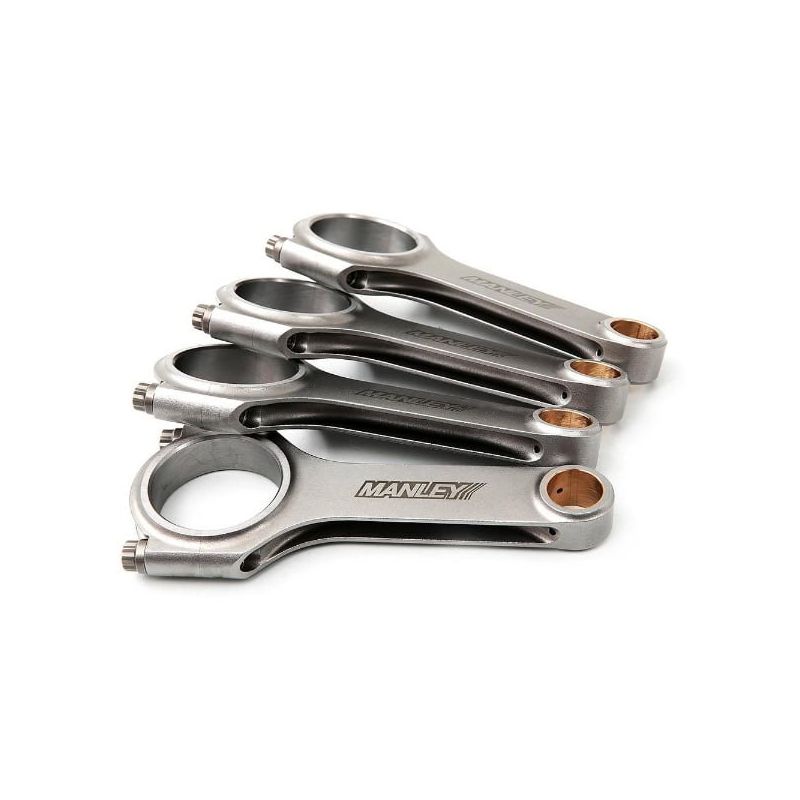
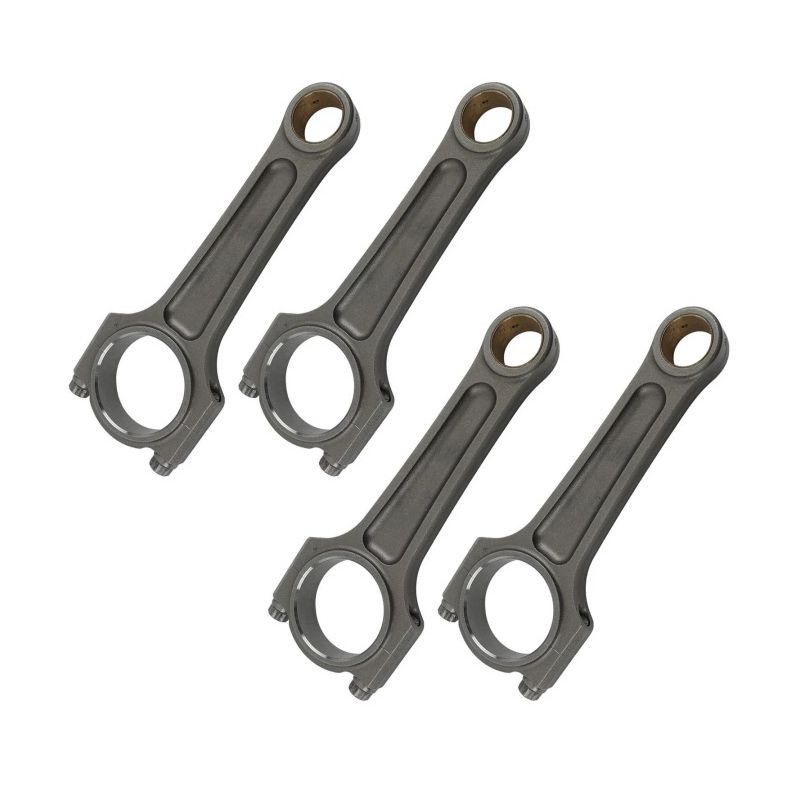
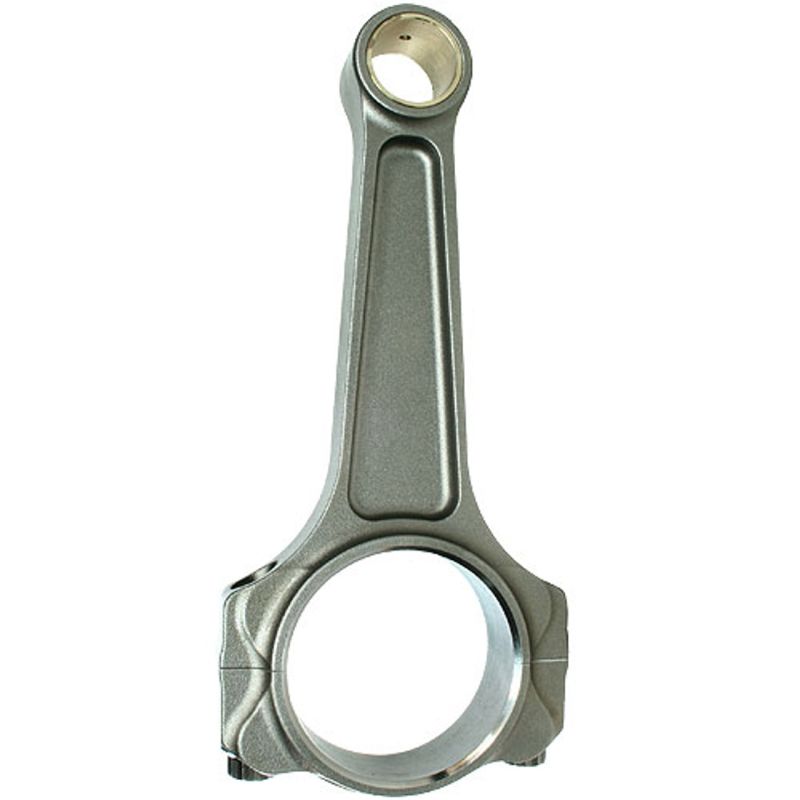
Set of 4 forged connecting rods in 4340 steel for the Mitsubishi 2.0L 16v Turbo 4G63 (6-bolt).
Built by Mitsubishi, the 4G63 is an inline-four displacing 1,997 cc (85 mm bore × 88 mm stroke) with double overhead camshafts (DOHC) and 16 valves. It earned its reputation in turbocharged 4G63T form, powering the DSM-generation Mitsubishi Eclipse 1G, Eagle Talon and Plymouth Laser as well as the Galant VR-4, and becoming a cornerstone of engine tuning. Blocks built until roughly 1992 are recognisable by their six-bolt crankshaft : the famous “6-bolt” : prized for being stiffer than the seven-bolt block that followed.
Rated at around 195 hp from the factory, the 4G63T holds huge headroom: a larger turbo and suitable engine management let it comfortably reach 400 to 600 hp, and more still in race trim. This rise in output subjects the rotating assembly to loads that cast-steel factory rods can no longer withstand.
Beyond roughly 350 to 400 hp, the connecting rod becomes the weak link: it flexes, stretches, then fails under inertial forces and combustion pressure. Switching to 4340 forged rods secures the bottom end and unlocks the full potential of the 6-bolt block.
Linking the piston to the crankshaft, the connecting rod turns reciprocating motion into rotation. On a built engine it withstands enormous loads every cycle: it is the first component that determines bottom-end reliability.
Forged from through-hardened steel, these rods deliver fatigue strength and stiffness far above stock parts. Designed for competition : circuit, rally, drift, drag, hillclimb or time attack : they suit a Stage 1 build just as well as the most extreme race engines.
Depending on the chosen profile and bolts, these 4G63 6-bolt rods support builds ranging from a few hundred horsepower to setups exceeding 600 hp, without ever becoming the weak point of the rotating assembly.
| Reference | Brand | Profile | Bolts | Pin diameter OEM 21 mm | Small-end width | Big-end diameter OEM n.p. | Big-end width | Centre-to-centre OEM 150 mm | Weight per rod |
|---|---|---|---|---|---|---|---|---|---|
| 14002-4 | Manley | H | ARP 2000 - 3/8"-38mm | 22 mm | - | 48,01 mm | 28,32 mm | 150 mm | 550 g |
| 14407-4 | Manley | I-HD | ARP 2000 - 3/8"-41mm | 22 mm | - | 48,01 mm | 28,32 mm | 150 mm | 645 g |
| 14407R6-4 | Manley | I-HD | ARP CA625+ - 3/8"-41mm | 22 mm | - | 48,01 mm | 28,32 mm | 150 mm | 645 g |
| Rod | Bolts | Tightening torque | Recommended stretch |
|---|---|---|---|
| Manley (14002-4) | ARP 2000 - 3/8"-38mm | 81,3 N·m | 0,147 - 0,157 mm |
| Manley (14407-4) | ARP 2000 - 3/8"-41mm | 81,3 N·m | 0,147 - 0,157 mm |
| Manley (14407R6-4) | ARP CA625+ - 3/8"-41mm | 88,1 N·m | 0,165 - 0,190 mm |
For assembly, the reference method is bolt-stretch measurement with a gauge, more accurate than torque alone; when in doubt, the instructions supplied with the kit always take precedence. The torque figures above assume tightening with ARP lubricant.
4340 is a chromium-nickel-molybdenum alloy steel, shaped by forging then heat-treated. Forging aligns the metal’s grain flow and removes porosity, unlike a cast or sintered stock rod whose grainy structure is far more fragile.
The result is a tensile strength of around 1,100 to 1,300 MPa, remarkable fatigue endurance and high tolerance to thermal and mechanical shock. It is the reference material for high-performance rods: it withstands high-pressure cycles without deforming, where a sintered factory rod would give way.
The rod-body profile determines its behaviour under load. Two families are offered for this engine:
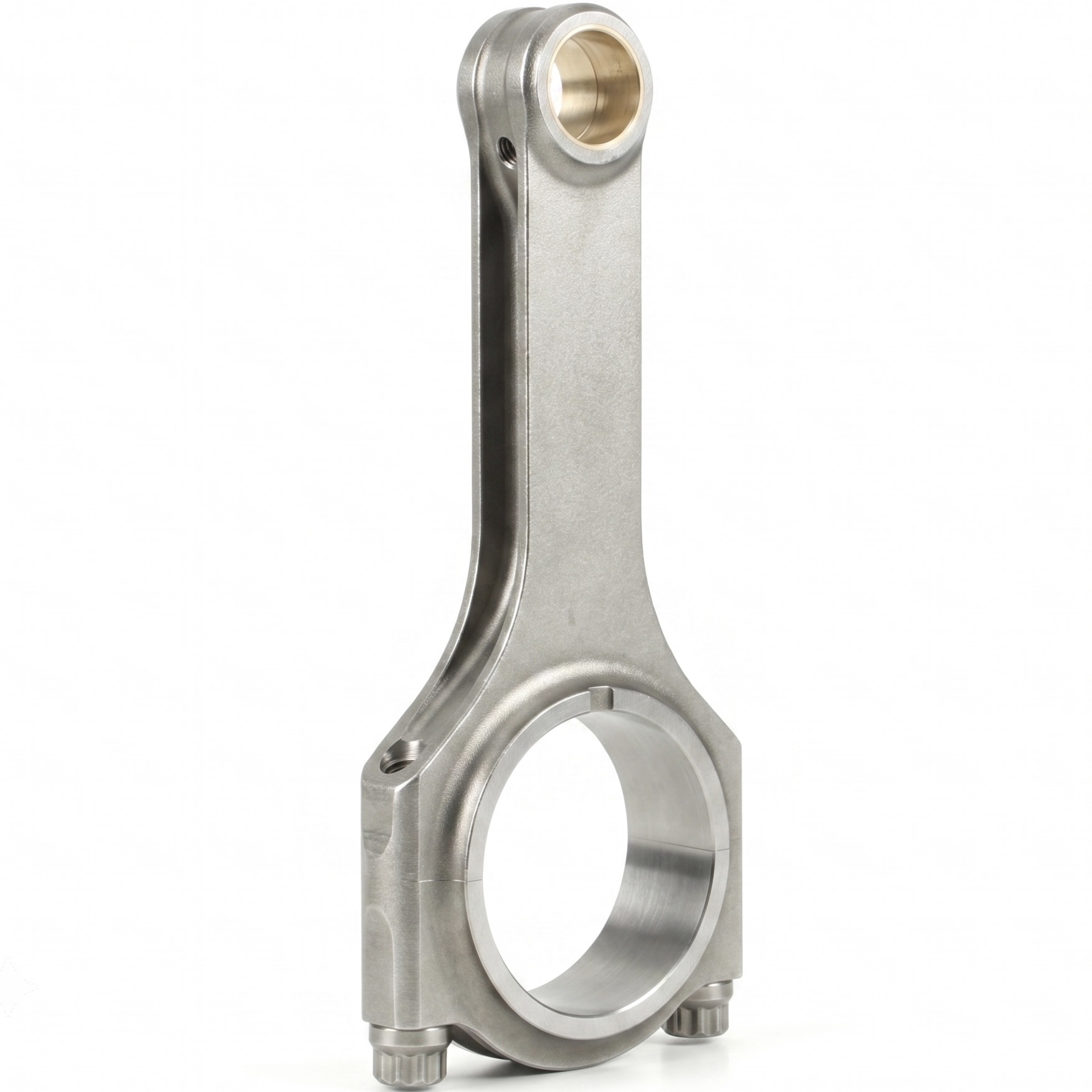 | H profile: the H-shaped beam gives the best stiffness-to-weight ratio. On a six-bolt 4G63 that happily revs, that lower mass eases the inertia loads carried by the bearings and suits turbo builds from moderate to seriously boosted. |
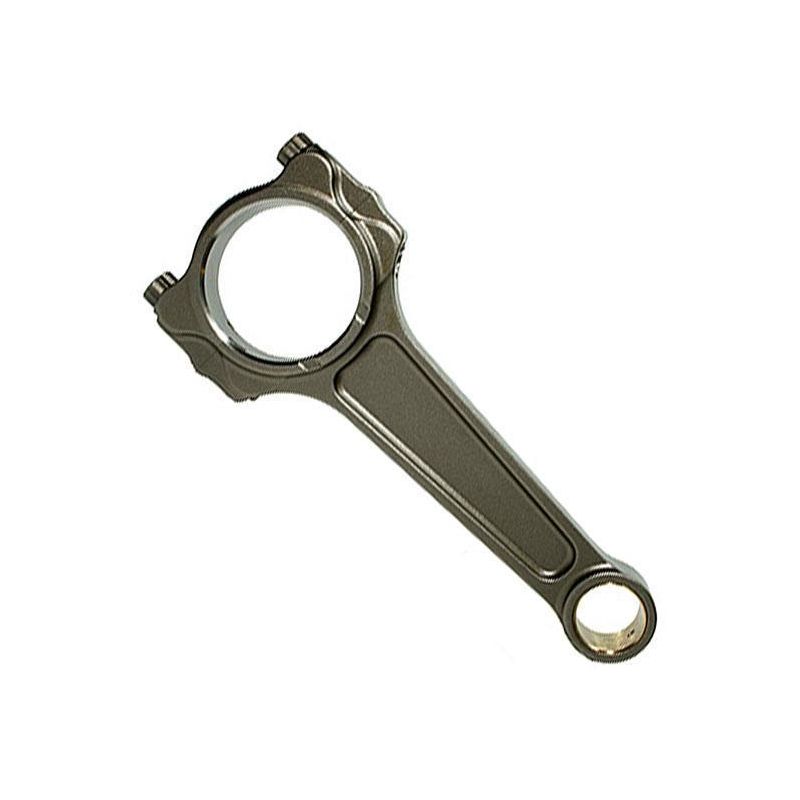
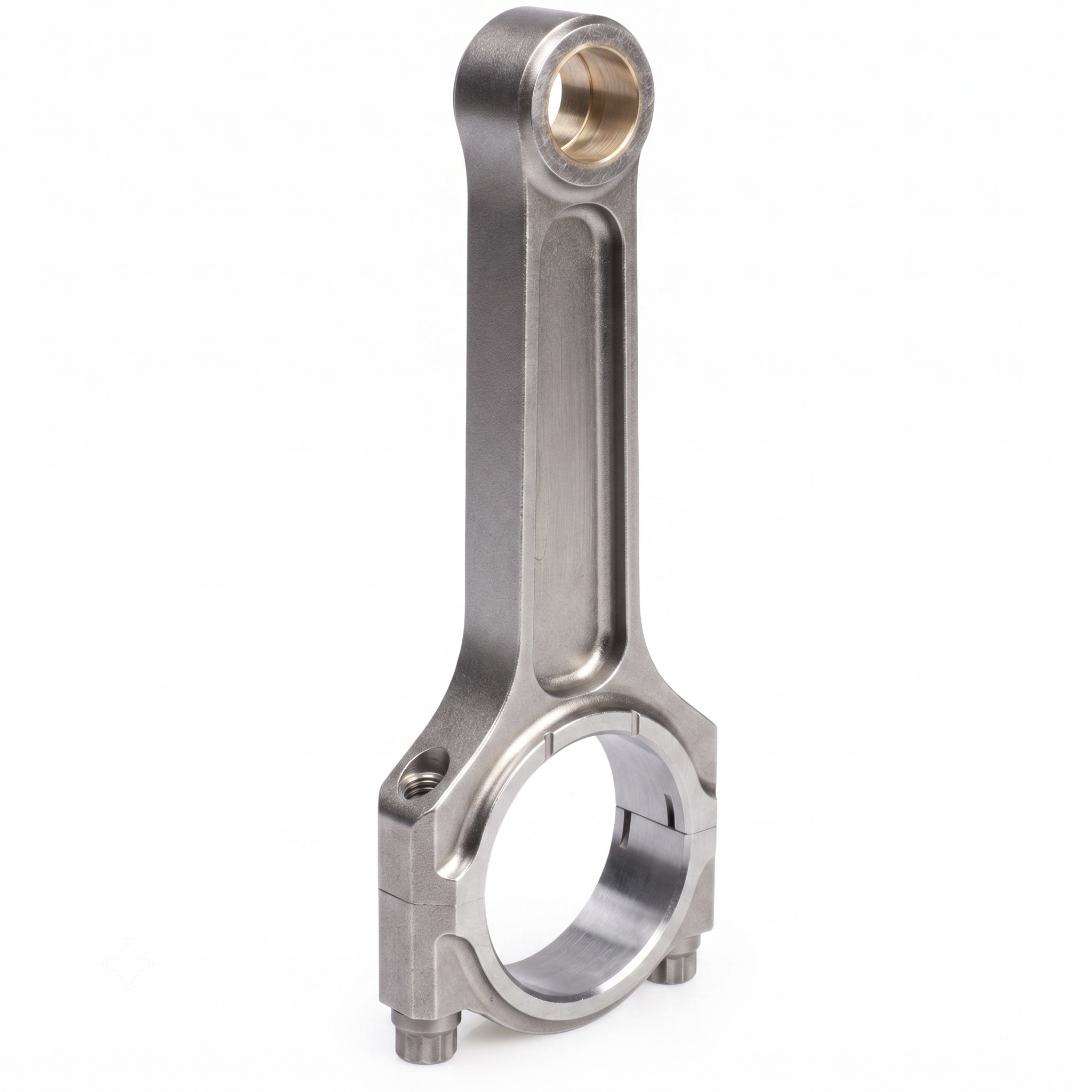 | I-HD profile (I-Beam Heavy Duty, Manley Pro Series Turbo Tuff range): the I-section is considerably thicker and therefore heavier, but it shrugs off extreme boost pressures and the torque that drag-oriented six-bolt 4G63 builds produce. |
The most heavily loaded part of the rod, the bolts hold the cap against inertial forces. Every rod on this page uses 3/8" ARP bolts, available in two grades.
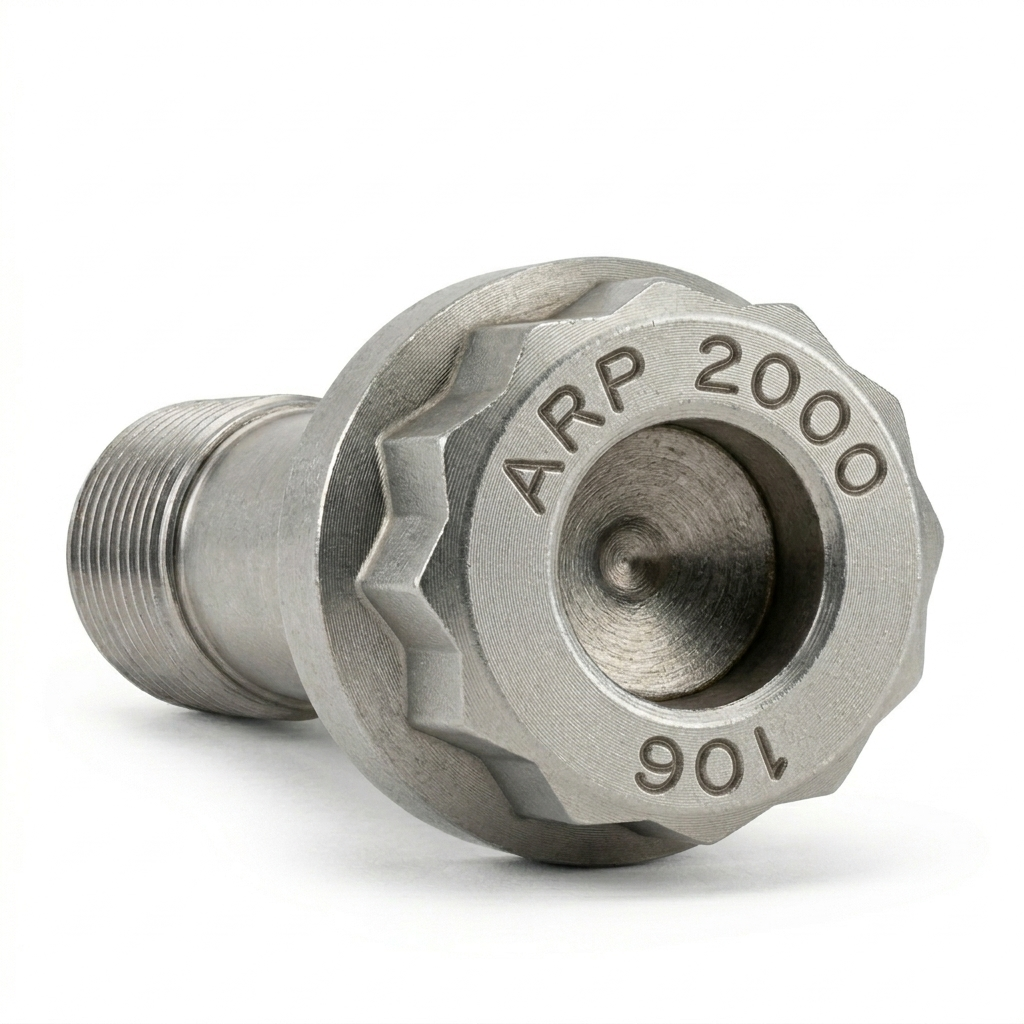 | ARP 2000 (tensile strength ~220,000 psi, i.e. ~1,517 MPa) equips both Manley rods of this 22 mm pin version: the 550 g H profile in 3/8"-38 mm and the 645 g I-HD in 3/8"-41 mm. The grade is rated up to 200 hp per cylinder in 3/8" and up to 8,500 rpm and remains the most widely used in circuit racing, trackdays, drift, rally, drag and hillclimb. Its long-term reliability comes from consistent preload: caps marked and refitted the original way round, threads blown out and lubricated, progressive tightening then stretch measurement, bolts taken up one by one and replaced as soon as free length has changed. No storage constraint. |
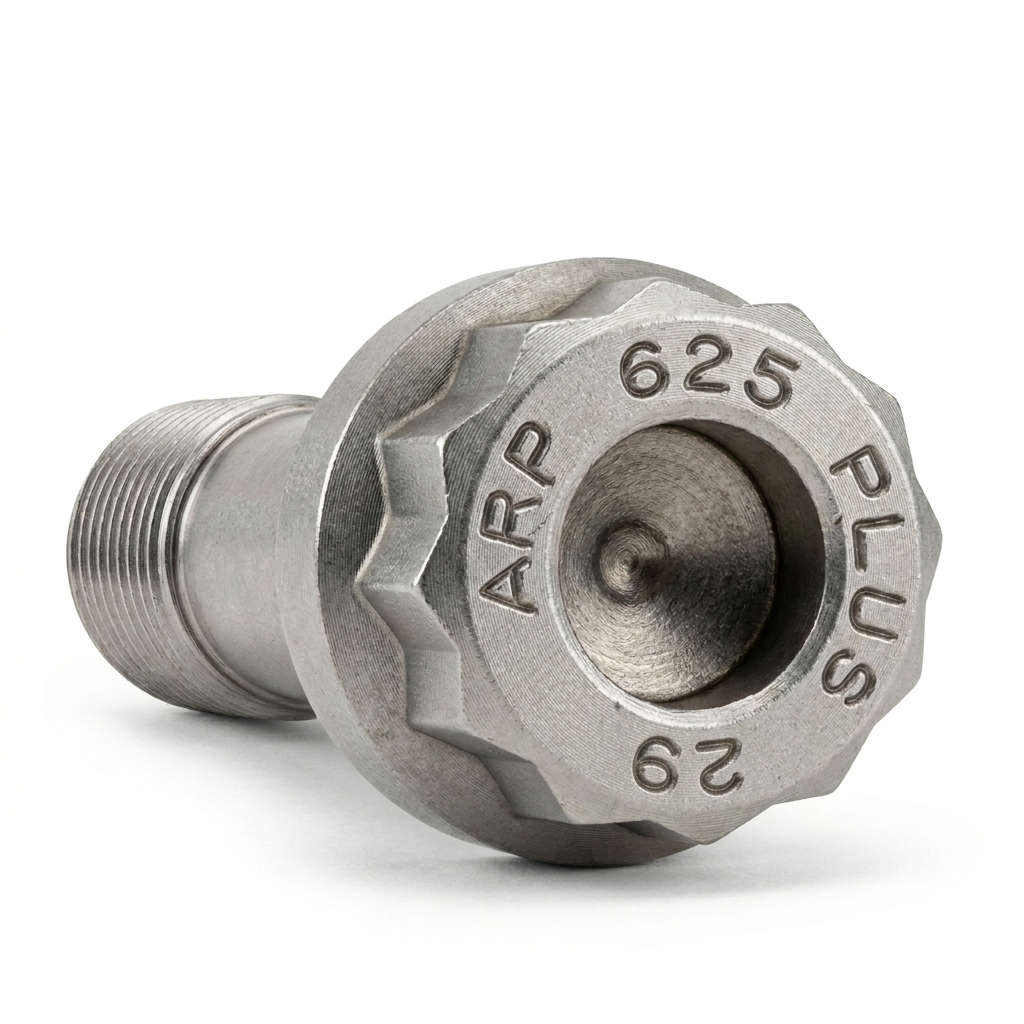 | ARP CA625+ (Custom Age 625+, 260,000 to 280,000 psi, i.e. ~1,793 to 1,931 MPa) is ARP's premium alloy, here fitted to the I-HD in 3/8"-41 mm. Reserved for the hardest-driven 22 mm pin 4G63 builds, beyond 250 hp per cylinder and beyond 10,000 rpm, it holds its preload through dozens of heat cycles and launches. Better protected than ARP 2000 against atmospheric corrosion and oxidation, immune to hydrogen embrittlement, it can be stored without particular precautions, but it is tightened with the same method: clean threads, assembly lubricant, stretch measured with a gauge and a reading logged for each bolt. |
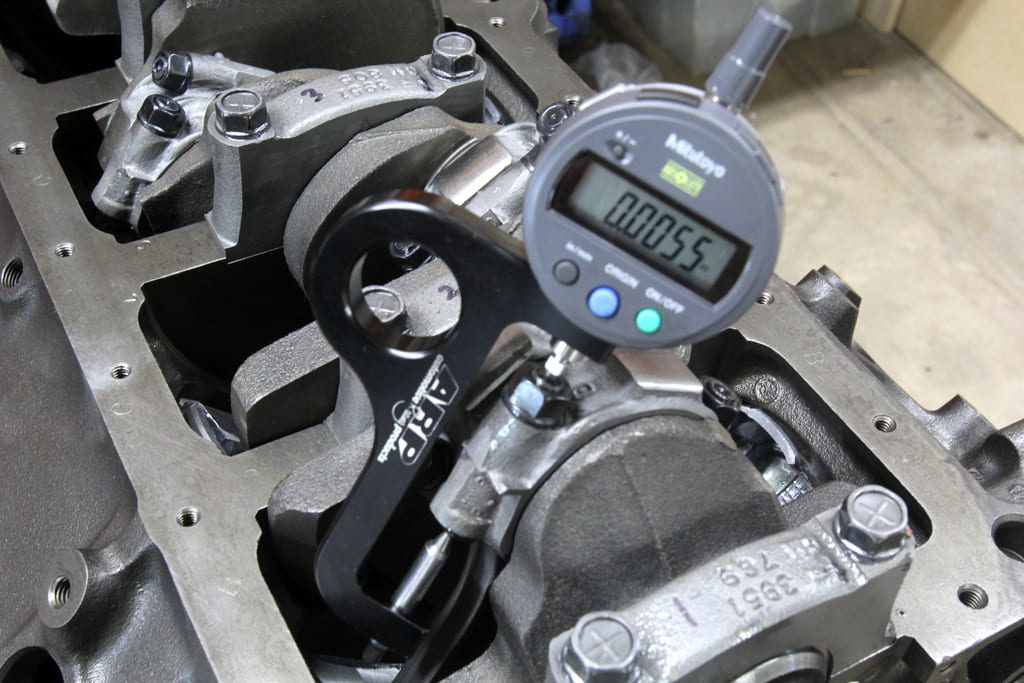
| The tightening of a high-performance rod bolt is controlled by stretch, not torque alone: the bolt elongation is measured with a dedicated gauge to ensure an exact preload. The recommended stretch values are shown in the table above. |
Discover the ARP stretch gauge
 | Manley Performance: an American manufacturer recognised worldwide for its forged racing rods. The H-Beam and Pro Series I-Beam Turbo Tuff ranges equip the highest-performing DSM builds and are renowned for their manufacturing consistency and reliability under heavy load. |
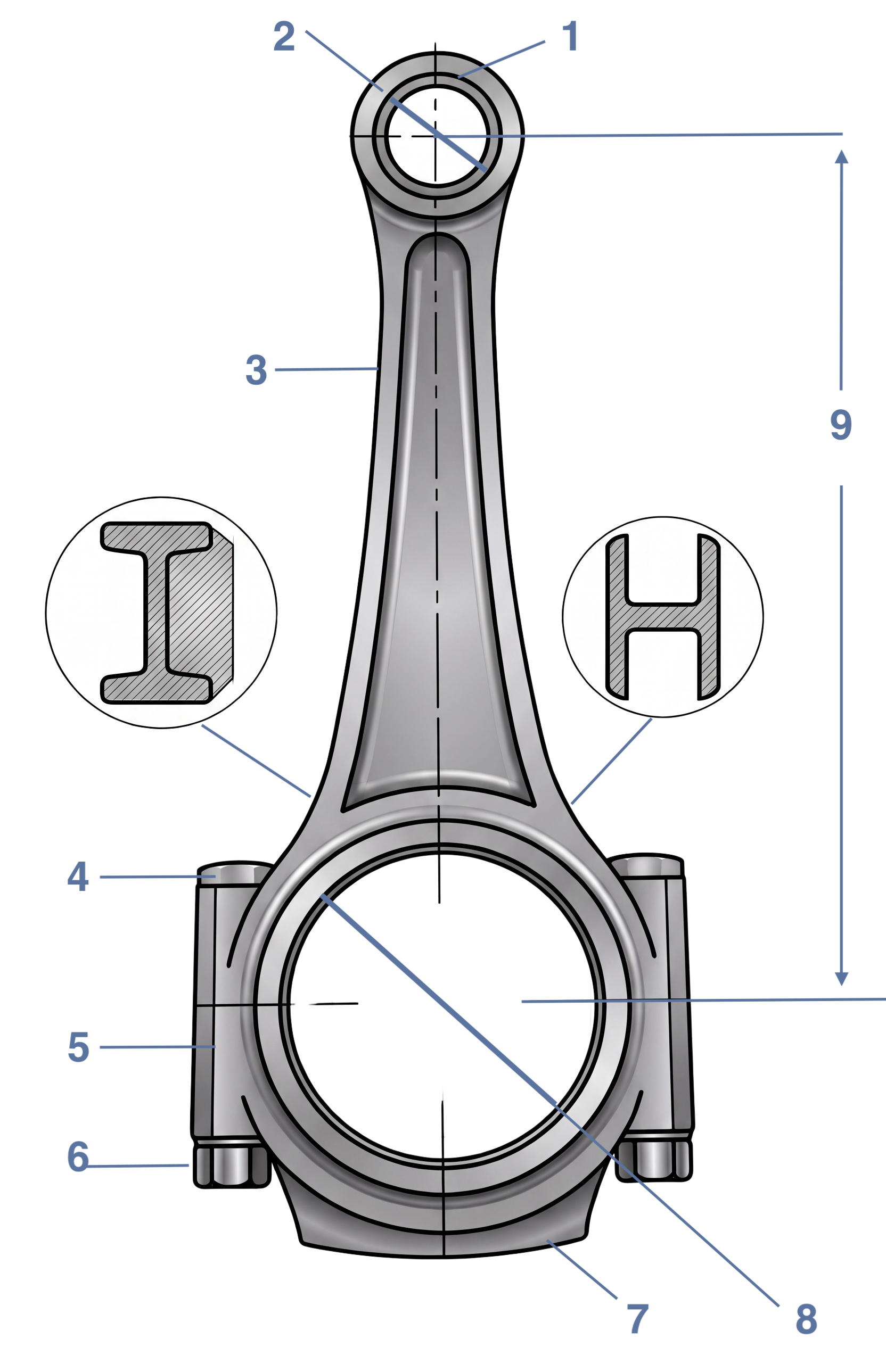 | 1) Small end 2) Small-end diameter 3) Rod beam 4) Rod bolt 5) Big end 6) Rod nut / bolt 7) Rod cap 8) Big-end diameter 9) Center-to-center |
These forged rods fit every vehicle powered by the Mitsubishi 4G63 engine (2.0L 16v turbo, 6-bolt block):
| Make | Model (chassis) | Engine code | Power | Years |
|---|---|---|---|---|
| Mitsubishi | Eclipse 1G (D22A/D27A) GS-T / GSX | 4G63T | 195 hp | 1990-1992 |
| Eagle | Talon TSi / TSi AWD (1G) | 4G63T | 195 hp | 1990-1992 |
| Plymouth | Laser RS Turbo (1G) | 4G63T | 195 hp | 1990-1992 |
| Mitsubishi | Galant VR-4 (E39A) | 4G63T | 195 hp | 1988-1992 |
OEM reference: (set of 4 connecting rods).
Given the security it provides, a set of forged rods is a modest investment. On a built 4G63, a failed factory rod almost always destroys the block, the crankshaft and, often, the cylinder head.
Fitting forged rods from the outset of a build avoids an engine failure whose cost far exceeds that of the kit. On a high-output engine, it is simply the most cost-effective insurance part.