- On order
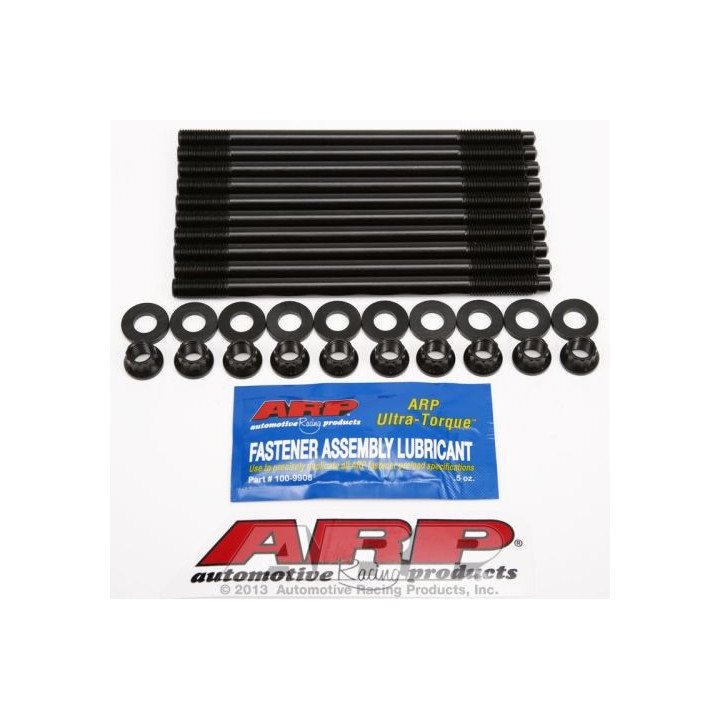

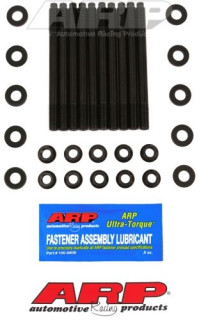
Reinforced ARP cylinder head studs TOYOTA LOTUS 2ZZ
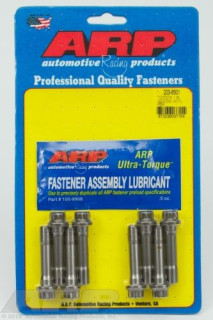
ARP cylinder head studs for Toyota 2ZZ-GE (16-valve inline four-cylinder).
- Brand: ARP
- Engines: 2ZZ-GE
- Thread: M10 x 1.5
- Grade: ARP2000
The engine concerned
The 2ZZ-GE is Toyota's 1.8-litre inline four-cylinder, with double overhead camshafts and 16 valves (82 mm original bore). It powers the Toyota Celica T23 and Corolla E12 T-Sport, the Lotus Elise and Exige, the Toyota Matrix XRS and the Pontiac Vibe GT, among others. ARP offers the 203-4302 stud kit for it, in ARP2000, with nuts.
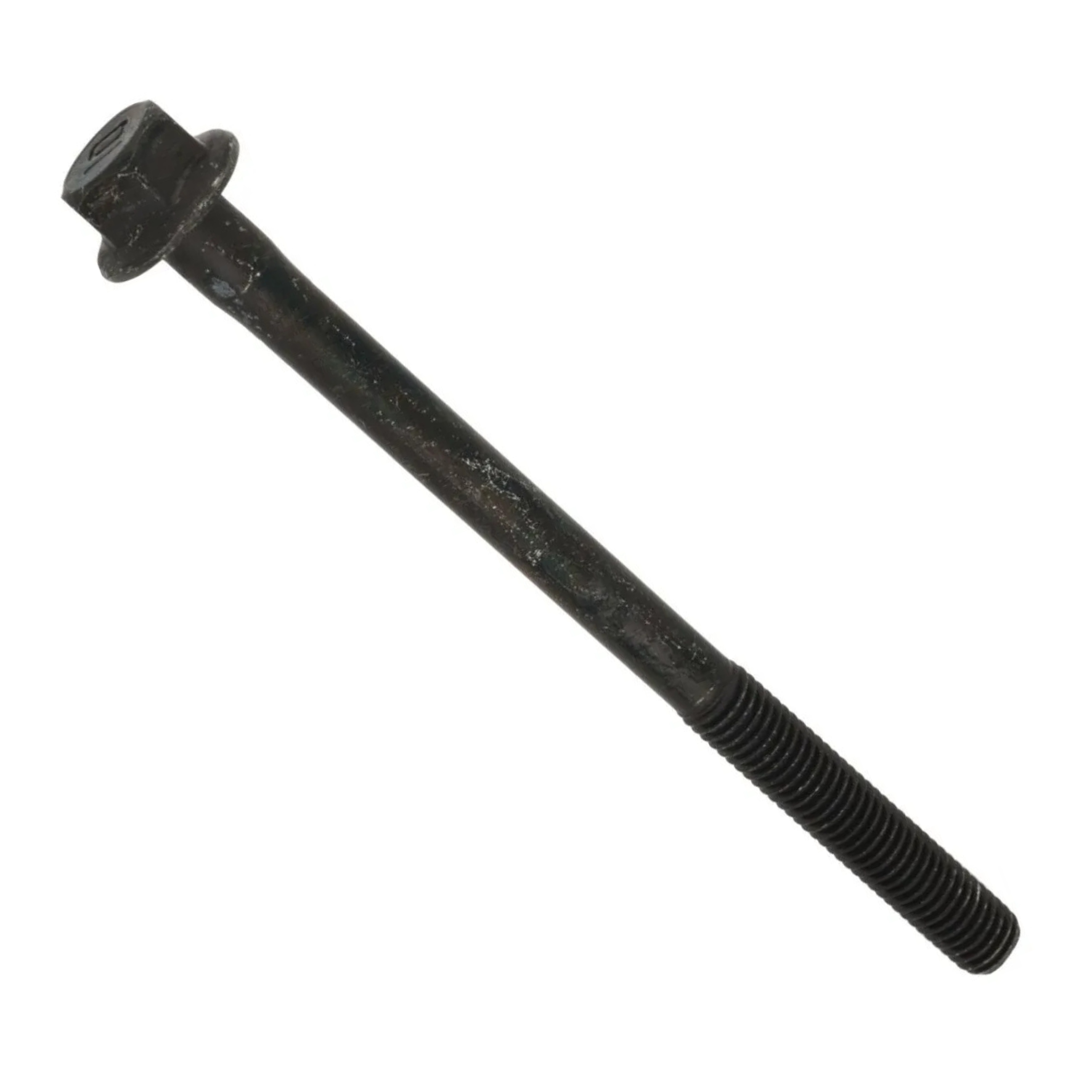
On the 2ZZ-GE, the cylinder head is held from the factory by head bolts, which ARP kit 203-4302 replaces with studs and their nuts.
Reinforced ARP cylinder head studs
Every combustion cycle pushes the cylinder head upwards. The head fasteners resist it by keeping a constant clamping pressure on the gasket; if that pressure drops, the seal is no longer guaranteed.
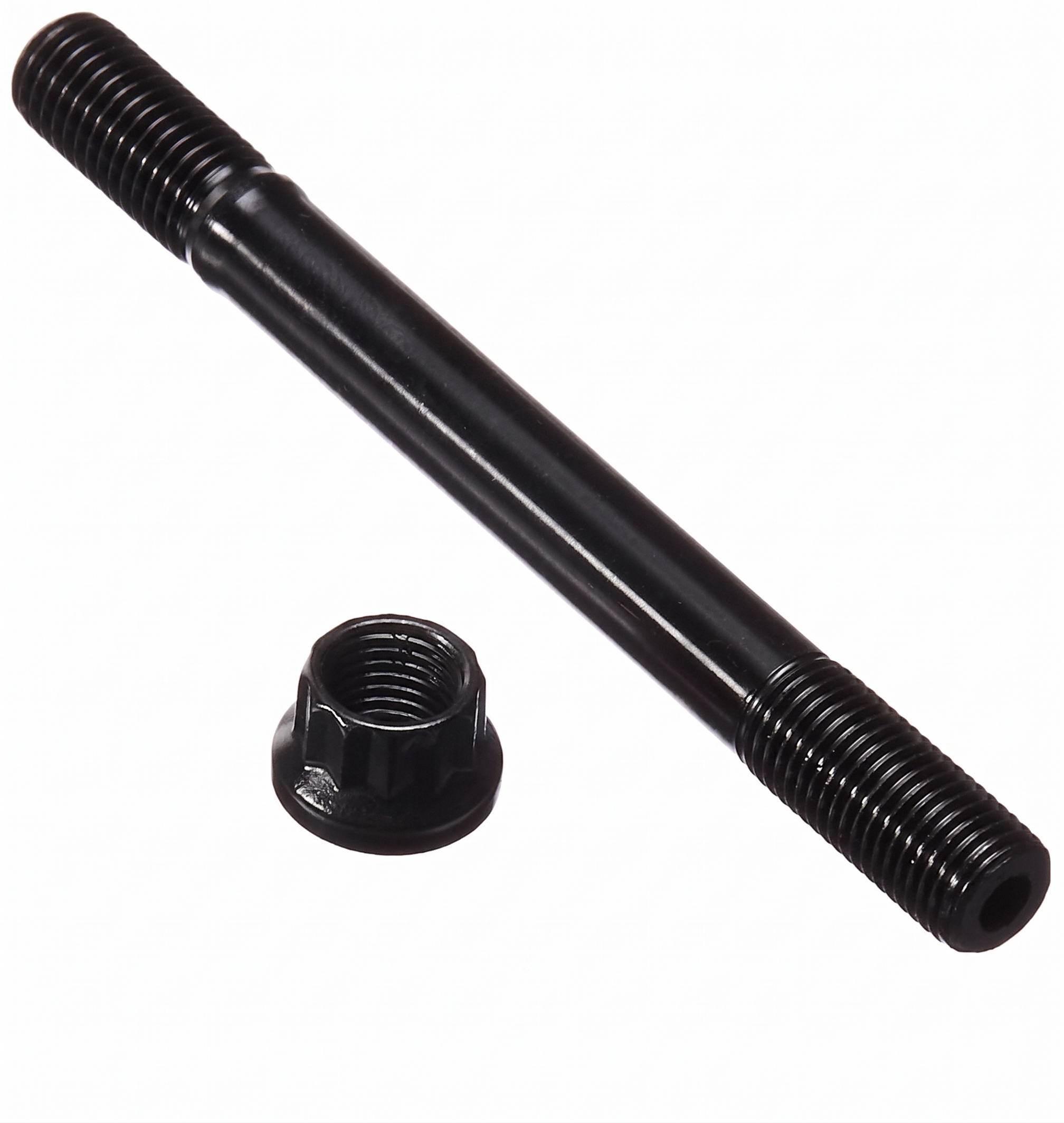
The ARP 203-4302 kit brings together ARP2000 studs with an M10 x 1.5 thread and their 12-point nuts. The ARP instructions call for each stud to be screwed hand tight into the block, the head to be fitted next, then the washers and nuts to be added and torqued following the manufacturer's sequence. Developed by ARP, ARP2000 alloy steel is heat treated to 220,000 psi tensile strength, and its threads are rolled once the treatment is done. Compared with the 10.9 and 12.9 classes of standard fasteners, between 150,800 and 176,900 psi minimum tensile strength, the gap reaches 24 to 46 %. In M10 x 1.5, the ARP2000 studs hold up to 600 hp on this four-cylinder engine (calculated estimate).
Technical specifications
| Part number | Brand | Grade / material | Nuts | Thread |
| ARP-203-4302 | ARP | ARP2000 | 12-point | M10 x 1.5 |
Tightening torque
| Part number | Stage 1 | Stage 2 | Stage 3 |
| ARP-203-4302 | 32 Nm | 63 Nm | 95 Nm |
The studs are fitted into the block by hand, without a torque wrench. For a permanent installation, the instruction sheet accepts thread locker, with tightening to be completed before it sets.
If a stud runs through to the water jacket, the instruction sheet says to coat its threaded section with ARP sealant.
Tightening to torque is done in three steps, in the order set by the engine manufacturer, with ARP lubricant applied to the threads and under the nuts, a condition for the table values to apply.
According to the instruction sheet, ARP lubricant is also applied to the washers, as on the threads.
The torque figures above come from ARP instruction sheet 203-4302, revision applicable on the day the page went online. The official instruction sheet prevails in case of difference and describes the complete procedure, tightening sequence included. Read the ARP 203-4302 instruction sheet
Technical guide
To obtain the intended preload, ARP assembly grease must be present on the threads and under the nuts: the torque figures in the table are established with it.
| Buy the ARP assembly grease → |
The ARP brand
 |
ARP (Automotive Racing Products) was born in the early 1970s from the initiative of Gary Holzapfel, an engineer from the aerospace industry, determined to eliminate engine failures caused by weak fasteners in motorsport. The company designs and manufactures thousands of parts in California, in several material grades suited to each use. |
Advantages over the original bolts
| Criterion | Original head bolts | Reinforced ARP studs |
 |
 |
|
| Block threads | Stressed at every tightening | Preserved (studs fitted hand tight) |
When studs become necessary
On an engine left standard, the original fasteners do their job. Switching to reinforced fasteners becomes worthwhile as soon as:
- 2ZZ-GE: forced induction added (turbo or supercharger), or higher combustion pressure
- The compression ratio is increased
- A reinforced MLS gasket is fitted, with its need for a high and even preload
- The head has already lifted or the gasket has already failed
- The engine is used in competition, with intense heat cycles and repeated teardowns
Vehicle compatibility
| Model | Engine code | Power | Years |
| Lotus Elise S2 111R / Elise R | 2ZZ-GE | 189 hp | 2004-2011 |
| Lotus Elise SC (S/C) | 2ZZ-GE (S/C) | 220-221 hp | 2008-2011 |
| Lotus Exige S / Cup (S/C) | 2ZZ-GE (S/C) | 220-243 hp | 2006-2010 |
| Lotus Exige S2 (atmo) | 2ZZ-GE | 189 hp | 2004-2006 |
| Pontiac Vibe GT | 2ZZ-GE | 164-180 hp | 2003-2006 |
| Toyota Celica T23 GT-S / 190 | 2ZZ-GE | 180-192 hp | 1999-2006 |
| Toyota Corolla Compressor (E12) | 2ZZ-GE (S/C) | 215-224 hp | 2005-2006 |
| Toyota Corolla E12 T-Sport | 2ZZ-GE | 189-192 hp | 2001-2006 |
| Toyota Matrix XRS (E130) | 2ZZ-GE | 164-180 hp | 2003-2006 |
Why is it the most cost-effective solution?
On a tuned 2ZZ-GE, every gain in cylinder pressure is felt first by the cylinder head and its clamping. ARP studs in ARP2000 hold the head under a clearly higher load than the original fasteners; they reduce the risk of a torn gasket and of a rebuild whose cost far exceeds that of the kit.
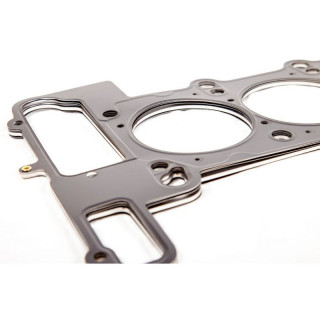
Consider a reinforced head gasket
To get the most out of reinforced fasteners, pair them with a head gasket that withstands the same pressure. Here is the gasket we offer for this engine:
| Reinforced head gasket 2ZZ-GE → |
-
Brand
-
ReferenceARP-203-4302
-
EAN130672036041823