Product successfully added to your shopping cart
Quantity
Total
There are 0 items in your cart. There is 1 item in your cart.
Total products
Total shipping To be determined
Total

1.5L 16v - 4G15
Manufacturers
1.5L 16v - 4G15
Warning: Last items in stock!
New product
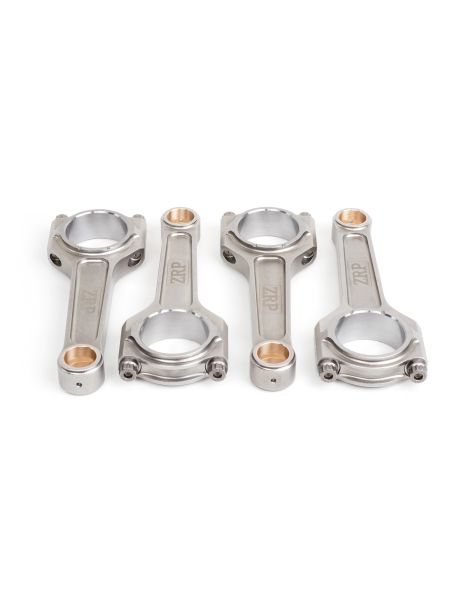
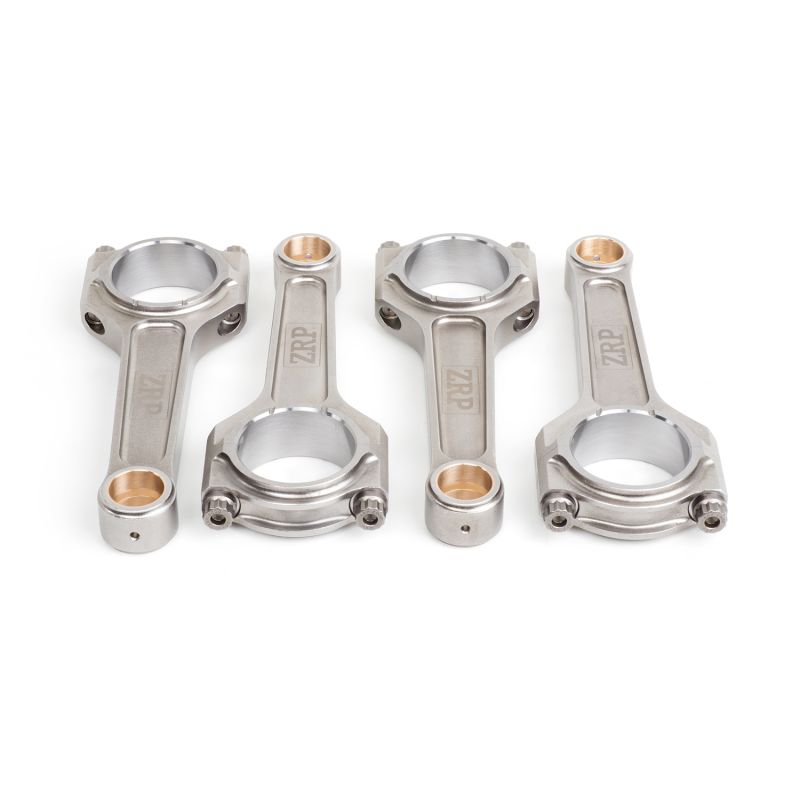
Set of 4 forged connecting rods in 4340 steel for the Mitsubishi 4G15 1.5L 16v Turbo (Colt CZT / Ralliart).
The 4G15 is the 1.5-litre four-cylinder petrol unit from Mitsubishi’s 4G1 family, here in turbocharged 16-valve form powering the Colt CZT and Colt Ralliart (Z30). Rated at 150 hp from the factory for 1,468 cc (75.5 mm bore, 82 mm stroke), it was also chosen by Smart for the Forfour Brabus.
Compact and lively, this turbo engine responds well to tuning: a remap, a larger turbo and a switch to forged pistons quickly raise cylinder pressure, soon pushing the standard rod beyond its safety margin.
Machined from high-strength 4340 steel, these reinforced forged connecting rods secure the bottom end as soon as power rises. They become essential when fitting forged pistons, raising the rev limit, increasing boost pressure or gaining displacement, all cases where the original 4G15 rod reaches its limits.
Designed to absorb the heavy loads of tuned engines, turbo as well as supercharged, they cover every discipline, from rally to drift, drag, circuit and track days, hill climb and time attack, and support Stage 2, Stage 3 and Stage 4+ builds, right up to competition engines.
| Reference | Brand | Profile | Bolts | Pin diameter OEM 18 mm | Small-end width | Big-end diameter | Big-end width | Center-to-center OEM 131 mm | Weight per rod |
|---|---|---|---|---|---|---|---|---|---|
| R-MIT-008-I | ZRP | I | ARP 2000-5/16"-38mm | 18 mm | 45 mm | 19.89 mm | 131 mm | 460 g | |
| R-MIT-008-I-L19 | ZRP | I | ARP L19-5/16"-38mm | 18 mm | 45 mm | 19.89 mm | 131 mm | 460 g |
| Rod | Bolts | Torque | Recommended stretch |
|---|---|---|---|
| ZRP (R-MIT-008-I) | ARP 2000-5/16"-38mm | 40.7 N·m | 0.140 – 0.152 mm |
| ZRP (R-MIT-008-I-L19) | ARP L19-5/16"-38mm | 54.2 N·m | 0.127 – 0.140 mm |
One habit to drop on the 4G15: going back to an already tightened bolt with the wrench to check it is at its value. That gesture adds load without measuring anything and distorts the next check. The only valid control is to record the stretch at the moment of tightening, on the build sheet, and then leave it alone; if in doubt, strip it back down and measure the free length again on the gauge. The torque and stretch figures in the table come from the bolt manufacturer, ARP 2000 or ARP L19 in 5/16" 38 mm depending on the variant, and are to be followed scrupulously, the stretch reading remaining the reference method.
| 4340 is a nickel-chromium-molybdenum alloy steel used in aerospace as well as motorsport. Forged and then heat-treated (quench and temper), it combines excellent tensile strength, high fatigue endurance and genuine ductility. Compared with an original rod, usually made of sintered metal optimised for series cost, a forged 4340 rod gains roughly 19% in yield strength, 8% in tensile strength and, above all, 19 to 37% in fatigue strength, giving a service life under cyclic load several times longer. That is exactly what makes forged 4340 the reference material as soon as boost and rpm climb. |
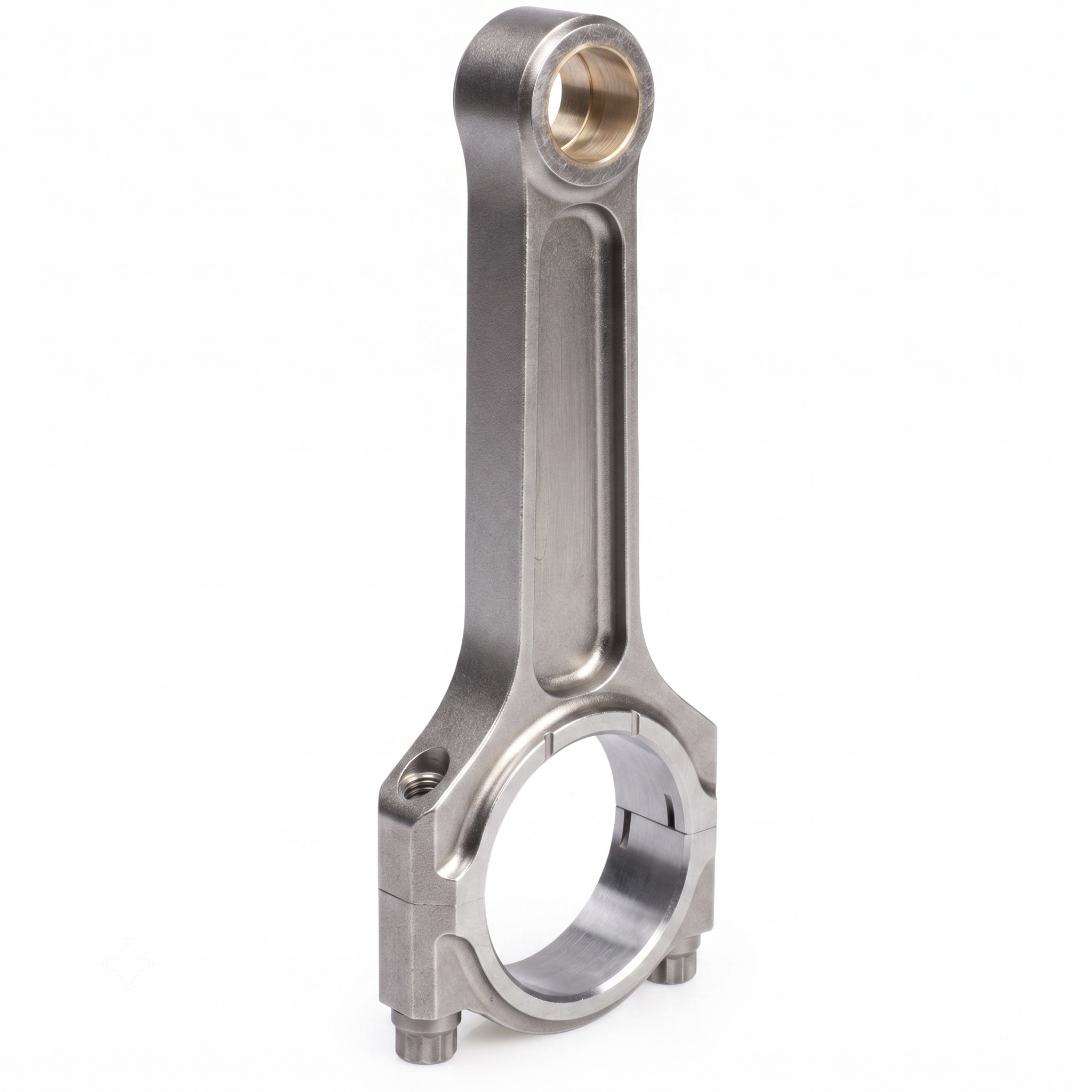 | I profile. Its slimmer central section makes the rod lighter: less inertia and freer revving. It is the profile of choice on modern turbo engines such as the 4G15, where it offers the best compromise between lightness and strength, securing the bottom end while preserving responsiveness. |
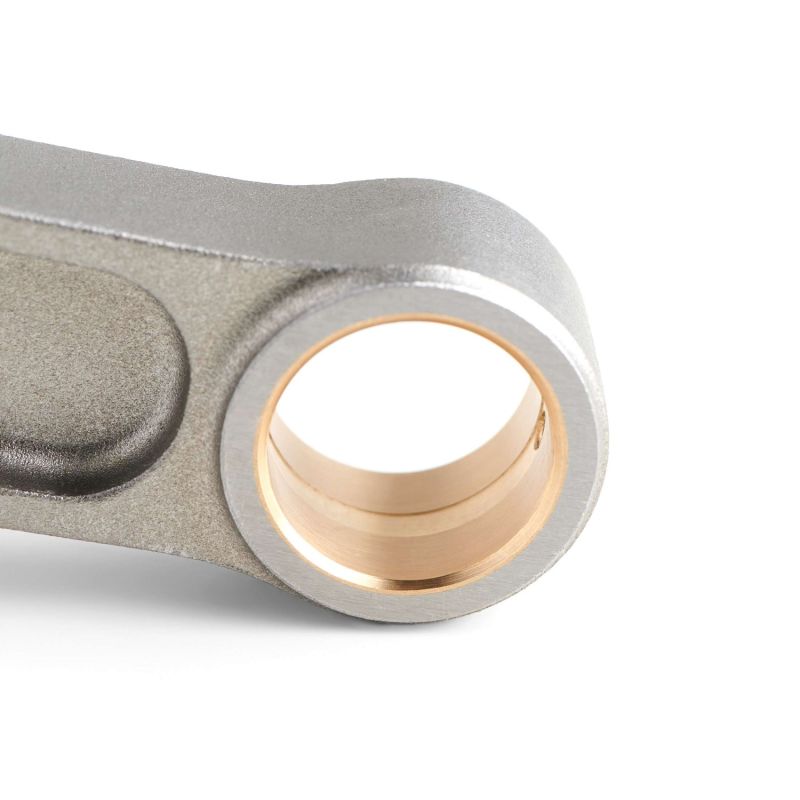
On this 1.5 turbo the bolts offered are 5/16"-38 mm, a diameter matched to the small end and big end of this 460 g ZRP I-profile rod. Two grades are available, ARP 2000 and ARP L19: their power-per-cylinder figures are quoted by ARP for a 3/8" bolt and the table below recalls them, but the diameter actually supplied here is 5/16", so those figures must not be transposed as they stand. What matters on assembly is unchanged: threads and seats cleaned then coated with assembly lubricant, tightening in several passes, preload confirmed through stretch measured with a dial gauge and free length recorded for every bolt, before and after. That discipline, more than the grade, is what makes a bottom end last.
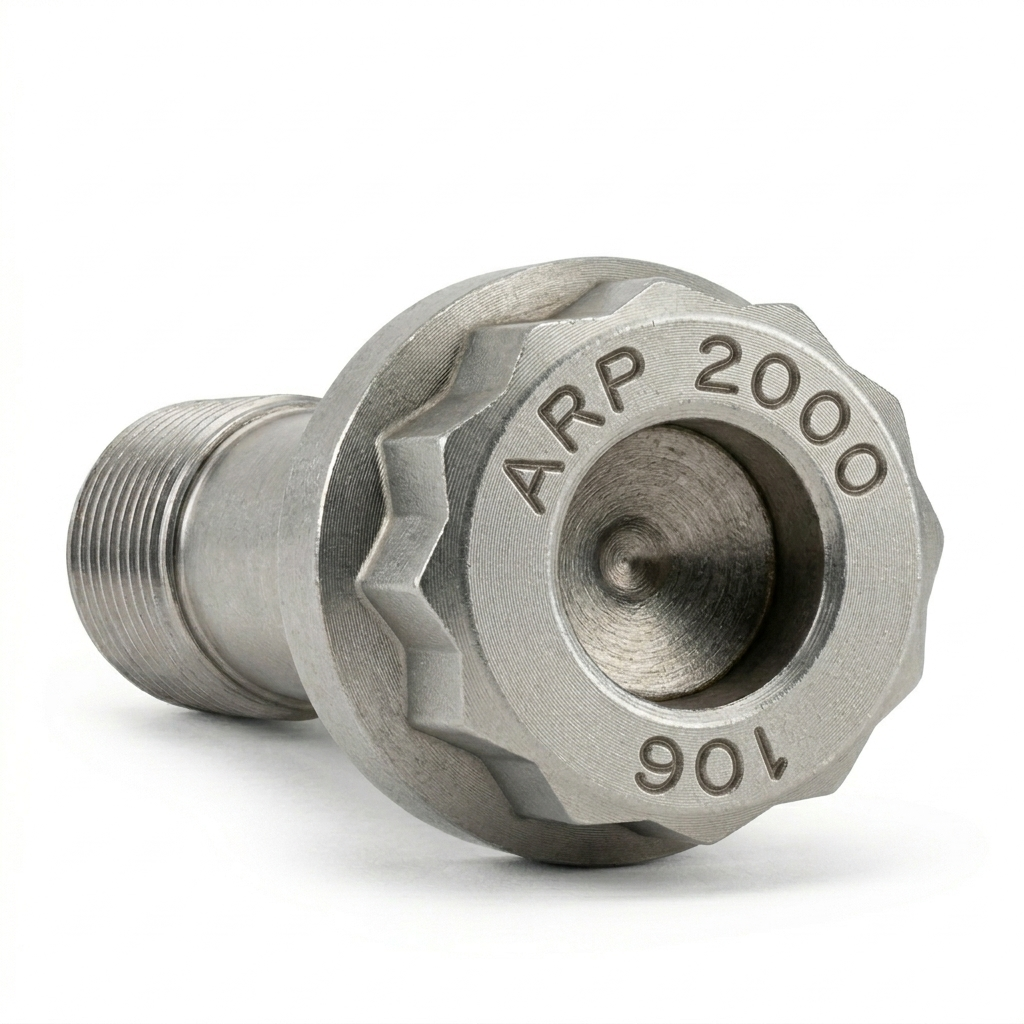 | ARP 2000 (tensile strength around 220,000 psi, i.e. about 1,517 MPa) is the high-performance standard. Suitable for builds up to 150 hp per cylinder in 5/16" or 200 hp per cylinder in 3/8", and up to 8,500 rpm, it is the most common grade in circuit, track day, drift, rally, drag and hill climb, valued for its robustness, reliability and versatility, with no particular storage constraint. |
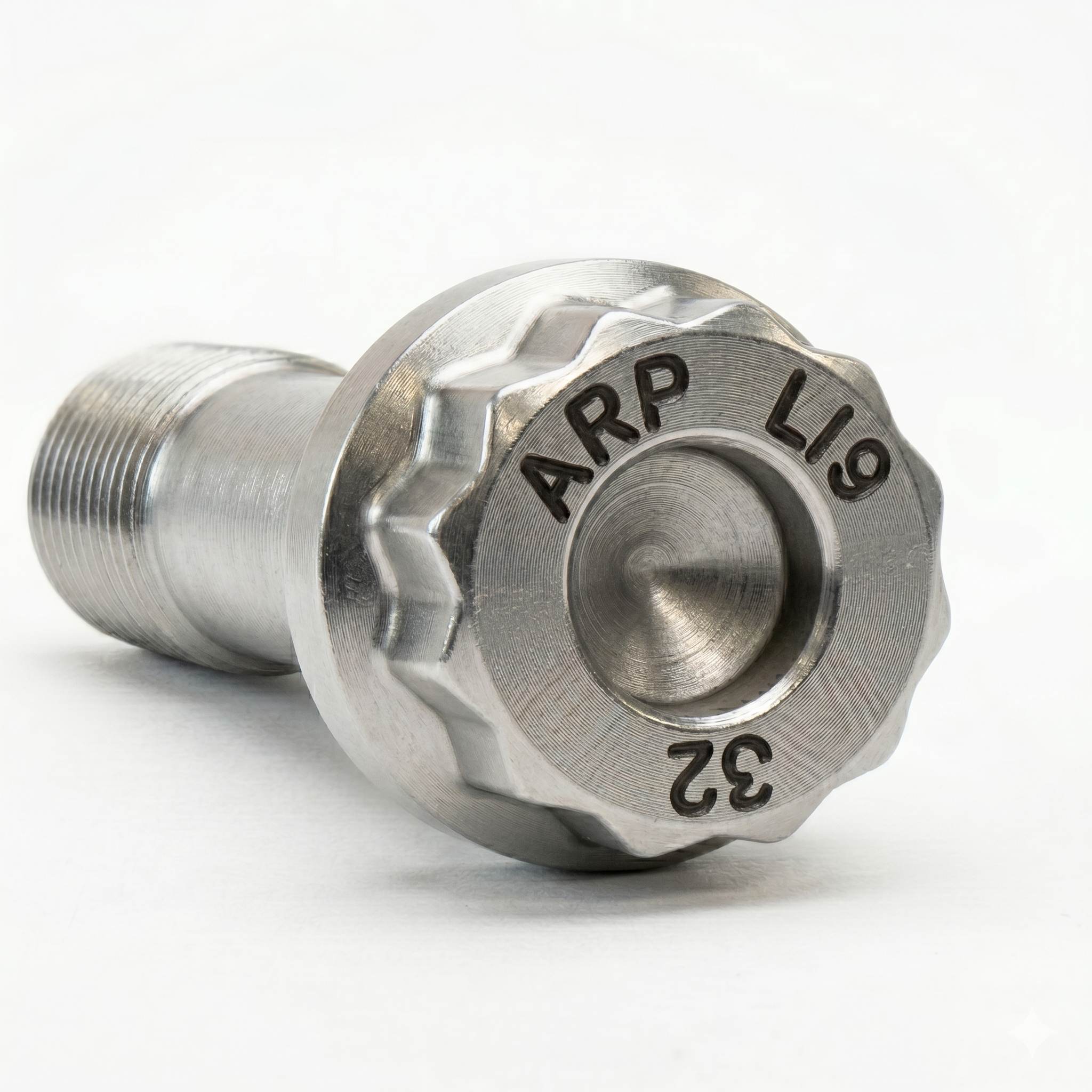 | ARP L19 (tensile strength around 260,000 psi, i.e. about 1,793 MPa) is designed for engines pushed to the extreme, up to 200 hp per cylinder in 5/16" or 250 hp per cylinder in 3/8", and up to 10,000 rpm: very high boost pressure, sustained high rpm and elevated cylinder pressure. It is the choice for big-power builds in drag, drift, rally and circuit. Note: sensitive to corrosion and hydrogen embrittlement, it must be stored and fitted oiled, away from moisture. |
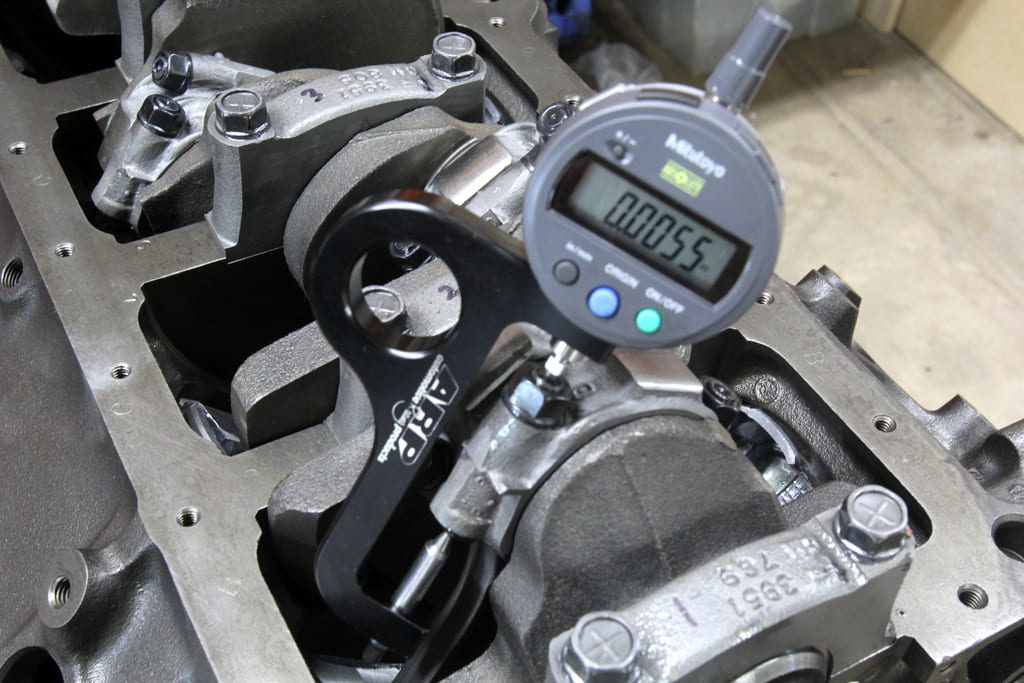
| In addition to torque tightening, measuring connecting-rod bolt stretch is the most reliable way to achieve optimal preload. The check is carried out with the bolt fitted: a dial gauge is placed on both ends of the bolt and its actual stretch is read, which must match the recommended value (see the torque and stretch table above). This method eliminates the friction variations inherent to torque tightening and secures the assembly on heavily stressed engines. |
 | ZRP is a Greek brand of high-performance forged connecting rods, designed by Alex Drakos in Athens. Each rod is forged from 4340 steel, precision-machined and balanced to ±1 g to stay reliable at high rpm. Offered here in the I profile with ARP 2000 or L19 bolts, they are designed and inspected in Greece, and proven in rally, on circuit and in drift. |
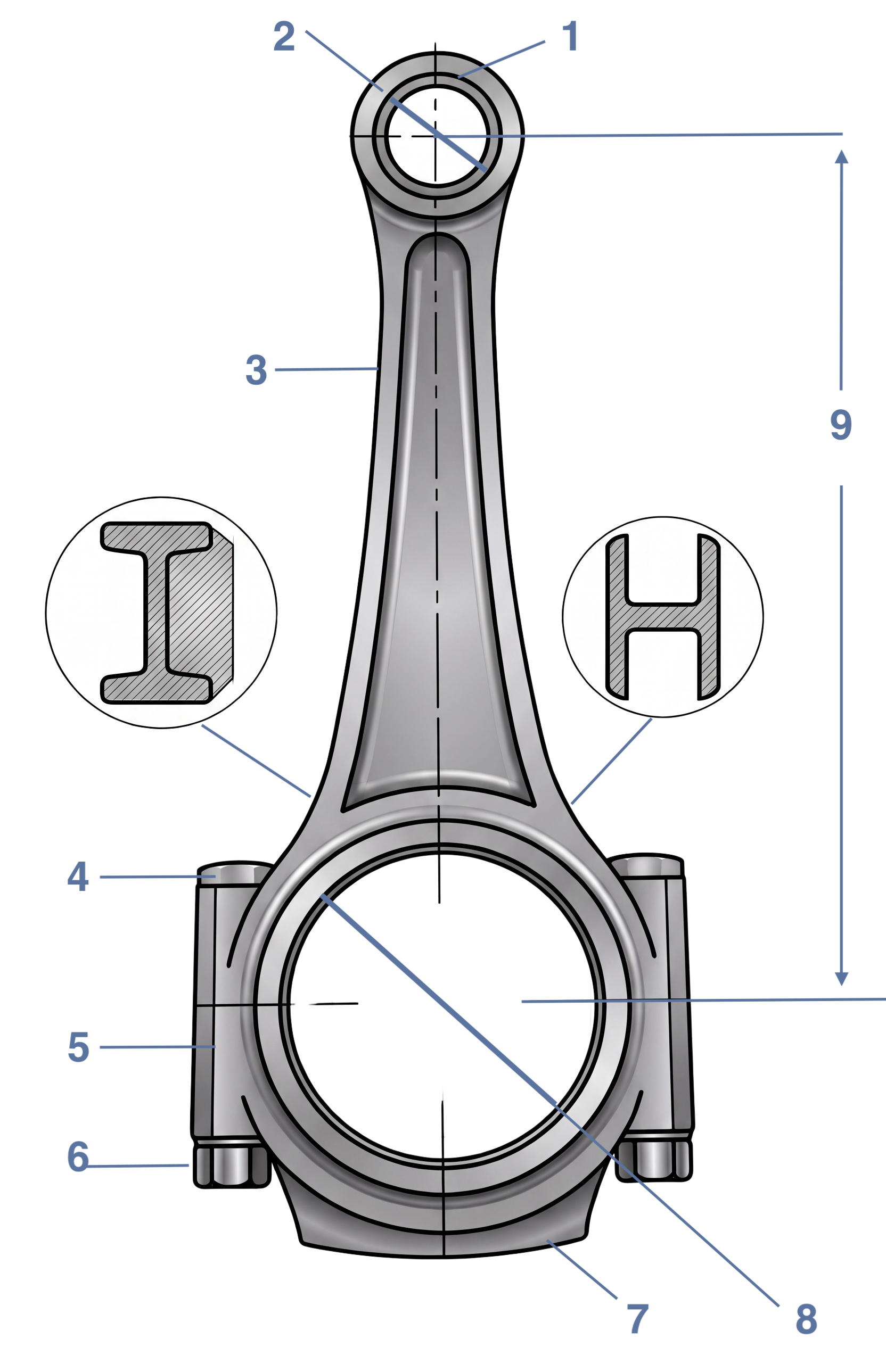 | 1) Small end 2) Small-end diameter 3) Rod beam 4) Rod bolt 5) Big end 6) Rod nut / bolt 7) Rod cap 8) Big-end diameter 9) Center-to-center |
These forged connecting rods are compatible with all vehicles fitted with the 4G15 1.5L 16v Turbo engine (131 mm centre-to-centre, 18 mm pin):
| Brand | Model (chassis) | Engine code | Power | Years |
|---|---|---|---|---|
| Mitsubishi | Colt CZT / Ralliart (Z30) | 4G15 | 150 hp | 2004–2012 |
| Mitsubishi | Colt CZC (Z30) | 4G15 | 150 hp | 2006–2009 |
| Smart | Forfour Brabus (W454) | 4G15 | 177 hp | 2005–2006 |
OEM reference: (set of 4 rods).
When an original bottom end fails (broken rod, scored crank, block to rebuild), the bill climbs fast, yet without guaranteeing better durability than standard.
For an equivalent, or even lower, budget, fitting forged 4340 connecting rods together with forged pistons brings far greater reliability and safety margin, plus genuine room for power growth. It is the solution chosen by European tuners.
At the same budget: more reliability, more potential and more resale value.