Product successfully added to your shopping cart
Quantity
Total
There are 0 items in your cart. There is 1 item in your cart.
Total products
Total shipping To be determined
Total

1.3L 16v - 4E-FTE
Manufacturers
1.3L 16v - 4E-FTE
Warning: Last items in stock!
New product
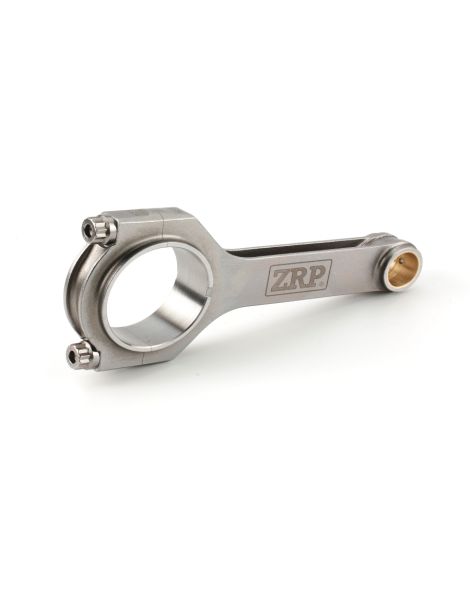
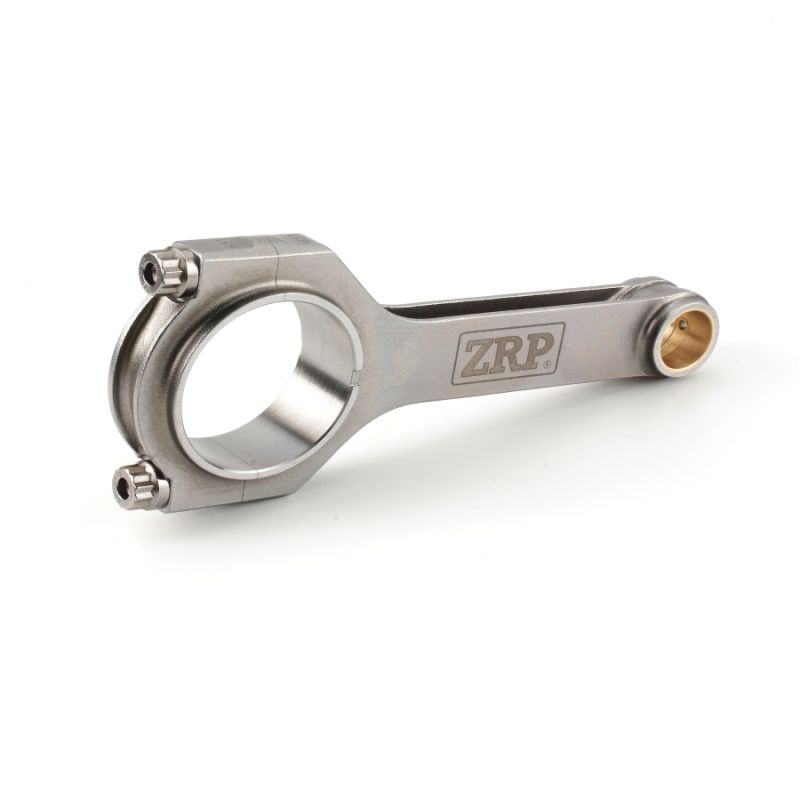
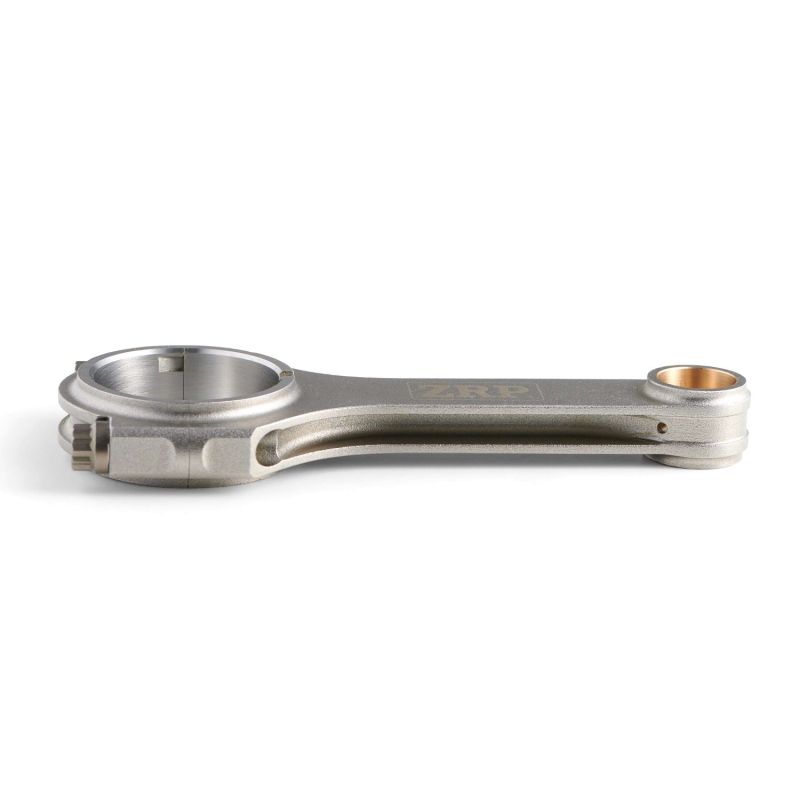
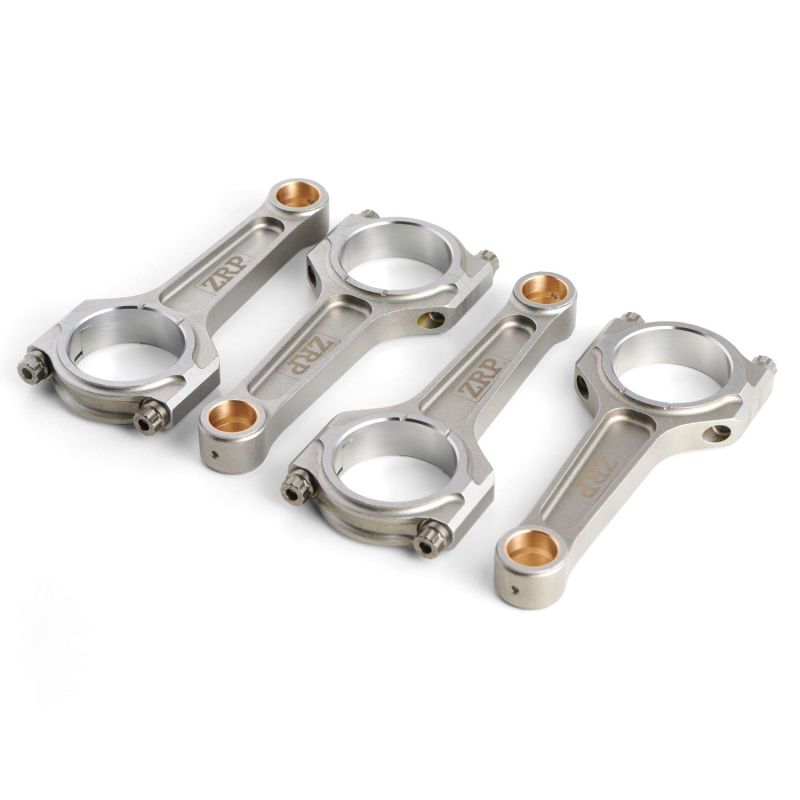
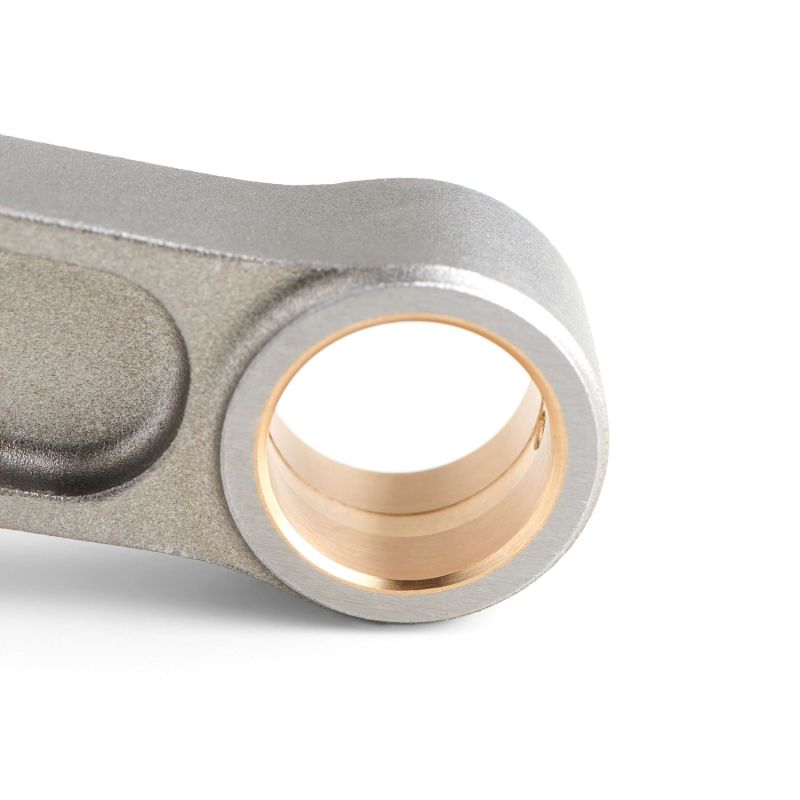
Set of 4 forged connecting rods in 4340 steel for the Toyota 1.3L 16V turbo 4E-FTE.
Brands: ZRP
Compatibility: Starlet GT, Glanza
Engine codes: 4E-FTE
Bolts included: ARP 2000 or L19
The Toyota 4E-FTE is a 1.3 L (1,331 cc) 16-valve inline-four, the only turbocharged member of Toyota's E-engine family. With a twin-cam block, electronic fuel injection and a turbocharger, it produces around 135 hp at 6,400 rpm and 157 N·m at 4,800 rpm, with a 74 mm bore and 77.4 mm stroke. This compact unit was built in Japan from 1989 to 1999.
The 4E-FTE was fitted exclusively to the Toyota Starlet GT Turbo (EP82) and then the Toyota Glanza V (EP91), two Japanese compacts that became icons of lightweight tuning. Its naturally aspirated sibling, the 4E-FE (around 85 to 90 hp), powers the Corolla and the Starlet, among others. Praised for the strength of its bottom end, the 4E-FTE is a sought-after tuning base: as soon as boost pressure or engine speed rise, the stock rods become the weak link.
On such a compact base, every extra horsepower comes with mechanical stress: the light weight of the Starlet GT and Glanza V invites more boost and higher engine speeds, and both load the rotating assembly directly. Fitting forged rods, matched to the gram and torqued with ARP hardware, secures the bottom end before chasing power and saves you from opening the block again after a first season of track use.
Machined from high-strength 4340 steel, these forged connecting rods replace the stock rods to withstand power and engine speeds far beyond standard. Where the factory sintered rod is optimised for production cost, the forged rod is optimised for mechanical strength and secures the rotating assembly as the build's loads increase.
They suit every competition and tuning discipline: rally, drift, drag, circuit, hillclimb and time attack. In practice they become essential from an aggressive Stage 2 and are a must in Stage 3 and Stage 4+, especially on a 4E-FTE running higher boost, higher rpm or more torque. Paired with forged pistons, they form an assembly able to endure the load cycles of a heavily boosted engine.
| Reference | Brand | Profile | Bolts | Pin diameter OEM 18 mm | Small-end width | Big-end diameter OEM n.p. | Big-end width | Center-to-center OEM 118 mm | Weight |
|---|---|---|---|---|---|---|---|---|---|
| R-TOY-001H | ZRP | H | ARP 2000-5/16″-38mm | 18 | 43,07 | 20,85 | 118 | 367 g | |
| R-TOY-001-I | ZRP | I | ARP 2000-3/8″-38mm | 18 | 43,07 | 20,85 | 118 | 377 g | |
| R-TOY-001-I-L19 | ZRP | I | ARP L19-3/8″-38mm | 18 | 43,07 | 20,85 | 118 | 377 g |
| Rod | Bolts | Torque | Recommended stretch |
|---|---|---|---|
| ZRP (R-TOY-001H) | ARP 2000 | 40,7 N·m | 0,140 – 0,152 mm |
| ZRP (R-TOY-001-I) | ARP 2000 | 61 N·m | 0,140 – 0,152 mm |
| ZRP (R-TOY-001-I-L19) | ARP L19 | 67,8 N·m | 0,152 – 0,165 mm |
Manufacturers recommend the stretch-measurement method over torque alone: it reflects the bolt's real tension far more accurately. The table above gives, for each reference, the indicative torque (without gauge) and the target stretch (with gauge).
| 4340 is a low-alloy nickel-chromium-molybdenum steel used in aerospace and motorsport alike. Forged and then heat-treated (quench and temper), it combines high tensile strength, excellent fatigue resistance and good ductility. Compared with a stock rod, often sintered metal, designed for series cost, a forged 4340 rod gains roughly +19% yield strength, +8% tensile strength and, above all, +19 to +37% fatigue strength, for a cyclic-load life several times longer. This is what makes it the reference material once boost and rpm climb. |
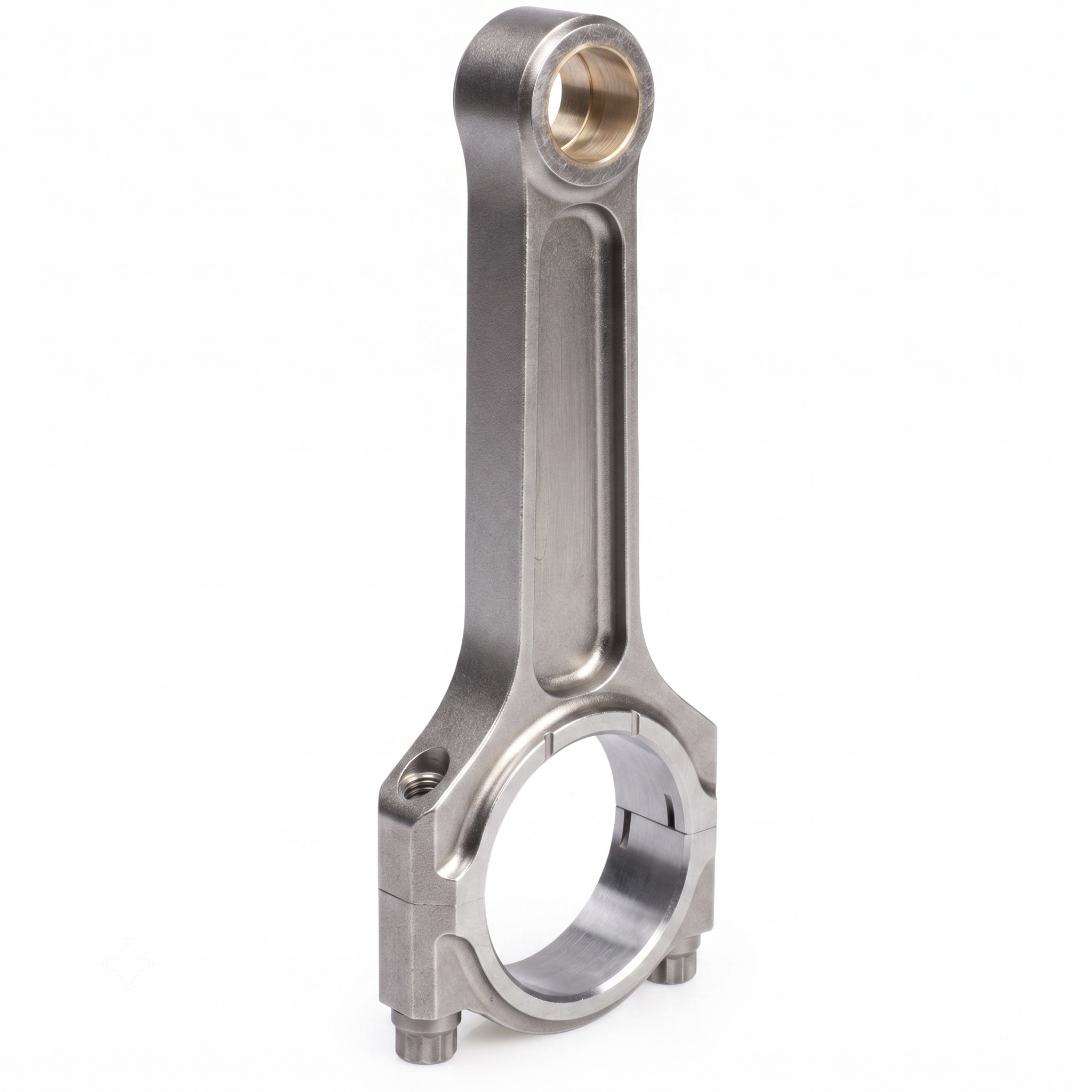 | I-beam profile. Its slimmer centre section lightens the rod: less reciprocating mass, therefore lower inertia loads at high rpm and quicker pick-up, a valuable quality on a small turbo engine such as the 4E-FTE, whose character depends on how fast boost builds. On this page the I version weighs 377 g per rod and takes 3/8" ARP hardware, either ARP 2000 or L19: this is the combination chosen for builds that favour engine speed and response while aiming at high power. |
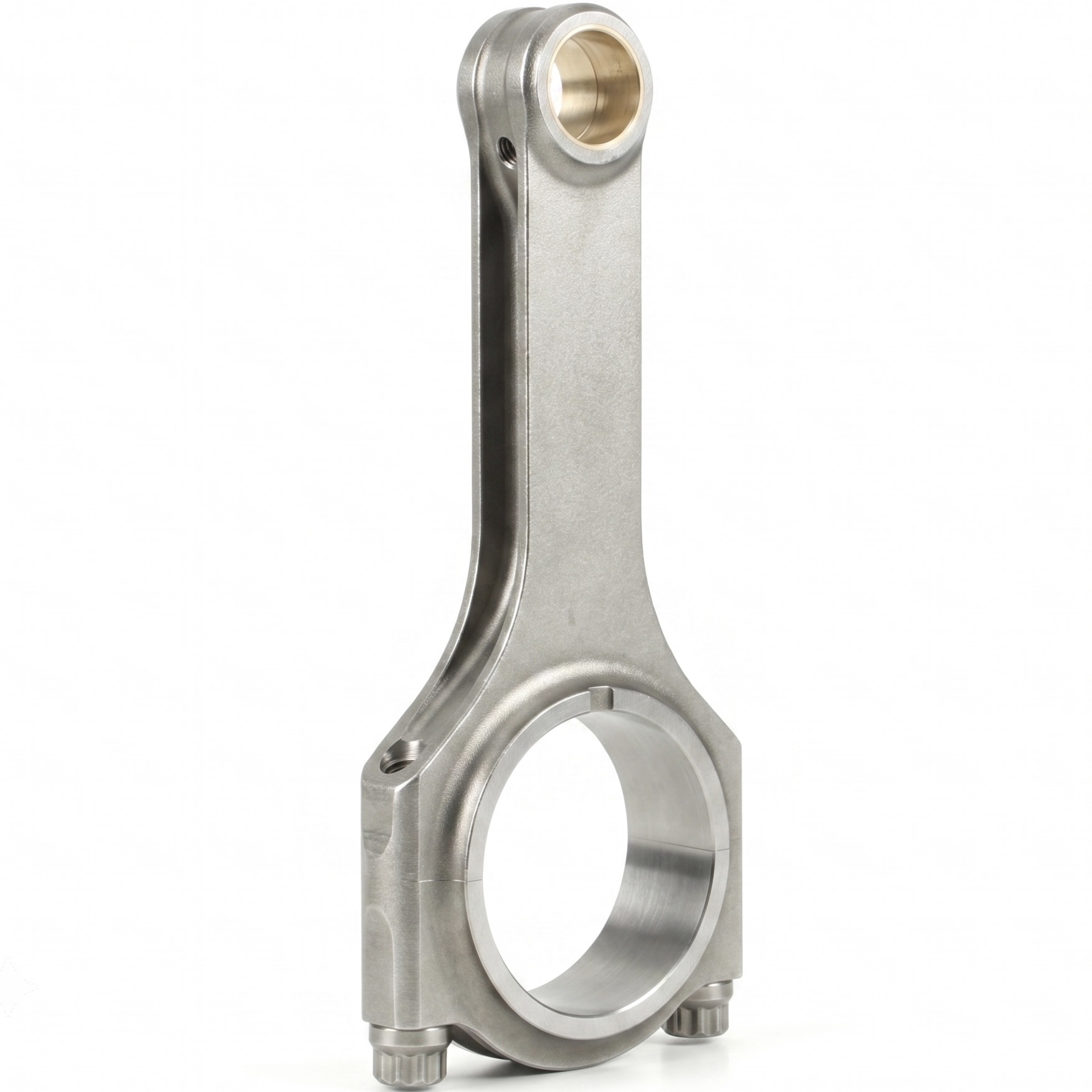 | H-beam profile. Its H section, with two solid flanks joined by a web, offers high stiffness and excellent resistance to bending as well as compression, where cylinder pressure and the load on the cap become the sizing factors. Here the H version is the lightest in the range offered, at 367 g per rod, and takes ARP 2000 hardware in 5/16": it is aimed at high-torque builds where the strength of the beam matters more than the last few rpm. |
The rod bolt is one of the most heavily loaded parts of the engine: it holds the cap against inertial forces. The bolt grade depends directly on the target power and maximum engine speed.
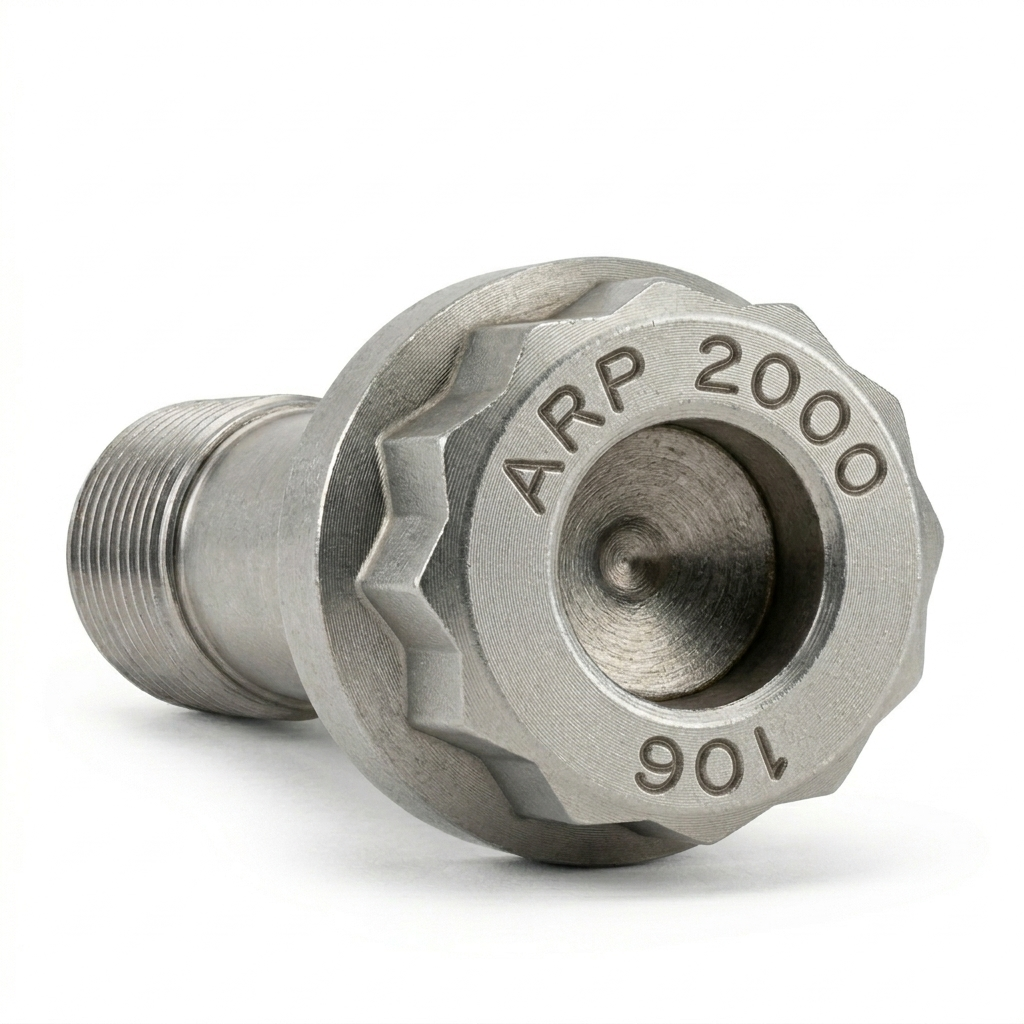 | ARP 2000 (tensile strength ~220,000 psi, i.e. ~1,517 MPa). A versatile grade covering the great majority of builds: up to about 150 hp per cylinder with a 5/16" bolt and up to about 200 hp per cylinder with a 3/8" bolt, at engine speeds commonly up to ~8,500 rpm. It requires no particular storage precautions, is torqued and then checked by stretch, and tolerates several rebuilds if the procedure is followed. On a prepared 4E-FTE it is the default choice, whichever profile is selected. |
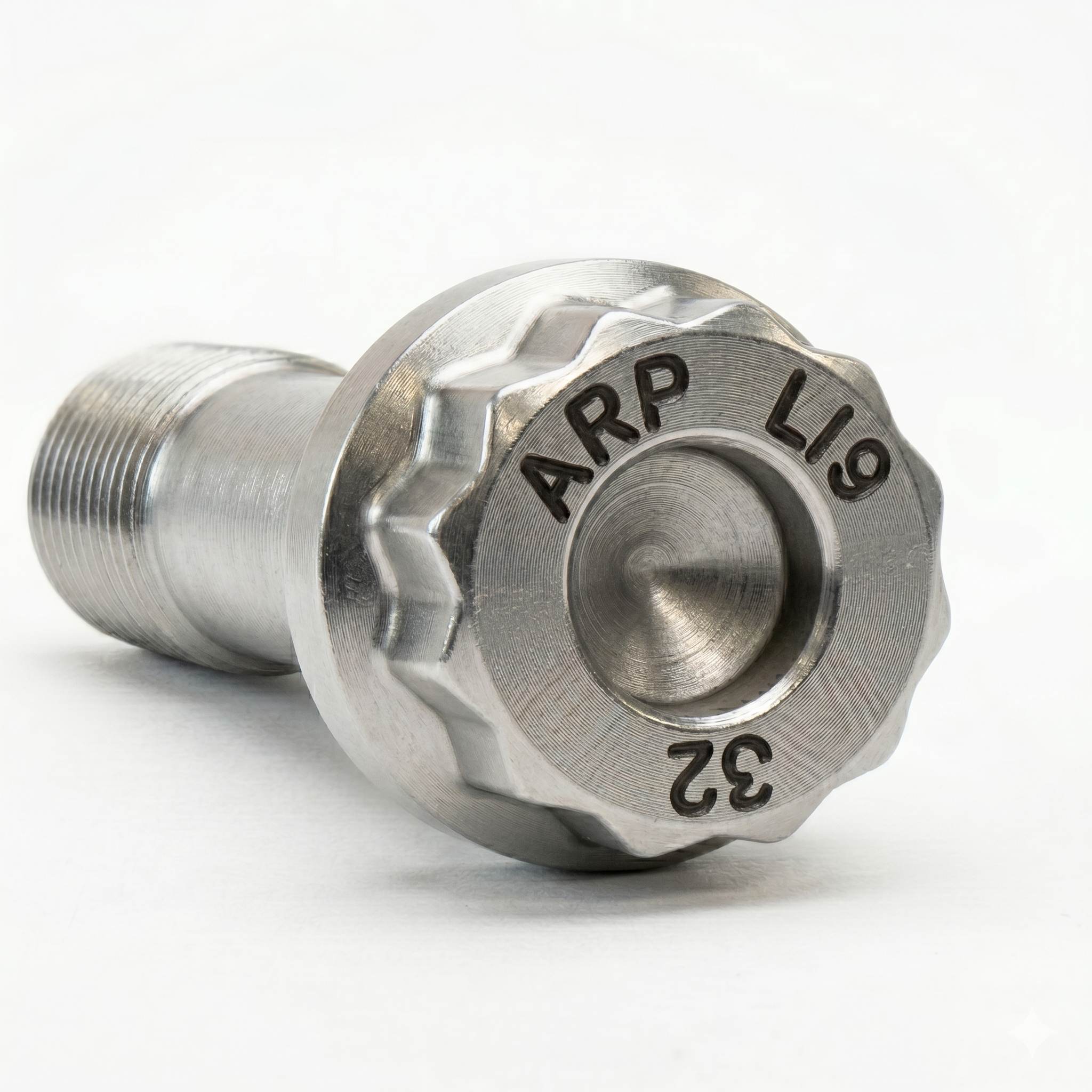 | ARP L19 (tensile strength ~260,000 psi, i.e. ~1,793 MPa). A top grade reserved for extreme builds: up to about 200 hp per cylinder with a 5/16" bolt and up to about 250 hp per cylinder with a 3/8" bolt, at engine speeds up to ~10,000 rpm. In exchange for that gain, L19 is sensitive to corrosion and hydrogen embrittlement: it must be stored oiled, fitted oiled, and never left bare or cleaned back to metal. It is therefore kept for very heavily boosted or very high-revving 4E-FTE engines, where the extra margin justifies those handling constraints. |
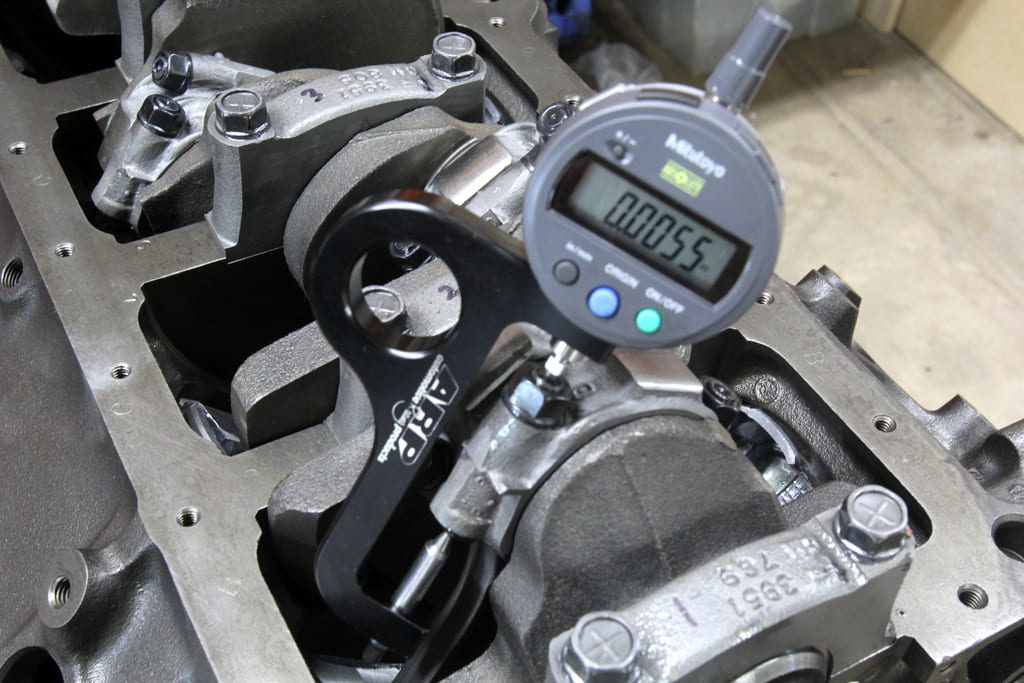
| In addition to torque tightening, measuring bolt stretch (a dial gauge resting on both ends of the bolt) gives the most faithful picture of its real tension: the free length is compared with the loaded length, the difference matching the recommended stretch. This method eliminates thread friction, which distorts torque readings. |
 | ZRP is a Greek high-performance forged-rod brand founded by Alex Drakos (Athens). Each set is precision-machined and matched: the rods in a kit are weighed and selected to within ±1 g. ZRP supplies rally, circuit and drift builds, with 4340 steel rods offered in I and H profiles and ARP 2000 or L19 bolts. |
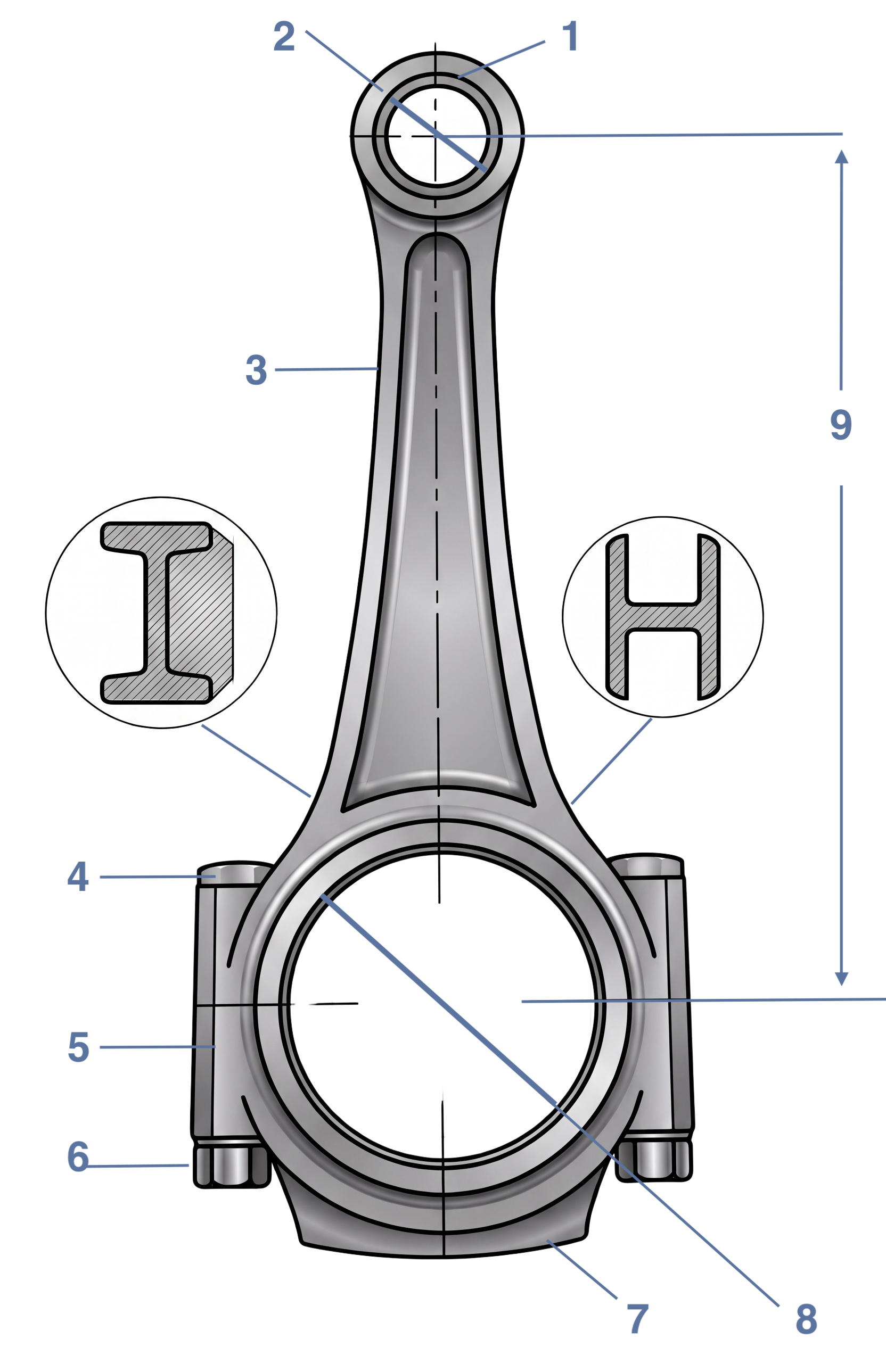 | 1) Small end 2) Small-end diameter 3) Rod beam 4) Rod bolt 5) Big end 6) Rod nut / bolt 7) Rod cap 8) Big-end diameter 9) Center-to-center |
These forged connecting rods fit the following engines. The 4E-FTE shares its architecture (rod length and pin diameter) with the naturally aspirated 4E-FE, so the forged assembly suits both.
| Brand | Model (chassis) | Engine code | Power | Years |
|---|---|---|---|---|
| Toyota | Starlet GT Turbo (EP82) | 4E-FTE | 135 hp | 1989–1996 |
| Toyota | Starlet Glanza V (EP91) | 4E-FTE | 135 hp | 1996–1999 |
| Toyota | Corolla (E100 / E110) | 4E-FE | 85–90 hp | 1991–1999 |
| Toyota | Starlet Glanza S (EP91) | 4E-FE | 85 hp | 1996–1999 |
Rebuilding a bottom end is expensive, and even more so after a failure: the block then has to be checked, the crankshaft reground and parts replaced that were not planned for. Fitting forged rods from the start of the build means investing once instead of paying for two or three successive repairs.
A standard rod that lets go very often takes the crankshaft and the block with it, sometimes the head: the bill then far exceeds the price of a complete set of forged rods, without counting weeks off the road and, in competition, a lost season. On a high-revving 1.3 turbo this is not a theoretical case: it is the most common failure mode.
By securing the rotating assembly, these forged rods extend the life of the prepared engine and protect everything built around it, from the turbocharger to the engine management. For the same budget, it is the spend that returns the most peace of mind.