Product successfully added to your shopping cart
Quantity
Total
There are 0 items in your cart. There is 1 item in your cart.
Total products
Total shipping To be determined
Total

2.0L 16v - SR20DE/DET
Manufacturers
2.0L 16v - SR20DE/DET
Warning: Last items in stock!
New product
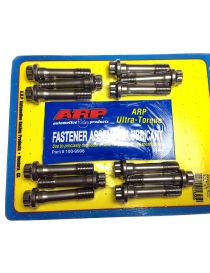
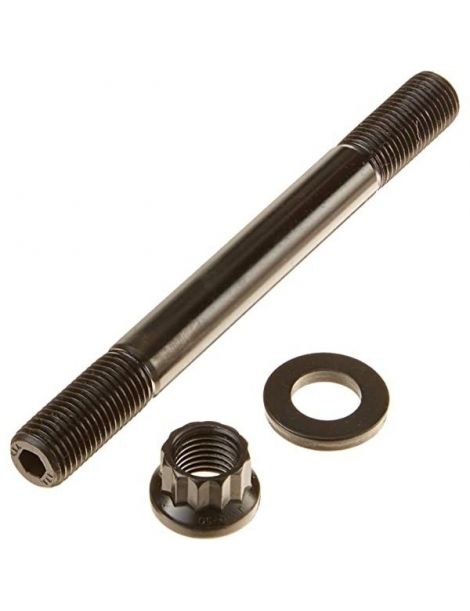
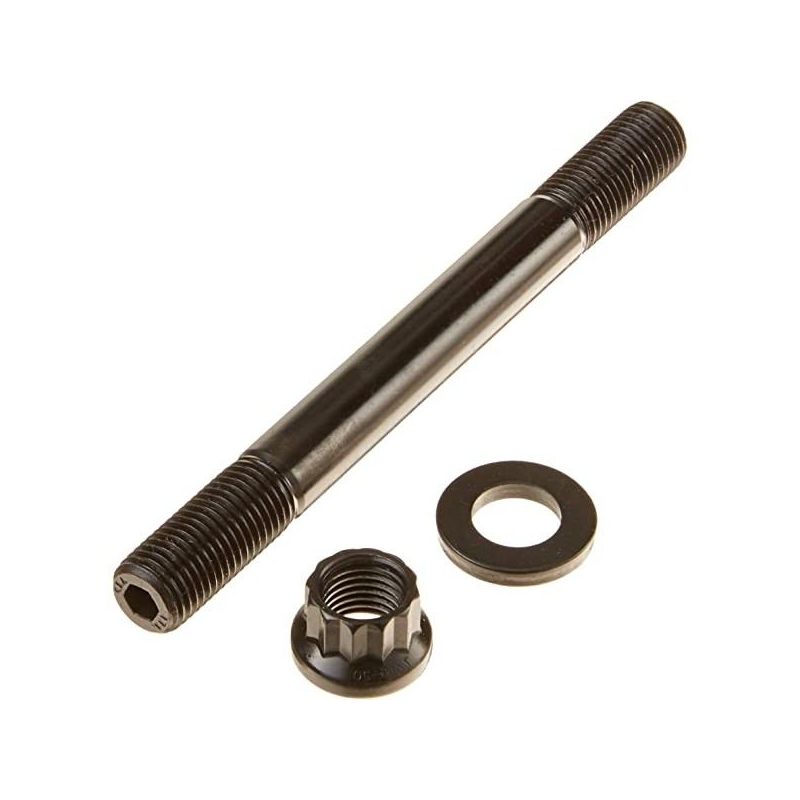
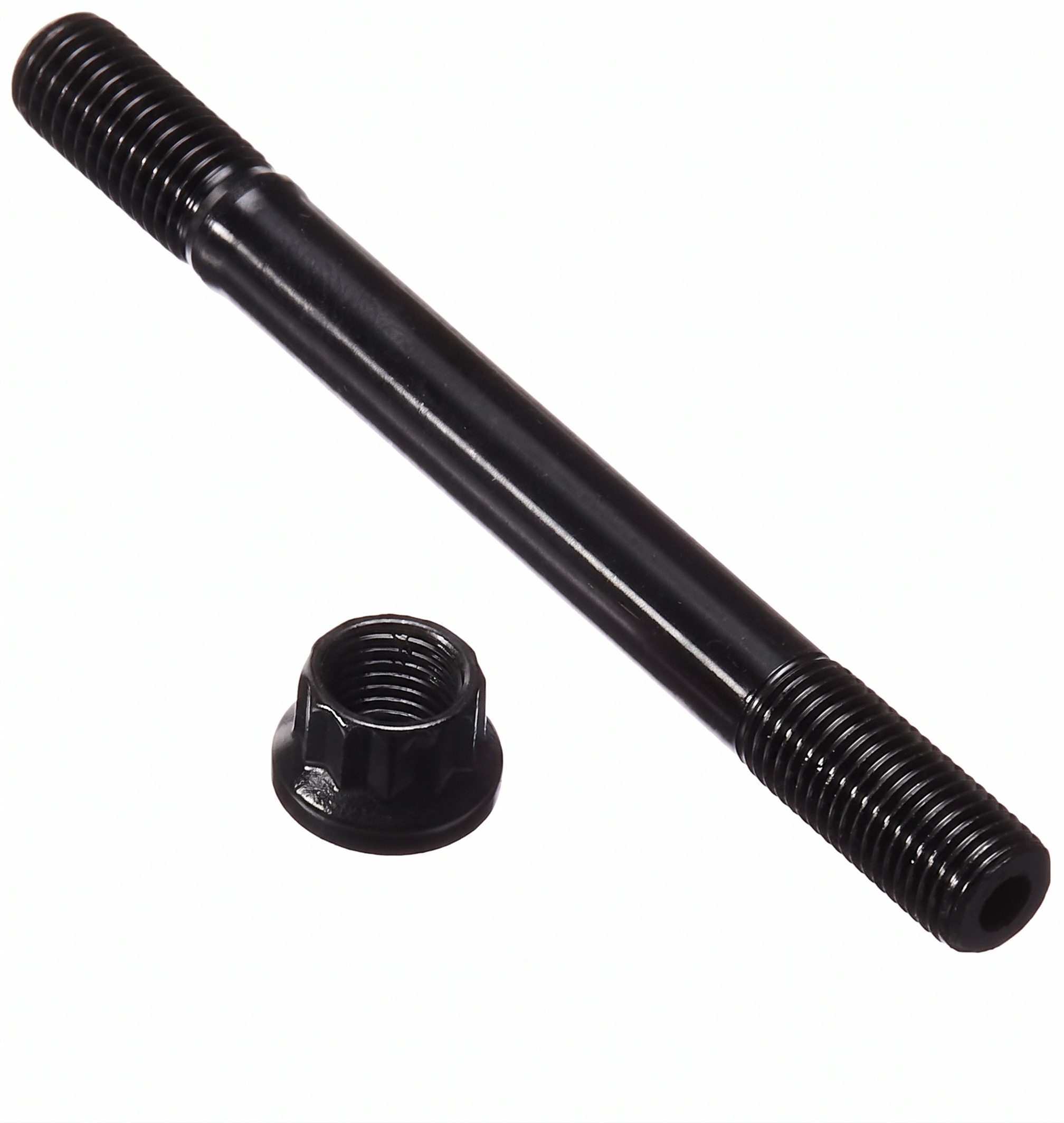
ARP cylinder head studs for the Nissan SR20DE and SR20DET engines (Silvia, 200SX, Pulsar GTI-R).
The SR20 is Nissan's 2.0-litre 16-valve inline four-cylinder engine (1,998 cc, 86 mm bore, 86 mm stroke), naturally aspirated (SR20DE) or turbocharged (SR20DET). It powers the Nissan Silvia and 200SX S13, S14 and S15, the Pulsar GTI-R, the Bluebird, the Primera, the Sentra SE-R and the Almera GTi, among others. ARP offers two stud kits: the 202-4303 in 8740, for the SR20DET (RN14), and the 102-4701 in ARP2000, for the SR20DE and SR20DET.
The original cylinder head bolts carry Nissan reference 11056-53J01. As original equipment, the SR20DE cylinder head is tightened to 39 Nm, then to 78 Nm, fully loosened, retightened to 34 to 44 Nm and finished with two angle passes of 90 to 95°, with oiled threads and seats.
Every combustion cycle pushes the cylinder head upwards. The head fasteners resist it by keeping a constant clamping pressure on the gasket; if that pressure drops, the seal is no longer guaranteed.
Both ARP kits are studs with 12-point nuts: the 202-4303 in M12 x 1.75, in 8740, and the 102-4701 in M11 x 1.5, in ARP2000. Their block-side threads differ: the instruction sheets ask you to compare the kit number with the one on the box before fitting. For both kits, the instruction sheets ask you to screw the studs into the block by hand before fitting the cylinder head, then to tighten the nuts in three equal passes, up to 100 ft-lb for the 202-4303 and up to 90 ft-lb for the 102-4701. In M12 x 1.75, the 8740 studs hold up to 700 hp on this four-cylinder engine (calculated estimate). On this four-cylinder engine, the limit of the ARP2000 studs in M11 x 1.5 lies at 700 hp (calculated estimate).
| Part number | Brand | Grade / material | Nuts | Thread |
| ARP-202-4303 | ARP | 8740 | 12-point | M12 x 1.75 |
| ARP-102-4701 | ARP | ARP2000 | 12-point | M11 x 1.5 |
| Part number | Stage 1 | Stage 2 | Stage 3 |
| ARP-202-4303 | 45 Nm | 90 Nm | 136 Nm |
| ARP-102-4701 | 41 Nm | 81 Nm | 122 Nm |
For both kits: no torque is applied to the studs as they go into the block: they are screwed in by hand. The instruction sheet leaves the option of thread locker to mount them permanently, provided tightening is done before the product hardens.
For the 202-4303, the instruction sheet cites the ARP thread chaser 912-0008 (M12 x 1.75) to clean up the block threads if needed. Where studs pass through into a water jacket, the instruction sheets call for ARP thread sealer on their block-side threads.
For the 102-4701, the instruction sheet cites the ARP thread chaser 912-0005 (M11 x 1.5) to clean up the block threads if needed.
Tightening to torque is done in three steps, in the order set by the engine manufacturer, with ARP lubricant applied to the threads and under the nuts, a condition for the table values to apply.
These torque figures are those of ARP instruction sheets 202-4303 and 102-4701; only the official sheets in force apply, as for the complete procedure and the tightening sequence. Read the ARP 202-4303 instruction sheet ; Read the ARP 102-4701 instruction sheet
The stated tightening torques only make sense with ARP assembly grease, applied to the threads and under the nuts.
| Buy the ARP assembly grease → |
| Grade | Material | Tensile strength | Strengths |
| 8740 | Chrome-moly steel | 190,000 psi | Widely used grade, threads rolled after heat treatment |
| ARP2000 | ARP alloy steel | 220,000 psi | Stronger than 8740, a common step up in racing |
 | Founded in the early 1970s by Gary Holzapfel, who came from the aerospace industry, ARP (Automotive Racing Products) set itself the mission of eliminating engine failures caused by inadequate fasteners in competition. Its thousands of parts are designed and produced in California, in several material grades depending on the application. |
| Criterion | Original head bolts | Reinforced ARP studs |
 |  | |
| Tightening | Several passes with an intermediate loosening, then an angle (SR20DE) | Torque only, in three passes |
| Block threads | Stressed at every tightening | Preserved (studs screwed in by hand) |
Standard fasteners remain suitable as long as the engine keeps its original combustion pressure. They reach their limits in the following cases:
| Model | Engine code | Power | Years |
| Nissan Silvia / 200SX S13, S14, S15 | SR20DET | Not available | 1991-2002 |
| Nissan Pulsar GTI-R (RNN14) | SR20DET | Not available | 1990-1994 |
| Nissan Bluebird U12 / U13 (JDM) | SR20DET | Not available | 1989-1997 |
| Nissan Primera P10 / P11 | SR20DE | Not available | 1990-2002 |
| Nissan Sentra SE-R B13 / B14 / NX2000 | SR20DE | Not available | 1991-1999 |
| Nissan Almera GTi N15 | SR20DE | Not available | 1995-2000 |
OEM reference: 11056-53J01 (SR20DE)
The original SR20 head bolts are sized for stock power: as soon as combustion pressure rises with forced induction, the gaskets and the fasteners are the first to suffer. ARP studs in 8740 or ARP2000 bring a higher clamp load and keep the gasket pressed down; redoing a cylinder head, with gasket and labour, costs far more than the kit.
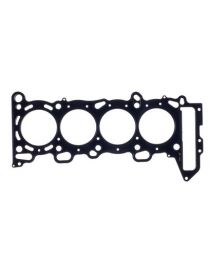
Reinforced fasteners and the head gasket work together: the gasket must hold the same pressure as the fasteners. The matching gasket for this engine:
| Reinforced Cometic MLS head gasket (SR20DET) → |