Product successfully added to your shopping cart
Quantity
Total
There are 0 items in your cart. There is 1 item in your cart.
Total products
Total shipping To be determined
Total

2.0L 16v - F4RT 776/874
Manufacturers
2.0L 16v - F4RT 776/874
Warning: Last items in stock!
New product
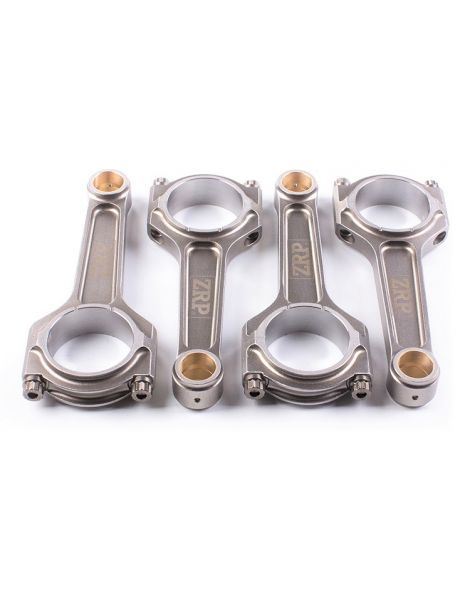
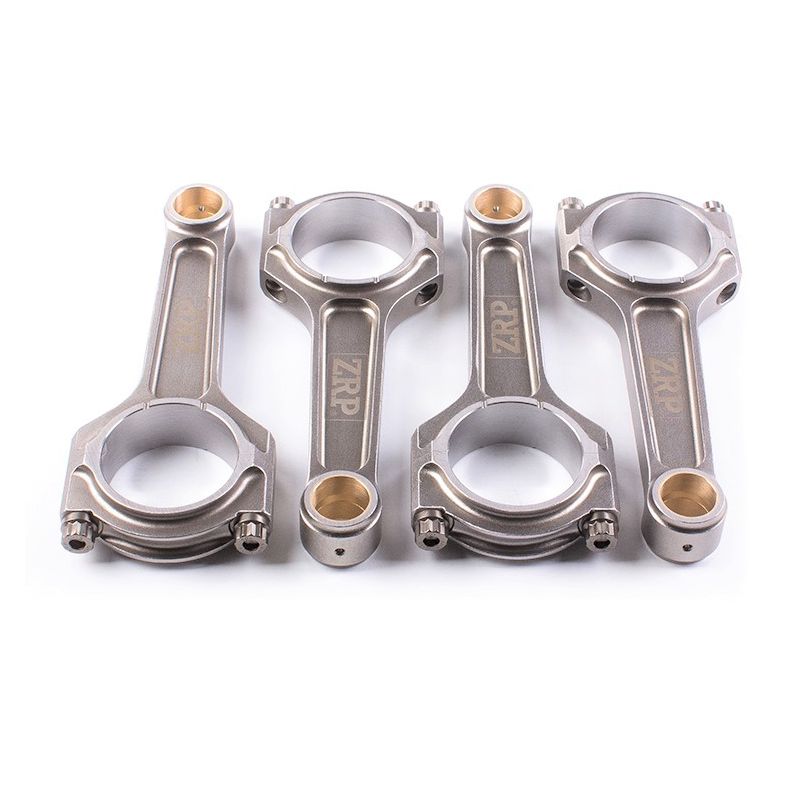
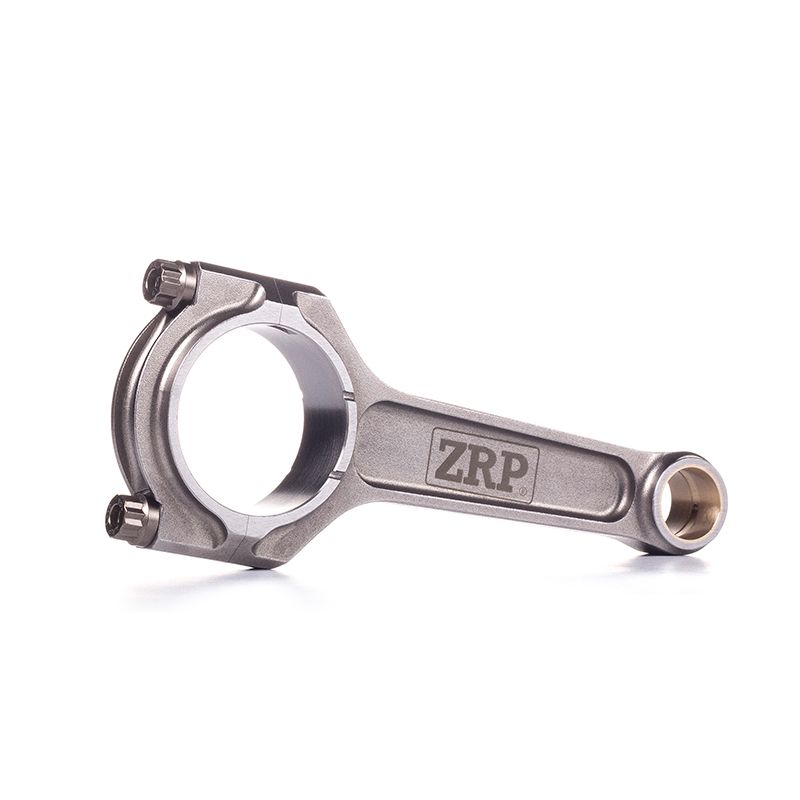
Set of 4 forged 4340-steel connecting rods for Renault F4R, F7R and F7P 2.0/1.8 16V.
The F7P, F7R and F4R make up the 16-valve line of Renault's "F-Type" engine, a cornerstone of Renault Sport. The F7P launched the family in 1991: a 1.8L 16V (1,764 cc, 82 mm × 83.5 mm) powering the Clio 16S and Williams. The F7R then raised displacement to 2.0L 16V (Clio Williams, Mégane Coupé, around 147 hp). The F4R, introduced in 1998, made the 2.0L 16V (1,998 cc, 82.7 mm × 93 mm) widespread across the Clio RS and Mégane RS, both naturally aspirated and turbocharged (F4Rt), from 138 to 275 hp depending on the model.
The whole F family shares the same rotating assembly (144 mm rod centre distance), allowing a single forged rod. Hugely popular in motorsport and tuning (Clio RS, Mégane RS), the F4R readily takes boost and higher revs. But beyond factory figures, the stock connecting rod becomes the weak link, which is where forged connecting rods come in.
Machined from high-strength 4340 steel, these forged connecting rods reinforce the bottom end of the F4R, F7R and F7P as power rises. They become essential when fitting forged pistons, building a turbo setup, raising the rev limit or enlarging displacement, where the stock rod reaches its limits.
Built to withstand the heavy loads of tuned F engines (naturally aspirated as well as turbo), they suit every discipline (rally, circuit and track days, drift, drag, hillclimb, time attack) and support Stage 2, Stage 3 and beyond. Depending on the bolts chosen, ARP 2000 or ARP L19, they safely handle targets of several hundred horsepower.
| Reference | Brand | Profile | Bolts | Pin diameter OEM 21 mm | Small-end width | Big-end diameter | Big-end width | Center-to-center OEM 144 mm | Weight per rod |
|---|---|---|---|---|---|---|---|---|---|
| R-REN-001-I | ZRP | I | ARP 2000-3/8"-38mm | 21 mm | 51,6 mm | 25 mm | 144 mm | 513 g | |
| R-REN-001-I-L19 | ZRP | I | ARP L19-3/8"-38mm | 21 mm | 51,6 mm | 25 mm | 144 mm | 513 g |
ZRP: With bearing locating tag; lightweight design.
| Rod | Bolts | Torque | Recommended stretch |
|---|---|---|---|
| ZRP (R-REN-001-I) | ARP 2000 | 61 N·m | 0,140 – 0,152 mm |
| ZRP (R-REN-001-I-L19) | ARP L19 | 67,8 N·m | 0,152 – 0,165 mm |
The two ZRP part numbers on this page do not take the same bolts, which is exactly why no single torque figure covers the whole engine: each one was calculated with its own bolts, ARP 2000 for the R-REN-001-I and ARP L19 for the R-REN-001-I-L19, and therefore has its own line in the table above. Use the value belonging to the rod actually fitted, never the neighbouring one. Keep in mind, too, that a torque wrench does not measure preload but the torque it transmits, a variable share of which vanishes into friction. Hence the value of a stretch gauge, which verifies the real elongation of the eight bolts and is the dependable method whenever there is doubt. Clean threads, a thin film of ARP assembly lubricant and tightening taken up in several stages rather than one long pull make preload consistent from cylinder to cylinder. The manufacturer’s instruction sheet takes priority.
| 4340 steel is a nickel-chromium-molybdenum alloy steel used in aerospace and motorsport alike. Forged then heat-treated (quench and temper), it offers excellent tensile strength, high fatigue resistance and real ductility. Compared with an original rod (often sintered/powder metal, optimised for series-production cost), a 4340 forged rod shows roughly +19% higher yield strength, +8% higher tensile strength and above all +19% to +37% higher fatigue strength, i.e. a fatigue life under cyclic loading several times longer. This is what makes forged 4340 the reference material as soon as boost and rpm climb. |
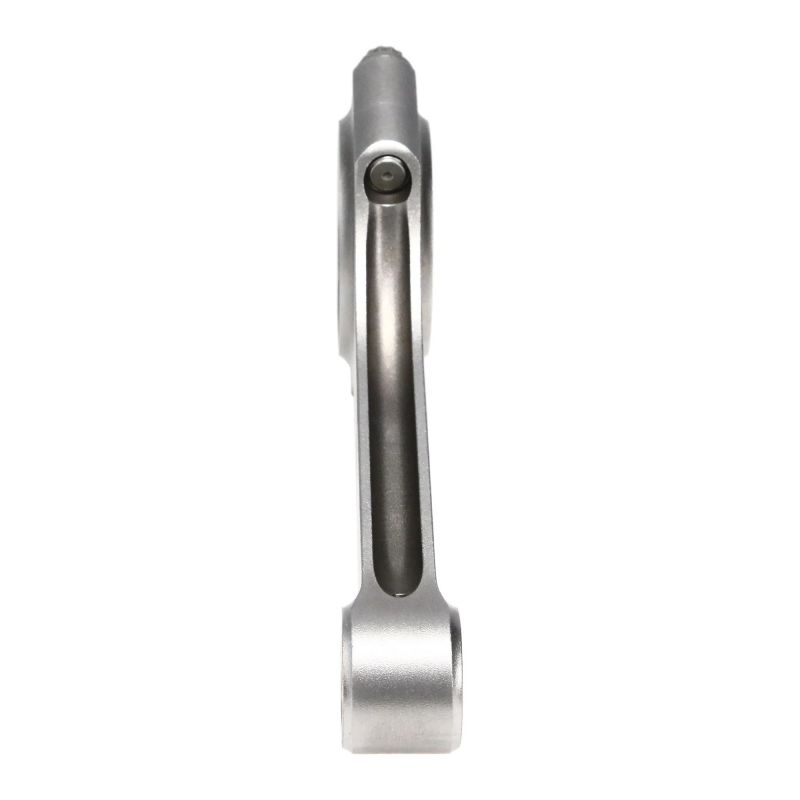
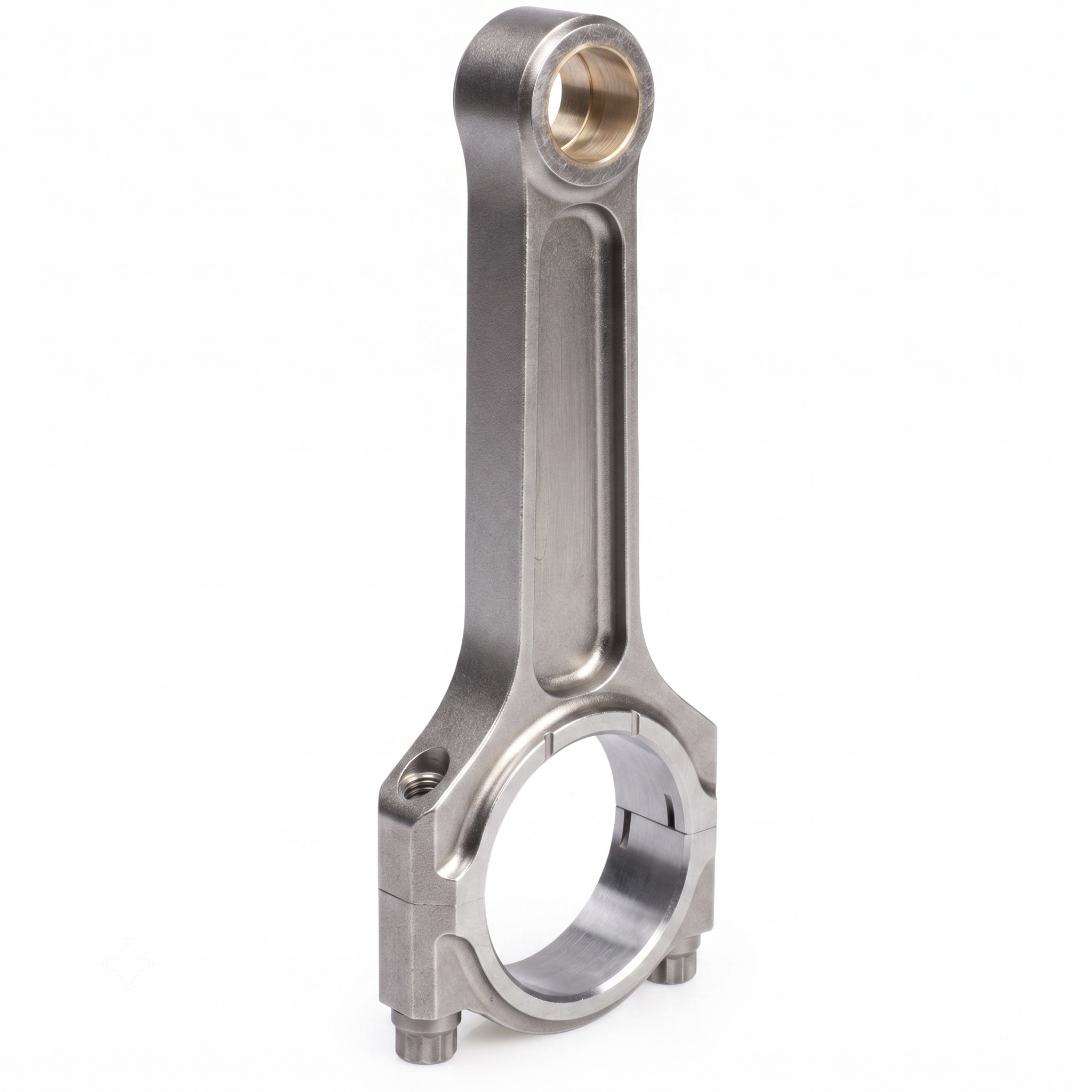 | I-beam profile. With its thinner central section, the I-beam rod is lighter: less inertia and freer rev pick-up. It is the preferred profile on modern turbo engines like the F4R. |
On a built F4R or F7R, the rod bolt is what really limits the rpm and the cylinder pressure: it is where the choice starts. It is made according to the discipline, from torque used in the mid range in rally to rpm held high through a circuit session, up to the short load peaks of drag racing, then according to the target power per cylinder. The grades offered here come in 3/8"-38 mm with the ZRP rods.
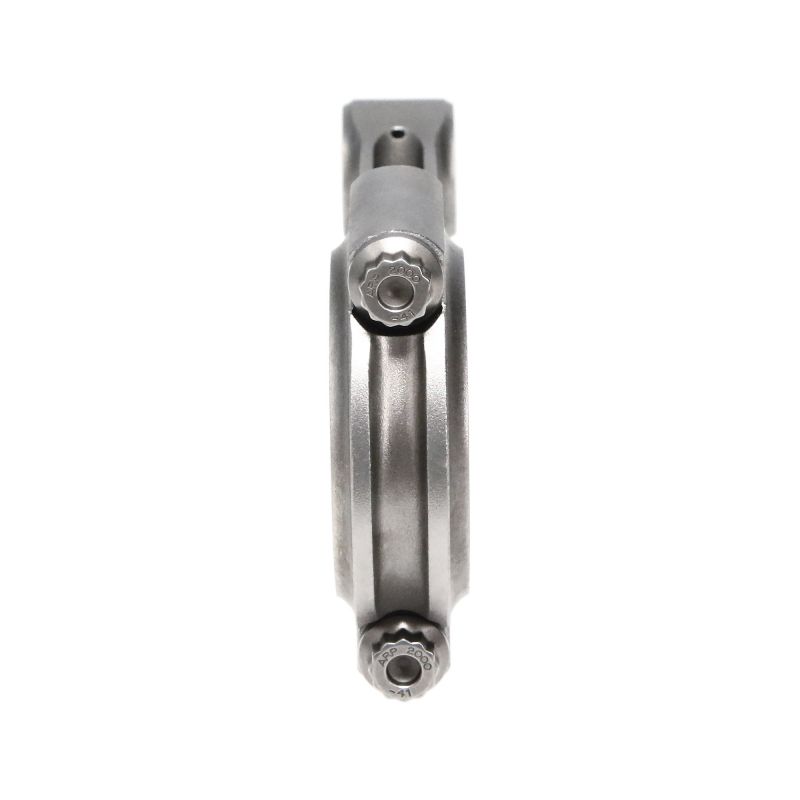
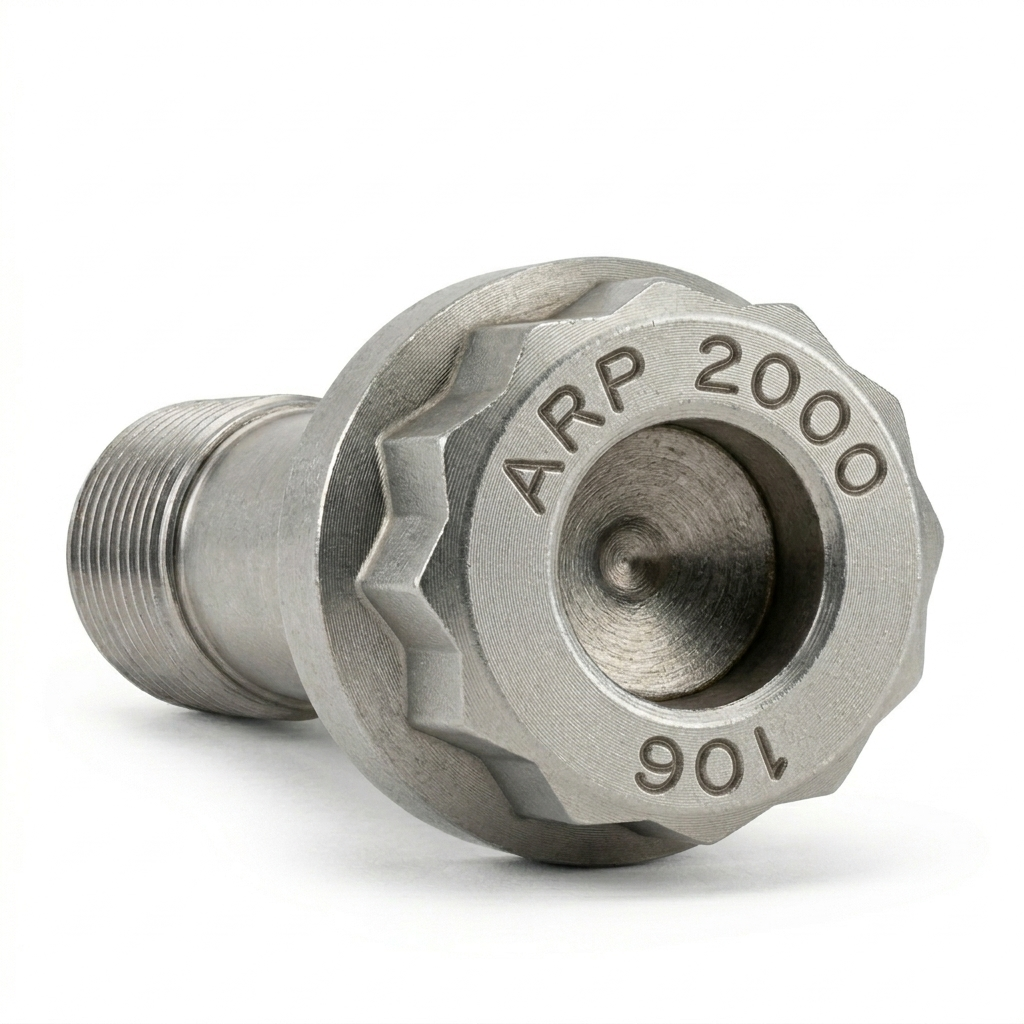 | ARP 2000, with its ~220,000 psi (~1,517 MPa) tensile strength, covers most built F4R, F7R and F7P engines: up to 200 hp per cylinder in 3/8" and up to 8,500 rpm. It is the grade found in circuit racing, track days, drift, rally, drag racing and hillclimb, and here it equips the ZRP rods, with no particular storage constraint. It is the safe default choice for a whole season. |
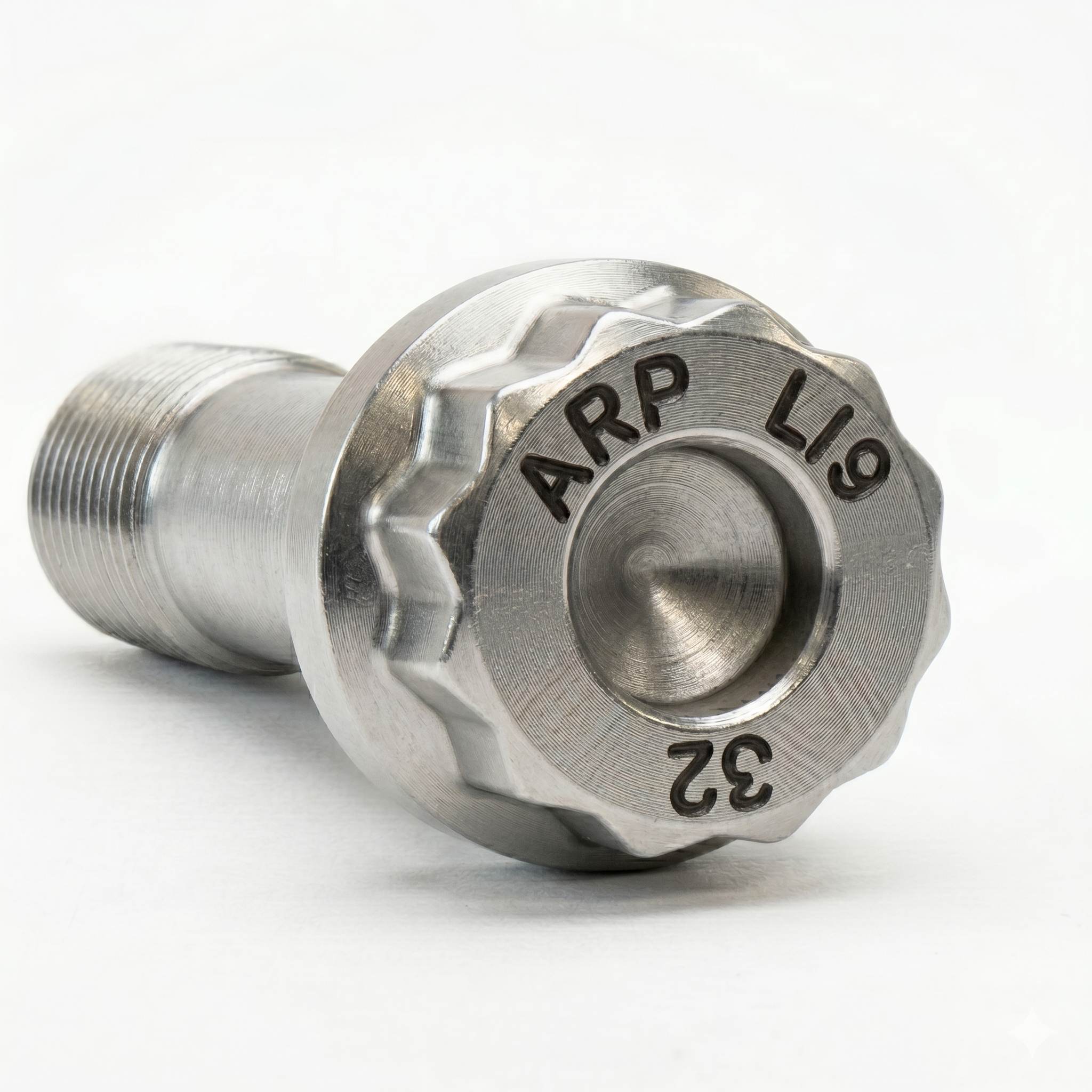 | L19 takes the level to ~260,000 psi (~1,793 MPa) and allows up to 250 hp per cylinder in 3/8" as well as 10,000 rpm. It is aimed at heavily boosted F4R engines, with high cylinder pressure or rpm held high for a long time, and at the big power levels in drag racing, drift, rally and circuit. It is offered here on the ZRP rod in I profile. Its sensitivity to corrosion and to hydrogen embrittlement calls for oiled storage and fitting, away from moisture. |
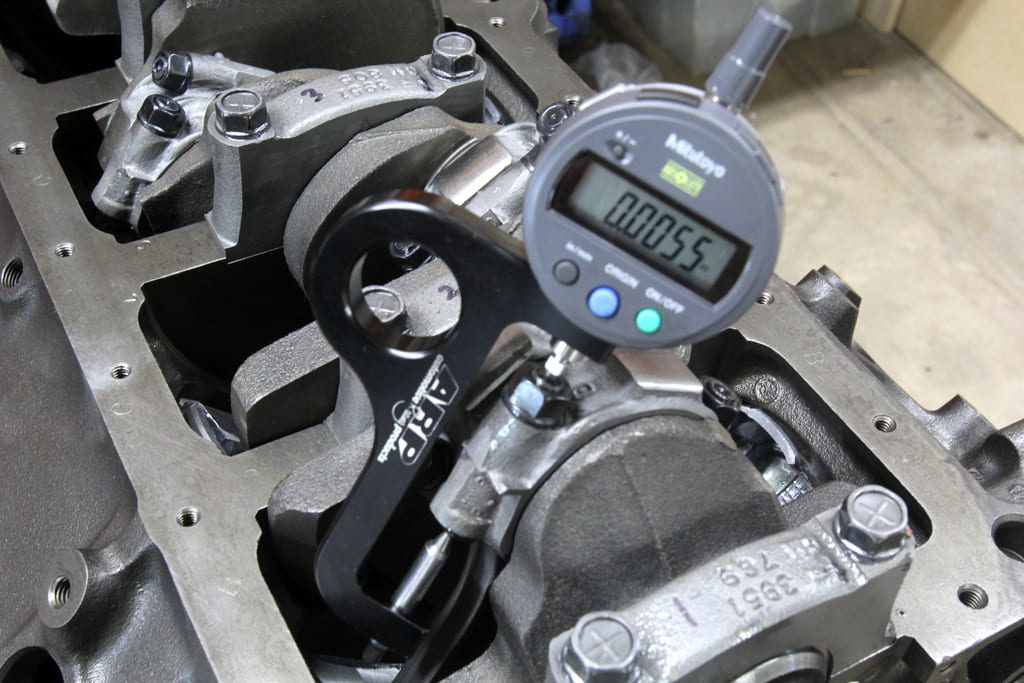
In addition to torque tightening, measuring rod-bolt stretch is the most reliable check for optimal preload. The check is done with the bolt fitted: place the gauge (dial indicator) on the two ends of the bolt and read its actual stretch, which must match the recommended value (see the torque & stretch table above). This method removes the friction variations inherent in torque tightening and secures the assembly on heavily stressed engines. |
 | ZRP, a Greek brand of high-performance forged connecting rods, designed by Alex Drakos in Athens. Each rod is forged from 4340 steel, precision-machined and balanced to ±1 g to stay reliable at high rpm. Offered here in the I profile with ARP 2000 or L19 bolts, they are designed and inspected in Greece, and proven in rally, on circuit and in drift. |
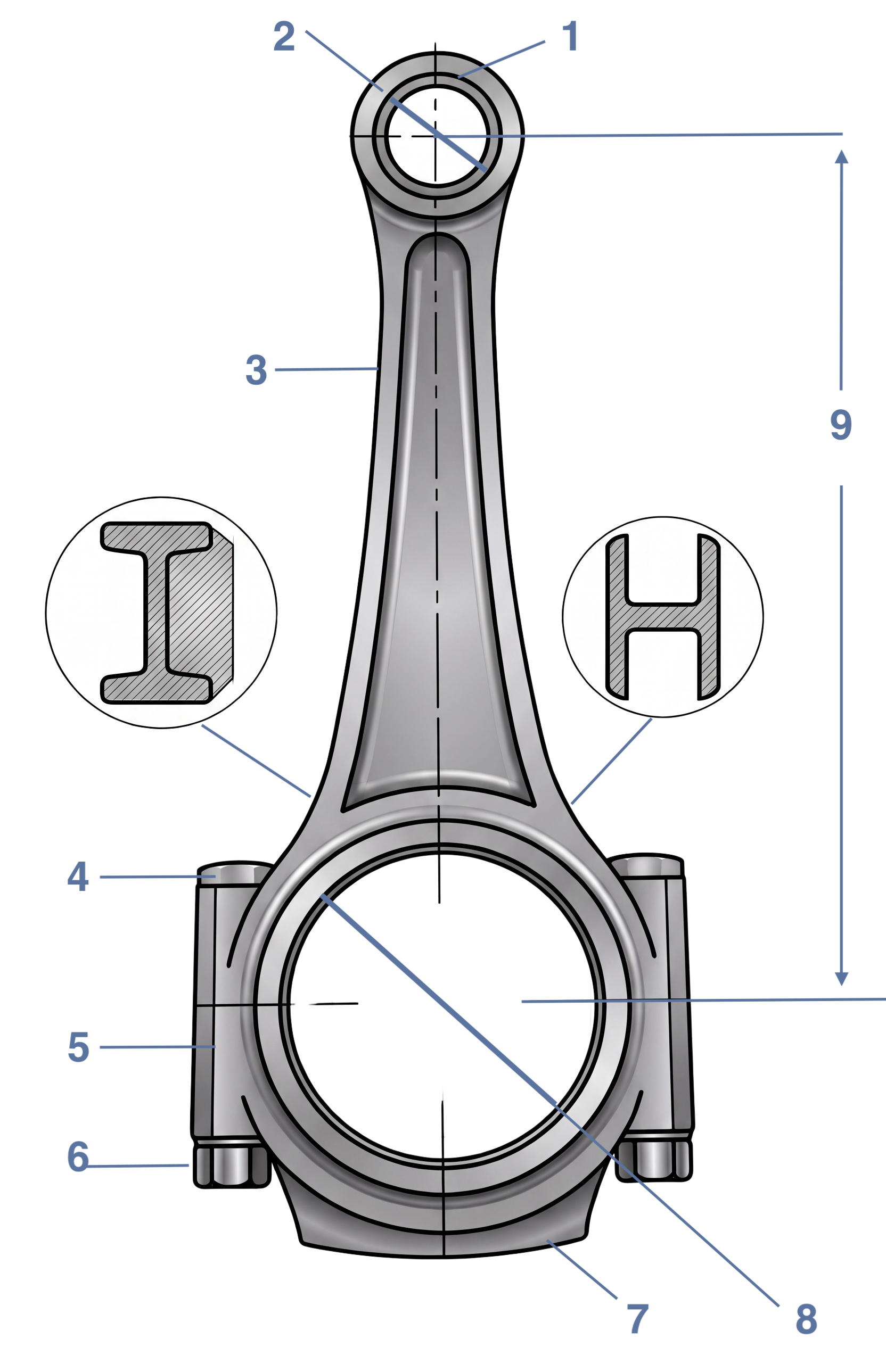 | 1) Small end 2) Small-end diameter 3) Rod beam 4) Rod bolt 5) Big end 6) Rod nut / bolt 7) Rod cap 8) Big-end diameter 9) Center-to-center |
These forged connecting rods fit the Renault 16-valve F-family engines listed below:
| Brand | Model (chassis) | Engine code | Power | Years |
|---|---|---|---|---|
| Renault | Clio II RS 172 / 182 (X65) | F4R | 172-182 hp | 1999-2005 |
| Renault | Clio III RS 197 / 200 (R) | F4R | 197-203 hp | 2006-2013 |
| Renault | Mégane II RS 225 / 230 (M) | F4R | 225-230 hp | 2004-2009 |
| Renault | Mégane III RS 250 / 265 / 275 (Z) | F4R | 250-275 hp | 2009-2017 |
| Renault | Mégane I Coupé 2.0 16V | F7R | 147 hp | 1996-1999 |
| Renault | Clio Williams / 16S (X57) | F7P | 137-150 hp | 1991-1998 |
| Renault | Laguna I 2.0 16V | F4R | 139 hp | 1998-2001 |
OEM reference: 7701478497 (set of 4 rods).
On these Renault 16-valve engines, a broken standard rod takes the piston with it and calls for a check of the block: putting things right with standard parts is then counted in new rods and pistons. The engine, meanwhile, starts again with the same limits as on day one, ready to do it again.
For a comparable, often lower budget, a set of forged 4340 steel rods combined with forged pistons changes the level of reliability and the safety margin, while opening real power potential. European engine builders have worked this way for more than 15 years on competition F4R and F7R engines.
For the same budget the conclusion is unchanged: more reliability, more potential, more service life for the bottom end.