Product successfully added to your shopping cart
Quantity
Total
There are 0 items in your cart. There is 1 item in your cart.
Total products
Total shipping To be determined
Total

2.0L 16v - Cosworth YB N5
Manufacturers
2.0L 16v - Cosworth YB N5
Warning: Last items in stock!
New product
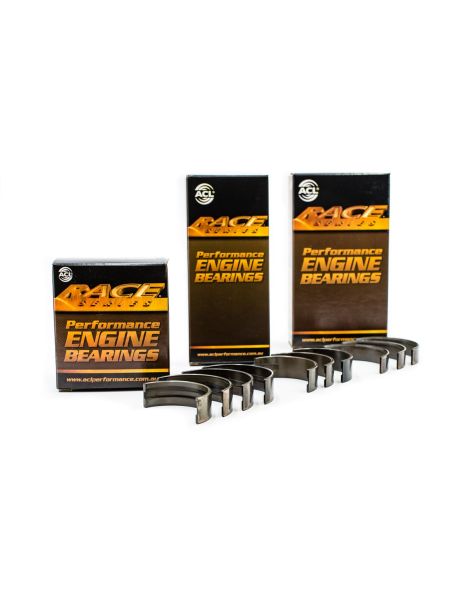
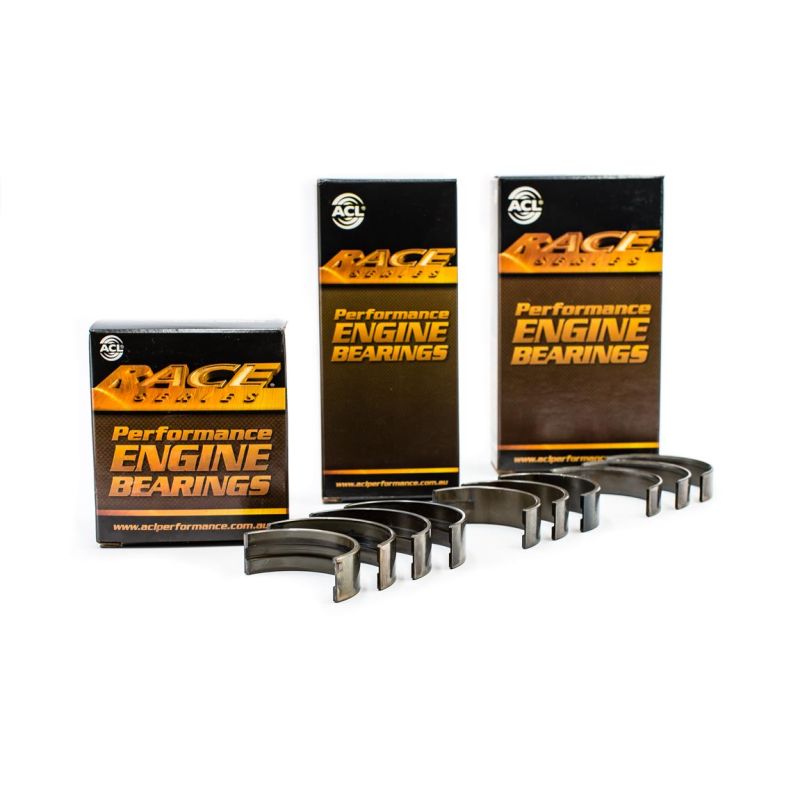
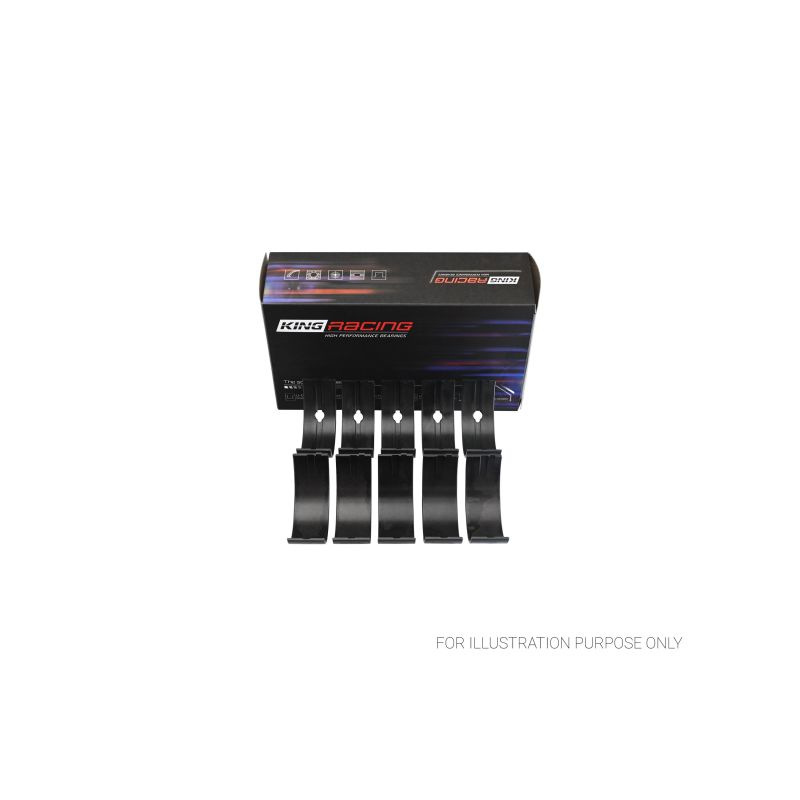
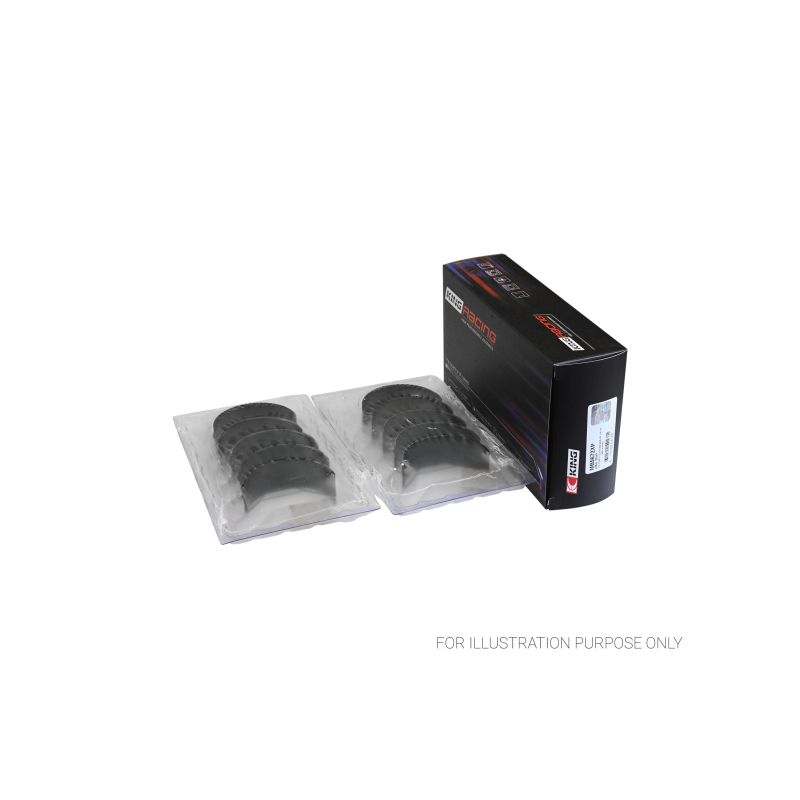
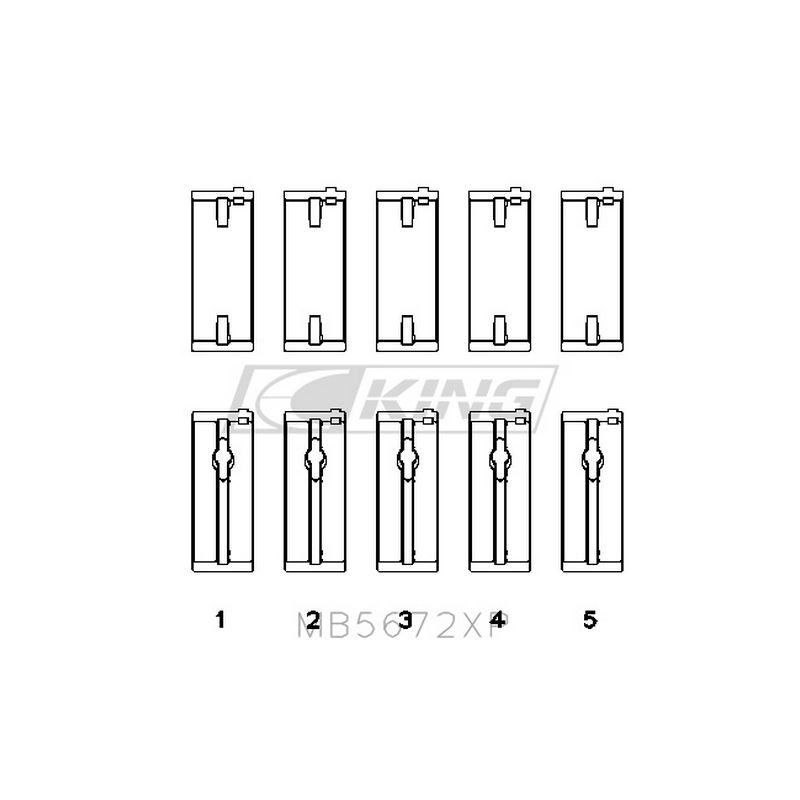
Set of 10 tri-metal crankshaft half bearings for the five main journals of Ford Cosworth YB engines (Ø 56.99 mm).
The Cosworth YB is Ford's turbocharged 2.0 litre 16-valve four-cylinder petrol engine, fitted to the Sierra RS Cosworth (rear-wheel drive and 4x4) and the Escort RS Cosworth (engine codes N5B, N5C, N5D, N5F, YBB and YBD). ACL lists main bearing set 5M2167H for the Ford Cosworth 2.0L: a single set covers these engines.
The crankshaft of these engines runs on five main bearings. Each journal turns between two half shells, one seated in the block and the other in the main bearing cap: they carry the crankshaft. The ACL Race Series and King Racing tri-metal sets shown here replace them on built engines.
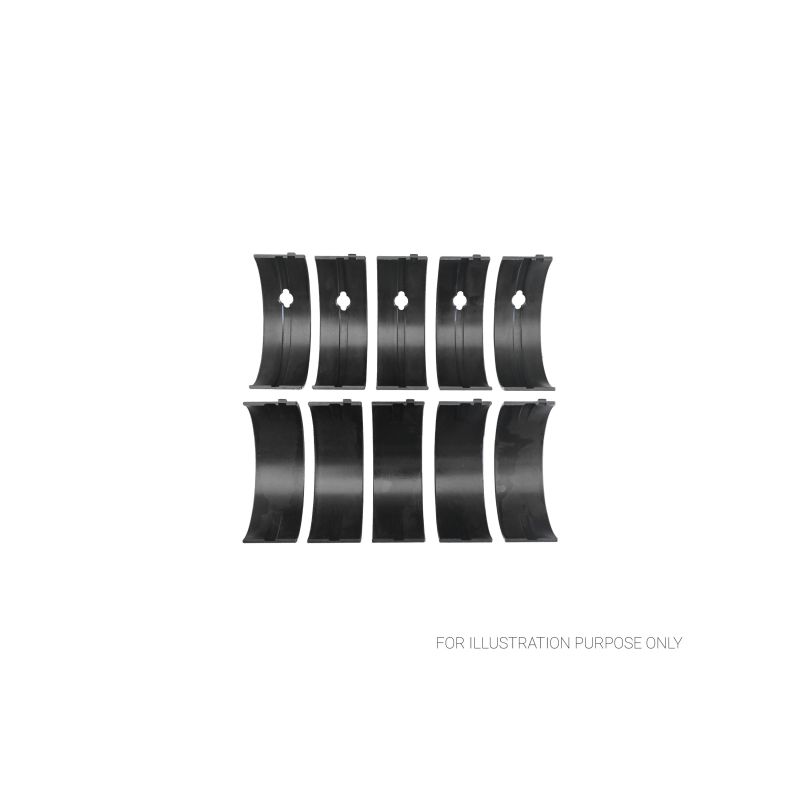
A trimetal bearing combines three layers with complementary roles: a steel back that provides structural strength, a copper-lead intermediate layer that takes the heavy loads and an anti-friction running layer that protects the main journal. The complete set contains 10 half shells, i.e. 5 pairs.
An aluminium bi-metal bearing, intended for low to medium loads, tops out at around 8,000 psi; a performance trimetal bearing holds up to 12,000 psi, 50% more load capacity. It therefore gains strength and service life on turbocharged, supercharged or high-revving engines.
| ACL bearings Crankshaft journal Ø 56.990 / 57.000 mm Housing bore Ø 60.620 / 60.640 mm Width 23.75 mm | King bearings Crankshaft journal Ø 56.99 / 57.00 mm Housing bore Ø 60.62 / 60.64 mm Width 23.7 mm |
| Reference | Brand and treatment | Size | Wall thickness (mm) |
|---|---|---|---|
| 5M2167H-STD | ACL Race - Untreated | Standard | 1.803 |
| 5M2167HX-STD | ACL Race - Untreated | Std, increased clearance (HX) | 1.79 |
| 5M2167H-.25 | ACL Race - Untreated | +0.25 | 1.928 |
| 5M2167H-.50 | ACL Race - Untreated | +0.50 | 2.053 |
| MB5672XP | King Racing - Untreated | Standard | 1.801 |
| MB5672XP0.25 | King Racing - Untreated | +0.25 | 1.928 |
Running clearance is the space left between the bearing and the main journal, permanently filled by the oil film.
With the engine running, the main journal does not touch the bearing: it rides on this oil film, which takes the load. The clearance sets the film thickness. Too small, it restricts oil flow, raises the temperature and invites seizure; too large, it lets the oil escape, the film loses its load capacity and oil pressure falls. The right clearance combines sufficient lubrication with an oil film that keeps carrying the load.
| Size / grade | When to choose it | ACL Race Series | King XP |
|---|---|---|---|
| Standard (STD) | Standard journal, not reground | 0.059 to 0.070 mm | 0.057 mm - 0.070 mm |
| Increased clearance (HX) | Wider clearance: high oil flow, high rpm | 0.084 to 0.095 mm | |
| +0.25 mm | Journal reground to 0.25 mm | 0.059 to 0.070 mm | 0.057 mm - 0.070 mm |
| +0.50 mm | Journal reground to 0.50 mm | 0.059 to 0.070 mm |
Check at assembly: lay a calibrated strip (Plastigauge) on the journal, tighten the main cap following the manufacturer's procedure, then compare the width of the crushed strip with the gauge to read the clearance.
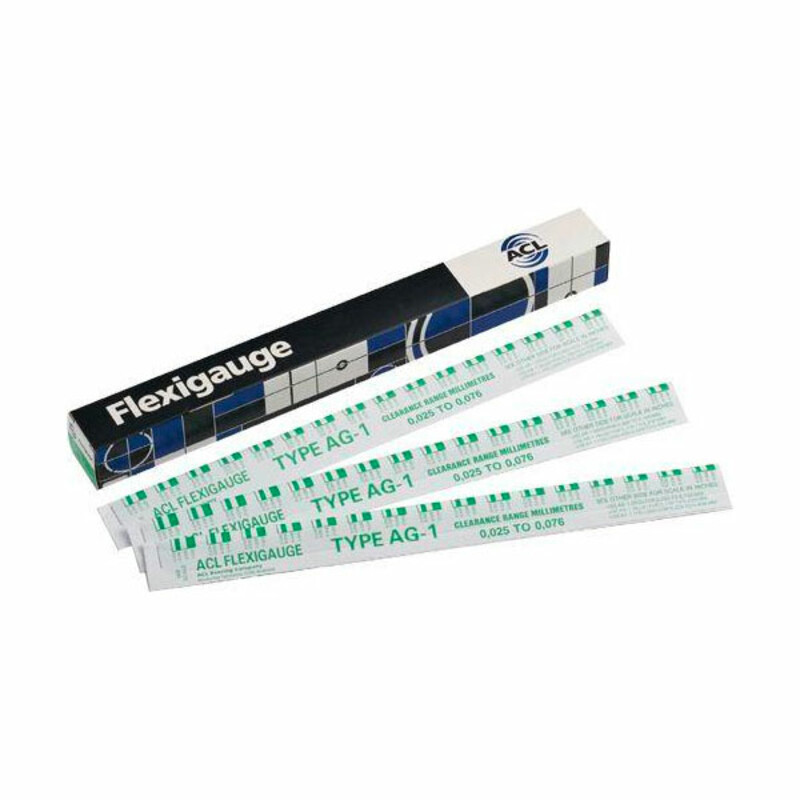
The ACL and King main bearings shown here are trimetal bearings built for engine tuning and racing. They withstand far higher loads than a standard bearing and come in several sizes: the standard size, +0.25 and +0.50 mm regrind sizes and the HX version with increased clearance for high-revving engines or engines needing a high oil flow. This range lets you refit a reground crankshaft without changing product line and match the clearance to the oil and use chosen.
 | Founded in Australia in 1949, ACL Bearing Company designs high-performance engine bearings. Its Race Series brings together precision trimetal bearings, offered in a wide choice of sizes and fitted to built engines around the world. |
 | An Israeli maker of high-performance engine bearings since the 1960s, King Engine Bearings developed the pMax Black trimetal alloy for heavy loads. |
| Criterion | ACL Race Series | King Racing |
| Cross-section | 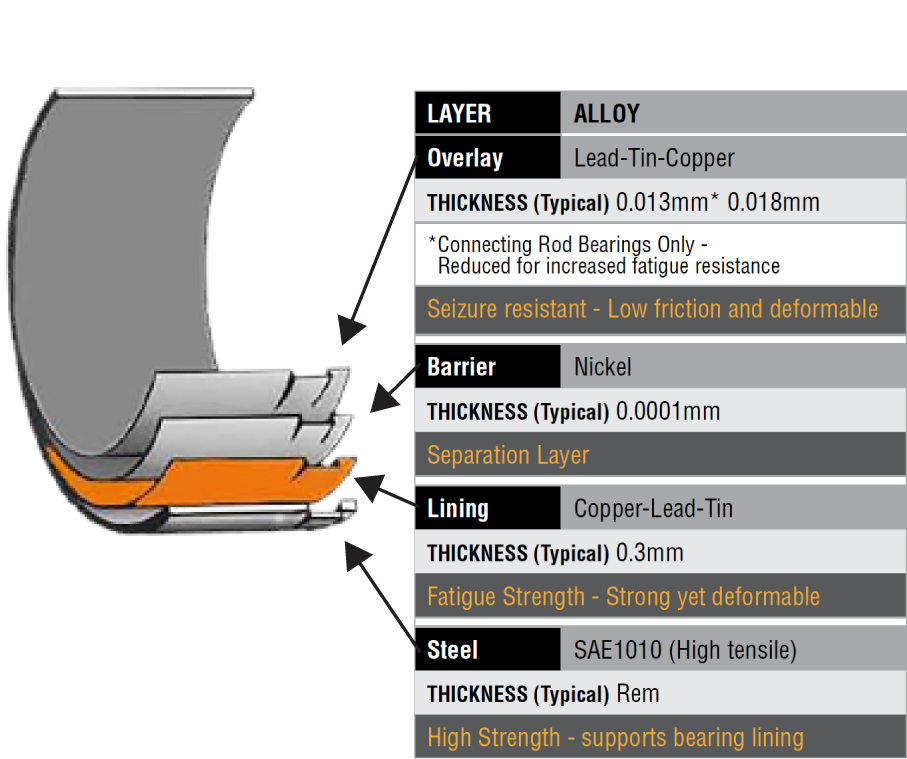 | 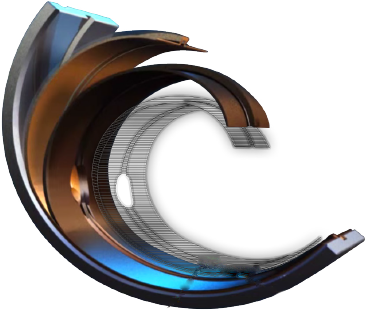 |
| Type | High-performance trimetal bearing | High-performance trimetal bearing |
| Country of manufacture | Australia | Israel |
| Construction | Trimetal: steel back, copper layer, soft surface | Trimetal: steel back, copper layer, soft surface |
| Alloy | Race Series (copper-lead) | pMax Black (hardened copper-lead) |
| Protective coating | No | No |
| Available sizes | Standard to +0.50 mm (+ increased clearance HX) | Standard to +0.25 mm |
This main bearing set fits the following vehicles, according to the engine code:
| Brand | Model (chassis) | Engine code | Power | Years |
|---|---|---|---|---|
| FORD | SIERRA I Hatchback 2.0 4x4 | N5B, YBB | 204 hp | 1985–1987 |
| FORD | SIERRA II Hatchback 2.0 RS Cosworth / 2.0 RS500 Cosworth / 2.0 16V Cosworth / 2.0 16V Cosworth Cat 4x4 | N5B, N5C, N5D, YBB, YBD | 204–227 hp | 1987–1993 |
| FORD | ESCORT V (AAL, ABL) RS Cosworth 4x4 | N5F | 220 hp | 1991–1995 |
| FORD | ESCORT VI (GAL, AAL, ABL) RS Cosworth 4x4 | N5F | 220 hp | 1995–1998 |
A failing main bearing does not fail alone: it scores the main journal, sends debris through the oil circuit and calls at least for a crankshaft regrind, when it does not damage the block as well. On a built engine, a bearing set costs only a fraction of a regrind, and even less of a full rebuild: it is the cheapest part of the crankshaft assembly and the one whose failure costs the most.