Product successfully added to your shopping cart
Quantity
Total
There are 0 items in your cart. There is 1 item in your cart.
Total products
Total shipping To be determined
Total

1.6L 16v - B6
Manufacturers
1.6L 16v - B6
Warning: Last items in stock!
New product
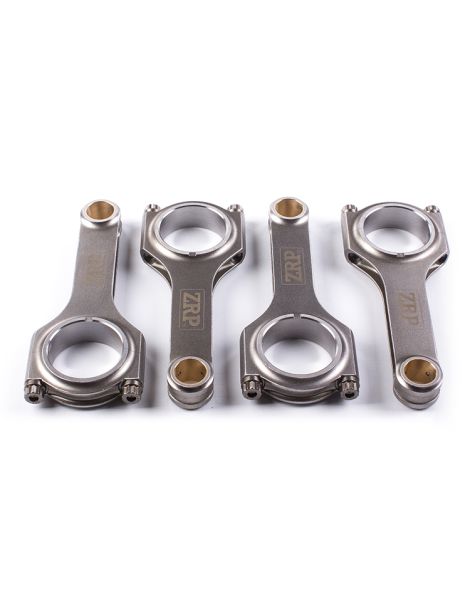
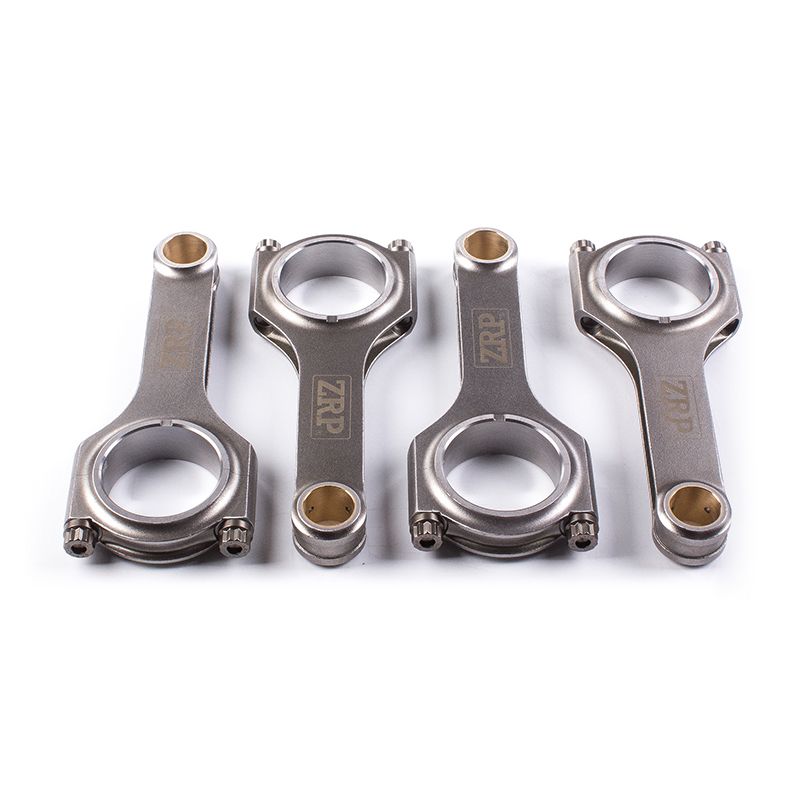
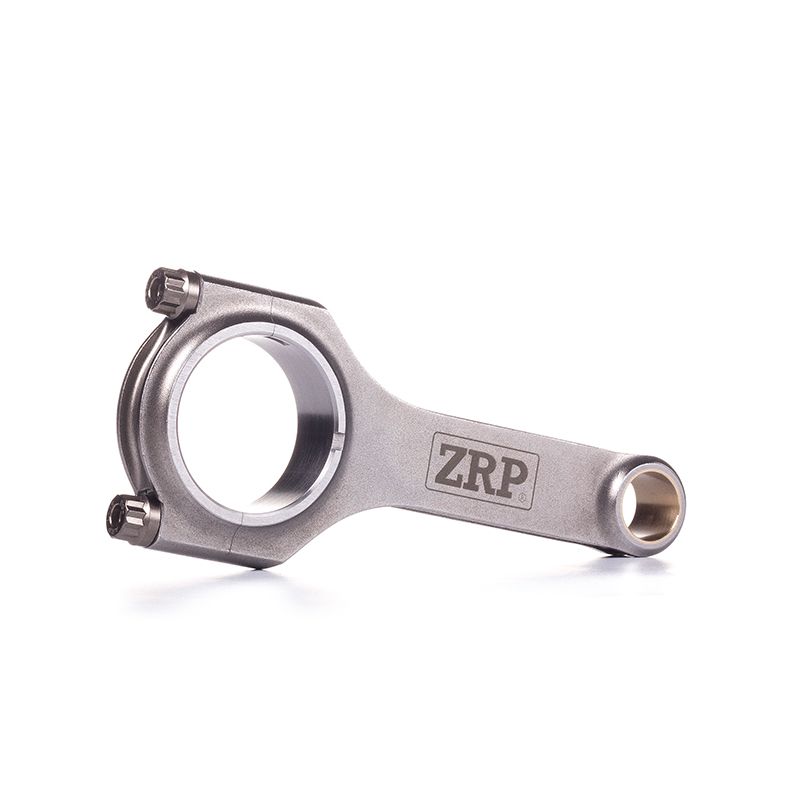
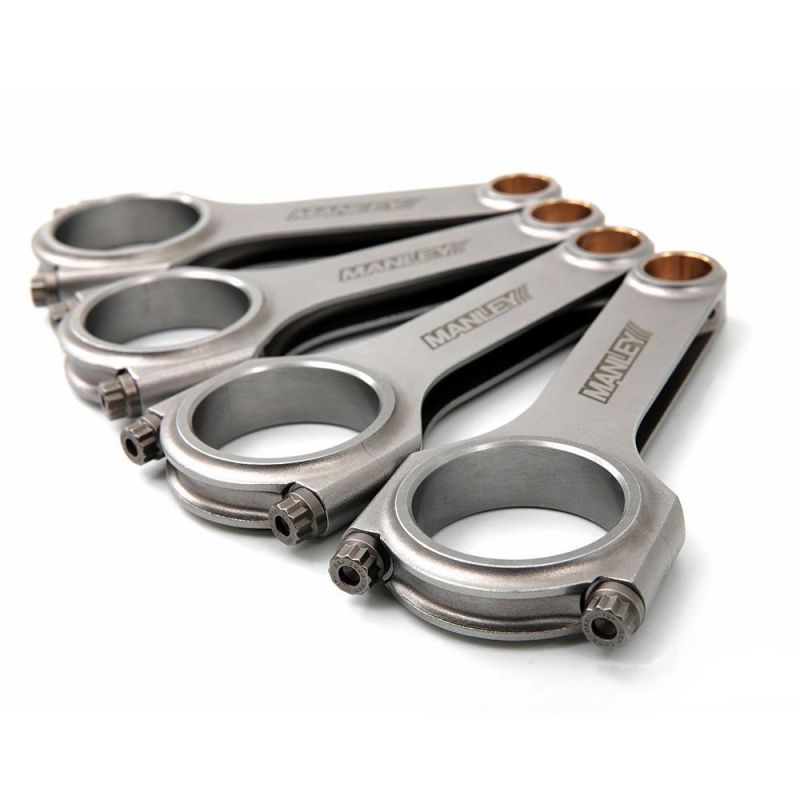
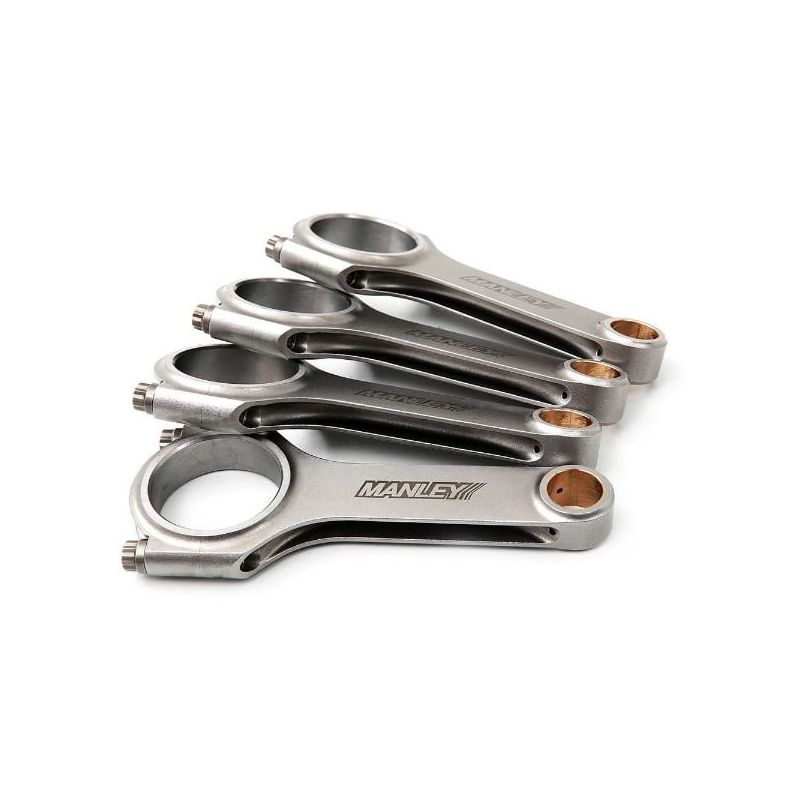
Set of 4 forged 4340 steel connecting rods for the Mazda MX-5 1.6 & 1.8 (B6 / BP).
The Mazda B6 / BP is the family of 1.6 and 1.8-litre inline-four DOHC 16-valve engines that powers the Mazda MX-5 (Miata) NA and NB generations. The B6 (B6-ZE) displaces 1,597 cc (78 mm bore, 83.6 mm stroke), while the BP (BP-ZE) raises capacity to 1,839 cc (83 × 85 mm). Cast-iron block, aluminium head and belt-driven cams make it a simple, light and durable design that has become a benchmark for both naturally aspirated and turbo builds.
Introduced in 1989 on the MX-5 NA 1.6, the engine moved to 1.8 (BP) on the NA8 and NB up to 2005; it also appears in the Mazda 323 / Familia and, in turbocharged BP-T form, in the 323 GT-X. Tough as standard, it is nonetheless held back by its factory rods as soon as boost climbs or the engine is held at high rpm in competition. Switching to forged rods removes that limit and secures high-power builds.
Machined from high-strength 4340 alloy steel, these forged connecting rods replace the sintered-metal factory rods to strengthen the B6 / BP rotating assembly. Forged, machined and shot-peened, they deliver far greater fatigue strength and withstand high cylinder pressures with ease.
Designed for built engines, turbo BP-T as well as high-revving naturally aspirated units, they cope with rising rpm and extra torque. Supplied as a set of 4, balanced and with their ARP bolts, they are the foundation of a reliable short block, from intensive use to competition. Versatile, they cover every discipline (rally, drift, drag, circuit and track days, hillclimb, time attack) and suit Stage 2, Stage 3 and Stage 4+ builds.
| Reference | Brand | Profile | Bolts | Pin diameter OEM 20 mm | Small-end width | Big-end diameter OEM n.p. | Big-end width | Center-to-center OEM 132.8 mm | Weight per rod |
|---|---|---|---|---|---|---|---|---|---|
| 14011-4 | Manley | H | ARP 2000-3/8"-38mm | 20 | 48 | 21.8 | 132.8 | 535 | |
| R-MAZ-001-H | ZRP | H | ARP 2000-3/8"-38mm | 20 | 48 | 21.8 | 132.8 | 418 | |
| R-MAZ-001-H-L19 | ZRP | H | ARP L19-3/8"-38mm | 20 | 48 | 21.8 | 132.8 | 418 |
| Rod | Bolts | Torque | Recommended stretch |
|---|---|---|---|
| Manley (14011-4) | ARP 2000-3/8"-38mm | 81.3 N·m | 0.147 – 0.157 mm |
| ZRP (R-MAZ-001-H) | ARP 2000-3/8"-38mm | 61 N·m | 0.140 – 0.152 mm |
| ZRP (R-MAZ-001-H-L19) | ARP L19-3/8"-38mm | 67.8 N·m | 0.152 – 0.165 mm |
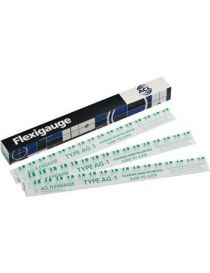
Manufacturers recommend the stretch method (with a gauge) over torque alone: it is the reference method for even preload on every bolt. The figures above assume the bolt and threads are oiled at assembly with ARP lubricant.
| 4340 steel is a nickel-chromium-molybdenum alloy chosen where failure is not an option: landing gear, drive shafts, competition connecting rods. Forged and then quenched and tempered, it shows very high yield and tensile strength while keeping enough toughness to absorb the shocks of detonation without cracking. Against an original rod, mass-produced by sintering and calculated to the bare minimum, a forged 4340 rod offers around 19% more yield strength, 8% more tensile strength and 19 to 37% better fatigue life: under the same load it lasts several times longer. On a B6 or BP that gains revs and power, that margin is exactly what you are buying. |
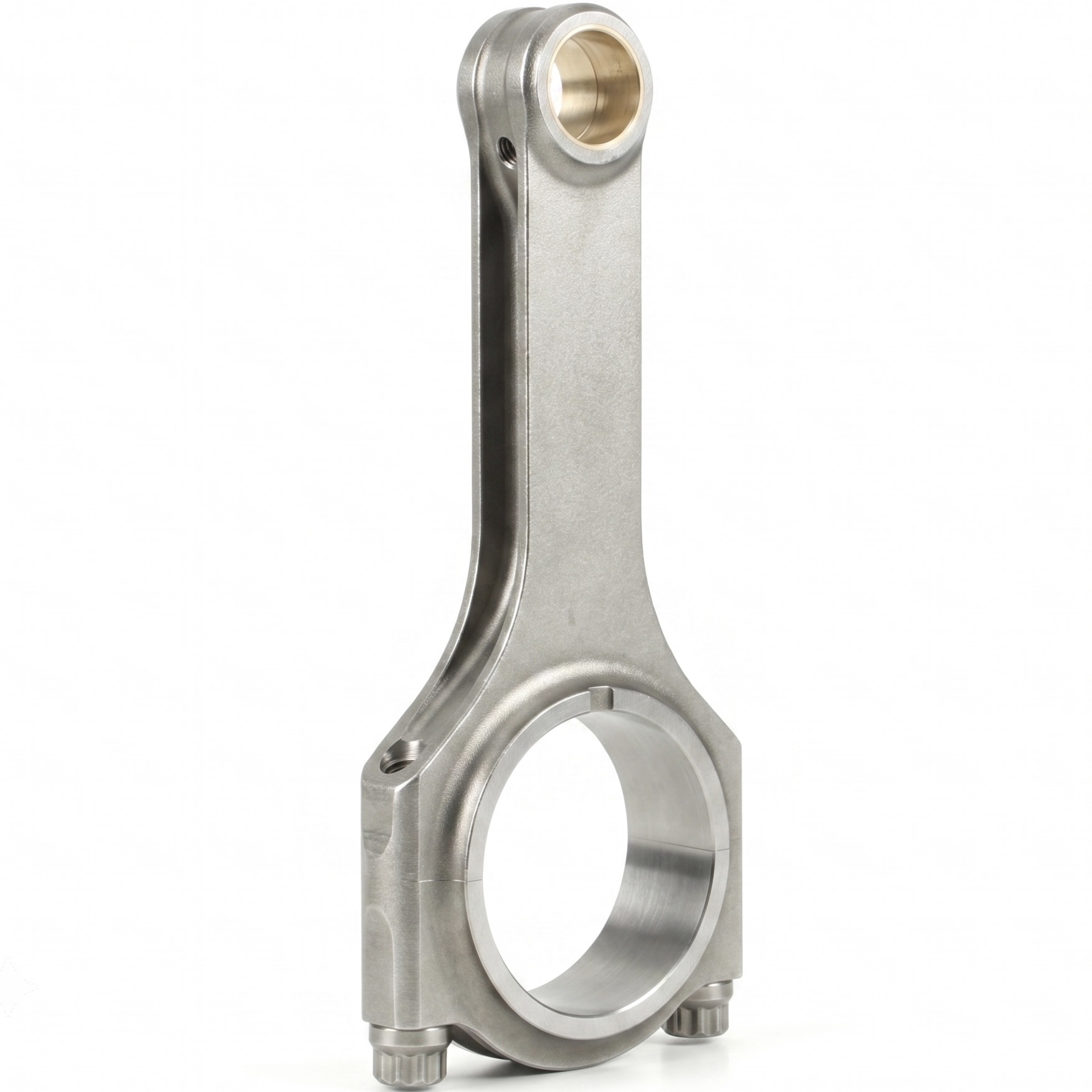 | H-beam profile. The H-shaped section presents two wide flat faces that maximise bending stiffness for a contained weight. It is the profile of choice on high-torque, high-boost engines, where it stands out for strength and dimensional stability. |
On the B6 and the BP, the rod bolt works in pure tension on every revolution and its load grows with the square of engine speed: it sets the limit of a bottom end more than the rod itself does. The three versions offered here share the same diameter, 3/8"-38 mm, which keeps the tooling simple: one set of sockets, one stretch gauge. The method stays the same in every case: threads and seats cleaned then coated with assembly lubricant, caps fitted the original way round, tightening in two or three passes, preload validated through measured stretch and free length recorded for each bolt. The choice between ARP 2000 and ARP L19 then depends on the power per cylinder, the maximum engine speed and the safety margin wanted for repeated use.
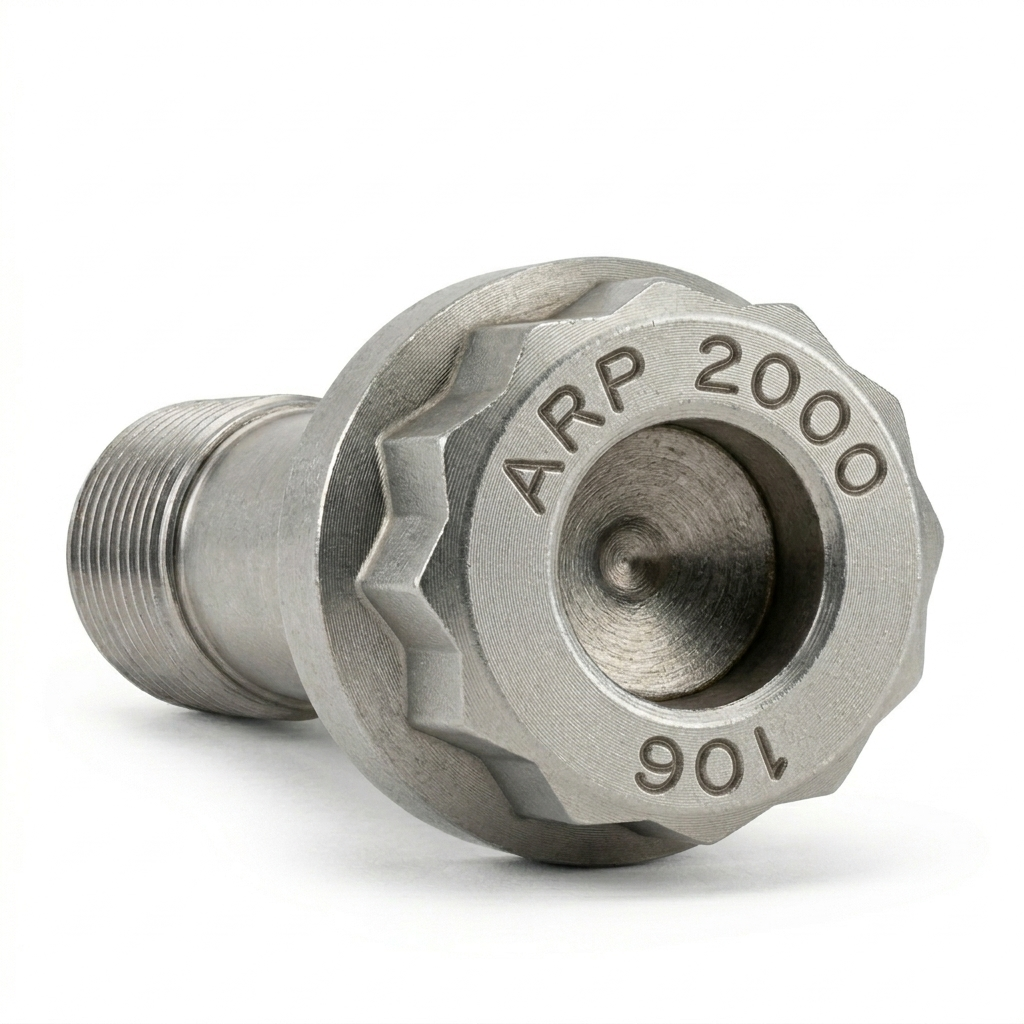 | ARP 2000 (tensile strength around 220,000 psi, i.e. ~1,517 MPa). The most versatile high-performance bolt, with no storage constraints. In 3/8" it handles up to 200 hp per cylinder and 8,500 rpm: ideal for circuit, trackday, drift, rally, hillclimb and drag. |
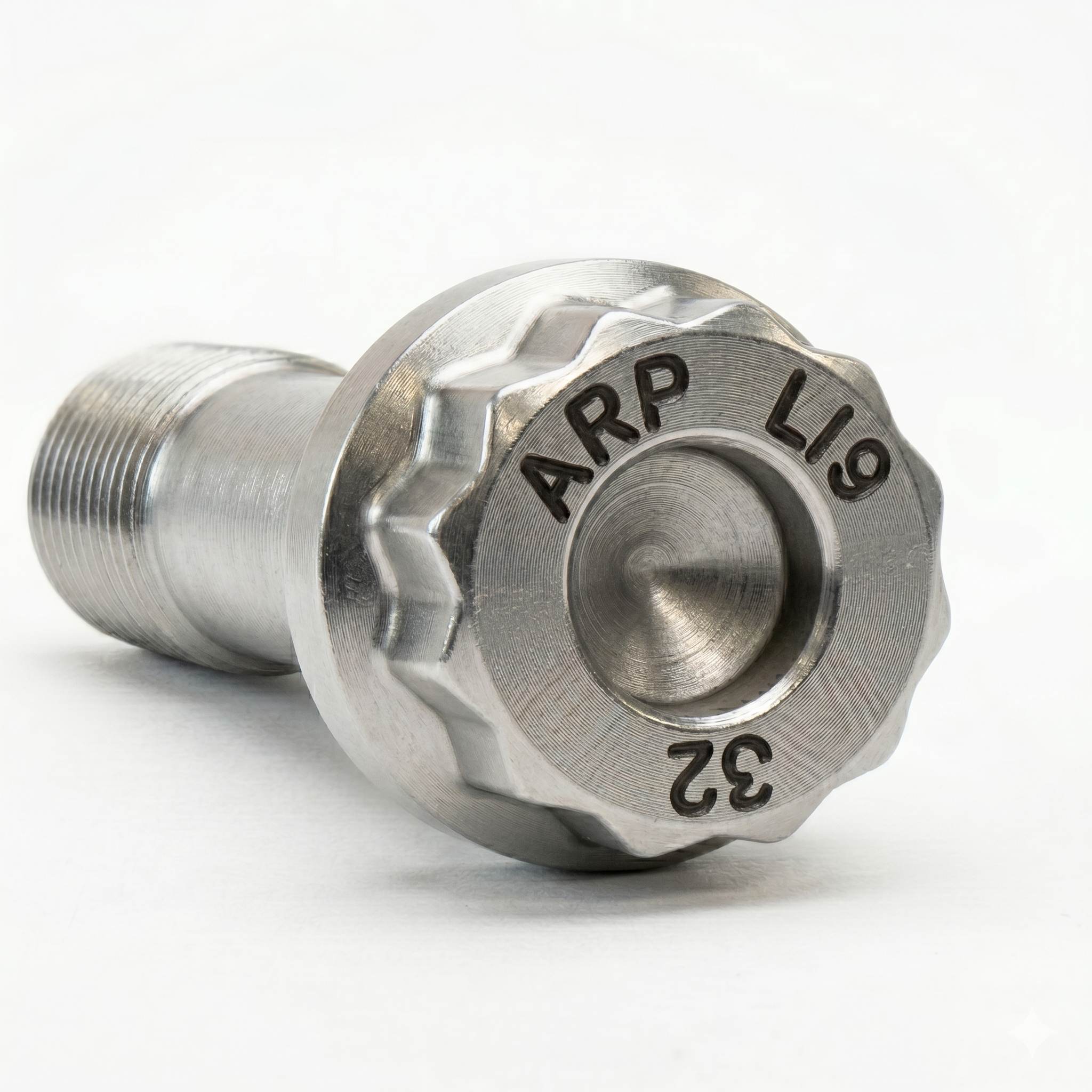 | ARP L19 (tensile strength around 260,000 psi, i.e. ~1,793 MPa). Designed for engines pushed to the extreme, very high boost, sustained high rpm, high cylinder pressure. In 3/8" it allows up to 250 hp per cylinder and 10,000 rpm. Sensitive to corrosion and hydrogen embrittlement, it must be stored and fitted oiled. |
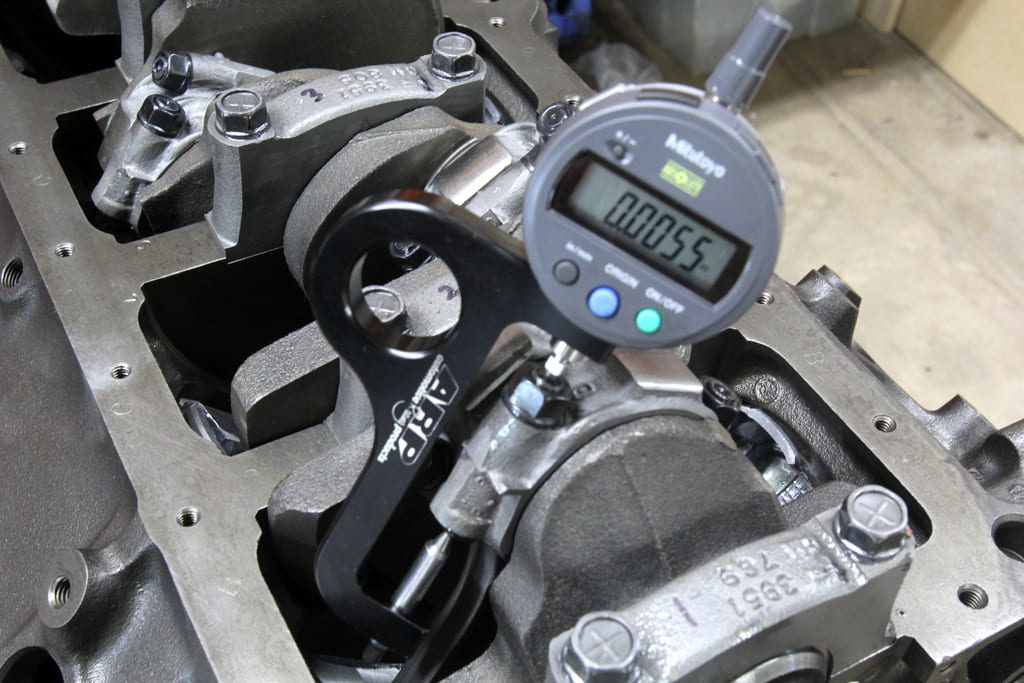
In addition to torque tightening, measuring bolt stretch confirms the actual preload: with the bolt fitted, place a dial indicator (stretch gauge) on its two ends and check that the reading matches the recommended stretch in the table above. It is the most reliable check of even clamping. |
 | Manley Performance: the American benchmark in competition engine parts since 1966. Its rods are cut from vacuum-degassed aerospace-grade 4340 steel, shot-peened to delay crack initiation, then weighed and inspected individually. On small Japanese four-cylinders the range is valued for its manufacturing consistency and comes with the ARP bolts suited to the level of tune. |
 | ZRP (Alex Drakos, Athens): a recognised maker of forged 4340 steel connecting rods for competition use. Bespoke machining, weight matching to ±1 g and unit-by-unit inspection guarantee a balanced rotating assembly, an essential condition when a B6 or BP is revving hard on track. Sets are delivered ready to fit, ARP bolts included. |
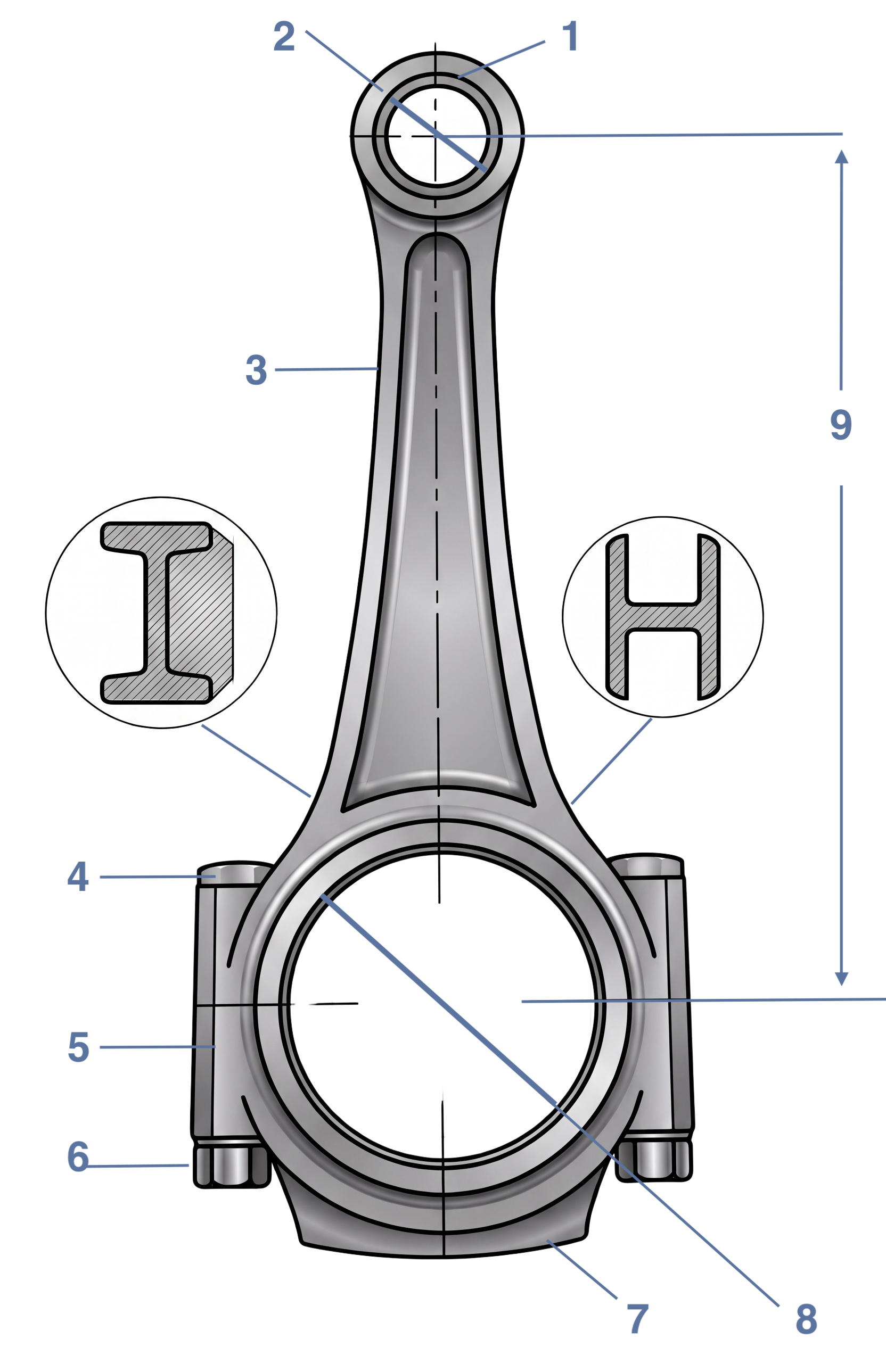 | 1) Small end 2) Small-end diameter 3) Rod beam 4) Rod bolt 5) Big end 6) Rod nut / bolt 7) Rod cap 8) Big-end diameter 9) Center-to-center |
These forged connecting rods are compatible with all vehicles fitted with the MAZDA B6 / BP engine, both naturally aspirated and turbo (BP-T):
| Brand | Model (chassis) | Engine code | Power | Years |
|---|---|---|---|---|
| Mazda | MX-5 NA | B6 | 115 hp | 1989–1997 |
| Mazda | MX-5 NA | BP | 128–133 hp | 1994–1997 |
| Mazda | MX-5 NB | B6 | 110–125 hp | 1998–2005 |
| Mazda | MX-5 NB | BP | 140–146 hp | 1998–2005 |
| Mazda | 323 / Familia GT-X | BP-T | 166 hp | 1989–1994 |
OEM reference: B6S7-11-210D (1.6 B6) and B6S7-11-210E (1.8 BP), factory rod sold individually.
On these small four-cylinders a failure is unforgiving: a rod that lets go takes the piston with it, marks the crankshaft and often forces a rebore. Simply going back to original parts already represents a serious budget, and hands the engine back exactly the limits it had before the incident.
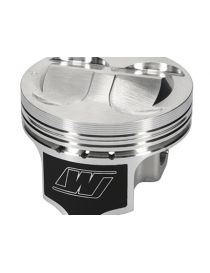
Putting the same money into forged 4340 rods and forged pistons instead gives you a bottom end able to take sustained high revs, a supercharger or a turbo, and a build that can evolve without being stripped a second time.
The reasoning is simple: for a comparable budget, more safety and more potential.