Product successfully added to your shopping cart
Quantity
Total
There are 0 items in your cart. There is 1 item in your cart.
Total products
Total shipping To be determined
Total

3.0L 24v - N52B30
Manufacturers
3.0L 24v - N52B30
Warning: Last items in stock!
New product
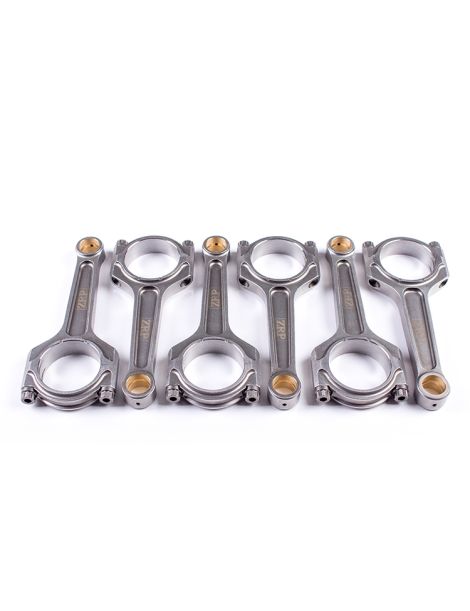
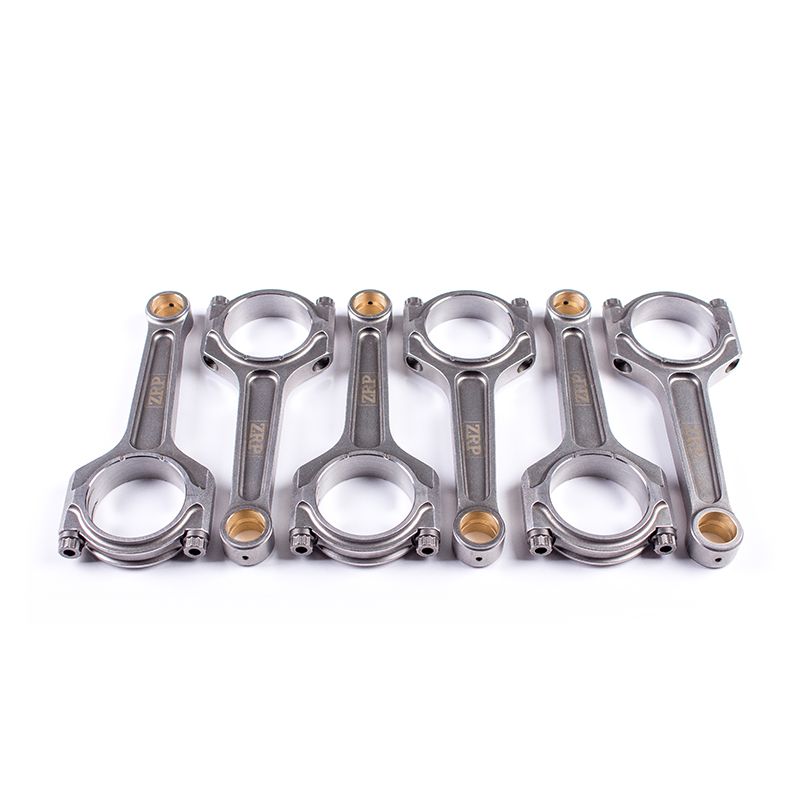
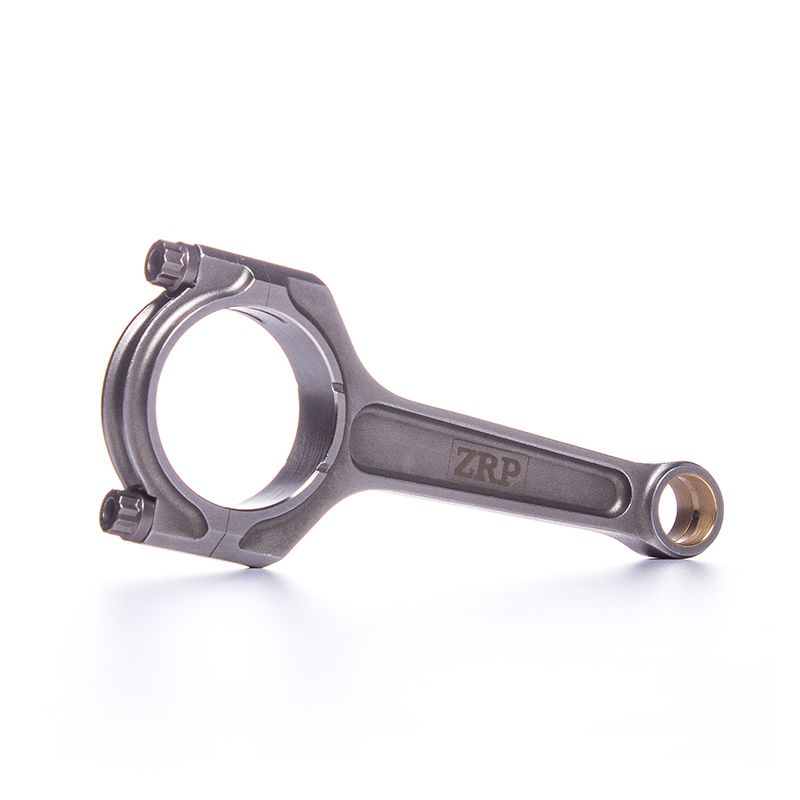
Set of 6 forged 4340 steel connecting rods for BMW 3.0L 24V N52B30.
The N52B30 is the naturally aspirated 2,996 cc in-line six BMW built from 2005 to 2013. It combines a magnesium-aluminium composite block, a twin-cam head, Double-VANOS and Valvetronic variable valve lift, which does away with the throttle butterfly. Successor to the M54, it powered a large part of the range, from the 130i hatchback to the 530i saloons.
Its dimensions (85 mm bore, 88 mm stroke) and outputs of 218 to 272 hp depending on version make it flexible yet genuinely fond of high revs, valued for its linearity and its in-line six sound. That character is what invites preparation: intake, exhaust line, remapping, camshafts, up to supercharger or turbo kits that completely rewrite its torque curve.
As soon as cylinder pressure climbs, the standard rotating assembly shows its limits. The original rods are sized for a production naturally aspirated engine; with added boost or a raised rev limit they deform before anything else and take the bottom end with them. A forged 4340 set, weight-matched and tightened with ARP hardware, restores the margin needed to exploit those builds without shortening engine life.
Forged rods keep the N52B30 dimensions but change material and process completely: a billet of 4340 steel is compressed under a press, which aligns the grain of the metal with the direction of the loads, and the beam is then machined on every face. Each set of six is weighed and matched so that crankshaft balance is left intact.
The I profile chosen here favours low reciprocating mass, in keeping with an in-line six that likes to rev: less inertia at every change of direction, therefore less load on the bearings at the end of the stroke. Hardware is chosen between ARP 2000 and ARP L19 according to the intended load, each grade having its own tightening torque and check stretch.
These rods cover the sporting uses of the N52: rallying, circuit and track use, drift, drag racing, hillclimb and time attack. They secure Stage 2, Stage 3 and Stage 4+ builds, in particular supercharger or turbo conversions, where cylinder pressure has nothing in common with that of a standard naturally aspirated engine.
| Reference | Brand | Profile | Bolts | Pin diameter OEM 20 mm | Small-end width | Big-end diameter OEM 53.6 mm | Big-end width | Center-to-center OEM 147.35 mm | Weight per rod |
|---|---|---|---|---|---|---|---|---|---|
| R-BMW-020-I | ZRP | I | ARP 2000-3/8"-38mm | 20 mm | 53.6 mm | 20.9 mm | 147 mm | 450 g | |
| R-BMW-020-I-L19 | ZRP | I | ARP L19-3/8"-38mm | 20 mm | 53.6 mm | 20.9 mm | 147 mm | 450 g |
| Rod | Bolts | Torque | Recommended stretch |
|---|---|---|---|
| ZRP (R-BMW-020-I) | ARP 2000 | 61 N·m | 0.140 – 0.152 mm |
| ZRP (R-BMW-020-I-L19) | ARP L19 | 67.8 N·m | 0.152 – 0.165 mm |
The reference remains the bolt-stretch measurement (stretch gauge) recommended by the manufacturer; in case of discrepancy, the kit's instructions prevail. The torque values apply to assembly with ARP lubricant.
4340 is a nickel-chromium-molybdenum steel that combines high strength with good ductility without turning brittle. Tests place it well above the original sintered metal: about +19% in yield strength, +8% in tension and +19 to +37% in fatigue depending on the type of load. In practice, the rod absorbs the pressure rises of a tuned N52 without deforming. |
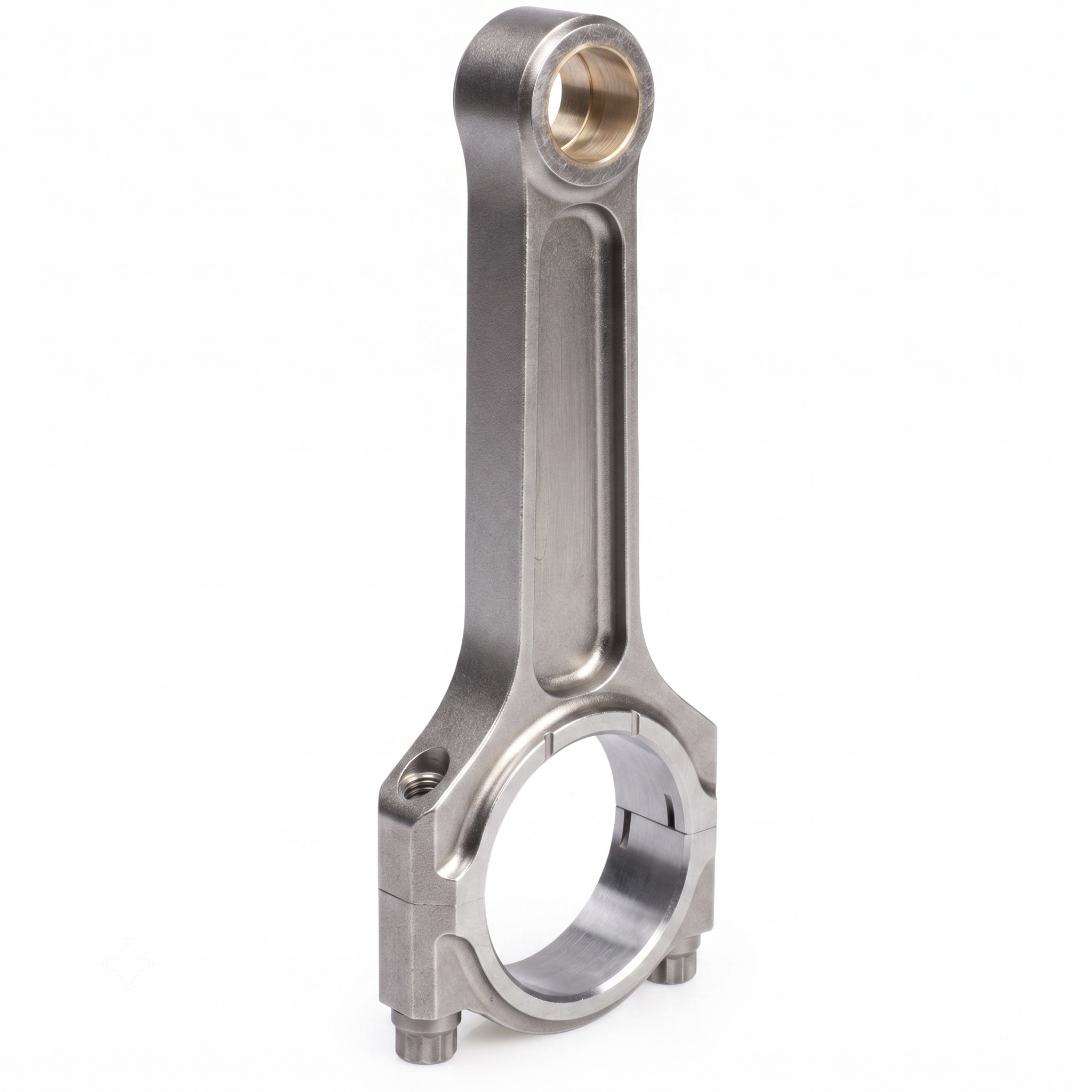 | I profile / I-Beam The I profile relies on a ribbed body that maximises stiffness for a contained weight. It is the all-round format par excellence, at ease in naturally aspirated use as well as in a build, while limiting inertia to preserve the responsiveness of the inline-six. |
The rod bolt governs the entire strength of the assembly. This kit comes with two grades of ARP hardware.
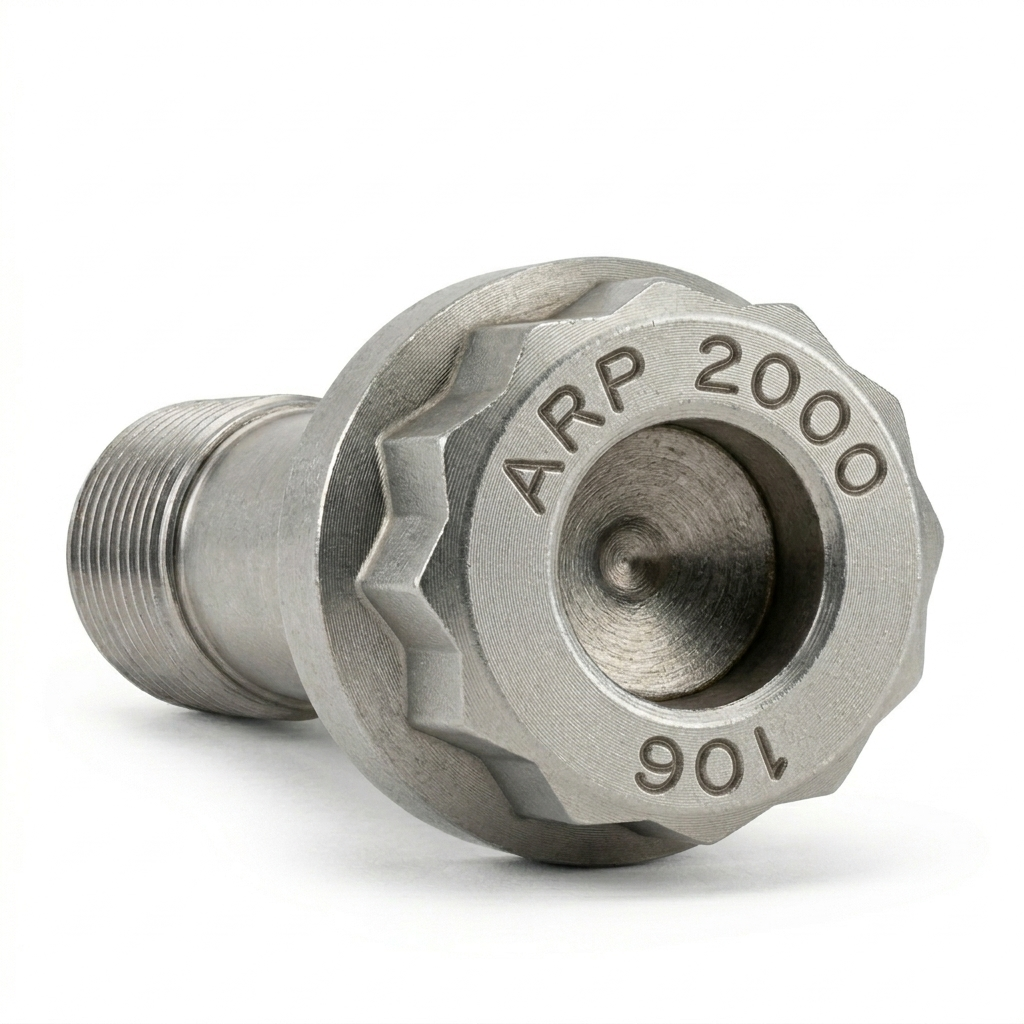 | ARP 2000 A versatile reference with no particular storage constraint. In 3/8" it handles up to around 200 hp per cylinder and 8,500 rpm, a range that covers the vast majority of uses, from track to drift, rally, drag and hillclimb. |
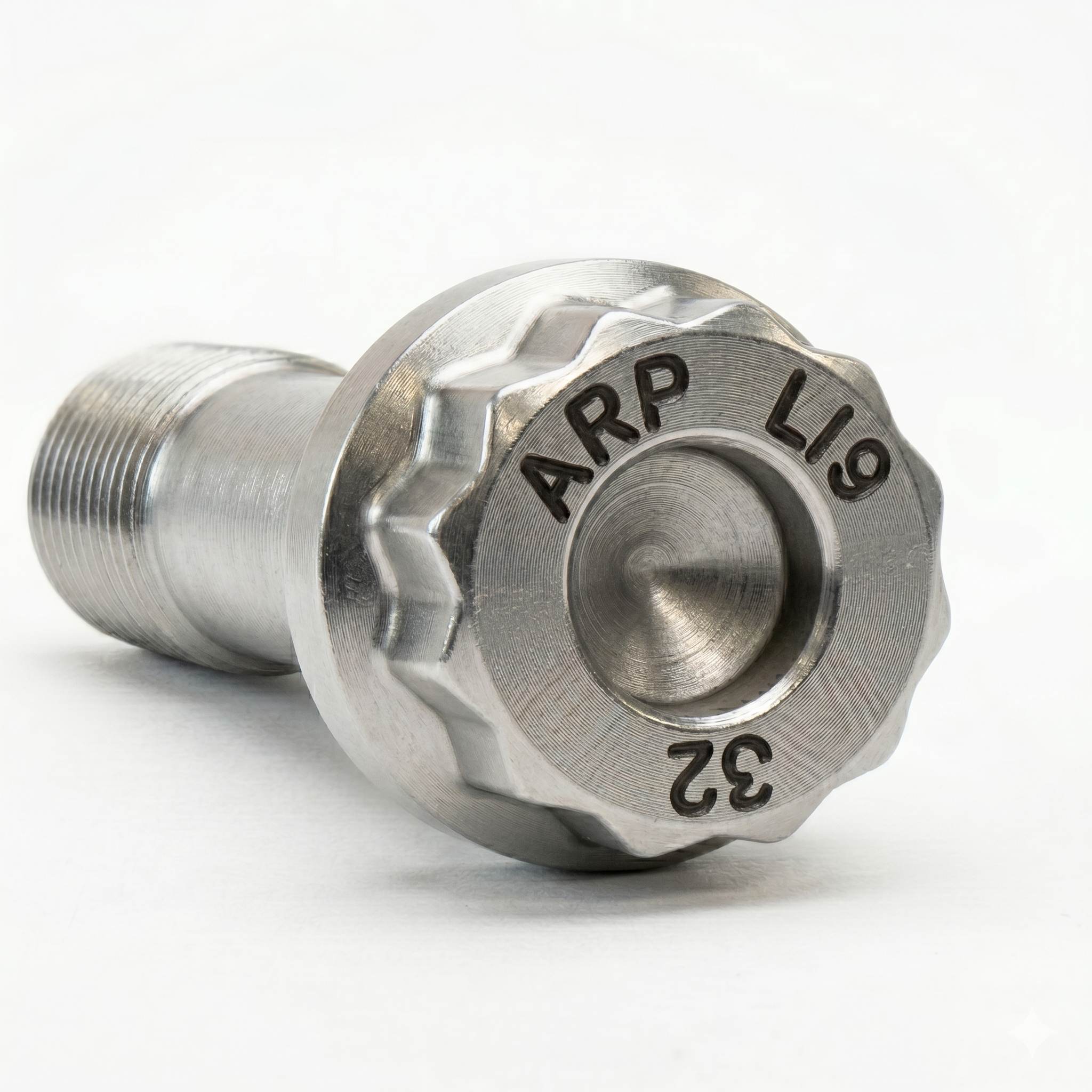 | ARP L19 Designed for engines taken to the limit: sustained high revs and strong combustion pressures. In 3/8" it targets around 250 hp per cylinder and 10,000 rpm, the domain of the most extreme builds. Its sensitivity to corrosion and hydrogen calls for oiled storage and fitting. |
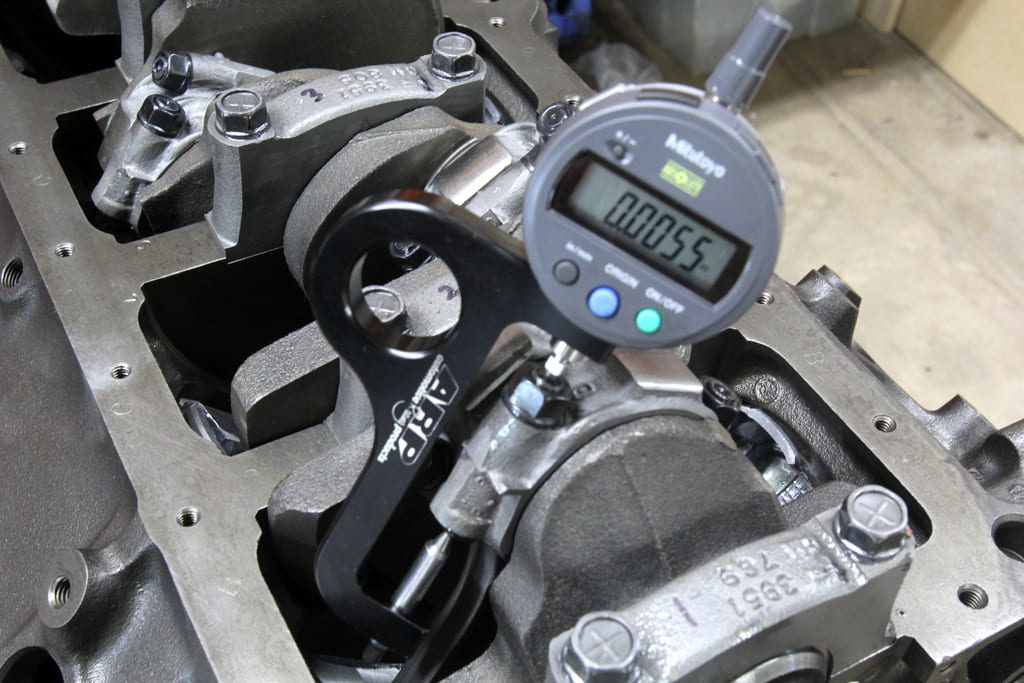
| On an extreme build, it is bolt stretch that faithfully reflects preload, where torque alone depends too much on friction. An ARP stretch gauge allows this check directly, with the bolt in place. |
 | ZRP, a Greek brand of high-performance forged connecting rods, designed by Alex Drakos in Athens. Each rod is forged from 4340 steel, precision-machined and balanced to ±1 g to stay reliable at high rpm. Offered here in the I profile with ARP 2000 or L19 bolts, they are designed and inspected in Greece, and proven in rally, on circuit and in drift. |
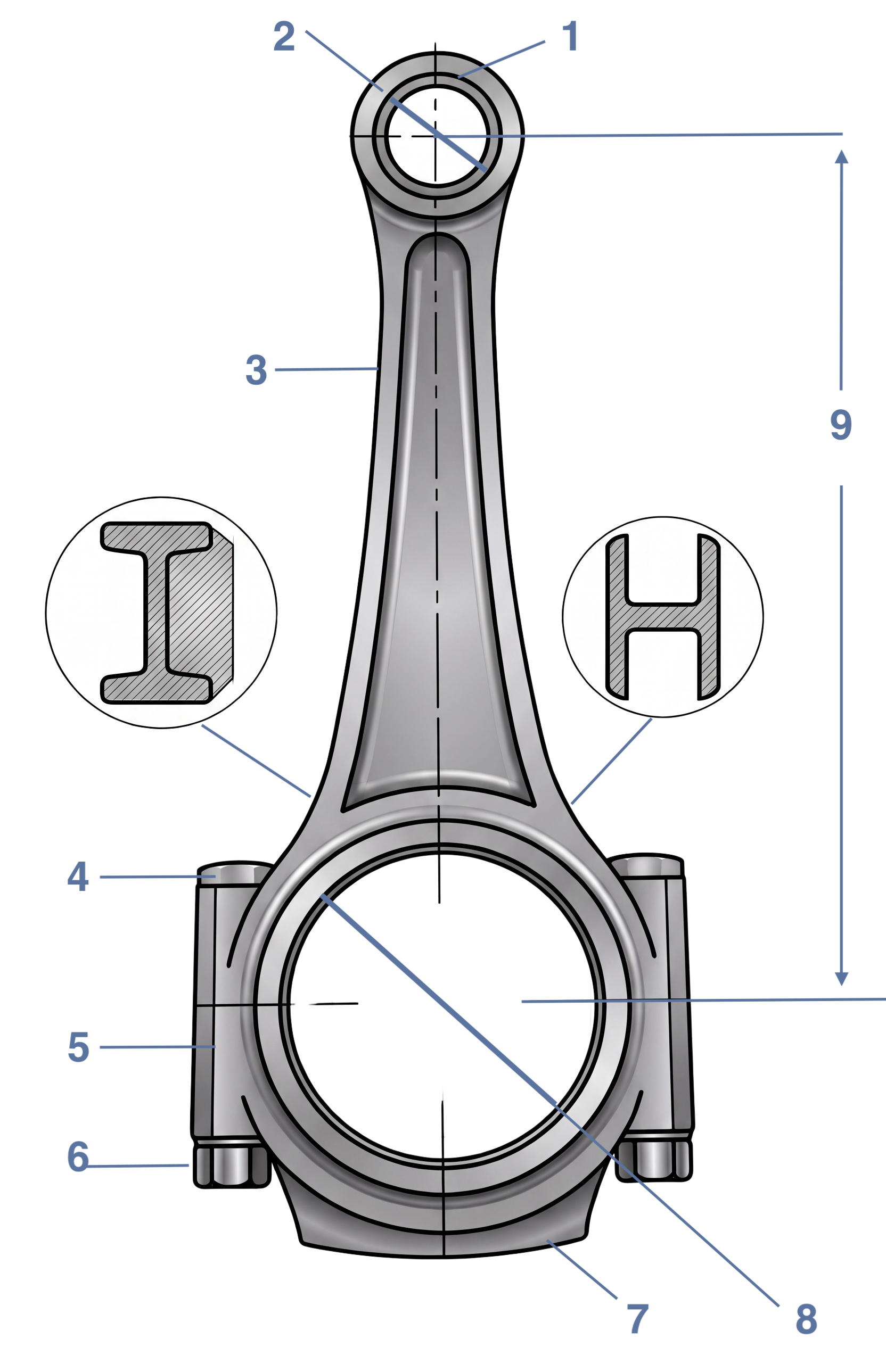 | 1) Small end 2) Small-end diameter 3) Rod beam 4) Rod bolt 5) Big end 6) Rod nut / bolt 7) Rod cap 8) Big-end diameter 9) Center-to-center |
This table gathers the vehicles powered by the BMW 3.0L 24V N52B30. Measure the piston pin diameter and the rod length before ordering to rule out any fitting error.
| Brand | Model (chassis) | Engine code | Power | Years |
|---|---|---|---|---|
| BMW | 130i (E81) | N52B30 | 258–265 hp | 2006–2011 |
| BMW | 130i (E87) | N52B30 | 258–265 hp | 2005–2011 |
| BMW | 125i Coupe (E82) | N52B30 | 218 hp | 2008–2013 |
| BMW | 128i Coupe (E82) | N52B30 | 234 hp | 2007–2013 |
| BMW | 125i Convertible (E88) | N52B30 | 218 hp | 2007–2013 |
| BMW | 128i Convertible (E88) | N52B30 | 234 hp | 2007–2013 |
| BMW | 325xi (E90) | N52B30 | 218 hp | 2005–2006 |
| BMW | 328i (E90) | N52B30 | 234 hp | 2006–2011 |
| BMW | 328xi (E90) | N52B30 | 234 hp | 2006–2008 |
| BMW | 328i xDrive (E90) | N52B30 | 234 hp | 2008–2010 |
| BMW | 530i (E60) | N52B30 | 258 hp | 2005–2007 |
| BMW | 530Li (E60) | N52B30 | 258 hp | 2006–2010 |
| BMW | 528Li (F10) | N52B30 | 258 hp | 2010–2011 |
| BMW | 530Li (F10) | N52B30 | 258 hp | 2011–2014 |
OEM reference: 11 24 7 547 835 (jusqu'à 09/2006)
A rod that lets go on an in-line six cannot be repaired: it marks the crankshaft, gouges the block and ruins at least one cylinder. The quote then goes far beyond the price of a set of forged rods, before even counting workshop time and the car being off the road.
The most profitable moment to fit them is when the engine is already stripped during the build: labour is shared with the forged pistons and the rest of the bottom end. On a hard-driven N52B30 this is the expense that protects the whole investment and lets the full rev range be used without second thoughts.