Product successfully added to your shopping cart
Quantity
Total
There are 0 items in your cart. There is 1 item in your cart.
Total products
Total shipping To be determined
Total

1.8L 20VT
Manufacturers
1.8L 20VT
Warning: Last items in stock!
New product
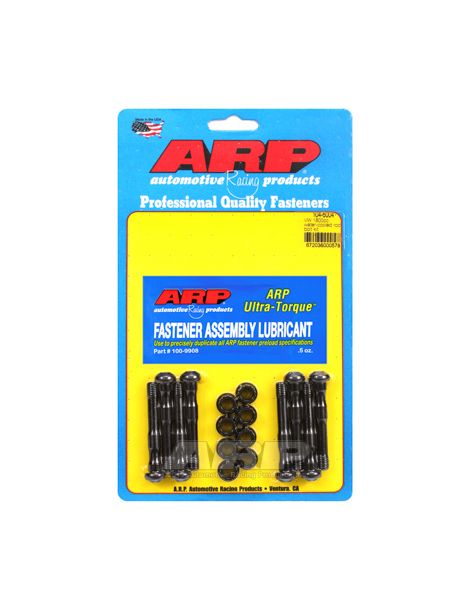
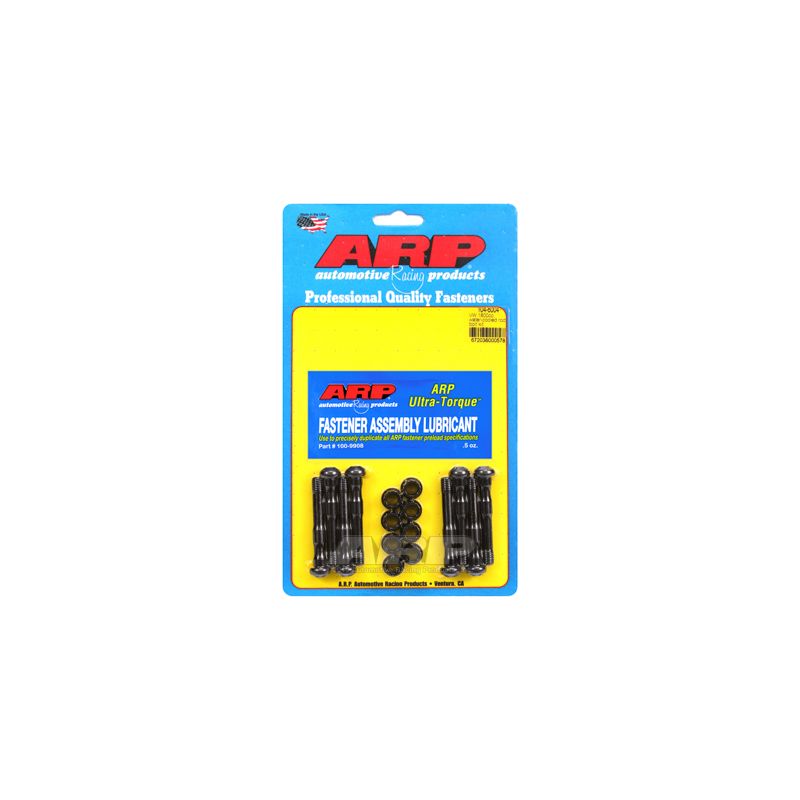
ARP ARP2000 rod bolt kit for OEM rods of Volkswagen, Audi, SEAT and Skoda 1.8 and 2.0-litre engines.
This kit covers the Volkswagen Group four-cylinder petrol engines of 1.8 litres (1,781 cc, in 8 and 16-valve form and as the 20-valve turbo) and of 2.0 litres (1,984 cc, in 8 and 16-valve form), identified by the codes DX, DZ, KR, PL, 9A, ABA, ABF and by those of the 1.8 T rated from 150 to 225 hp (AGU, AUM, AWP, BAM and others), fitted from 1982 to 2010 to Volkswagen, Audi, SEAT and Skoda models.
ARP intends kit 104-6004 for water-cooled Volkswagen 1.8 and 2.0-litre engines: it replaces the original rod bolt with an ARP2000 bolt pressed into the rod and closed with a nut.
At every engine revolution, the rod and piston assembly pulls on the rod cap, and only its bolts hold it against these inertia loads. The original ones are intended for stock power.
The kit supplies bolts to be pressed into the rods, with their nuts. The ARP instruction sheet asks you to measure the stretch of each bolt as it is tightened; without a gauge, it gives 47.5 Nm. Material: ARP2000, an alloy steel developed by ARP, heat treated to 220,000 psi tensile strength, with threads rolled after heat treatment. Against classes 10.9 and 12.9 of original fasteners, between 150,800 and 176,900 psi minimum, the margin is 24 to 46%. The ARP2000 bolts hold up to 9,500 rpm (calculated estimate).
| Part number | Brand | Grade / material | Nut | Thread | Under-head length |
|---|---|---|---|---|---|
| ARP-104-6004 | ARP | ARP2000 | Not published | M8 | Not published |
Before the bolts are pressed in, ARP asks for the entry of each rod bore to be chamfered wide enough to clear the radius under the bolt head.
| Reference | Tightening torque | Stretch |
|---|---|---|
| ARP-104-6004 | 47.5 Nm | 0.216 - 0.229 mm |
ARP gives priority to stretch control for an accurate preload; the torque in the table is used only when no gauge is available. Torque and stretch figures in the table apply with ARP lubricant.
Source of the torque and stretch figures: ARP 104-6004 instruction sheet, in the revision applicable at publication. The manufacturer's instruction sheet prevails in the event of any difference. Read the ARP 104-6004 instruction sheet
No thread locker is called for by the ARP instruction sheet for this kit: the bolts are fitted with ARP Ultra-Torque grease, on their threads and on the bearing face of the nuts.
According to the ARP instructions, the big ends must be checked and resized with the fasteners in place; plan a visit to a machine shop.
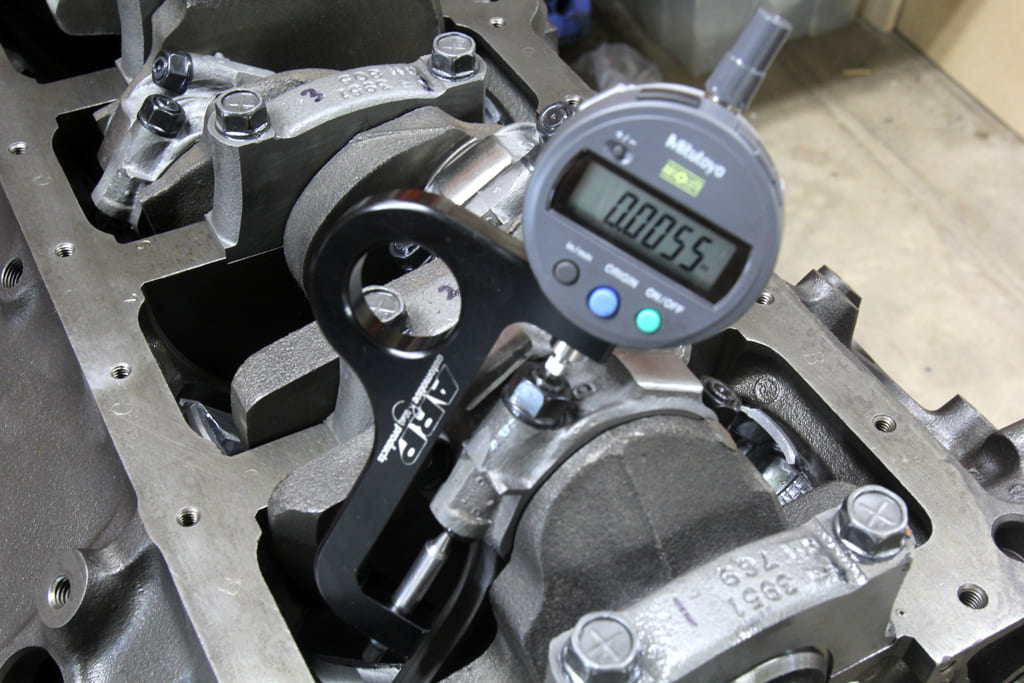
With the stretch gauge, you read directly how much the bolt stretches during tightening: the dial gauge sits on both ends of the fitted bolt, and tightening stops when the stretch reaches the value in the table. Friction no longer comes into play, hence a more consistent preload on a heavily stressed engine.
Torque and stretch figures are only valid with ARP assembly grease, applied to the bolt threads and to the bearing face of the nuts.
ARP (Automotive Racing Products) came into being in the early 1970s, when Gary Holzapfel, who came from the aerospace industry, decided to tackle the engine failures caused in motorsport by inadequate fasteners. Today the brand produces thousands of part numbers in California for the cylinder head, the main bearings and the connecting rods, in materials suited to each application, with manufacturing known for its consistency.
| Brand | Model (chassis) | Engine code | Power | Years |
|---|---|---|---|---|
| Volkswagen | Bora (9M2) 1.8 | AUQ, AWP, BEK | 179 hp | 2005-2014 |
| Volkswagen | Bora I (1J2) 1.8 | AGU, ARX, AUM, AUQ, AWD, AWP, AWW | 150 - 180 hp | 2000-2005 |
| Volkswagen | Bora Variant (1J6) 1.8 | AGU, ARX, AUM, AUQ, AWD, AWP, AWW | 150 - 180 hp | 2000-2005 |
| Volkswagen | Corrado (53I) 1.8 | KR | 136 hp | 1989-1992 |
| Volkswagen | Corrado (53I) 2.0 | 9A | 136 hp | 1991-1995 |
| Volkswagen | Fox (16) 1.8 | DX | 112 hp | 1990-1996 |
| Volkswagen | Golf I (17) 1.8 | DX | 112 hp | 1982-1983 |
| Volkswagen | Golf I Cabriolet (155) 1.8 | DX | 111 - 112 hp | 1982-1992 |
| Volkswagen | Golf II (19E, 1G1) 1.8 | KR, PL | 129 - 139 hp | 1986-1991 |
| Volkswagen | Golf II (19E, 1G1) 1.8 | DX | 112 hp | 1983-1991 |
| Volkswagen | Golf II (19E, 1G1) 2.0 | 9A | 136 hp | 1989-1992 |
| Volkswagen | Golf III (1H1) 2.0 | ABF | 150 hp | 1992-1997 |
| Volkswagen | Golf III (1H1) 2.0 | ABA, ADC, AKR | 115 hp | 1991-1997 |
| Volkswagen | Golf III Cabriolet (1E7) 2.0 | ABA, AKR | 115 hp | 1993-1998 |
| Volkswagen | Golf IV (1J1) 1.8 | AGU, AQA, ARZ, AUM, AUQ, AWD, AWP, AWW, BEK | 150 - 180 hp | 1997-2005 |
| Volkswagen | Golf IV Cabriolet (1E7) 2.0 | ABA, AKR, ATU, AWF, AWG | 115 hp | 1998-2002 |
| Volkswagen | Golf IV Variant (1J5) 1.8 | AGU, ARZ, AUM | 150 hp | 2000-2006 |
| Volkswagen | Jetta I (16) 1.8 | DX | 112 hp | 1982-1984 |
| Volkswagen | Jetta II (19E, 1G2, 165) 1.8 | KR, PL | 129 - 140 hp | 1986-1991 |
| Volkswagen | Jetta II (19E, 1G2, 165) 2.0 | 9A | 136 hp | 1989-1992 |
| Volkswagen | New Beetle (9C1, 1C1) 1.8 | AGU, APH, AVC, AWP, AWU, AWV, BKF, BNU | 150 - 180 hp | 1999-2010 |
| Volkswagen | New Beetle Cabriolet (1Y7) 1.8 | AWU, AWV, BKF | 150 hp | 2003-2010 |
| Volkswagen | Passat B2 (32B) 1.8 | DZ | 112 hp | 1983-1988 |
| Volkswagen | Passat B2 Variant (33B) 1.8 | DZ | 112 hp | 1983-1988 |
| Volkswagen | Passat B3/B4 (3A2, 35I) 1.8 | KR | 136 hp | 1988-1989 |
| Volkswagen | Passat B3/B4 (3A2, 35I) 2.0 | 9A, ABF | 136 - 150 hp | 1988-1996 |
| Volkswagen | Passat B3/B4 (3A2, 35I) 2.0 | ABA | 115 hp | 1990-1996 |
| Volkswagen | Passat B3/B4 Variant (3A5, 35I) 1.8 | KR | 136 - 139 hp | 1988-1993 |
| Volkswagen | Passat B3/B4 Variant (3A5, 35I) 2.0 | 9A, ABF | 136 - 150 hp | 1988-1997 |
| Volkswagen | Passat B5 (3B2) 1.8 | AEB, ANB, APU, ATW, AUG | 150 hp | 1996-2000 |
| Volkswagen | Passat B5 Variant (3B5) 1.8 | AEB, ANB, APU, ATW, AUG | 150 hp | 1997-2000 |
| Volkswagen | Passat B5.5 (3B3) 1.8 | AWM | 170 hp | 2001-2005 |
| Volkswagen | Passat B5.5 Variant (3B6) 1.8 | AWM | 170 hp | 2002-2005 |
| Volkswagen | Quantum Variant 2.0 | ABA | 111 - 118 hp | 1990-2005 |
| Volkswagen | Scirocco (53B) 1.8 | KR, PL | 125 - 139 hp | 1985-1992 |
| Volkswagen | Scirocco (53B) 1.8 | DX | 112 hp | 1982-1989 |
| Volkswagen | Sharan (7M8, 7M9, 7M6) 2.0 | ABF | 150 hp | 1995-2000 |
| Volkswagen | Vento (1H2) 2.0 | ABA, AKR | 115 hp | 1991-1998 |
| Audi | 80 B2 (811, 813, 814, 819, 853) 1.8 | DZ | 112 hp | 1984-1986 |
| Audi | 80 B3 (893, 894, 8A2) 1.8 | DZ | 112 hp | 1986-1991 |
| Audi | 90 B3 (893, 894, 8A2) 1.8 | DZ | 111 hp | 1989-1991 |
| Audi | A3 (8L1) 1.8 | AGU, AMK, APY, AQA, ARX, ARZ, AUL, AUM, BAM | 150 - 224 hp | 1996-2003 |
| Audi | A4 B5 (8D2) 1.8 | AEB, ANB, APU, ARK, ATW, AWM, AWT | 150 - 170 hp | 1995-2001 |
| Audi | A4 B5 Avant (8D5) 1.8 | AEB, ANB, APU, ARK, ATW, AWT | 150 hp | 1996-2001 |
| Audi | A4 B6 (8E2) 1.8 | AMB, AWM | 170 - 173 hp | 2001-2004 |
| Audi | A4 B6 Avant (8E5) 1.8 | AWM | 173 hp | 2001-2004 |
| Audi | A6 C5 (4B2, 4B4) 1.8 | AEB, ANB, APU, ARK, AWT | 150 hp | 1997-2005 |
| Audi | A6 C5 Avant (4B5, 4B6) 1.8 | AEB, ANB, APU, ARK, AWT | 150 hp | 1997-2005 |
| Audi | Coupe B2 (81, 855, 856) 1.8 | DZ | 112 hp | 1984-1988 |
| Audi | Coupe B3 (89, 8B3) 1.8 | DZ | 112 hp | 1989-1991 |
| Audi | TT (8N3) 1.8 | AJQ, APP, APX, ATC, AUQ, AWP, BAM, BEA | 180 - 224 hp | 1998-2006 |
| Audi | TT Roadster (8N9) 1.8 | AJQ, APP, APX, ATC, AUQ, AWP, BAM, BEA | 180 - 224 hp | 1999-2006 |
| SEAT | Cordoba (6K1, 6K2) 2.0 | ABF | 150 hp | 1996-1999 |
| SEAT | Ibiza II (6K1) 2.0 | ABF | 150 hp | 1996-1999 |
| SEAT | Leon (1M1) 1.8 | AMK, BAM | 209 - 225 hp | 2002-2006 |
| SEAT | Toledo I (1L2) 1.8 | KR, PL | 125 - 139 hp | 1991-1999 |
| SEAT | Toledo I (1L2) 2.0 | ABF | 150 hp | 1993-1999 |
| Skoda | Octavia I (1U2) 1.8 | AGU, ARX, ARZ, AUM | 150 hp | 1997-2010 |
| Skoda | Octavia I Combi (1U5) 1.8 | AGU, ARX, ARZ, AUM | 150 hp | 1998-2010 |
On a Golf GTI 16S, an Audi TT 225 hp or a Leon Cupra R, every rod bolt takes inertia loads on each revolution, and the failure of a single one destroys the rod, the piston and the block. An ARP2000 kit costs far less than rebuilding the bottom end.