Product successfully added to your shopping cart
Quantity
Total
There are 0 items in your cart. There is 1 item in your cart.
Total products
Total shipping To be determined
Total

2.5L 20v - CEPA CEPB
Manufacturers
2.5L 20v - CEPA CEPB
Warning: Last items in stock!
New product
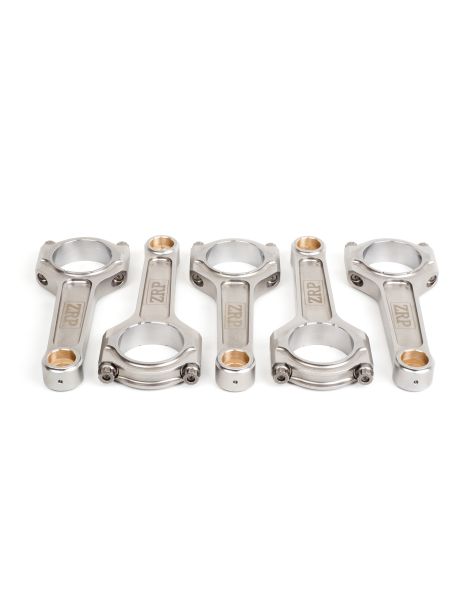
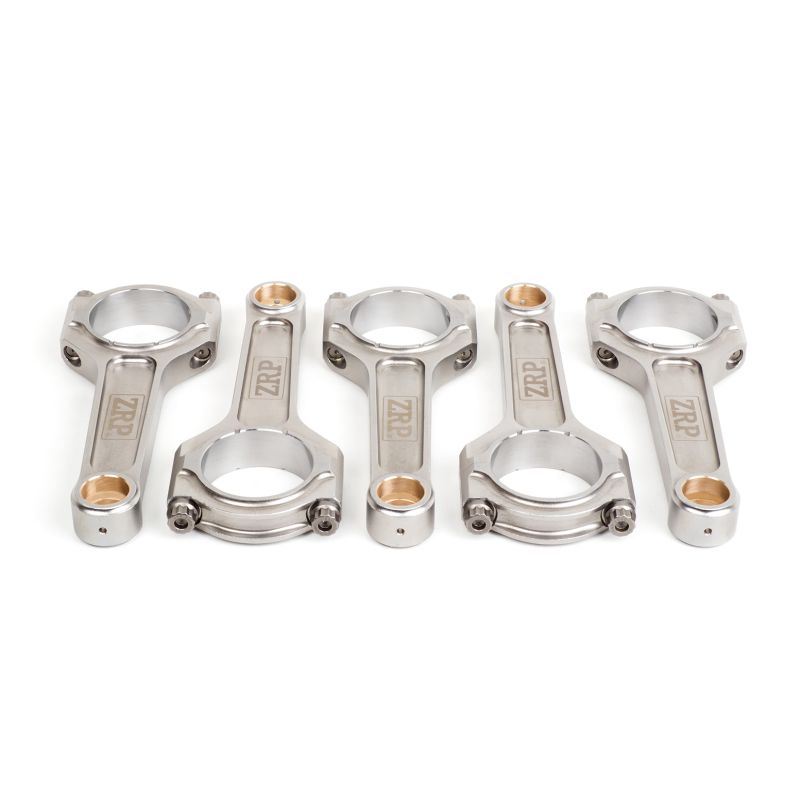
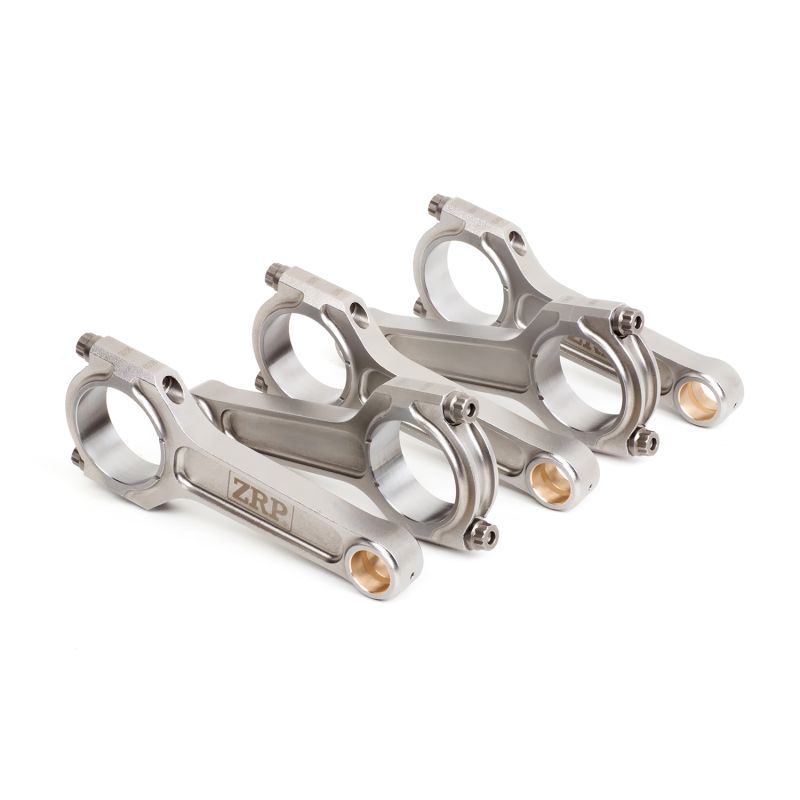
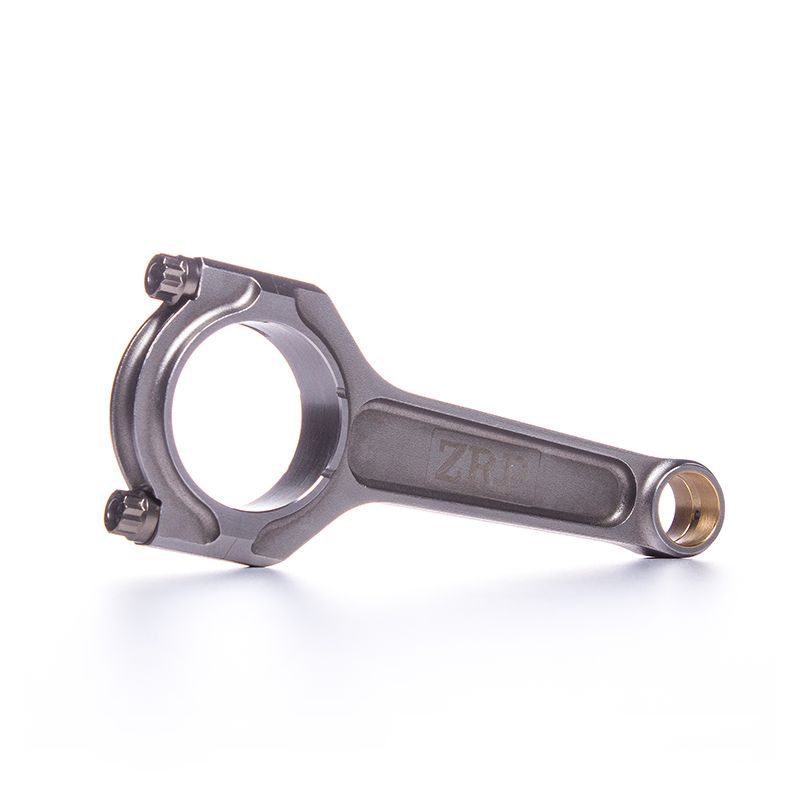
Set of 5 forged connecting rods in 4340 steel for the Audi 2.5L 20V TFSI EA855 (21 mm pin).
The 2.5 TFSI, known internally by the code EA855, is an in-line five-cylinder of 2,480 cc with direct injection and a turbocharger, launched by Audi in 2009 in the TT RS (8J). It revives a rare layout, that of the five-cylinder engines which built the brand's rally legend, with the same 1-2-4-5-3 firing order and the sound that goes with it, a timbre no four or six-cylinder reproduces. Its twin-cam twenty-valve head and cast-iron block were sized from the outset for high boost pressures.
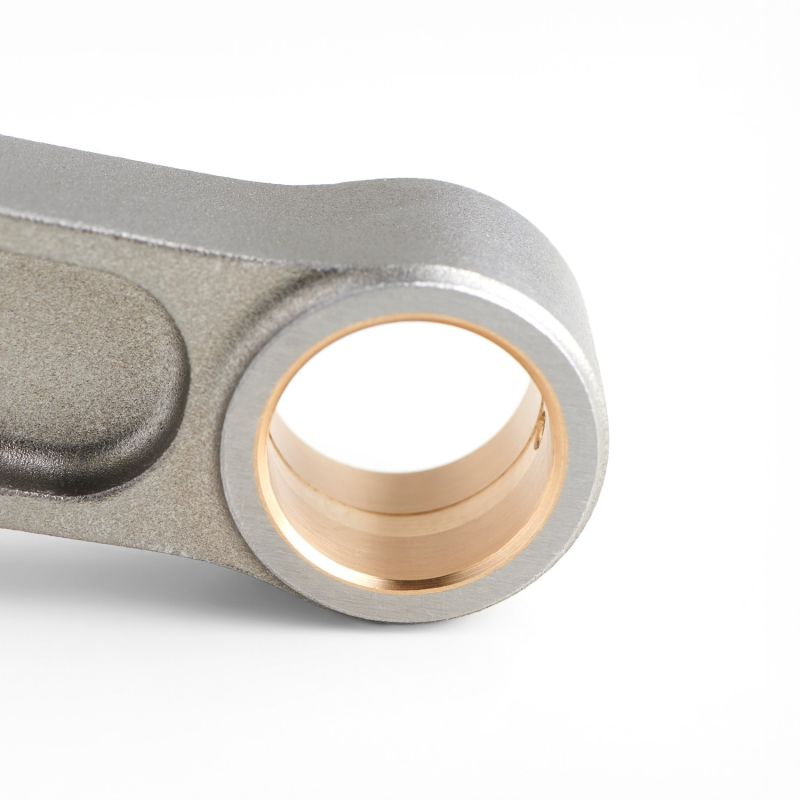
Later used in the RS3 (8P) and then the RS Q3 (8U), it produces 310 to 360 hp as standard and has been repeatedly honoured in the International Engine of the Year awards. That torque reserve and the margin left in the block explain its popularity with tuners: remap, intercooler, exhaust system and then a larger turbocharger allow considerable power steps. At that point the standard rotating assembly becomes the weak link: the original rod was sized for the 360 hp of the most powerful version, not for the figures aimed at in a build. The forged rods on this page keep the engine's 144 mm centre distance and 21 mm piston pin, with a reinforced I-HD profile at 488 g and ARP 2000 or ARP L19 hardware in 3/8" 38 mm; note that they have no oil hole, in line with the original design.
These rods are forged from high-strength 4340 steel and then machined to the dimensions of the 21 mm pin EA855. They make the bottom end reliable as soon as power goes beyond factory level, and become compulsory when fitting forged pistons, raising the rev limit, increasing boost pressure or adding displacement. At 488 g per rod, the mass stays contained for a reinforced part of this kind.
Intended for built engines, boosted by turbocharger as well as by supercharger, they run in every discipline: rally, drift, drag racing, circuit and track use, hillclimb, time attack. They follow Stage 2, Stage 3 and Stage 4+ builds, up to a fully rebuilt competition engine. The kit covers the five cylinders of the block and keeps the original 144 mm centre-to-centre length.
| Reference | Brand | Profile | Bolts | Pin Ø | Small-end width | Big-end Ø | Big-end width | Center-to-center | Weight/rod | Oil hole |
|---|---|---|---|---|---|---|---|---|---|---|
| R-AUD-009-I-5 | ZRP | I-HD | ARP 2000-3/8"-38mm | 21 mm | 50,6 mm | 21,9 mm | 144 mm | 488 g | No | |
| R-AUD-009-I-5-L19 | ZRP | I-HD | ARP L19-3/8"-38mm | 21 mm | 50,6 mm | 21,9 mm | 144 mm | 488 g | No |
ZRP: Straight, non-tapered pin end.
| Rod | Bolts | Torque | Recommended stretch |
|---|---|---|---|
| ZRP (R-AUD-009-I-5) | ARP 2000 | 61 N·m | 0,140–0,152 mm |
| ZRP (R-AUD-009-I-5-L19) | ARP L19 | 67,8 N·m | 0,152–0,165 mm |
The table above lists two sets of values because the two ARP grades offered on this five-cylinder engine do not work at the same preload level: the tougher ARP L19 is tightened harder than ARP 2000. A figure therefore never transfers from one grade to the other, and the bolt manufacturer’s specifications apply exactly as written. The underlying reason is simple: what stops the rod cap from lifting at high rpm is not the torque applied but the preload installed in the bolt. Torque only gives an approximate picture of it, since most of its energy is spent overcoming friction in the threads and under the bearing face. Hence the preparation required before assembly: threads cleaned, bolts inspected, ARP assembly lubricant applied evenly, then tightening in several alternating stages across the ten bolts of the EA855. Measuring stretch with a gauge remains the reliable method: it reads the actual elongation of the bolt. The ZRP instructions supplied with the kit always take precedence.
| 4340 steel is a nickel-chromium-molybdenum alloy steel used in aerospace and motorsport alike. Forged then heat-treated (quench and temper), it offers excellent tensile strength, high fatigue resistance and real ductility. Compared with an original rod (often sintered/powder metal, optimised for series-production cost), a 4340 forged rod shows roughly +19% higher yield strength, +8% higher tensile strength and above all +19% to +37% higher fatigue strength, i.e. a fatigue life under cyclic loading several times longer. This is what makes forged 4340 the reference material as soon as boost and rpm climb. |
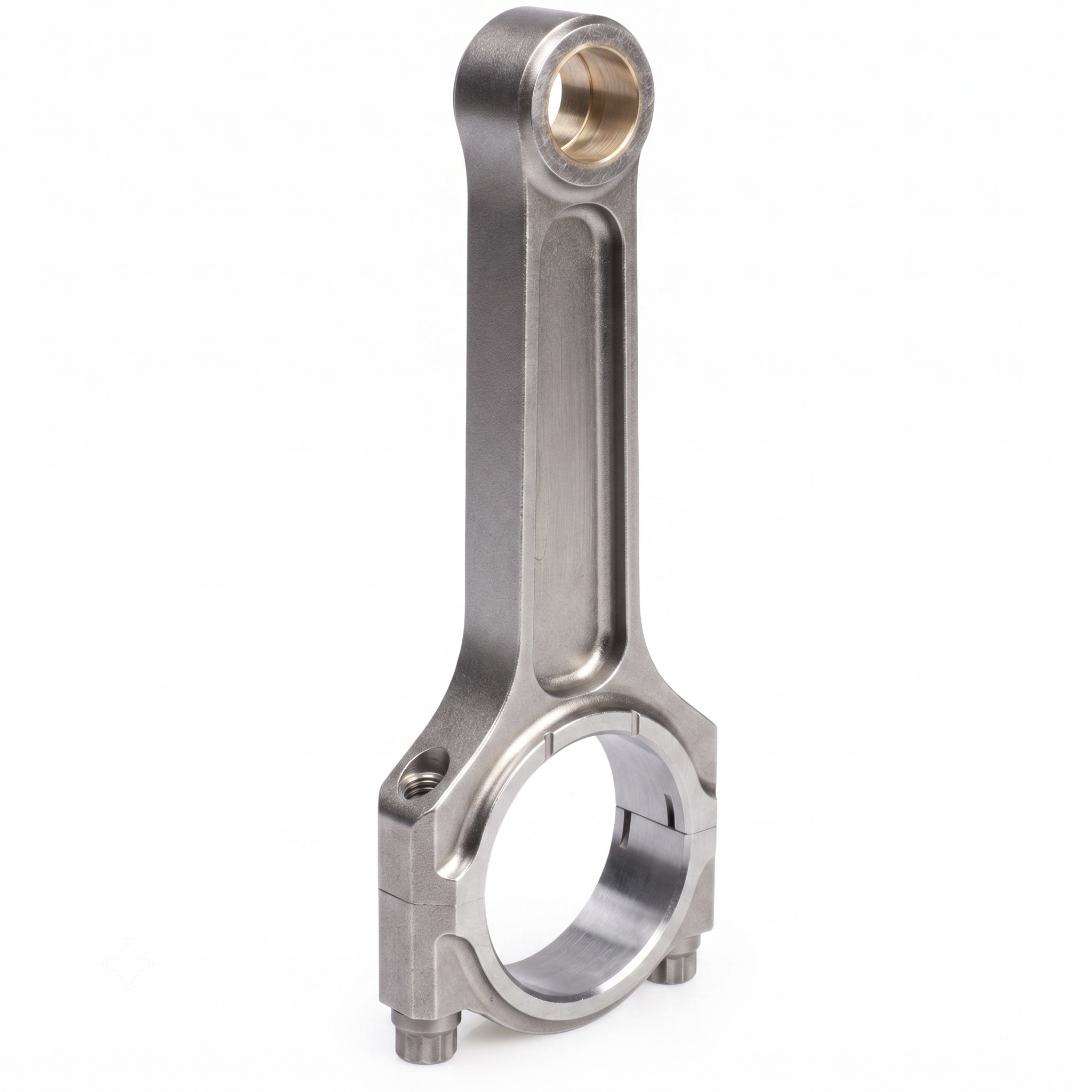 | I-beam profile. Its narrower central web makes it the lightest profile: inertia drops, the engine picks up more freely and the bearings work less, a direct benefit on a boosted five-cylinder that has to respond quickly out of every corner. The I-HD (Heavy Duty) version chosen here by ZRP keeps that design while thickening the critical sections, enough to take the cylinder pressure of 21 mm pin EA855 builds prepared for the track as well as for rally. |
A note on the oil hole: rods drilled with an oil hole (rifle drilled) are recommended up to around 600 hp. Beyond 600 hp, we recommend rods without an oil hole, whose solid beam offers maximum strength.
On this 21 mm pin EA855, the rod bolt is the part that decides the maximum rpm and the acceptable cylinder pressure. The grade is chosen first by the intended discipline: rally and hillclimb, where torque comes early and pick-ups are frequent; circuit and track use, where rpm stays high for long minutes; drag racing, where everything happens in a few very violent peaks. Power per cylinder and rev limit come next. The two grades below are offered in 3/8"-38 mm.
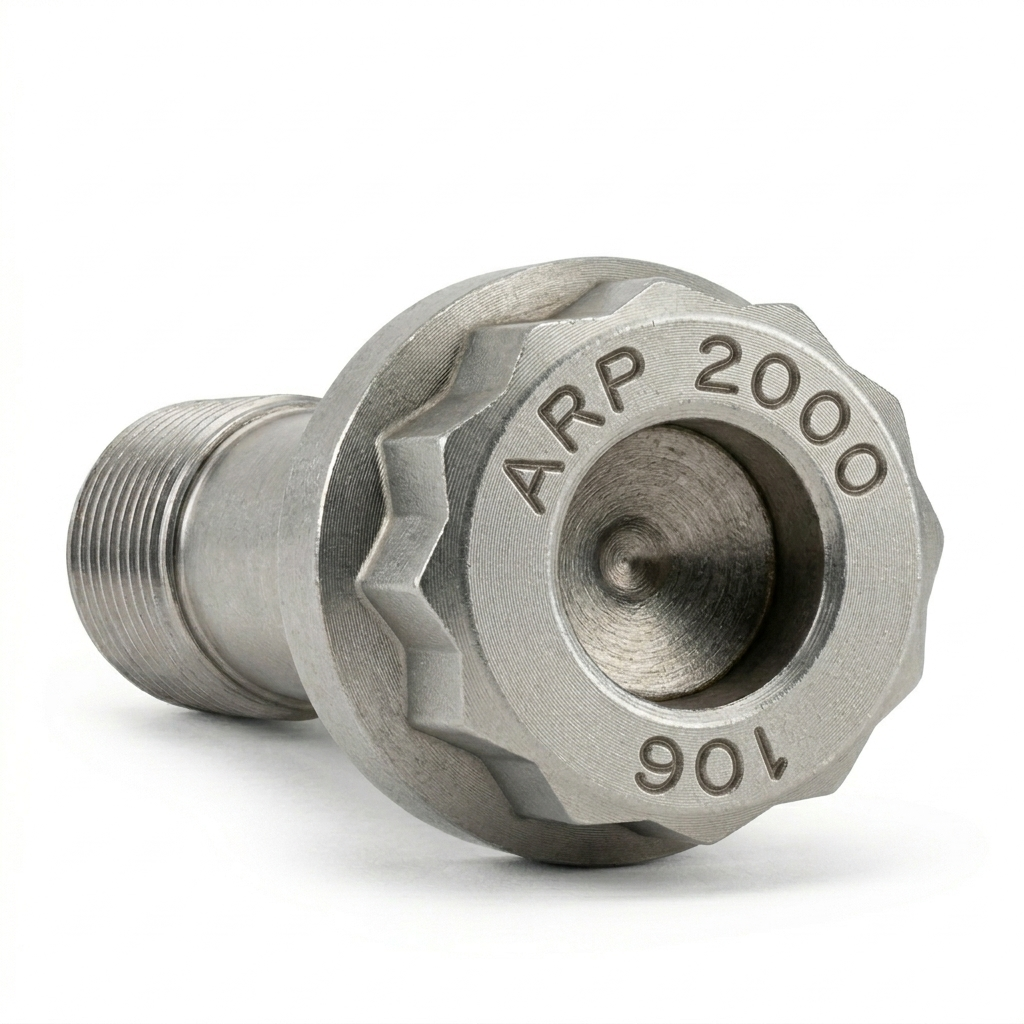 | ARP 2000, rated at a tensile strength of ~220,000 psi (~1,517 MPa), covers ordinary competition use: up to 200 hp per cylinder in 3/8" and 8,500 rpm maximum. On a Stage 2 or Stage 3 EA855 that means almost every configuration met in practice. It is also the dominant grade in circuit racing and track days, in drift, rally, drag racing and hillclimb, and it calls for no particular storage constraint. |
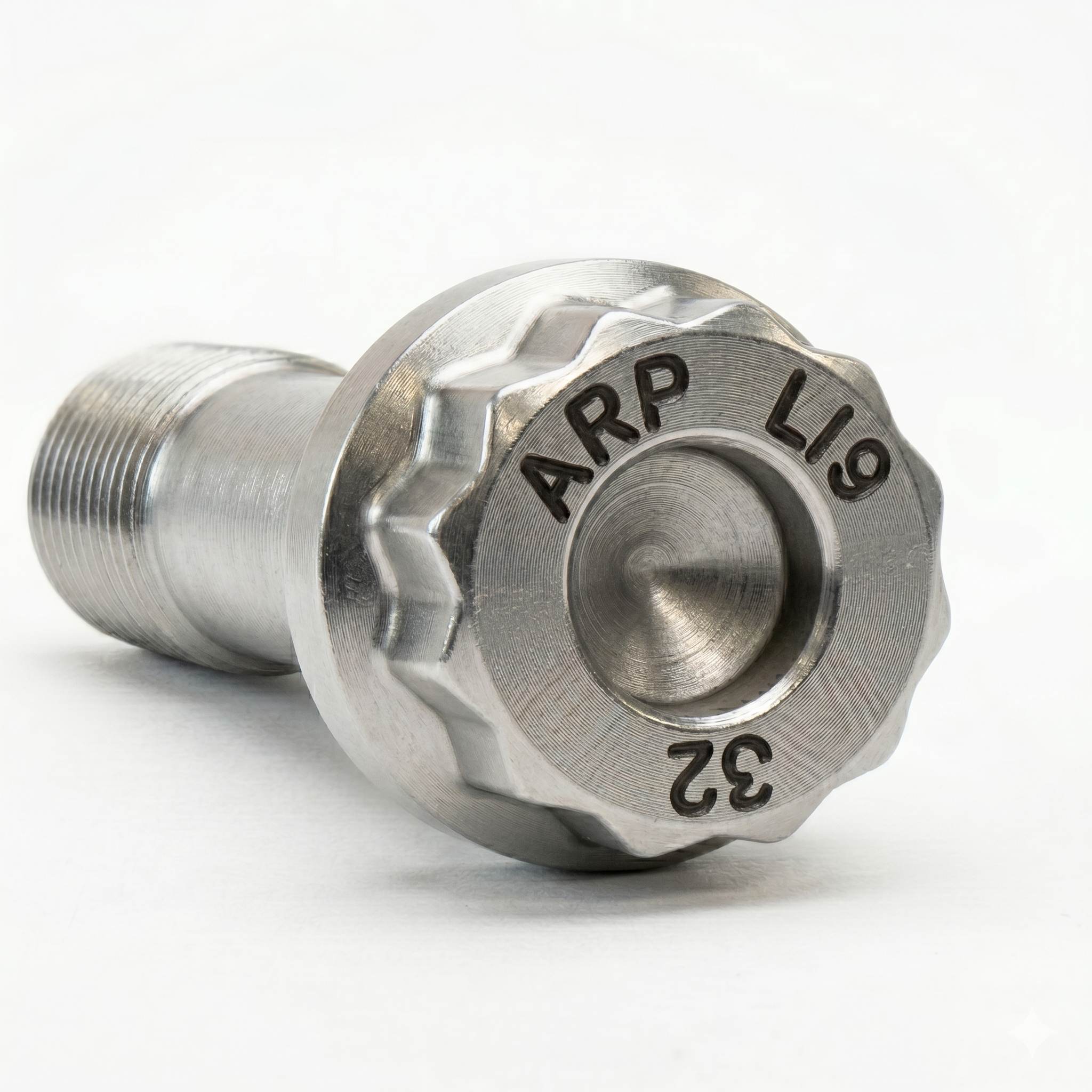 | L19 moves up to ~260,000 psi (~1,793 MPa) and allows up to 250 hp per cylinder in 3/8" as well as 10,000 rpm. It is the grade for the most highly developed EA855 engines: very high boost pressure, high cylinder pressure, sustained high rpm lap after lap. It is found on the big power levels in drag racing, drift, rally and circuit, where the margin of the ARP 2000 is no longer enough. Its downside is known: the alloy fears corrosion and hydrogen embrittlement, it is stored and fitted oiled, away from moisture, and never bare in a workshop. |
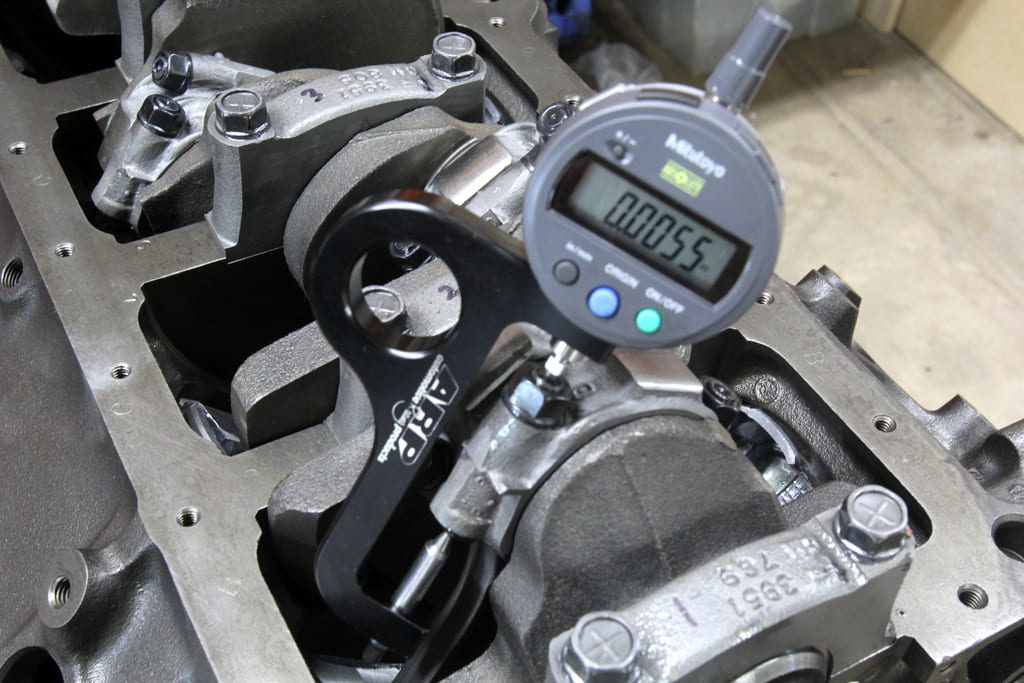
In addition to torque tightening, measuring rod-bolt stretch is the most reliable check for optimal preload. The check is done with the bolt fitted: place the gauge (dial indicator) on the two ends of the bolt and read its actual stretch, which must match the recommended value (see the torque & stretch table above). This method removes the friction variations inherent in torque tightening and secures the assembly on heavily stressed engines. |
 | ZRP, a Greek brand of high-performance forged connecting rods, designed by Alex Drakos in Athens. Each rod is forged from 4340 steel, precision-machined and balanced to ±1 g to stay reliable at high rpm. Offered here in the I-HD profile with ARP 2000 or L19 bolts, they are designed and inspected in Greece, and proven in rally, on circuit and in drift. |
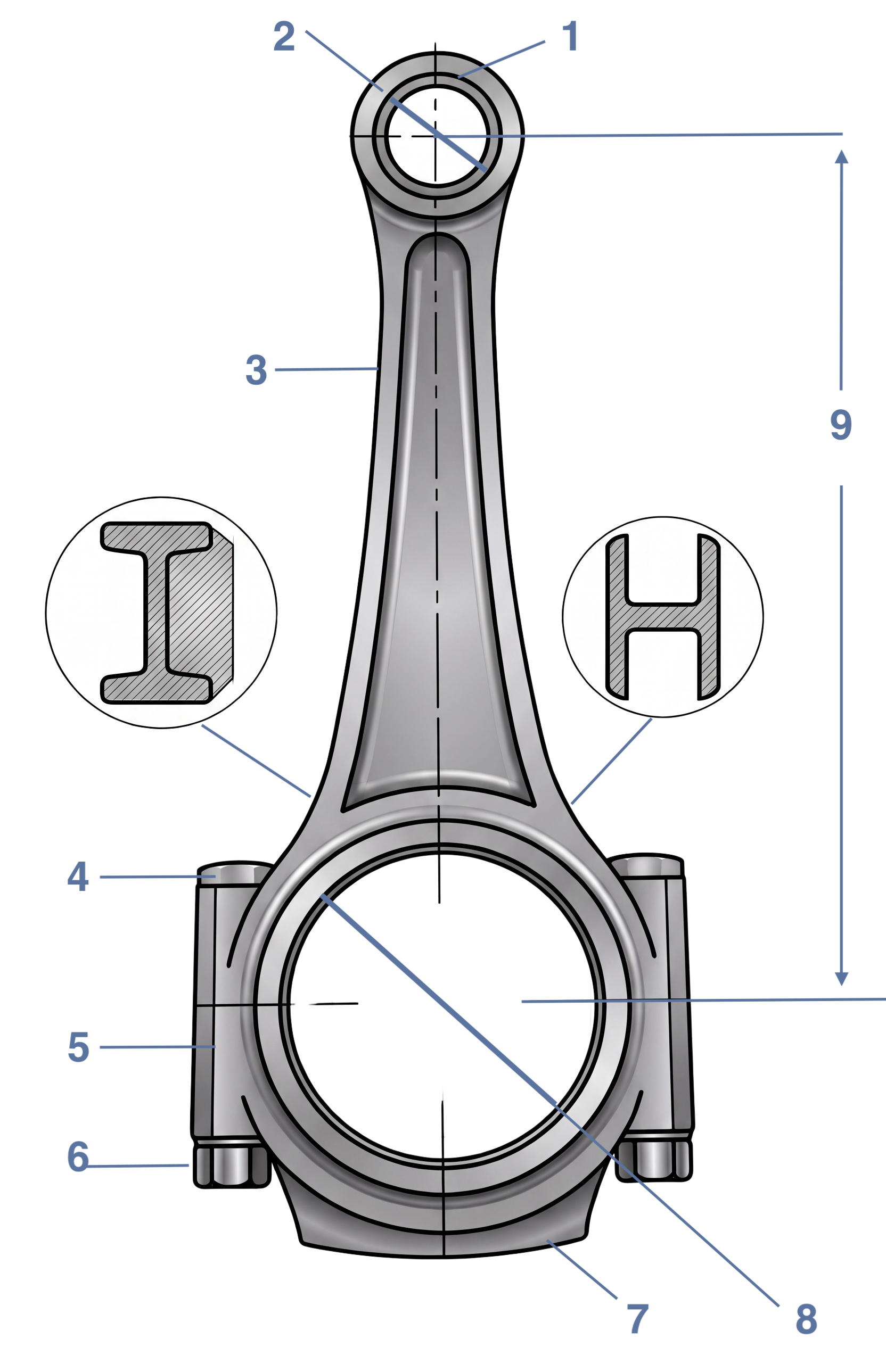 | 1) Small end 2) Small-end diameter 3) Rod beam 4) Rod bolt 5) Big end 6) Rod nut / bolt 7) Rod cap 8) Big-end diameter 9) Center-to-center |
These forged connecting rods fit the following Audi 2.5 TFSI engines (21 mm piston pin):
| Make | Model (chassis) | Engine code | Power | Years |
|---|---|---|---|---|
| Audi | TT RS (8J) | CEPA | 340 hp | 2009–2014 |
| Audi | RS3 (8P) | CEPA | 340 hp | 2011–2012 |
| Audi | TT RS Plus (8J) | CEPB | 360 hp | 2012–2014 |
| Audi | RS Q3 (8U) | CTSA | 310 hp | 2013–2015 |
| Audi | RS Q3 (8U) | CZGA | 340 hp | 2015–2018 |
Losing a rod on a 2.5 TFSI never costs the price of a rod: the matching piston, often the liner and sometimes the crankshaft go with it. Rebuilding the engine with standard parts therefore means buying both the original rods and pistons, a heavy outlay just to recover exactly the same level of fragility as before.
For a comparable, sometimes lower budget, forged 4340 steel rods combined with forged pistons offer reliability and a safety margin of another order, and above all the possibility of increasing power afterwards. That is why European engine builders have been fitting forged rods on boosted five-cylinders for more than 15 years.
For the same money spent: more reliability, more potential, more service life.