Product successfully added to your shopping cart
Quantity
Total
There are 0 items in your cart. There is 1 item in your cart.
Total products
Total shipping To be determined
Total

4.0L 24v - Barra
Manufacturers
4.0L 24v - Barra
Warning: Last items in stock!
New product
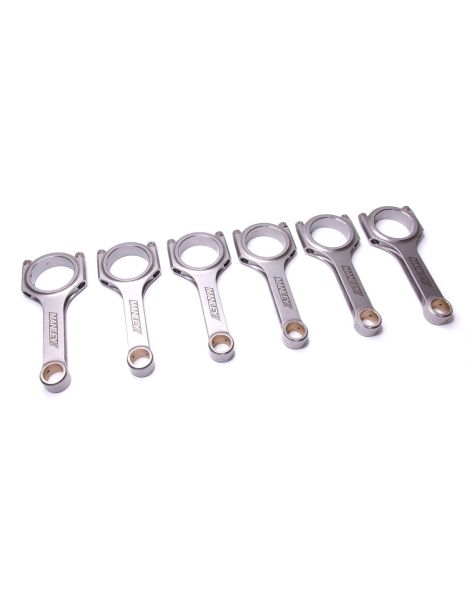
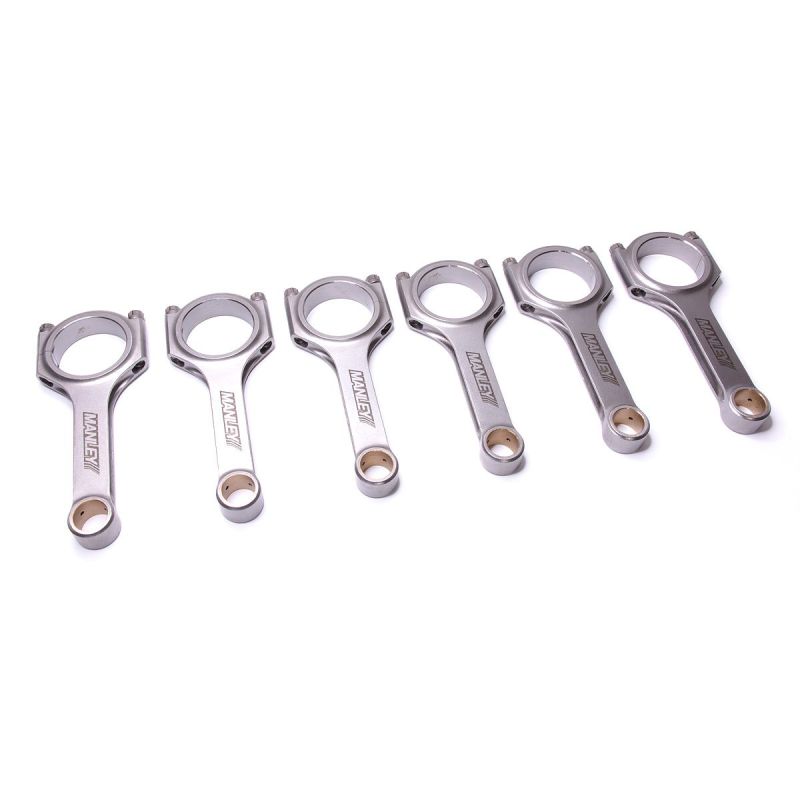
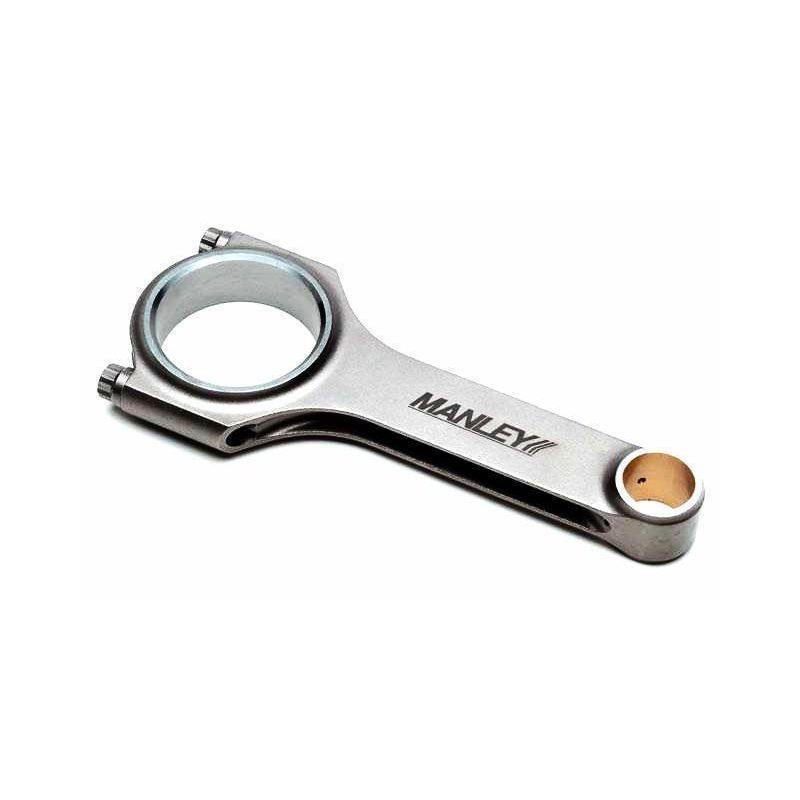
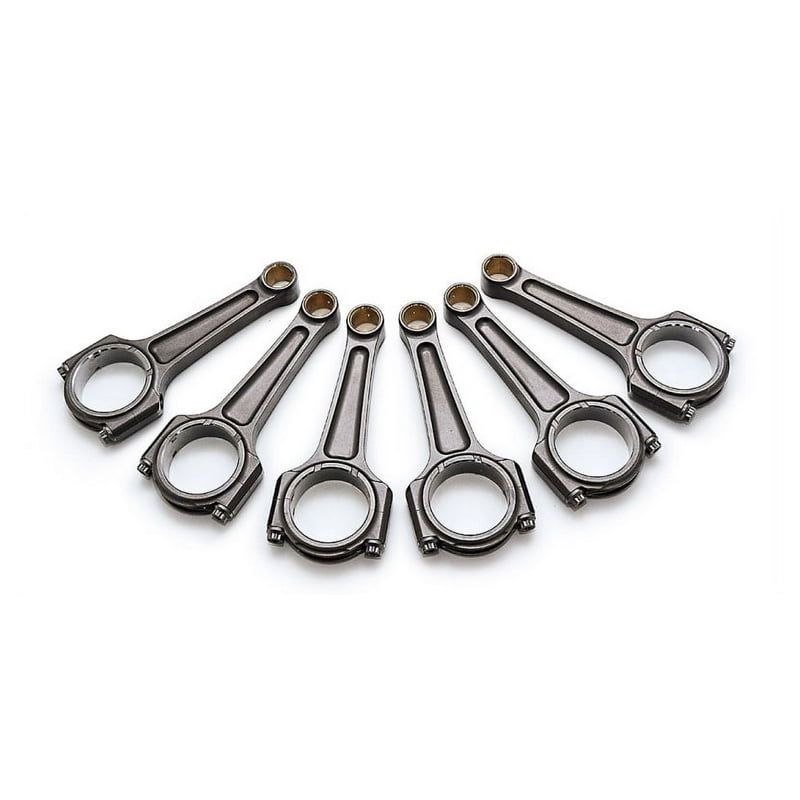
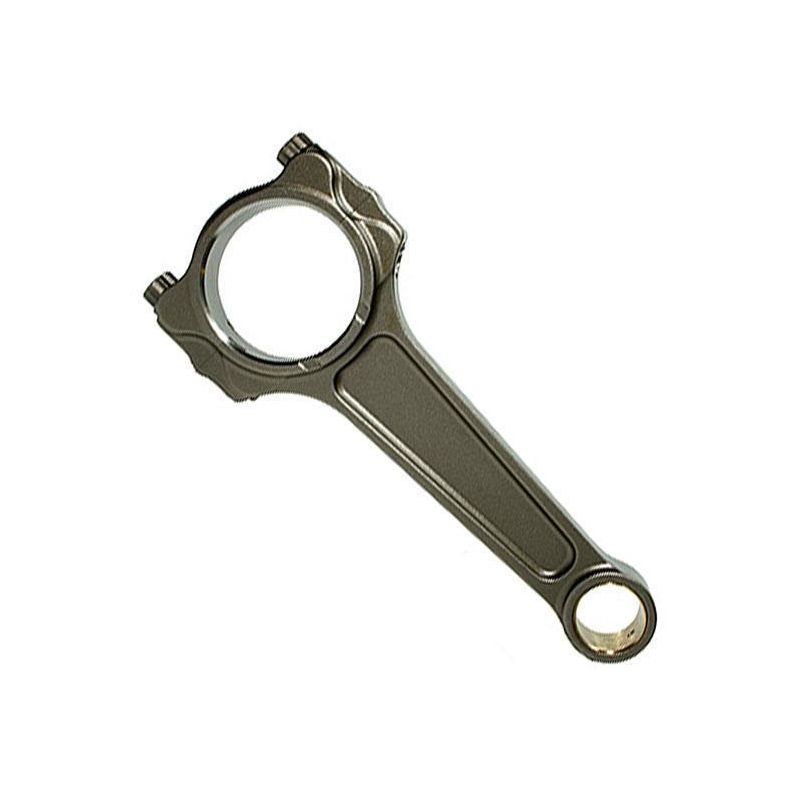
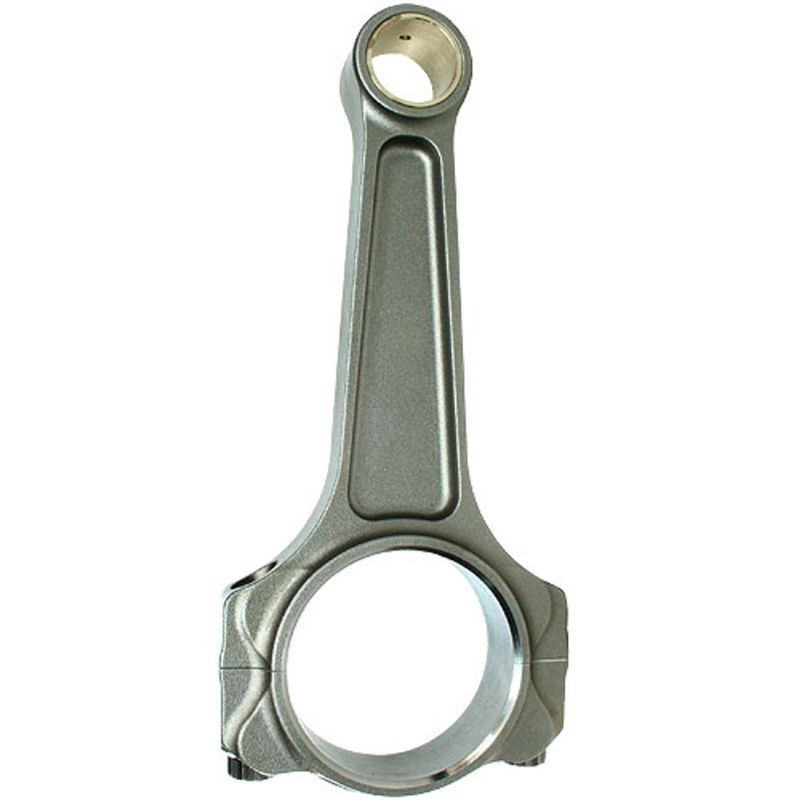
Set of 6 forged connecting rods in 4340 steel for the Ford Falcon 4.0L 24V Turbo Barra 240T.
The Ford Barra 240T is a 4.0-litre (3,984 cc) inline-six with double overhead camshafts and 24 valves, force-fed by a turbocharger. Introduced in 2002 on the BA-series Falcon XR6 Turbo, it produces 240 kW (322 hp) at 5,250 rpm and 450 N·m of torque, pairing a particularly rugged cast-iron block with an aluminium cylinder head.
Designed in Australia, the Barra turbo is renowned for handling big power increases: its cast-iron block and factory crankshaft cope with very aggressive builds. The stock connecting rod then becomes the limiting link; replacing it with a forged rod is the first step to making the engine reliable well beyond its factory output.
A forged connecting rod is shaped by hot die-forging the steel, then machined and heat-treated: the metal grain follows the contour of the part, giving it mechanical strength and fatigue resistance far higher than a stock sintered-metal rod. Supplied as a set of 6, balanced and delivered with their high-performance bolts, our forged connecting rods are the foundation of a reliable Barra 240T build.
They are offered in H-Beam and in I-HD profile (reinforced I-Beam, "Turbo Tuff") and supplied with their high-performance ARP bolts. Each kit includes the six rods needed for the inline-six, ready to receive your forged pistons. Built for high-power turbo builds, they cover every discipline (rally, drift, drag, circuit and track days, hillclimb, time attack) and support Stage 2, Stage 3 and Stage 4+ builds, right up to full competition engines.
| Reference | Brand | Profile | Steel | Bolts | Pin diameter OEM 22 mm | Small-end width | Big-end diameter OEM n.p. | Big-end width | Center-to-center OEM 153.87 mm | Weight per rod |
|---|---|---|---|---|---|---|---|---|---|---|
| 14017R-6 | Manley | H | Forged 4340 steel | ARP 2000-7/16"-37mm | 22 | 56.9 | 25.14 | 154 | 645 g | |
| 14017-6 | Manley | H | Forged 4340 steel | ARP 8740-7/16"-37mm | 22 | 56.9 | 25.15 | 154 | 645 g | |
| 14427-6 | Manley | I-HD | Forged 4340 steel | ARP 2000-7/16"-37mm | 22 | 56.9 | 25.15 | 154 | 690 g | |
| 14427R6-6 | Manley | I-HD | Forged 4340 steel | ARP CA625+-7/16"-37mm | 22 | 56.9 | 25.15 | 154 | 690 g | |
| 15527-6 | Manley | I-HD-300M | Forged 300M steel | ARP 2000-7/16"-37mm | 22 | 56.9 | 25.15 | 154 | 760 g | |
| 15527R6-6 | Manley | I-HD-300M | Forged 300M steel | ARP CA625+-7/16"-37mm | 22 | 56.9 | 25.15 | 154 | 760 g |
| Rod | Bolts | Torque | Recommended stretch |
|---|---|---|---|
| Manley (14017R-6) | ARP 2000 | 122 N·m | 0.127 – 0.152 mm |
| Manley (14017-6) | ARP 8740 | 128.8 N·m | 0.127 – 0.137 mm |
| Manley (14427-6) | ARP 2000 | 108.5 N·m | 0.127 – 0.152 mm |
| Manley (14427R6-6) | ARP CA625+ | 142.4 N·m | 0.152 – 0.165 mm |
| Manley (15527-6) | ARP 2000 | 108.5 N·m | 0.127 – 0.152 mm |
| Manley (15527R6-6) | ARP CA625+ | 142.4 N·m | 0.152 – 0.165 mm |
The 7/16" bolts on the Barra call for an effort you can only control with proper support: the block firmly chocked on its stand, a wrench long enough to pull without straining the wrist, and your body lined up with the movement. A jerky pull, or a wrench bearing at an angle, shows up as scatter from one bolt to the next which the gauge reveals immediately. So you tighten slowly, then read the stretch again. Three grades are offered on this engine, ARP 8740, ARP 2000 and ARP CA625+ in 7/16" 37 mm, each with its own figures: those in the table come from the bolt manufacturer and must be followed scrupulously, measured stretch remaining the reference.
| 4340 steel is a nickel-chromium-molybdenum alloy steel, through-hardened, used in aerospace and motorsport. After forging, it offers yield strength, tensile strength and fatigue resistance markedly higher than the sintered metal of stock rods, while retaining good ductility. The most extreme versions use 300M steel, derived from 4340 with increased silicon content, even stronger for very high power levels. |
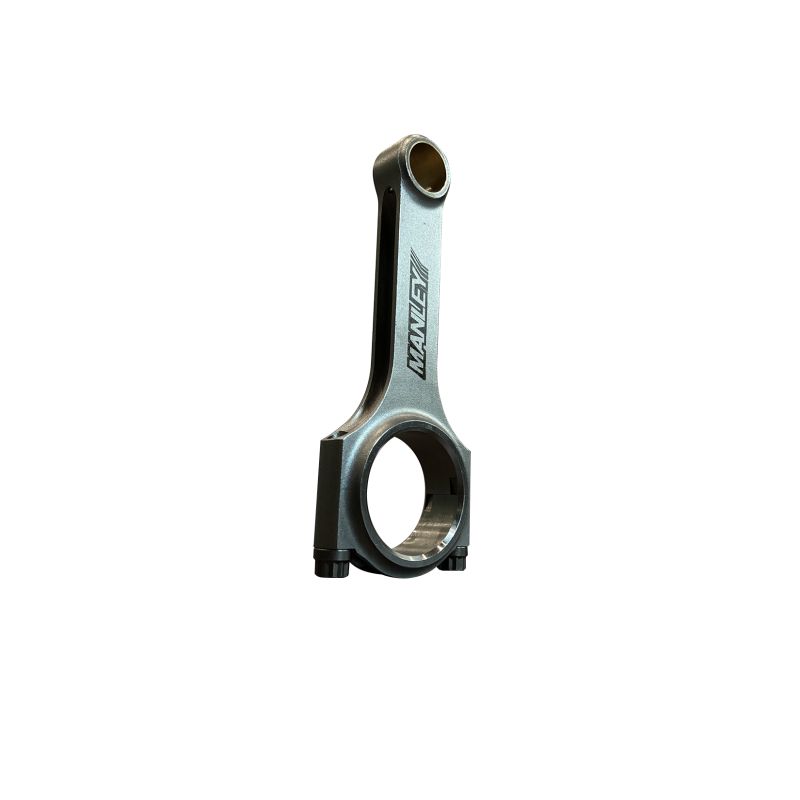
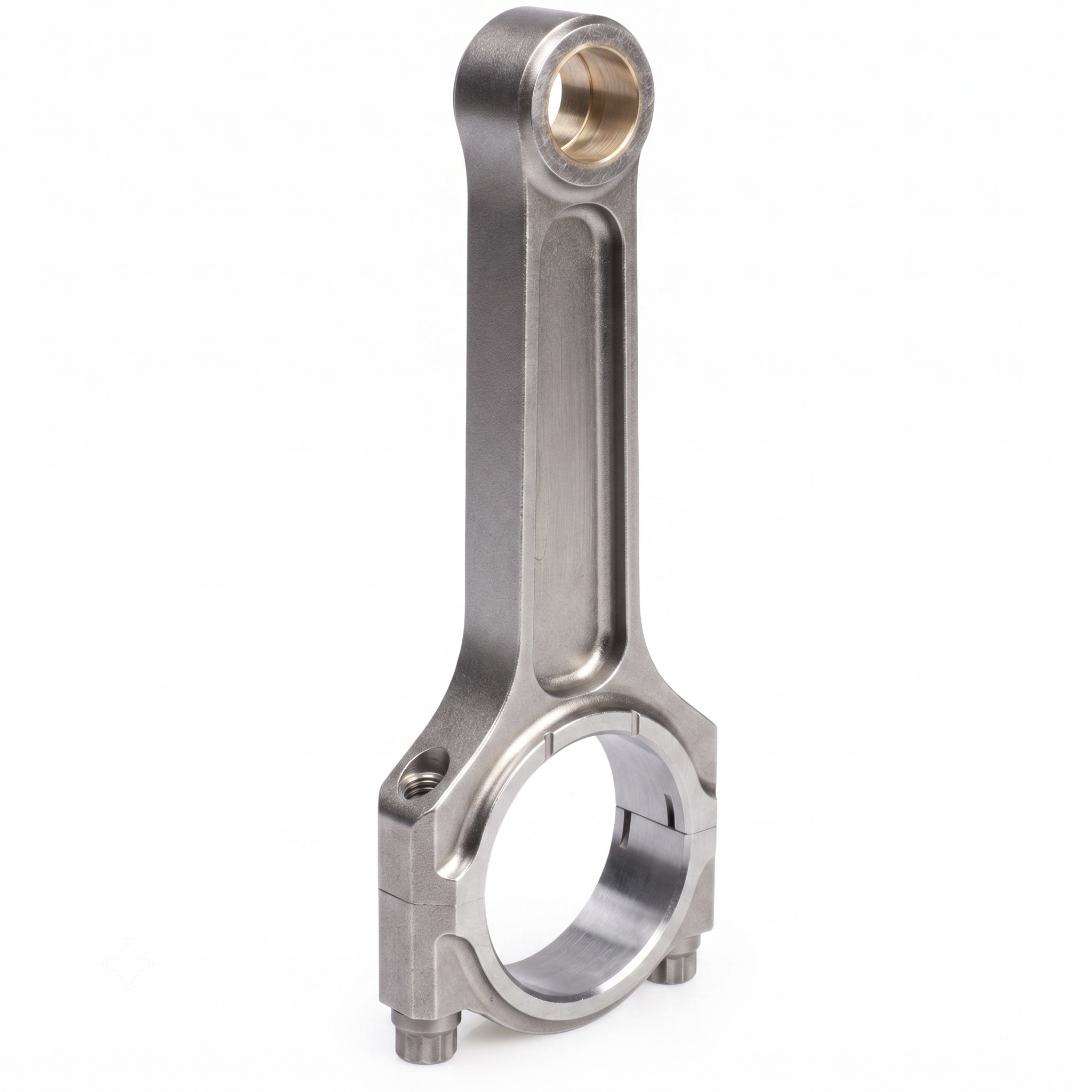 | I-HD profile (Manley "Turbo Tuff"). Reinforced version of the I-Beam: the central section is thickened to gain rigidity while keeping mass low, an excellent compromise for heavily boosted engines. |
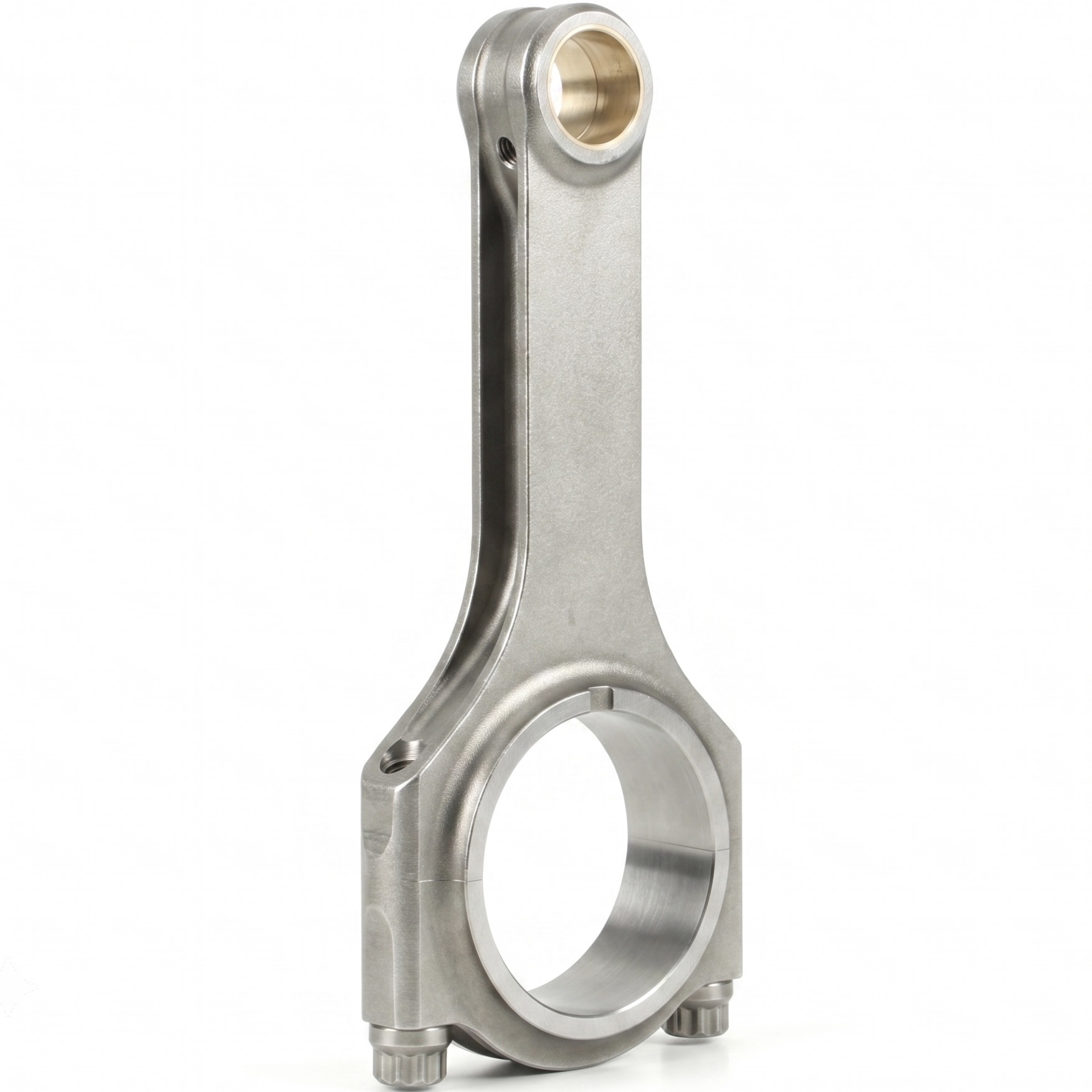 | H-Beam profile. H-Beam section offering high rigidity under compressive load, particularly suited to high-torque, high-boost engines like the Barra turbo. |
The rod bolt is one of the most heavily stressed parts of the engine: it holds the cap clamped to the crank journal on every revolution. On a built Barra turbo, the choice of ARP bolt grade directly determines the reliability of the bottom end. Three ARP bolt grades are offered: ARP 8740 (high-performance chromoly steel) as standard fitment, then ARP 2000 and ARP Custom Age 625+ for the most extreme builds.
| ARP 8740. Proven, versatile heat-treated chrome-molybdenum steel: ARP's long-standing reference, fitted as standard on most performance rod kits. | |
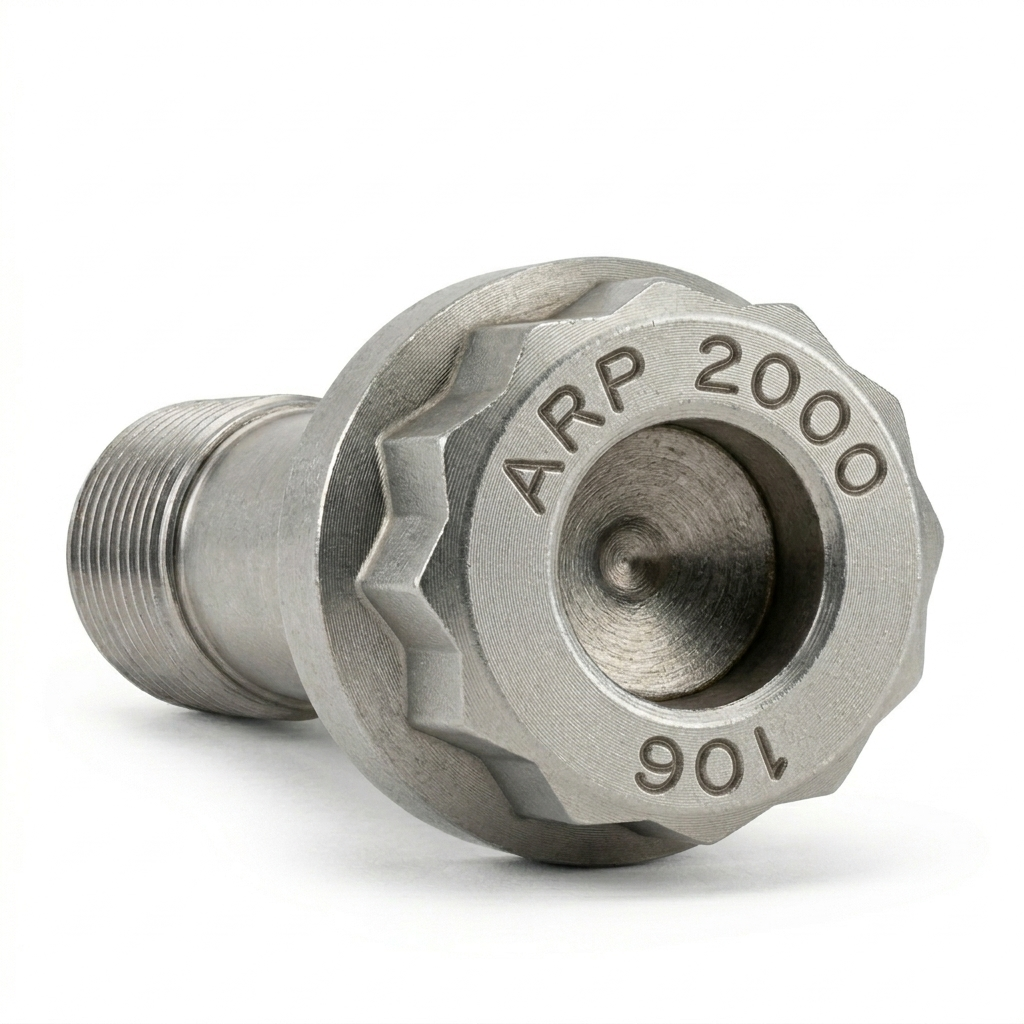 | ARP 2000. High-strength alloy steel (about 220,000 psi tensile strength), for circuit, drift, rally, drag and hillclimb use, up to 8,500 rpm. |
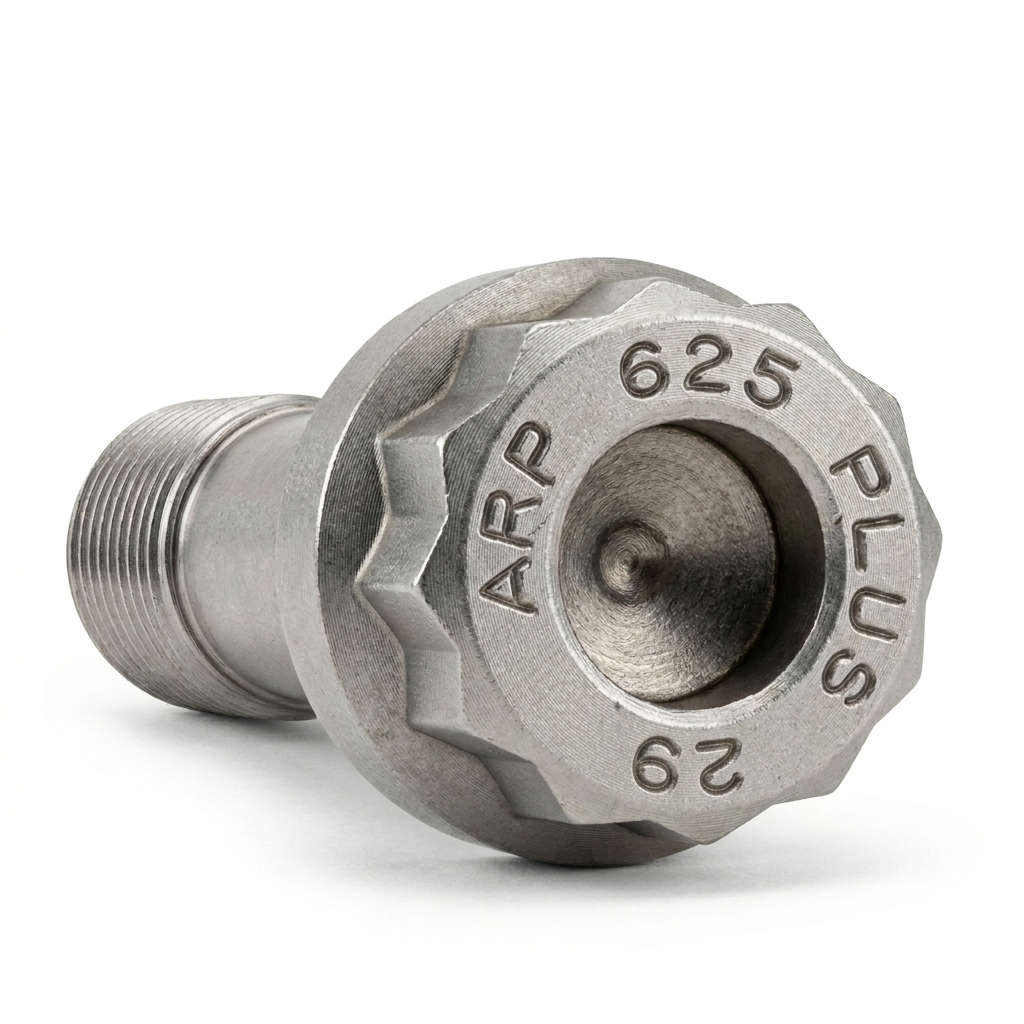 | ARP Custom Age 625+. Premium aerospace alloy (260,000 to 280,000 psi), resistant to corrosion and hydrogen embrittlement, with no storage constraints: the choice for extreme builds, beyond 10,000 rpm. |
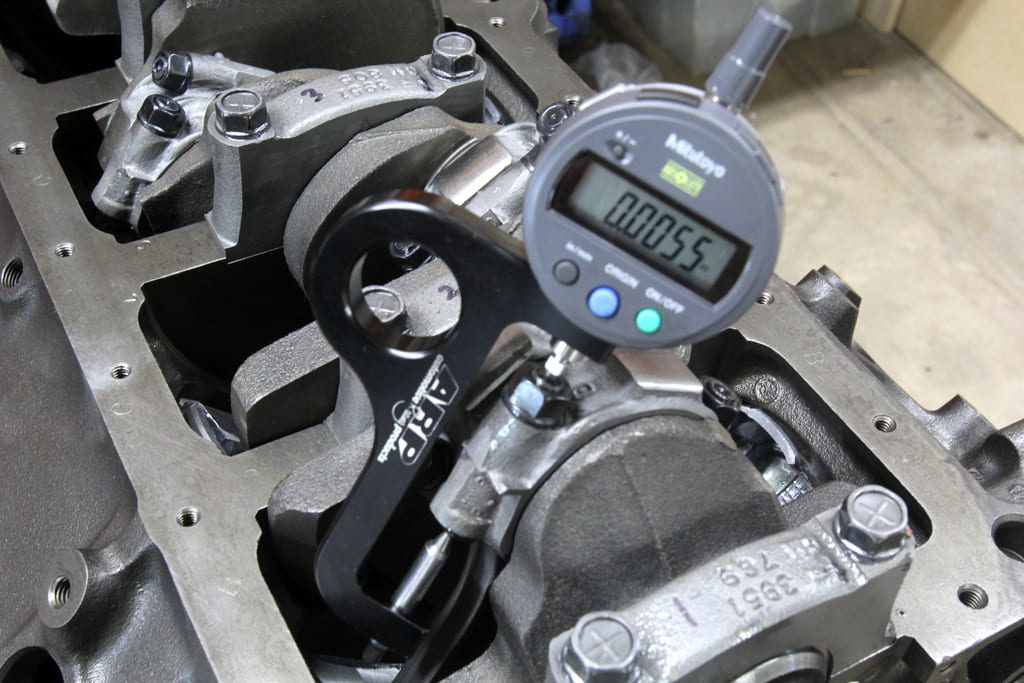
| In addition to torque tightening, measuring bolt stretch with a gauge (dial indicator) remains the most reliable method to ensure correct preload. Always refer to the instructions supplied with the kit. |
 | Manley Performance. A leading American manufacturer of high-performance engine parts. Its forged connecting rods for the Barra 240T are offered in H-Beam and I-HD (Turbo Tuff) profiles, in 4340 steel or 300M steel for the most demanding versions, with ARP 8740, ARP 2000 or ARP Custom Age 625+ bolts. |
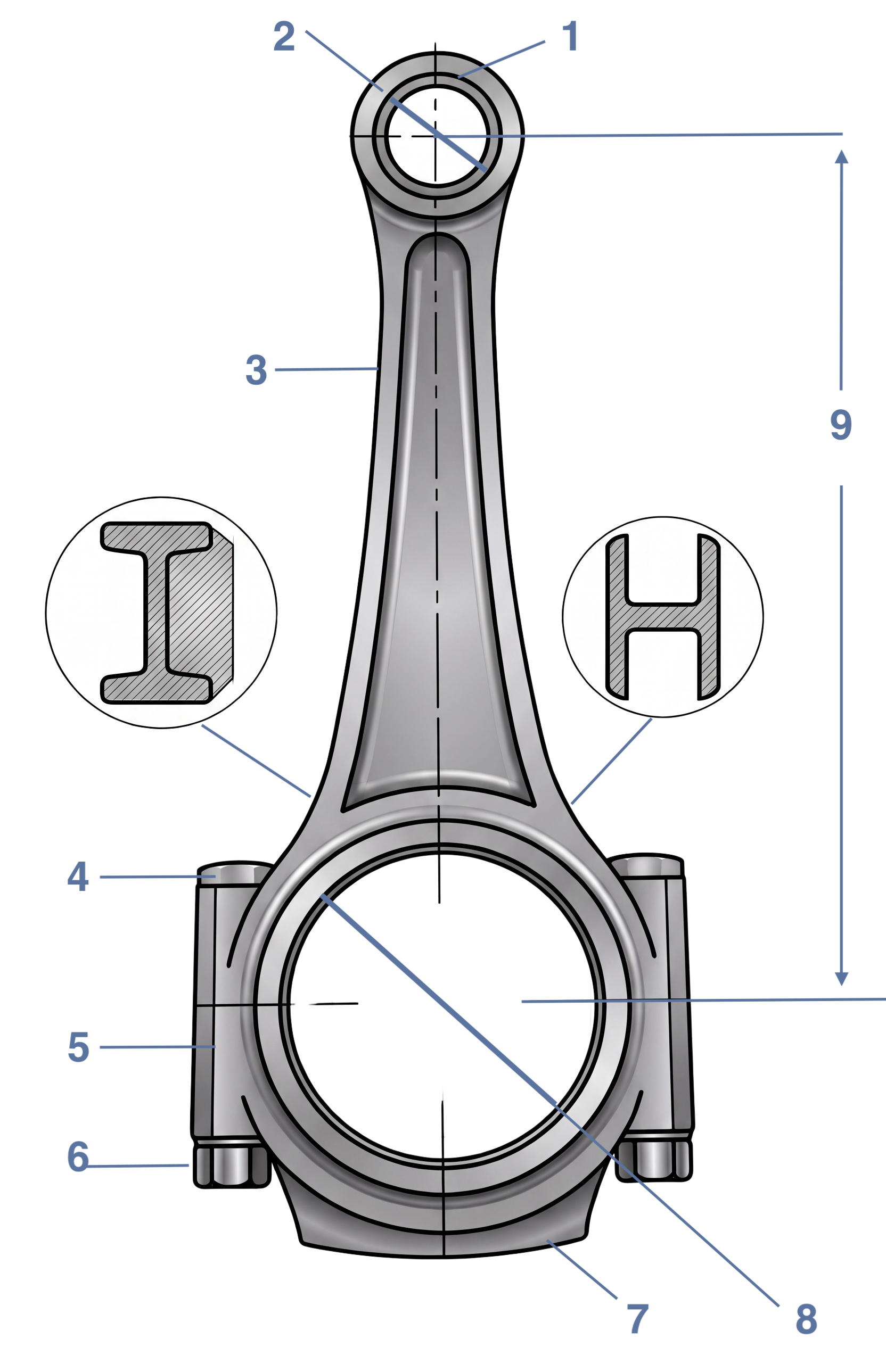 | 1) Small end 2) Small-end diameter 3) Rod beam 4) Rod bolt 5) Big end 6) Rod nut / bolt 7) Rod cap 8) Big-end diameter 9) Center-to-center |
These forged connecting rods are compatible with the Ford Barra 240T engine fitted to the Falcon XR6 Turbo:
| Brand | Model (chassis) | Engine code | Power | Years |
|---|---|---|---|---|
| Ford | Falcon XR6 Turbo (BA) | Barra 240T | 322 hp | 2002–2005 |
OEM reference:
Replacing the original connecting rods with forged rods means securing a reliable engine even when heavily built. The price of a set of forged rods bears no comparison with the cost of a full rebuild after a failure: it is the investment that lastingly protects your Barra 240T.
For a budget comparable to a stock assembly, forged connecting rods withstand far more torque and rpm. It is one of the most cost-effective investments of a serious engine build.
For the same budget: more reliability, more power potential and real peace of mind over time.