Product successfully added to your shopping cart
Quantity
Total
There are 0 items in your cart. There is 1 item in your cart.
Total products
Total shipping To be determined
Total

3.5L 24v - VQ35DE
Manufacturers
3.5L 24v - VQ35DE
Warning: Last items in stock!
New product
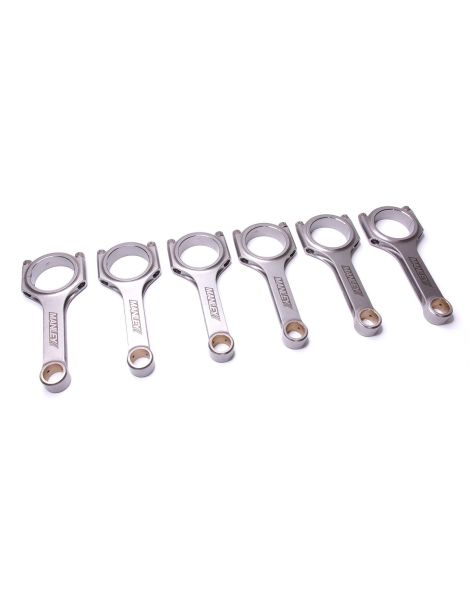
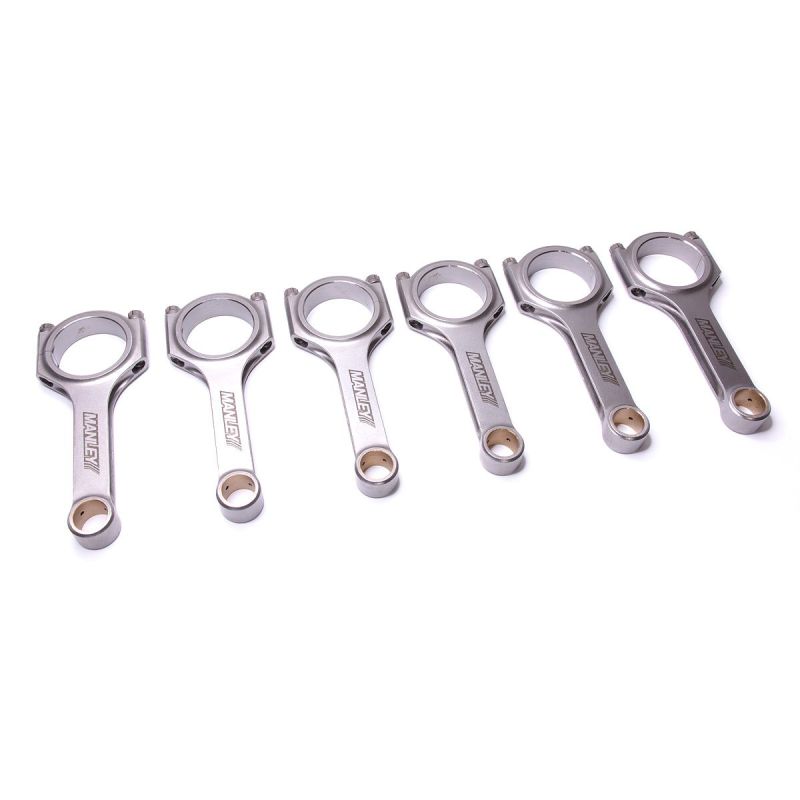
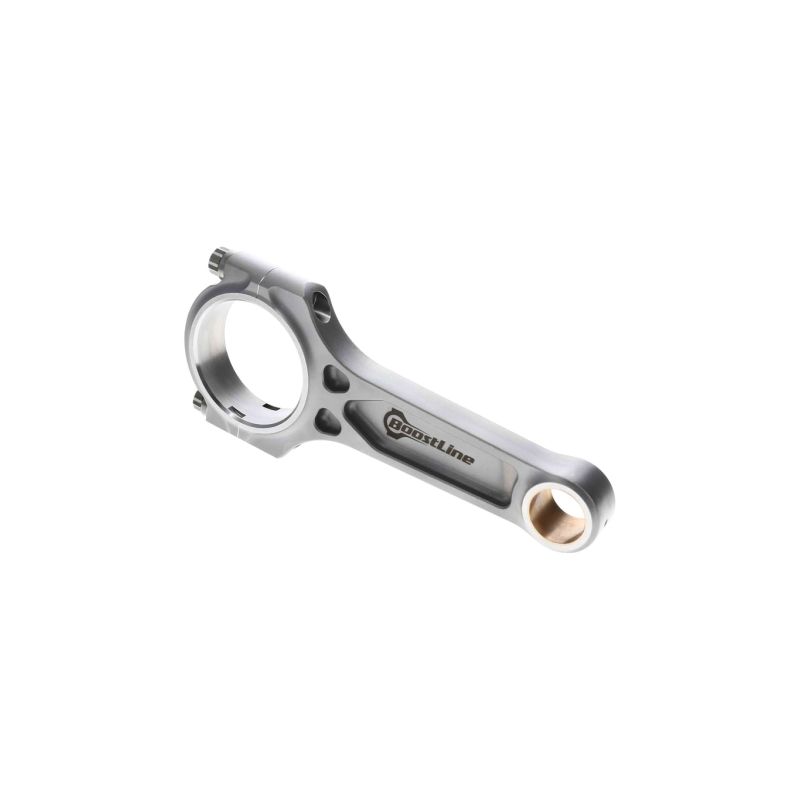
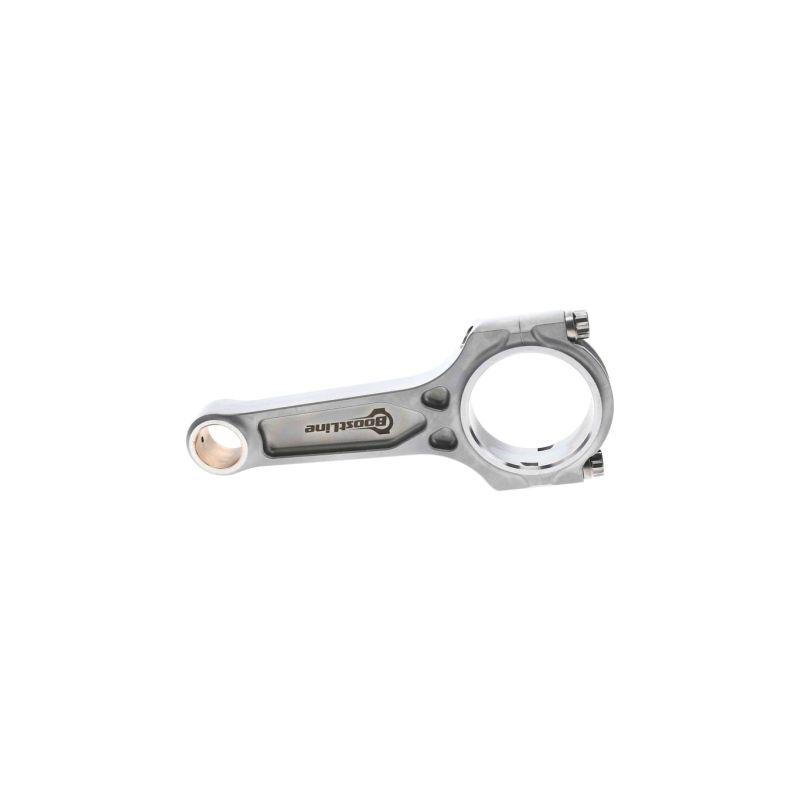
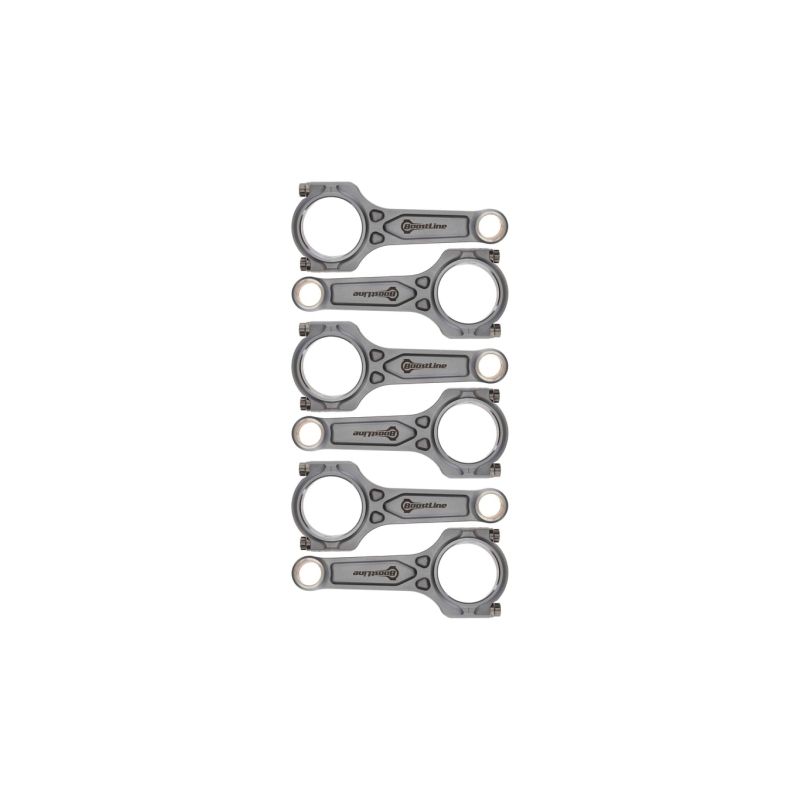
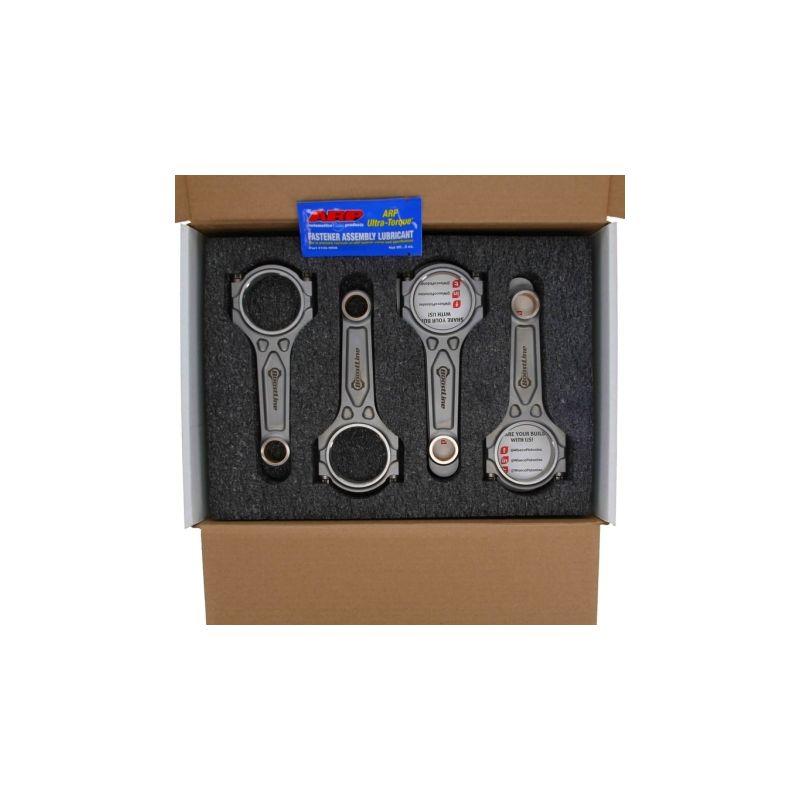
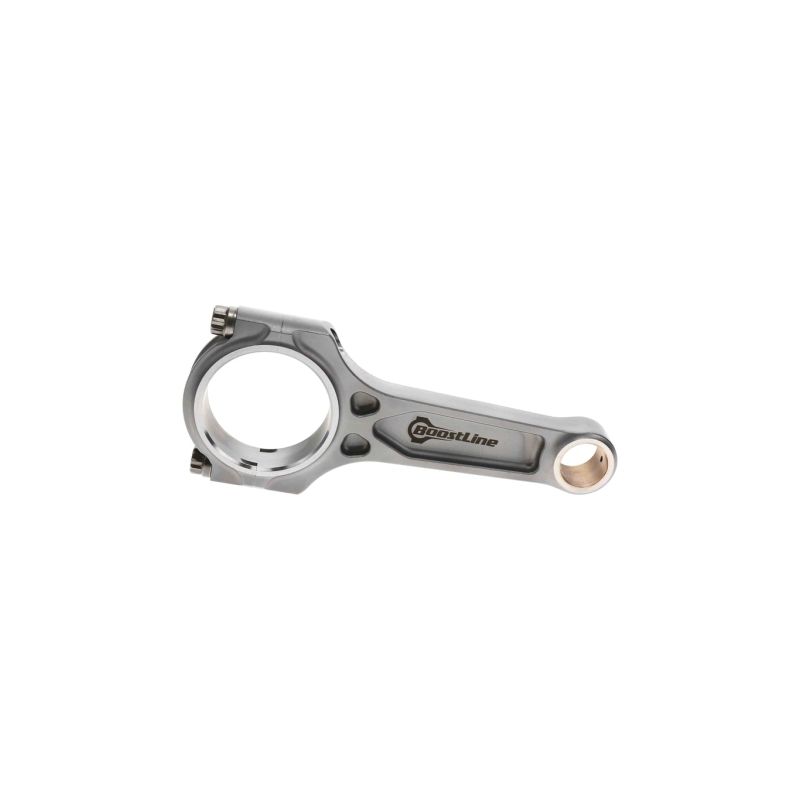
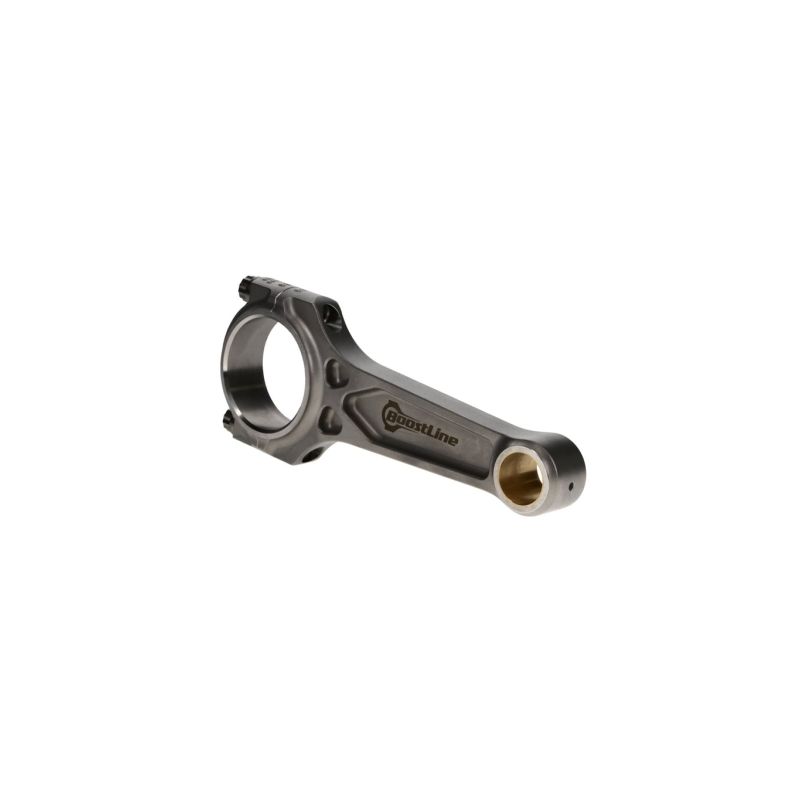
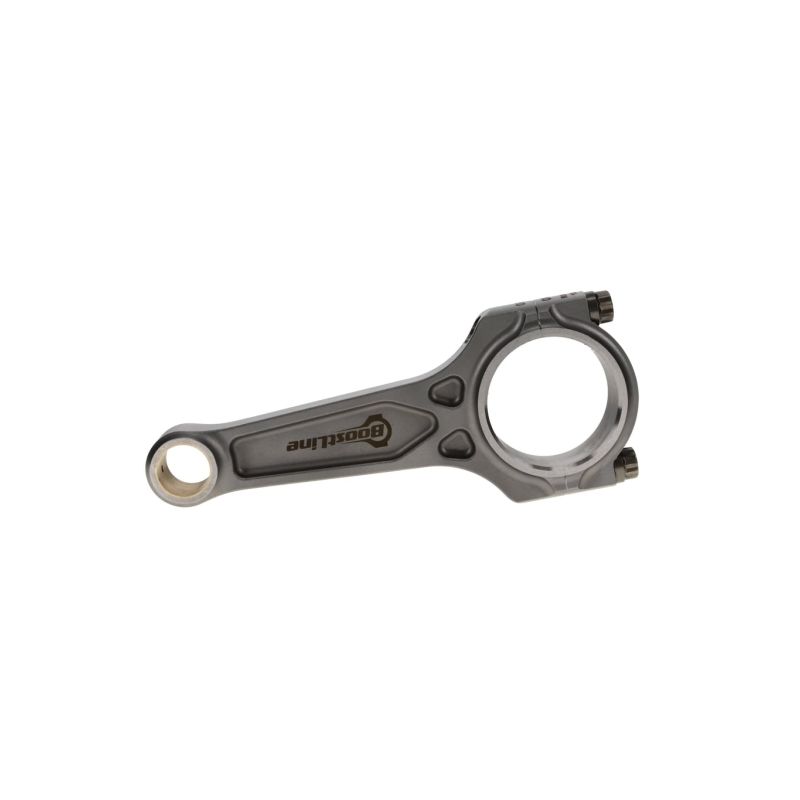
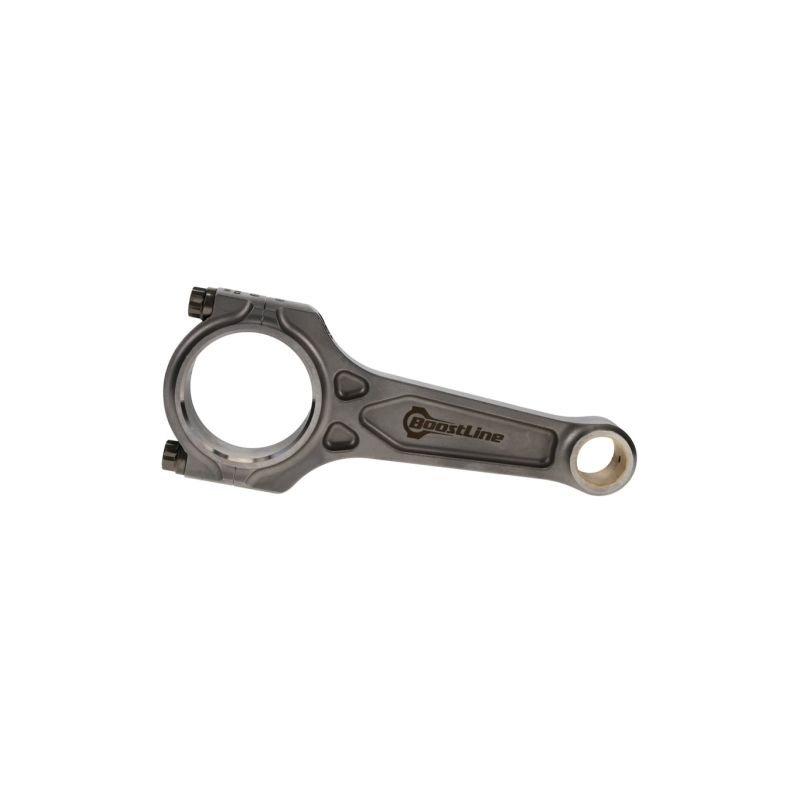
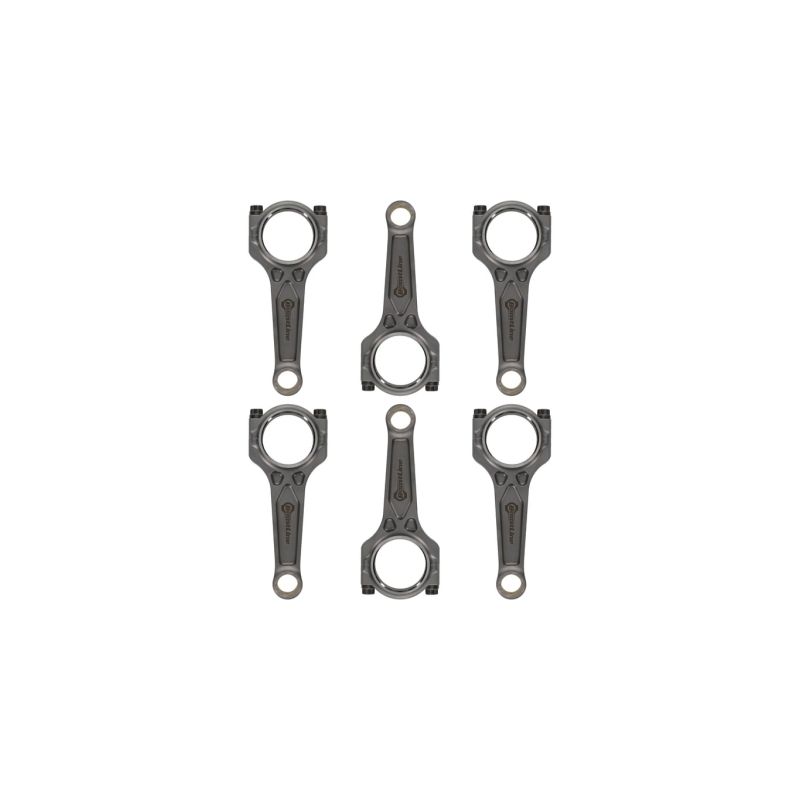
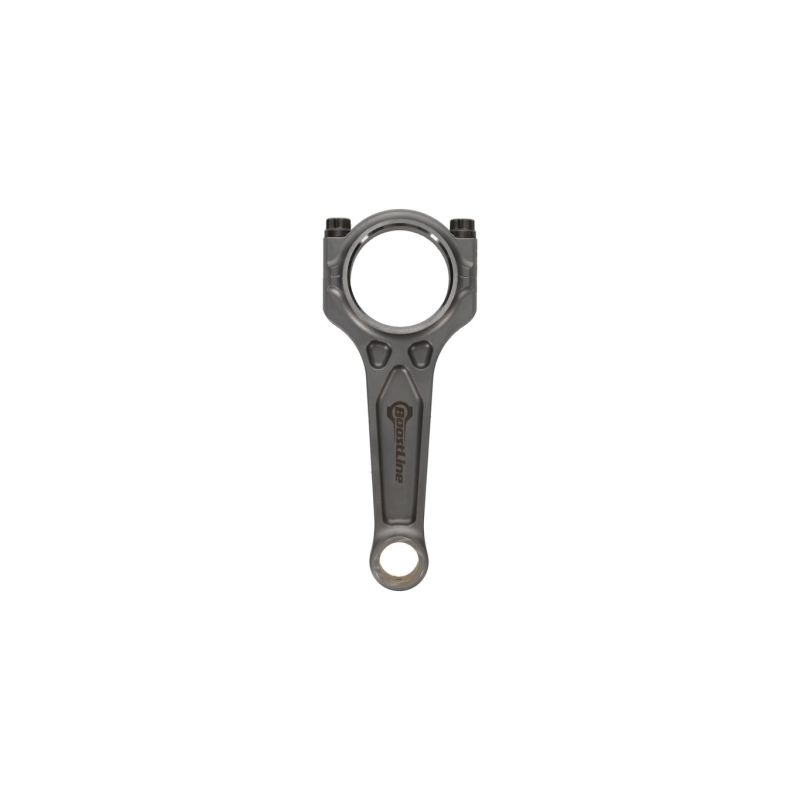
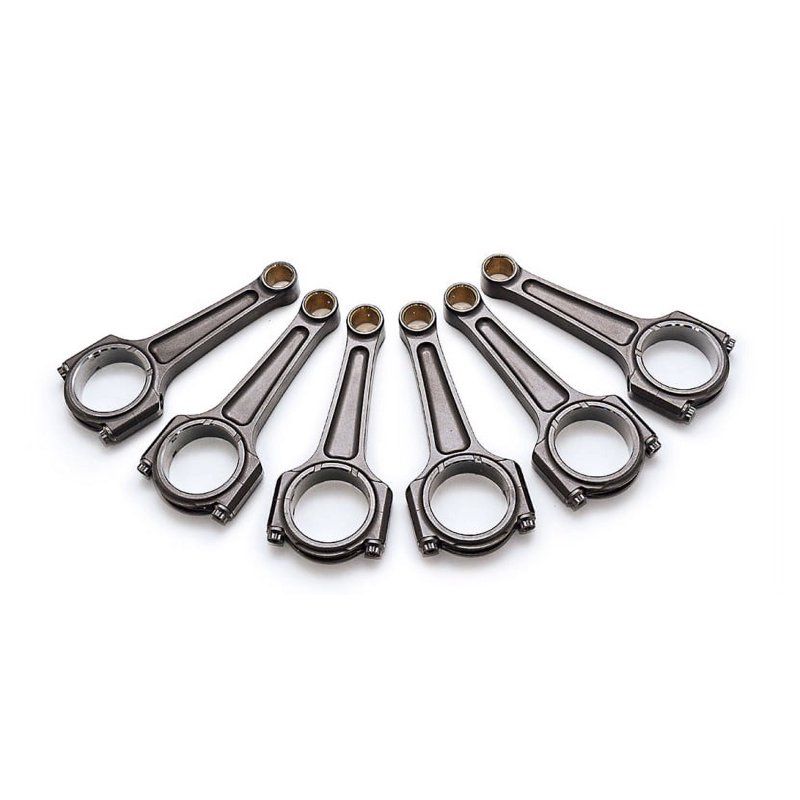
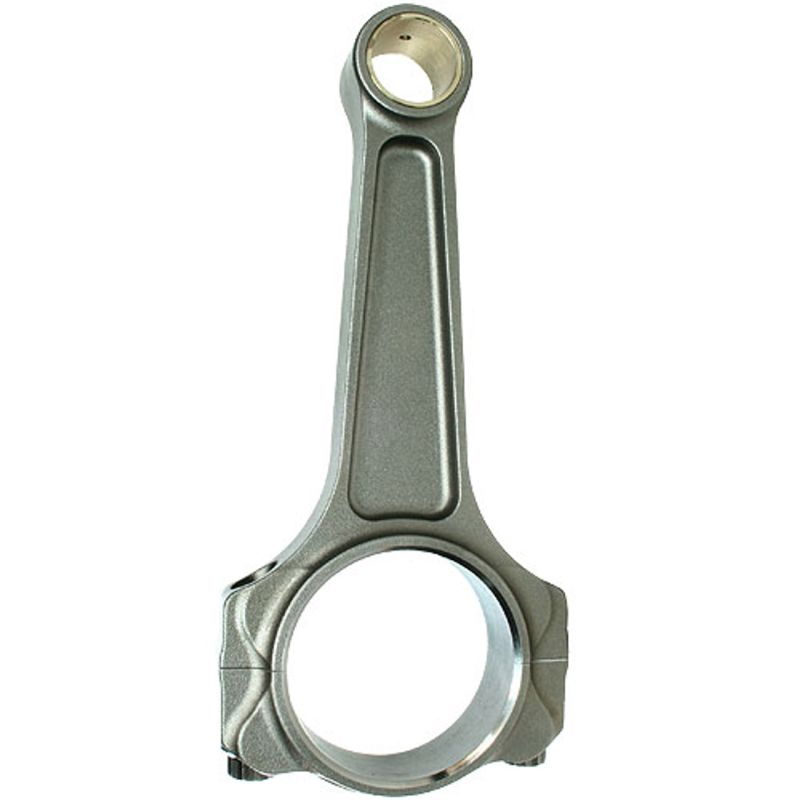
Set of 6 forged 4340 steel connecting rods for the Nissan 3.5L 24V VQ35DE.
The Nissan VQ35DE is a 3,498 cc, 24-valve DOHC V6 produced from 2000 at the Iwaki plant in Japan. Part of the award-winning VQ family, it builds on the proven VQ30DE architecture and adds variable intake valve timing (CVTCS). With a 95.5 mm bore and an 81.4 mm stroke, it favours high-rpm response and flexibility, two traits that built its reputation in the Nissan 350Z (Z33) and Infiniti G35 (V35).
Depending on the version and model year, the VQ35DE produces roughly 234 to 300 hp and 334 to 371 N·m of torque. It powers the Nissan 350Z, Altima, Maxima, Murano and Quest, as well as the Infiniti G35 and FX35. Well engineered, it relies on an aluminium block and a forged crankshaft; its stock connecting rods, however, quickly reach their limit as cylinder pressure rises, whether in a sharp naturally aspirated build or a forced-induction conversion. Switching to 4340 forged connecting rods is the key step to strengthen the bottom end and handle power well beyond factory levels.
NSB Concept forged connecting rods turn the reciprocating motion of the pistons into crankshaft rotation while absorbing tremendous loads on every cycle. Hot-forged from high-strength alloy steel, they feature a grain flow that follows the shape of the part: for an equal section, they offer far greater fatigue strength and resistance to failure than the sintered-metal rods fitted as standard.
They are designed for all high-performance and competition uses: circuit, trackday, drift, rally, hillclimb, drag and time attack. They suit both a high-rpm naturally aspirated build and a turbo or supercharger conversion, from Stage 2 to Stage 4 and beyond.
As soon as cylinder pressure rises (higher compression ratio, forced induction, sustained rpm), the rods become the cornerstone of VQ35DE reliability. Combined with forged pistons, they let you confidently target 400, 500 hp and more depending on the setup, where stock rods would demand a cautious safety margin. Profile and bolt grade are then chosen according to the targeted power and discipline.
| Reference | Brand | Profile | Bolts | Pin diameter OEM 22 mm | Small-end width | Big-end diameter | Big-end width | Center-to-center OEM 144.2 mm | Weight per rod |
|---|---|---|---|---|---|---|---|---|---|
| NI5677-866 | BOOSTLINE | I-3P | ARP 2000-3/8"-38mm | 22 | 21 | 55 | 20.78 | 144.2 | 614 g |
| NI5677-866+ | BOOSTLINE | I-3P | ARP CA625+-3/8"-38mm | 22 | 21 | 55 | 20.78 | 144.2 | 613 g |
| 14019-6 | MANLEY | H | ARP 2000-3/8"-38mm | 22 | 55 | 20.83 | 144.27 | 525 g | |
| 14406-6 | MANLEY | I-HD | ARP 2000-3/8"-38mm | 22 | 55 | 20.83 | 144.27 | 590 g |
| Rod | Bolts | Torque | Recommended stretch |
|---|---|---|---|
| Boostline (NI5677-866) | ARP 2000 | 75 N·m | 0.130 to 0.140 mm |
| Boostline (NI5677-866+) | ARP CA625+ | 115 N·m | 0.170 to 0.180 mm |
| Manley (14019-6) | ARP 2000 | 81.3 N·m | 0.147 to 0.157 mm |
| Manley (14406-6) | ARP 2000 | 81.3 N·m | 0.147 to 0.157 mm |
On a V6 such as the VQ35DE, what holds the rod cap in place is not the figure read on the wrench but the preload actually installed in each of the twelve bolts. Torque is only an indirect way of reaching it: part of the effort is lost to friction in the threads and under the bolt head. This is why the values in the table above, specified by the bolt manufacturer, must be followed to the letter, and why checking stretch with a gauge remains the reference method: it measures the elongation of the bolt directly, and therefore the preload obtained. Clean, dry threads, then ARP assembly lubricant spread evenly, and progressive tightening in two or three alternating passes: these precautions determine repeatability, whether the rod is fitted with ARP 2000 or ARP CA625+ bolts. The instructions supplied with the kit always take precedence.
4340 is a nickel-chromium-molybdenum (Ni-Cr-Mo) alloy steel renowned in aerospace and motorsport for its outstanding balance of strength, ductility and fatigue resistance. After hot forging, the rods are quenched and tempered, then shot-peened to close surface microporosity and further boost fatigue strength.
Compared with the sintered metal of stock rods, 4340 offers roughly +19% yield strength, +8% tensile strength and +19 to +37% fatigue strength. In practice, the rod deforms and breaks much later: this margin is what allows high cylinder pressure and high rpm without bottom-end failure.
This product offers the profiles genuinely suited to the VQ35DE. The choice depends on the targeted power and the type of build.
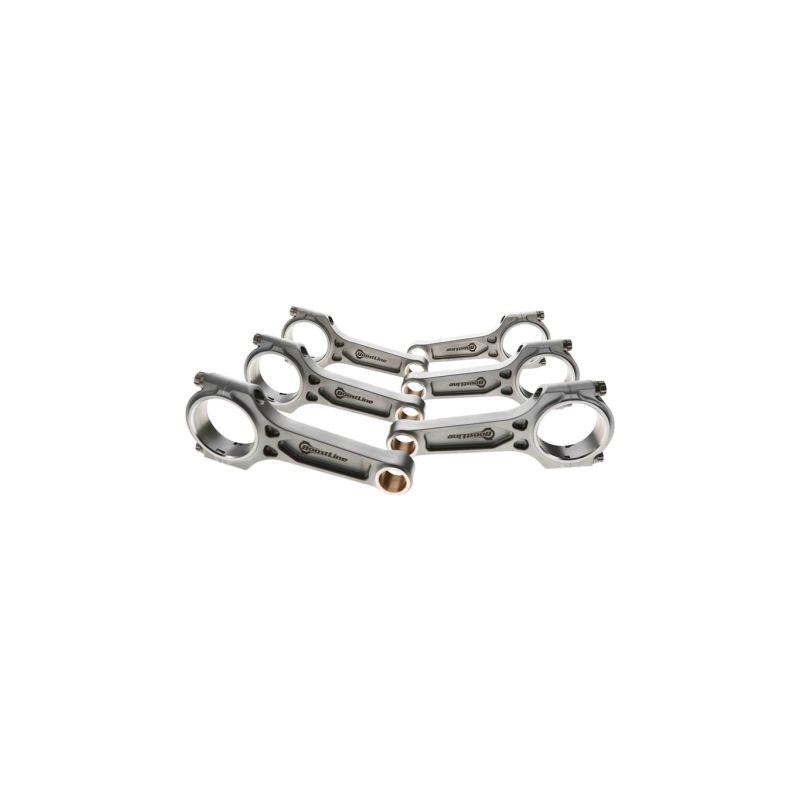
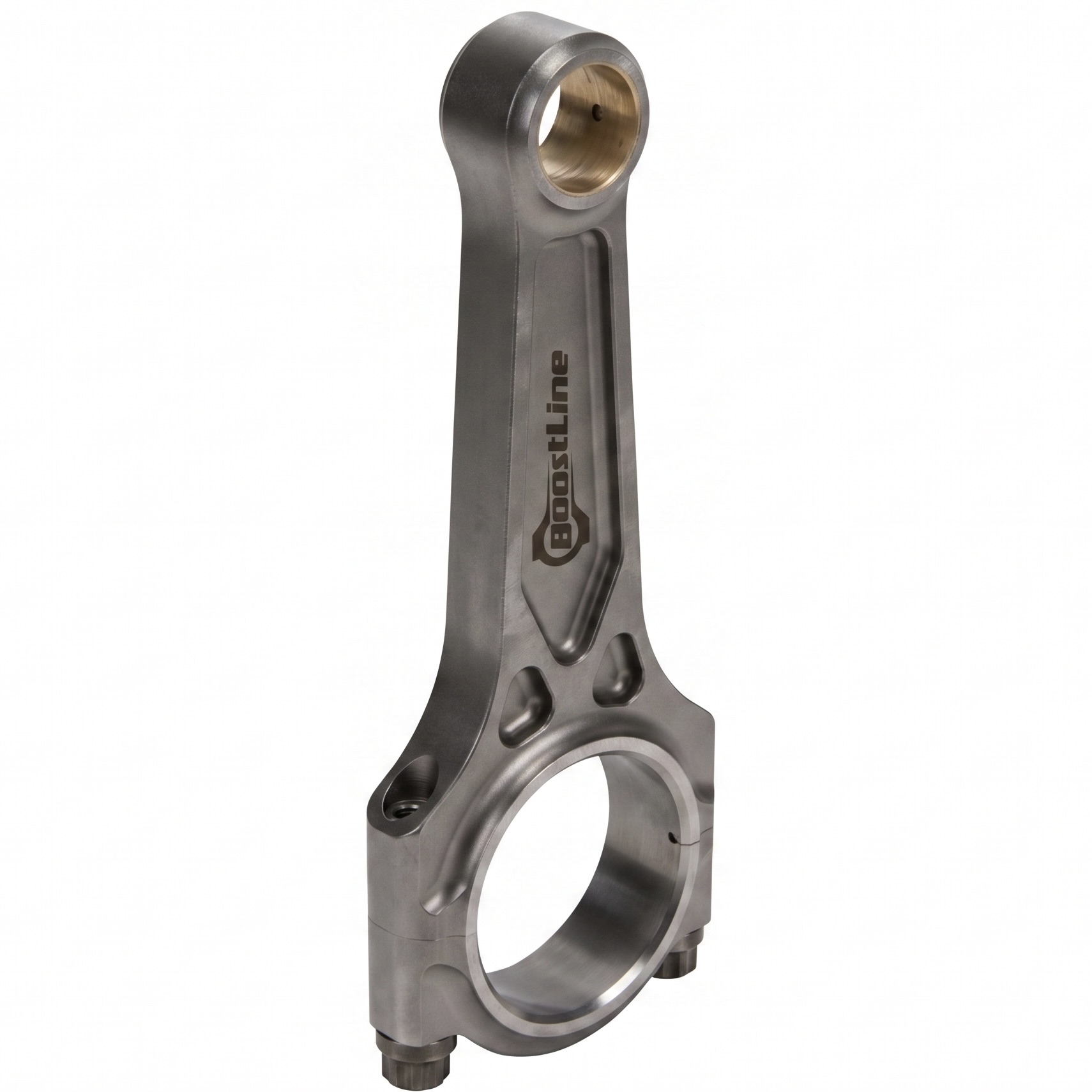 | I-3P profile (Boostline) : an I-Beam structure optimised by Boostline, with three lightening pockets and a beam shaped through finite-element analysis. It combines the lightness of the I-Beam with rigidity close to an H-Beam, ideal for both high-rpm naturally aspirated engines and forced-induction builds. |
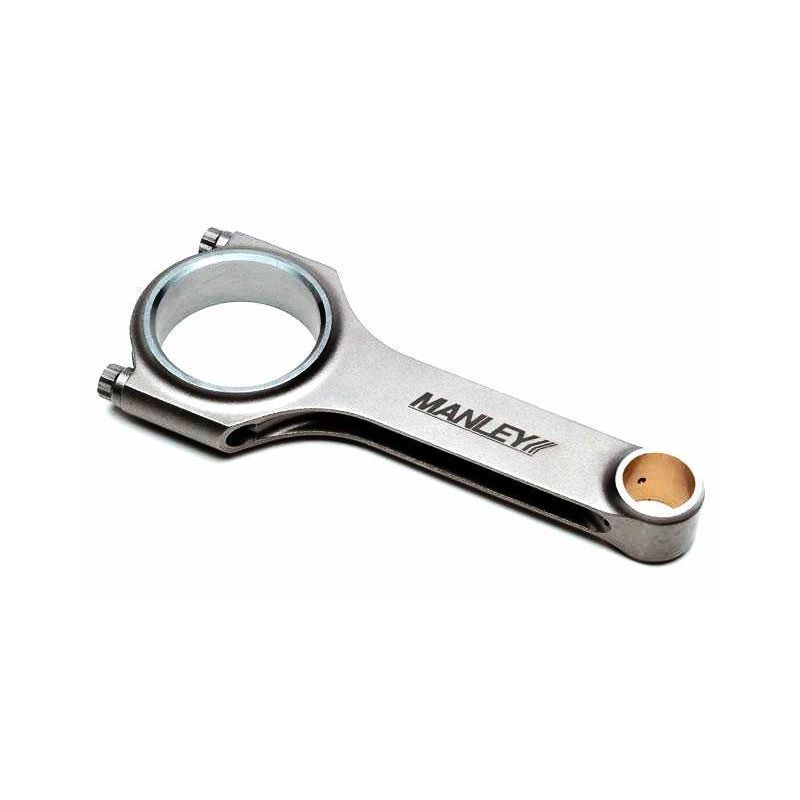
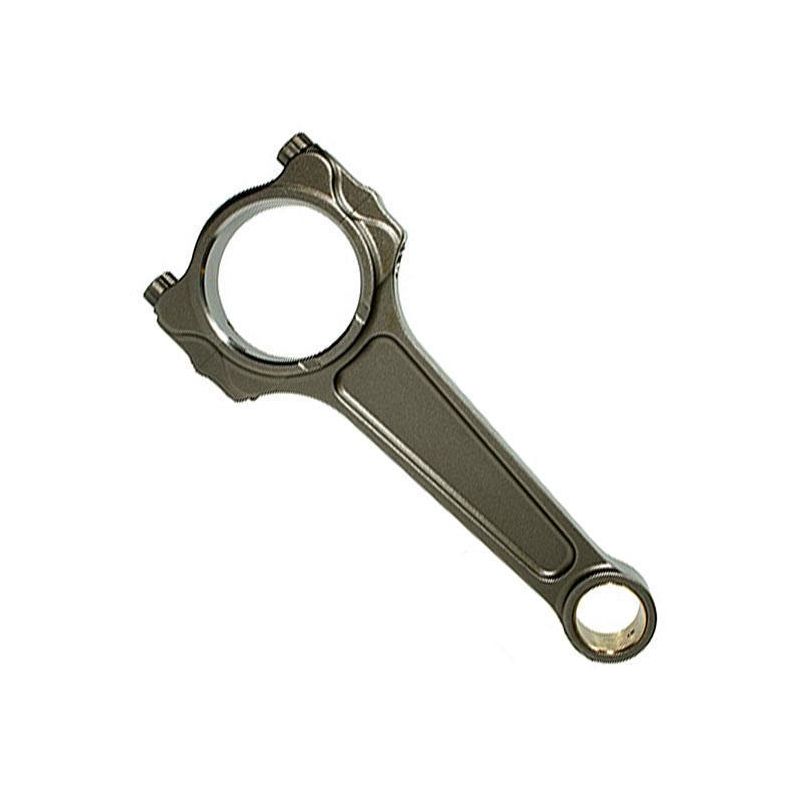
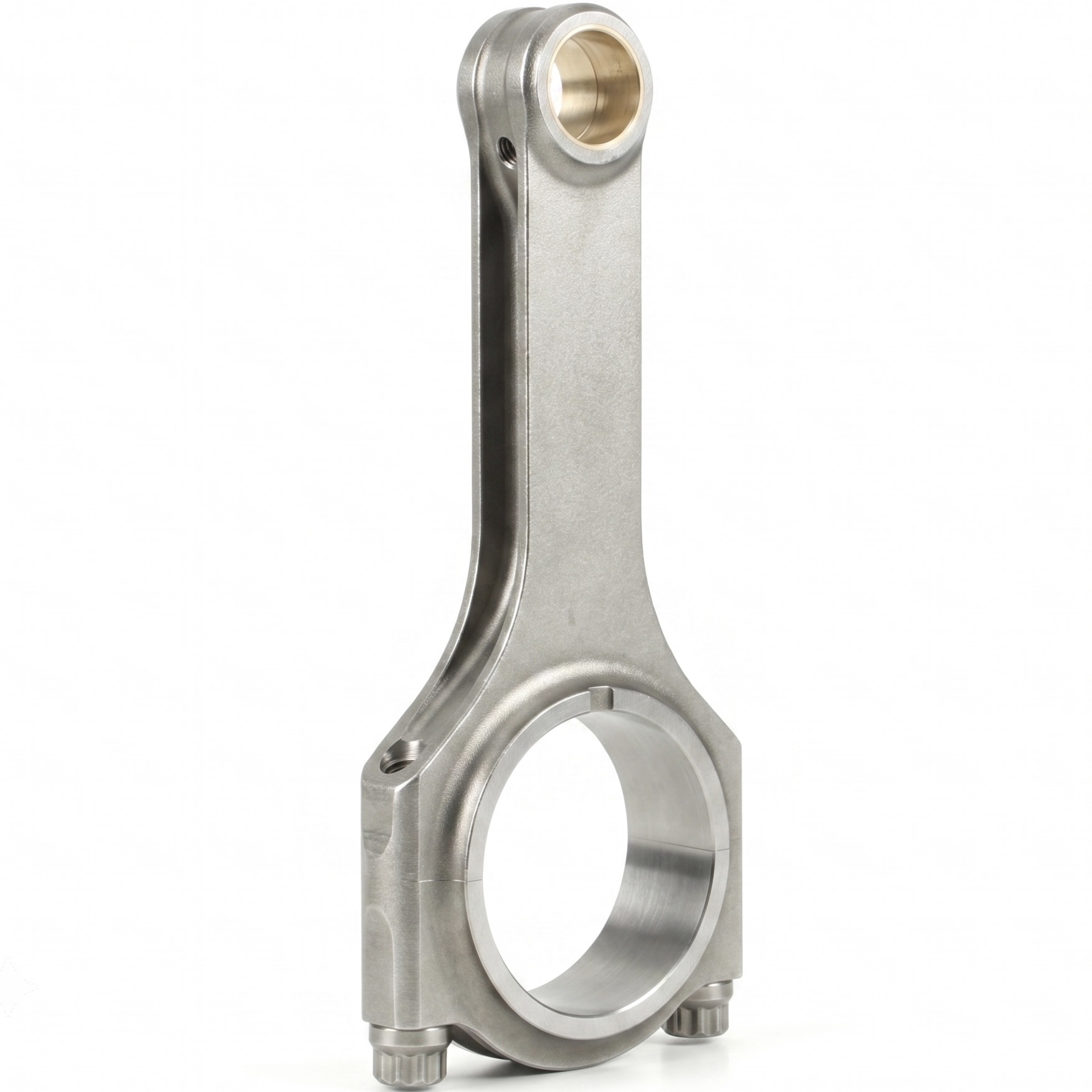 | H-Beam profile (Manley) : the H-Beam offers excellent bending and compression resistance, particularly valued on high-torque engines and high-boost setups. |
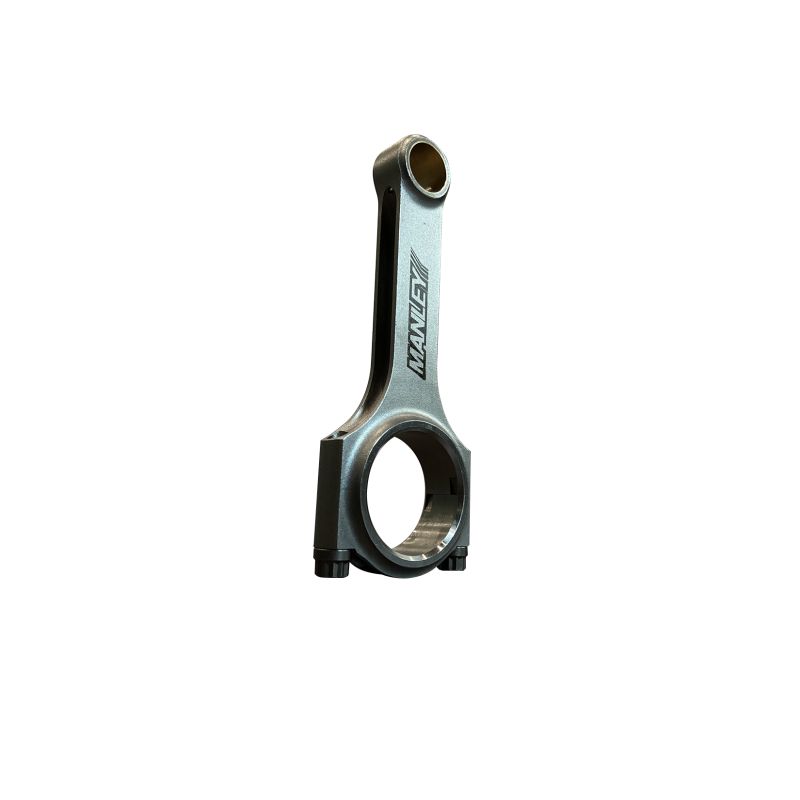
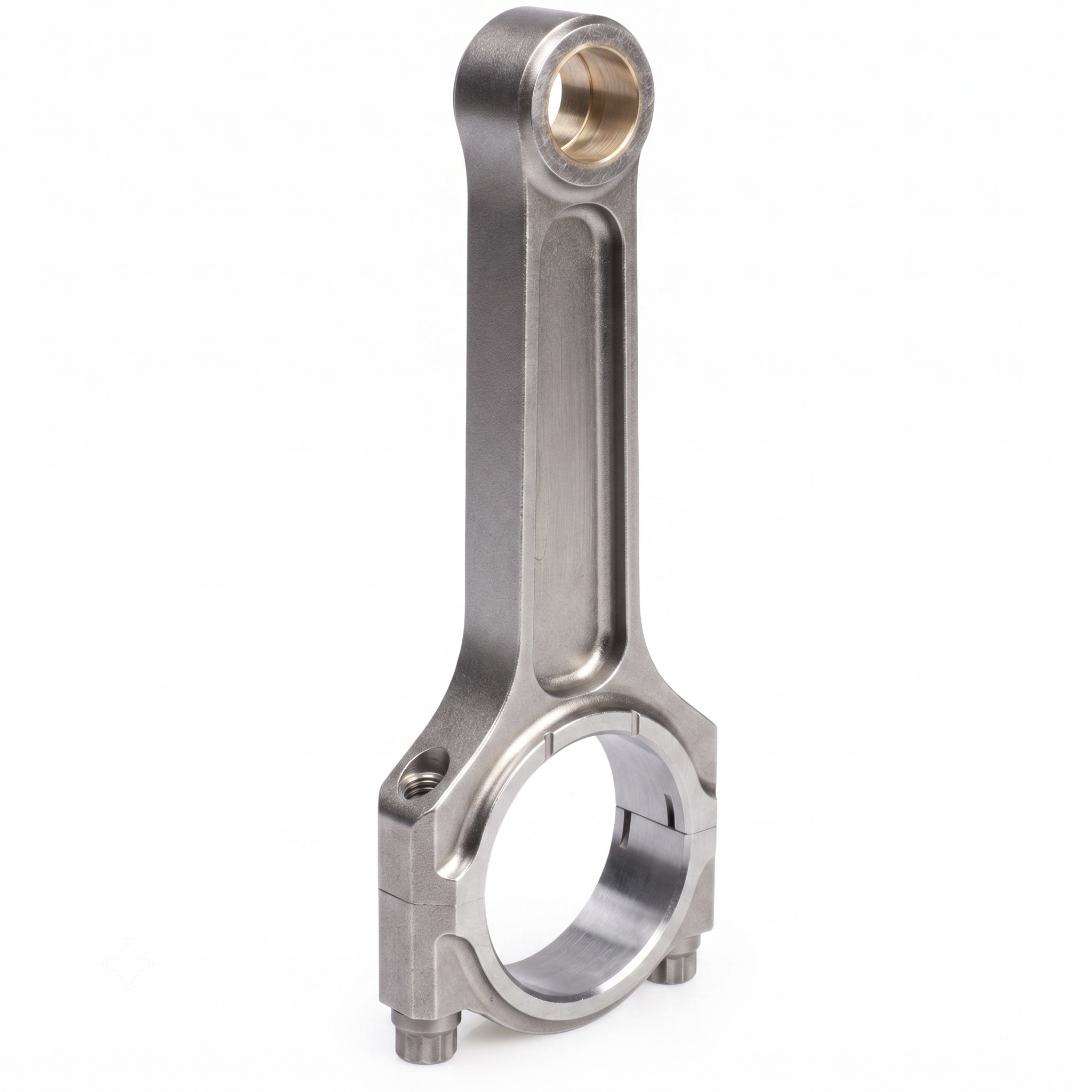 | I-HD profile (Manley Pro Series Turbo Tuff) : a reinforced version of the I-Beam by Manley (Pro Series I-Beam Turbo Tuff), designed to handle very high loads while keeping mass under control, for the most powerful configurations. |
The bolts hold the rod cap together under colossal acceleration. This product offers two ARP grades depending on the level of the build.
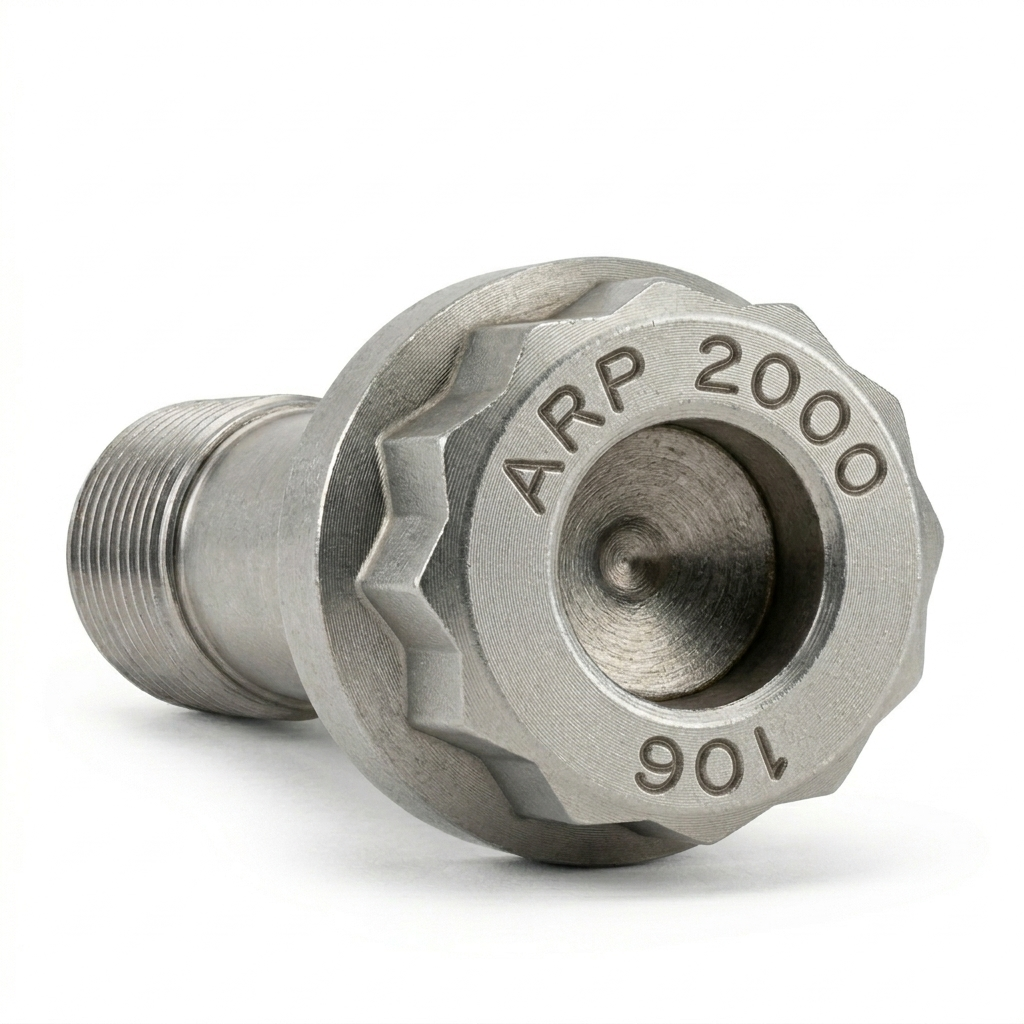 | ARP 2000 : a high-performance reference with a tensile strength of about 220,000 psi (1,517 MPa). It suits up to 200 hp per cylinder in 3/8", up to 8,500 rpm. Robust, reliable and versatile, it is at home on circuit, trackday, drift, rally, drag and hillclimb, with no particular storage constraints. |
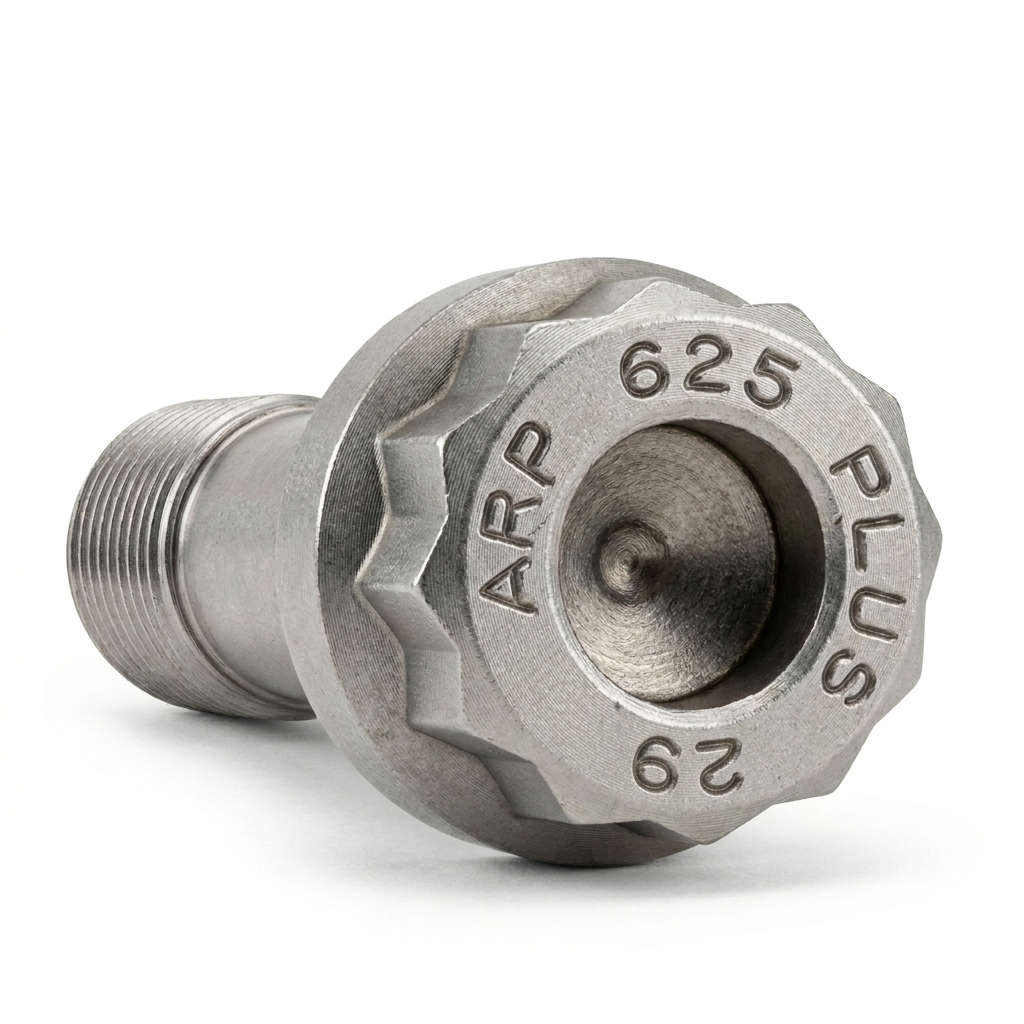 | ARP Custom Age 625+ : a premium alloy with a tensile strength of 260,000 to 280,000 psi (1,793 to 1,931 MPa). It exceeds 250 hp per cylinder in 3/8", beyond 10,000 rpm. Excellent corrosion and oxidation resistance, immune to hydrogen embrittlement and with no storage constraints: the choice for extreme builds. |
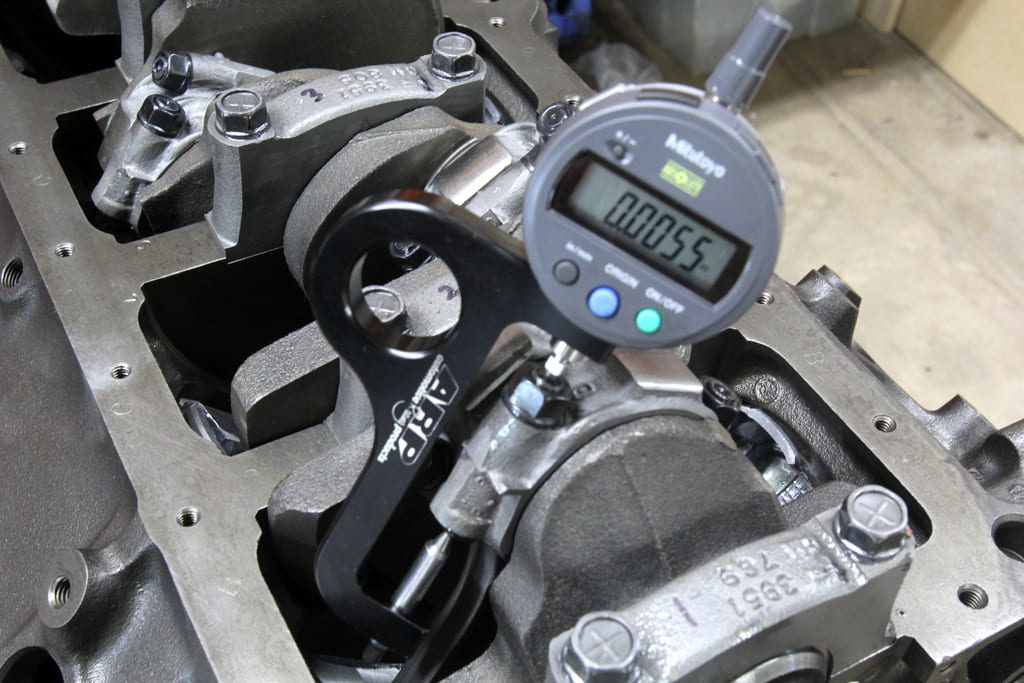
| Stretch-gauge tightening is the most accurate method to ensure the correct preload of the rod bolts. Using a gauge, you measure the actual elongation of the bolt rather than torque, which removes friction-related variation and ensures a reliable, repeatable assembly. |
This product brings together the two manufacturers offered for the VQ35DE.
 | Boostline: a range developed by the Wiseco group, known for its patented three-pocket I-3P profile. Machined with great precision and supplied with ARP bolts, Boostline rods target sharp naturally aspirated builds and demanding forced-induction conversions. |
 | Manley Performance: a long-established American manufacturer, also part of the Wiseco group. Its forged rods (H-Beam and Pro Series I-Beam Turbo Tuff profiles) are weighed and matched, and favoured in drag, drift, circuit and rally for their robustness under heavy load. |
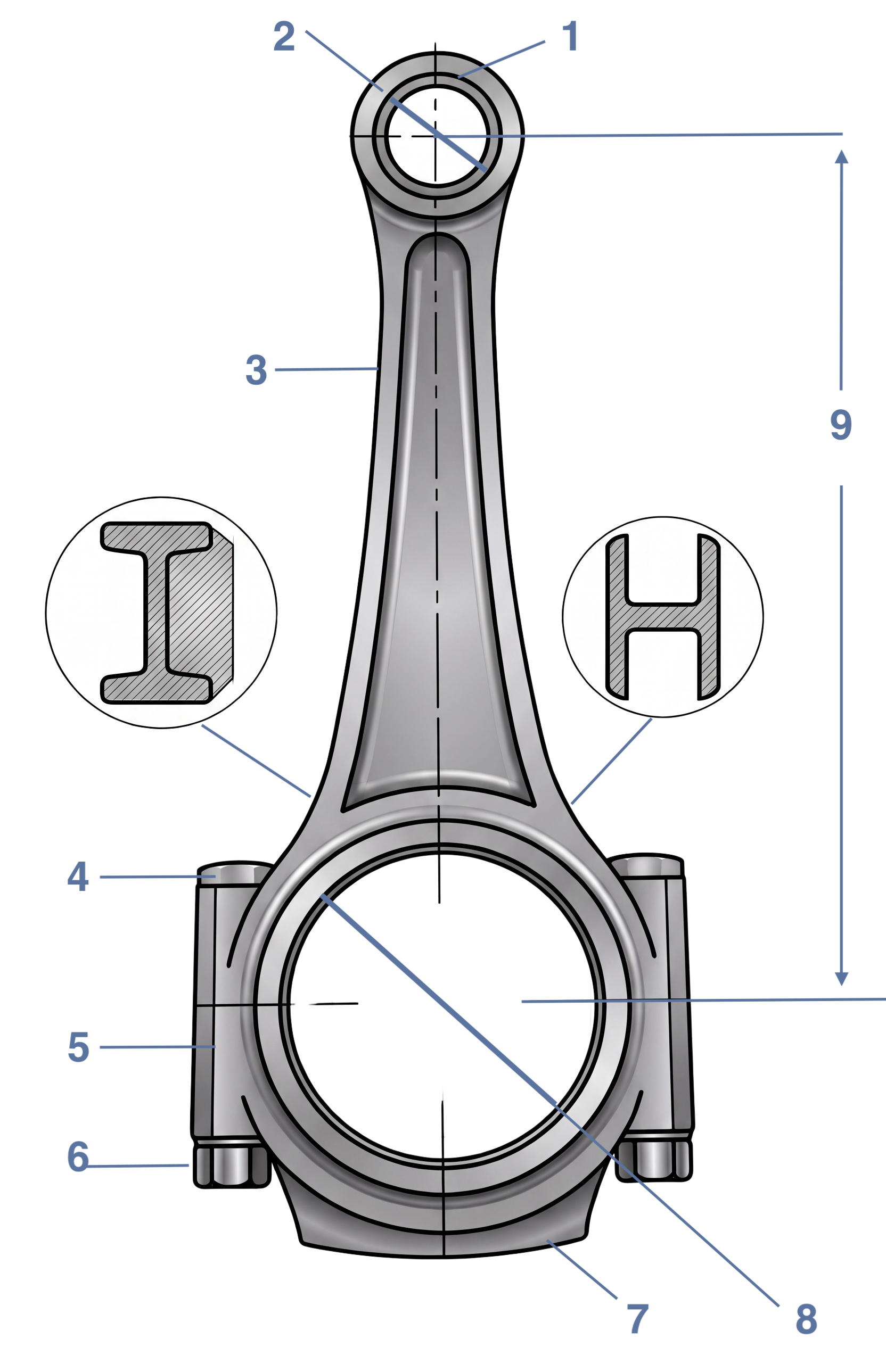
| 1) Small end 2) Small-end diameter 3) Rod beam 4) Rod bolt 5) Big end 6) Rod nut / bolt 7) Rod cap 8) Big-end diameter 9) Center-to-center |
These forged connecting rods are compatible with all vehicles fitted with the Nissan VQ35DE engine:
| Brand | Model (chassis) | Engine code | Power | Years |
|---|---|---|---|---|
| Nissan | 350Z (Z33) | VQ35DE | 280–300 hp | 2002–2007 |
| Infiniti | G35 (V35) | VQ35DE | 280–298 hp | 2002–2007 |
| Nissan | Altima (L31/L32) | VQ35DE | 240–270 hp | 2002–2008 |
| Nissan | Maxima (A34) | VQ35DE | 258–265 hp | 2004–2008 |
| Nissan | Murano (Z50) | VQ35DE | 234–249 hp | 2003–2007 |
| Infiniti | FX35 (S50) | VQ35DE | 280 hp | 2003–2008 |
| Nissan | Quest (V42) | VQ35DE | 240 hp | 2004–2009 |
OEM reference: 12100-4W00D (set of 6 rods).
Rebuilding a bottom end is expensive, so it is best done only once. By fitting forged rods from the outset, you secure your VQ35DE for years of intensive use and avoid a failure that would cost far more than a set of rods. It is the assurance of a reliable engine able to handle the rise in power without nasty surprises.