Product successfully added to your shopping cart
Quantity
Total
There are 0 items in your cart. There is 1 item in your cart.
Total products
Total shipping To be determined
Total

3.5L 24v - S38B36
Manufacturers
3.5L 24v - S38B36
Warning: Last items in stock!
New product
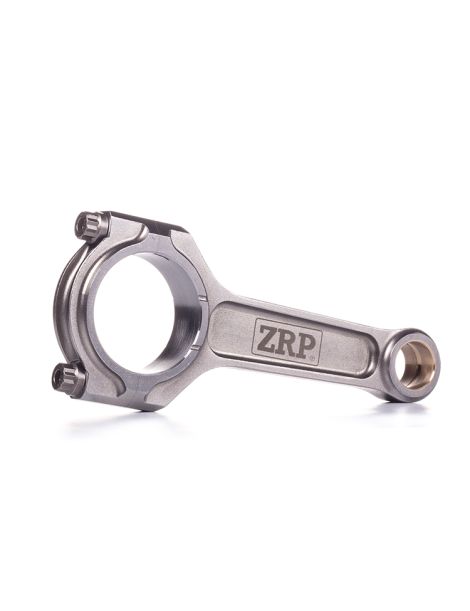
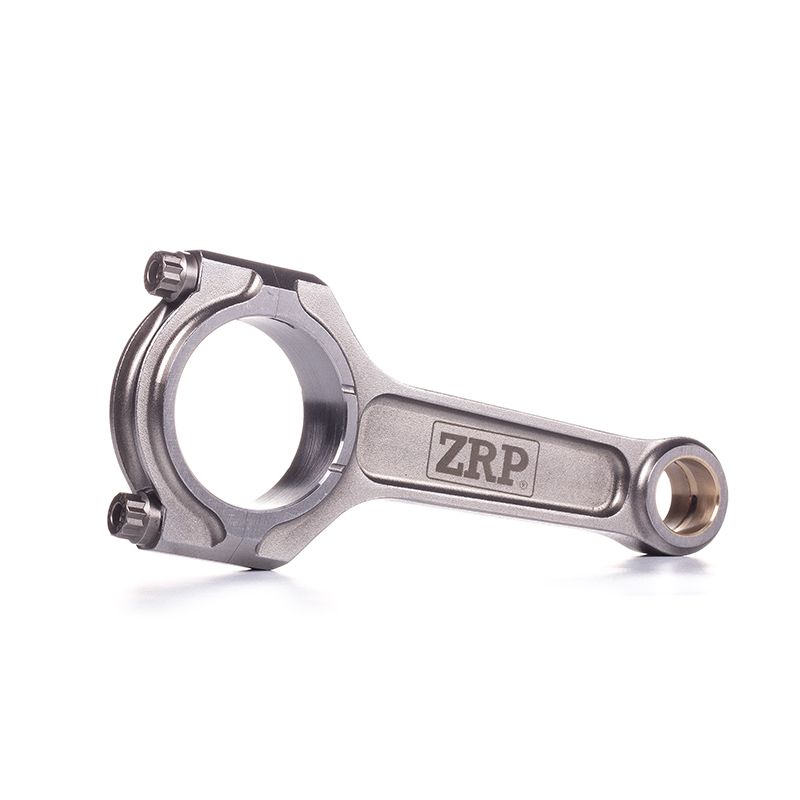
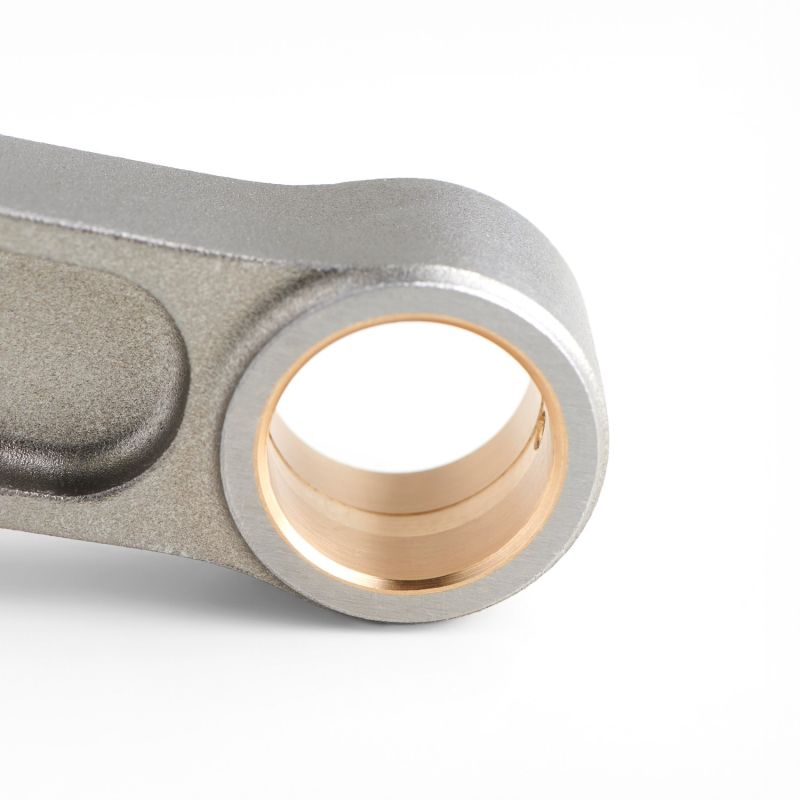
Set of 6 forged 4340 steel connecting rods for BMW M5 E34 (S38B36 engine, 315 hp).
The BMW S38B36 (commonly called the “S38”) is BMW Motorsport's naturally aspirated 3.6L 24-valve inline-six, a direct descendant of the M88 from the M1. It combines a cast-iron block, an aluminium twin-cam four-valve head and six individual throttle bodies. It displaces 3,535 cc (bore 93.4 mm × stroke 86 mm), produces 315 hp and was hand-assembled by the M division from 1988 to 1992.
Fitted to the BMW M5 E34, the S38B36 makes it one of the fastest saloons of its era. Reputedly robust, it nonetheless becomes sensitive as soon as you raise compression, the rev limit or consider forced induction: the original rods are then replaced with reinforced forged 4340-steel rods, combined with forged pistons, to secure higher power.
Forged and then machined from heat-treated 4340 steel, these rods replace the production parts as soon as the S38B36 leaves its factory envelope. Forging aligns the metal grain with the load path, which clearly raises fatigue life compared with a mass-production rod, the factor that decides whether a straight-six held high in the rev range survives hours of use.
Shot-peened, individually inspected and weight-matched to ±1 g across the six rods in the set, they preserve the natural balance of the straight-six. They cover the serious uses of a tuned M5 E34: circuit racing and track days, hillclimb, drift, rally, drag and time attack, and they support Stage 1, Stage 2 and Stage 3 builds up to full race engines. The ARP bolts supplied lock the assembly under heavy load and at high rpm.
| Reference | Brand | Profile | Bolts | Pin diameter OEM 22 mm | Small-end width | Big-end diameter OEM 52 mm | Big-end width | Center-to-center OEM 144 mm | Weight per rod |
|---|---|---|---|---|---|---|---|---|---|
| R-BMW-001-I-6 | ZRP | I | ARP 2000-3/8"-38mm | 22 mm | 52 mm | 23.9 mm | 144 mm | 566 g | |
| R-BMW-001-I-6-L19 | ZRP | I | ARP L19-3/8"-38mm | 22 mm | 52 mm | 23.9 mm | 144 mm | 566 g |
| Rod | Bolts | Torque | Recommended stretch |
|---|---|---|---|
| ZRP (R-BMW-001-I-6) | ARP 2000 | 61 N·m | 0.140 – 0.152 mm |
| ZRP (R-BMW-001-I-6-L19) | ARP L19 | 67.8 N·m | 0.152 – 0.165 mm |
Tightening harder is never a safety margin on the S38B36: beyond the specified range the bolt enters its plastic domain, loses its elastic recovery and guarantees nothing after the first heat cycle. The bearing bore distorts under the excess load, the big end takes a slightly oval shape and the shell only bears on two zones: oil escapes at the sides and local temperature climbs. Conversely, a bolt tightened below the threshold lets preload drop under the inertia loads of the inline-six: the cap works in micro-separation, the shell is hammered, eventually spins in its bore and the crankshaft gets scored. All six rods must therefore be assembled to the values in the table below, exactly as the fastener manufacturer specifies them for ARP 2000 and ARP L19 in 3/8". Checking bolt stretch with a dial gauge is the only method free of thread friction and head seating effects: it is the one that counts, with ARP assembly lubricant, the kit instructions always taking priority.
| 4340 is a low-alloy nickel-chromium-molybdenum steel valued in aerospace and motorsport. Forged then quenched and tempered, it combines a high yield strength, excellent fatigue endurance and good ductility. Against the sintered metal fitted as standard, forged 4340 gains around 19% in yield strength, nearly 8% in tensile strength and 19 to 37% in fatigue life: the go-to material when revs and cylinder pressure climb. |
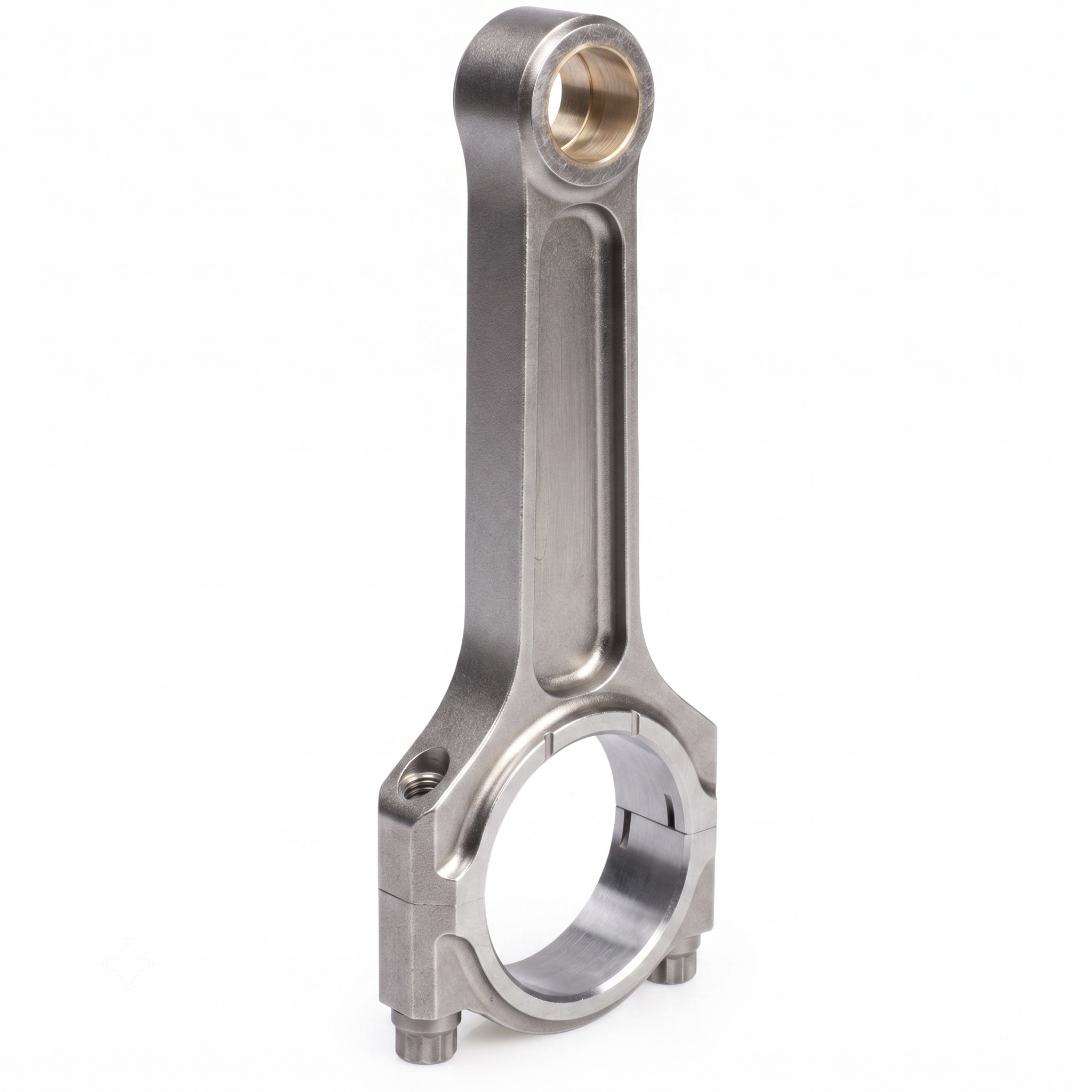 | I-Beam. Its slimmer central section cuts reciprocating mass: less inertia, less load on the bearings and a freer climb through the rev range, a direct benefit on a 3.5-litre naturally aspirated engine built around its top end. Material stays concentrated where it actually works, so stiffness remains suited to track and competition use. It is the only profile offered for this engine, and the one most in keeping with the character of a high-revving straight-six. |
The rod bolt is the most heavily loaded part of the assembly: on every revolution it takes the inertial force trying to pull the cap away from the rod body, and that force rises with the square of engine speed. Two ARP grades are offered on this kit; what matters is matching the grade to the real use of the build, then following the specified torque and stretch figures exactly.
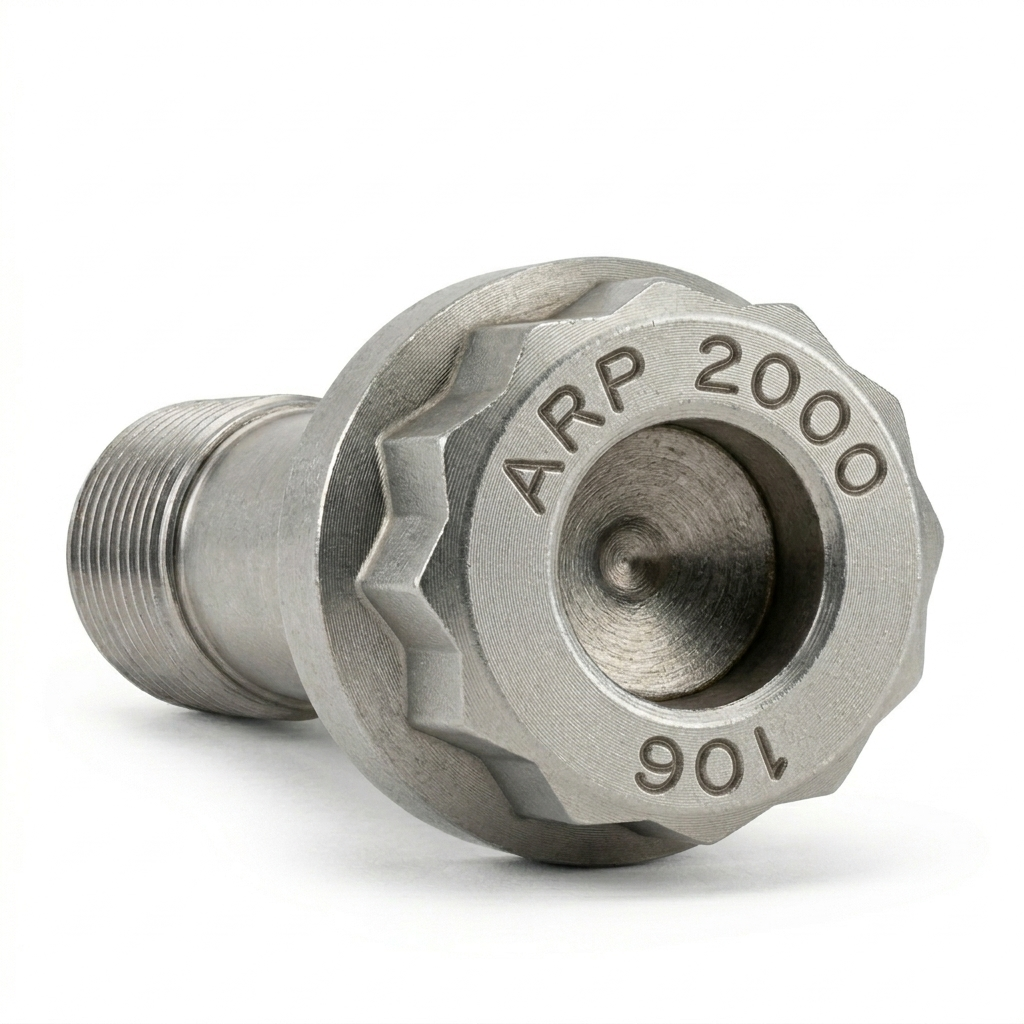 | ARP 2000: the high-performance standard, with tensile strength around 220,000 psi (about 1,517 MPa). In 3/8" it covers builds up to 200 hp per cylinder and 8,500 rpm, which leaves a comfortable margin on an S38B36, even an optimised one used regularly on track. It is the most common grade in circuit racing and track days, drift, rally, drag and hillclimb, valued for its strength and versatility, with no special storage requirements. |
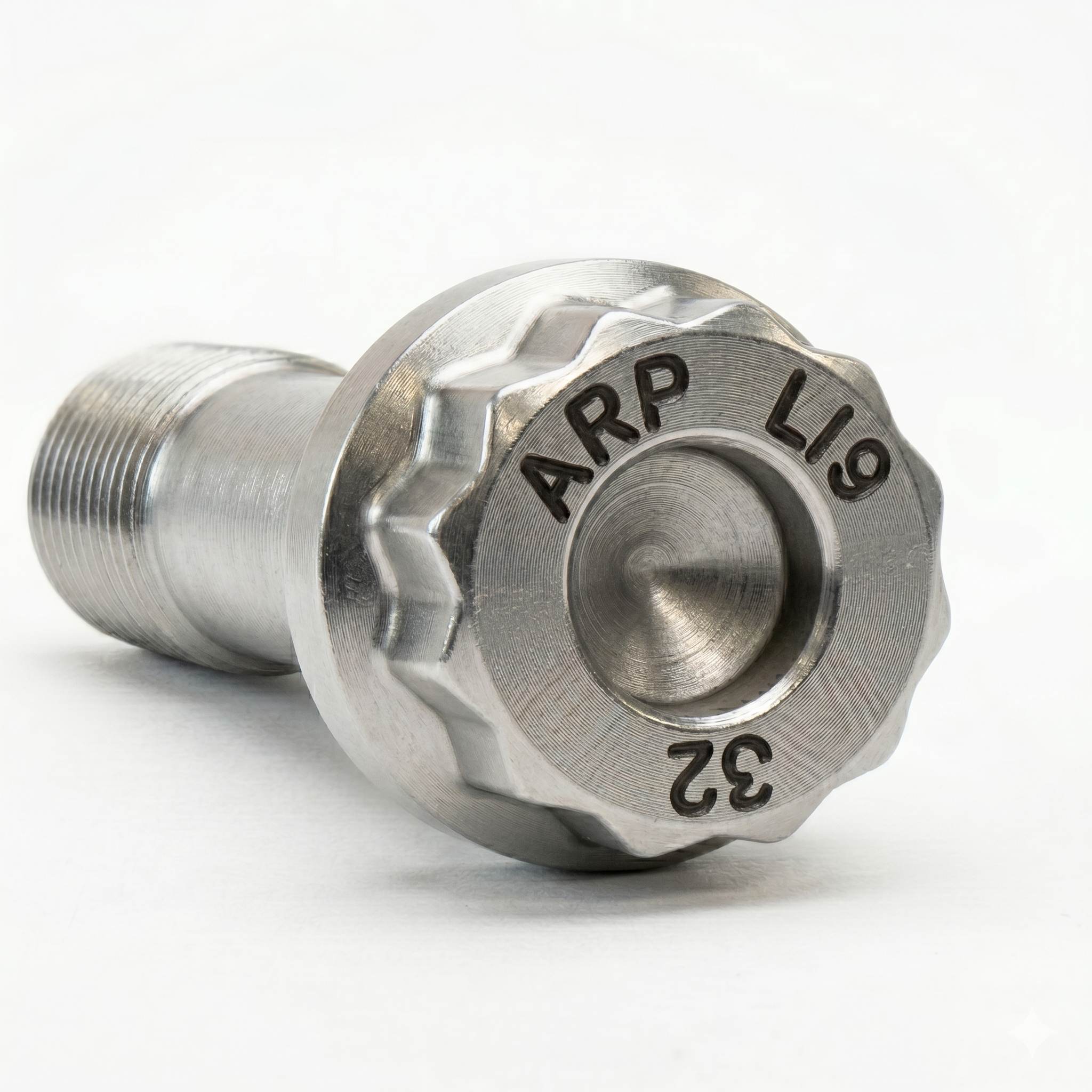 | ARP L19: the grade for engines pushed to the extreme, with tensile strength around 260,000 psi (about 1,793 MPa). In 3/8" it allows up to 250 hp per cylinder and 10,000 rpm, making it the choice for heavily tuned, boosted or race-entered S38B36 engines, where cylinder pressure and engine speed become the limiting factors. The trade-off: the alloy is sensitive to corrosion and hydrogen embrittlement, and must be stored and fitted oiled, away from moisture. |
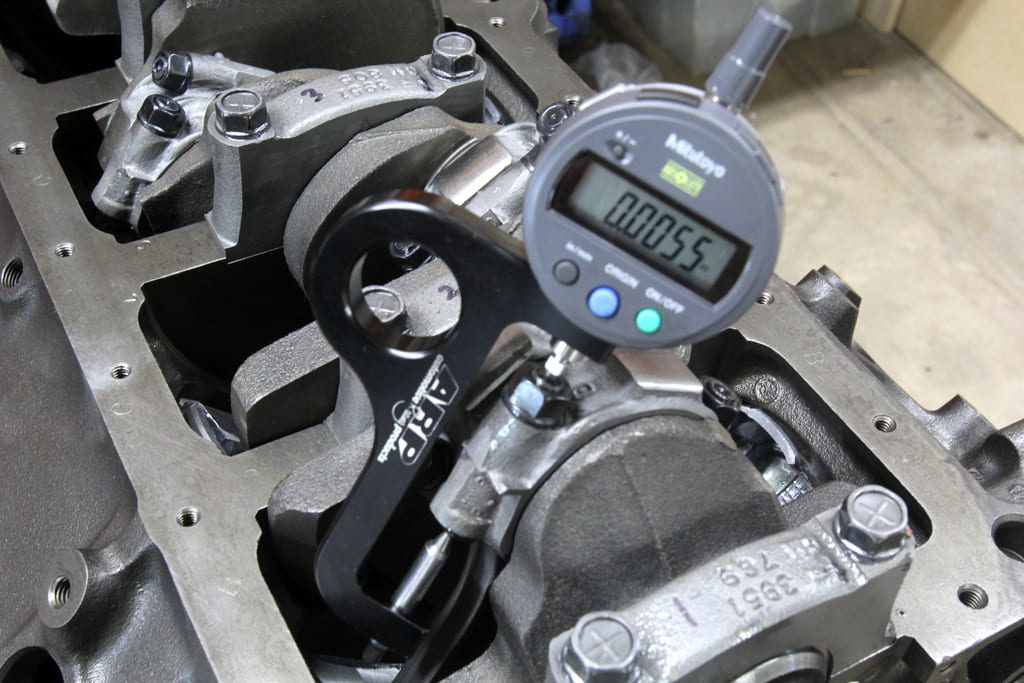
| In addition to torque tightening, measuring stretch reflects each bolt's true tension, regardless of friction. A dedicated gauge lets you respect the manufacturer's value and achieve even clamping across all six rods. |
 | ZRP, the Greek manufacturer of high-performance forged connecting rods run by Alex Drakos in Athens. Every rod is forged from 4340 steel, precision machined, inspected and then weight-matched across the full set of six to preserve the balance of the straight-six. For the S38B36 the range is limited to the I-Beam profile, with ARP 2000 or ARP L19 bolts depending on the power and rpm targeted. Design, machining and inspection all take place in Greece, and the rods are proven in rally, drift and circuit racing. |
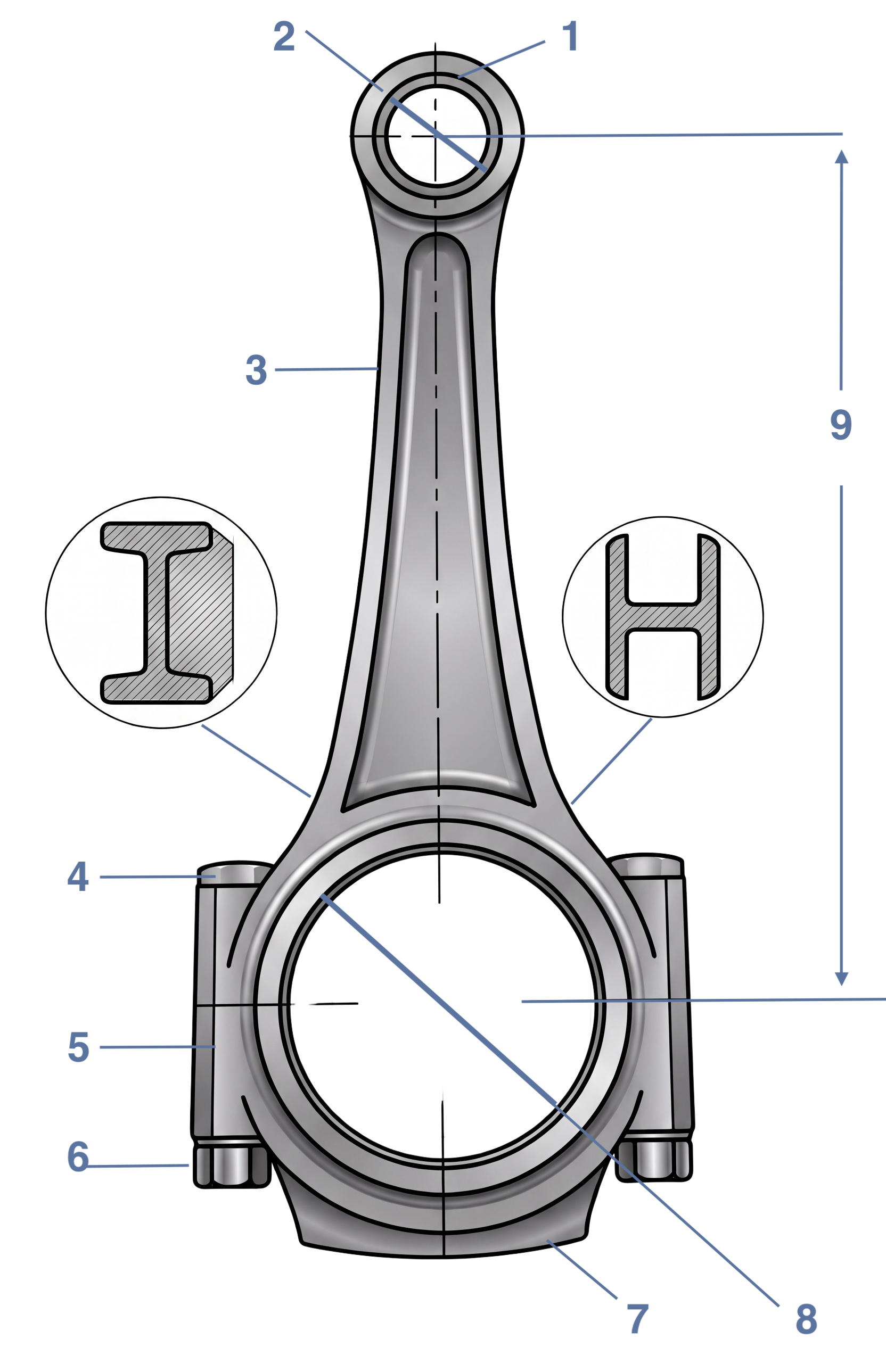 | 1) Small end 2) Small-end diameter 3) Rod beam 4) Rod bolt 5) Big end 6) Rod nut / bolt 7) Rod cap 8) Big-end diameter 9) Center-to-center |
These forged connecting rods are compatible with all vehicles fitted with the BMW S38B36 engine (3.0L 24V twin-turbo):
| Brand | Model (chassis) | Engine code | Power | Years |
|---|---|---|---|---|
| BMW | M5 (E34) | S38B36 | 315 hp | 1988–1992 |
OEM reference: 11 24 1 307 653 (set of 6 rods).
When the original bottom end gives out (a broken, bent or scored rod), returning the M5 to factory spec often means replacing rods and pistons together, both damaged at once. The bill climbs fast, just to get back to square one.
For a comparable, even lower budget, switching to forged 4340 rods and forged pistons brings far greater reliability and safety margin, with real room to grow. It has been the European tuners' reflex for over fifteen years.
For the same budget: more reliability, more potential, more longevity.