Product successfully added to your shopping cart
Quantity
Total
There are 0 items in your cart. There is 1 item in your cart.
Total products
Total shipping To be determined
Total

2.6L 24v - RB26DETT
Manufacturers
2.6L 24v - RB26DETT
Warning: Last items in stock!
New product
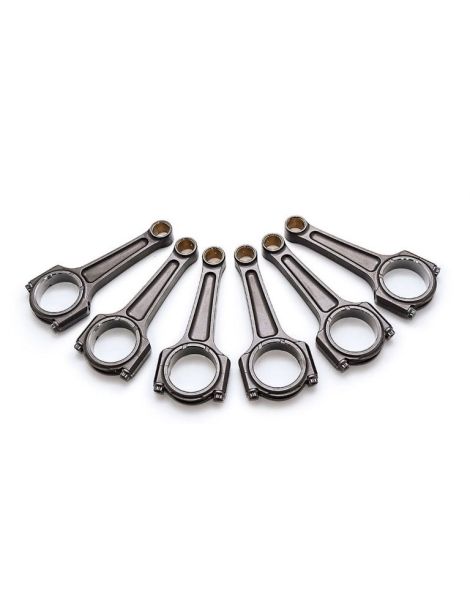
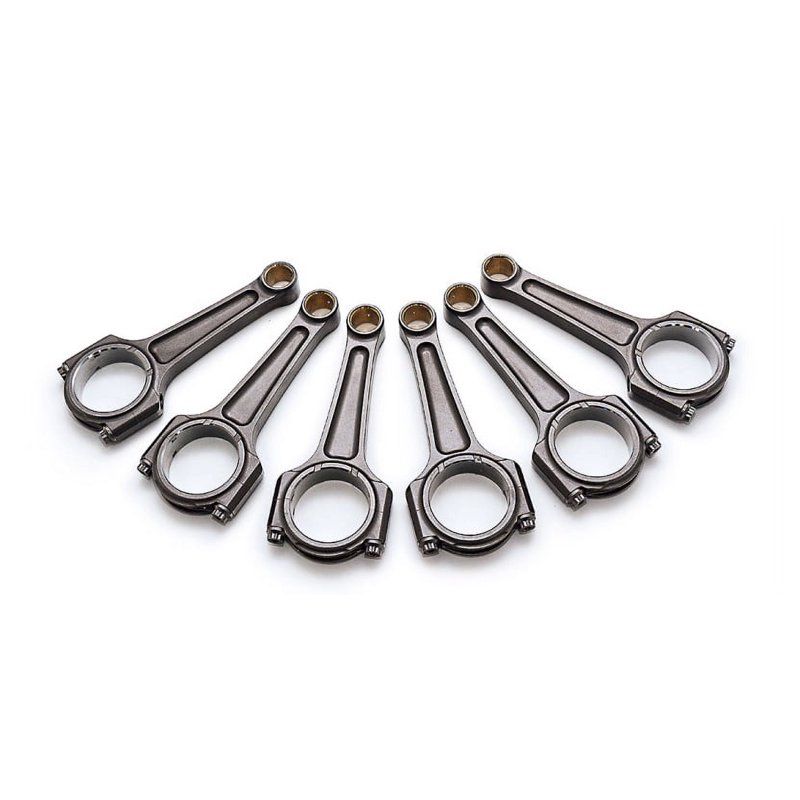
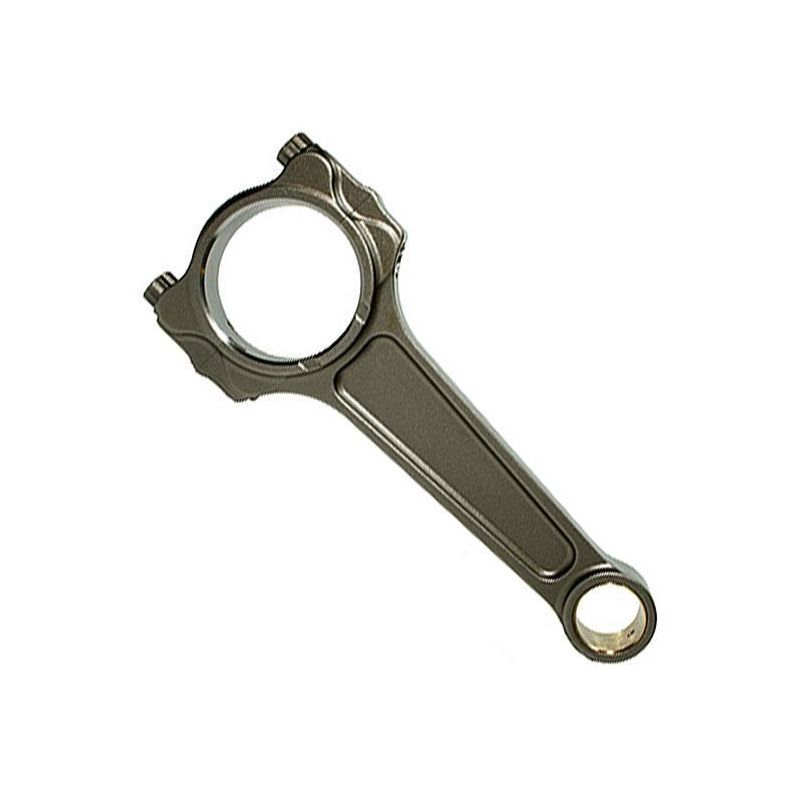
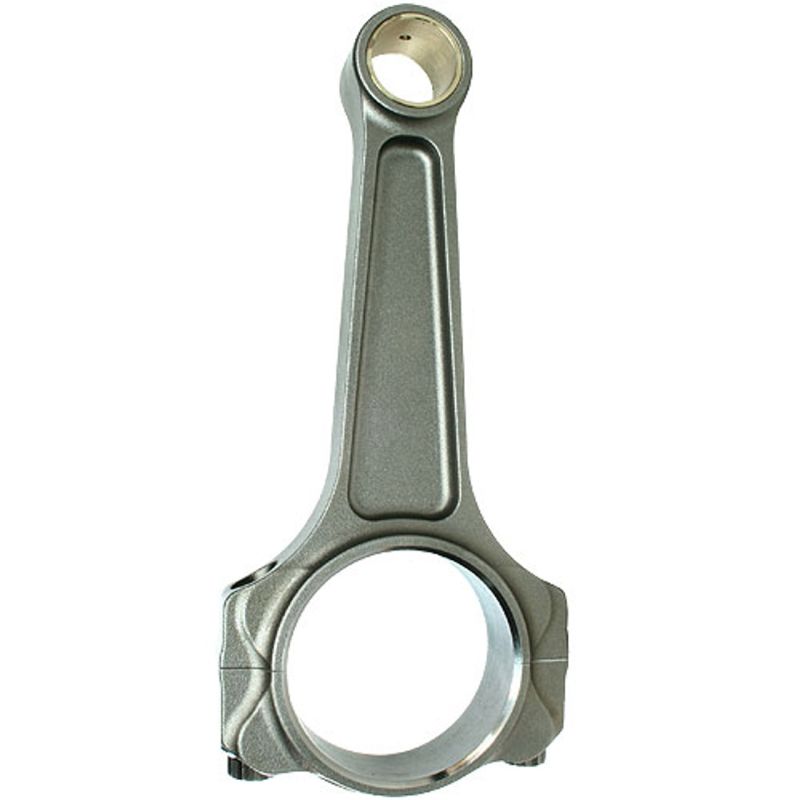
Set of 6 forged 4340-steel rods for Nissan RB26DETT / RB25DET (22 mm pin).
The Nissan RB26DETT is the 2.6 L twin-turbo inline-six that built the Skyline GT-R legend. Introduced in 1989 under the bonnet of the R32 GT-R, it uses the cast-iron block of the RB family, topped by a 24-valve twin-cam head and two parallel turbochargers. With an 86 mm bore and a 73.7 mm stroke for 2,568 cc, it was officially rated at 280 hp, a figure deliberately capped by the Japanese gentlemen’s agreement of the era: real output comfortably exceeded 300 hp from the very start.
A cult engine among tuners, the RB26 owes its reputation to a strong bottom end and outstanding development potential. On the R32, R33 and R34 GT-R, as on the RB25DET of the Skyline, Stagea, Laurel and Gloria, it withstands greatly increased power once the turbos, injection and engine management are upgraded. Beyond a certain build level, however, the factory rods become the weak link: that is exactly the job of a forged connecting-rod set, offered here in its 22 mm piston-pin version for assemblies fitted with oversize-pin pistons.
Machined from high-strength 4340 chrome-molybdenum steel, these Manley forged rods for the RB26DETT and RB25DET with a 22 mm piston pin replace factory rods that quickly reach their limit as boost pressure rises. Forging aligns the metal grain flow with the load path and gives the part far greater fatigue strength, a guarantee of reliability on a highly tuned engine.
Designed for the most demanding uses (track, drift, drag, rally, time attack, hill climb), they suit a mild Stage 1 build just as well as a competition engine run to the top of the rev range. The I-HD profile (reinforced I-beam) and ARP bolts sized for the 22 mm pin provide the safety margin required by high-power builds and elevated engine speeds.
| Reference | Brand | Profile | Bolts | Pin diameter OEM 21 mm | Small-end width | Big-end diameter | Big-end width | Center-to-center OEM 121.5 mm | Weight per rod |
|---|---|---|---|---|---|---|---|---|---|
| 14418-6 | Manley | I-HD | ARP 2000-3/8"-41mm | 22 | 51 | 21,77 | 121,49 | 565 g | |
| 14418R6-6 | Manley | I-HD | ARP CA625+-3/8"-41mm | 22 | 51 | 21,77 | 121,49 | 565 g |
| Rod | Bolts | Tightening torque | Recommended stretch |
|---|---|---|---|
| Manley (14418-6) | ARP 2000 | 81,3 N·m | 0,147 – 0,157 mm |
| Manley (14418R6-6) | ARP CA625+ | 88,1 N·m | 0,165 – 0,190 mm |
Manufacturers recommend the stretch method over torque tightening: a gauge measures the actual bolt stretch to guarantee even, reliable preload on every rod. Without a gauge, the torque values above serve as a reference, ARP lubricant applied.
| 4340 steel is a nickel-chromium-molybdenum alloy renowned for its exceptional balance of mechanical strength, toughness and fatigue endurance. Forged, then machined and heat-treated, it copes with the intense cyclic loads of a boosted engine far better than a factory sintered rod, whose structure weakens as soon as power exceeds stock levels. |
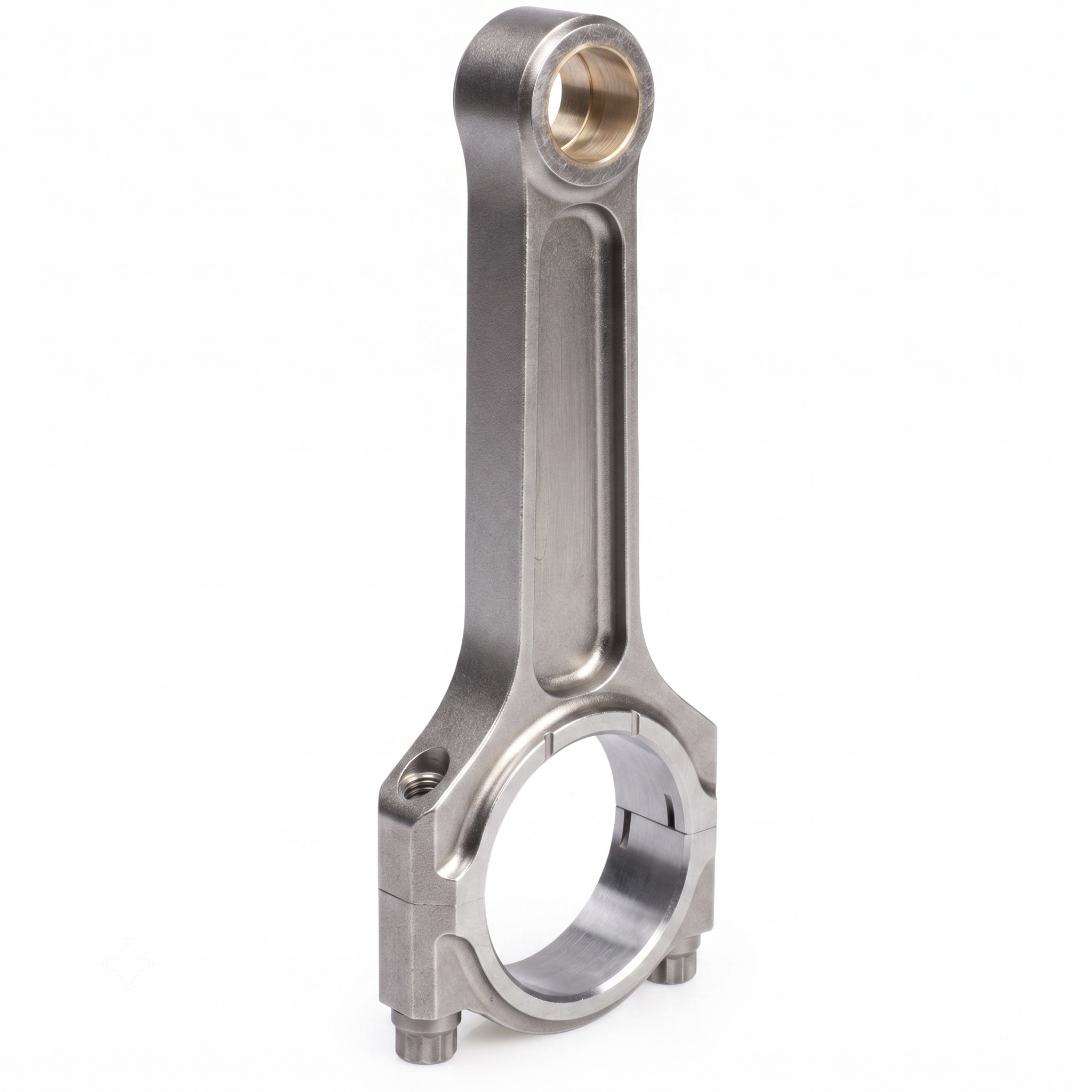 | I-HD profile (I-beam Heavy Duty). The « I » section concentrates material where loads peak while keeping reciprocating mass low; Manley’s Heavy Duty version thickens the beam to withstand the high boost pressures and high engine speeds of the RB26 without flexing. It is the reference profile for demanding turbo builds. |
The rod bolt is among the most heavily loaded parts in the engine: it must keep the cap closed despite inertia forces that rise with the square of engine speed. On this reference, two ARP bolt grades in 3/8" diameter are offered depending on the target power.
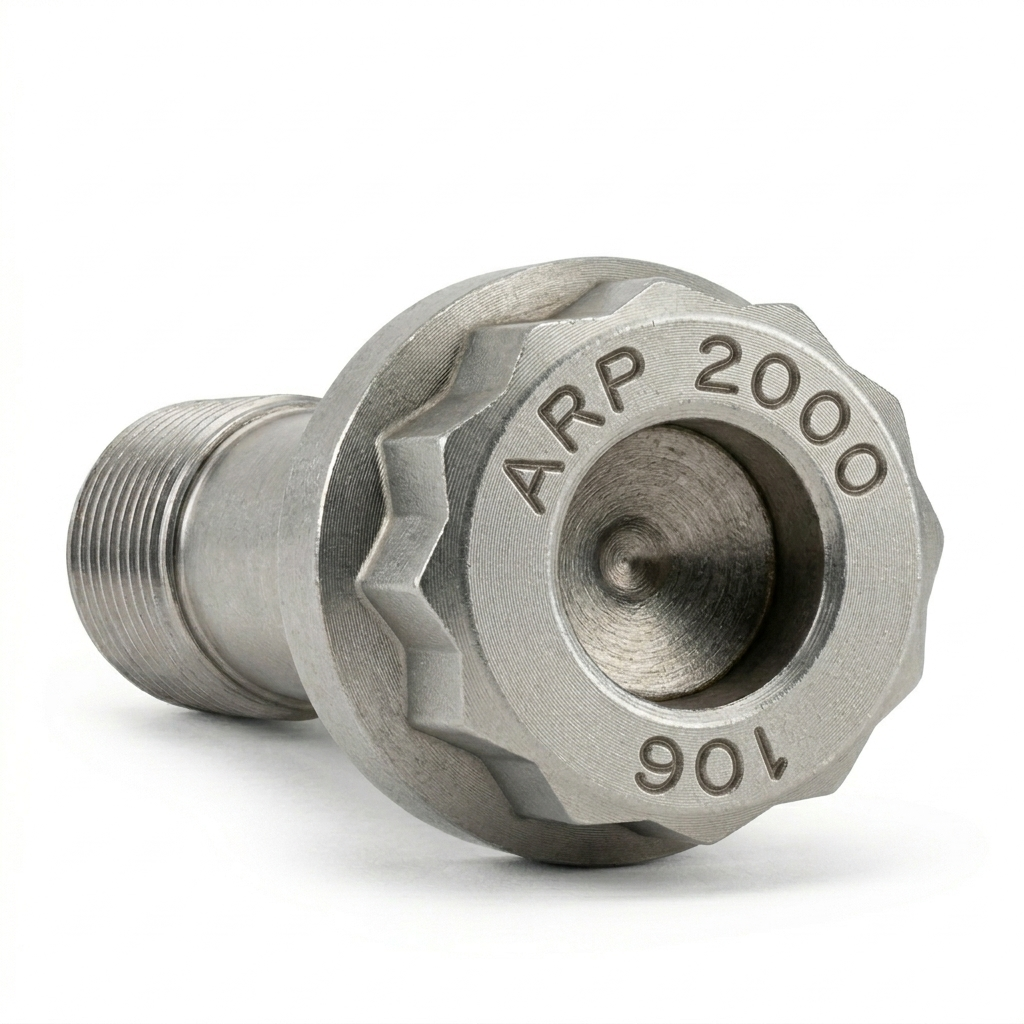 | ARP 2000 (tensile strength around 220,000 psi, roughly 1,517 MPa). In 3/8" diameter it confidently allows about 200 hp per cylinder and speeds up to around 8,500 rpm. It is the versatile choice, ideal for fast road, track and most turbo builds. |
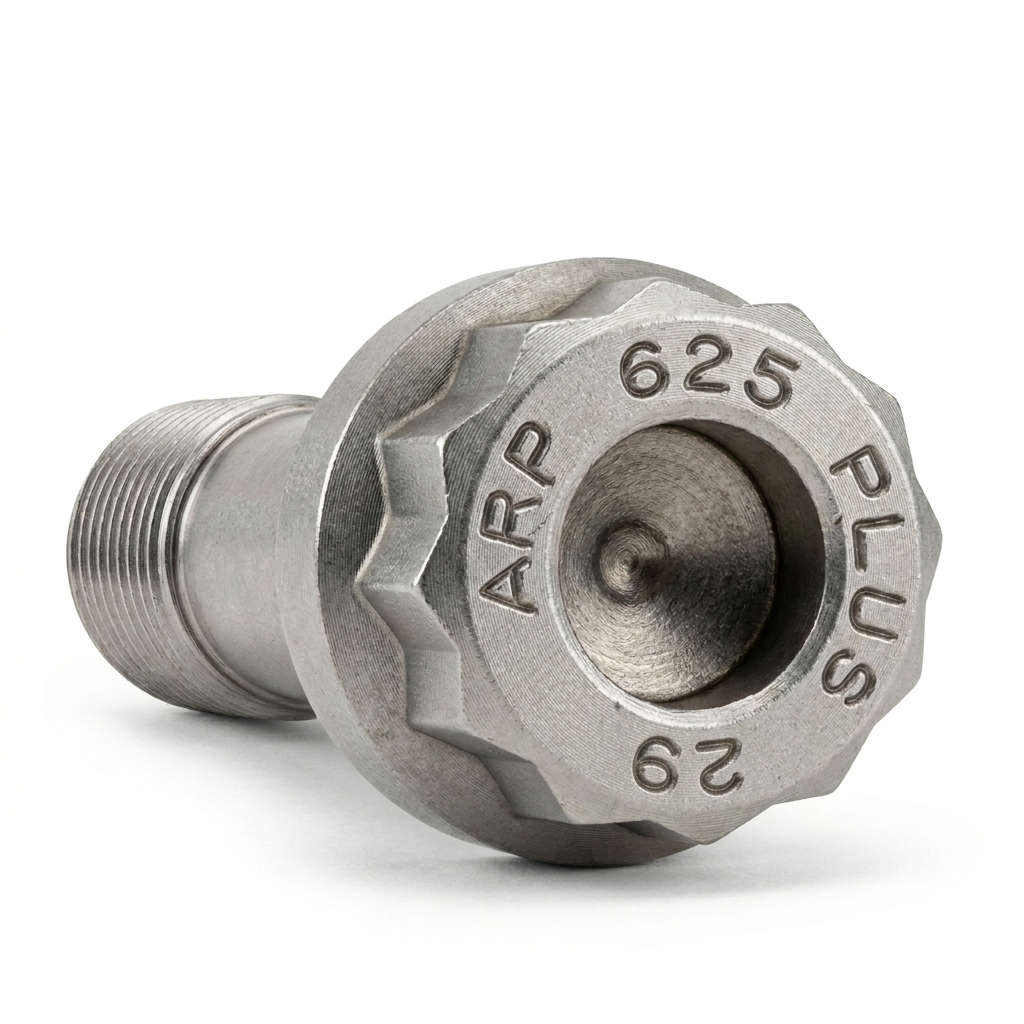 | CA625+ (Custom Age 625+, tensile strength around 260,000 psi, roughly 1,793 MPa). This premium, highly corrosion-resistant alloy targets the most extreme competition engines: in 3/8" diameter it pushes the limit well beyond 250 hp per cylinder and supports the highest engine speeds, beyond 10,000 rpm. |
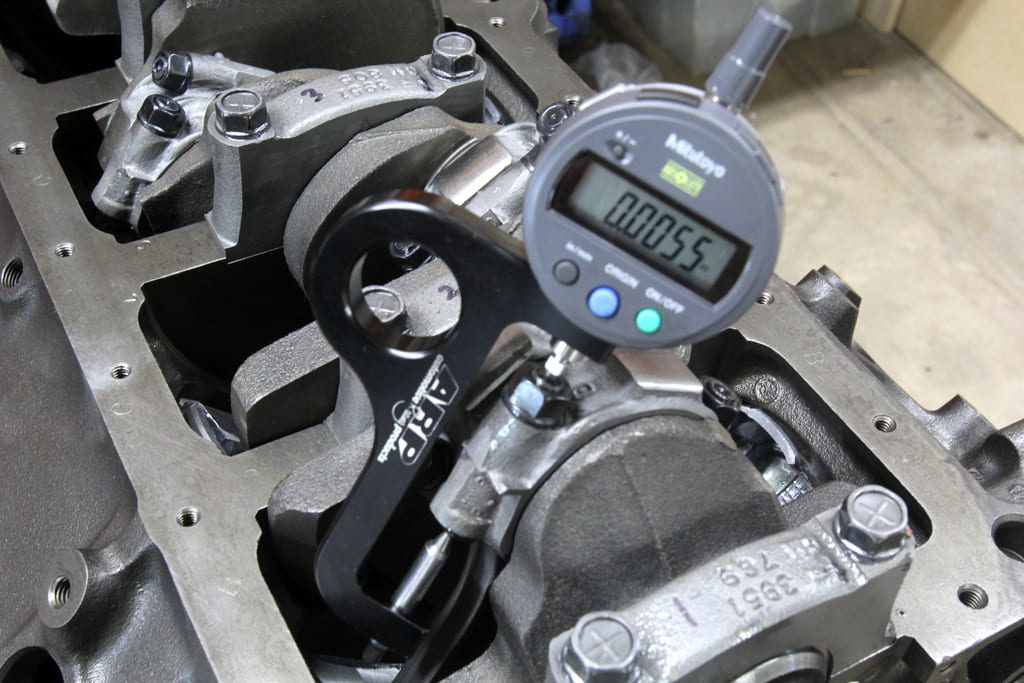
| The ARP stretch gauge measures the actual bolt elongation during assembly. More accurate than torque tightening, this method ensures identical preload on every rod and reliably secures the assembly of a heavily stressed engine. |
 | MANLEY Performance, an American manufacturer founded in 1966, ranks among the world references in high-performance forged rods. Its Pro Series I-Beam « Turbo Tuff » range, machined from 4340 steel and fitted with ARP bolts, is a favourite on boosted Japanese blocks such as the RB26 for its strength and consistency. |
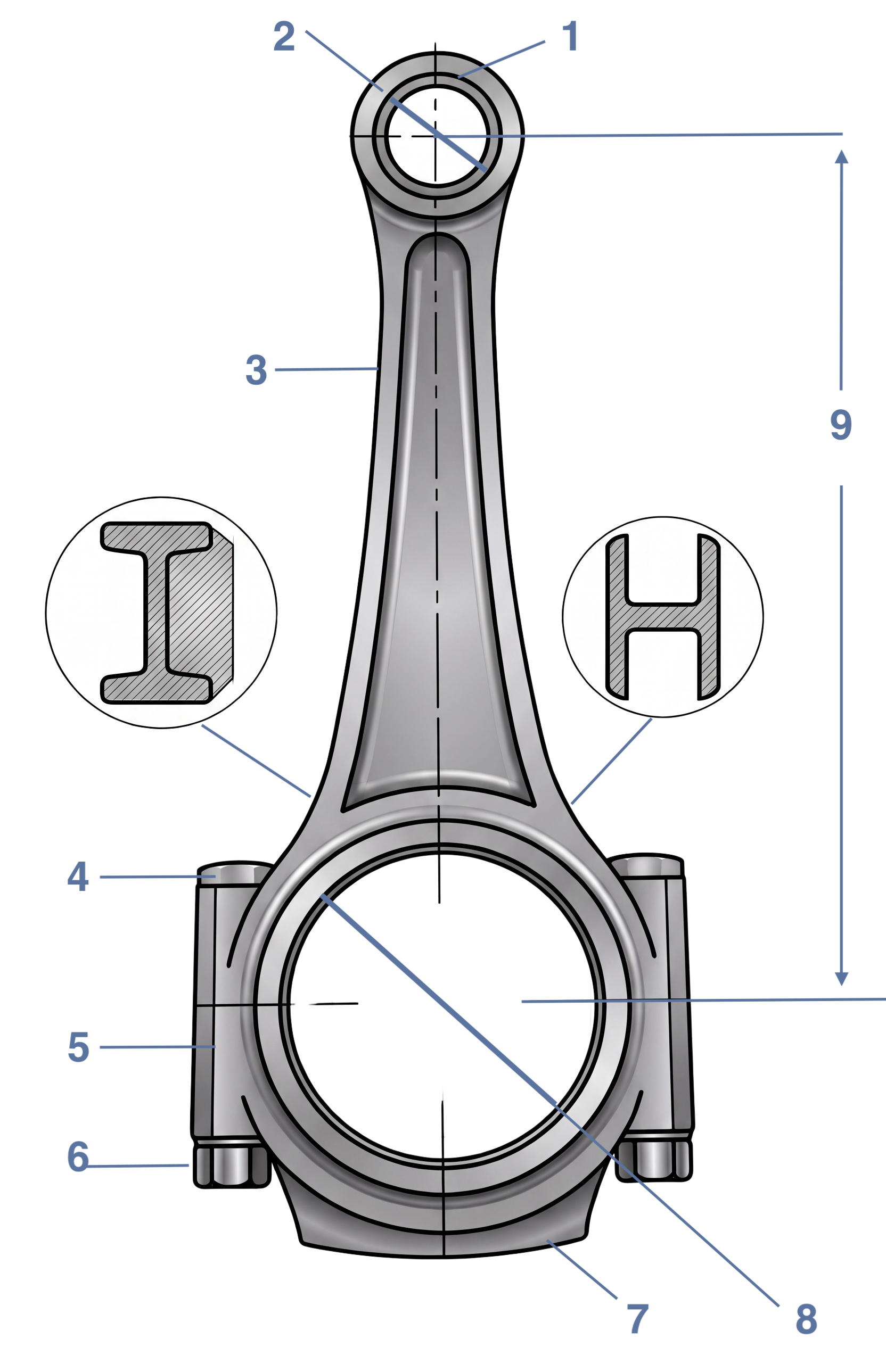 | 1) Small end 2) Small-end diameter 3) Rod beam 4) Rod bolt 5) Big end 6) Rod nut / bolt 7) Rod cap 8) Big-end diameter 9) Center-to-center |
In their 22 mm piston-pin version, these forged rods are compatible with Nissan RB26DETT and RB25DET engines fitted with oversize 22 mm pin pistons. Check the pin diameter of your forged pistons before ordering.
| Make | Model (chassis) | Engine code | Power | Years |
|---|---|---|---|---|
| Nissan | Skyline GT-R (R32 / BNR32) | RB26DETT | 280 ch | 1989-1993 |
| Nissan | Skyline GT-R (R33 / BCNR33) | RB26DETT | 280 ch | 1994-1999 |
| Nissan | Skyline GT-R (R34 / BNR34) | RB26DETT | 280–333 ch | 1999-2002 |
| Nissan | Stagea 260RS (WC34 / WGNC34) | RB26DETT | 280 ch | 1996-2001 |
| Nissan | Skyline (R33 / ECR33) | RB25DET | 250 ch | 1994-2000 |
| Nissan | Skyline (R34 / ER34) | RB25DET | 280 ch | 1998-2002 |
| Nissan | Stagea (WC34 / WGNC34) | RB25DET | 235 ch | 1996-2001 |
| Nissan | Laurel (C34 / C35) | RB25DET | 234 ch | 1993-2002 |
| Nissan | Gloria (Y34) | RB25DET | 250 ch | 1999-2004 |
OEM reference: 12100-05U01 (set of 6 rods).
When a factory bottom end lets go (broken rod, wrecked bearings, cracked liner) on a tuned RB, the bill climbs fast. Rebuilding it like-for-like with stock parts simply reinstalls the same weak link.
For an equivalent, or even lower, budget on these sought-after engines, fitting forged rods during the rebuild secures the bottom end for good and unlocks a power potential far beyond stock.
For the same budget: more reliability, more headroom and the peace of mind of a rotating assembly sized to handle the future stages of your build.