Product successfully added to your shopping cart
Quantity
Total
There are 0 items in your cart. There is 1 item in your cart.
Total products
Total shipping To be determined
Total

2.4L 16v - SRT-4
Manufacturers
2.4L 16v - SRT-4
Warning: Last items in stock!
New product
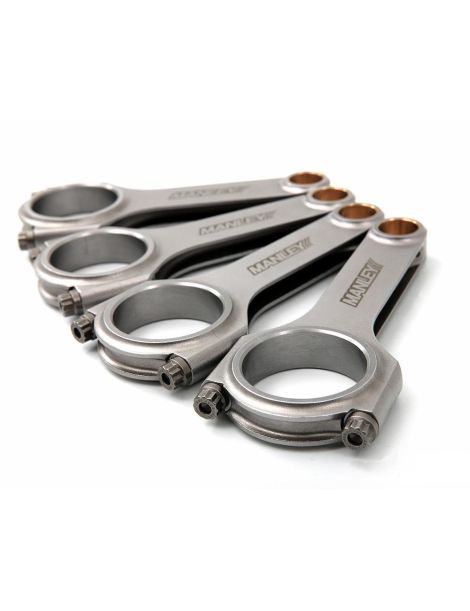
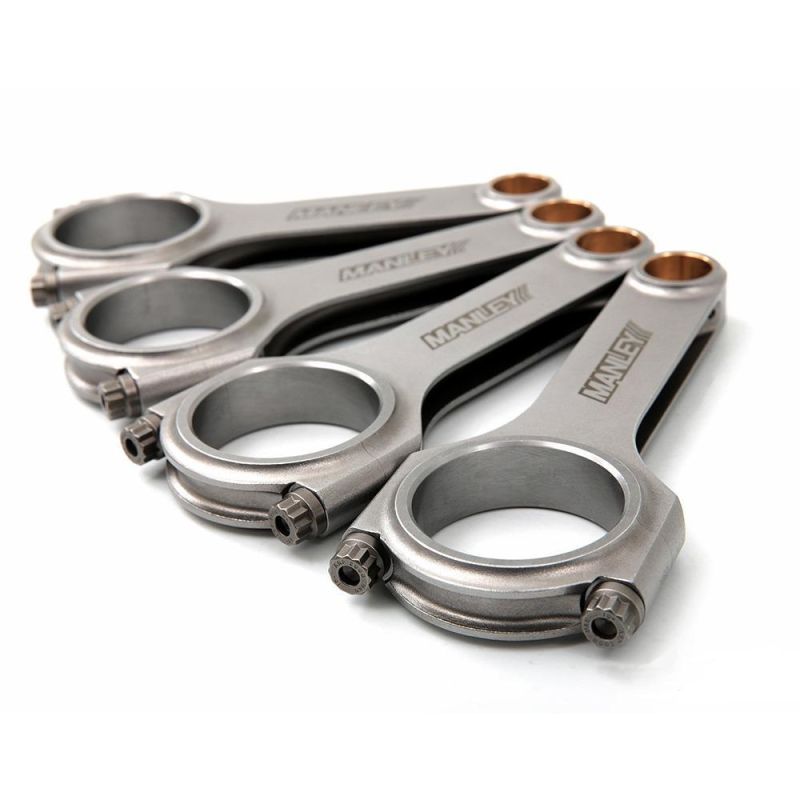
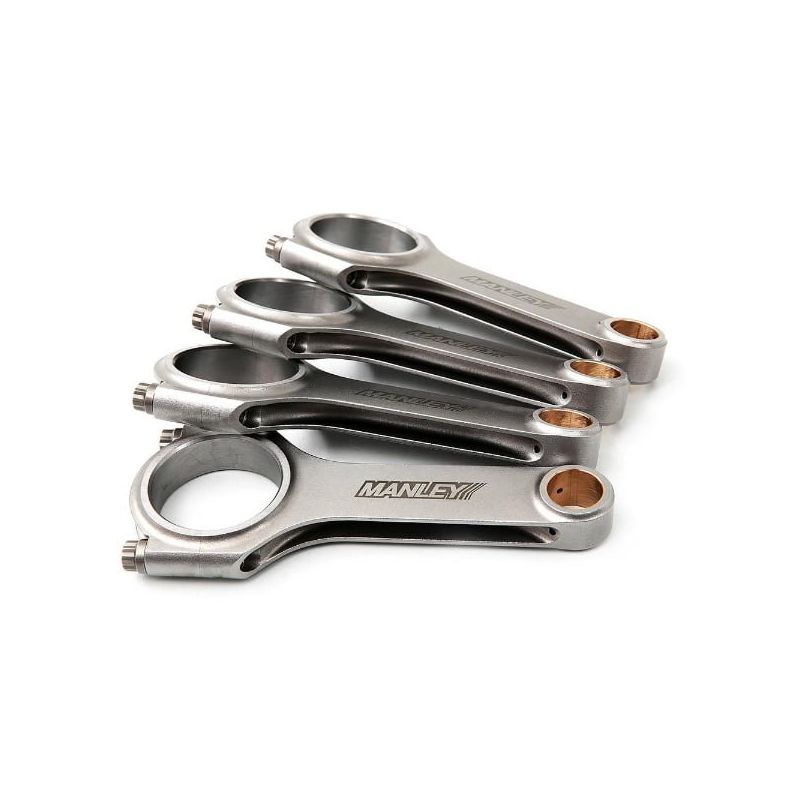
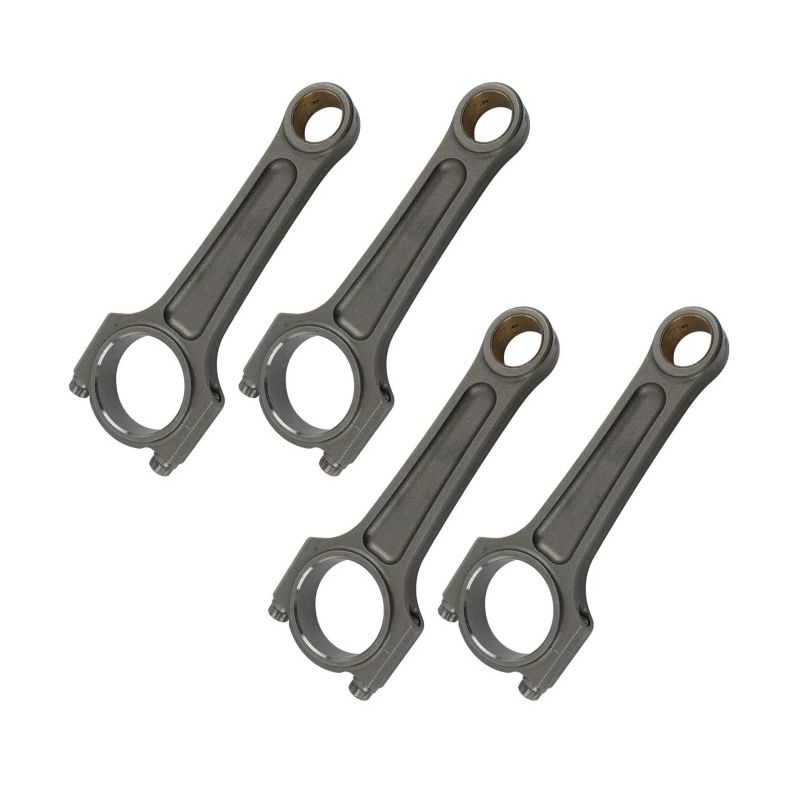
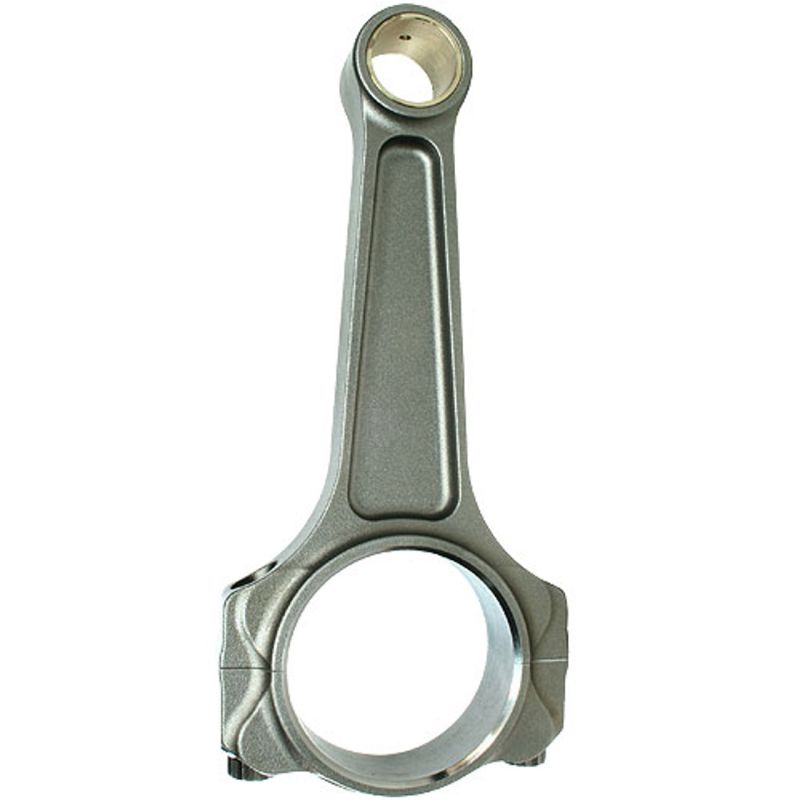
Set of 4 forged 4340 steel connecting rods for Dodge Neon SRT-4 2.4L 16V Turbo (EDV).
The Chrysler EDV (2.4L 16-valve turbo) is the four-cylinder that powers the Dodge Neon SRT-4 and several Chrysler models. With 2,429 cc (87.5 mm bore, 101 mm stroke) and a turbocharger, it produced over 230 hp in SRT-4 form, built from 2003 to 2005.
With its sturdy cast-iron block and strong crankshaft, the weak point in tuning remains the rotating assembly once boost pressure climbs. Beyond stock output the standard rods reach their limit; forged 4340 steel connecting rods secure the bottom end and open the door to high-power builds.
Forged then machined from high-strength 4340 steel, these rods give the EDV bottom end the margin the production part never had. Moving to forged pistons, raising the rev limit, increasing boost pressure or gaining displacement: in each of these cases the standard rod runs out of reserve, and it is the first component to let go. The two Manley profiles offered here, H at 595 g and I-HD at 695 g for a 151 mm centre-to-centre and a 22 mm pin, each answer a different level of load.
Sized for modified engines, whether turbocharged or supercharged, they cover the whole range of disciplines: rally, drift, drag, circuit and trackdays, hillclimb, time attack. They follow Stage 2, Stage 3 and Stage 4+ builds, right up to a block fully dedicated to competition. Their steel and the grade of their bolts set the real limit of the build.
| Reference | Brand | Profile | Bolts | Pin diameter OEM 22 mm | Small-end width | Big-end diameter OEM n.p. | Big-end width | Center-to-center OEM 151 mm | Weight per rod |
|---|---|---|---|---|---|---|---|---|---|
| 14010-4 | Manley | H | ARP 2000-3/8"-38mm | 22 mm | 53.0 mm | 25.8 mm | 151 mm | 595 g | |
| 14420-4 | Manley | I-HD | ARP 2000-3/8"-41mm | 22 mm | 53.0 mm | 25.8 mm | 151 mm | 695 g |
| Rod | Bolts | Torque | Recommended stretch |
|---|---|---|---|
| Manley (14010-4) | ARP 2000 | 81.3 N·m | 0.147 – 0.157 mm |
| Manley (14420-4) | ARP 2000 | 81.3 N·m | 0.147 – 0.157 mm |
On strip-down, badly executed tightening always shows: hammering marks on the back of the shell, a shiny parting face, a marked thread. That is the signature of a lack of tension, when bolt preload drops below the force trying to separate cap from rod at every revolution; the cap knocks, the shell is intermittently crushed, it loses its running clearance and the bearing eventually seizes. Over-tightening leaves other marks: a permanently stretched bolt, an oval big end, a distorted bearing bore, a shell back bearing more in the middle than at the edges. On this 2.4 turbo, often used in hard acceleration, tolerance is therefore nil in both directions. The two Manley rods offered here do not take the same ARP 2000 bolt length: each row of the table below carries the fastener manufacturer's own values, to be applied as they stand. Stretch measured with a dial gauge remains the reference checking method; assemble with ARP lubricant, the kit instructions taking priority.
| 4340 steel is a nickel-chromium-molybdenum alloy steel used in aerospace and motorsport alike. Forged then heat-treated (quench and temper), it offers excellent tensile strength, high fatigue resistance and real ductility. Compared with an original rod (often sintered/powder metal, optimised for series-production cost), a 4340 forged rod shows roughly +19% higher yield strength, +8% higher tensile strength and above all +19% to +37% higher fatigue strength, i.e. a fatigue life under cyclic loading several times longer. This is what makes forged 4340 the reference material as soon as boost and rpm climb. |
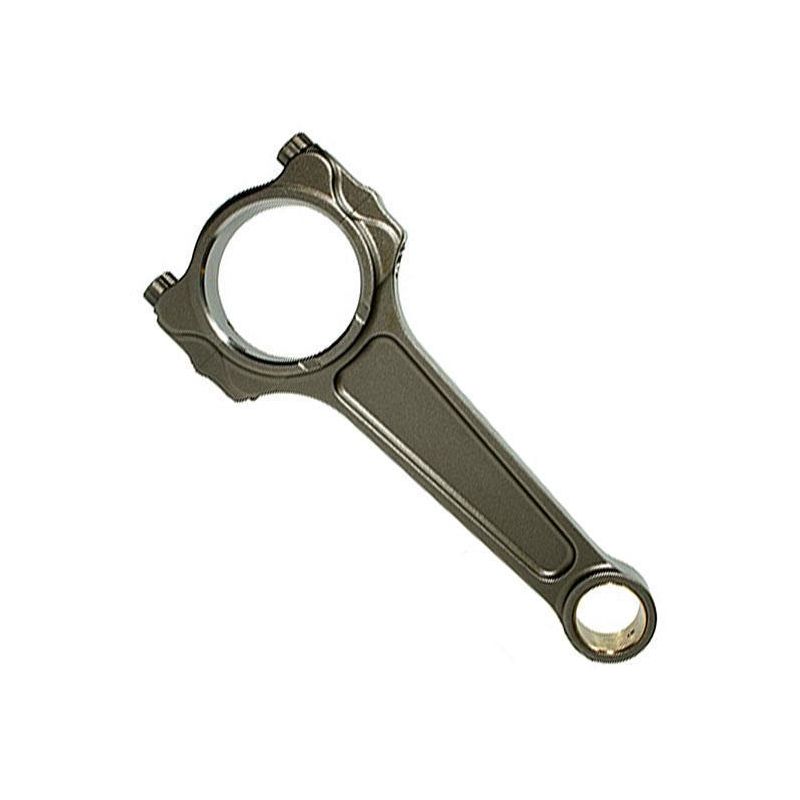
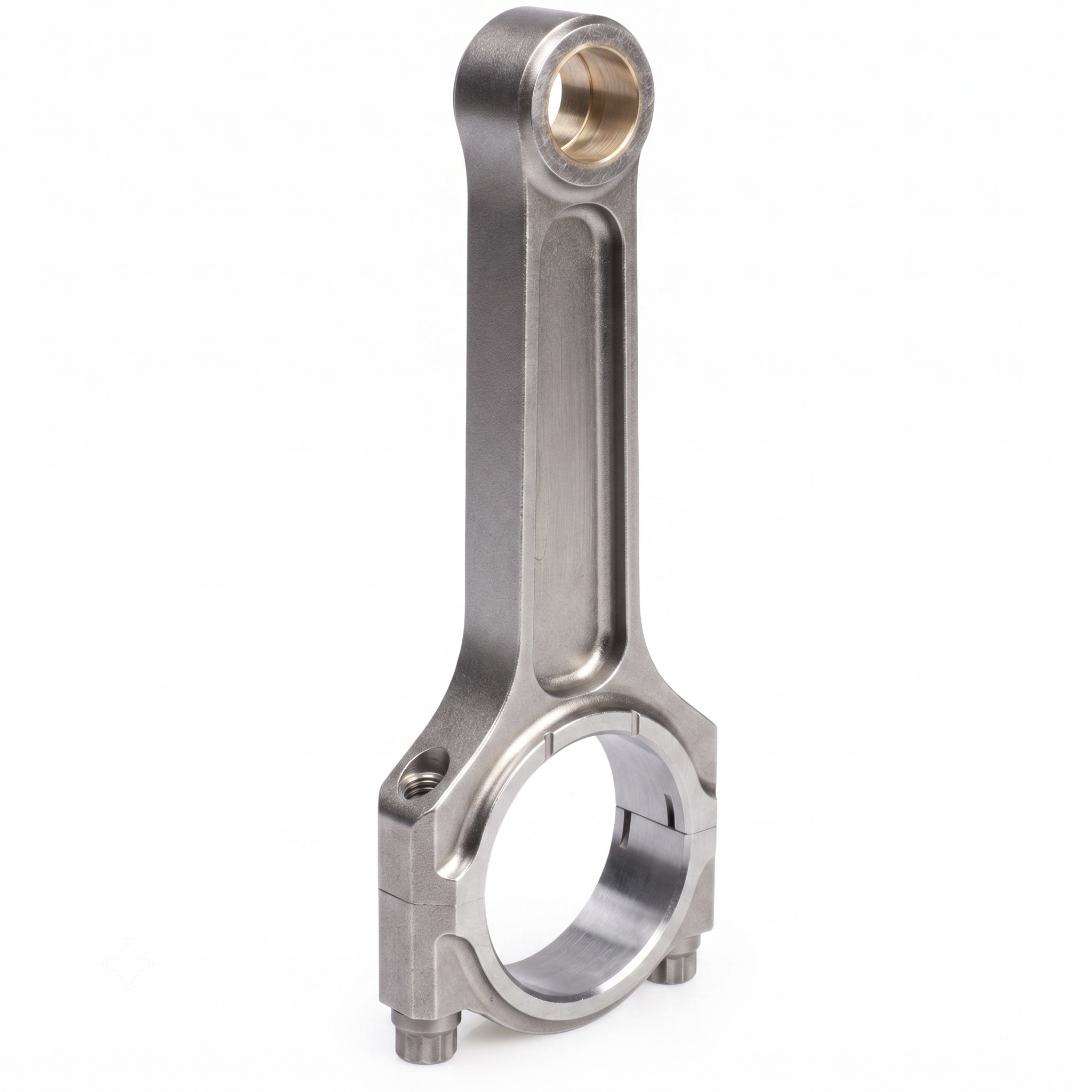 | I-HD profile (Pro Series Turbo Tuff). Manley's reinforced version of the I-beam: a robust section, larger-diameter bolts and generous material to handle very high boost pressures while keeping weight in check. |
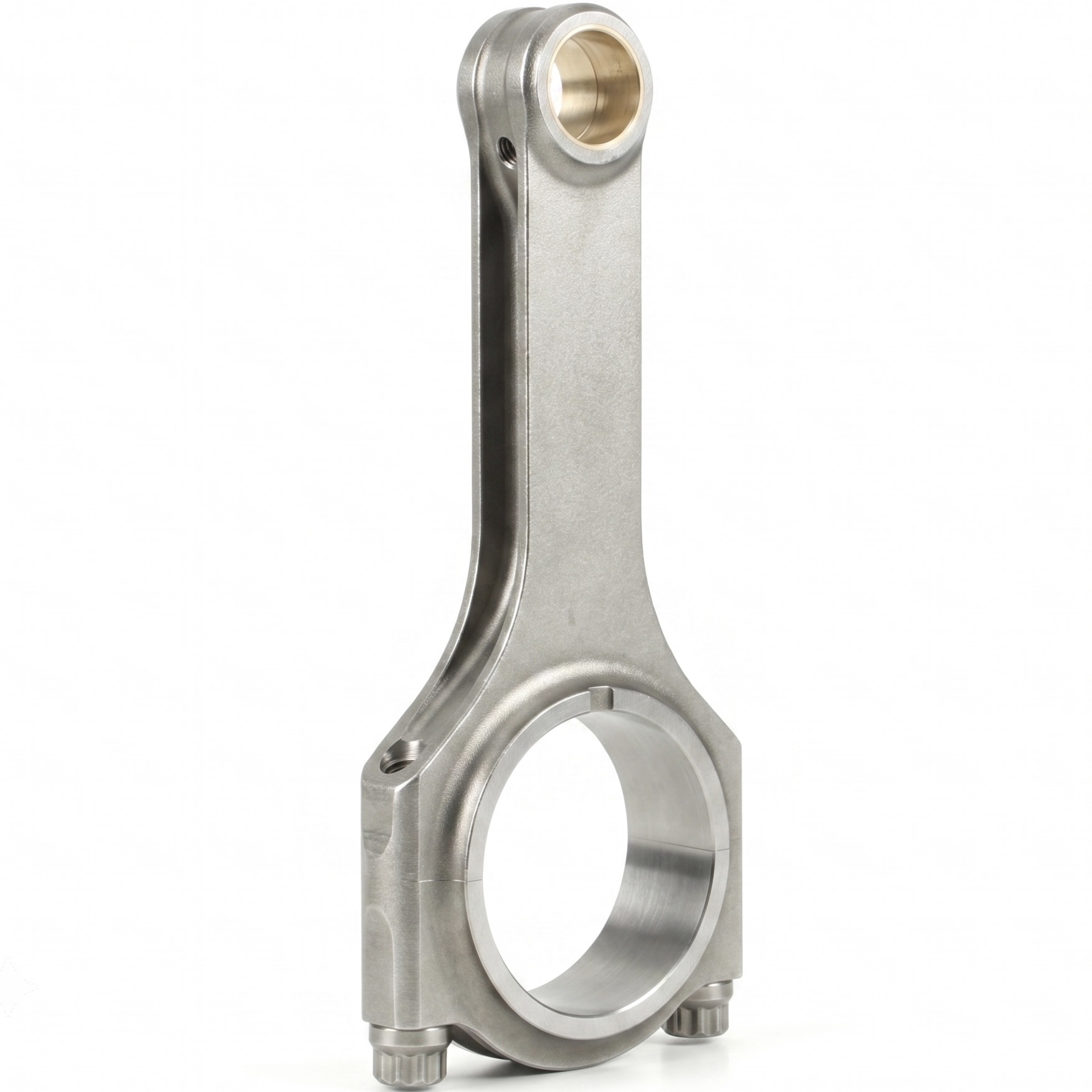 | H-Beam profile. The H-beam rod, two flat faces joined by a central web, offers maximum bending rigidity and excellent resistance to high loads. It is the reference profile for heavily stressed turbo engines. |
What sets a competition rod bolt apart from an ordinary one lies in its metallurgy and its process: selected alloy, clean steel, controlled quench and temper, then threads rolled after heat treatment, which work-hardens the thread root, the exact place where fatigue starts. Then comes manufacturing consistency, the only thing that allows the same preload to be reached on every bolt. On this EDV, ARP 2000 hardware comes in 3/8"-38 mm with the Manley H profile and in 3/8"-41 mm with the Manley I-HD; in both cases, check the stretch rather than torque alone.
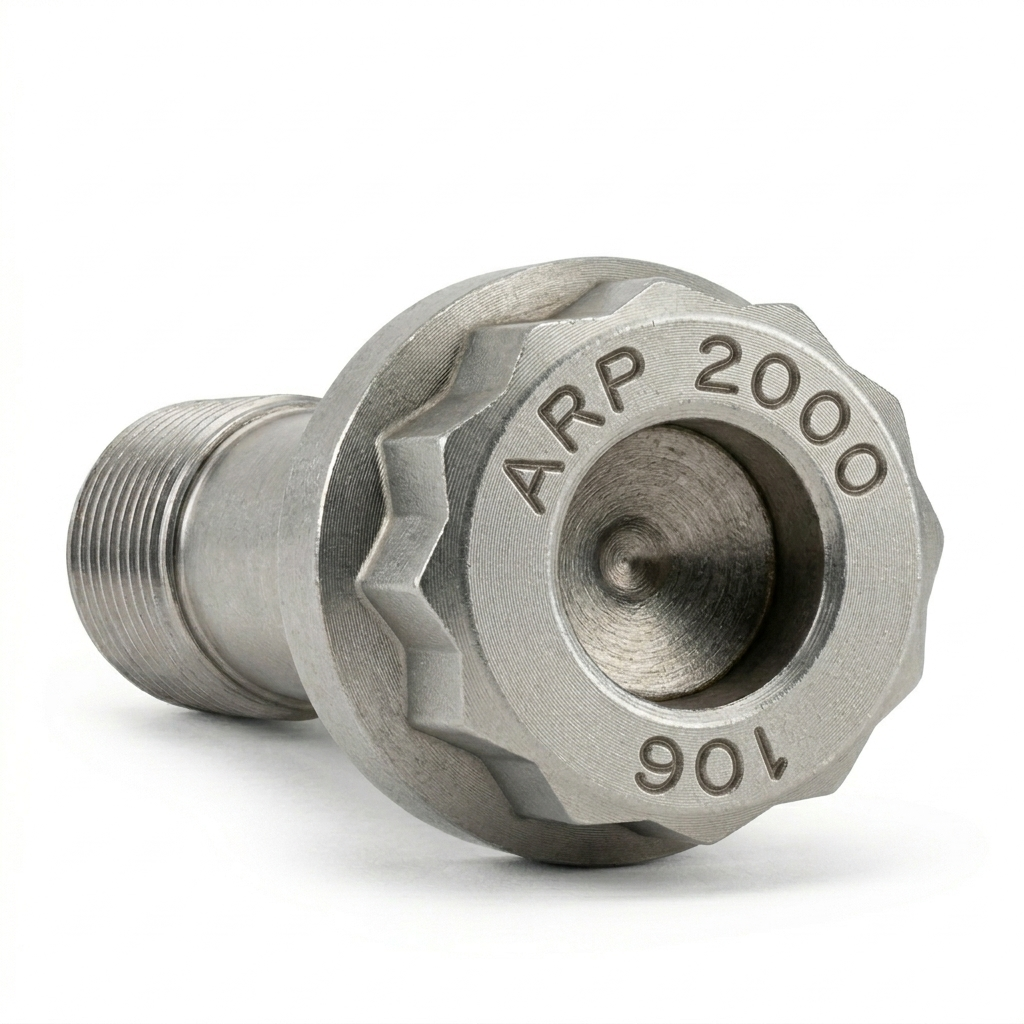 | ARP 2000 is a low-alloy steel, wrought and treated through the whole section, with tensile strength around 220,000 psi, i.e. ~1,517 MPa. Its threads, rolled after heat treatment, give high cyclic fatigue endurance, and its chemistry makes it indifferent to normal storage conditions. The grade is rated up to 200 hp per cylinder in 3/8" and up to 8,500 rpm: it is the most common in circuit racing, trackdays, drift, rally, drag and hillclimb. Here it is offered in 3/8"-38 mm and in 3/8"-41 mm depending on the Manley rod chosen. |
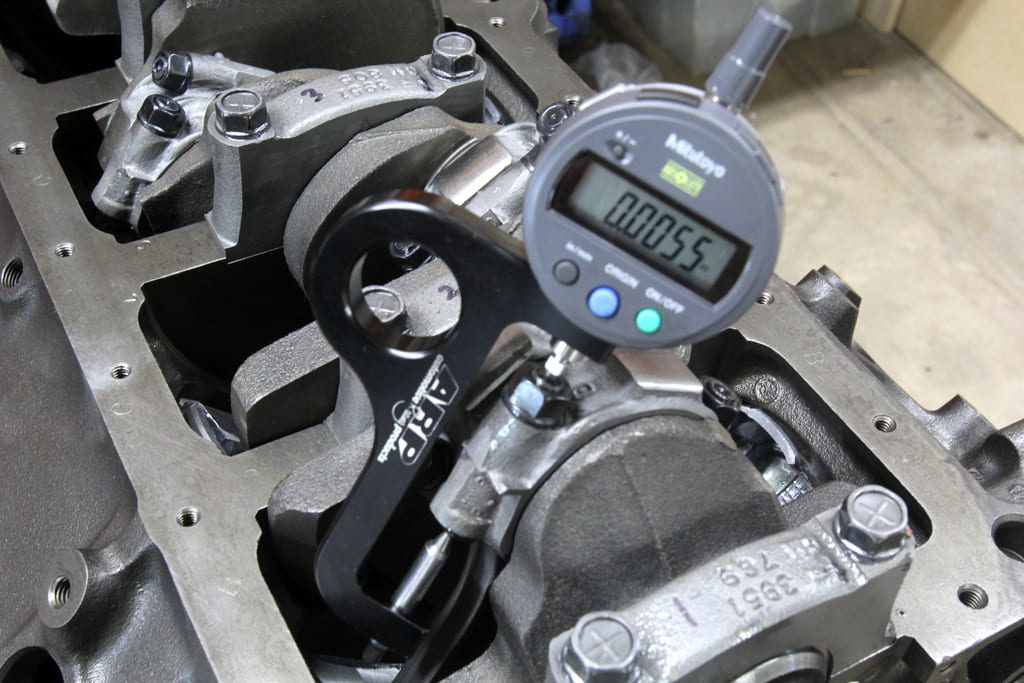
In addition to torque tightening, measuring rod-bolt stretch is the most reliable check for optimal preload. The check is done with the bolt fitted: place the gauge (dial indicator) on the two ends of the bolt and read its actual stretch, which must match the recommended value (see the torque & stretch table above). This method removes the friction variations inherent in torque tightening and secures the assembly on heavily stressed engines. |
 | Manley Performance, a leading US manufacturer of high-performance forged connecting rods. For this engine the range includes the H-Beam and the I-HD (Pro Series Turbo Tuff) profiles, both with ARP 2000 bolts, for the most demanding turbo builds. |
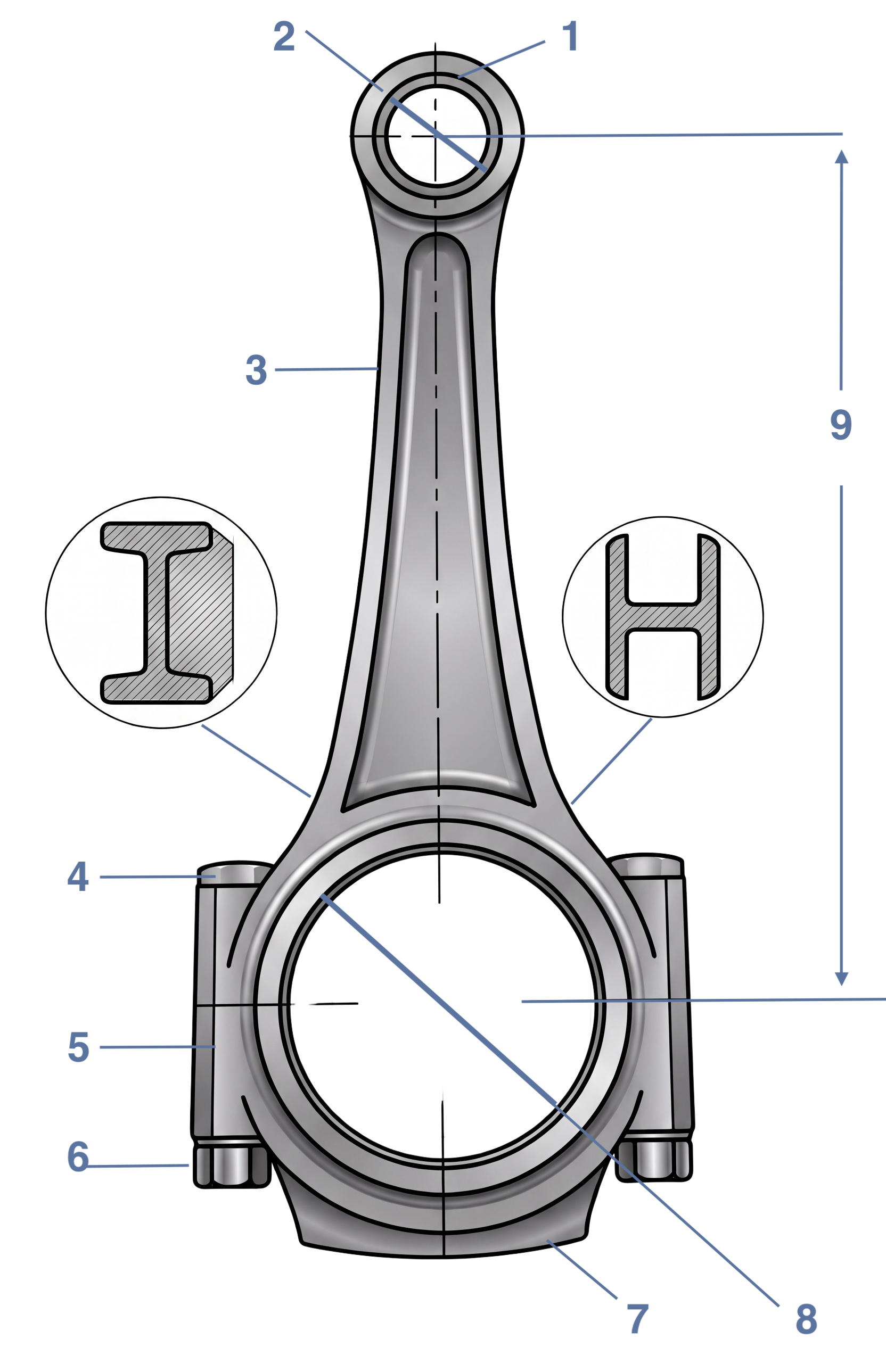 | 1) Small end 2) Small-end diameter 3) Rod beam 4) Rod bolt 5) Big end 6) Rod nut / bolt 7) Rod cap 8) Big-end diameter 9) Center-to-center |
These forged connecting rods are compatible with vehicles fitted with the Chrysler / Dodge EDV engine (2.4L 16V Turbo):
| Brand | Model (chassis) | Engine code | Power | Years |
|---|---|---|---|---|
| Dodge | Neon SRT-4 (EDV) | EDV | 218–234 hp | 2003–2005 |
| Chrysler | PT Cruiser GT / Turbo (PT_) | EDV | 223–234 hp | 2003–2010 |
| Chrysler | Sebring 2.4 Turbo (JR) | EDV | 223 hp | 2001–2007 |
| Chrysler | Cirrus 2.4 Turbo | EDV | 218 hp | 2001–2006 |
| Dodge | Stratus 2.4 Turbo (II) | EDV | 223 hp | 2001–2006 |
OEM reference:
On a standard bottom end, a broken rod is never an isolated failure: the rods AND the pistons, damaged in the same movement, have to be replaced, and the crankshaft often needs regrinding. The cost of a simple return to factory condition quickly exceeds what had been budgeted.
For an equivalent or even lower budget, 4340 forged rods combined with forged pistons put the engine in another class of reliability, with a clear safety margin and real room to raise power. This is the route European engine builders have followed for more than fifteen years, and it applies to this American turbo four-cylinder too.
For the same budget: more reliability, more potential, more longevity for the whole bottom end.