Product successfully added to your shopping cart
Quantity
Total
There are 0 items in your cart. There is 1 item in your cart.
Total products
Total shipping To be determined
Total

2.4L 16v - KA24DE
Manufacturers
2.4L 16v - KA24DE
Warning: Last items in stock!
New product
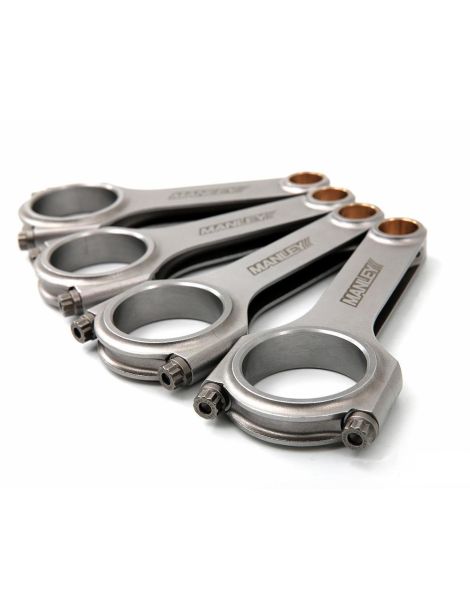
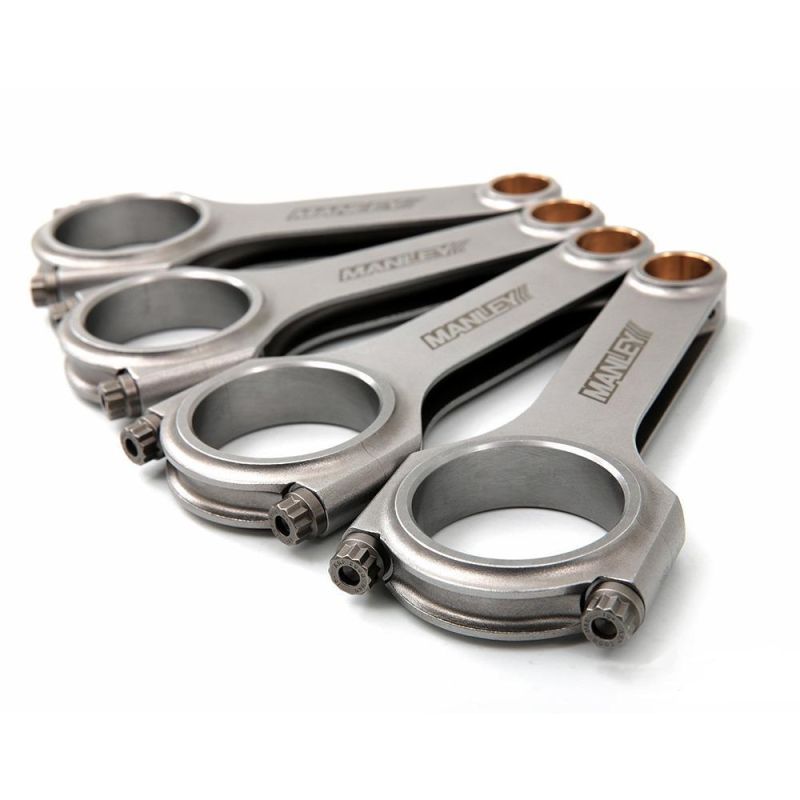
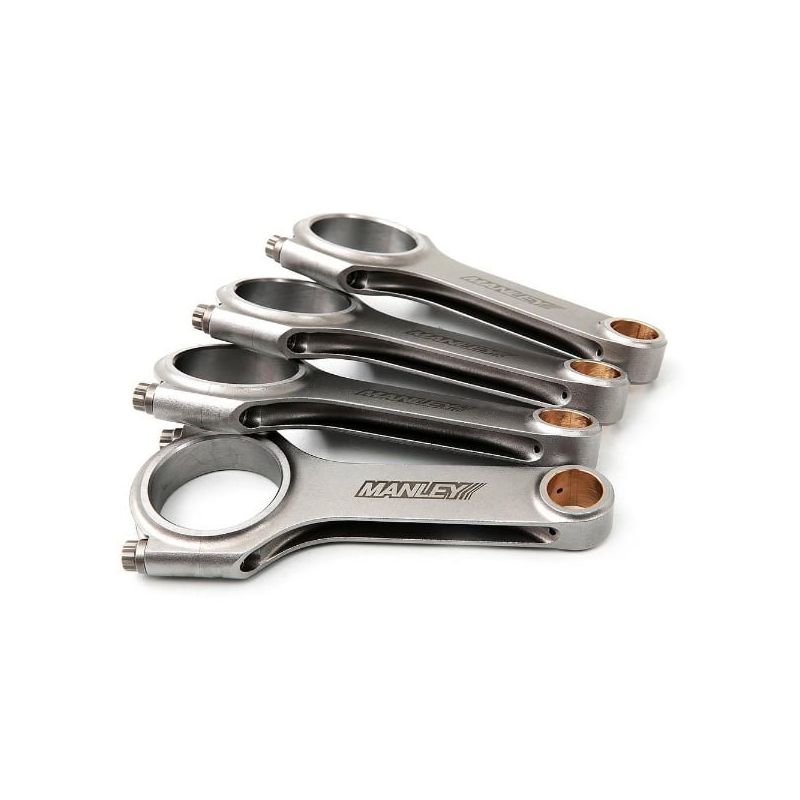
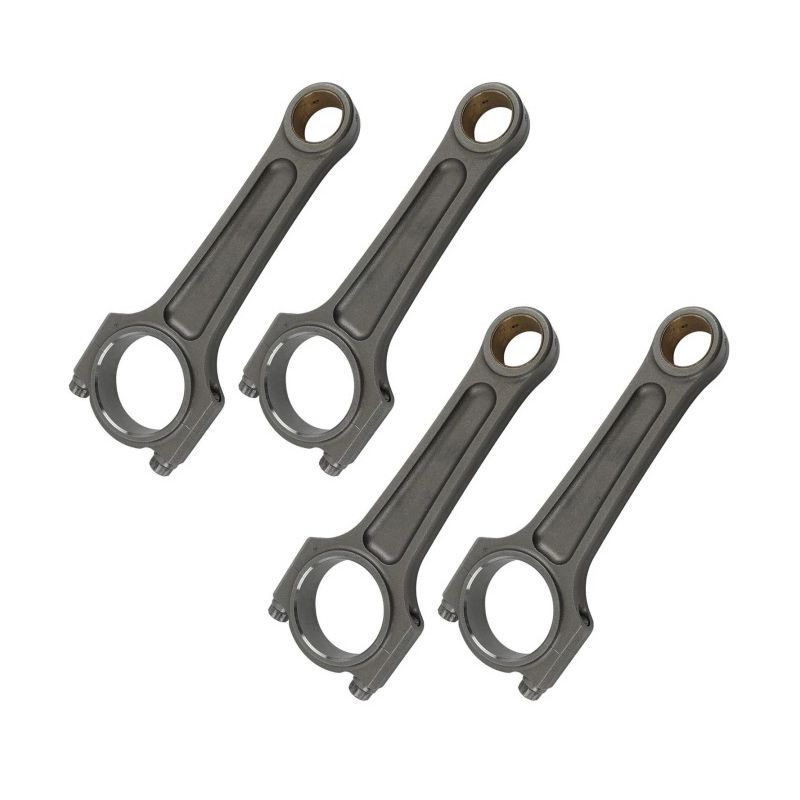
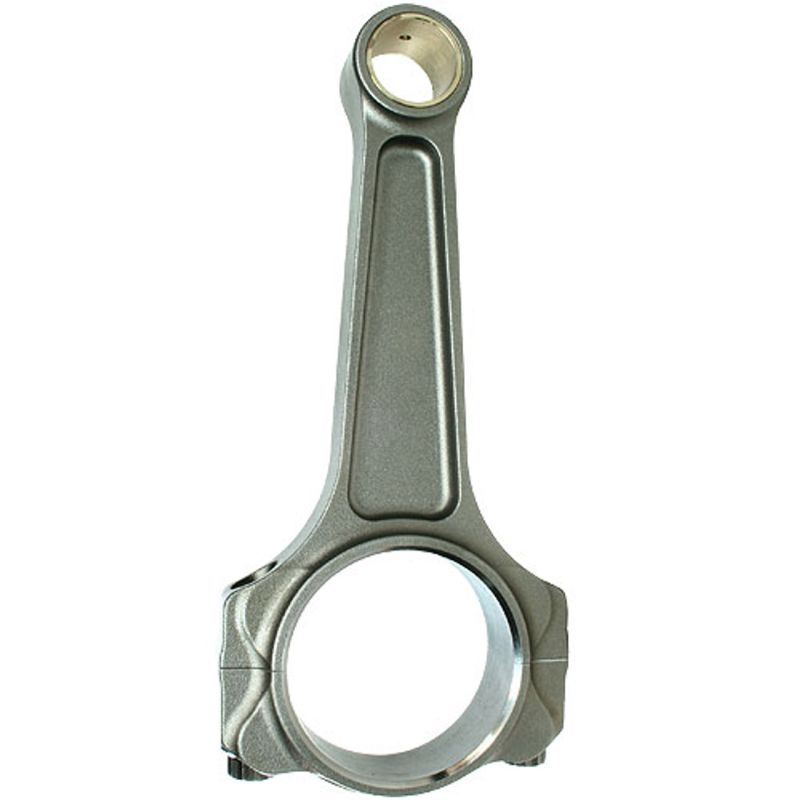
Set of 4 forged 4340 connecting rods for the Nissan 2.4L KA24 (240SX).
The Nissan KA24 is a 2.4-litre naturally aspirated inline-four, produced from 1989 to 2004. With a displacement of 2,389 cc (89 mm bore x 96 mm stroke), it came as the SOHC KA24E and then the DOHC 16-valve KA24DE, which breathes better at high rpm. Its long-stroke design favours low and mid-range torque, and its sturdy bottom end earned it a reputation for outstanding durability.
The KA24DE mainly powered the Nissan 240SX (S13 and S14) and the North American Silvia, producing around 155 hp. Naturally aspirated as standard, it is one of the most popular tuning platforms in drift and motorsport: as soon as forged pistons, higher rpm or, above all, a turbocharger are added, the factory rod reaches its limits. It is then replaced by reinforced 4340 forged connecting rods that secure the bottom end.
These rods are forged from high-strength 4340 steel and then machined to KA24 dimensions, with a 21 mm pin and a 164.97 mm centre-to-centre length. They make reliable a bottom end that quickly takes more than intended as soon as boost is added, the maximum rpm is raised, forged pistons are fitted or displacement is increased.
Intended for built engines, turbocharged as well as supercharged, they serve every discipline: rally, drift, drag racing, circuit and track use, hillclimb, time attack. They support Stage 2, Stage 3 and Stage 4+ builds up to a fully rebuilt competition engine, with two profiles to choose from, H or I-HD, from 615 to 630 g per rod.
| Reference | Brand | Profile | Bolts | Pin diameter OEM 21 mm | Small-end width | Big-end diameter | Big-end width | Center-to-center OEM 164,97 mm | Weight per rod |
|---|---|---|---|---|---|---|---|---|---|
| 14006-4 | Manley | H | ARP 2000-3/8"-38mm | 21 mm | 52,98 mm | 24,71 mm | 164,97 mm | 615 g | |
| 14401-4 | Manley | I-HD | ARP 2000-3/8"-38mm | 21 mm | 52,98 mm | 24,71 mm | 164,97 mm | 630 g |
| Rod | Bolts | Torque | Recommended stretch |
|---|---|---|---|
| Manley (14006-4) | ARP 2000 | 81,3 N·m | 0,147 – 0,157 mm |
| Manley (14401-4) | ARP 2000 | 81,3 N·m | 0,147 – 0,157 mm |
A successful assembly is decided before the wrench comes out: rod and bolt threads perfectly clean, free of old oil and machining residue, then ARP assembly lubricant laid down as an even film on the thread and under the nut. Without that preparation, friction varies from one bolt to the next and the torque read at the handle no longer tells you anything about the load actually passing through the bolt. That is the limit of the torque method, and it is why the values in the table above, those specified by the maker of the ARP 2000 bolts, must be applied without interpretation. On the eight bolts of the KA24, work up in increasing steps and alternate sides of the cap so the preload is installed without distorting the big end. Checking stretch with a gauge remains the reference: it reads the elongation of the bolt, and therefore the actual preload, regardless of friction. The instructions supplied with the Manley kit prevail in case of any discrepancy.
| 4340 steel is a nickel-chromium-molybdenum alloy steel used in aerospace and motorsport alike. Forged then heat-treated (quench and temper), it offers excellent tensile strength, high fatigue resistance and real ductility. Compared with an original rod (often sintered/powder metal, optimised for series-production cost), a 4340 forged rod shows roughly +19% higher yield strength, +8% higher tensile strength and above all +19% to +37% higher fatigue strength, i.e. a fatigue life under cyclic loading several times longer. This is what makes forged 4340 the reference material as soon as boost and rpm climb. |
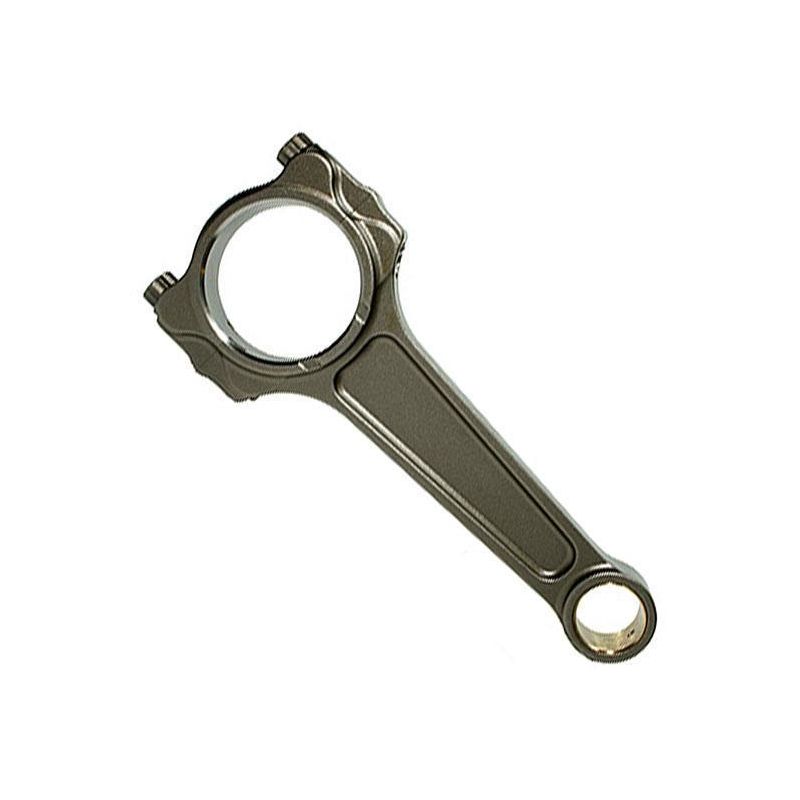
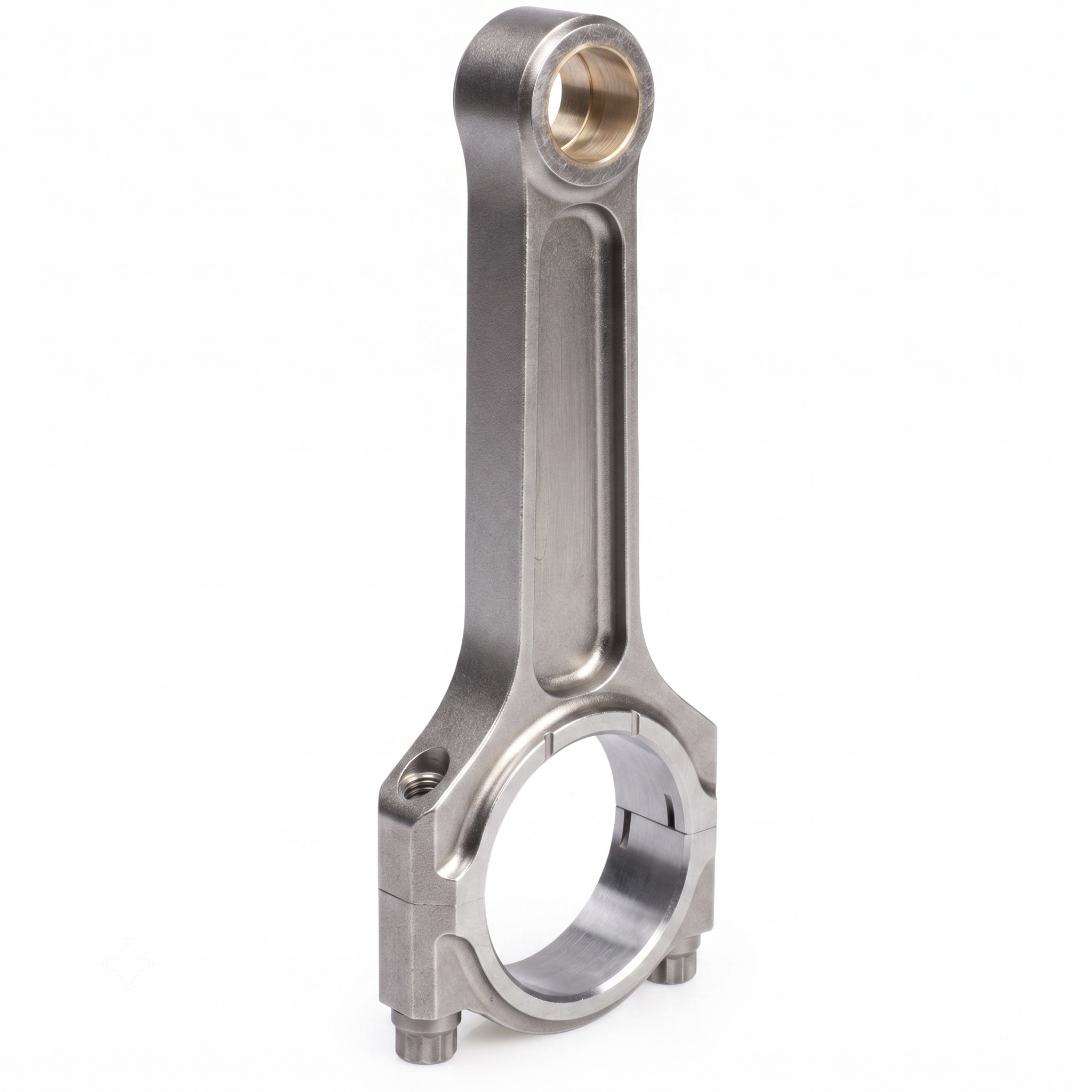 | I-HD profile (Manley Pro Series Turbo Tuff). With its thinner central section, the I-beam rod is lighter: less inertia and freer rev pick-up. It is the preferred profile on modern turbo engines like the KA24. This Heavy Duty version is a reinforced I-beam, designed for higher loads. |
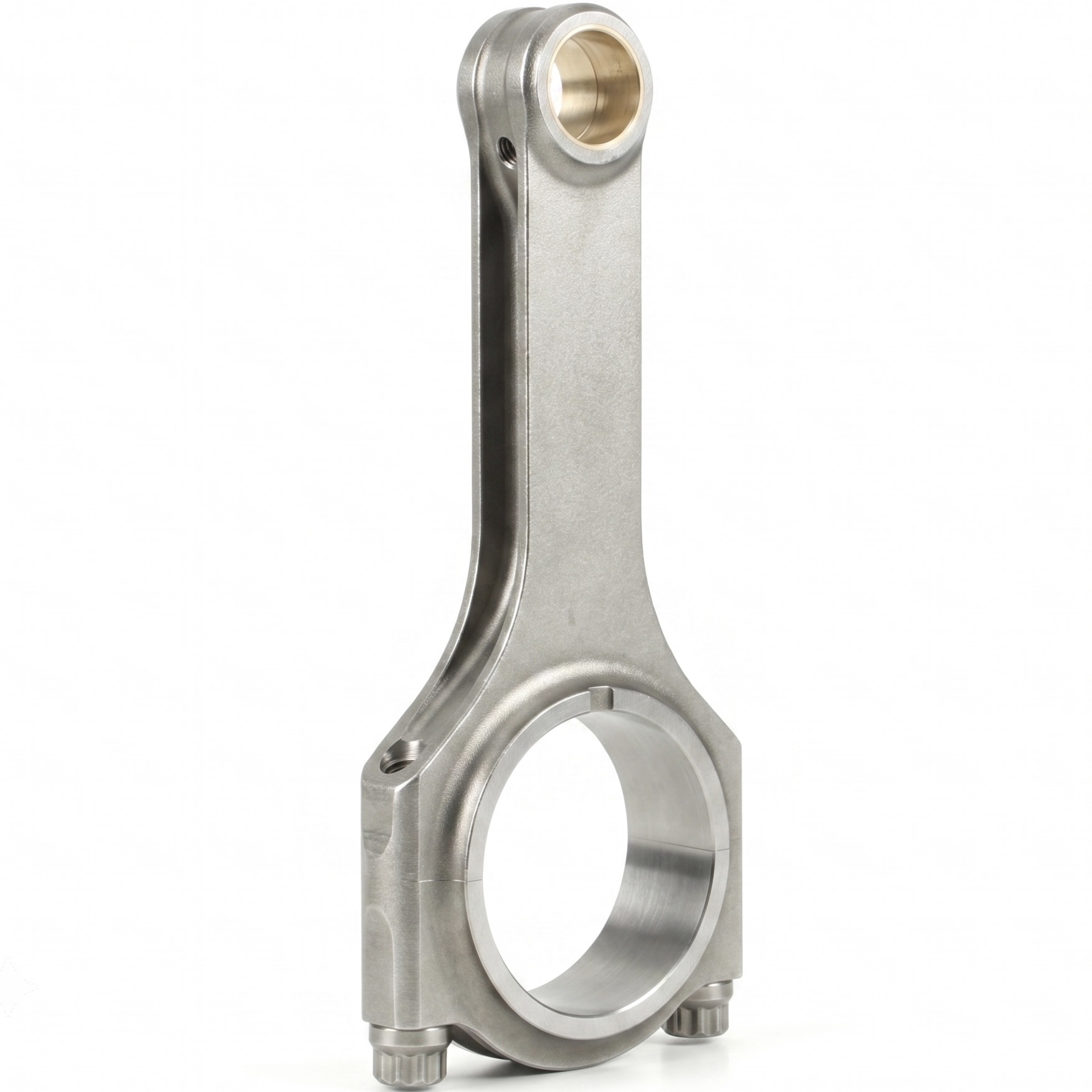 | H-beam profile. “H”-shaped section offering great rigidity and excellent resistance to bending and compression. Slightly heavier than an I-beam, it favours strength: the choice for high-torque engines, large displacements and drag. On a torque-oriented, reliability-focused KA24, it is a safe bet. |
On a KA24 the rod bolt is the part that decides what the bottom end will accept, in rpm as well as in cylinder pressure. The grade is therefore chosen by use: a drift engine spending its life at full load in the mid range does not load its bolts like a circuit engine holding maximum rpm, nor like a drag engine taking a few seconds of extreme load. Target power per cylinder then refines the choice. The bolts offered here are in 3/8"-38 mm.
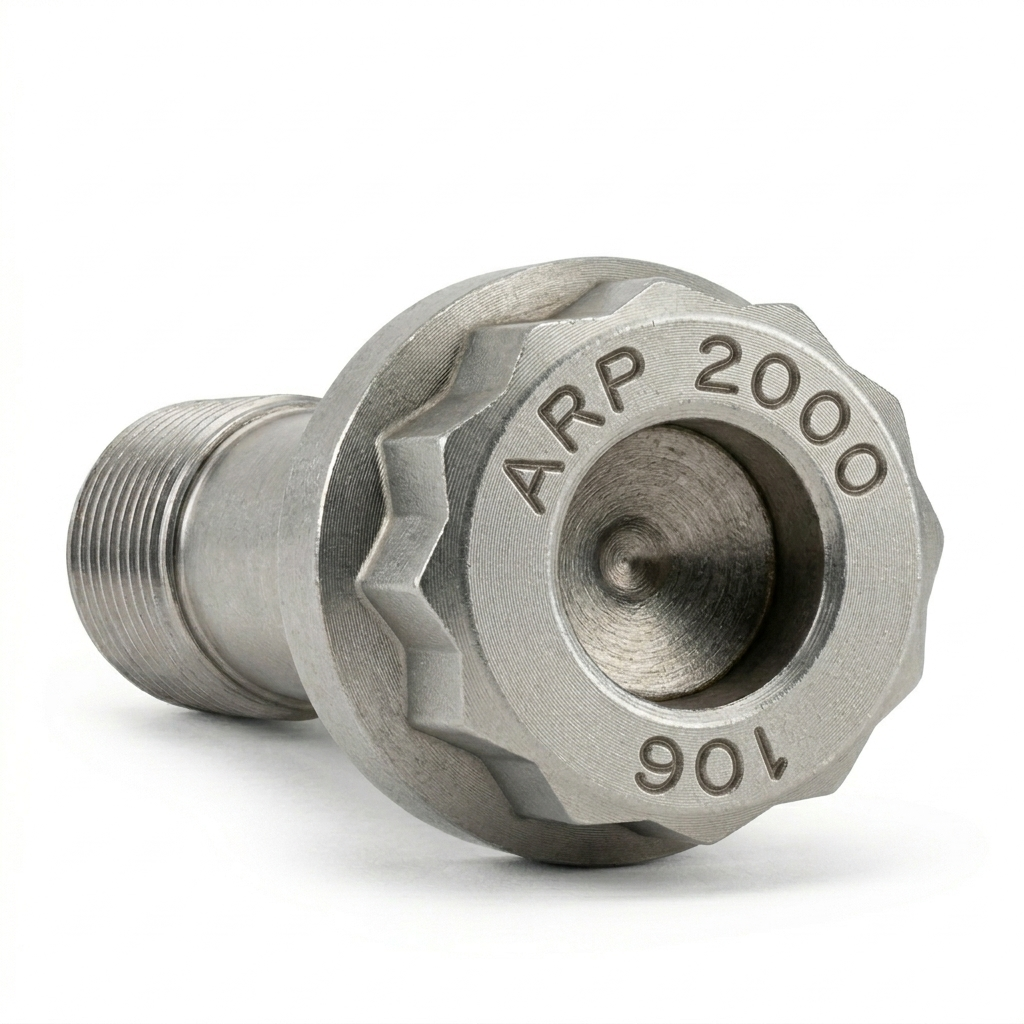 | ARP 2000, with a tensile strength of ~220,000 psi (~1,517 MPa), is the high-performance standard: up to 200 hp per cylinder in 3/8" and up to 8,500 rpm. On a built KA24 that covers most configurations, from the drift engine to the circuit engine. It is moreover the most common grade in circuit racing, track days, drift, rally, drag racing and hillclimb, and it calls for no particular storage constraint: the bolts wait for assembly with no special precaution. |
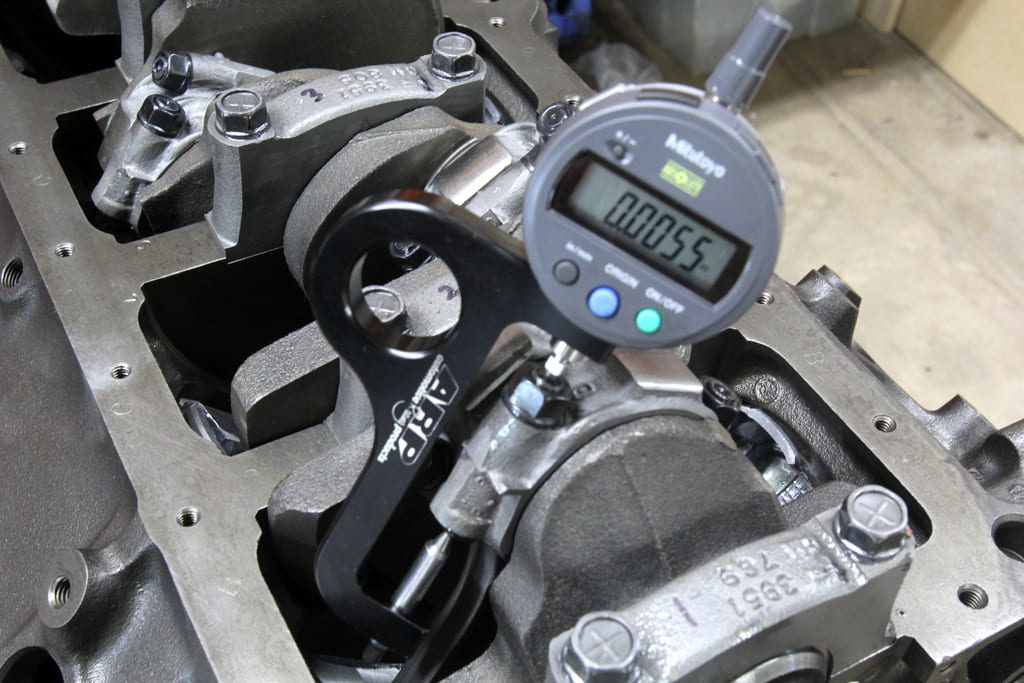
In addition to torque tightening, measuring rod-bolt stretch is the most reliable check for optimal preload. The check is done with the bolt fitted: place the gauge (dial indicator) on the two ends of the bolt and read its actual stretch, which must match the recommended value (see the torque & stretch table above). This method removes the friction variations inherent in torque tightening and secures the assembly on heavily stressed engines. |
 | MANLEY, an American forged connecting rod manufacturer since 1966. Machined from vacuum-degassed aerospace-grade 4340 steel, shot-peened and inspected one by one, its “Turbo Tuff” rods come in H-beam and I-beam profiles, with ARP 2000 bolts. A major name in engine building, from street to competition. |
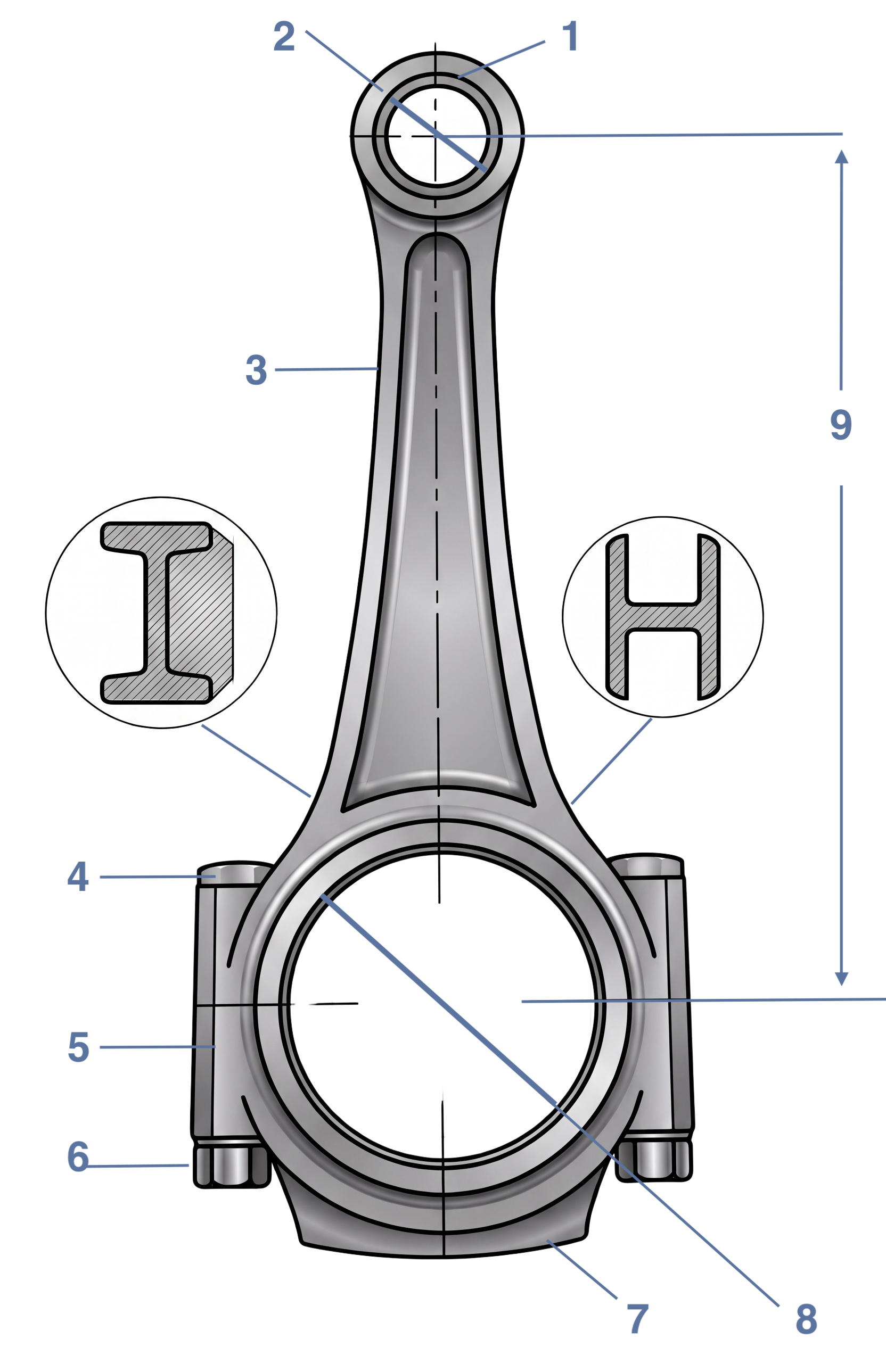 | 1) Small end 2) Small-end diameter 3) Rod beam 4) Rod bolt 5) Big end 6) Rod nut / bolt 7) Rod cap 8) Big-end diameter 9) Center-to-center |
These forged connecting rods are compatible with all vehicles fitted with the Nissan KA24 engine (2.4L 16V):
| Brand | Model (chassis) | Engine code | Power | Years |
|---|---|---|---|---|
| Nissan | 240SX (S13) | KA24E | 140 hp | 1989–1990 |
| Nissan | 240SX (S13) | KA24DE | 155 hp | 1991–1994 |
| Nissan | 240SX (S14) | KA24DE | 155 hp | 1995–1998 |
OEM reference: 12100-1KC0A (set of 4 rods).
On a KA24, a broken standard rod takes the piston with it and calls for a check of the block and crankshaft. Rebuilding the engine with standard parts means paying for rods and pistons only to recover exactly the same failure threshold. In other words, the same weakness is paid for twice.
For a comparable, often lower budget, a set of forged 4340 steel rods combined with forged pistons takes reliability and safety margin to another level, and leaves the door open to a later power increase. European engine builders have worked this way on Nissan four-cylinders for more than 15 years.
For the same budget: more reliability, more potential, more service life, for an engine that finally runs without holding back.