Product successfully added to your shopping cart
Quantity
Total
There are 0 items in your cart. There is 1 item in your cart.
Total products
Total shipping To be determined
Total

2.3L 8v - B230
Manufacturers
2.3L 8v - B230
Warning: Last items in stock!
New product
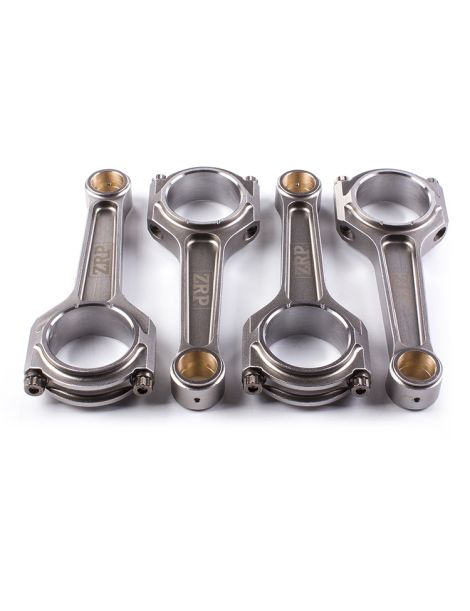
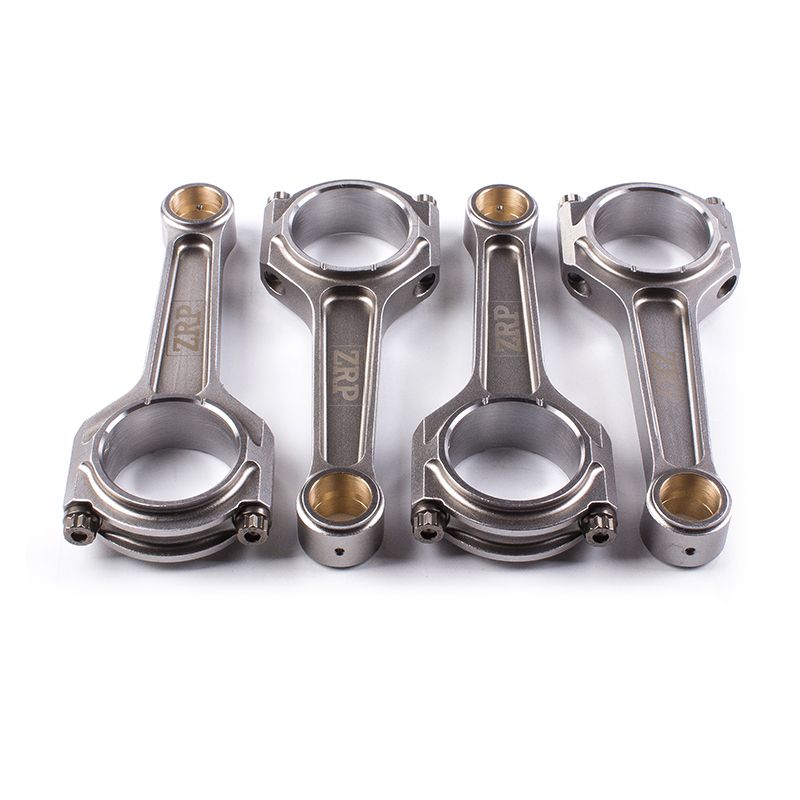
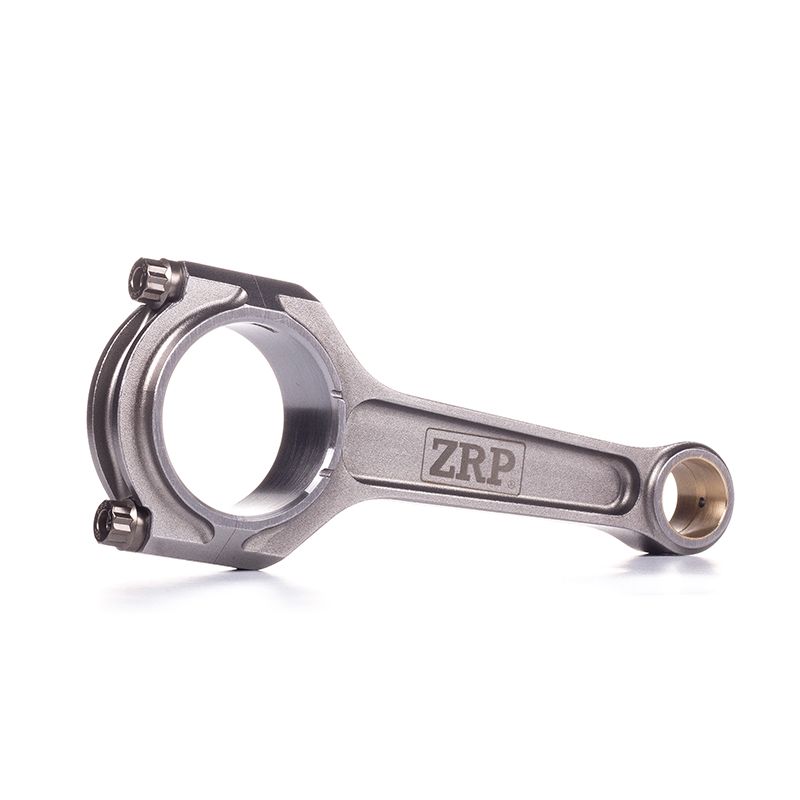
Set of 4 forged 4340 steel connecting rods for Volvo 2.3L B230 / B234.
The Volvo “red block” is the famous family of cast-iron inline-four engines that powered the Volvo 240, 740, 760 and 940. Derived from the B23, the B230 displaces 2,316 cc (96 mm bore × 80 mm stroke): eight valves and a single belt-driven overhead camshaft, it comes in naturally aspirated forms (B230F, roughly 114 to 131 hp) as well as turbocharged ones (B230FT and B230FK, roughly 160 to 200 hp). The B234F builds on the same block with a sixteen-valve twin-cam head, for around 153 to 155 hp naturally aspirated. This generation was produced from 1985 to 1998.
A counterbalanced crankshaft, a sturdy bottom end and exemplary durability made the red block one of the most popular tuning bases, especially under boost. Yet as boost pressure climbs, engine speed rises or displacement grows, the stock connecting rod eventually reaches its limit: pushing that limit back is exactly what a forged rod is for.
On a built engine, the connecting rod converts the piston’s reciprocating motion into crankshaft rotation: on every cycle it withstands tensile, compressive and bending loads that rise sharply with power, engine speed and boost pressure. A 4340 forged rod provides the safety margin required as soon as the stock component is pushed beyond its capacity, whether from higher boost, more rpm or a displacement increase.
Designed to absorb the heavy loads of built engines (turbo as well as high-output naturally aspirated), these forged rods suit every discipline: rallying, drift, drag, circuit and track days, hill climb and time attack. They support Stage 2, Stage 3 and Stage 4+ builds, all the way to full competition engines.
| Reference | Brand | Profile | Bolts | Pin bore OEM 23 mm | Small-end width | Big-end bore | Big-end width | Centre-to-centre OEM 152 mm | Weight per rod |
|---|---|---|---|---|---|---|---|---|---|
| R-VOL-003-I | ZRP | I | ARP 2000-3/8"-38mm | 23 mm | 52 mm | 29,5 mm | 152 mm | 618 g | |
| R-VOL-003-I-L19 | ZRP | I | ARP L19-3/8"-38mm | 23 mm | 52 mm | 29,5 mm | 152 mm | 618 g |
| Reference | Bolts | Torque | Recommended stretch |
|---|---|---|---|
| ZRP (R-VOL-003-I) | ARP 2000 | 61 N·m | 0,140 – 0,152 mm |
| ZRP (R-VOL-003-I-L19) | ARP L19 | 67,8 N·m | 0,152 – 0,165 mm |
A torque setting is only as good as the tool applying it: a wrench out of calibration, left wound up at full scale or used outside its useful range introduces invisible scatter across the eight bolts of a B230 or B234 block. The figures in the table above, set by the bolt manufacturer, therefore assume checked equipment, smooth take-up and a reading taken at the click, with no extra pull afterwards. Since torque remains an indirect quantity, measuring stretch with a dial gauge stays the reference method: it reports the tension actually installed, whatever the state of the wrench. Keep the ARP 2000 and ARP L19 lines of the table carefully apart, prepare clean threads coated with ARP assembly lubricant, and build load in alternating stages. In case of disagreement, the instruction sheet supplied with the kit decides.
| 4340 is a low-alloy nickel-chromium-molybdenum steel, the benchmark for highly stressed mechanical parts, used even in aerospace. After hot forging, the rods are quenched and tempered to balance hardness and toughness. Compared with a production sintered metal, forged 4340 offers around 19% more yield strength, about 8% more tensile strength and 19 to 37% greater fatigue endurance depending on loading: extra margin that translates directly into a more reliable bottom end under high load. |
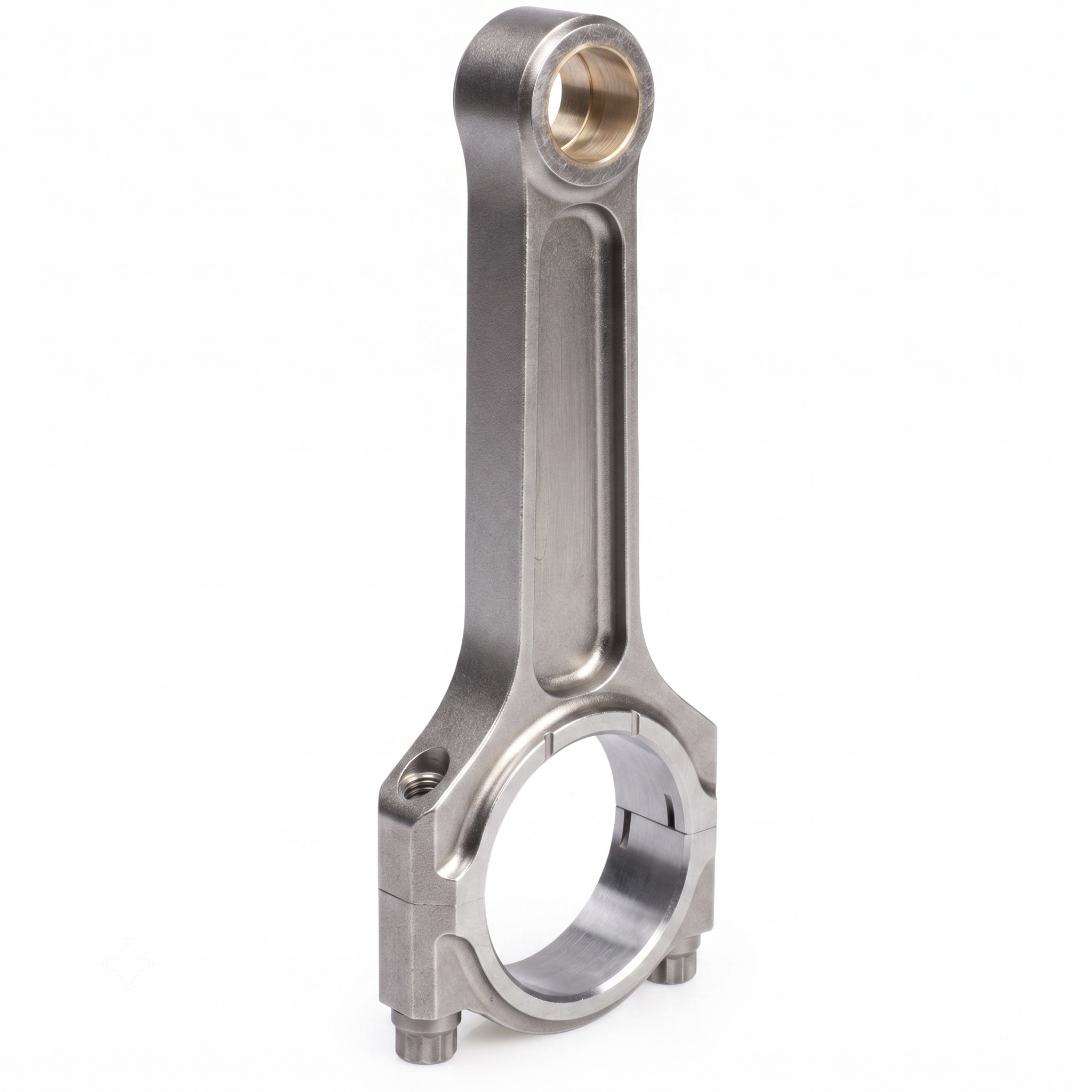 | I-beam profile: an I-shaped section that favours an excellent stiffness-to-weight ratio. Light and stable at high rpm, the I-beam rod is ideally suited to the B6284 straight-six, where controlling moving masses and high-rpm stability come first. |
How a rod bolt behaves is decided long before assembly, in the material: the alloy grade gives the yield strength and the tensile strength, the heat treatment decides how uniform the part is, and the rolling of the threads, carried out after that treatment, work-hardens the thread root and clearly delays the appearance of a fatigue crack. Then there is the question of environment: some grades dislike moisture and hydrogen, others do not. This B230 / B234 with 152 mm centre-to-centre takes its bolts in 3/8"-38 mm; choose the grade according to target power and engine speed, then tighten by measured stretch.
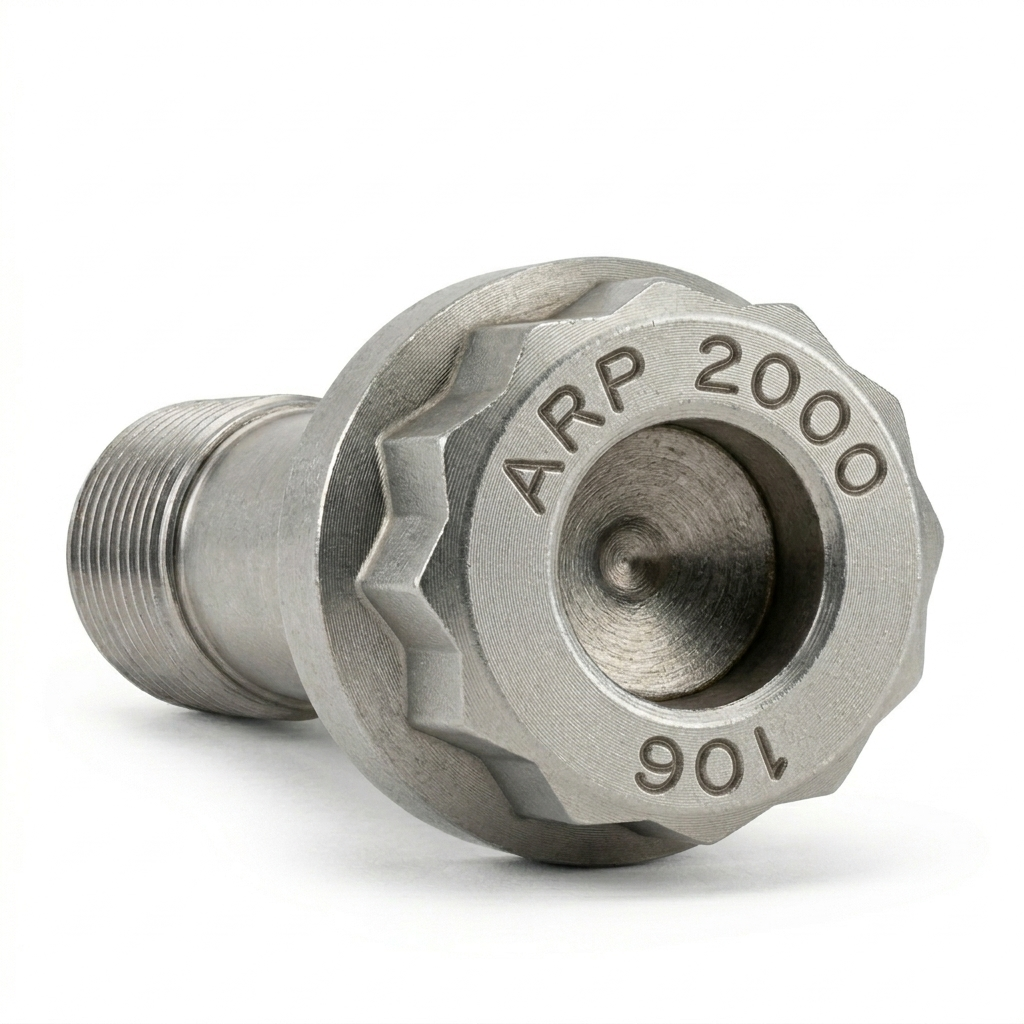 | ARP 2000 is a wrought, through-hardened steel with tensile strength around 220,000 psi, i.e. ~1,517 MPa, with threads rolled after heat treatment for excellent cyclic fatigue life. The grade covers up to 200 hp per cylinder in 3/8" and up to 8,500 rpm, which makes it the most common in circuit racing, trackdays, drift, rally, drag and hillclimb. It is stable against ambient corrosion and imposes no storage constraint; on this red block it equips the ZRP I-profile rod in 3/8"-38 mm. |
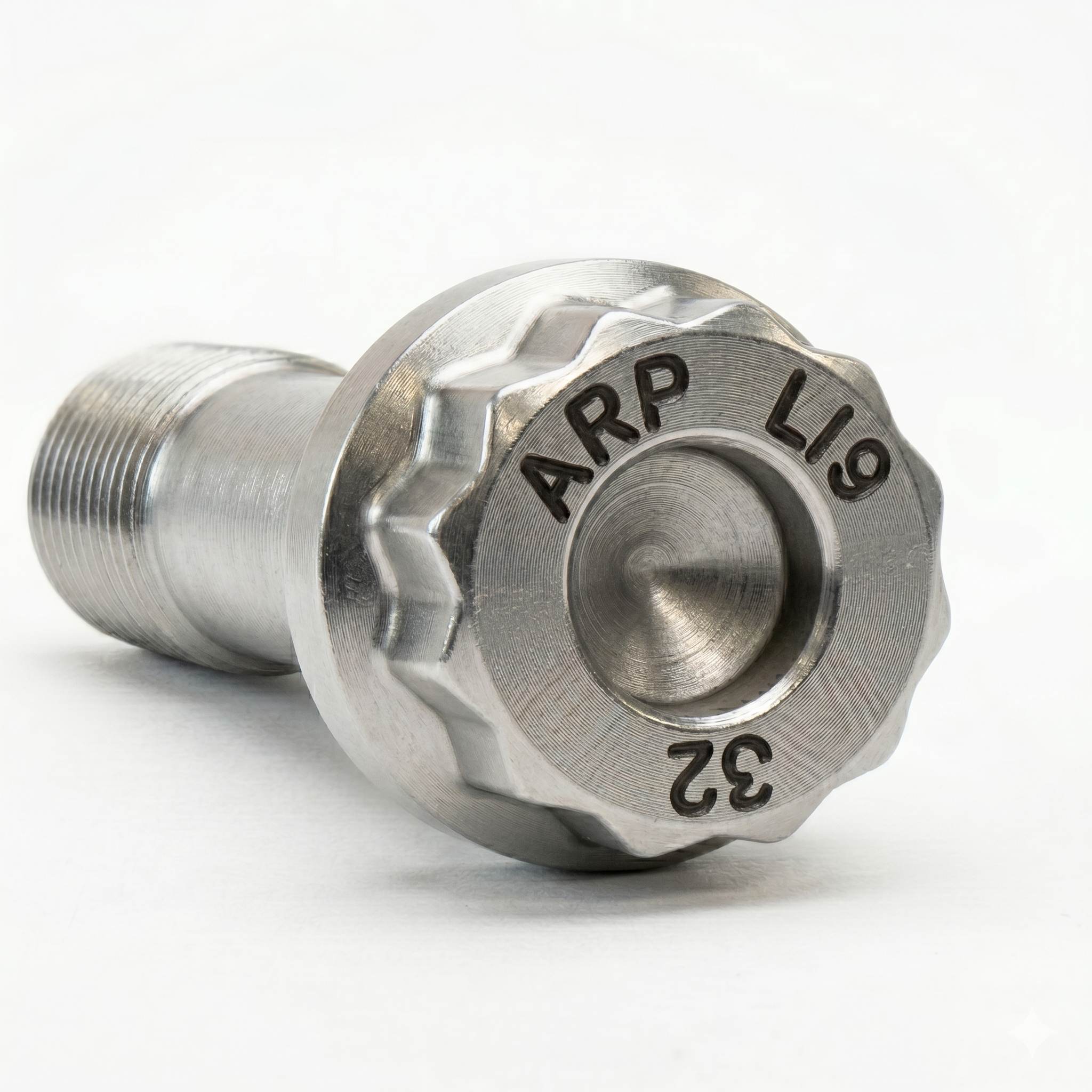 | ARP L19 is the next grade up: richer alloy, more severe heat treatment, tensile strength of about 260,000 psi, i.e. ~1,793 MPa, for 250 hp per cylinder in 3/8" and up to 10,000 rpm. It is intended for very high boost pressure, sustained high engine speeds and high cylinder pressure, hence big power in drag, drift, rally and circuit; here it is fitted to the same ZRP I-profile rod with 152 mm centre-to-centre, in 3/8"-38 mm. Its metallurgy calls for discipline: sensitive to corrosion and to hydrogen embrittlement, L19 is stored and fitted oiled, away from moisture. |
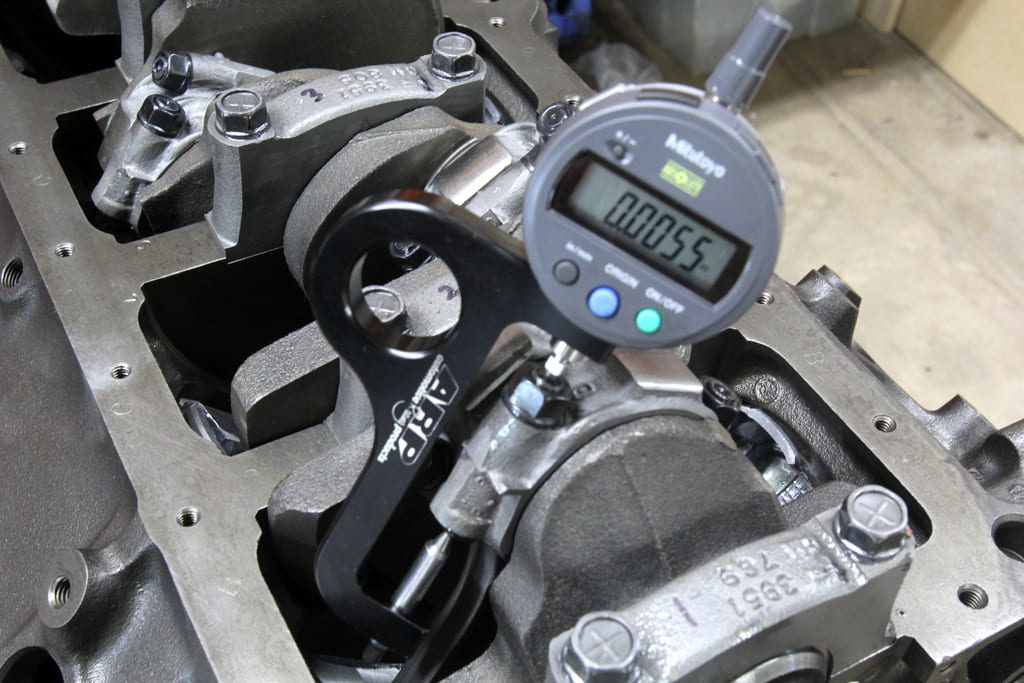
| The most reliable tightening method is to measure bolt stretch with a gauge, between its two ends, rather than relying on torque alone: it eliminates parasitic friction and guarantees exact preload. The target stretch value is given in the manufacturer's instructions. |
 | ZRP is the brand of Alex Drakos, based in Athens, Greece. Its rods are precision-machined from 4340 steel, inspected and weight-matched to within ±1 g for optimal bottom-end balance. They excel in circuit, rally and drift as well as in high-power builds. |
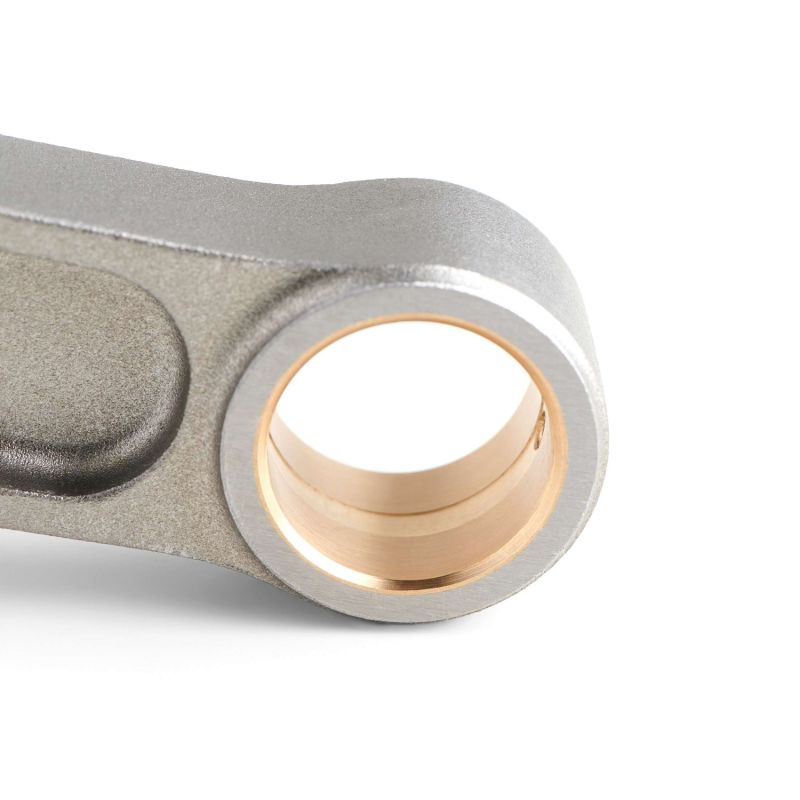
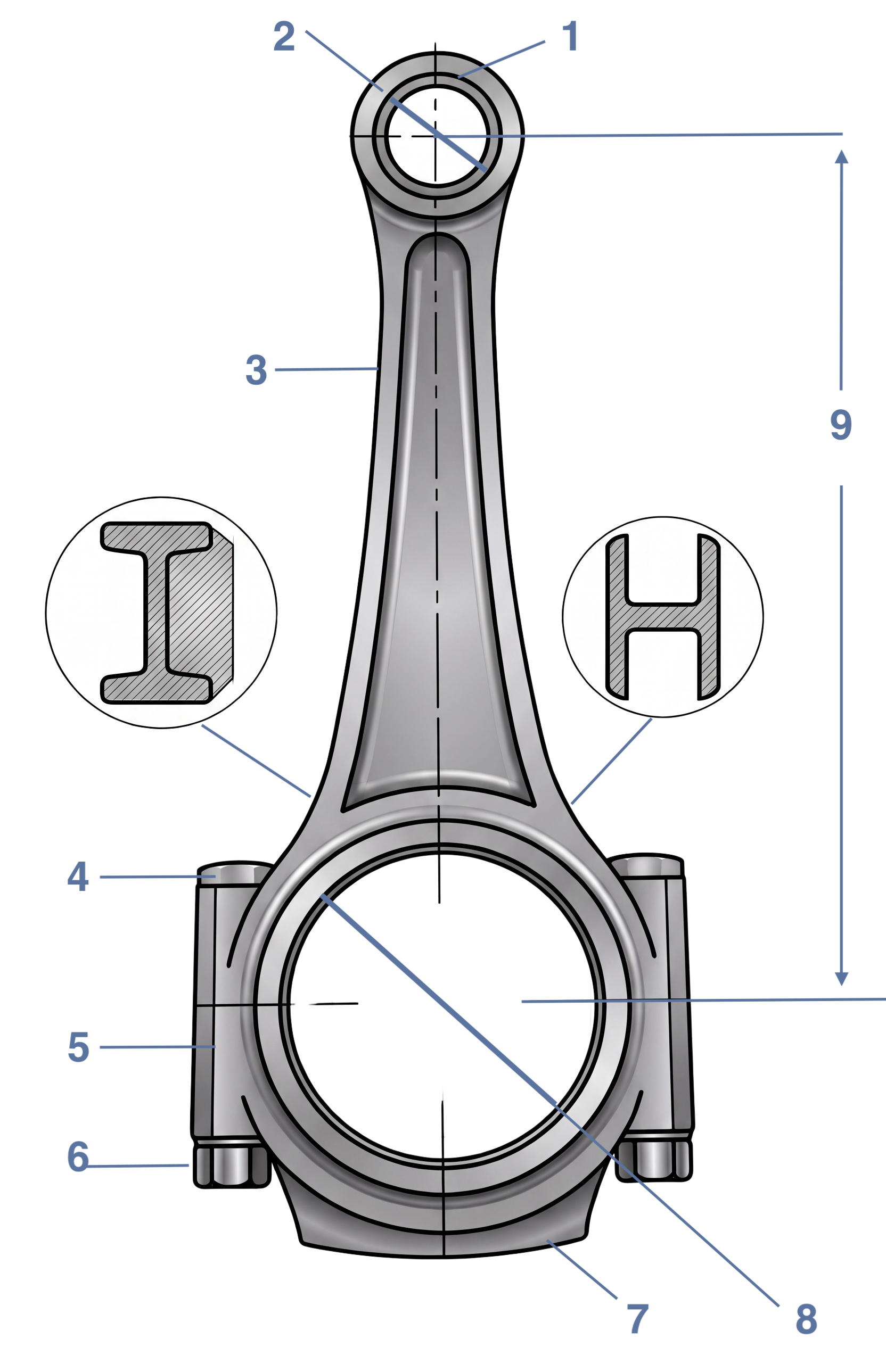 | 1) Small end 2) Small-end diameter 3) Rod beam 4) Rod bolt 5) Big end 6) Rod nut / bolt 7) Rod cap 8) Big-end diameter 9) Center-to-center |
The table below lists the vehicles built with the Volvo 2.3L 8V & 16V B230 / B234 engine. Before ordering, check the piston pin diameter and the centre-to-centre length of your original rods. Variant concerned: red block 152 mm.
| Make | Model (chassis) | Engine code | Power | Years |
|---|---|---|---|---|
| Volvo | 240 (242 / 244 / 245) | B230F | 114–131 hp | 1985–1993 |
| Volvo | 740 / 740 Turbo (744 / 745) | B230F / B230FT | 114–190 hp | 1984–1992 |
| Volvo | 740 GLE 16-valve (744 / 745) | B234F | 153–155 hp | 1988–1991 |
| Volvo | 760 Turbo (764) | B230FT | 160–182 hp | 1985–1990 |
| Volvo | 940 / 940 Turbo (944 / 945) | B230F / B230FT | 114–190 hp | 1990–1998 |
| Volvo | 940 16-valve (944 / 945) | B234F | 153–155 hp | 1990–1994 |
OEM reference : (set of 4 rods)
When a stock bottom end fails (a broken, bent or scored rod), going back to the factory configuration means replacing the rods and the pistons, which are often damaged at the same time. The bill adds up quickly, for a mere return to standard.
For an equivalent or even lower budget, fitting 4340 forged rods together with forged pistons brings clearly superior reliability and safety margin, plus genuine room to raise power. It is the solution European engine builders have chosen for more than fifteen years.
For the same budget: more reliability, more potential, more longevity.