Product successfully added to your shopping cart
Quantity
Total
There are 0 items in your cart. There is 1 item in your cart.
Total products
Total shipping To be determined
Total

2.0L 16v - B48
Manufacturers
2.0L 16v - B48
Warning: Last items in stock!
New product
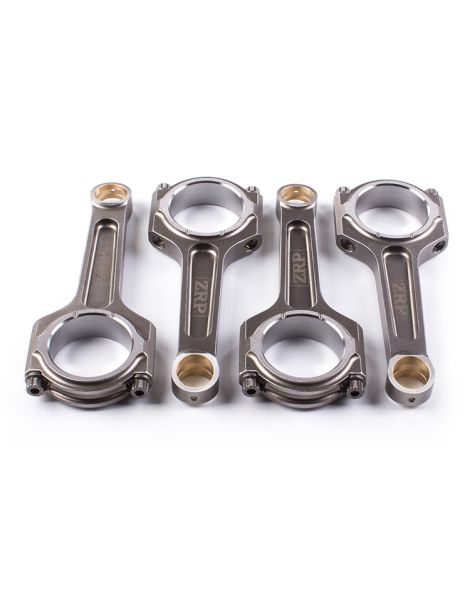
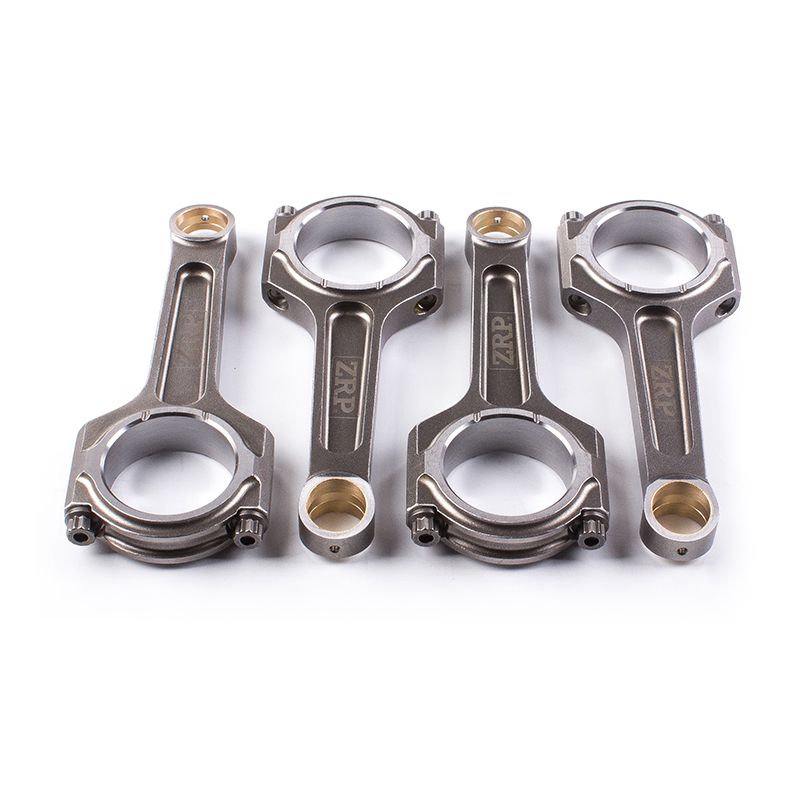
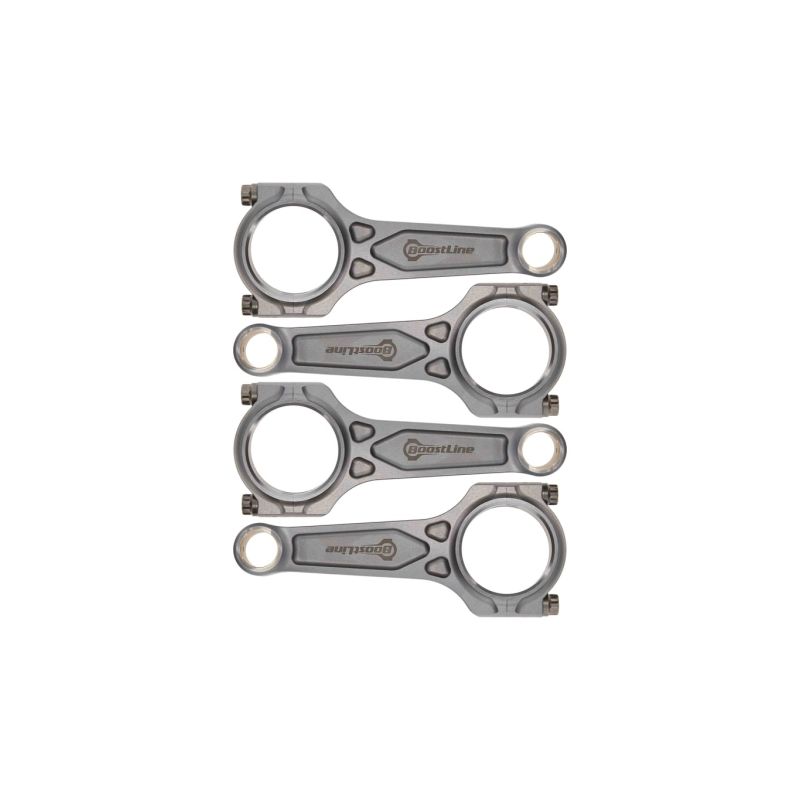
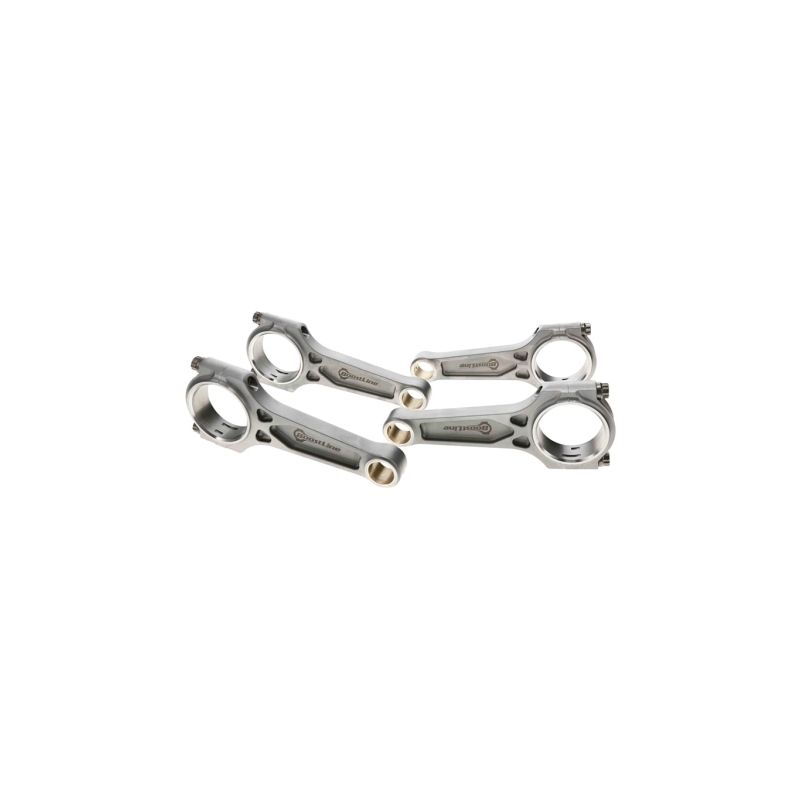
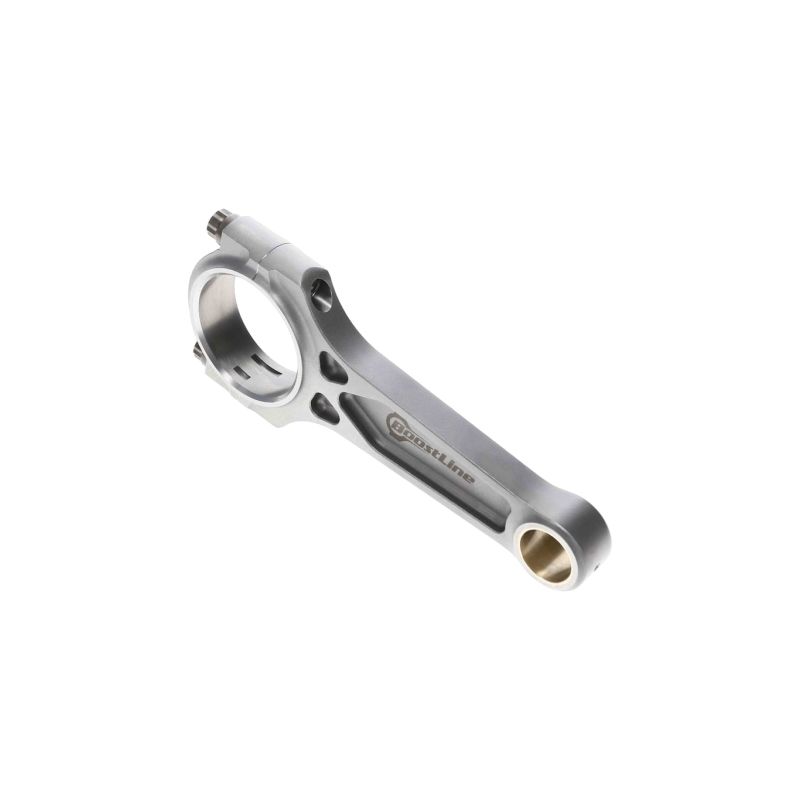
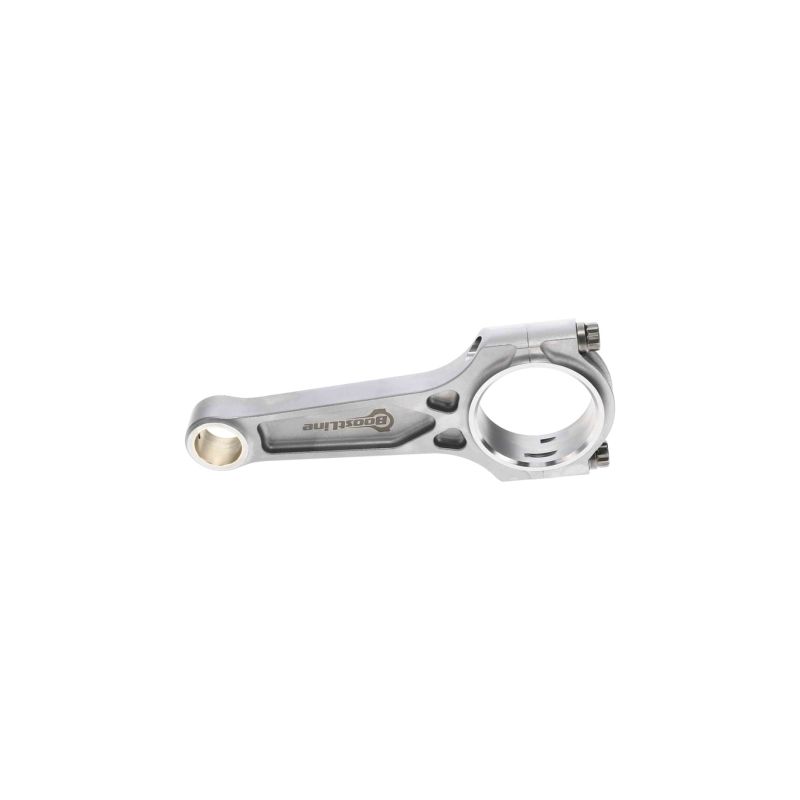
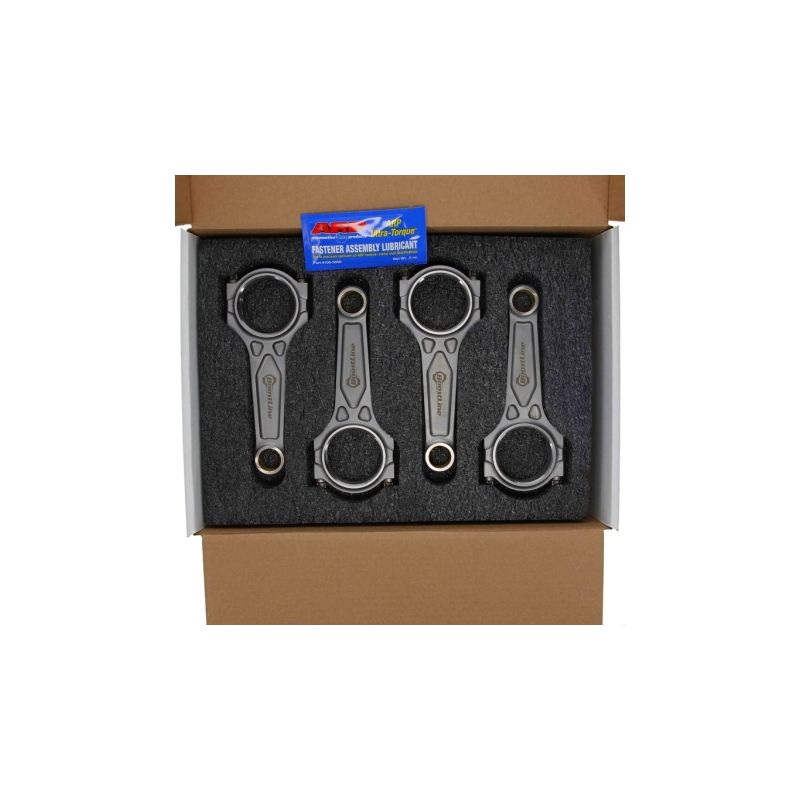
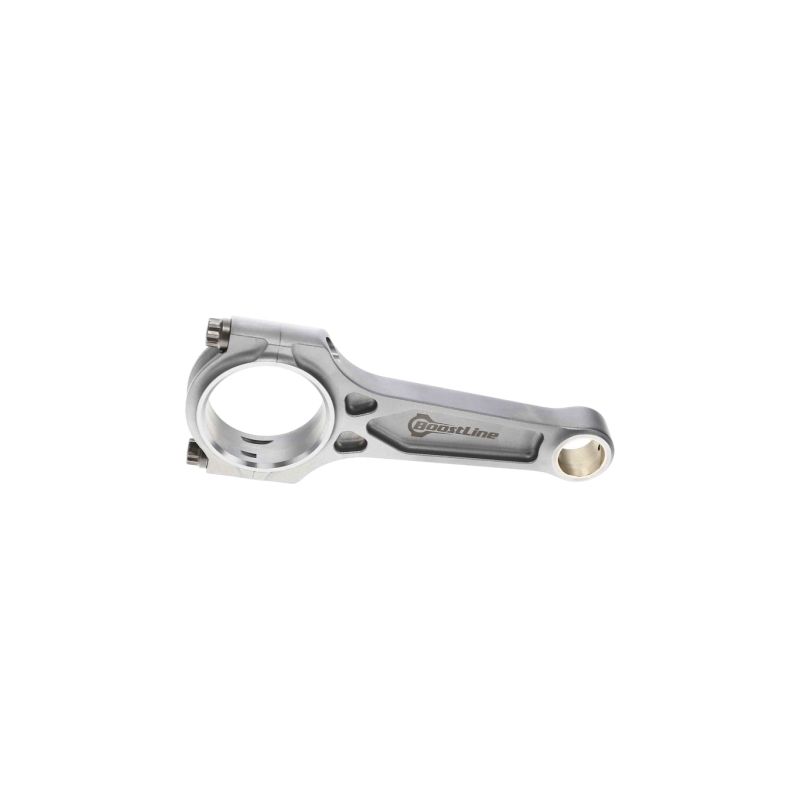
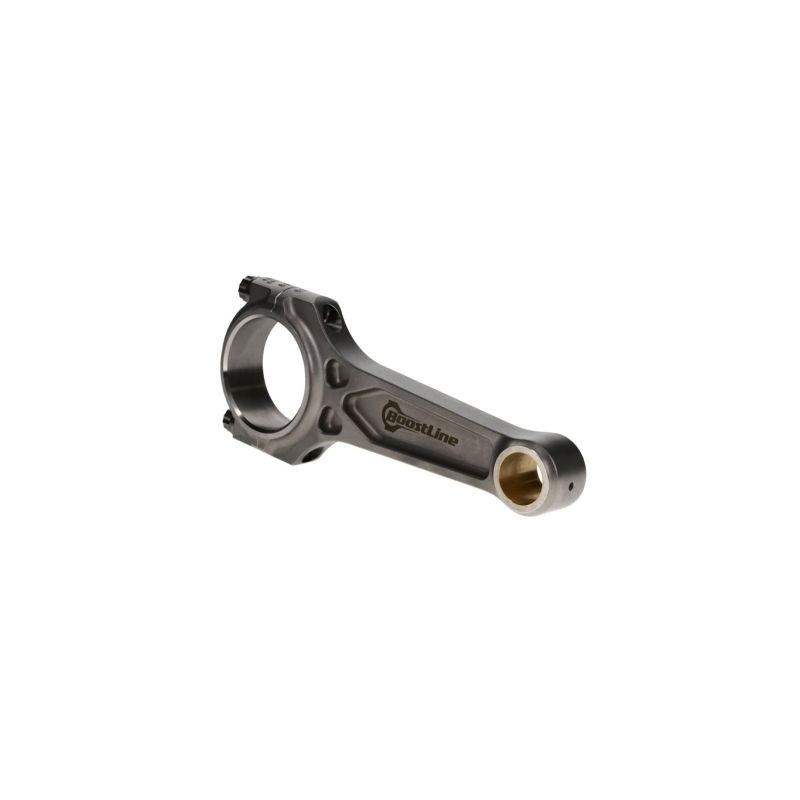
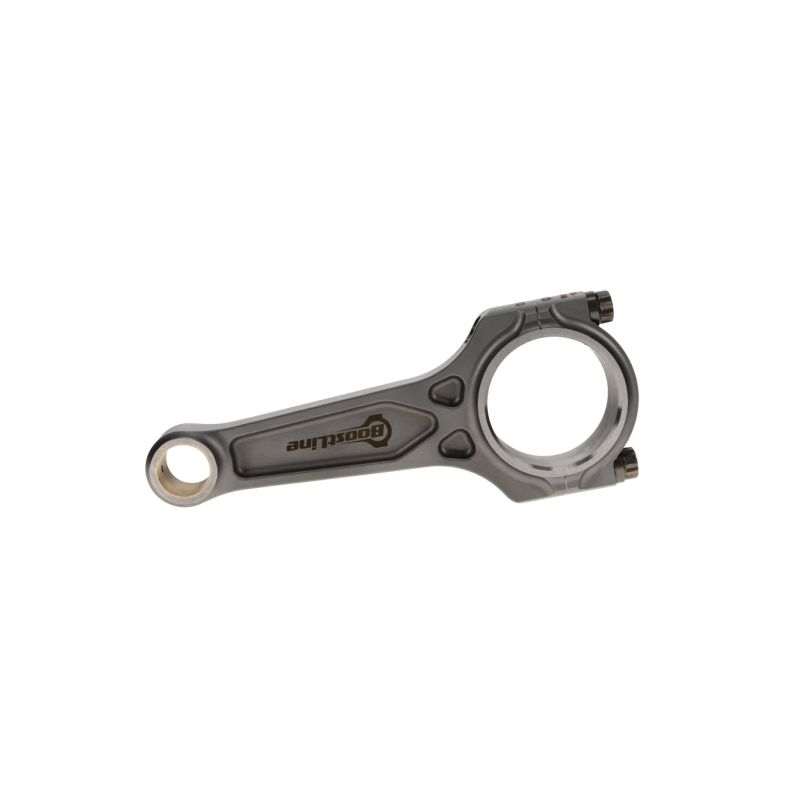
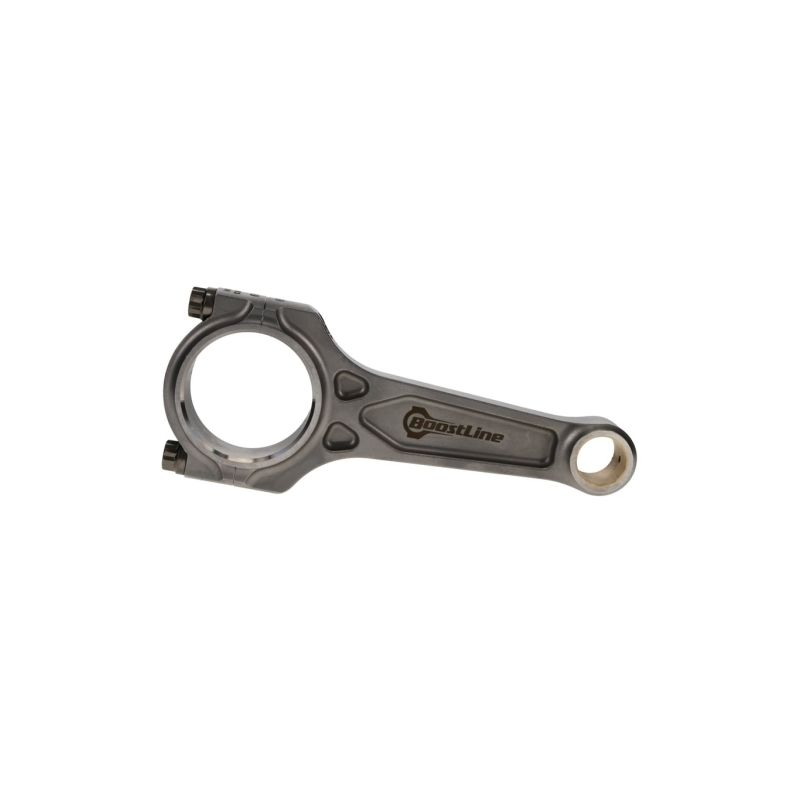
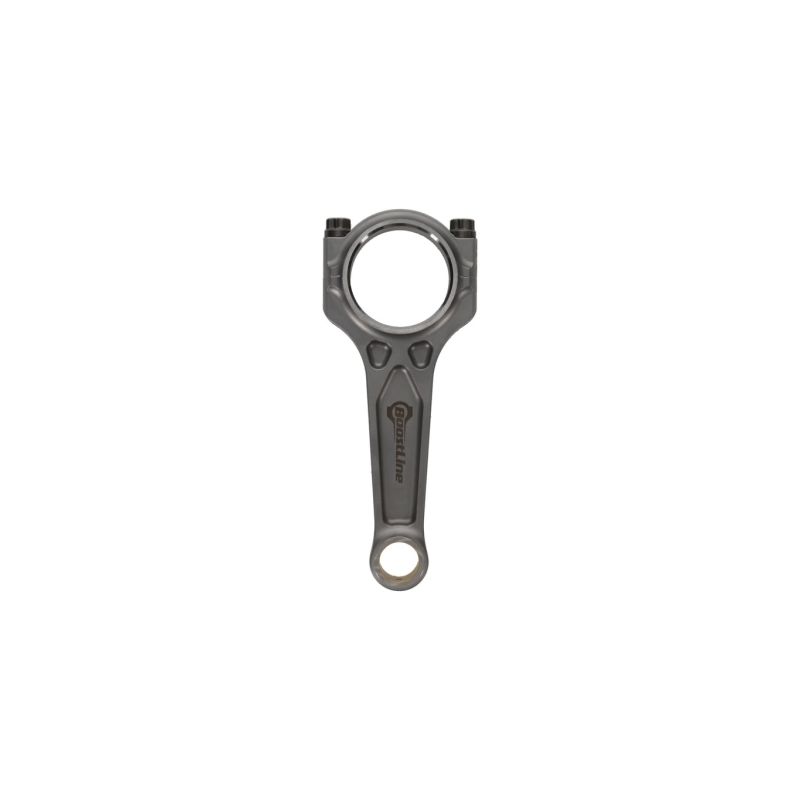
Set of 4 forged 4340 steel connecting rods for BMW / MINI 2.0L 16V Turbo B48B20.
The B48 is BMW's turbocharged 2.0-litre four-cylinder petrol engine, launched in 2014 on the Mini Hatch then rolled out across the BMW range from 2015 to replace the N20. It belongs to BMW's modular engine family (three-cylinder B38, four-cylinder B48, six-cylinder B58), built around a unit displacement of 500 cc. Aluminium block and head, closed-deck architecture, chain-driven timing, Double VANOS, Valvetronic variable valve lift, high-pressure direct injection and a twin-scroll turbo: the B48 combines efficiency and refinement, backed by a forged crankshaft. The 2018 revision (B48TU) further reinforced the bottom end and the timing drive.
Found across much of the range (1 to 7 Series, X1 to X6, Z4) as well as in MINI cars, the Toyota Supra 2.0 and the Morgan Plus Four, the B48 spans outputs from around 136 hp to more than 300 hp on the most powerful versions. In its longitudinally mounted B48B20 variant, it powers the 320i, 520i, X3 xDrive20i and Z4 sDrive20i, among others, at around 184 hp. Renowned for its strength, it responds very well to tuning: remapping, a larger turbo and higher boost pressure. To make the bottom end reliable beyond the original torque, switching to forged connecting rods and forged pistons is the foundation of a Stage 2 build and beyond.
Machined from very high-strength 4340 steel, these reinforced connecting rods protect the bottom end from the very first power gains. Fitting them becomes essential when installing forged pistons, raising the rev limit, increasing boost pressure or displacement.
Engineered to absorb the repeated loads of tuned engines, turbocharged and supercharged alike, they suit every discipline (rally, drift, drag, circuit, hillclimb, time attack) and stay reliable on Stage 2, Stage 3 and Stage 4+ builds.
| Reference | Brand | Profile | Hardware | Pin Ø OEM 22 mm | Small-end width | Big-end Ø OEM 53.6 mm | Big-end width | Center-to-center OEM 148.18 mm | Weight per rod |
|---|---|---|---|---|---|---|---|---|---|
| BM5833-866 | BOOSTLINE | I-3P | ARP 2000-3/8"-38mm | 22 mm | 21 mm | 53.6 mm | 23.9 mm | 148.18 mm | 574 g |
| BM5833-866+ | BOOSTLINE | I-3P | ARP CA625+-3/8"-38mm | 22 mm | 21 mm | 53.6 mm | 23.9 mm | 148.18 mm | 574 g |
| R-MIN-003-I | ZRP | I | ARP 2000-3/8"-38mm | 22 mm | 53.6 mm | 23.9 mm | 148.18 mm | 494 g | |
| R-MIN-003-I-L19 | ZRP | I | ARP L19-3/8"-38mm | 22 mm | 53.6 mm | 23.9 mm | 148.18 mm | 494 g |
ZRP: Tapered pin end.
| Rod | Hardware | Tightening torque | Recommended stretch |
|---|---|---|---|
| BOOSTLINE (BM5833-866) | ARP 2000 | 75 N·m | 0.130 to 0.140 mm |
| BOOSTLINE (BM5833-866+) | ARP CA625+ | 115 N·m | 0.170 to 0.180 mm |
| ZRP (R-MIN-003-I) | ARP 2000 | 61 N·m | 0.140 to 0.152 mm |
| ZRP (R-MIN-003-I-L19) | ARP L19 | 67.8 N·m | 0.152 to 0.165 mm |
Two symmetrical mistakes lead to the same destroyed bearing on a highly tuned B48B20. The first is under-tightening: residual bolt tension drops below the separating force, the cap lifts by a few microns on every cycle, the seating face degrades, the shell is hammered, its clearance grows and oil pressure eventually falls. The second is over-tightening: beyond the specified range the bolt works in its plastic domain, a fatigue crack starts at the thread root and, at the same time, the bearing bore distorts, the big end goes oval and the shell no longer bears evenly. The range given in the table below is therefore both a minimum and a maximum; it comes from the fastener manufacturer and differs by reference, since ARP 2000, CA625+ and L19 in 3/8" share neither the same strength nor the same target stretch. Measuring bolt elongation with a dial gauge remains the reference method, ARP assembly lubricant is required and the kit instructions prevail.
| 4340 is a low-alloy steel with nickel, chromium and molybdenum, valued in aerospace and motorsport. After forging and heat treatment (quenching and tempering), it delivers a yield strength around 19% higher, a tensile strength around 8% higher and fatigue life 19 to 37% greater than the original sintered steel. This gap is why a 4340 rod withstands, without breaking, boost pressures that would push sintered steel to failure. |
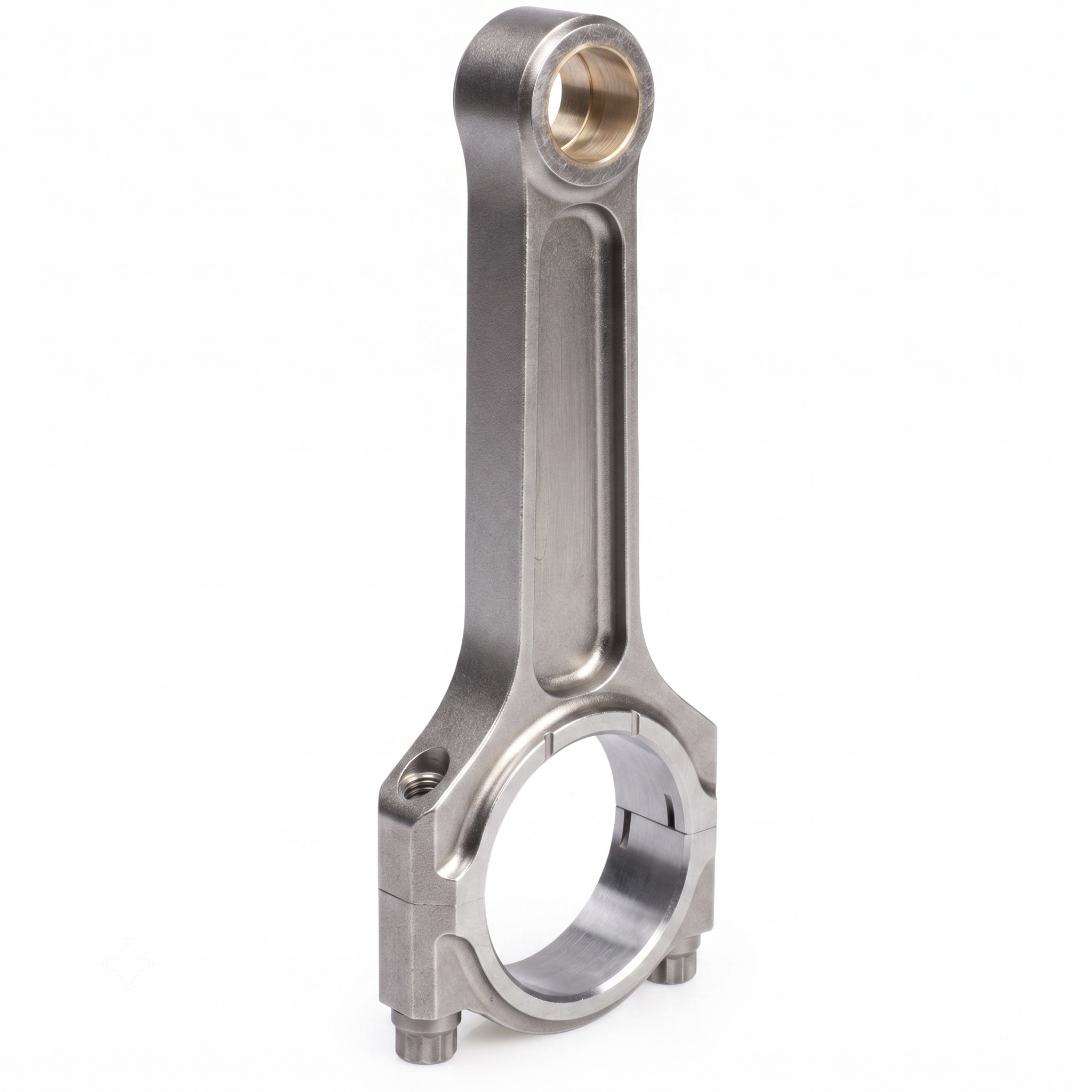 | I-Beam profile. Slimmer central web and reduced mass: less inertia in motion and a real aptitude for high revs. It is the profile chosen for modern turbocharged four-cylinders and high-revving builds (rally, drift, time attack). The ZRP rods offered here use this profile. |
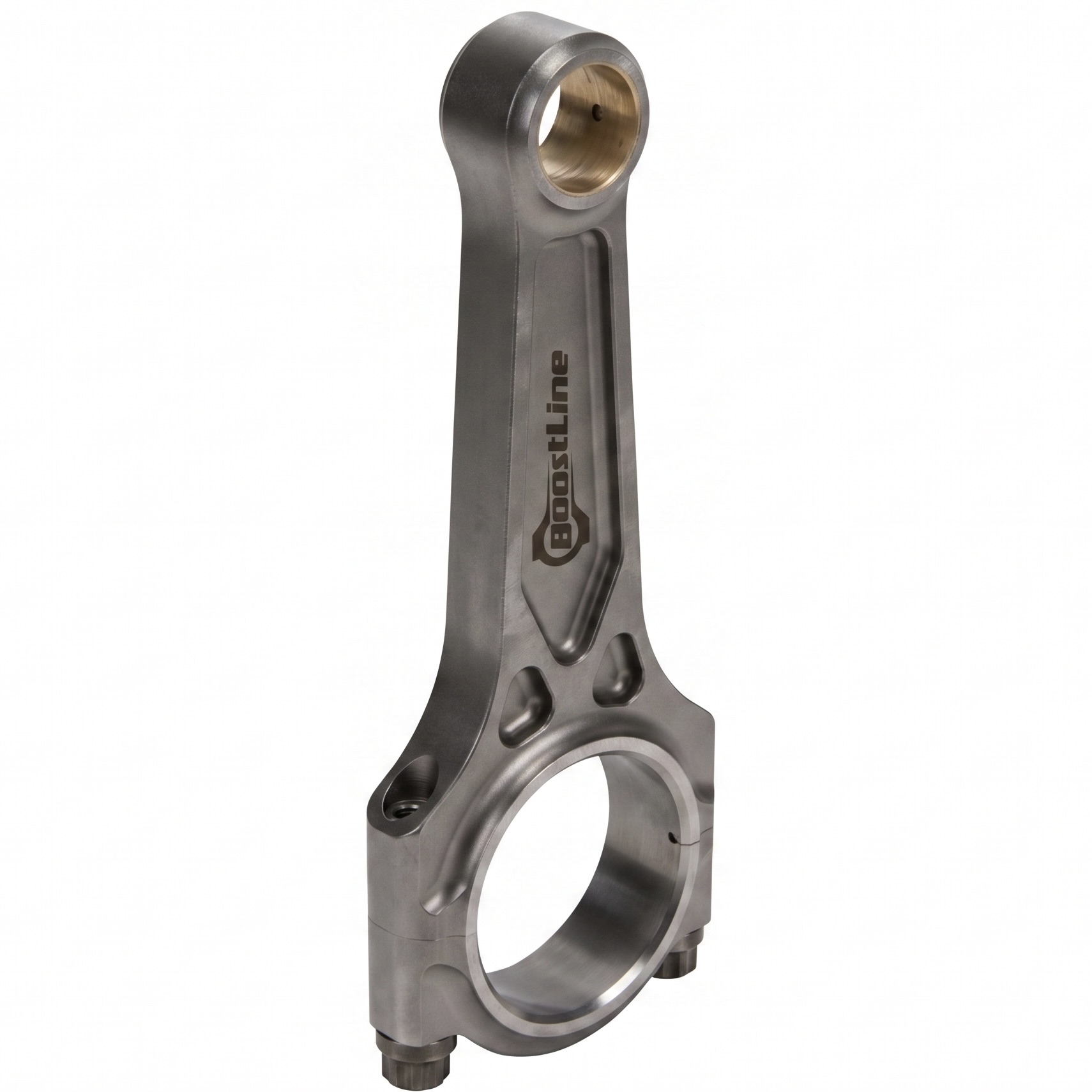 | 3-pocket I-Beam profile (Boostline). This patented Boostline variant keeps the lightness of an I-Beam and adds three triangulated reinforcements near the big end. The result: better behaviour under tensile load and higher bending resistance than an H-Beam rod, ideal for heavily boosted engines and high cylinder pressures. |
Subjected to extreme alternating loads, the rod bolt is not chosen at random: match the steel grade to the engine's real use, then strictly respect the installation torque and stretch.
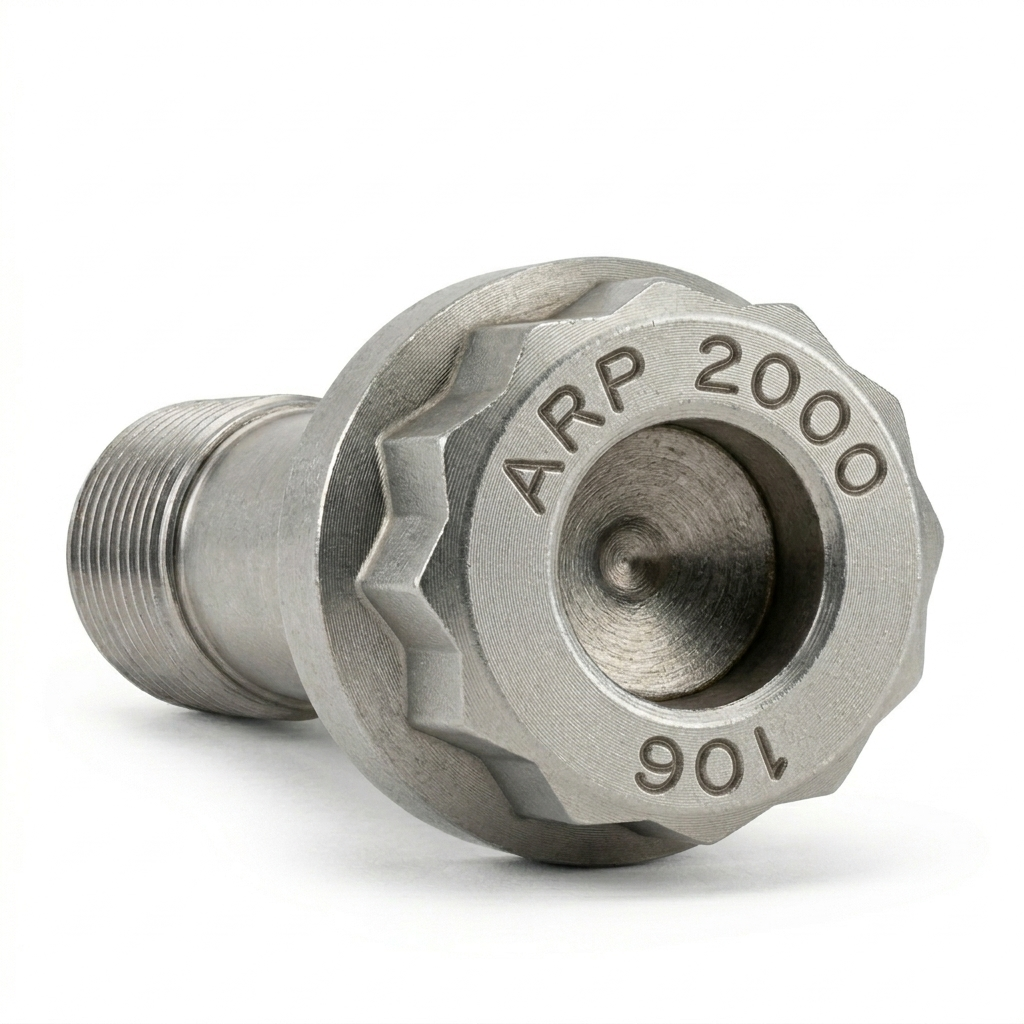 | ARP 2000 (tensile strength close to 1,517 MPa) is the performance standard. On a four-cylinder with 3/8" bolts, it covers builds up to around 200 hp per cylinder and engine speeds close to 8,500 rpm. It is the all-round choice par excellence for circuit, track-day, drift, rally, drag or hillclimb, reliable and with no storage precaution. |
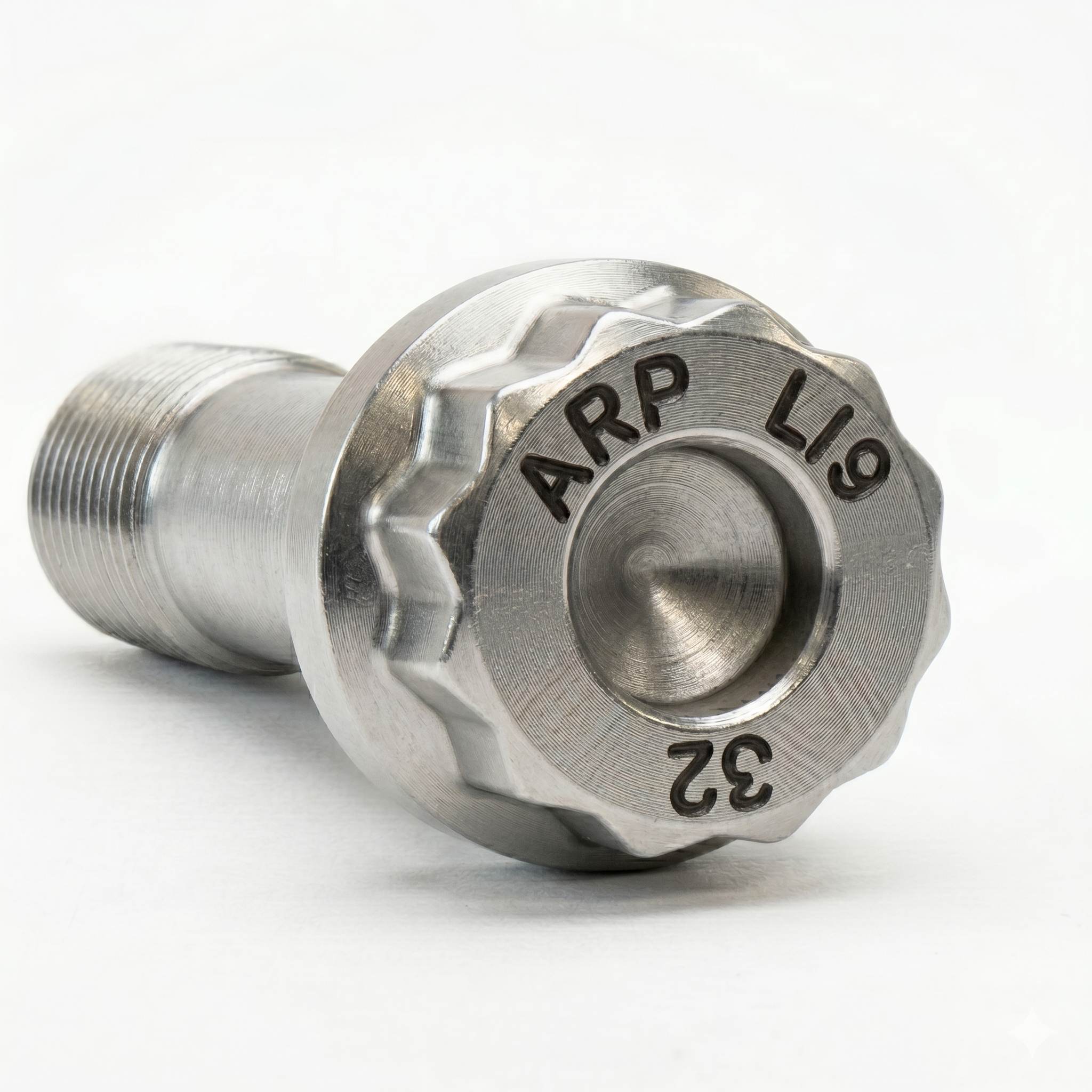 | ARP L19 (tensile strength of approximately 260,000 psi, or ~1,793 MPa) (tensile strength close to 1,793 MPa) targets engines taken to the extreme: high boost, sustained high revs and elevated cylinder pressure. With 3/8" bolts, it allows around 250 hp per cylinder and revs up to 10,000 rpm (drag, drift, rally, circuit). Sensitive to corrosion and hydrogen, it must be stored and fitted oiled, away from moisture. |
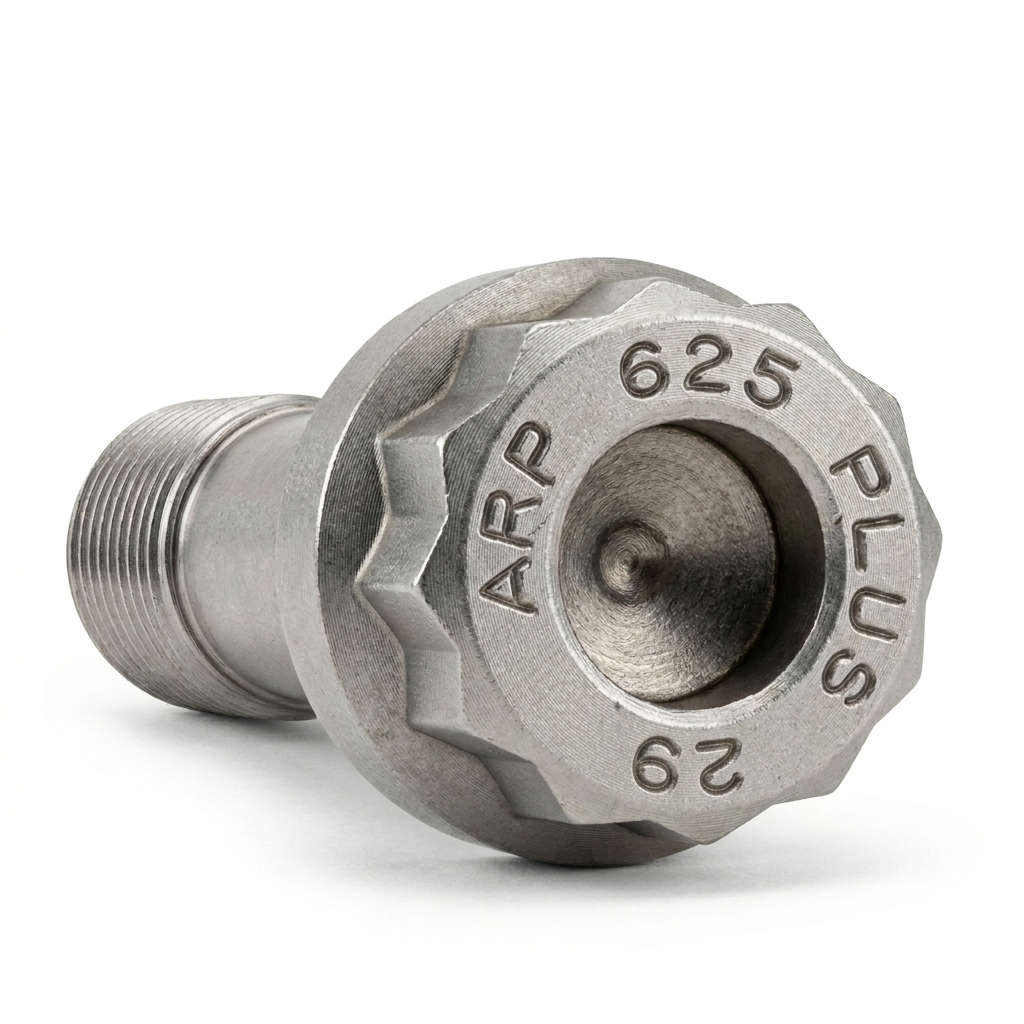 | ARP CA625+ (Custom Age 625+, tensile 1,793 to 1,931 MPa) is the top-tier alloy. Beyond 250 hp per cylinder and 10,000 rpm, it outperforms ARP 2000 in corrosion and oxidation resistance, stays immune to hydrogen and needs no storage precaution. |
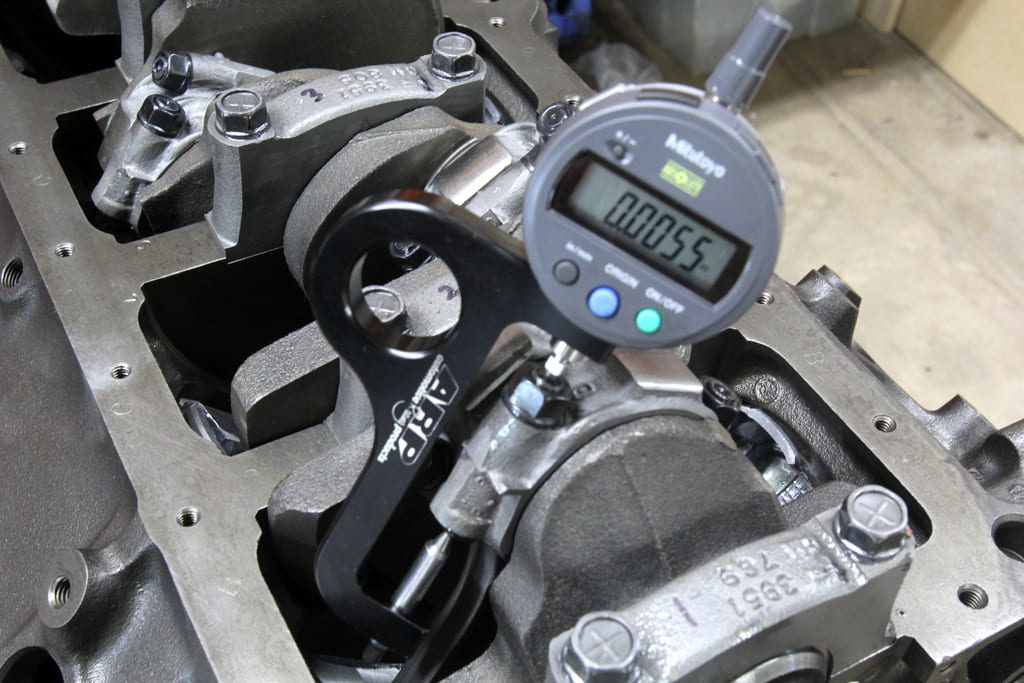 |
| To tighten a rod bolt, measuring stretch with a dial indicator (stretch gauge) takes precedence over torque alone. Record the bolt's free length, then tighten in steps until the recommended stretch in the table above is reached. The resulting preload is then correct, regardless of thread friction: it is the manufacturers' reference method for forged connecting rods. |
| Buy the ARP stretch gauge → |
 | BOOSTLINE (Wiseco group) belongs to the American specialist Wiseco, active since 1941. Its patented 3-pocket profile combines the mass of an H-Beam rod with the rigidity of an I-Beam. Forged from 4340 and machined in the United States, supplied with ARP 2000 (ARP CA625+ optional), they are built for boosted engines. |
 | ZRP designs its high-performance forged connecting rods in Greece, at the Drakos Engineering workshops in Athens. 4340 steel forging, precision machining and ±1 g balancing ensure their reliability high up the rev range. Available in I-Beam or H-Beam profile with ARP 2000, ARP L19 or ARP CA625+ hardware, they prove themselves in rally, on circuit and in drift. |
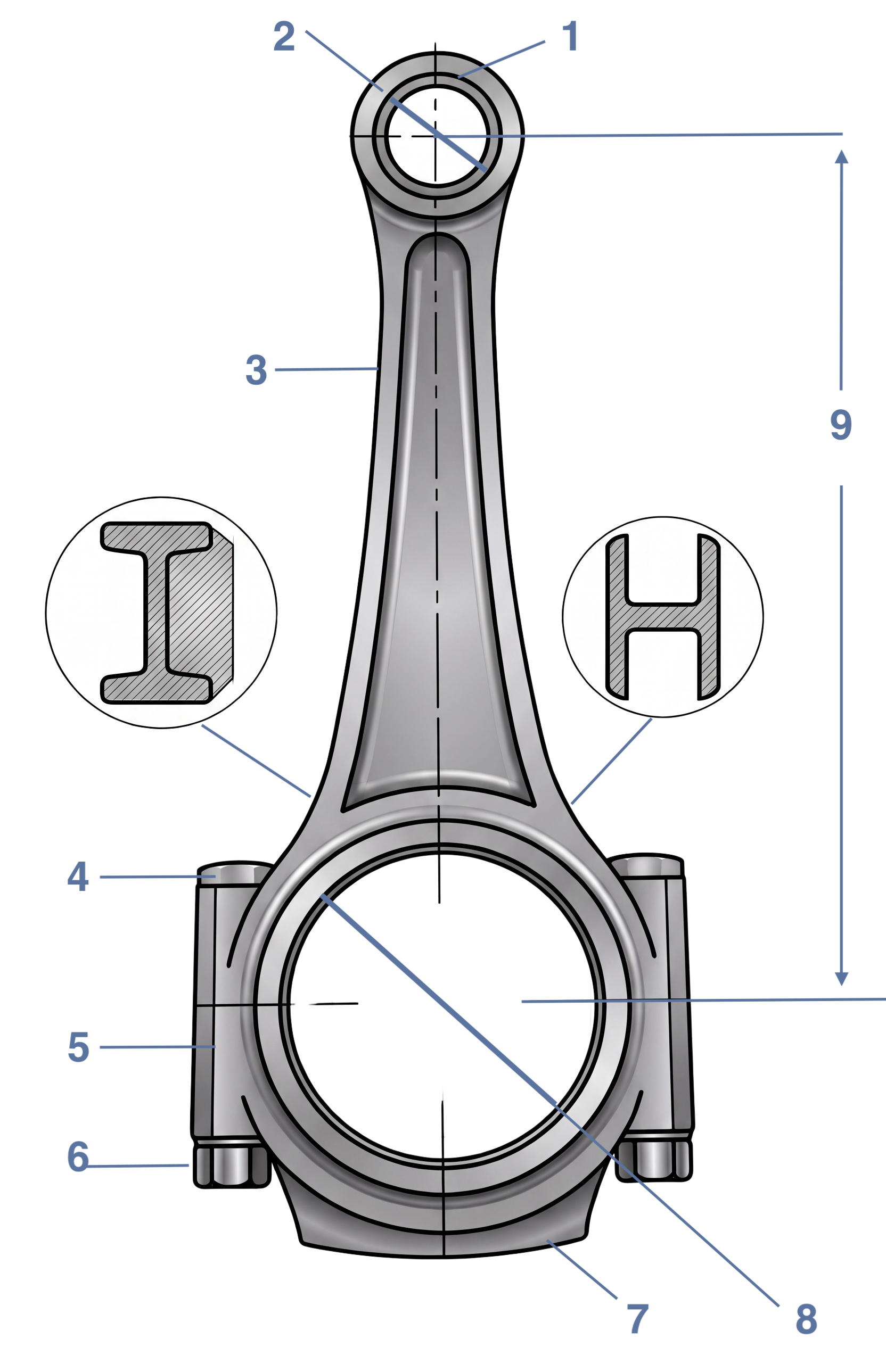 | 1) Small end 2) Small-end diameter 3) Rod beam 4) Rod bolt 5) Big end 6) Rod nut / bolt 7) Rod cap 8) Big-end diameter 9) Center-to-center |
The models listed below receive the BMW / MINI 2.0L 16V Turbo B48B20 engine. Check the piston pin diameter and the rod centre-to-centre length before validating your basket.
| Brand | Model | Engine code | Power | Years |
|---|---|---|---|---|
| BMW | 1 Series (F20, F21) | B48B20 | 184 to 224 hp | 2015–2019 |
| BMW | 1 Series (F40, F70) | B48A20 | 178 to 317 hp | since 2019 |
| BMW | 2 Series Coupé / Convertible (F22, F23, G42) | B48B20 | 136 to 258 hp | since 2015 |
| BMW | 2 Series Active / Gran Tourer / Gran Coupé (F45, F46, U06, F44, F74) | B48A20 | 163 to 317 hp | since 2013 |
| BMW | 3 Series (F30, F31, F34) | B48B20 | 163 to 252 hp | since 2015 |
| BMW | 3 Series (G20, G21, G28) | B48B20 | 156 to 292 hp | since 2018 |
| BMW | 4 Series (F32, F33, F36) | B48B20 | 163 to 252 hp | 2016–2021 |
| BMW | 4 Series (G22, G23, G26) | B48B20 | 184 to 258 hp | since 2020 |
| BMW | 5 Series (G30, G31, F90) | B48B20 | 163 to 292 hp | since 2016 |
| BMW | 5 Series (G60, G61) | B48B20 | 181 to 299 hp | since 2023 |
| BMW | 6 Series Gran Turismo (G32) | B48B20 | 245 to 258 hp | since 2017 |
| BMW | 7 Series (G11, G12) | B48B20 | 249 to 326 hp | 2015–2022 |
| BMW | X1 (F48, U11) | B48A20 | 178 to 317 hp | since 2015 |
| BMW | X2 (F39, U10) | B48A20 | 178 to 317 hp | since 2017 |
| BMW | X3 (G01, G45) | B48B20 | 184 to 299 hp | since 2017 |
| BMW | X4 (G02) | B48B20 | 184 to 252 hp | since 2018 |
| BMW | X5 (G05) | B48B20 | 265 hp | 2019–2021 |
| BMW | X6 (G06) | B48B20 | 245 to 265 hp | since 2019 |
| BMW | Z4 (G29) | B48B20 | 163 to 258 hp | since 2018 |
| MINI | Cooper S / JCW 3/5-door (F55, F56) | B48A20 | 163 to 306 hp | since 2014 |
| MINI | Cooper S / JCW Convertible (F57) | B48A20 | 163 to 231 hp | since 2014 |
| MINI | Cooper S / JCW Clubman (F54) | B48A20 | 163 to 306 hp | since 2014 |
| MINI | Cooper S / JCW Countryman (F60, U25) | B48A20 | 163 to 317 hp | since 2016 |
| MORGAN | Plus Four | B48B20 | 258 hp | since 2020 |
| TOYOTA | Supra 2.0 (DB) | B48B20 | 197 hp | since 2019 |
These forged connecting rods share the same geometry across the entire B48 2.0 petrol family, in longitudinal (B48B20) as well as transverse (B48A20) mounting. OEM reference: 11 24 8 623 418.
When the standard bottom end fails (a broken, bent or scored rod), returning to factory configuration means replacing rods and pistons, often damaged together: a heavy expense for a mere return to the original state.
For a comparable, sometimes lower budget, 4340 forged connecting rods paired with forged pistons bring far higher reliability and safety margin, with a real power reserve. It has been European tuners' choice for over fifteen years.
For the same budget: more reliability, more margin, more durability.