Product successfully added to your shopping cart
Quantity
Total
There are 0 items in your cart. There is 1 item in your cart.
Total products
Total shipping To be determined
Total

2.0L 16v - 4G63 6-bolt
Manufacturers
2.0L 16v - 4G63 6-bolt
Warning: Last items in stock!
New product
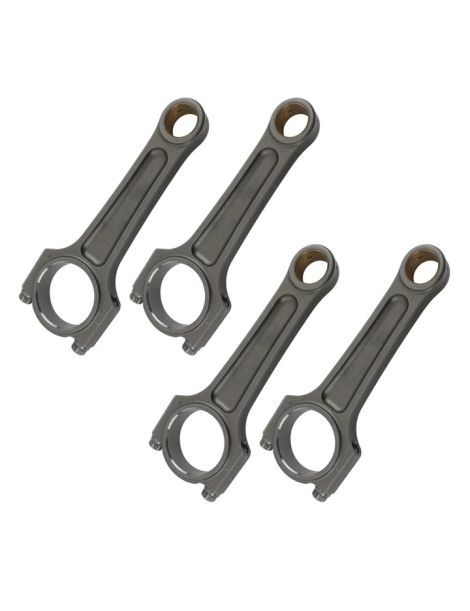
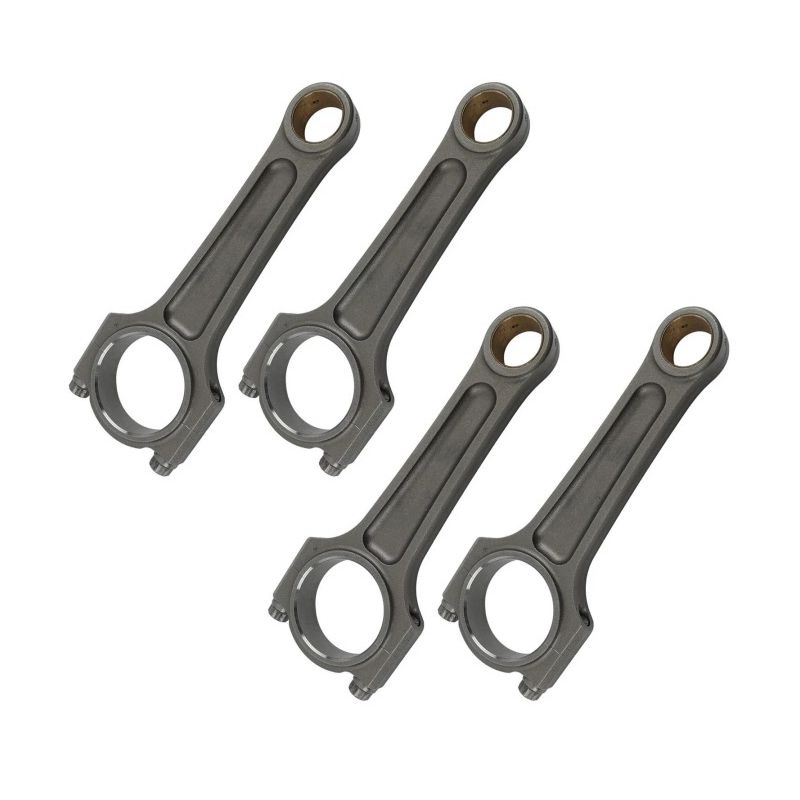
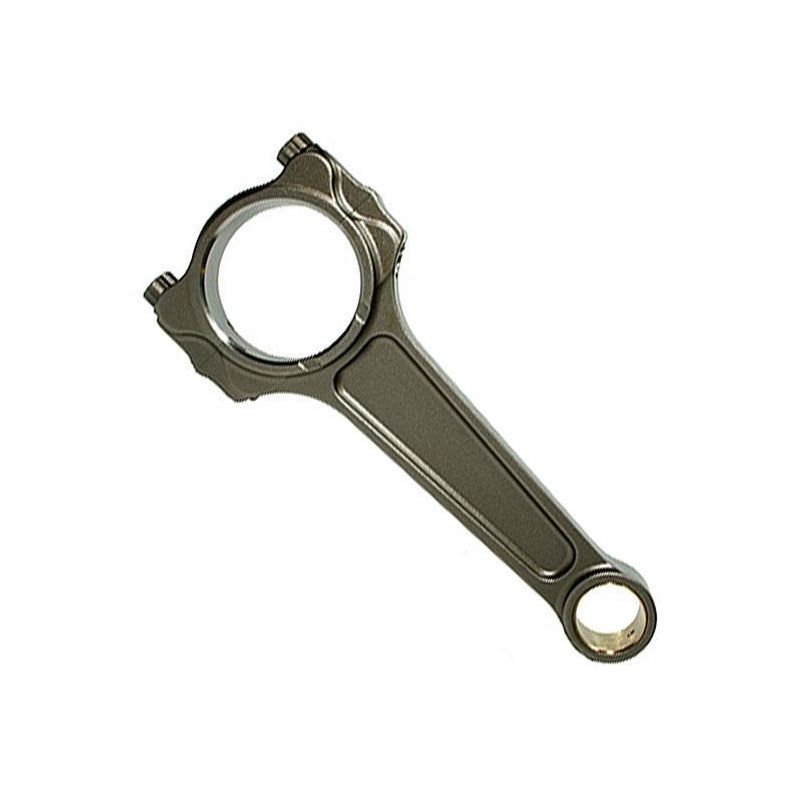
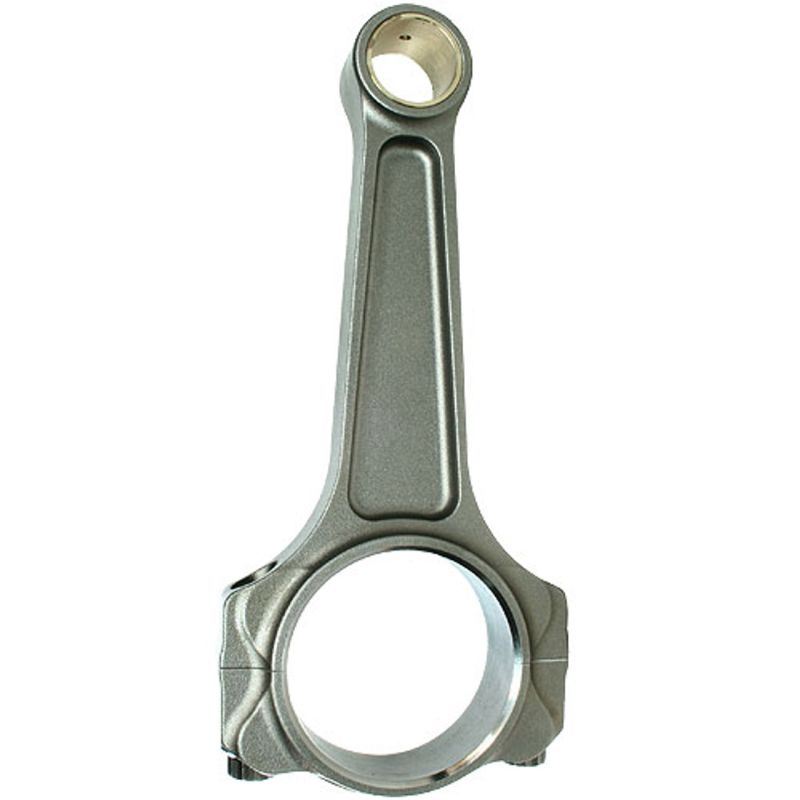
Set of 4 long forged 4340 connecting rods (156 mm centres) for Mitsubishi 2.0L 16v Turbo 4G63 (6-bolt).
Designed by Mitsubishi, the 4G63 is an inline four-cylinder displacing 1,997 cc (85 mm bore, 88 mm stroke) with double overhead camshafts and sixteen valves. Its fame rests on the turbocharged 4G63T, which powered the Mitsubishi Eclipse 1G, the Eagle Talon and Plymouth Laser of the DSM era as well as the Galant VR-4, becoming a cornerstone of engine tuning. Blocks built up to the early 1990s are recognised by their crankshaft secured with six bolts, the so-called “6-bolt” architecture, which builders consider stiffer than the seven-bolt block that followed.
Rated at close to 195 hp from the factory, the 4G63T holds a remarkable development margin: a larger turbocharger and suitable engine management let it clear 400 to 600 hp with ease, and far more in race form. The rods shown here use a long 156 mm centre-to-centre length: this extended dimension suits blocks with modified geometry (stroker or destroke builds), where it improves the rod-to-stroke ratio, reduces rod angularity and thereby limits piston side-loading against the cylinder wall.
Beyond roughly 350 to 400 hp, the stock rod becomes the weak link: it flexes, stretches, then fails under repeated compression and inertia loads. Replacing the factory cast rods with forged parts is therefore the first safeguard of a tuned 4G63, even before chasing high power targets.
Linking piston to crankshaft, the connecting rod turns reciprocating motion into rotation. In a tuned engine it withstands combustion pressures and inertia forces greatly increased by boost and rising rpm. In its long 156 mm version, it fits blocks whose stroke has been reworked and whose reciprocating assembly requires adjusted geometry.
Forged from through-hardened alloy steel, these rods deliver fatigue strength and stiffness well above a cast or sintered factory part. Press-formed, the material keeps an oriented grain flow that follows the lines of stress and gives the rod its robustness under heavy load.
Depending on the profile and bolts chosen, they suit an optimised standard engine as much as a full race build, across the whole operating range of a tuned 4G63T: rally and rallycross, drag, drift, circuit racing and track days, hillclimb or time attack. They therefore support Stage 1 reliability builds, Stage 2 raised-boost builds and Stage 3 big-power builds, right up to dedicated race engines.
| Reference | Brand | Profile | Bolts | Pin diameter OEM 21 mm | Small-end width | Big-end diameter OEM n.p. | Big-end width | Centre-to-centre OEM 150 mm | Weight per rod |
|---|---|---|---|---|---|---|---|---|---|
| 14426-4 | Manley | I-HD | ARP 2000 - 3/8"-41mm | 22 mm | - | 48,01 mm | 28,32 mm | 156 mm | 660 g |
| Rod | Bolts | Tightening torque | Recommended stretch |
|---|---|---|---|
| Manley (14426-4) | ARP 2000 - 3/8"-41mm | 81,3 N·m | 0,147 - 0,157 mm |
During assembly, strictly follow the hardware reference and the stretch-tightening procedure noted above. More reliable than torque alone, measuring bolt stretch ensures even, repeatable preload of the rod caps.
The 4340 is a low-alloy nickel-chromium-molybdenum steel prized for its balance of mechanical strength, toughness and fatigue endurance. Found in aerospace and motorsport alike, it is the reference material for high-performance forged rods.
After forging, quenching followed by tempering raises its tensile strength to around 1,200 to 1,300 MPa while preserving good ductility. The rod thus endures millions of tension and compression cycles without crack initiation, where a stock part would eventually fatigue.
The rod-body profile governs its stiffness, mass and mechanical strength. This listing uses the I-HD profile, described below.
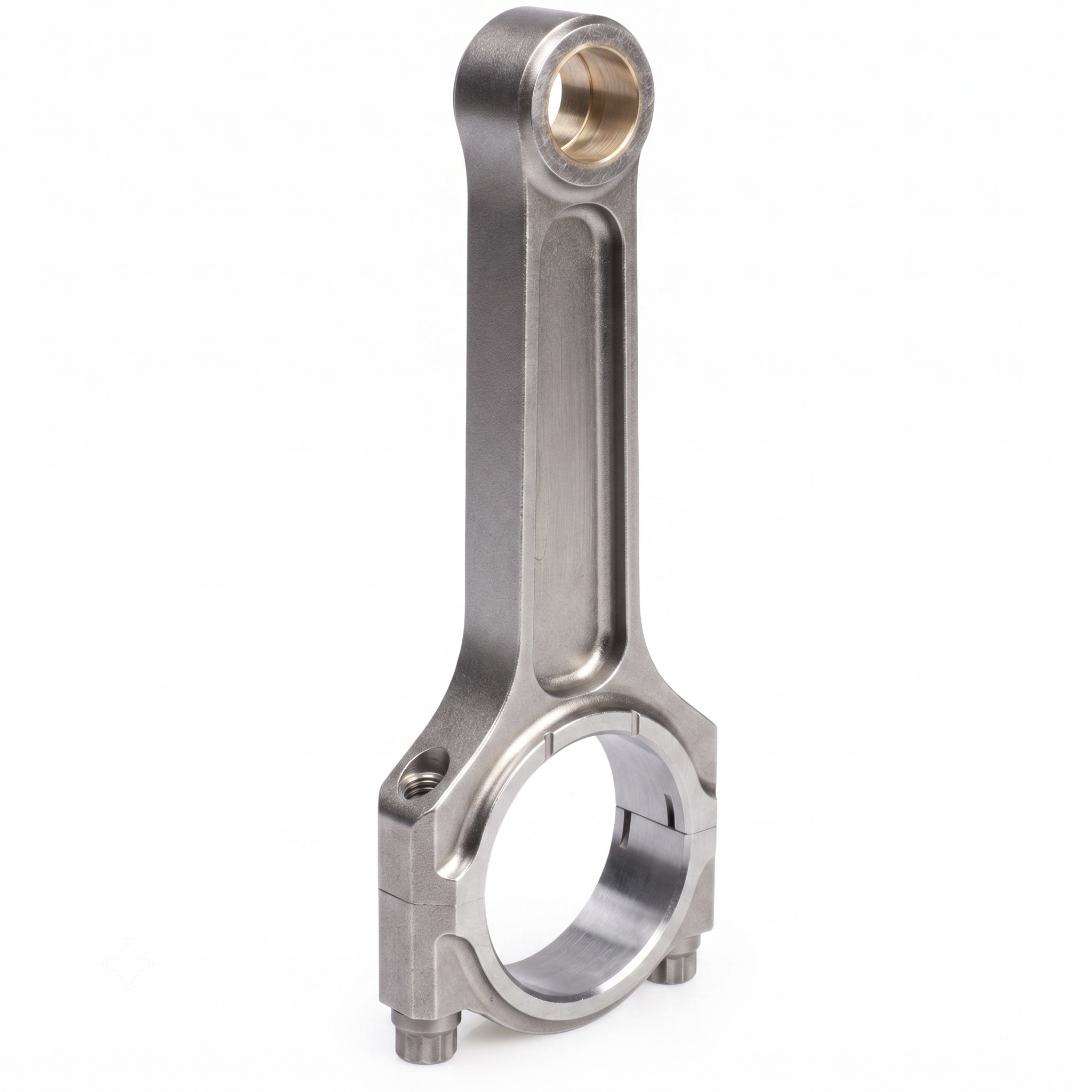 | I-HD profile (I-Beam Heavy Duty, Manley Pro Series Turbo Tuff range): a reinforced, heftier I-section engineered to absorb the high boost pressures and elevated torque of the most heavily built 4G63 engines. It is the preferred choice for a long rod destined for stroker blocks. |
The most heavily loaded fastener in the assembly, the rod bolt holds the cap under enormous forces every cycle. The build offered here relies on ARP hardware, detailed below.
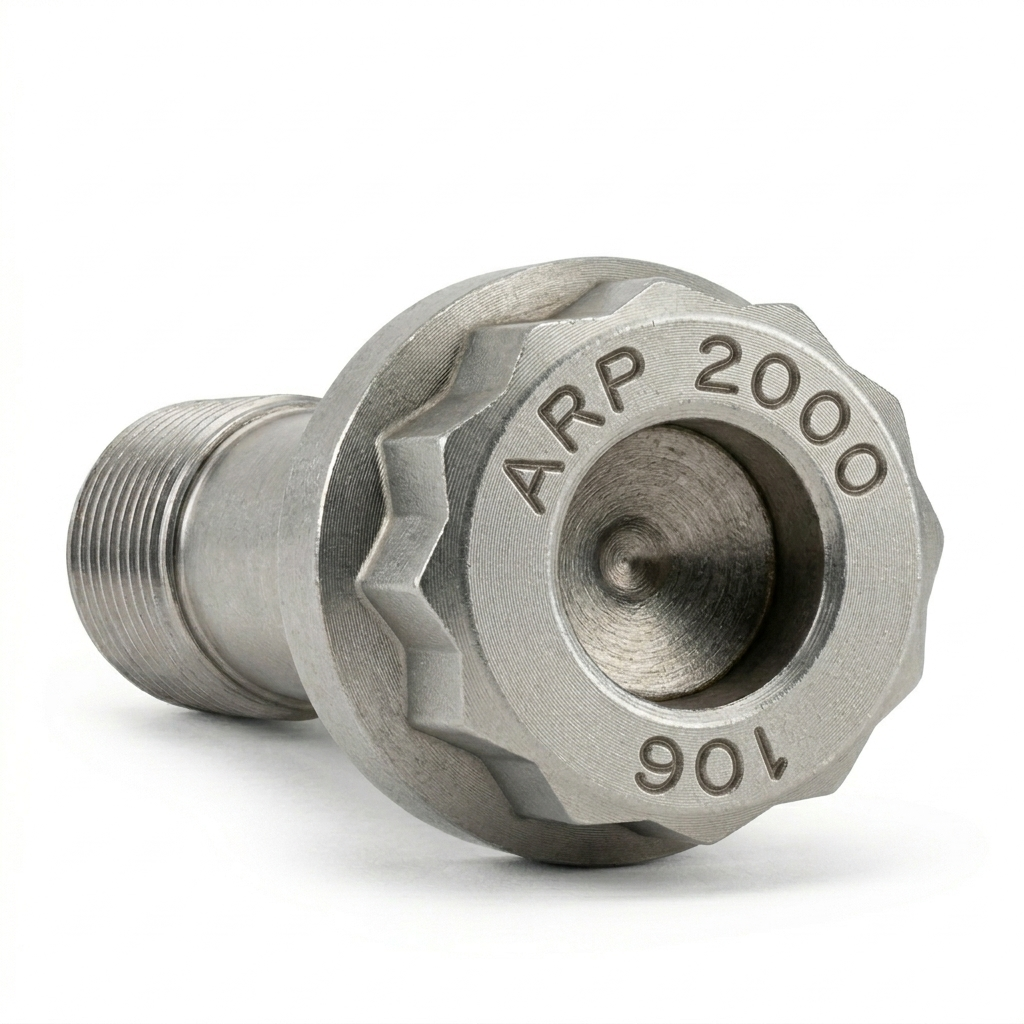 | ARP 2000: the versatile reference. With a tensile strength of about 220,000 psi (close to 1,517 MPa), it allows up to roughly 200 hp per cylinder in 3/8" diameter, covering most 4G63 turbo builds, and holds engine speeds up to 8,500 rpm. Robust, reliable and free of storage constraints, it is the default choice for most performance builds. |
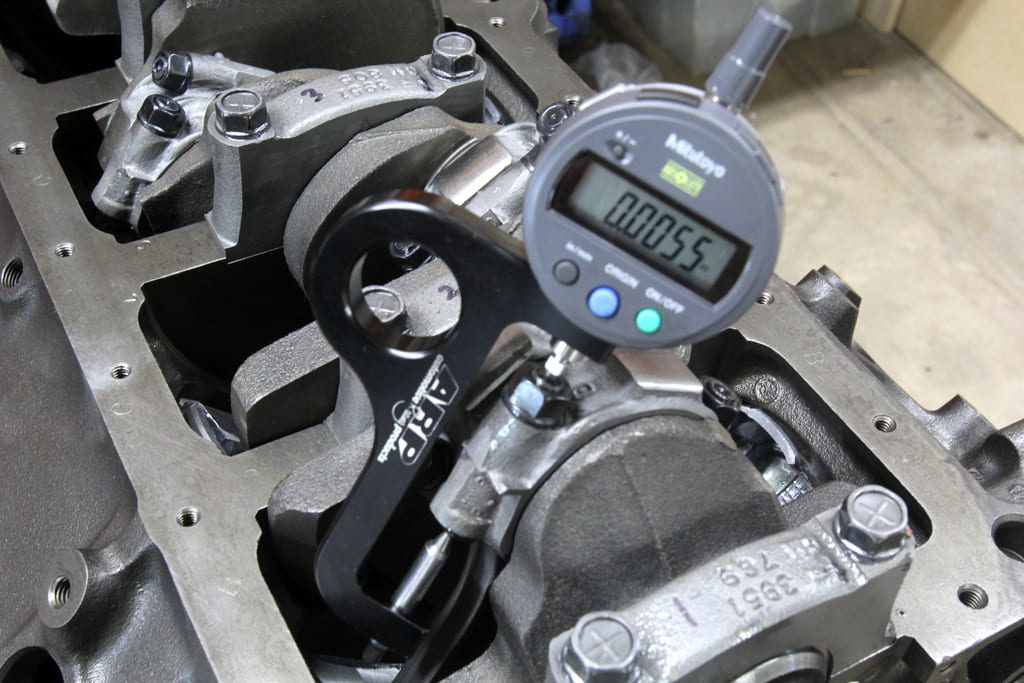
| The tightening of a high-performance rod bolt is controlled by stretch, not torque alone: the bolt elongation is measured with a dedicated gauge to ensure an exact preload. The recommended stretch values are shown in the table above. |
Discover the ARP stretch gauge
 | Manley Performance: an American manufacturer known worldwide for its forged competition connecting rods. Its H-Beam and Pro Series I-Beam Turbo Tuff ranges are found in the fastest DSM builds and are known for manufacturing consistency, machining quality and resistance to heavy load. Every rod is forged, machined and inspected in the United States, weight-matched across the complete set of four, then supplied with its dedicated ARP bolts. |
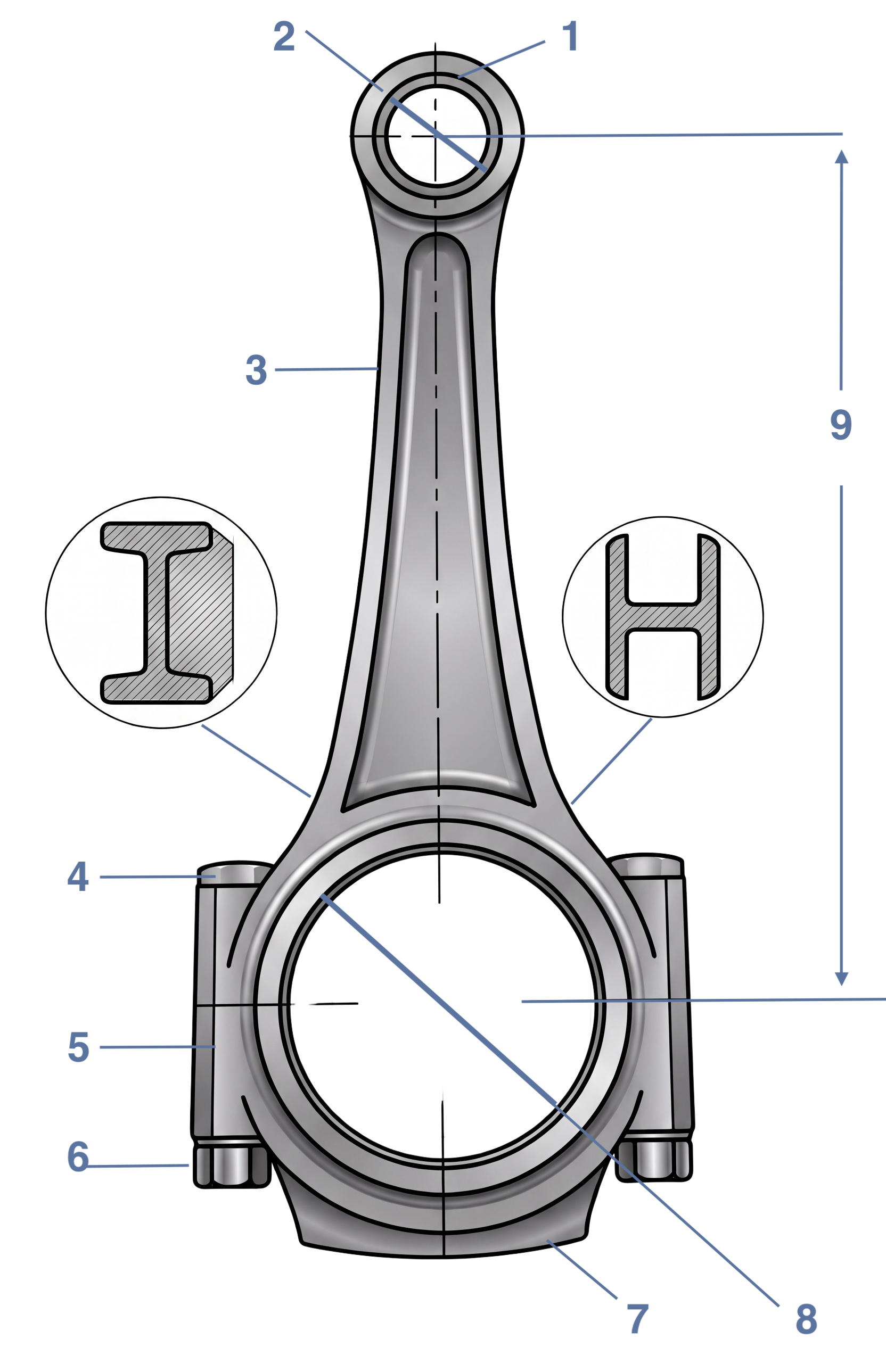 | 1) Small end 2) Small-end diameter 3) Rod beam 4) Rod bolt 5) Big end 6) Rod nut / bolt 7) Rod cap 8) Big-end diameter 9) Center-to-center |
These long forged connecting rods are intended for the “6-bolt” 4G63T four-cylinder fitted to the following models:
| Make | Model (chassis) | Engine code | Power | Years |
|---|---|---|---|---|
| Mitsubishi | Eclipse 1G (D22A/D27A) GS-T / GSX | 4G63T | 195 hp | 1990-1992 |
| Eagle | Talon TSi / TSi AWD (1G) | 4G63T | 195 hp | 1990-1992 |
| Plymouth | Laser RS Turbo (1G) | 4G63T | 195 hp | 1990-1992 |
| Mitsubishi | Galant VR-4 (E39A) | 4G63T | 195 hp | 1988-1992 |
OEM reference: (set of 4 connecting rods).
Set against the safety it brings, a set of forged rods remains a measured investment. On a tuned 4G63, a stock rod failure almost always destroys the block, the crankshaft and, often, the cylinder head.
Fitting forged rods from the start of a build means avoiding an engine failure whose cost far exceeds that of the kit. On a heavily built engine, it is the most cost-effective insurance part there is.