Product successfully added to your shopping cart
Quantity
Total
There are 0 items in your cart. There is 1 item in your cart.
Total products
Total shipping To be determined
Total

2.0L 16v - 4B11T
Manufacturers
2.0L 16v - 4B11T
Warning: Last items in stock!
New product
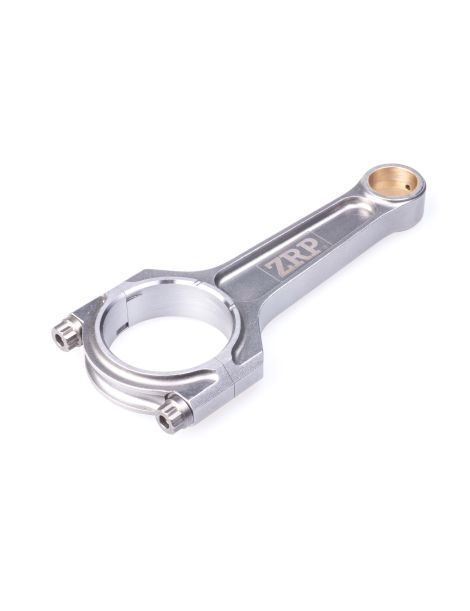
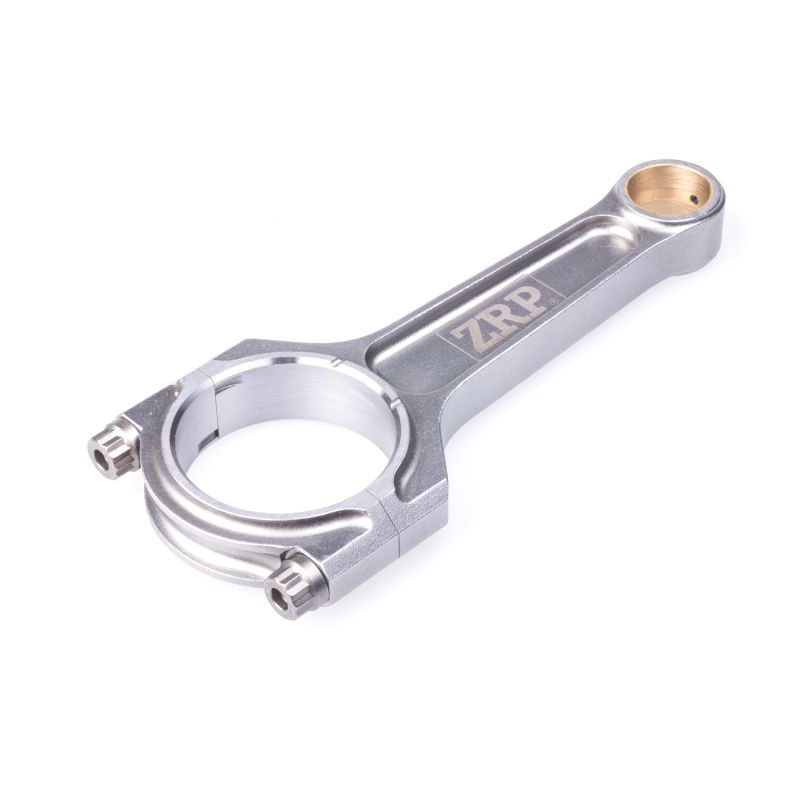
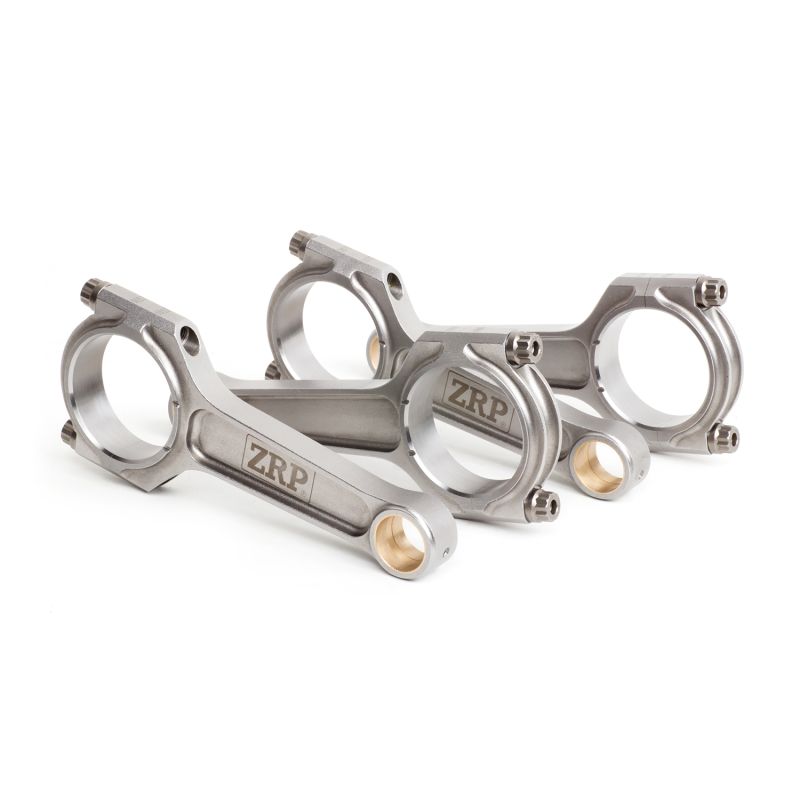
Set of 4 forged EN24T steel connecting rods for the Mitsubishi 2.0 16V Turbo 4B11T.
The 4B11 is a 2.0-litre (1,998 cc) inline-four with twin overhead camshafts, 16 valves and MIVEC variable valve timing. Part of the ‘4B1’ family developed by Mitsubishi within the Global Engine Alliance, it has an 86 mm bore and an 86 mm stroke, a strictly square architecture. Introduced in 2007, it brought to the Lancer Evolution an aluminium cylinder block (shedding around 12 kg versus the 4G63T it replaced) and chain-driven rather than belt-driven timing.
Its turbocharged derivative, the 4B11T, powers the Lancer Evolution X (CZ4A) as well as the Lancer Ralliart (CY4A sedan and CX4A Sportback), with factory output ranging from 237 hp on the Ralliart to over 300 hp on the most potent Evo X versions. As soon as boost pressure, engine speed or load climb beyond factory values, the stock rods – sized for road use – become the weak link of the reciprocating assembly. Replacing them with forged rods is the decisive step to reliably secure a 4B11T build.
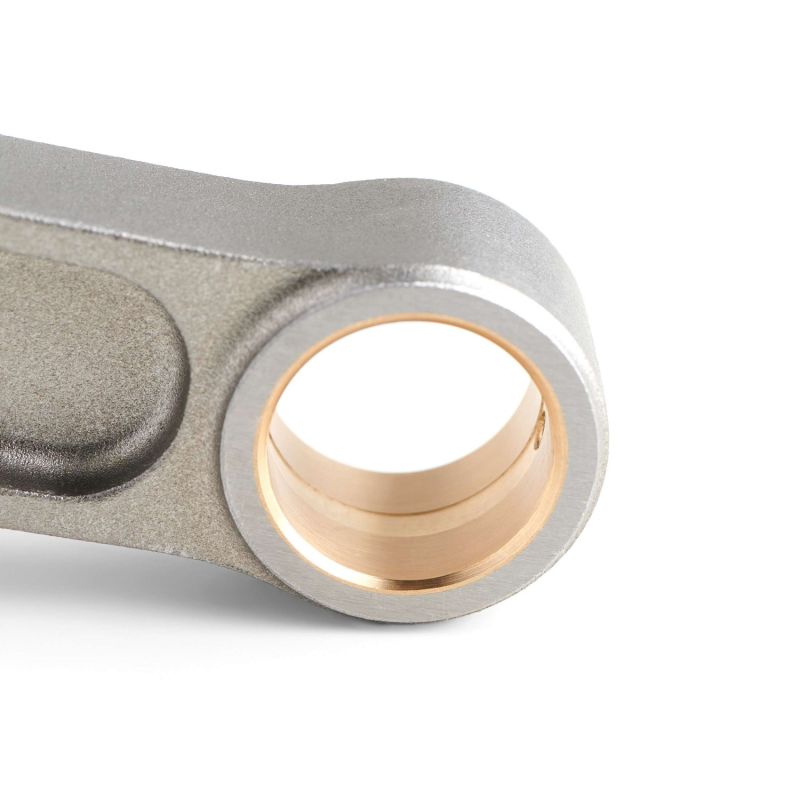
Our forged 4B11T rods are machined from wrought EN24T steel, the reference alloy in motorsport, and offered in the I-HD profile (a reinforced ‘Heavy Duty’ I-beam) specifically designed to withstand the high cylinder pressures of a turbo engine. They suit every discipline – circuit, drift, rally, drag, time attack and hillclimb – and support both a track-driven Evo X and a Ralliart with raised power. Depending on the target (Stage 2, Stage 3 high power, Stage 4 and beyond), they lock in the power increase without ever cutting corners on reliability. Supplied as a weight-matched set of 4, they keep the factory 23 mm piston pin and 143.71 mm center-to-center length.
Compared with a factory rod designed above all for high-volume manufacturing cost, a forged EN24T rod offers a clearly greater mechanical reserve: around +19% yield strength, +8% tensile strength and +19 to +37% fatigue endurance. That margin lets a boosted 4B11T absorb cylinder-pressure peaks and inertia loads without breakage. Two bolt grades are available to cover the whole tuning range, from sensible reinforcement to the most ambitious builds.
| Reference | Brand | Profile | Rod bolts | Ø pin (mm) OEM 23 mm | Small-end width (mm) | Ø big end (mm) | Big-end width (mm) | Center-to-center (mm) OEM 143.7 mm | Weight (g) per rod |
|---|---|---|---|---|---|---|---|---|---|
| R-MIT-EN24-006 | ZRP | I-HD | ARP 2000-3/8"-38mm | 23 | 54.99 | 21.87 | 143.71 | 483 | |
| R-MIT-EN24-006-L19 | ZRP | I-HD | ARP L19-3/8"-38mm | 23 | 54.99 | 21.87 | 143.71 | 483 |
A rod bolt works like a spring: as it is tightened it stretches within its elastic range, and that elongation creates the preload that clamps the cap against the big end. Too little preload and the joint opens on every downward piston stroke, so the bearing shell starts to hammer; too much and the bolt is taken past its limit. The window between the two is narrow, and that is exactly what the values in the table above, issued by the bolt manufacturer, define: ARP 2000 and ARP L19 have neither the same strength nor the same setting, and no substitution is allowed. Torque merely calls up that elongation through friction, so it takes thoroughly cleaned threads, ARP assembly lubricant spread over the whole bearing area and a stepped tightening sequence on the eight bolts of the 4B11. A stretch gauge measures the elongation directly: that is the reliable method, the one manufacturers favour. In case of doubt, the instructions supplied with the ZRP kit govern.
| Rod | Rod bolts | Tightening torque | Recommended stretch |
|---|---|---|---|
| ZRP (R-MIT-EN24-006) | ARP 2000 | 61 N·m | 0.140–0.152 mm |
| ZRP (R-MIT-EN24-006-L19) | ARP L19 | 67.8 N·m | 0.152–0.165 mm |
| EN24T designates a low-alloy nickel-chromium-molybdenum steel supplied in the quenched and tempered condition — that treatment is what the "T" suffix stands for. It belongs to the same family of Ni-Cr-Mo steels as the 4340 grades and aims at the same qualities: high yield strength combined with enough toughness not to snap under overload. Hot die forging runs the grain of the metal along the body of the rod, from small end to big end, so that no fibre ends up cut across in the most heavily loaded areas, unlike a part machined from bar stock or produced by powder sintering. Against the standard 4B11T rod, the gain is above all in fatigue strength: on this engine failure almost never comes from a single overload but from the accumulation of cycles at high cylinder pressure. |
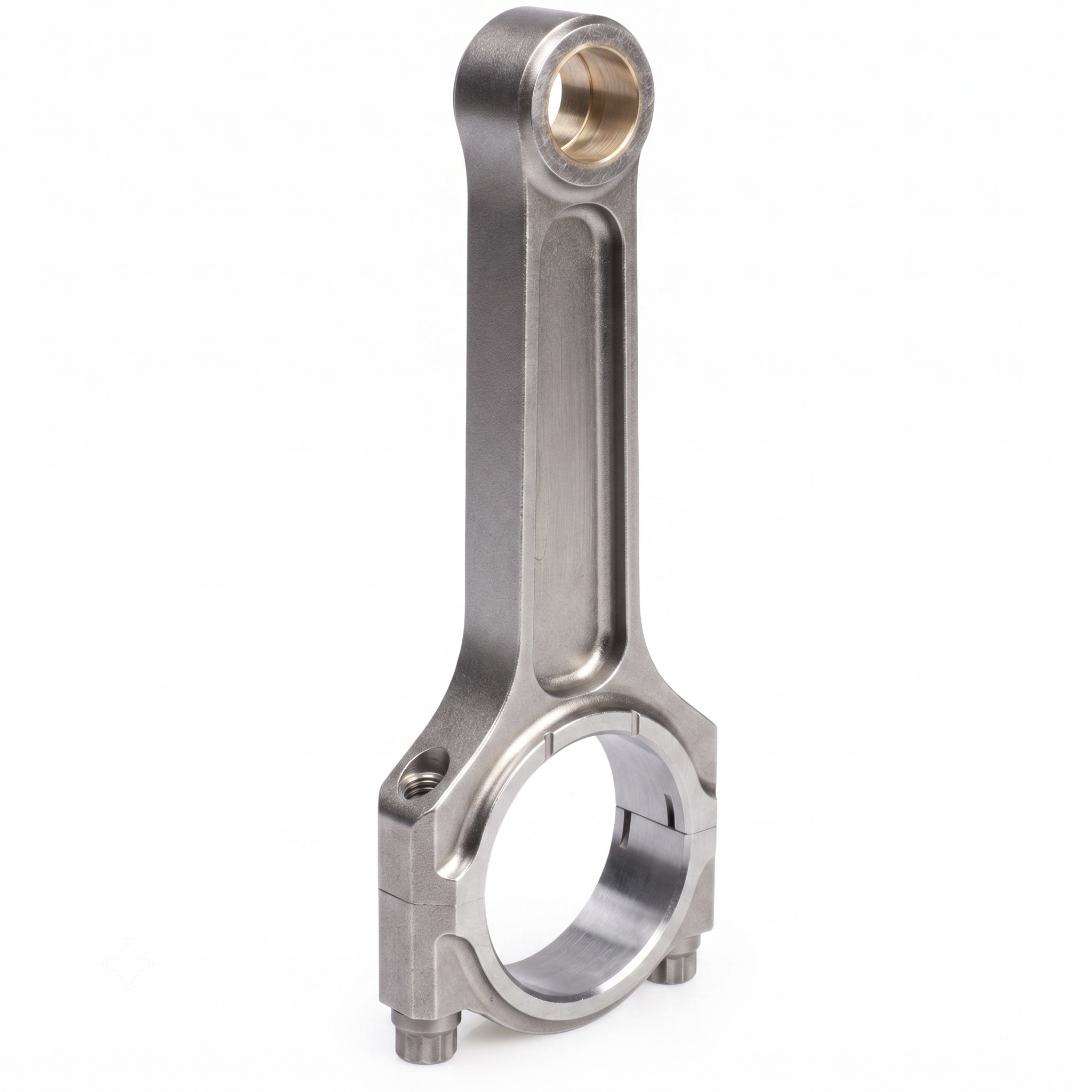 | The I-HD profile (ZRP) is a reinforced ‘Heavy Duty’ I-beam: it concentrates material where the compression loads build up while thickening the rod beam to carry the load of a turbo engine. Machined from EN24T steel and weighing 483 g per rod, it offers the best compromise between a light reciprocating assembly and robustness, ideal for a 4B11T running significantly raised boost. |

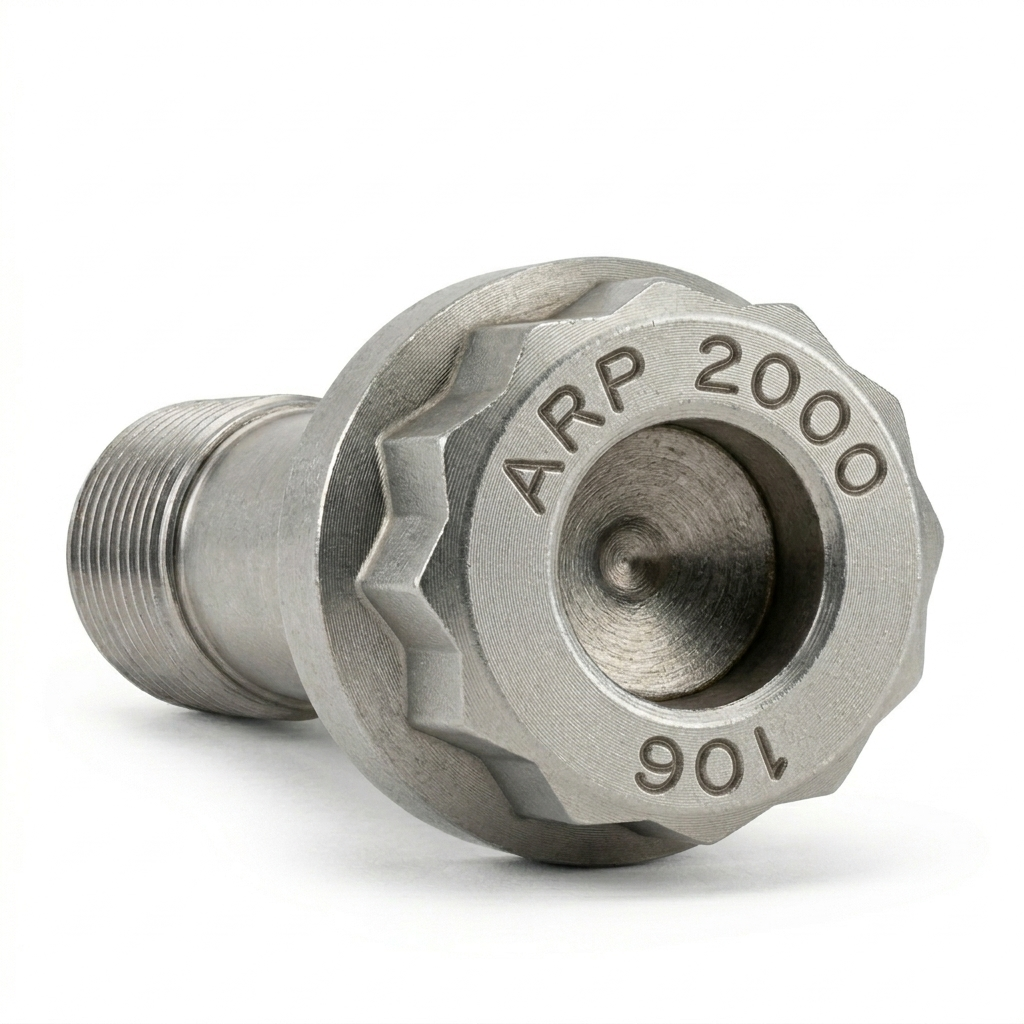 | ARP 2000: the versatile reference alloy in the ARP range, with tensile strength around 220,000 psi (close to 1,517 MPa). In 3/8" it covers builds up to about 200 hp per cylinder and speeds up to 8,500 rpm, which matches the great majority of 4B11T engines built for rally, circuit, drift or hillclimb. No storage constraints and repeatable torque: it is the default choice for this kit. |
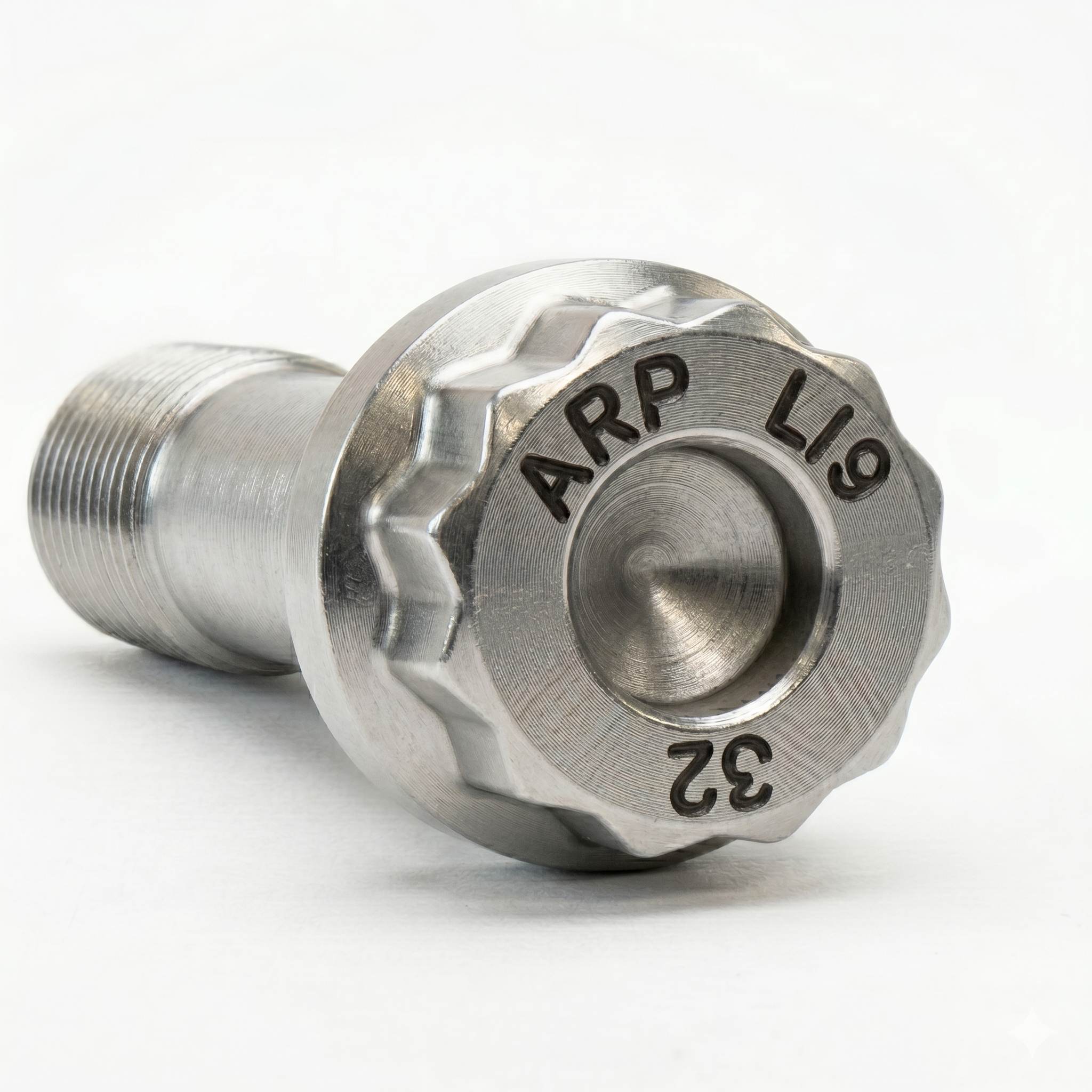 | ARP L19: a very high strength steel, around 260,000 psi (close to 1,793 MPa), intended for 4B11T engines pushed further, in drag racing, time attack or high-power drift, where cylinder pressure and engine speed stay high for long periods. In 3/8" it allows up to about 250 hp per cylinder and speeds up to 10,000 rpm. In exchange, the alloy fears corrosion and hydrogen embrittlement: storage away from moisture, oiled assembly and protection after the build are essential. |
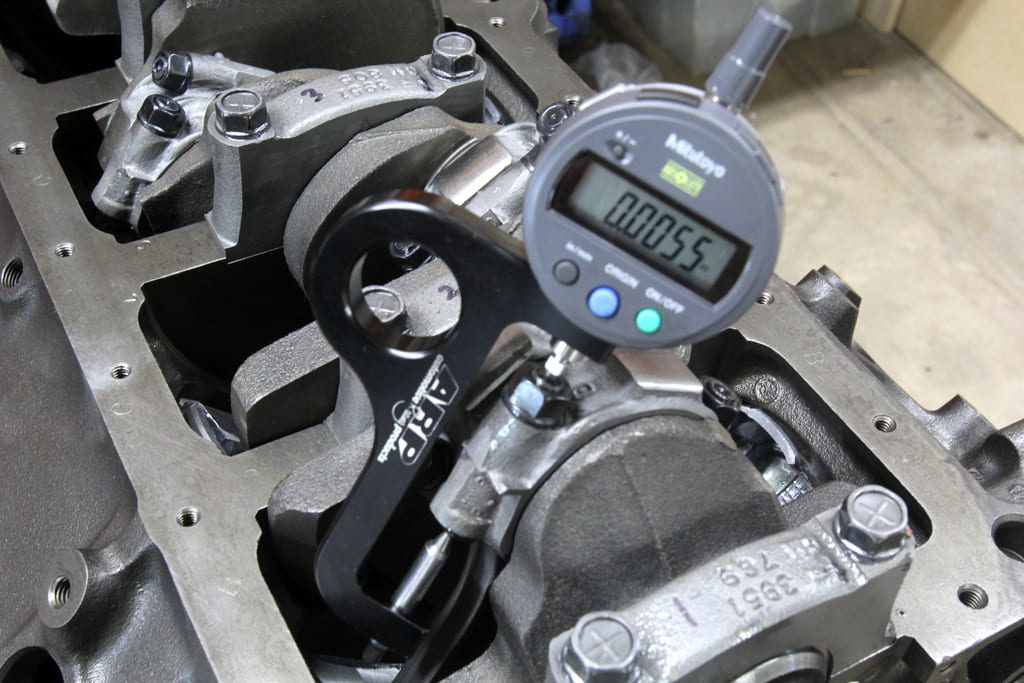
| On a forged rod, the exact bolt preload is checked by its stretch, measured with a dial gauge (stretch gauge), rather than by torque alone: lubrication and run-in distort the torque reading. Always refer to the stretch values given by the bolt manufacturer. |
 | ZRP designs its rods in Athens, under the direction of Alex Drakos, and manufactures them in Greece. For the 4B11T the rod is forged from EN24T steel in the I-HD profile, machined to tight tolerances, then weight-matched across the whole set of four so as not to spoil engine balance at high revs. Well established in European rally and circuit builds, the brand leaves the choice between ARP 2000 and ARP L19 hardware. |
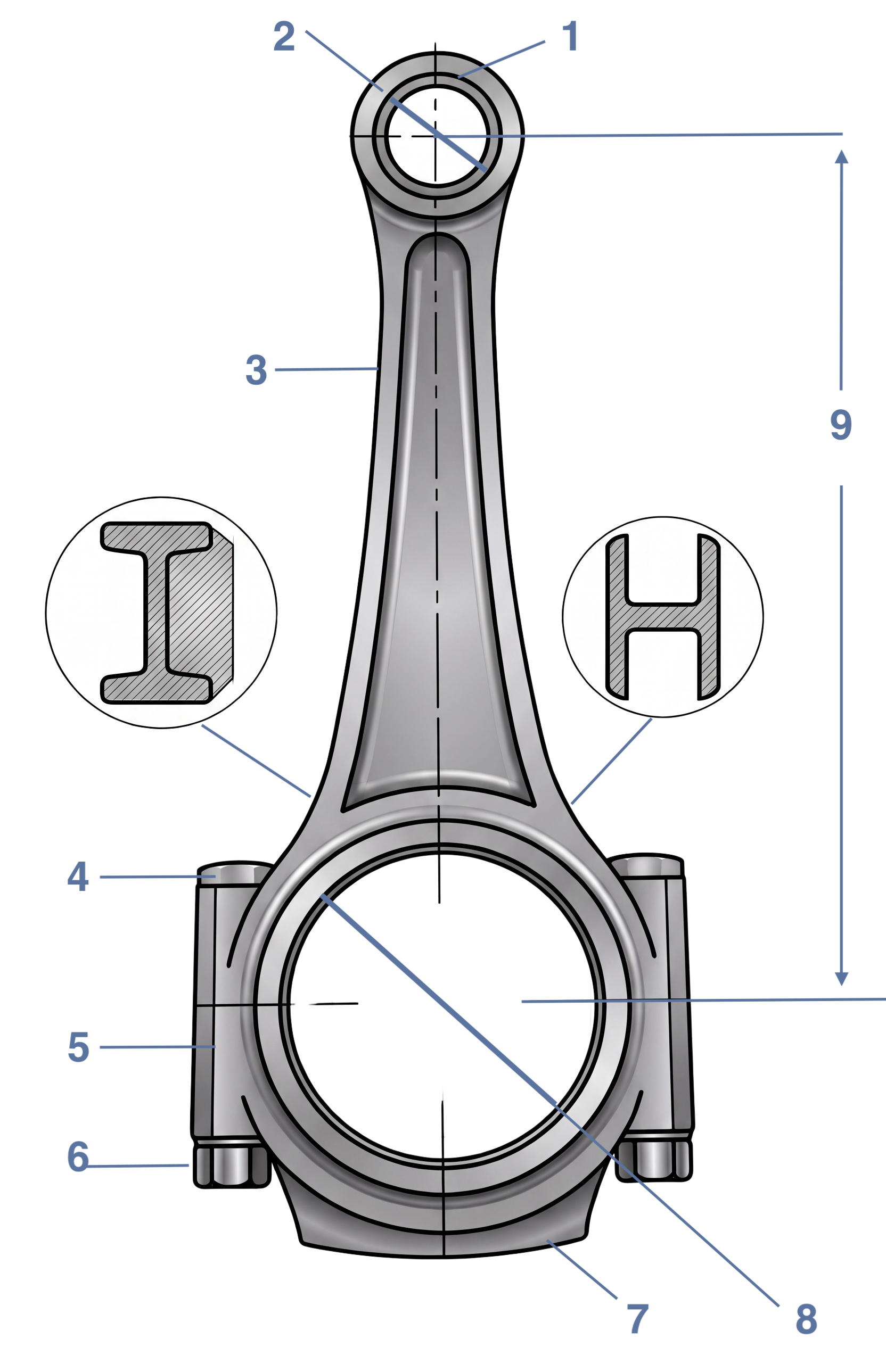 | 1) Small end 2) Small-end diameter 3) Rod beam 4) Rod bolt 5) Big end 6) Rod nut / bolt 7) Rod cap 8) Big-end diameter 9) Center-to-center |
These forged rods fit the Mitsubishi models powered by the 2.0 L 16v turbo 4B11T inline-four, with a 23 mm pin and 143.71 mm center-to-center:
| Brand | Model (chassis) | Engine code | Power | Years |
|---|---|---|---|---|
| Mitsubishi | Lancer Evolution X (CZ4A) | 4B11T | 280–360 hp | 2007–2016 |
| Mitsubishi | Lancer Ralliart (CY4A) | 4B11T | 237 hp | 2009–2015 |
| Mitsubishi | Lancer Sportback Ralliart (CX4A) | 4B11T | 237 hp | 2010–2011 |
OEM reference:
On a 4B11T with raised power, a stock rod that lets go usually takes the block, crankshaft and pistons with it. Investing in a forged rod set from the outset costs far less than an engine failure followed by a full rebuild. You permanently strengthen the bottom end, preserve the value of your build and drive with peace of mind, in intensive use as much as day to day.
The reasoning is simple on a 4B11T: the standard rod handles factory outputs, but it is the first part to give way when boost pressure rises, and its failure takes the block, the crankshaft and often the cylinder head with it. Rebuilding then costs far more than the set of forged rods that would have prevented the incident, quite apart from the downtime. Fitting the rods during a planned teardown remains the most economical call, and the only one that leaves margin for what comes next.