Product successfully added to your shopping cart
Quantity
Total
There are 0 items in your cart. There is 1 item in your cart.
Total products
Total shipping To be determined
Total

2.0L 16v - 3S-GTE
Manufacturers
2.0L 16v - 3S-GTE
Warning: Last items in stock!
New product
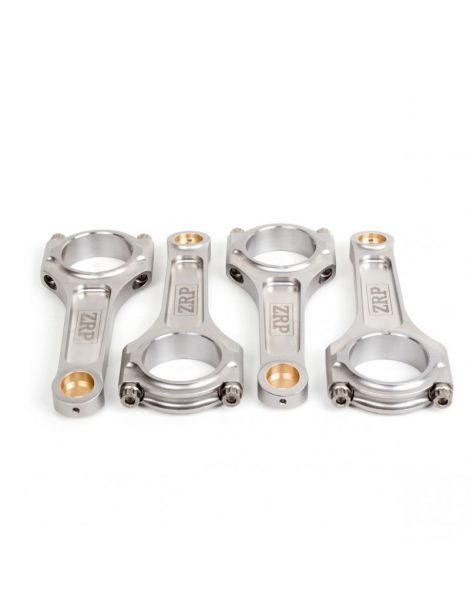
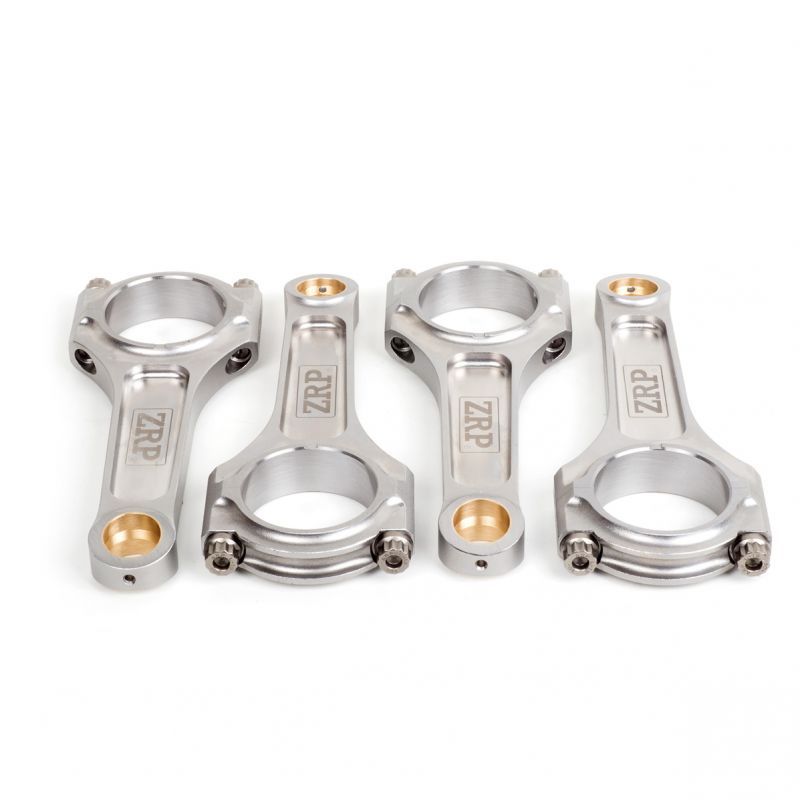
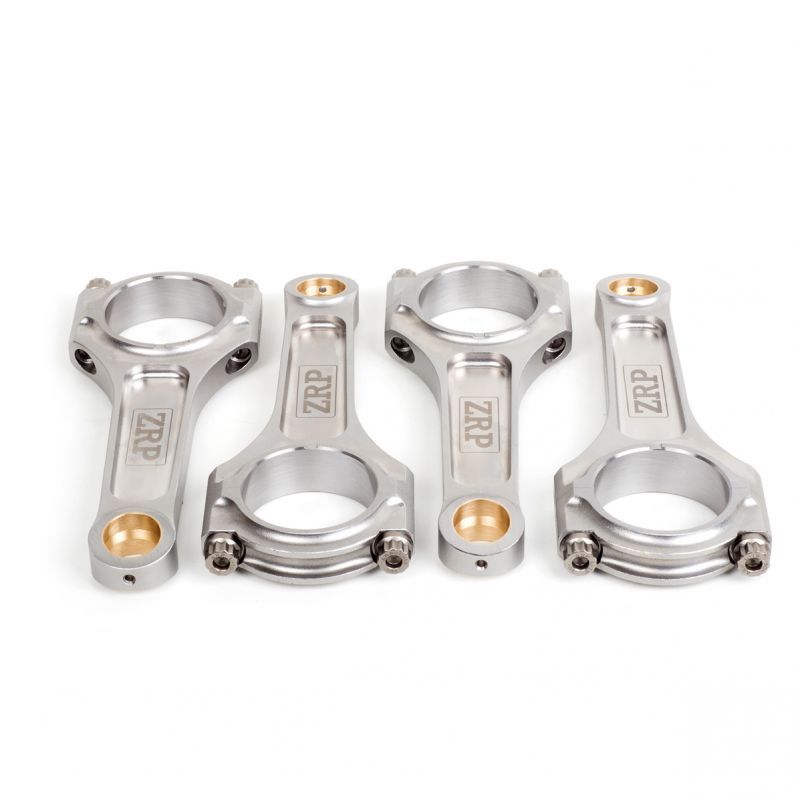
Set of 4 forged 4340 steel connecting rods for the Toyota 3S-GTE / 3S-GE 2.0 16V.
The 3S belongs to Toyota's S family: a 2.0-litre (1998 cc) inline-four with twin overhead camshafts and 16 valves, whose strictly equal 86 mm bore and stroke give a square, rev-friendly architecture. It comes as the naturally aspirated 3S-GE, whose final BEAMS dual VVT-i generation (Altezza RS200) reaches 200 to 210 hp, and as the turbocharged 3S-GTE. Built from 1986 to 2007, it powered a wide range of Toyota models, from the Celica and MR2 to the Caldina, Carina and RAV4.
The turbo 3S-GTE owes its reputation to the Celica GT-Four, whose rally versions carried Toyota to the top of the World Rally Championship (WRC) in the early 1990s. That competition pedigree made it a favourite of the tuning scene, able to deliver strong power once the turbo and engine management are reworked. But as soon as boost pressure and engine speed climb well past factory values, the stock rods become the weak point of the reciprocating assembly. Replacing them with forged rods is the decisive step to reliably secure a hard-pushed 3S-GTE, as well as a 3S-GE built for high rpm.
Our forged 3S rods are machined from wrought 4340 steel, the reference alloy in motorsport. They suit every discipline: circuit, drift, drag, rally, time attack and hillclimb, and support a high-revving naturally aspirated 3S-GE as readily as a heavily boosted 3S-GTE. Depending on the target (Stage 1 reliability, Stage 2 moderate boost, Stage 3 high power and beyond), they lock in the power increase without ever cutting corners on reliability. Supplied as a weight-matched set of 4, they keep the 3S's 22 mm piston pin and 138 mm center-to-center length.
Compared with a cost-driven sintered factory rod, a forged 4340 rod delivers about +19% yield strength, +8% tensile strength and +19 to +37% fatigue endurance. That mechanical reserve lets a 3S pushed in rpm or boost absorb cylinder-pressure peaks and inertia loads without breakage. The entire range is made from this forged 4340 steel, proven on the most demanding builds.
| Reference | Brand | Profile | Rod bolts | Ø pin (mm) | Small-end width (mm) | Ø big end (mm) | Big-end width (mm) | Center-to-center (mm) | Weight (g) |
|---|---|---|---|---|---|---|---|---|---|
| R-TOY-005-I | ZRP | I-HD | ARP 2000-3/8"-38mm | 22 | 51 | 26,7 | 138 | 588 | |
| R-TOY-005-I-L19 | ZRP | I-HD | ARP L19-3/8"-38mm | 22 | 51 | 26,7 | 138 | 588 | |
| TY5433-866 | Boostline | I-3P | ARP 2000-3/8"-41mm | 22 | 26,77 | 51,01 | 26,77 | 138 | 659 |
| TY5433-866+ | Boostline | I-3P | ARP CA625+-3/8"-41mm | 22 | 26,77 | 51,01 | 26,77 | 138 | 659 |
| 14008-4 | Manley | H | ARP 2000-3/8"-38mm | 22 | 51 | 26,8 | 137,87 | 565 |
Torque and stretch depend on the bolt reference and the rod manufacturer; refer to the datasheet supplied with the kit. Checking stretch with a gauge remains the most reliable and repeatable method.
| Reference | Brand | Rod bolts | Max torque (no gauge) | Stretch (gauge check) |
|---|---|---|---|---|
| R-TOY-005-I | ZRP | ARP 2000-3/8"-38mm | 61 | 0,140 à 0,152 |
| R-TOY-005-I-L19 | ZRP | ARP L19-3/8"-38mm | 67,8 | 0,152 à 0,165 |
| TY5433-866 | Boostline | ARP 2000-3/8"-41mm | 81 | 0,142 à 0,152 |
| TY5433-866+ | Boostline | ARP CA625+-3/8"-41mm | 88 | 0,152 à 0,163 |
| 14008-4 | Manley | ARP 2000-3/8"-38mm | 81,3 | 0,147 à 0,157 |
| 4340 is a low-alloy steel with nickel, chromium and molybdenum. Forging aligns the metal fibres in the direction of load, removes internal porosity and delivers far greater mechanical strength than a factory sintered or cast rod. The result is a tensile strength of around 930 to 1080 MPa together with excellent fatigue endurance, essential as soon as the engine gains torque, power or revs. This is the material used across our entire 3S range. |
The 3S range comes in three profiles.
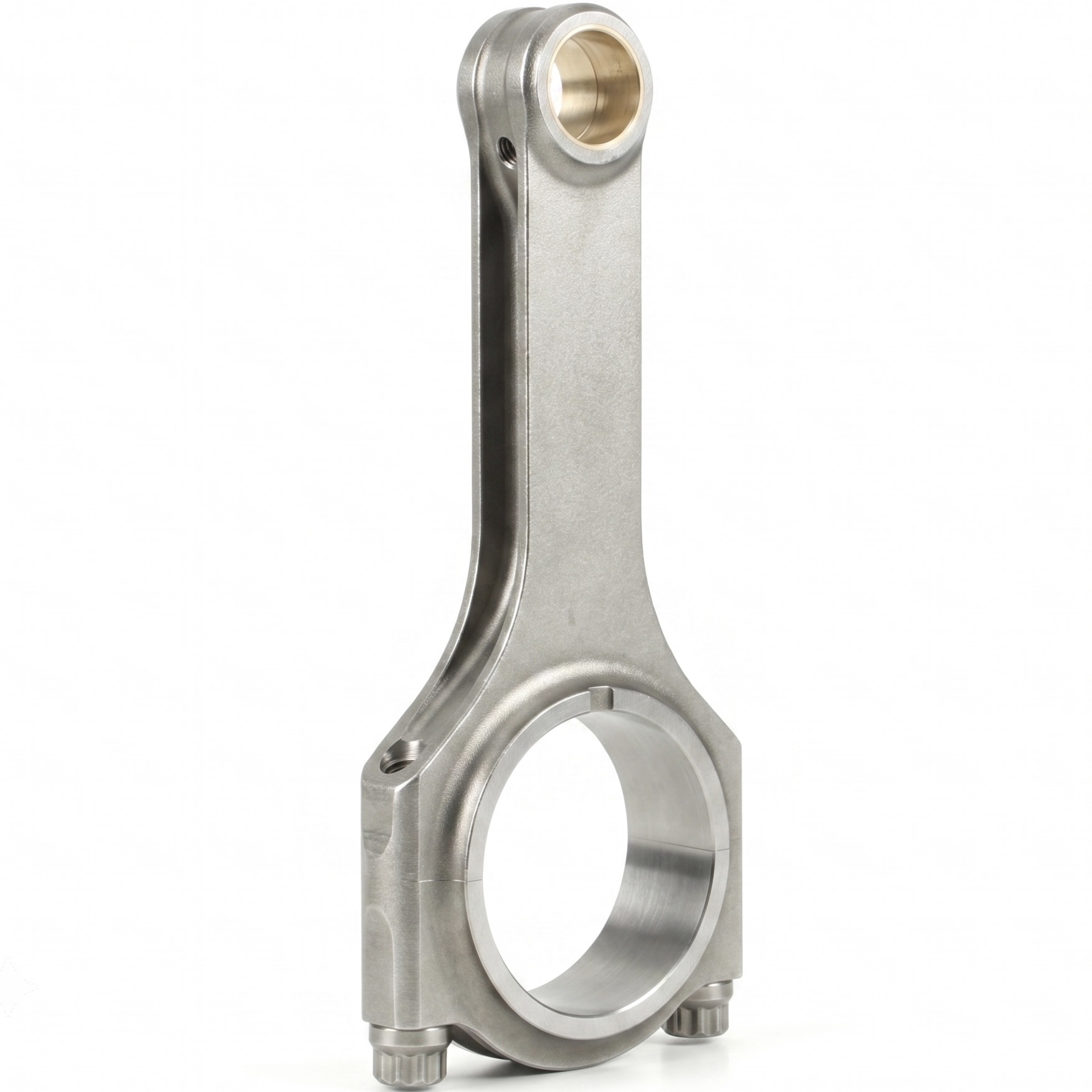 | The H profile (Manley), with its two flat flanks, offers excellent bending stiffness for a controlled weight: a robust, versatile choice. |
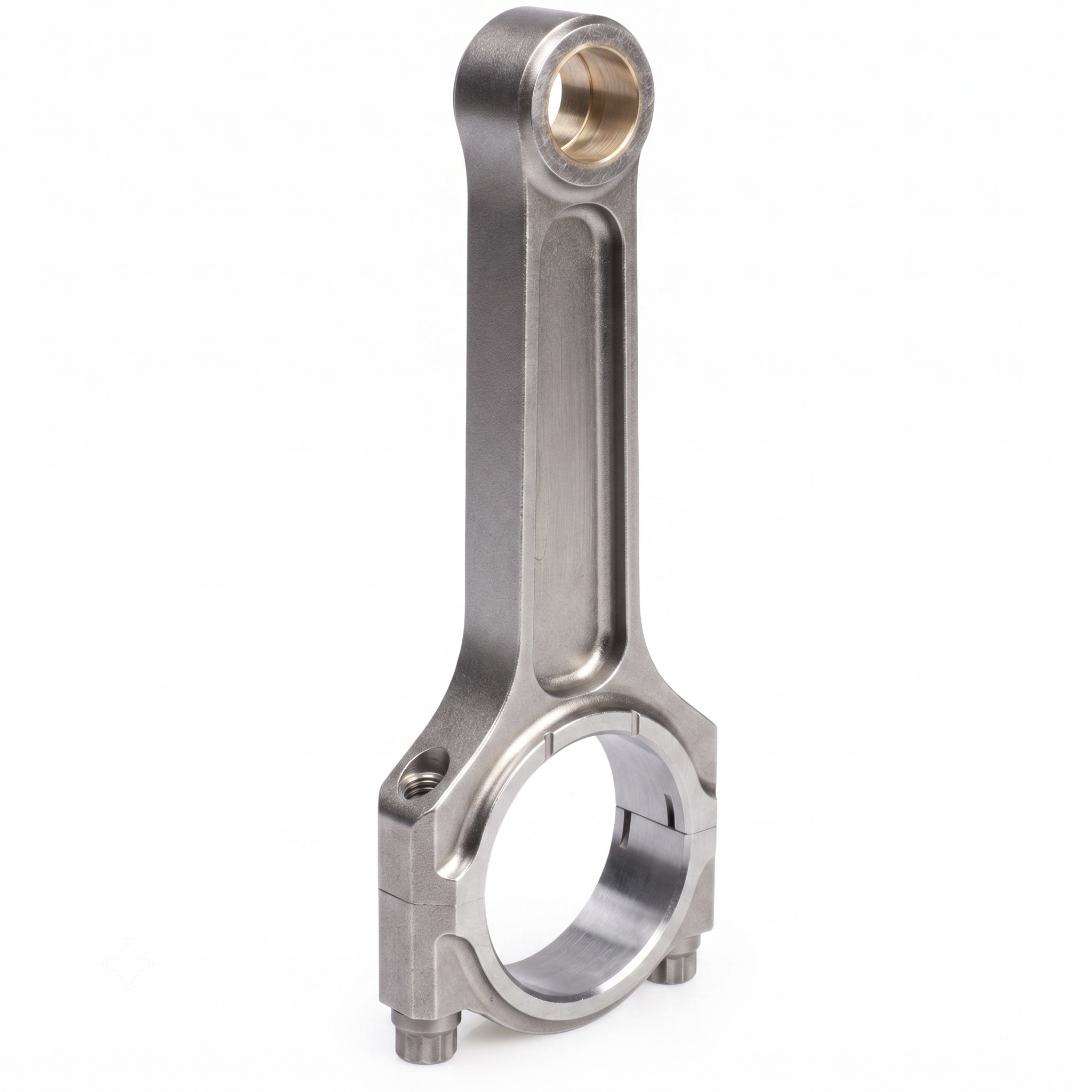 | The I-HD profile (ZRP) is a reinforced version of the I-beam, combining lightness with high compression resistance, available with ARP 2000 or L19 bolts. |
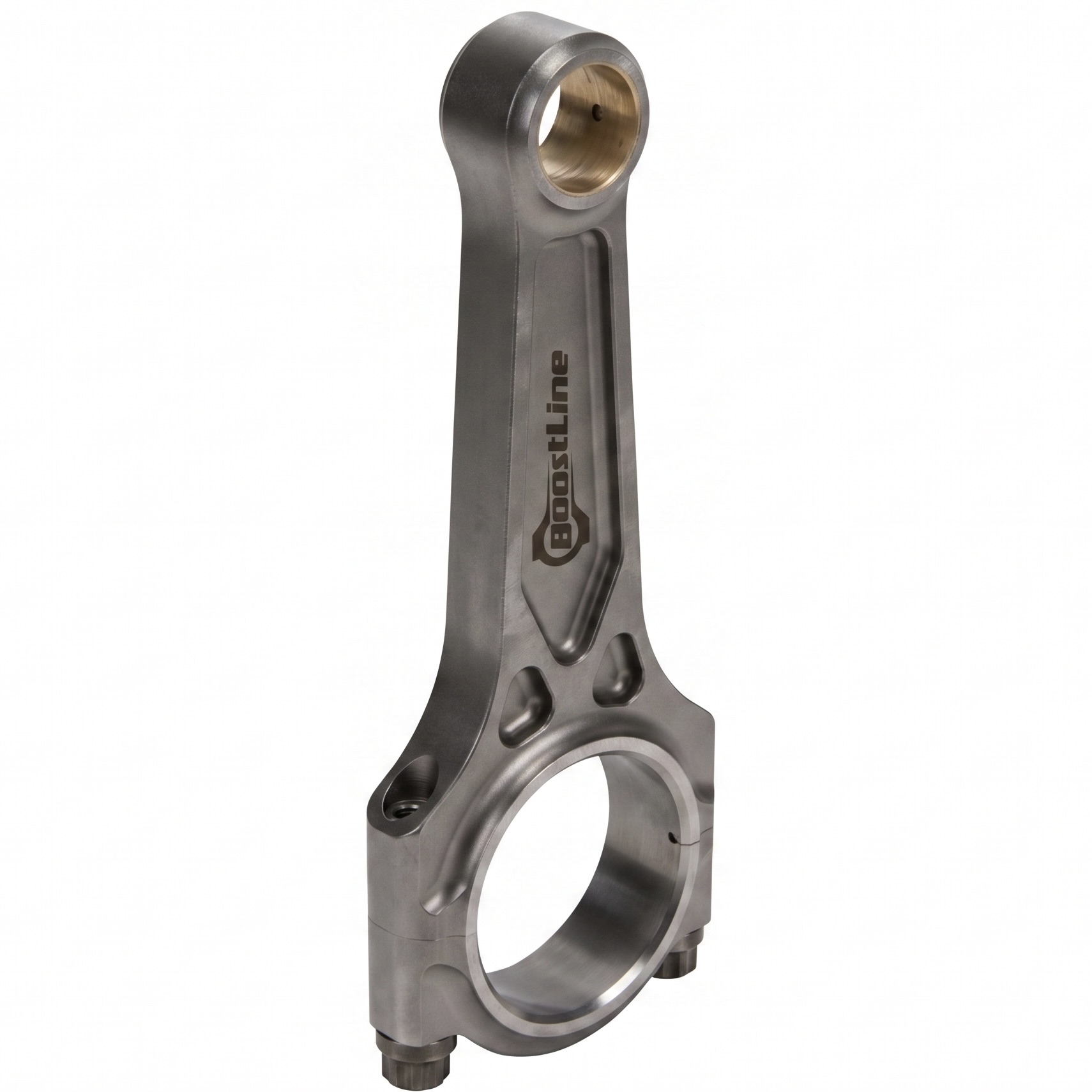 | Finally the I-3P profile (Boostline), with three machining pockets defined by structural analysis, shows a remarkable stiffness-to-weight ratio, tailored to the most demanding 3S builds. |
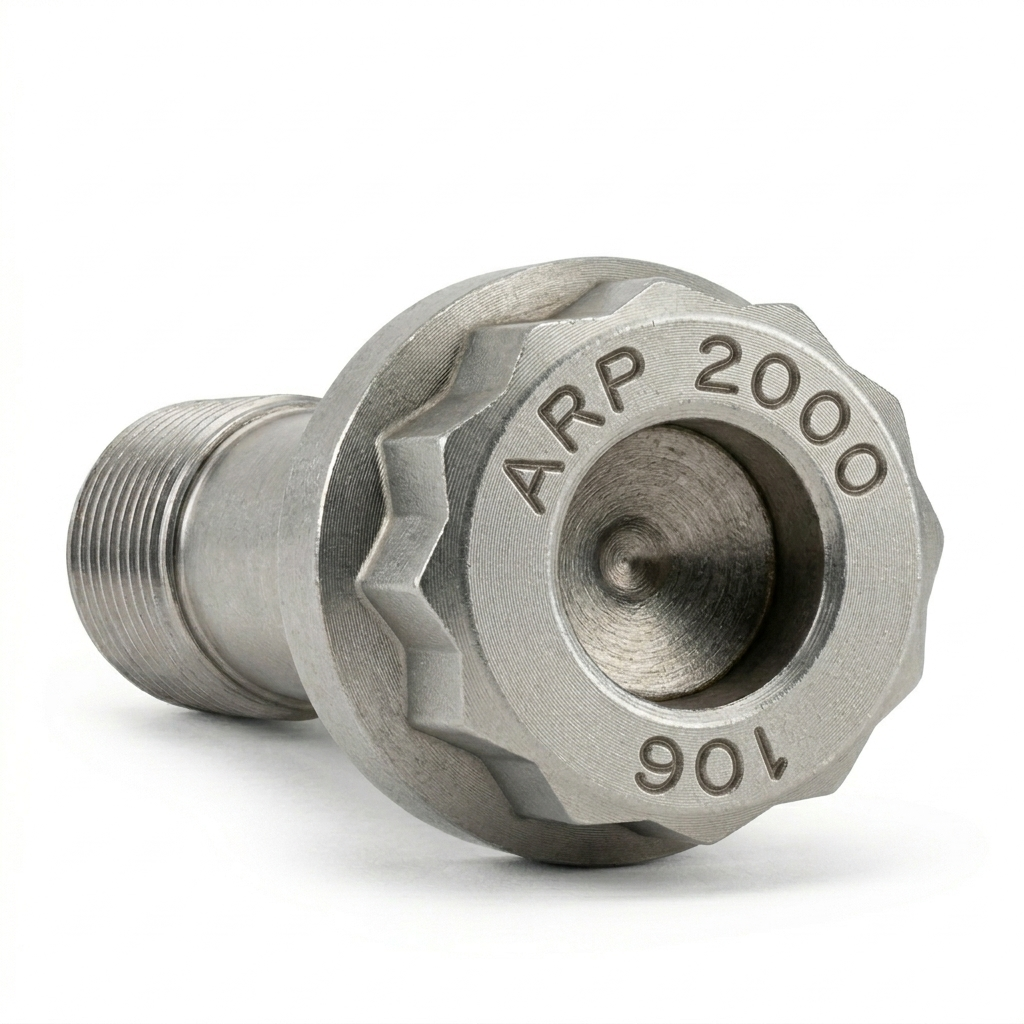 | ARP 2000: the all-round benchmark alloy, with a tensile strength of about 220,000 psi (1,517 MPa). Offered here in 3/8" diameter, it covers the vast majority of 3S builds, up to about 200 hp per cylinder and speeds reaching 8,500 rpm. It is the default choice to make a sporting 3S reliable. |
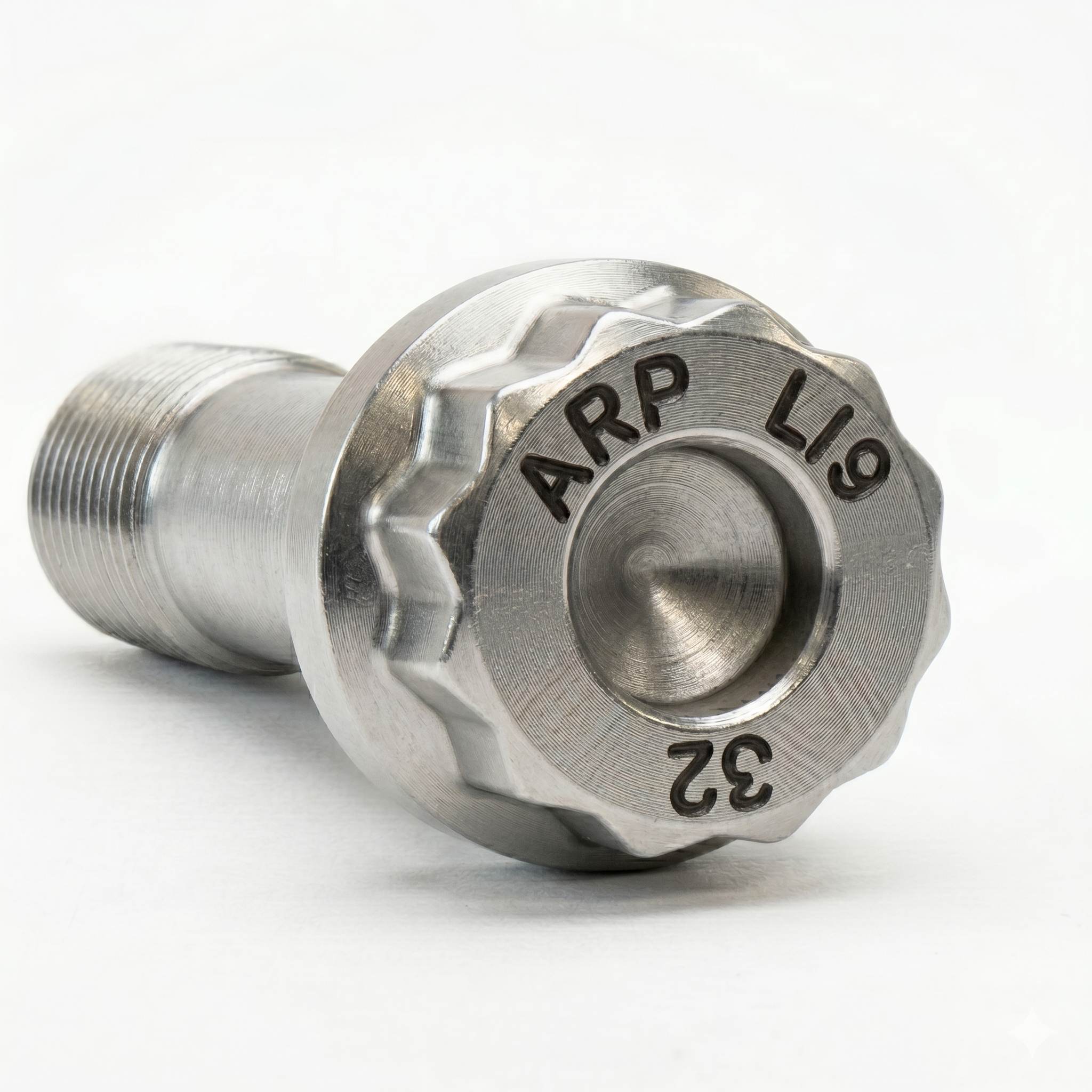 | ARP L19: a very-high-strength, stiffer steel intended for heavily stressed 3S engines, up to about 250 hp per cylinder and the highest engine speeds. In 3/8" diameter it clearly widens the safety margin on hard builds (note: corrosion-sensitive, it requires careful storage). |
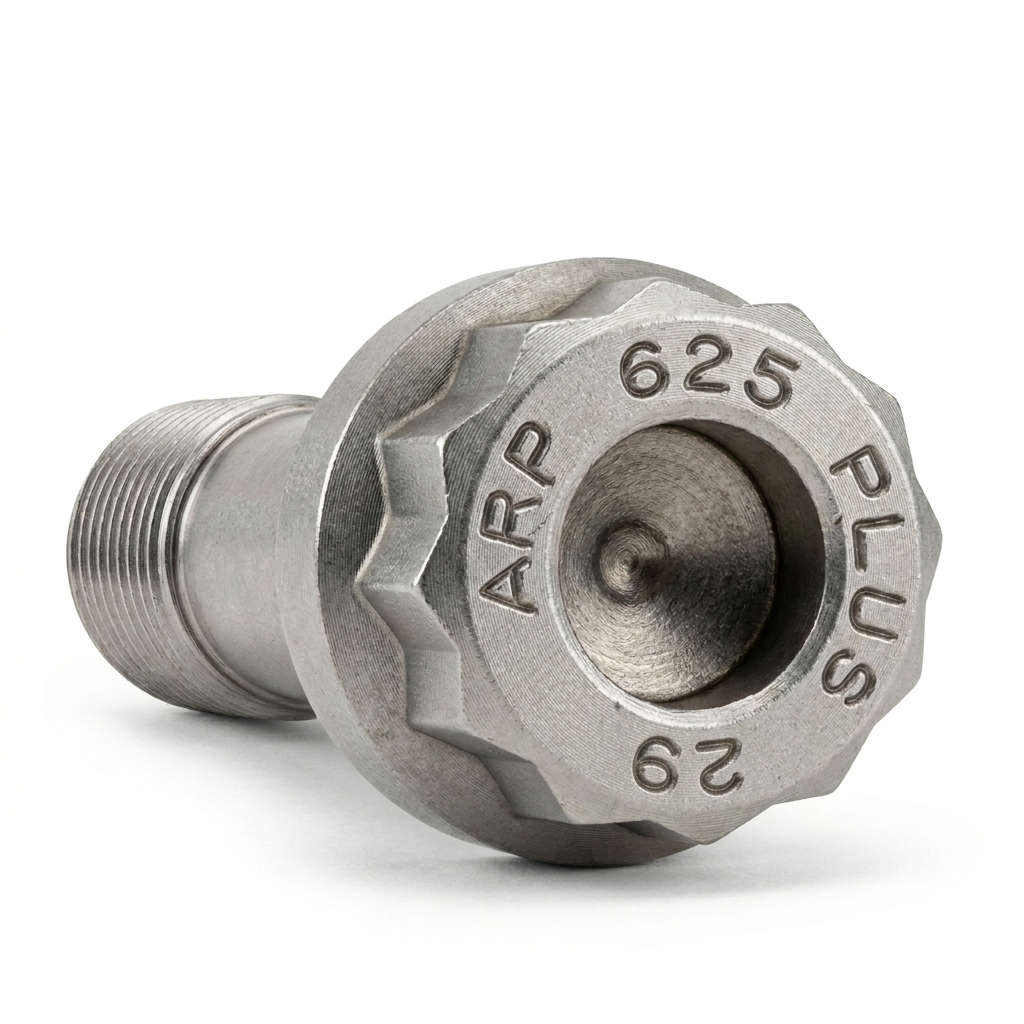 | ARP CA625+: the strongest bolts in the range, a premium corrosion-resistant alloy reserved for the most extreme 3S engines in load and rpm, beyond the previous thresholds. In 3/8" diameter it provides the maximum safety margin, with no storage constraint, and withstands the highest engine speeds (up to 10,000 rpm in extreme use). |
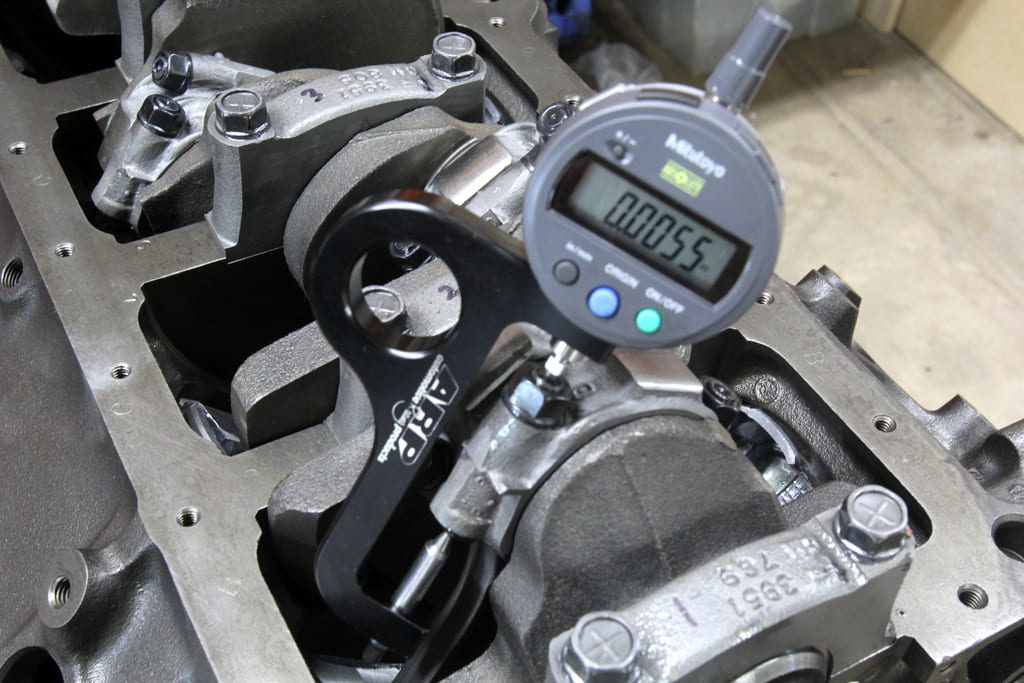
| On a forged rod, the exact bolt preload is checked by its stretch, measured with a dial gauge (stretch gauge), rather than by torque alone: lubrication and run-in distort the torque reading. Always refer to the stretch values given by the bolt manufacturer. |
This 3S range brings together three race forged-rod manufacturers.
 | ZRP offers its I-HD profile, available with ARP 2000 or L19 bolts, at the best price/performance ratio. |
 | Boostline designs its three-pocket I-3P profile through structural analysis, for a top-level stiffness-to-weight ratio, with ARP 2000 or CA625+. |
 | Manley, an American benchmark, offers its H profile in 4340 steel. Each reference ships as a complete set of 4, with its dedicated ARP bolts. |
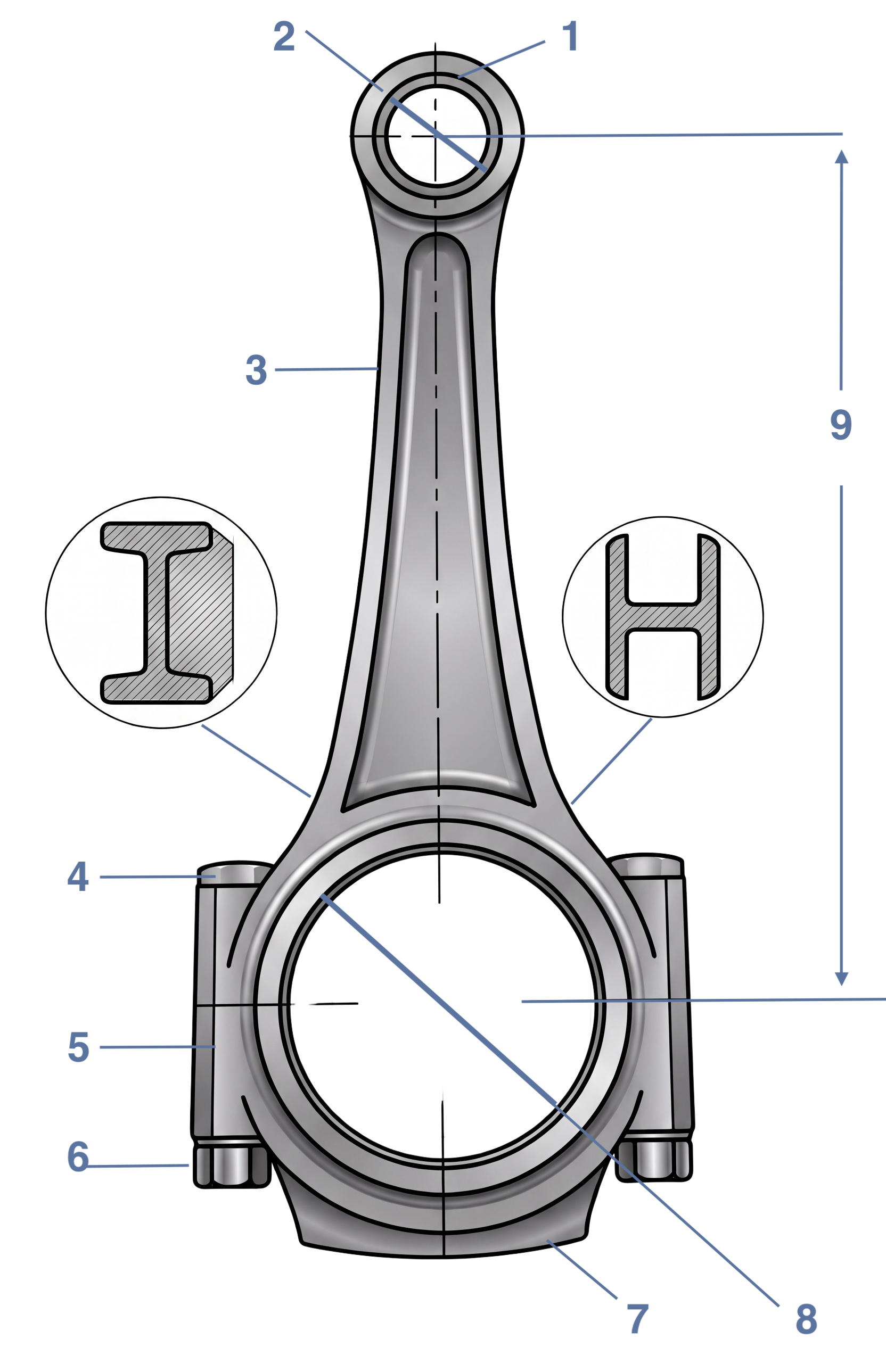 | 1) Small end 2) Small-end diameter 3) Rod beam 4) Rod bolt 5) Big end 6) Rod nut / bolt 7) Rod cap 8) Big-end diameter 9) Center-to-center |
These forged rods fit the Toyota models powered by the 2.0 L 16v 3S inline-four (138 mm center-to-center, 22 mm pin), in its naturally aspirated 3S-GE and turbocharged 3S-GTE forms:
| Brand | Model (chassis) | Engine code | Power | Years |
|---|---|---|---|---|
| Toyota | Celica GT-Four (ST165) | 3S-GTE | 185 ch | 1988–1989 |
| Toyota | Celica GT-Four (ST185) | 3S-GTE | 203–224 ch | 1989–1993 |
| Toyota | Celica GT-Four (ST205) | 3S-GTE | 242–256 ch | 1994–1999 |
| Toyota | MR2 Turbo (SW20) | 3S-GTE | 225–245 ch | 1989–1999 |
| Toyota | Caldina GT-T (ST215) | 3S-GTE | 190–261 ch | 1997–2001 |
| Toyota | Caldina GT-Four (ST246) | 3S-GTE | 260 ch | 2002–2007 |
| Toyota | Altezza RS200 (SXE10) | 3S-GE | 200–210 ch | 1998–2005 |
| Toyota | Celica (ST182 / ST183 / ST202) | 3S-GE | 156–200 ch | 1989–1999 |
| Toyota | MR2 (SW20) | 3S-GE | 156–200 ch | 1989–2000 |
| Toyota | Carina E / ED (ST191 / ST202 / ST205) | 3S-GE | 158–180 ch | 1989–1998 |
| Toyota | Corona / Curren (ST171 / ST191 / ST206) | 3S-GE | 160–180 ch | 1987–1998 |
| Toyota | Camry / Vista (SV21 / SV32 / SV33) | 3S-GE | 140–175 ch | 1986–1994 |
| Toyota | RAV4 (SXA10 / SXA11) | 3S-GE | 165–179 ch | 1994–1999 |
| Toyota | Caldina (ST195) | 3S-GE | 175 ch | 1994–1997 |
On a tuned 3S, a stock rod that lets go usually takes the block, crankshaft and pistons with it. Investing in a forged rod set from the outset costs far less than an engine failure followed by a full rebuild. You permanently strengthen the bottom end, preserve the value of your build and drive with peace of mind, in intensive use as much as day to day.