Product successfully added to your shopping cart
Quantity
Total
There are 0 items in your cart. There is 1 item in your cart.
Total products
Total shipping To be determined
Total

1.8L 16v - M42B18
Manufacturers
1.8L 16v - M42B18
Warning: Last items in stock!
New product
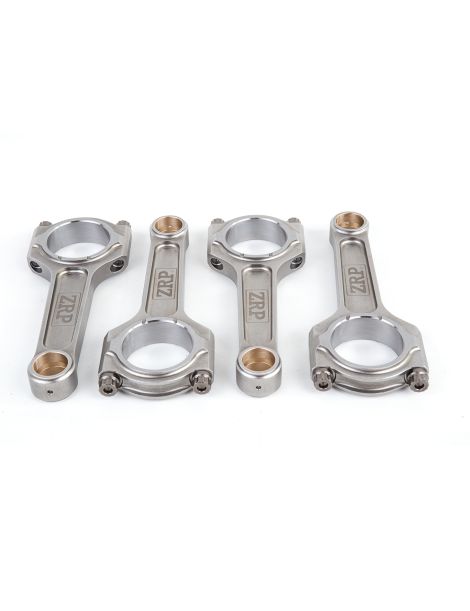
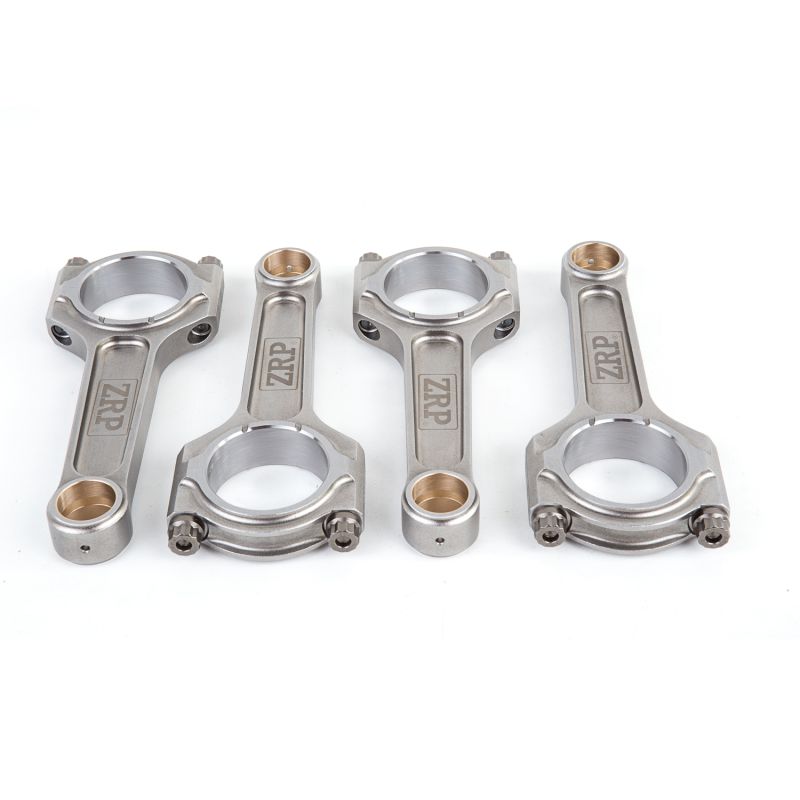
Set of 4 forged connecting rods in 4340 steel for BMW M42B18 and M44B19.
Launched in 1989, the M42 was BMW's first four-cylinder with double overhead camshafts and sixteen valves. With a 1,796 cc displacement (84 mm bore, 81 mm stroke), it pairs a sturdy cast-iron block with an aluminium cylinder head, chain-driven timing and hydraulic lifters. It powers the sporty 318is versions and comes as a saloon, coupé, convertible and compact.
In 1995 the M44 took over, with displacement raised to 1,895 cc (85 mm bore, 83.5 mm stroke) for around 140 hp. It is found on the E36 3 Series 318is, 318ti and 318i convertible, as well as on the Z3 1.9 roadster. Smooth and eager at high revs, these engines make an excellent basis for tuning: as soon as you raise boost pressure, compression ratio or engine speed, switching to forged connecting rods secures the bottom end.
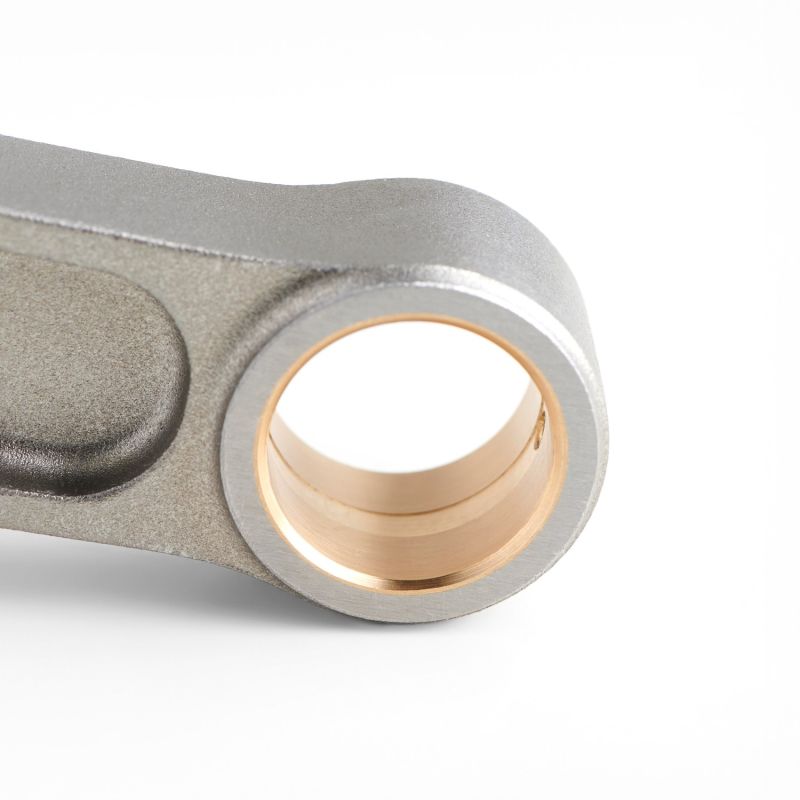
Forged from high-strength 4340 steel, these reinforced connecting rods protect the bottom end as soon as power rises. They become essential when fitting forged pistons, raising engine speed, increasing boost pressure or gaining displacement.
Designed to withstand the heavy loads of tuned engines, both forced-induction and high-revving naturally aspirated, they cover every discipline: rally, drift, drag racing, circuit, hillclimb and time attack, and support Stage 2 to Stage 4 builds and beyond.
| Reference | Brand | Profile | Bolts | Piston pin Ø OEM 22 mm | Small-end width | Big-end Ø OEM 48 mm | Big-end width | Center-to-center OEM 139,95 mm | Weight per rod |
|---|---|---|---|---|---|---|---|---|---|
| R-BMW-007-I | ZRP | I | ARP 2000-3/8"-38mm | 22 mm | 48 mm | 21.97 mm | 140 mm | 492 g | |
| R-BMW-007-I-L19 | ZRP | I | ARP L19-3/8"-38mm | 22 mm | 48 mm | 21.97 mm | 140 mm | 492 g |
| Rod | Bolts | Tightening torque | Recommended stretch |
|---|---|---|---|
| ZRP (R-BMW-007-I) | ARP 2000 | 61 N·m | 0.140 – 0.152 mm |
| ZRP (R-BMW-007-I-L19) | ARP L19 | 67.8 N·m | 0.152 – 0.165 mm |
The two bolts of a given cap form an inseparable pair: bringing them to the final value one after the other tilts the cap and distorts the bearing bore, even if the reading is correct at the end. On the M42B18 and M44B19, both bolts are therefore brought up together, taken through a common intermediate stage, then to the final figure from the table above with one more alternation. That figure, like the associated stretch range, is the bolt manufacturer’s and varies depending on whether the rod carries ARP 2000 or ARP L19: it is observed without interpretation. Since torque remains sensitive to thread friction, stretch measured with a dial gauge is still the reference check on the eight bolts. Clean threads, an even coat of ARP assembly lubricant. In case of contradiction, the kit instruction sheet wins.
| 4340 is a nickel-chromium-molybdenum alloy steel used in aerospace and motorsport. Forged then heat-treated (quench and temper), it offers an excellent balance of tensile strength, fatigue life and ductility. Compared with sintered metal, it gains about 19% in yield strength, 8% in tensile strength and 19 to 37% in fatigue life, whereas the sintered part reaches its limits under high boost and risks failure. |
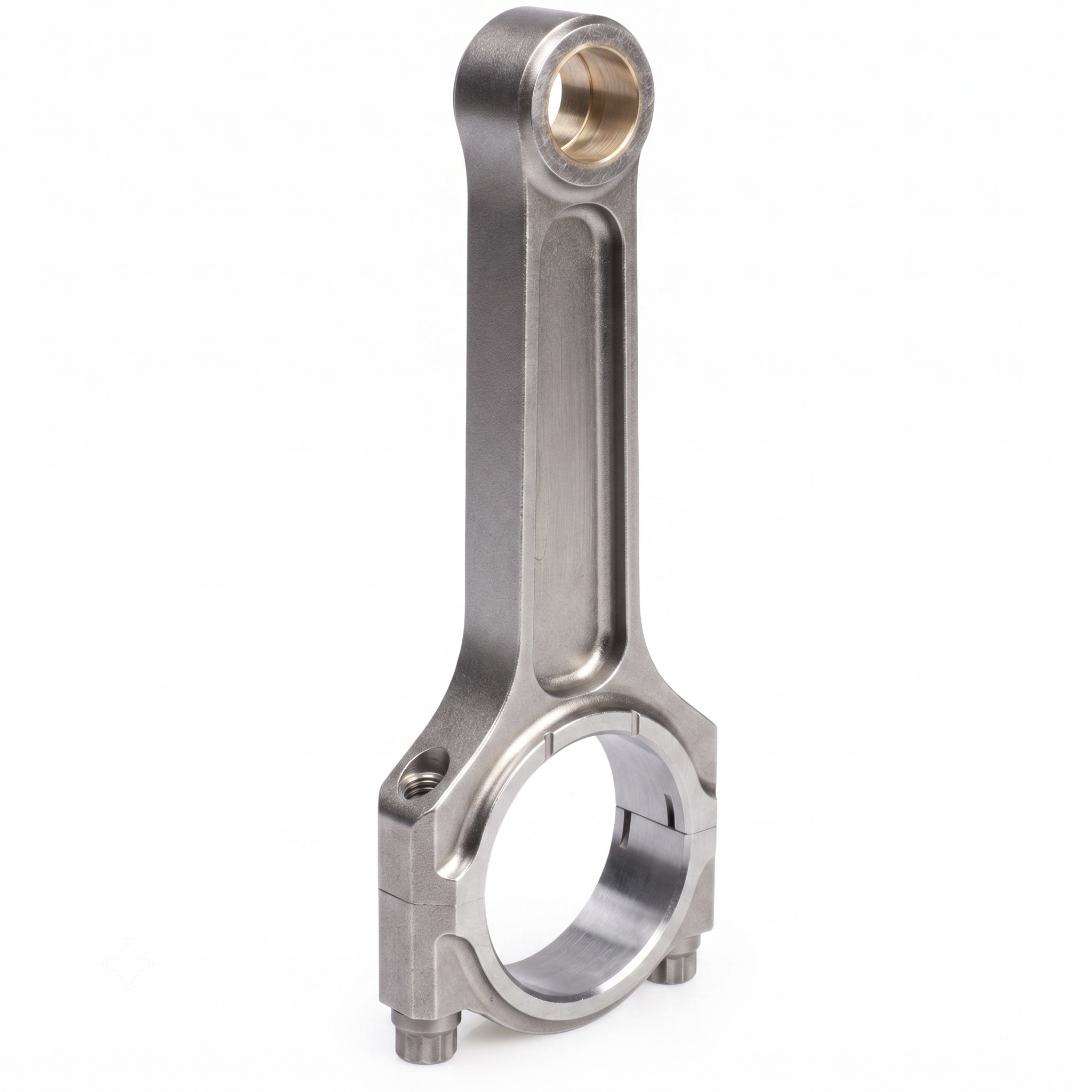 | I profile. The I-beam section favours light weight: less material in the rod beam, hence less inertia and a real ability to rev high. It is the reference profile for high-revving naturally aspirated engines and modern turbo builds, where controlling moving mass is key. |
Rod bolts are among the most heavily loaded parts of the engine. The right choice means matching the steel grade to the real use of the build, then respecting the assembly torque and stretch.
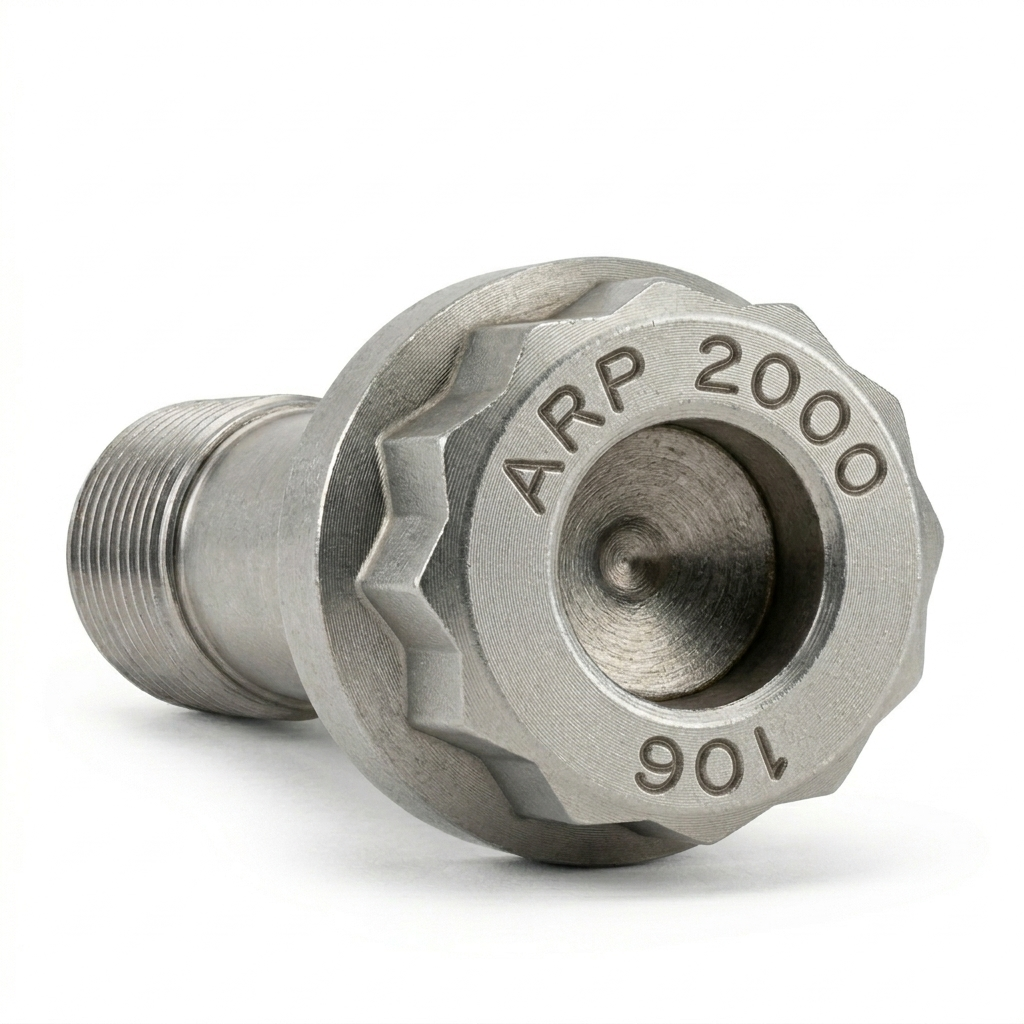 | ARP 2000. A high-performance standard, it covers up to about 200 hp per cylinder in 3/8" and a maximum engine speed of around 8,500 rpm. Versatile and reliable, with no particular storage constraints, it suits circuit, trackday, drift, rally, drag racing and hillclimb. |
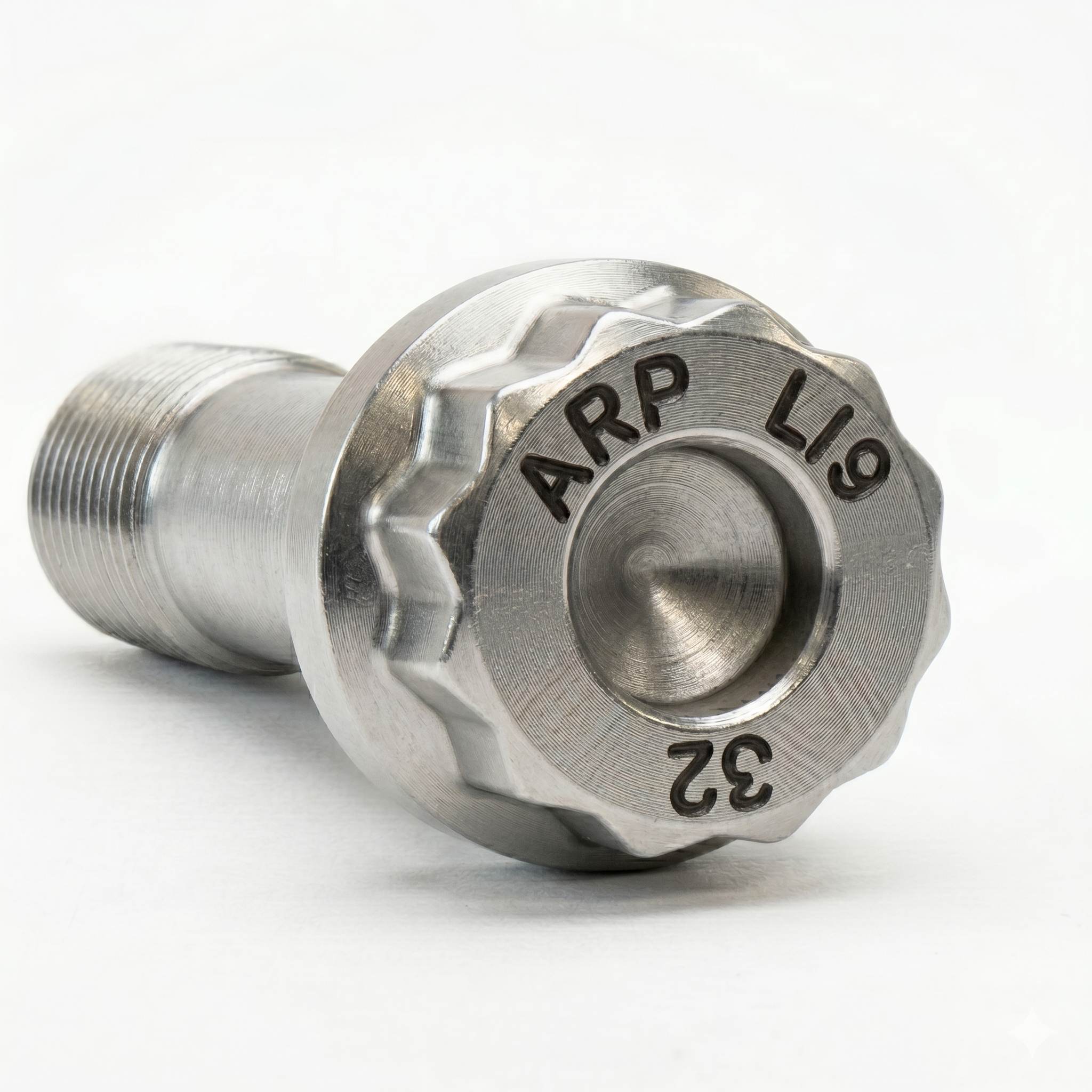 | ARP L19 (tensile strength of approximately 260,000 psi, or ~1,793 MPa). Designed for engines pushed to the extreme (very high boost pressure, sustained high revs, high cylinder pressure), it accepts up to about 250 hp per cylinder in 3/8" and speeds near 10,000 rpm. It is the choice for big builds in drag racing, drift, rally and circuit. Sensitive to corrosion and hydrogen embrittlement, it must be stored and fitted oiled. |
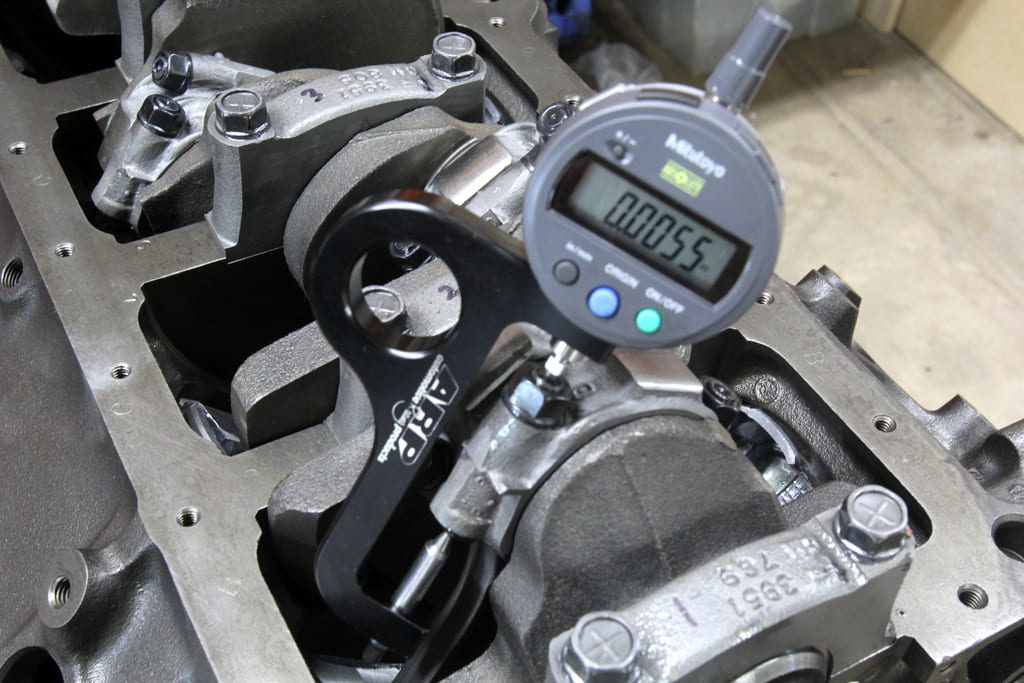
| The most accurate way to tighten a rod bolt is to measure its stretch with a dial indicator (stretch gauge) rather than relying on torque alone. Aim for the manufacturer's recommended stretch, bolt oiled, to ensure correct preload without overstressing. |
 | ZRP. A Greek brand of high-performance forged connecting rods, made by Drakos Engineering in Athens. Each rod is forged from 4340 steel, precision-machined and balanced to ±1 g to stay reliable at high revs. Offered here in I profile with ARP 2000 or ARP L19 bolts, they are designed and inspected in Greece for rally, circuit and drift. |
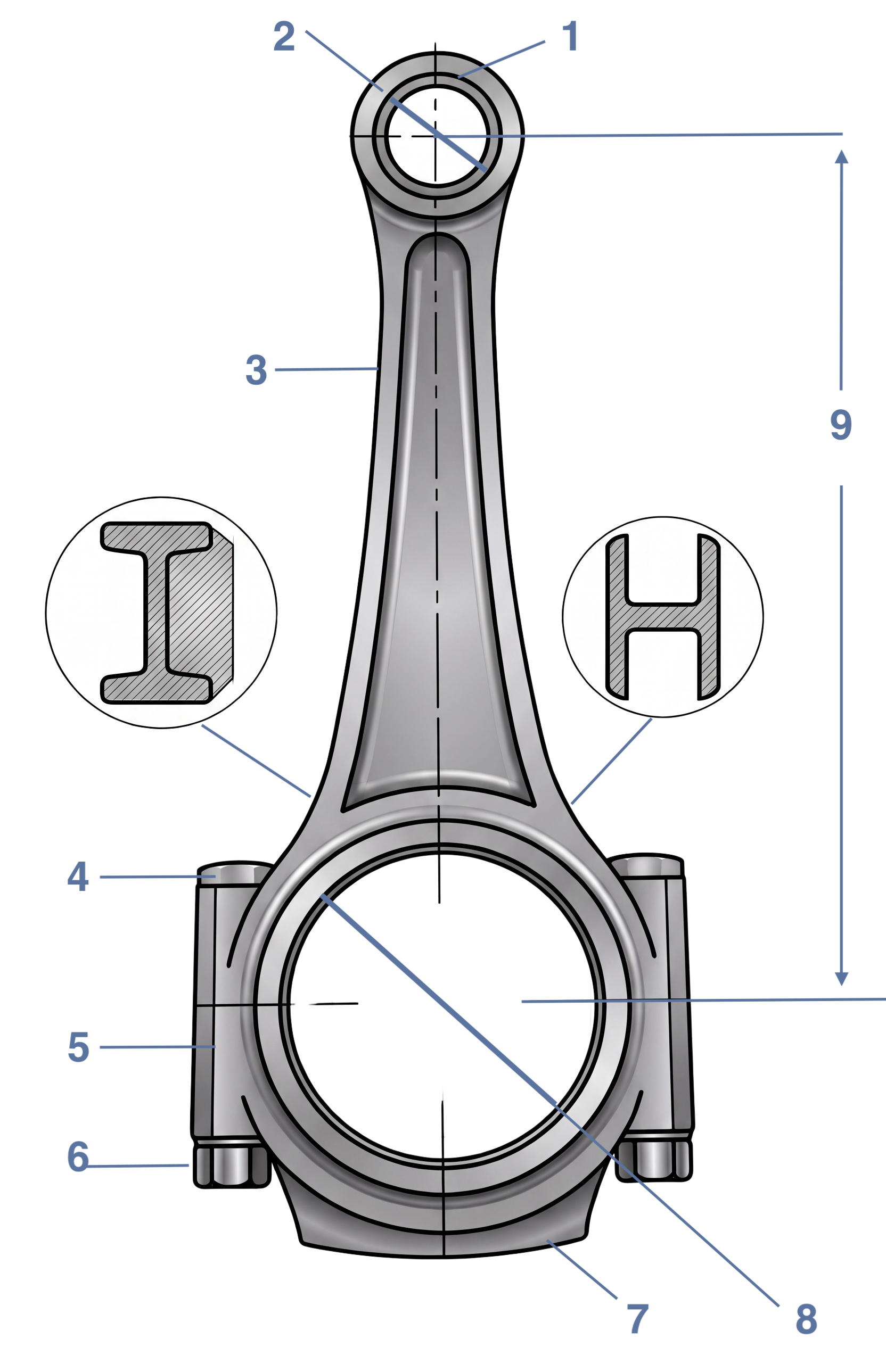 | 1) Small end 2) Small-end diameter 3) Rod beam 4) Rod bolt 5) Big end 6) Nut / rod bolt 7) Rod cap 8) Big-end diameter 9) Center-to-center |
Below is the list of vehicles equipped with the BMW 1.8L / 1.9L 16V M42B18 / M44B19 engine. The piston pin diameter and the centre-to-centre length must be confirmed on your engine before ordering.
| Brand | Model (chassis) | Engine code | Power | Years |
|---|---|---|---|---|
| BMW | 3 Series 318is (E30) | M42B18 | 136 hp | 1989–1991 |
| BMW | 3 Series 318i Convertible (E30) | M42B18 | 140 hp | 1990–1992 |
| BMW | 3 Series 318i (E36) | M42B18 | 140 hp | 1992–1995 |
| BMW | 3 Series 318is saloon / coupé (E36) | M42B18 | 140 hp | 1992–1995 |
| BMW | 3 Series 318i Convertible (E36) | M42B18 | 140 hp | 1994–1995 |
| BMW | 3 Series Compact 318ti (E36) | M42B18 | 140 hp | 1994–1995 |
| BMW | 3 Series 318is saloon / coupé (E36) | M44B19 | 140 hp | 1995–1999 |
| BMW | 3 Series 318is Convertible (E36) | M44B19 | 140 hp | 1996–1999 |
| BMW | 3 Series Compact 318ti (E36) | M44B19 | 140 hp | 1996–1999 |
| BMW | Z3 Roadster 1.9 (E36/7) | M44B19 | 140 hp | 1995–1999 |
OEM reference: 11 24 1 437 617 (rod set).
On a tuned M42 or M44, a connecting-rod failure almost always destroys the block and cylinder head. A set of forged rods costs a fraction of a new engine and a long downtime. It is the guarantee of a reliable bottom end, able to handle the target power for the long run, mile after mile.