Product successfully added to your shopping cart
Quantity
Total
There are 0 items in your cart. There is 1 item in your cart.
Total products
Total shipping To be determined
Total

1.8L 16v - CA18DET
Manufacturers
1.8L 16v - CA18DET
Warning: Last items in stock!
New product
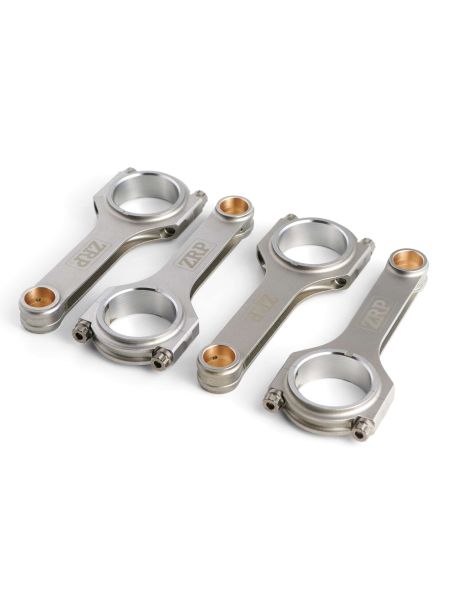
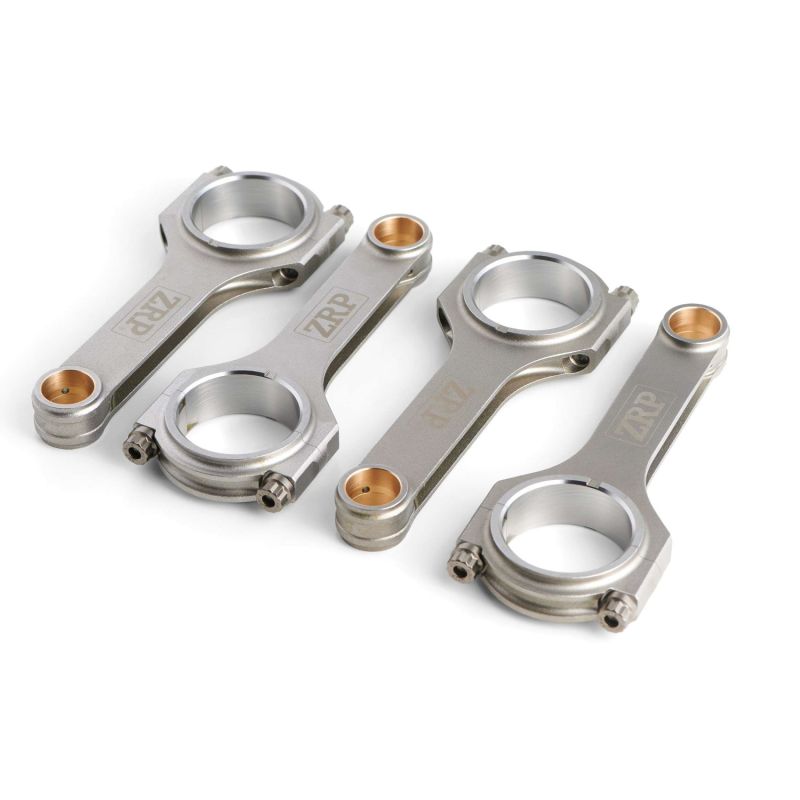
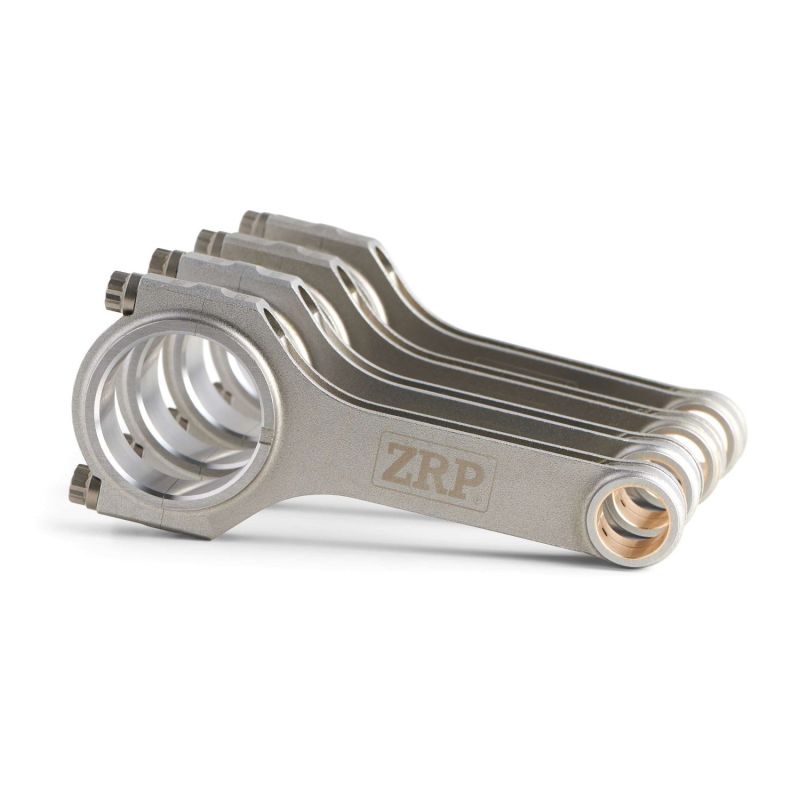
Set of 4 forged 4340 steel connecting rods for Nissan 1.8L 16V Turbo CA18DET.
The Nissan CA18DET is the pinnacle of the CA family: a 1.8 L (1,809 cc) inline-four petrol engine with double overhead camshafts and 16 valves, force-fed by a Garrett T25 turbocharger paired with an air-to-air intercooler. With an 83 mm bore and an 83.6 mm stroke, multipoint fuel injection and piston oil squirters, it delivers 169 hp (124 kW) and 228 N·m, while staying eager and responsive low down thanks to its dual-port intake.
Built from 1985 to 1994, it powered now-iconic cars: the Silvia and 180SX (S13), the European-market 200SX (S13), the Silvia S12 RS-X and the all-wheel-drive Bluebird U12 SSS ATTESA. A true icon of drifting and Japanese tuning, it offers a sound, durable mechanical base. As soon as boost pressure rises, however, strengthening the rotating assembly becomes the top priority to withstand torque and repeated high-rpm runs.
Forged 4340 steel connecting rods take over from the factory rods as soon as the CA18DET is pushed beyond its stock operating range. Designed for high performance, they belong in rally, drift, drag, circuit racing, hillclimb and time attack, wherever the engine is run well beyond its factory limits.
As soon as you raise boost, extend the rev range or aim for a significant power increase (Stage 2, Stage 3, Stage 4 and beyond), they become essential, ideally combined with forged pistons. Offered in an H profile, made for the high torque of turbocharged builds, they reliably secure the CA18DET bottom end for the long term.
| Reference | Brand | Profile | Bolts | Pin diameter OEM 20 mm | Small-end width | Big-end diameter OEM n.p. | Big-end width | Center-to-center OEM 133 mm | Weight per rod |
|---|---|---|---|---|---|---|---|---|---|
| R-NIS-001H | ZRP | H | ARP 2000-3/8"-38mm | 20 mm | 48 mm | 24,3 mm | 133 mm | 453 g | |
| R-NIS-001H-L19 | ZRP | H | ARP L19-3/8"-38mm | 20 mm | 48 mm | 24,3 mm | 133 mm | 453 g |
| Rod | Bolts | Torque | Recommended stretch |
|---|---|---|---|
| ZRP (R-NIS-001H) | ARP 2000 | 61 N·m | 0,140 – 0,152 mm |
| ZRP (R-NIS-001H-L19) | ARP L19 | 67,8 N·m | 0,152 – 0,165 mm |
Manufacturers recommend stretch-gauge measurement as the reference method: the instructions supplied with the kit always take precedence. The torque figures assume assembly with ARP lubricant.
| 4340 is a low-alloy steel with nickel, chromium and molybdenum, used in aerospace as well as motorsport. Forged then heat-treated (quench and temper), it combines high tensile strength, excellent fatigue endurance and good ductility. Compared with a production rod, usually made of powder metal optimised for mass production, forged 4340 typically shows a yield strength higher by about 19%, a tensile strength higher by about 8% and fatigue life increased by 19 to 37%. In practice this means a far wider safety margin under high cylinder pressure and high rpm, where a stock rod ends up deforming or breaking. |
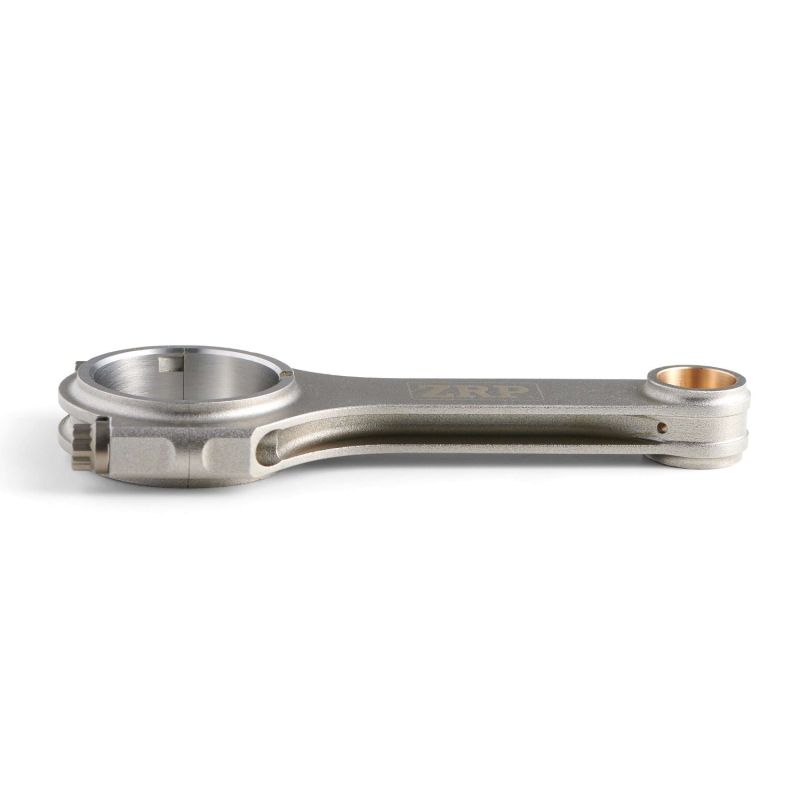
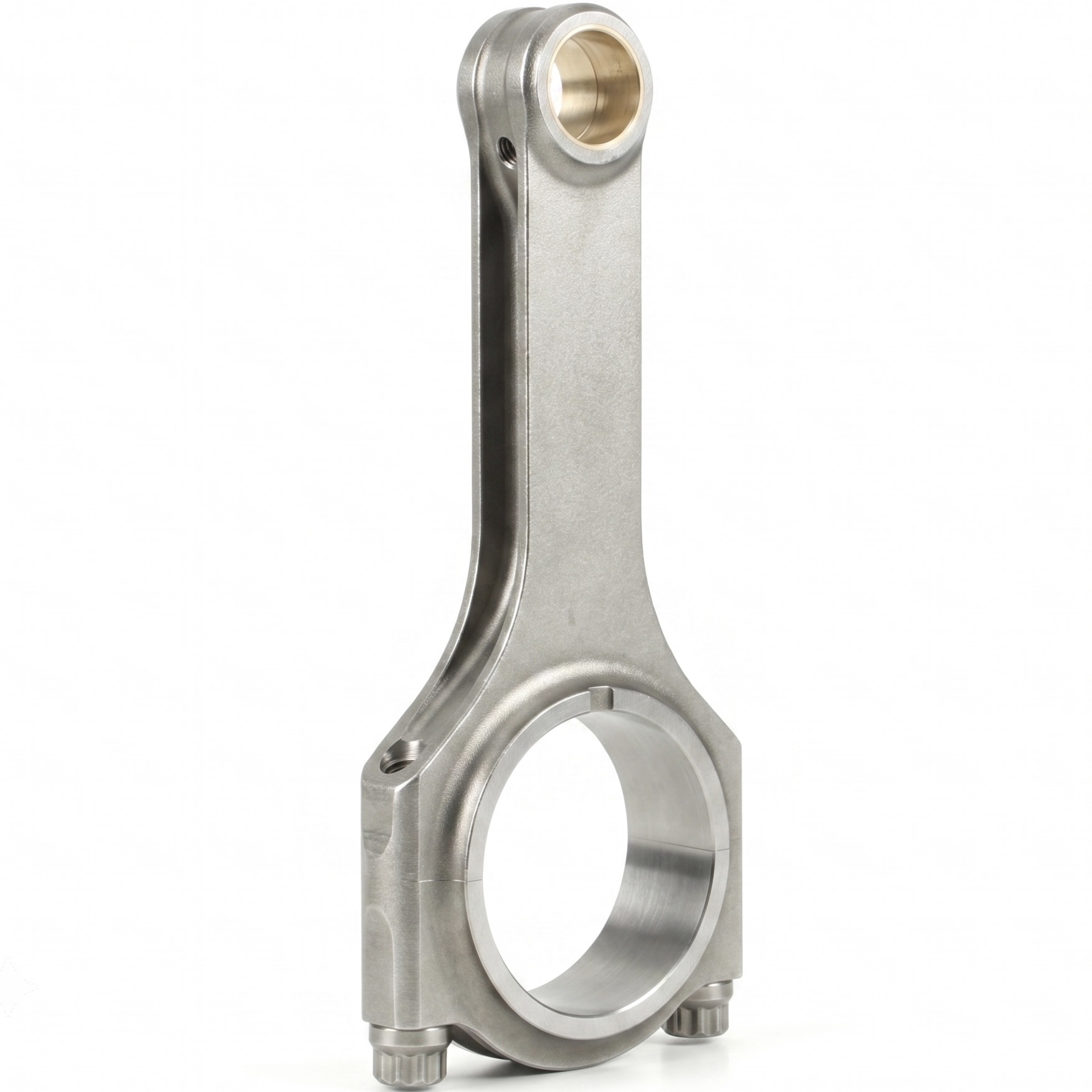 | H profile. Its “H”-shaped section gives it great rigidity and excellent resistance to both bending and compression. Slightly heavier than an I-beam rod, it favours strength: it is the profile of choice for high-torque engines and sustained turbocharged builds. On a hard-driven CA18DET, it provides a reassuring safety margin against boost-pressure spikes. |
The connecting-rod bolt is one of the engine’s most heavily stressed components: on every cycle it absorbs the inertial loads of the rotating assembly. On a build, the choice of ARP steel grade directly governs the power and rpm that can be run reliably.
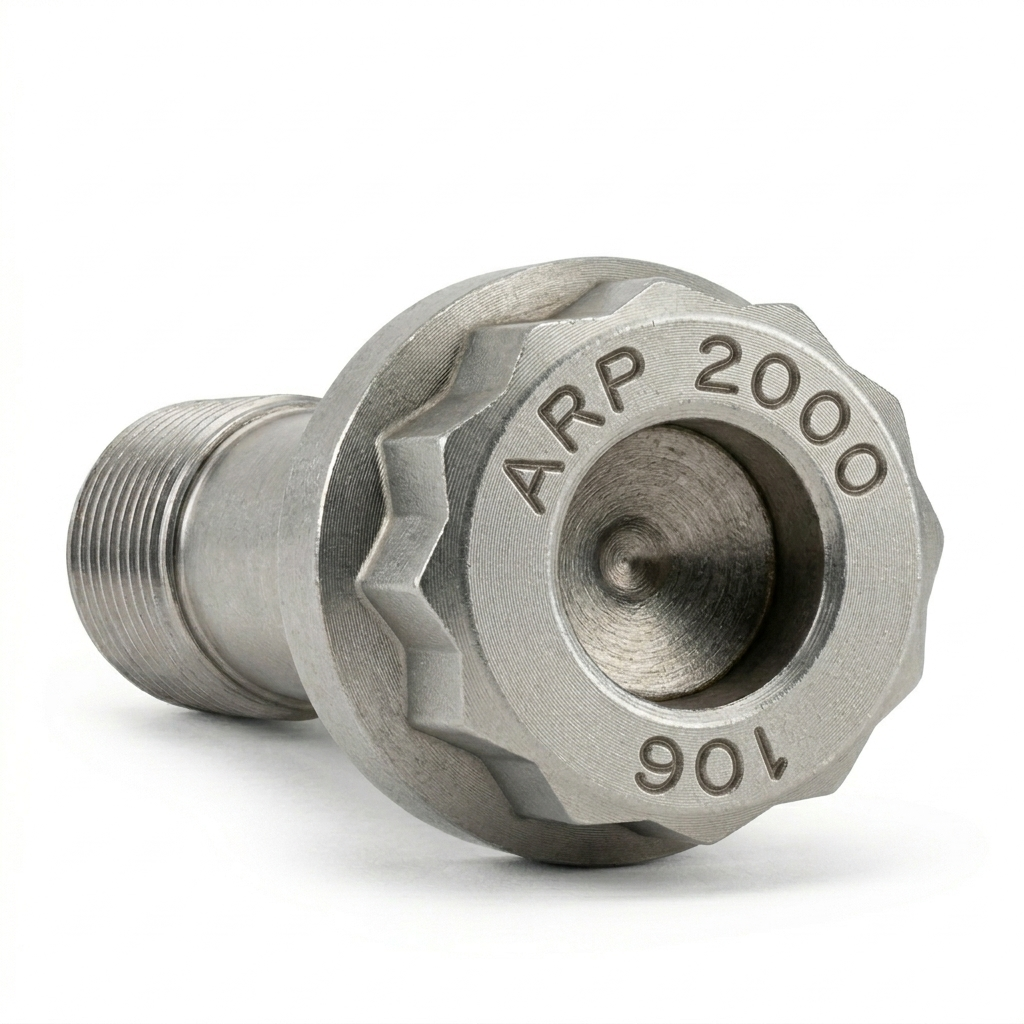 | The most widely used grade in ARP's range, ARP 2000 offers a tensile strength of around 220,000 psi (~1,517 MPa). In 3/8" diameter it allows builds up to 200 hp per cylinder and engine speeds of 8,500 rpm. It is found in circuit racing, track days, drift, rally, drag and hillclimb, where it wins users over with its strength, reliability and versatility, with no particular storage requirement. |
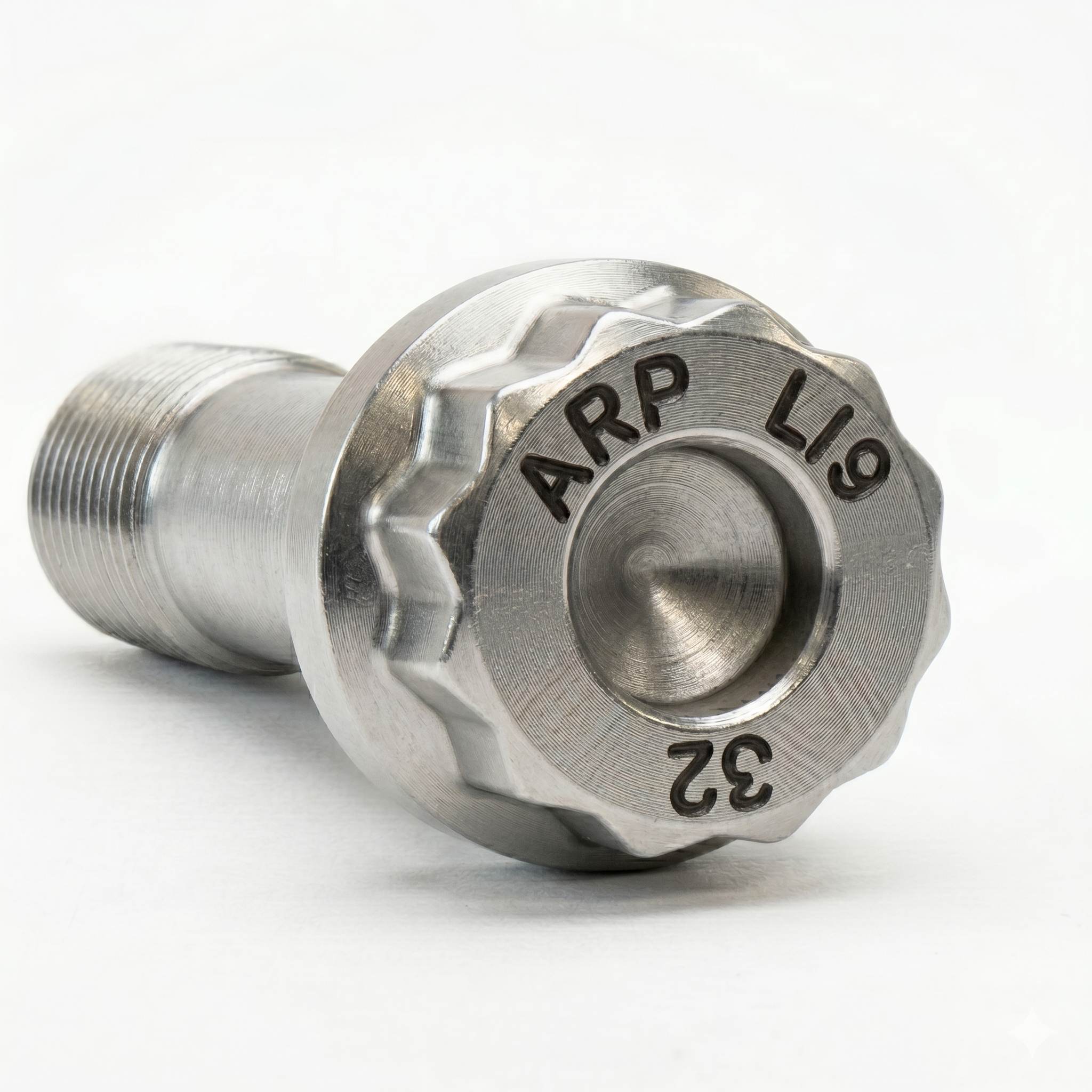 | Intended for very heavily built engines, ARP L19 delivers a tensile strength close to 260,000 psi (~1,793 MPa). In 3/8" it accepts up to 250 hp per cylinder and speeds of 10,000 rpm, under high boost, sustained high rpm and elevated cylinder pressure. It is the reference for big-power projects in drag, drift, rally and circuit. More sensitive to corrosion and hydrogen embrittlement, it requires oiled fitting and storage, away from moisture. |
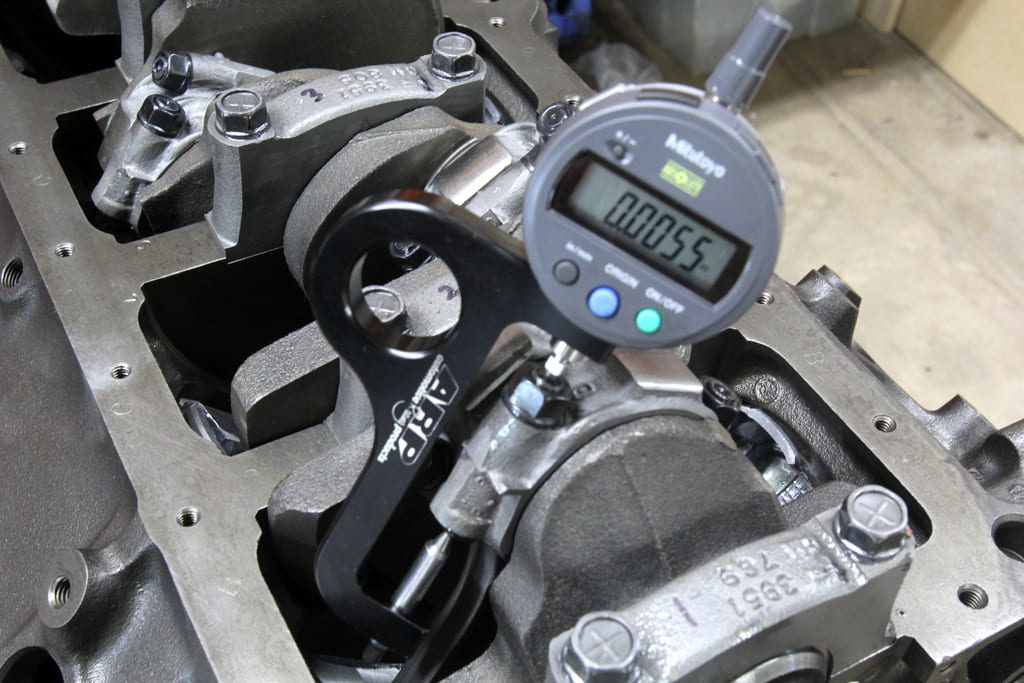
| Beyond torque tightening, measuring connecting-rod bolt stretch remains the most reliable check to ensure correct preload. The operation is done with the bolt fitted: the dial gauge is applied to both ends of the bolt to read its actual stretch, which must reach the recommended value (see the table above). This method eliminates the friction variations that distort a simple torque setting and ensures even tension from one bolt to the next. |
 | ZRP is a Greek high-performance forged connecting-rod brand, designed in Athens by Alex Drakos. Each rod is precision-machined from 4340 steel, then weighed and matched per set (tolerance of about ± 1 g) for optimal balancing of the rotating assembly. Proven in rally, on circuit and in drift, ZRP rods have established themselves as a benchmark in the European tuning market. |
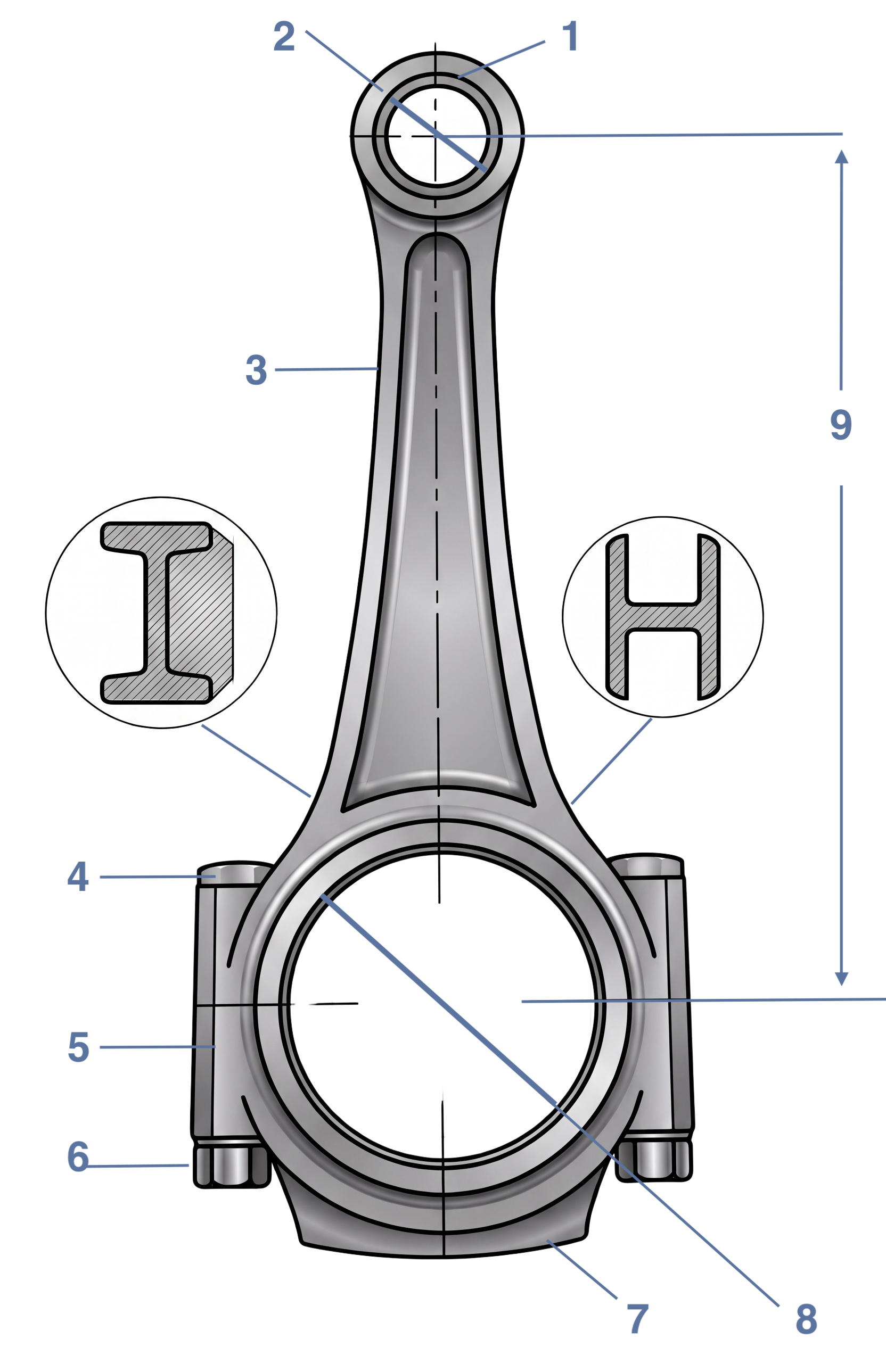 | 1) Small end 2) Small-end diameter 3) Rod beam 4) Rod bolt 5) Big end 6) Rod nut / bolt 7) Rod cap 8) Big-end diameter 9) Center-to-center |
The CA18DET engine powered several Nissan models, on which these forged connecting rods fit directly:
| Brand | Model (chassis) | Engine code | Power | Years |
|---|---|---|---|---|
| Nissan | Silvia (S13) | CA18DET | 169 ch | 1988-1990 |
| Nissan | 180SX (S13) | CA18DET | 169 ch | 1989-1991 |
| Nissan | 200SX (S13) | CA18DET | 169 ch | 1989-1994 |
| Nissan | Silvia (S12) | CA18DET | 169 ch | 1987-1989 |
| Nissan | Bluebird (U12 SSS ATTESA) | CA18DET | 169 ch | 1987-1989 |
OEM reference: (set of 4 connecting rods).
Breaking a stock rod usually means losing the engine: a rod that lets go punches through the block and takes the crankshaft, pistons and cylinder head down with it. The bill for a full rebuild then far exceeds the price of a set of forged rods.
Moreover, returning to the factory configuration after a failure usually requires replacing both the rods and the pistons, which are damaged too. For a comparable budget, sometimes lower, combining forged 4340 steel rods with forged pistons brings far greater reliability and safety margin, plus a real ability to increase power. It has been the choice of European tuners for over fifteen years.
At equal budget: more reliability, more potential, more longevity.