Product successfully added to your shopping cart
Quantity
Total
There are 0 items in your cart. There is 1 item in your cart.
Total products
Total shipping To be determined
Total

1.7L 16v - 1750 TBI
Manufacturers
1.7L 16v - 1750 TBI
Warning: Last items in stock!
New product
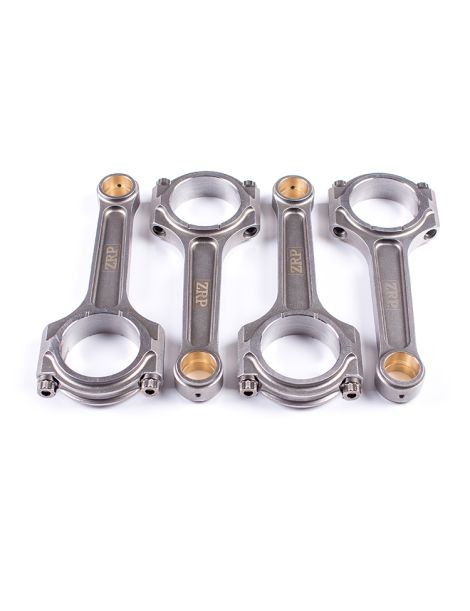
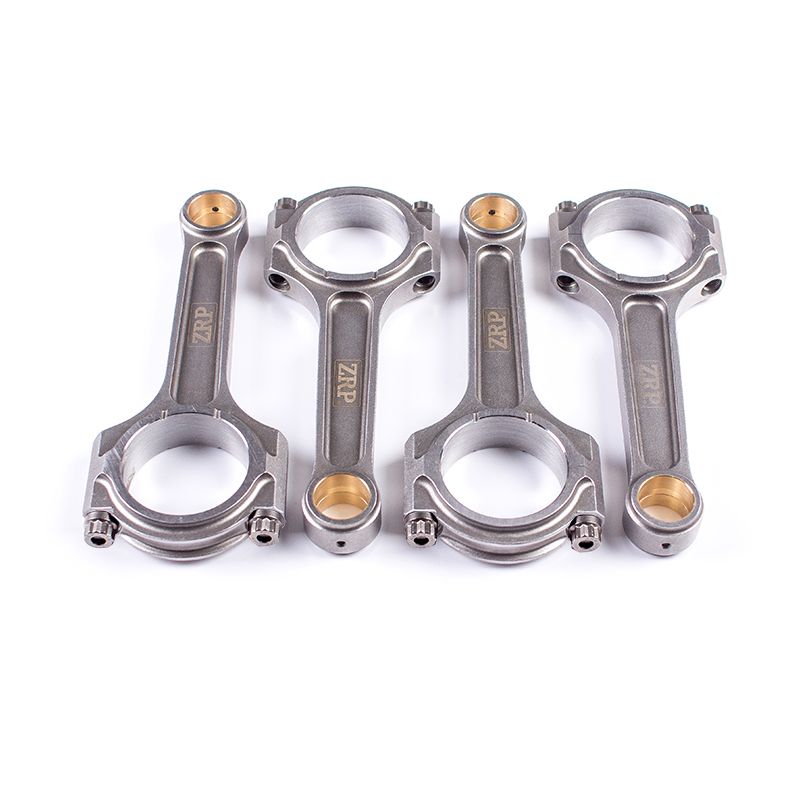
Set of 4 forged connecting rods in 4340 steel for the Alfa Romeo 1.7L 16V Turbo 1750 TBi.
The 1750 TBi is Alfa Romeo’s direct-injection turbocharged four-cylinder: 1,742 cc, sixteen valves and phasers on both camshafts. Depending on model year and model it was offered with 200, 235 and then 240 hp, from the 159 saloon and estate to the 4C coupé, which makes it one of the marque’s most widespread modern engines.
The name deliberately recalls Alfa Romeo’s historic 1750, but the engineering is that of a modern boosted unit: small displacement, high cylinder pressure and torque available very low down. That is also why it responds well to remapping and to intake and exhaust work.
The downside is well known: the standard rotating assembly was calibrated for factory output. As soon as boost pressure rises, the map gets more aggressive or the rev limit is raised, the rods see far higher alternating loads and become the part that caps the whole engine. A forged set, weight-matched and bolted with ARP hardware, pushes that limit well beyond the original envelope.
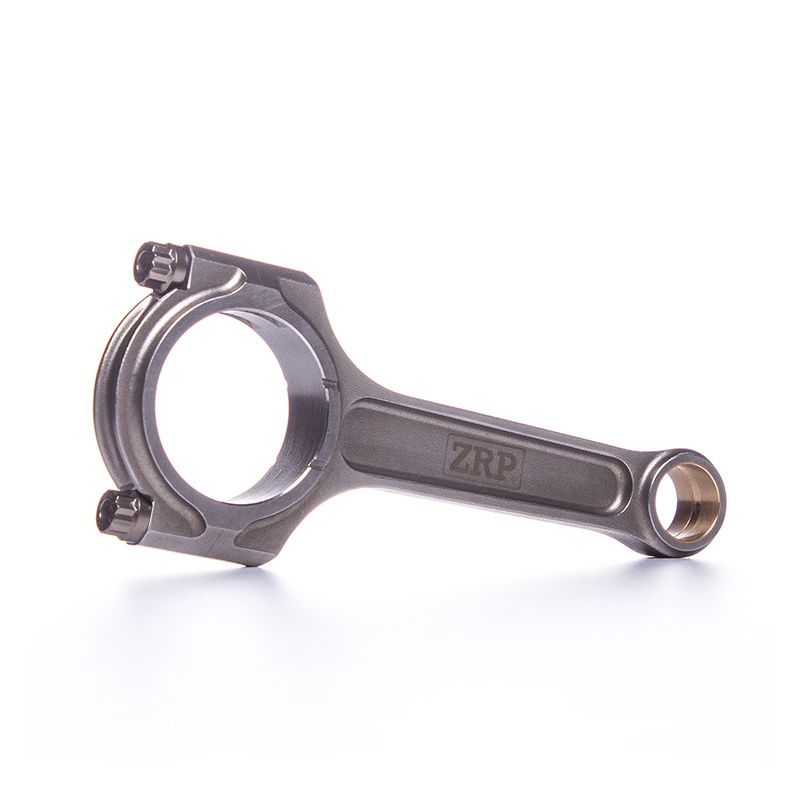
Forged rods replace the standard 1750 TBi assembly with beams die-forged in 4340 steel and then fully machined. The grain obtained in forging follows the outline of the part, giving fatigue strength a mass-production rod cannot approach; the set is then weighed and matched to keep the assembly balanced.
The I-HD profile offered here is an I-beam with a reinforced section: it keeps reciprocating mass contained, which helps on a four-cylinder that revs, while thickening the most heavily loaded areas to take the pressure of a hard-working turbo. ARP 2000 or ARP L19 hardware completes the set according to the intended load.
These rods are aimed at 1750 TBi engines prepared for rallying, circuit and track use, drift, drag racing, hillclimb and time attack. They secure Stage 2, Stage 3 and Stage 4+ builds, as soon as forged pistons, a larger turbocharger, more boost or a raised rev limit take the engine outside its original specification.
| Reference | Brand | Profile | Bolts | Pin diameter OEM 22 mm | Small-end width | Big-end diameter OEM n.p. | Big-end width | Center-to-center OEM 148.04 mm | Weight per rod |
|---|---|---|---|---|---|---|---|---|---|
| R-ALF-005-I | ZRP | I-HD | ARP 2000-3/8"-38mm | 22 mm | 51.37 mm | 21.94 mm | 148.04 mm | 498 g | |
| R-ALF-005-I-L19 | ZRP | I-HD | ARP L19-3/8"-38mm | 22 mm | 51.37 mm | 21.94 mm | 148.04 mm | 498 g |
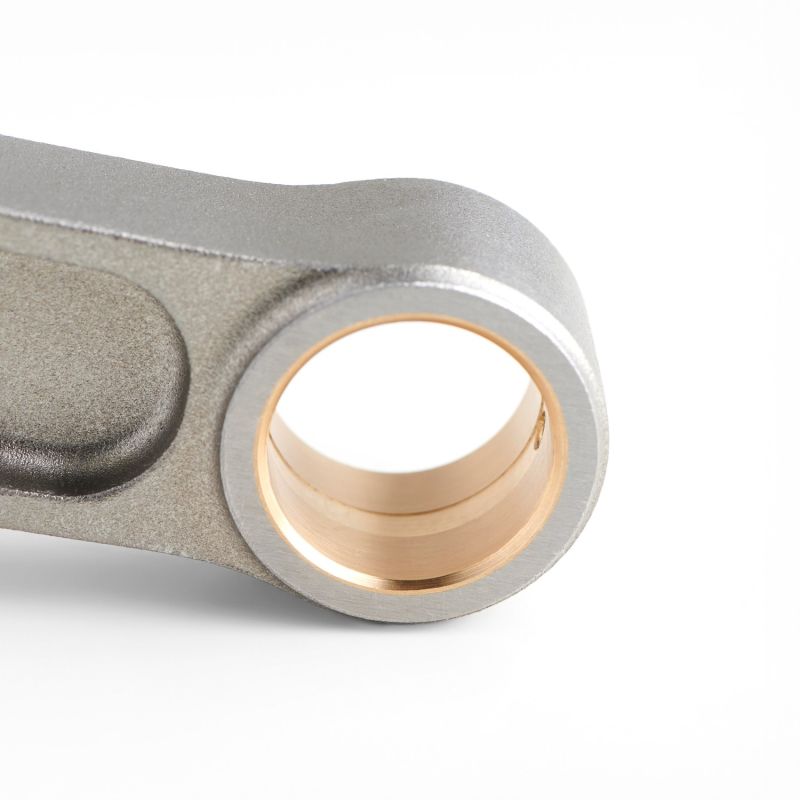
ZRP: Straight, non-tapered pin end.
| Rod | Bolts | Torque | Recommended stretch |
|---|---|---|---|
| ZRP (R-ALF-005-I) | ARP 2000 | 61 N·m | 0.140 – 0.152 mm |
| ZRP (R-ALF-005-I-L19) | ARP L19 | 67.8 N·m | 0.152 – 0.165 mm |
Manufacturers favour stretch measurement (stretch gauge) over torque alone: it is the most reliable indication of the bolt's actual preload.
| 4340 steel is a nickel-chromium-molybdenum alloy used in both aerospace and motorsport. Forged then heat-treated by quenching and tempering, it develops high mechanical strength, great toughness and excellent fatigue endurance. Compared with an original sintered-metal rod, designed for series-production cost, a forged 4340 rod offers around 19% more yield strength, 8% more tensile strength and 19 to 37% more fatigue resistance, i.e. a service life under cyclic load several times longer. That gain is precisely what makes it the reference material once boost and engine speed climb on a tuned 1750 TBi. |
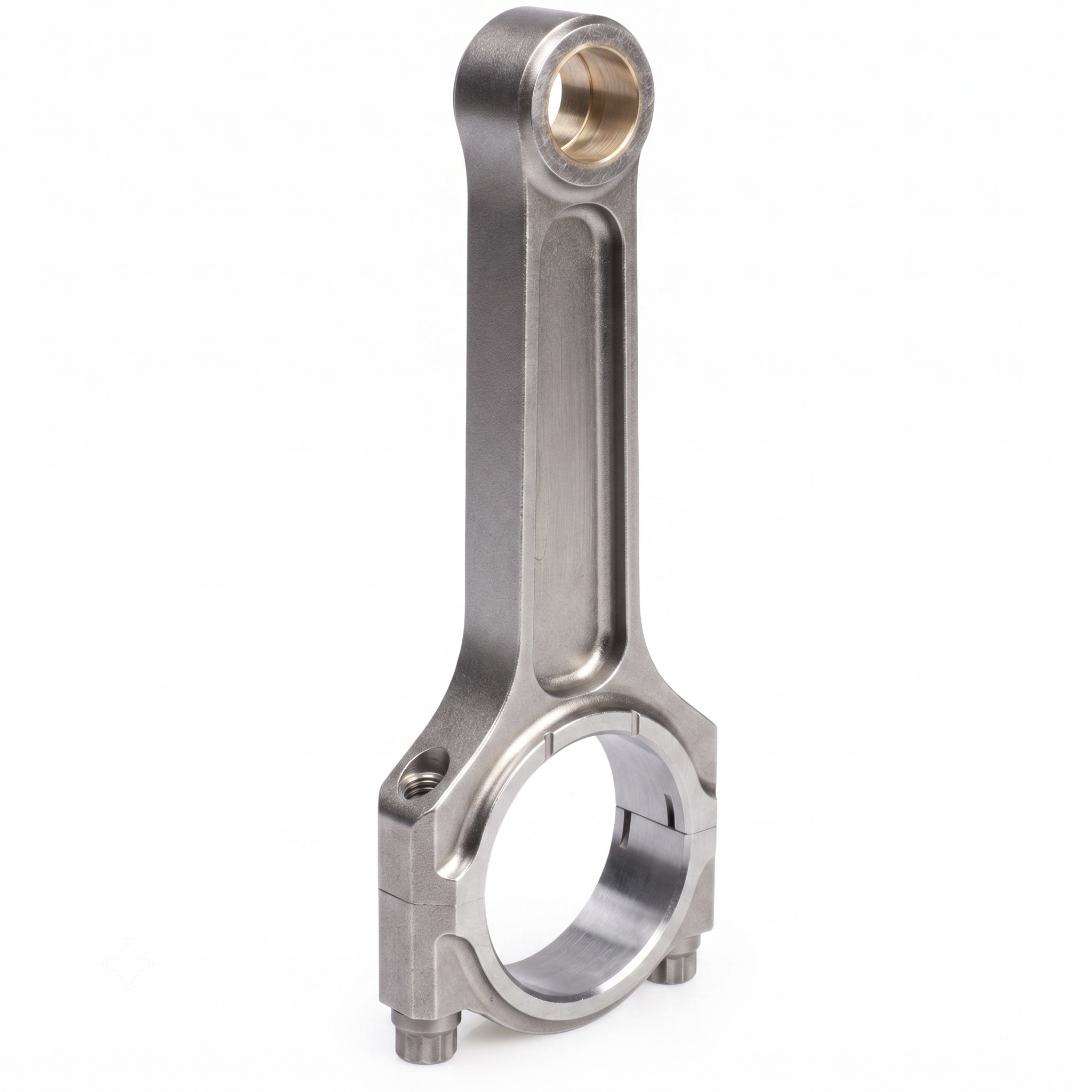 | I-HD profile. A reinforced version of the I-beam rod: the central I-section stays light to free up the revs, while the small and big ends are thickened (Heavy Duty) to handle high torque. An excellent lightness / strength compromise on heavily tuned turbo four-cylinders such as the 1750 TBi. |
Connecting-rod bolts are among the most heavily loaded parts of the engine: they keep the cap closed on every revolution. NSB Concept offers these rods with two ARP bolt grades, to choose according to the targeted build.
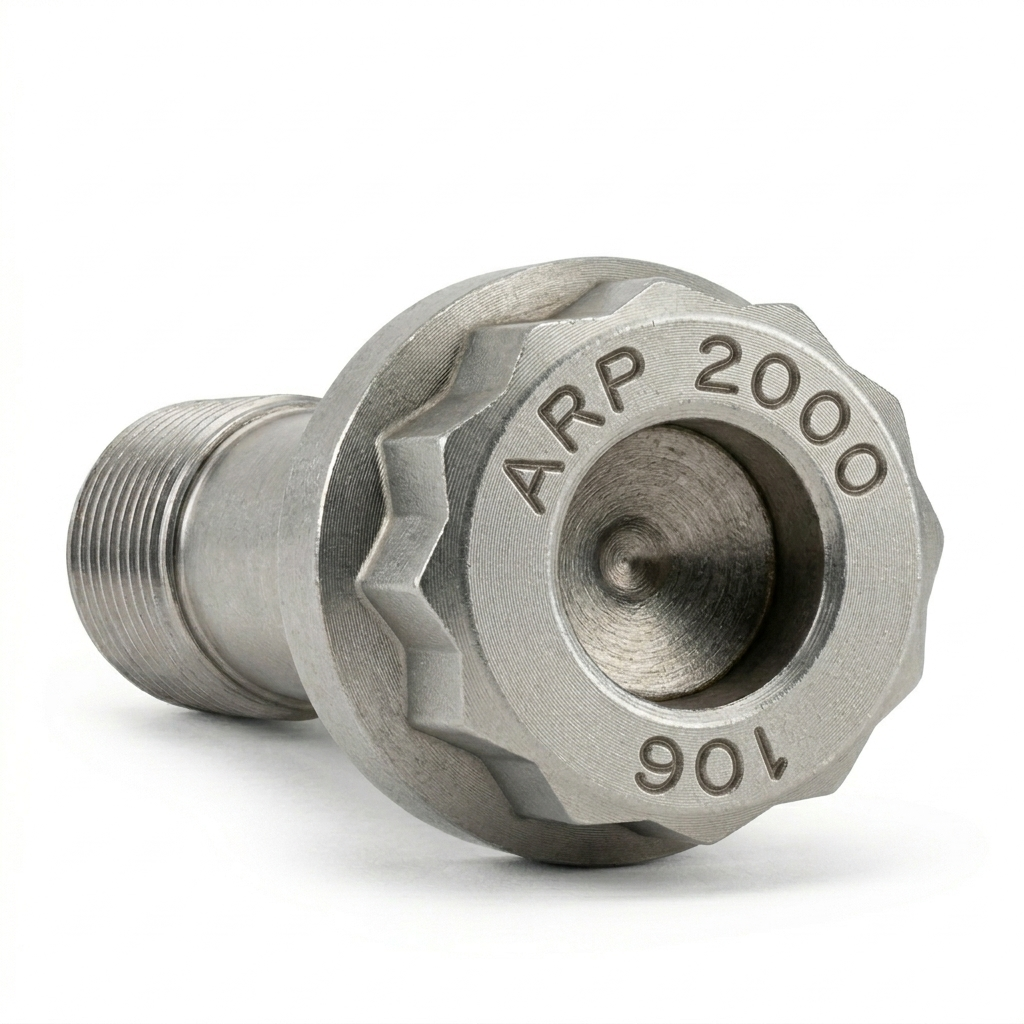 | ARP 2000 (tensile strength around 220,000 psi, i.e. ~1,517 MPa) is the high-performance standard. It covers builds up to 200 hp per cylinder in 3/8", and up to 8,500 rpm. Versatile and renowned for its ruggedness and reliability, it is used on track, trackday, drift, rally, drag and hill climb, with no particular storage constraints. |
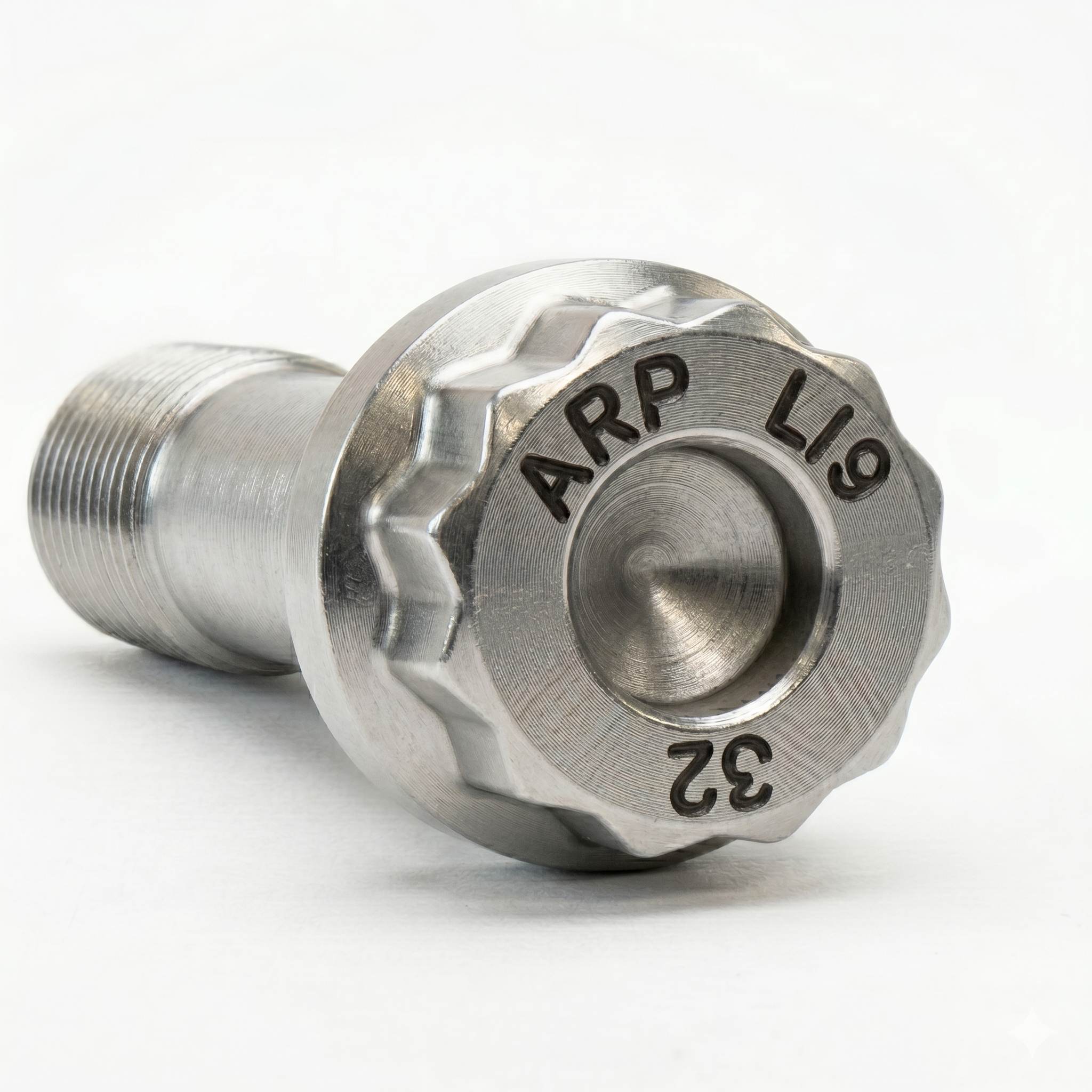 | ARP L19 (tensile strength around 260,000 psi, i.e. ~1,793 MPa) targets engines pushed to the extreme. It allows up to 250 hp per cylinder in 3/8", and up to 10,000 rpm, under high boost pressure and sustained high revs. This steel remains sensitive to corrosion and hydrogen embrittlement: it must be fitted and stored oiled, away from moisture. |
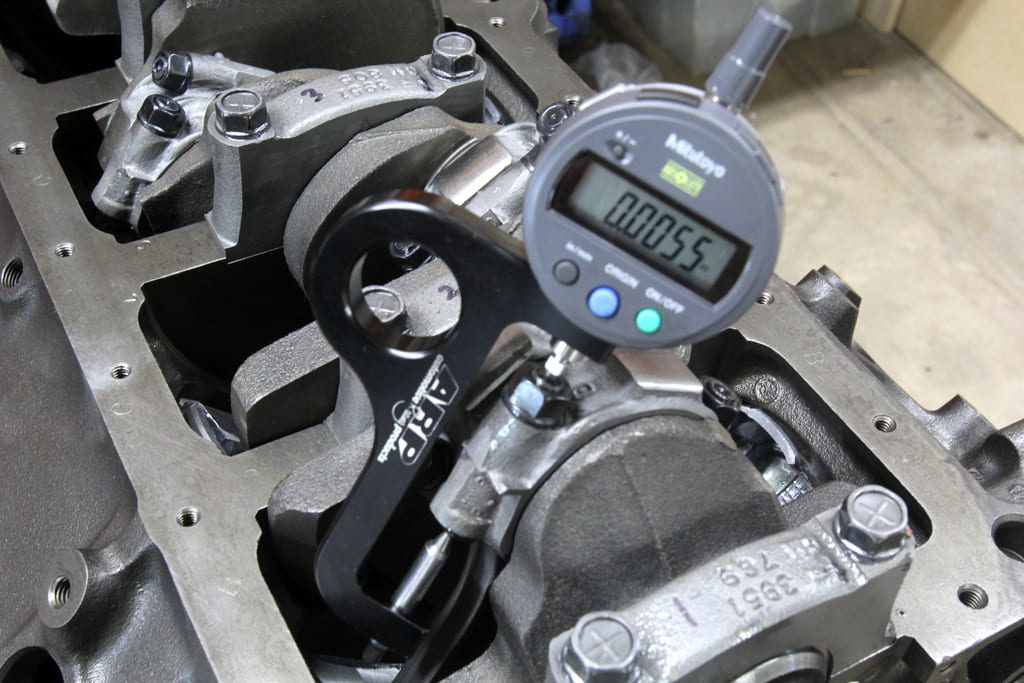
| Beyond torque tightening, checking connecting-rod bolt stretch remains the surest way to obtain a correct, repeatable preload. With the bolt fitted, a dial indicator is set on the two ends of the bolt and its actual stretch is read, which must match the recommended value (see the torque and stretch table above). By freeing itself from the friction scatter inherent in torque tightening alone, this method secures the bottom-end assembly on heavily loaded engines, such as a tuned 1750 TBi. |
 | ZRP is a Greek manufacturer of high-performance forged connecting rods founded by Alex Drakos in Athens. Each rod is forged in 4340 steel, precision-machined and balanced to ±1 g to stay reliable at the highest revs. Designed and inspected in Greece, then proven in rally, on track and in drift, they are offered for the 1750 TBi in I-HD profile with ARP 2000 or ARP L19 bolts. |
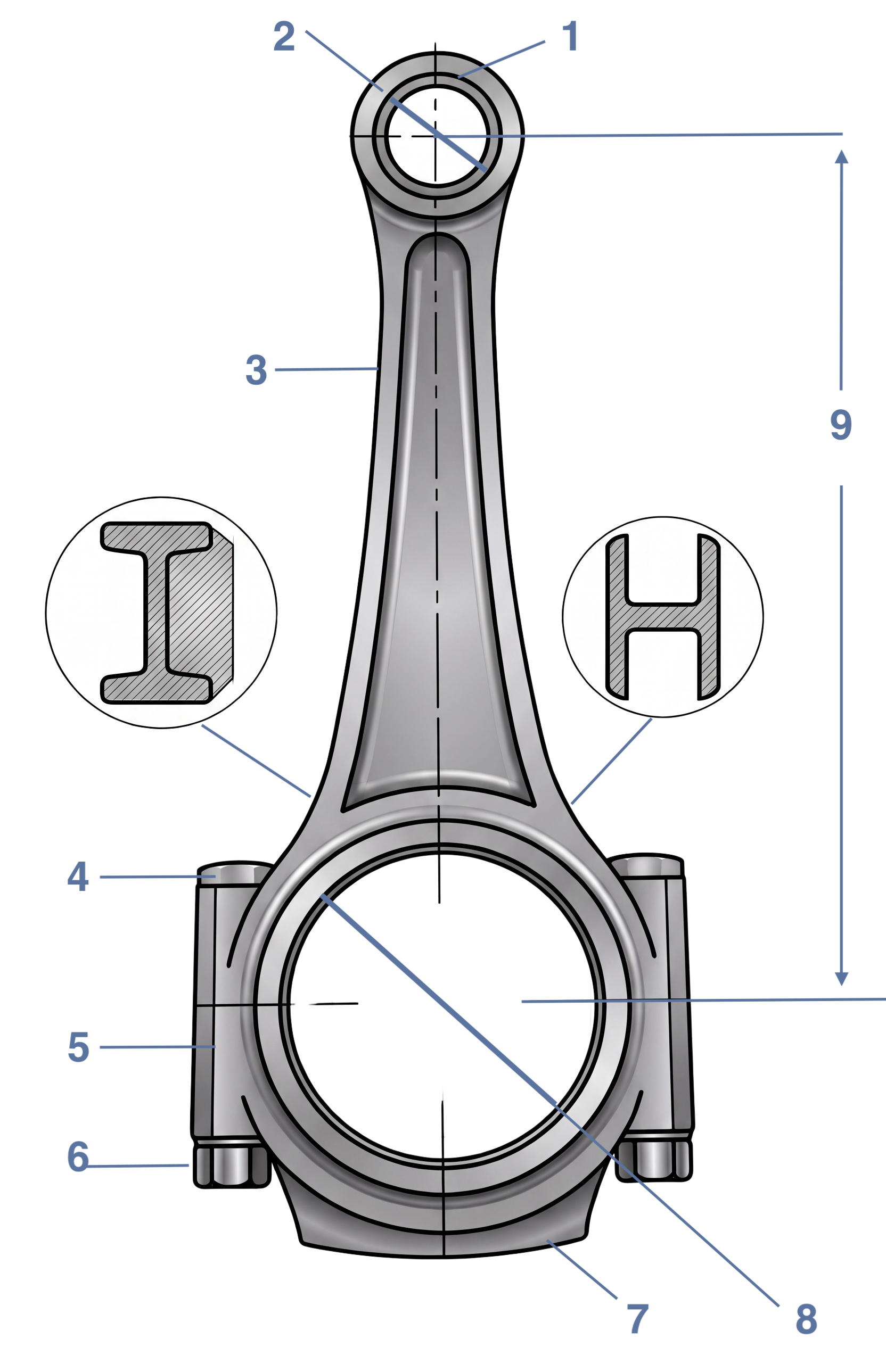 | 1) Small end 2) Small-end diameter 3) Rod beam 4) Rod bolt 5) Big end 6) Rod nut / bolt 7) Rod cap 8) Big-end diameter 9) Center-to-center |
These forged connecting rods are compatible with all vehicles fitted with the Alfa Romeo 1750 TBi engine, across every power version:
| Brand | Model (chassis) | Engine code | Power | Years |
|---|---|---|---|---|
| Alfa Romeo | 159 (939) | 939B1000 | 200 hp | 2009–2011 |
| Alfa Romeo | Brera (939) | 939B1000 | 200 hp | 2009–2010 |
| Alfa Romeo | Spider (939) | 939B1000 | 200 hp | 2009–2010 |
| Alfa Romeo | Giulietta QV / Veloce (940) | 940A1000 | 235–240 hp | 2010–2020 |
| Alfa Romeo | 4C (960) | 960A1000 | 240 hp | 2013–2020 |
OEM reference: 5 521 0496 (set of 4 connecting rods).
When the standard bottom end of a 1750 TBi lets go, with a rod broken, bent or scored at the bearing, replacing the guilty rod alone is never enough: the pistons, damaged as well in most cases, go with it, and the block machining, the bearing shells and the bolts have to be added. The bill quickly reaches a high figure for a plain return to the original state, with no gain in reliability.
For a comparable budget, sometimes a lower one, a set of four 4340 forged steel rods combined with forged pistons changes the nature of the bottom end: a far wider safety margin, resistance to high boost pressure, a bolt preload that is controlled and can be checked at every teardown, and a real capacity to raise power without going back inside the block. That is what European engine builders have been choosing for more than fifteen years.
For the same budget: more reliability, more potential, more service life, and an engine that goes back together without surprises.