- On order
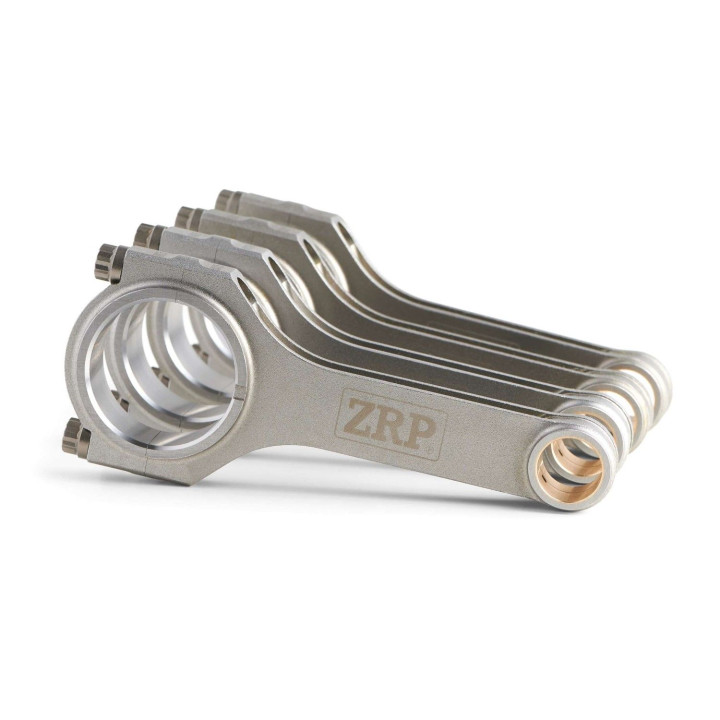
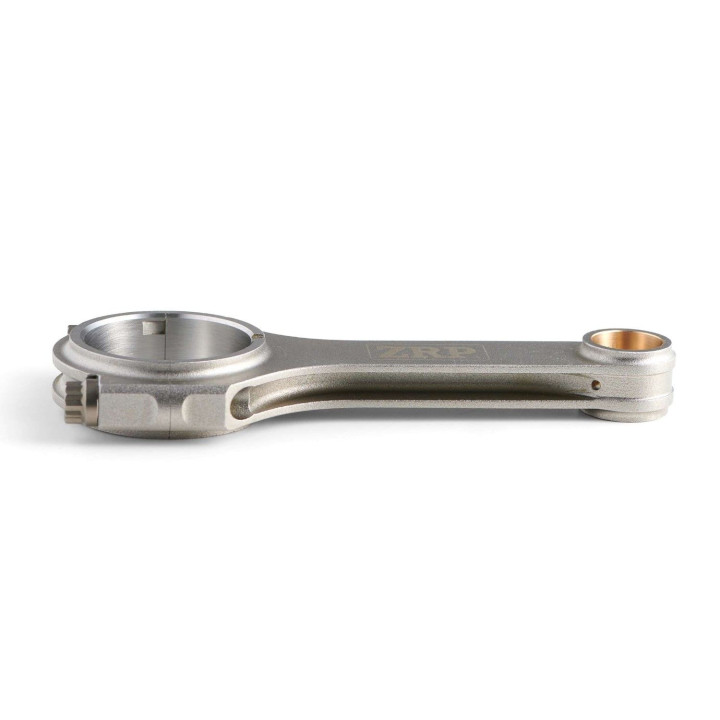


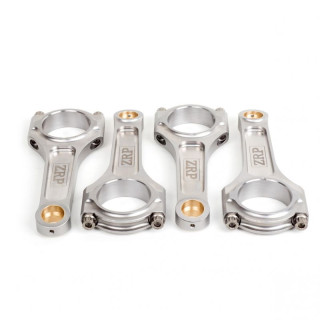
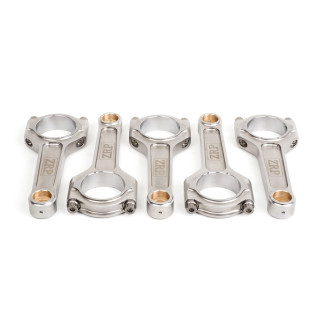
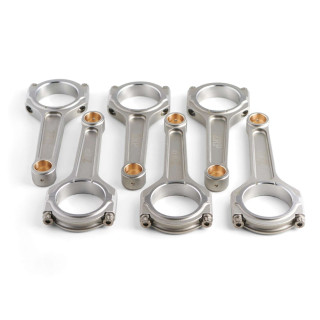
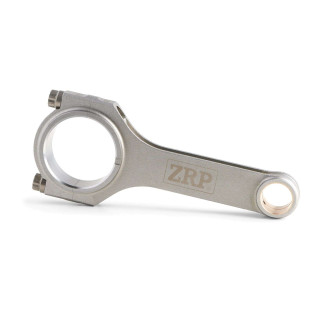
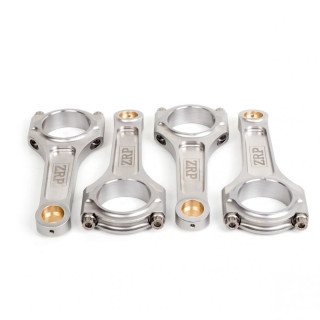
Forged connecting rods Toyota - 1.6L 16V & 20V - 4A-GE (Corolla AE86) 18 mm pin for forged pistons
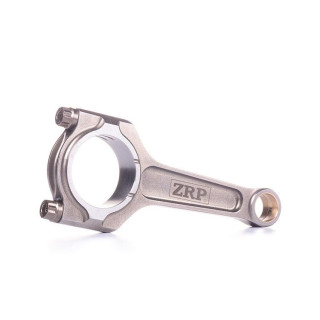
Set of 4 forged connecting rods in 4340 steel for the Toyota 1.6L 16V/20V 4A-GE, 18 mm pin.
Brands: ZRP
Compatibility: Corolla AE86, MR2 AW11, Celica, Carina
Engine codes: 4A-GE
Bolts included: ARP 2000 or L19
The Toyota 4A-GE engine
Introduced in 1983, the 4A-GE is the sporting version of Toyota’s A family: a 1.6-litre inline four (1,587 cc), twin overhead camshafts, 16 valves and then 20 valves on the last generations, with an 81 mm bore and a 77 mm stroke. This naturally aspirated engine built a reputation as a lively unit, very much at home at high rpm; produced until 2002, it went through several evolutions, from the first “big port” to the 20V Silvertop and then Blacktop with variable valve timing. It is found in the Corolla AE86, the MR2 AW11, the Celica, Carina, Corona and Sprinter. It remains a cult engine among tuners.
Its legend owes a great deal to the Corolla AE86, a light rear-wheel-drive car that became an icon of drift and of Japanese car culture. That fame made it one of the most heavily built engines in the world: individual throttle bodies (ITB), aggressive camshafts, higher compression ratio, rpm taken beyond 8,000, with some builds going as far as forced induction. As soon as rpm and load move away from factory figures, the standard rod becomes the weak link of the reciprocating assembly: replacing it with a forged rod is the decisive step to make a hard-revving 4A-GE reliable for good. This listing covers the 18 mm pin version, with a 122 mm centre-to-centre length and a 43 mm big-end bore.
The forged connecting rods
Our forged 4A-GE rods are machined from wrought 4340 steel, the reference alloy in motorsport. They suit every discipline: circuit, drift, rally, drag, time attack and hillclimb, and support a high-revving naturally aspirated 4A-GE as well as a heavily built engine. Depending on the target (Stage 1 reliability, Stage 2 tuning, Stage 3 high power and beyond), they lock in the power increase without ever cutting corners on reliability. Supplied as a weight-matched set of 4, they keep the 4A-GE's 18 mm piston pin and 122 mm center-to-center length.
Compared with a cost-driven sintered factory rod, a forged 4340 rod delivers about +19% yield strength, +8% tensile strength and +19 to +37% fatigue endurance. That mechanical reserve lets a 4A-GE pushed in rpm absorb cylinder-pressure peaks and the inertia loads typical of high engine speeds without breakage. The entire range is made from this forged 4340 steel, proven on the most demanding builds.
Technical specifications of the 4A-GE forged rods (18 mm pin, 122 mm center-to-center)
| Reference | Brand | Profile | Rod bolts | Ø pin (mm) OEM 18 mm | Small-end width (mm) | Ø big end (mm) OEM n.p. | Big-end width (mm) | Center-to-center (mm) OEM 122 mm | Weight (g) |
|---|---|---|---|---|---|---|---|---|---|
| R-TOY-003H | ZRP | H | ARP 2000-3/8"-38mm | 18 | 43 | 21,85 | 122 | 441 | |
| R-TOY-003H-L19 | ZRP | H | ARP L19-3/8"-38mm | 18 | 43 | 21,85 | 122 | 441 |
Tightening torque and stretch
On a 4A-GE you never tighten all four rods in a row without checking anything: after each cap has been brought to its figure, the crank must turn by hand with no tight spot, and the bolt stretch is read one last time. That double check, rotation then gauge, immediately isolates a badly presented rod or a pinched bearing shell. This version takes ARP 2000 or ARP L19 in 3/8" 38 mm depending on the variant; the torque and stretch figures in the table are those specified by the bolt manufacturer and must be followed scrupulously, stretch measured on the gauge remaining the reference method.
| Reference | Brand | Rod bolts | Torque | Recommended stretch |
|---|---|---|---|---|
| R-TOY-003H | ZRP | ARP 2000-3/8"-38mm | 61 N·m | 0,140 à 0,152 mm |
| R-TOY-003H-L19 | ZRP | ARP L19-3/8"-38mm | 67,8 N·m | 0,152 à 0,165 mm |
Technical guide
Forged 4340 steel: what is it?
| 4340 is a low-alloy steel with nickel, chromium and molybdenum. Forging aligns the metal fibres in the direction of load, closes internal porosity and delivers far greater mechanical strength than a factory sintered or cast rod. The result is a tensile strength of around 930 to 1080 MPa together with high fatigue endurance, essential as soon as the engine gains torque, power or revs. This is the material used across our entire 4A-GE range. |
The rod profile
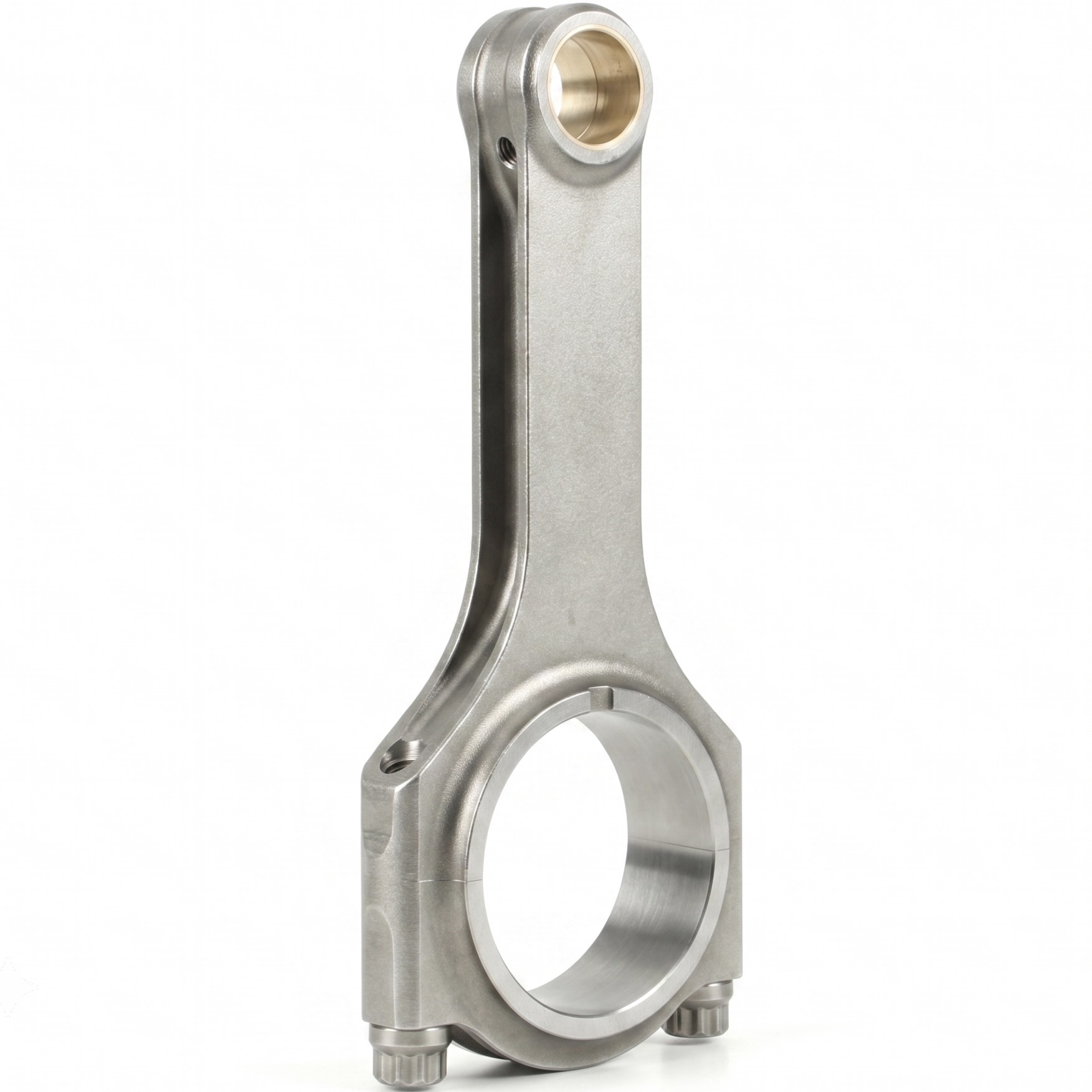 |
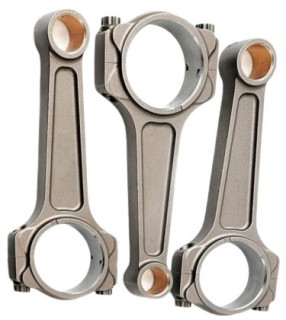
H-beam profile. Made up of two wide flat flanks linked by a central web, its “H” section gives the rod a massive, regular silhouette from end to end. It is the preferred profile for prepared naturally aspirated engines that rev high, such as the 4A-GE, where it gives the bottom end a high level of strength. |
How to choose your rod bolts? 
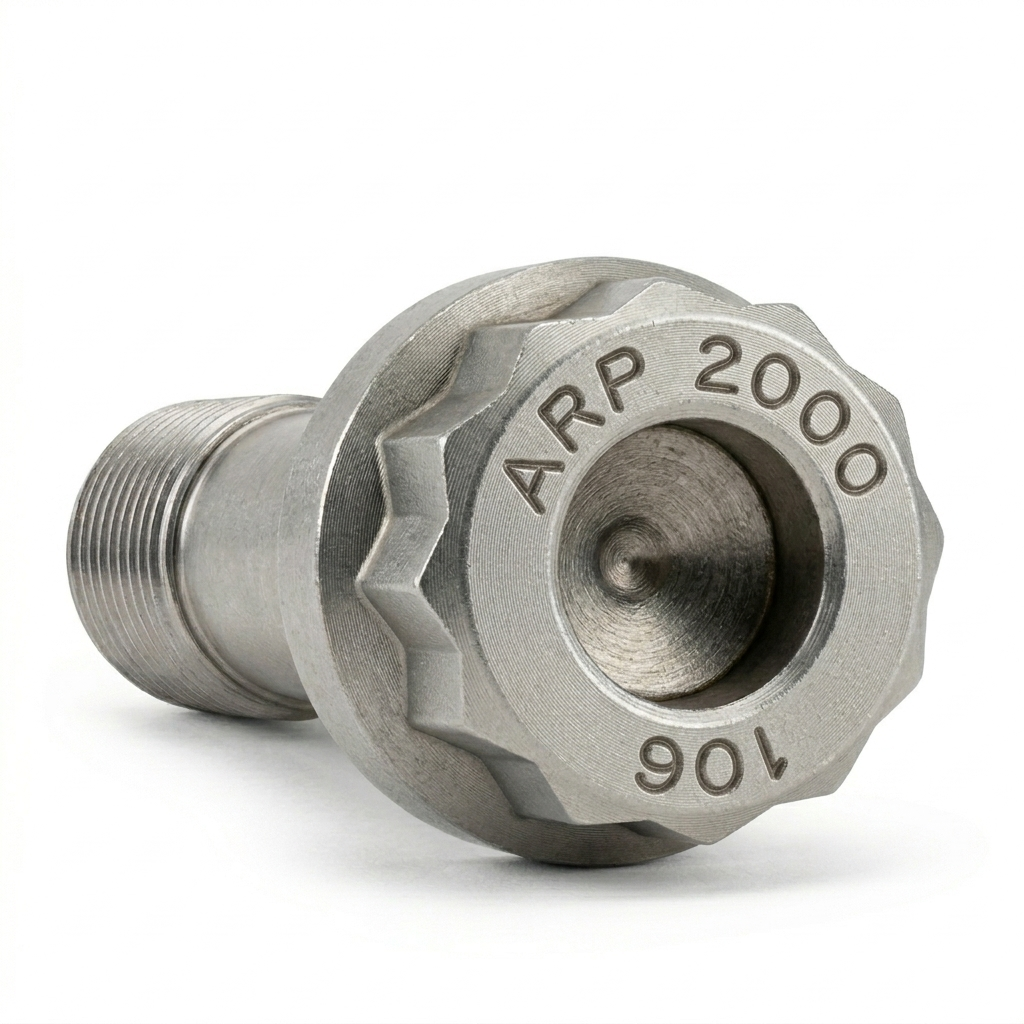 |
ARP 2000, quoted at ~220,000 psi (~1,517 MPa) tensile strength, goes beyond what a naturally aspirated 4A-GE asks for: the grade is rated up to 200 hp per cylinder in 3/8" and up to 8,500 rpm. It is the most common grade in circuit racing, track days, drift, rally, drag racing and hillclimb, and it imposes no particular storage constraint before assembly. |
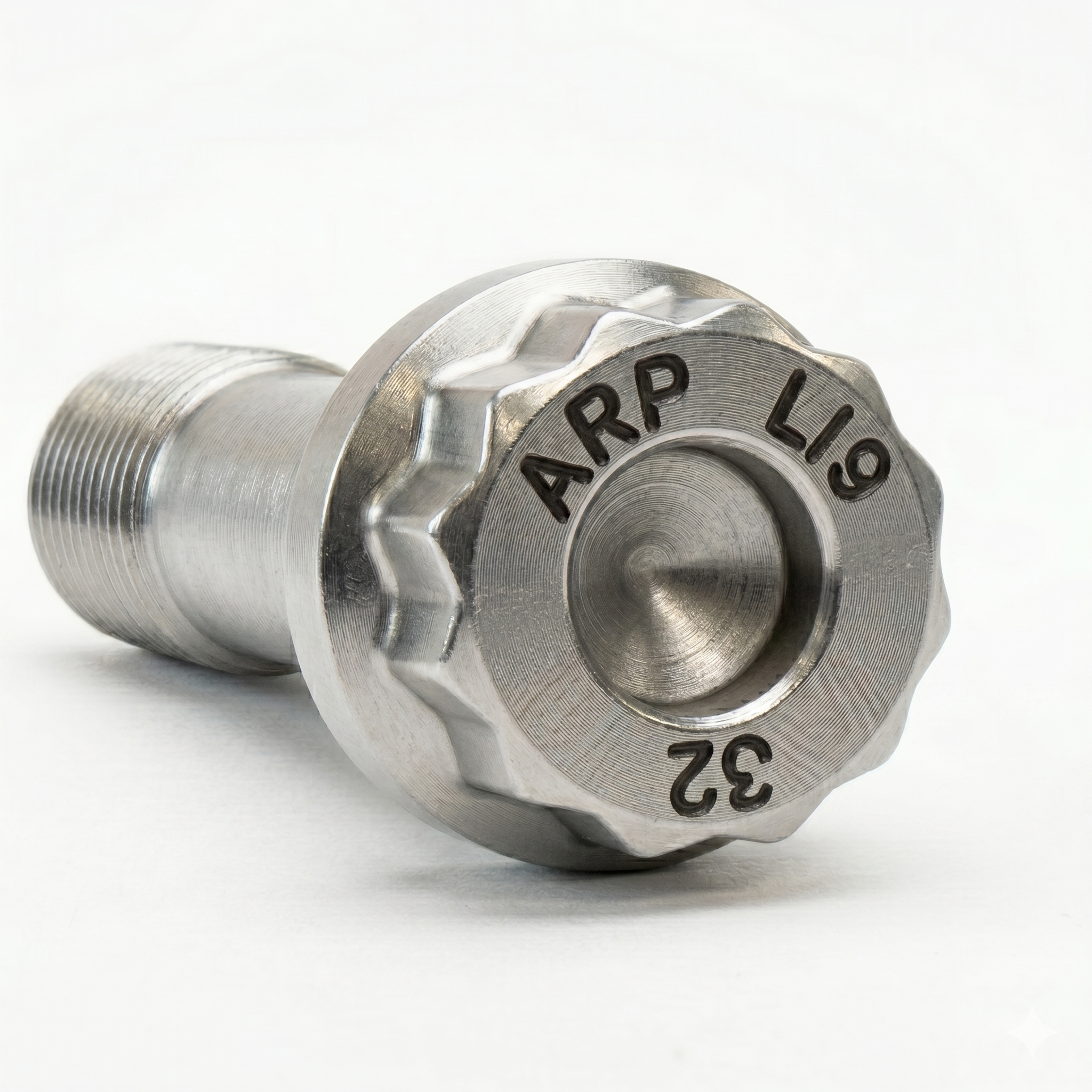 |
L19 rises to ~260,000 psi (~1,793 MPa) and covers up to 250 hp per cylinder in 3/8" as well as 10,000 rpm: it is the grade for 4A-GE engines revved very high, converted to forced induction or subjected to high cylinder pressure, as for the big power levels in drag racing, drift, rally and circuit. In exchange it calls for oiled storage and fitting, away from moisture, because the alloy is sensitive to corrosion and to hydrogen embrittlement. |
Measuring bolt stretch
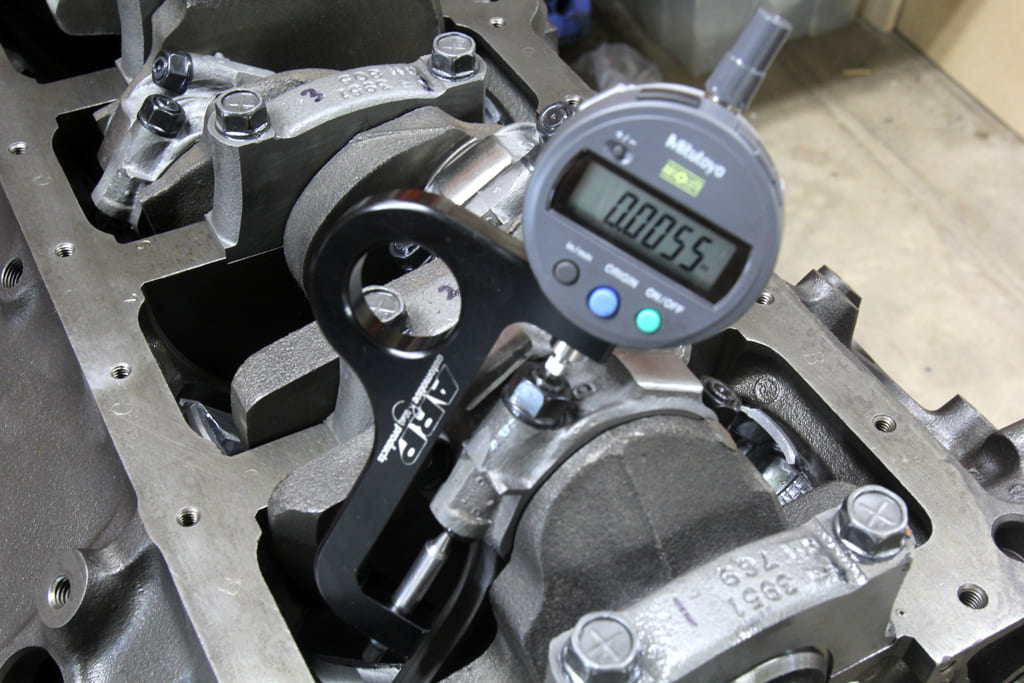
| On a forged rod, the exact bolt preload is checked by its stretch, measured with a dial gauge (stretch gauge), rather than by torque alone: lubrication and run-in distort the torque reading. Always refer to the stretch values given by the bolt manufacturer. |
The brand offered
 |
ZRP is a Greek brand of high-performance forged connecting rods, designed by Alex Drakos in Athens. Each rod is forged from 4340 steel, precision-machined and balanced to ±1 g to stay reliable at high rpm. On this 4A-GE range it is offered in an H profile with ARP 2000 or L19 hardware. Designed and inspected in Greece, these rods are proven in rally, on track and in drift, at the best price-to-performance ratio. |
Glossary
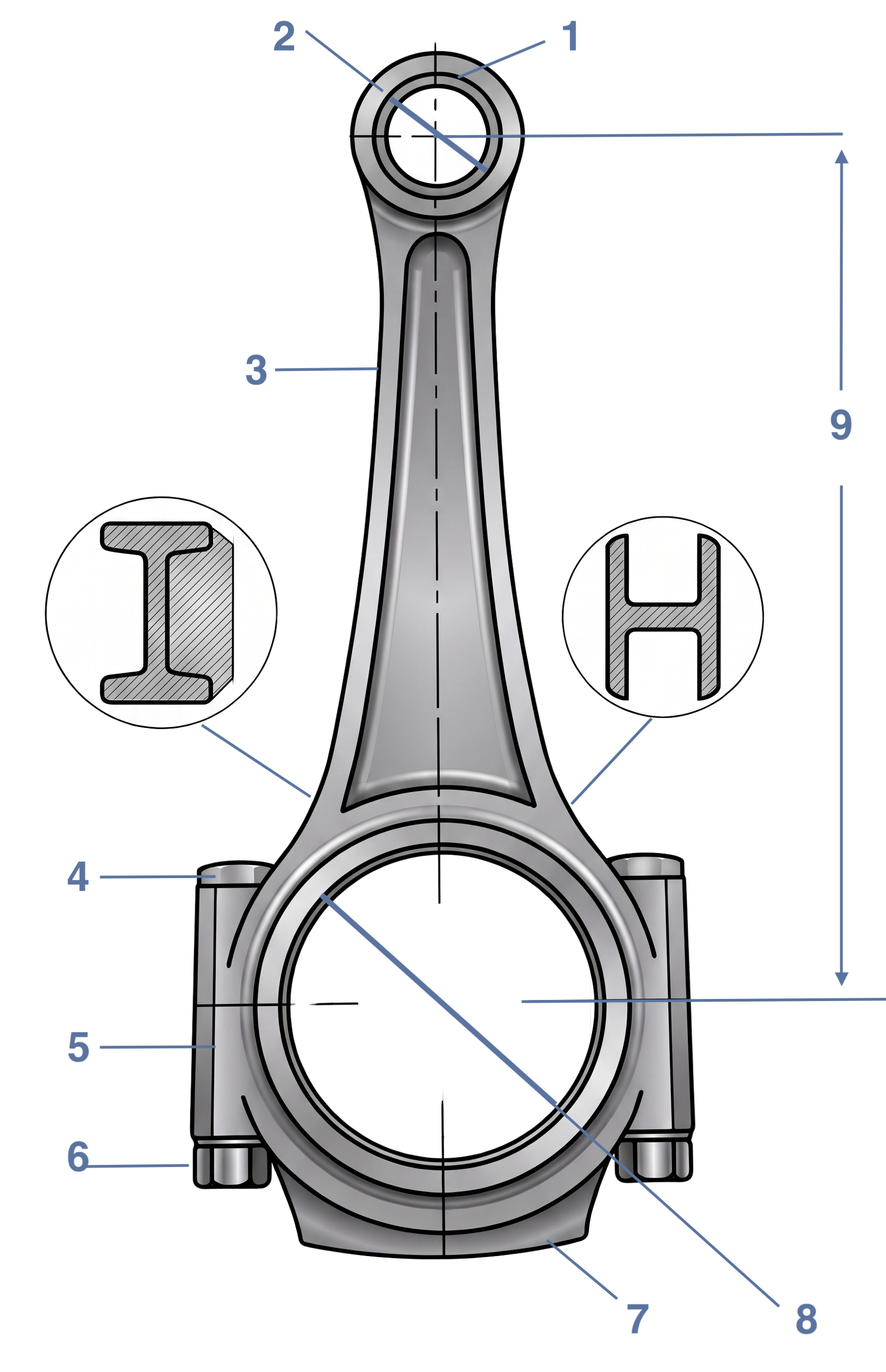 |
1) Small end 2) Small-end diameter 3) Rod beam 4) Rod bolt 5) Big end 6) Rod nut / bolt 7) Rod cap 8) Big-end diameter 9) Center-to-center |
Vehicle compatibility for the Toyota 4A-GE engine
These forged rods fit the Toyota models powered by the 1.6 L 16v (and 20v) 4A-GE inline-four, with a 18 mm pin and 122 mm center-to-center:
| Brand | Model (chassis) | Engine code | Power | Years |
|---|---|---|---|---|
| Toyota | Corolla (AE86) | 4A-GE | 124 ch | 1983–1987 |
| Toyota | Corolla (AE92) | 4A-GE | 116–125 ch | 1987–1994 |
| Toyota | Corolla / Levin (AE101) | 4A-GE (20V) | 156–160 ch | 1991–1998 |
| Toyota | Corolla / Levin (AE111) | 4A-GE (20V) | 165 ch | 1995–2000 |
| Toyota | Sprinter / Trueno (AE82 / AE86) | 4A-GE | 124 ch | 1983–1987 |
| Toyota | Celica (AA63 / ST162) | 4A-GE | 124–125 ch | 1983–1989 |
| Toyota | Carina (AT171) | 4A-GE | 120–140 ch | 1988–1992 |
| Toyota | Carina GT (AT210) | 4A-GE (20V) | 165 ch | 1996–2001 |
| Toyota | Corona Coupé (AT160) | 4A-GE | 131 ch | 1985–1987 |
| Toyota | MR2 (AW11) | 4A-GE | 116–131 ch | 1984–1990 |
| Geo | Prizm 1.6 GSI | 4A-GE | 132 ch | 1989–1992 |
Why is it the most economical solution?
On a 4A-GE, a broken standard rod takes the piston with it and calls for a check of the block: restoring the standard configuration means paying for rods and pistons only to find the same limit again. For a comparable, often lower budget, forged 4340 steel rods combined with forged pistons offer quite different reliability and safety margin, and keep the door open to more rpm or to forced induction. This is the logic European engine builders have applied for more than 15 years on highly tuned naturally aspirated Japanese engines. For the same budget: more reliability, more potential, more service life.
-
Brand
-
ReferenceR-TOY-003H
16 other products in the same category
Viewed products