Product successfully added to your shopping cart
Quantity
Total
There are 0 items in your cart. There is 1 item in your cart.
Total products
Total shipping To be determined
Total

2.0L 8v - Pinto
Manufacturers
2.0L 8v - Pinto
 View larger
 Warning: Last items in stock!
New product
ARP 8740 steel crankshaft main studs for the Ford Pinto 2.0 four-cylinder engine.
This kit is for the 2.0-litre Ford OHC « Pinto » four-cylinder, 8 valves, a single overhead camshaft engine that powered the Capri, Cortina, Escort RS2000, Granada and Sierra, as well as the P100 pick-up.
Each main bearing takes a share of the loads the connecting rods pass on at every combustion. Pulled downwards, the main cap tends to slide on its parting line: over time the mating faces brinell and the bearing bore loses its shape.
These ARP 8740 steel studs, 12 mm, replace the original main cap fasteners of the Pinto. After checking the block threads, the studs are fitted hand-tight only. With washers and nuts in place, threads, nuts and washers are lubricated with the ARP Ultra-Torque supplied, then tightened in three equal passes, in the manufacturer's sequence: 40, 81 then 122 Nm. ARP advises against engine oil, which raises friction and makes the clamping force irregular.
8740 is a chrome-moly steel heat treated by ARP to 200,000 psi tensile strength, with threads rolled after heat treatment. To put this figure in context, standard engine fasteners mostly belong to property classes 10.9 and 12.9, i.e. 150,800 to 176,900 psi minimum tensile strength. The 8740 studs in 12 mm hold up to 1,200 hp on this four-cylinder engine (calculated estimate).
| Brand | Grade / material | Nut | Thread |
| ARP | 8740 steel | ARP nut | 12 mm |
| Reference | Pass 1 | Pass 2 | Pass 3 |
| ARP-151-5401 | 40 Nm | 81 Nm | 122 Nm |
No torque is applied to the stud as it goes into the block: it is screwed in by hand. For a permanent installation, the instruction sheet leaves the option of a thread locker of the blue Loctite type on the block end, with the nuts fully tightened before it cures, never on the nuts and never mixed with ARP grease.
Follow the cap tightening sequence recommended by the manufacturer when bringing the nuts up to torque; the kit's instruction sheet details each step.
Stronger fasteners change the clamping force: the size and roundness of the main bearing bores are checked after installation, and the bores are align honed if necessary, using the final fasteners and lubricant.
The torque figures above come from the ARP 151-5401 instruction sheet, revision applicable at publication. The official instruction sheet is authoritative in the event of any difference. Read the ARP 151-5401 instruction sheet
The torque figures given only apply with ARP assembly grease, never with engine oil.
| Buy the ARP assembly grease → |
 | ARP, short for Automotive Racing Products, was born in the early 1970s on the initiative of Gary Holzapfel, an engineer from the aerospace sector, in response to the engine failures caused in racing by inadequate fasteners. Today the brand produces thousands of part numbers in California, offered in several materials depending on the application. |
| Criterion | Original main bolts | ARP studs |
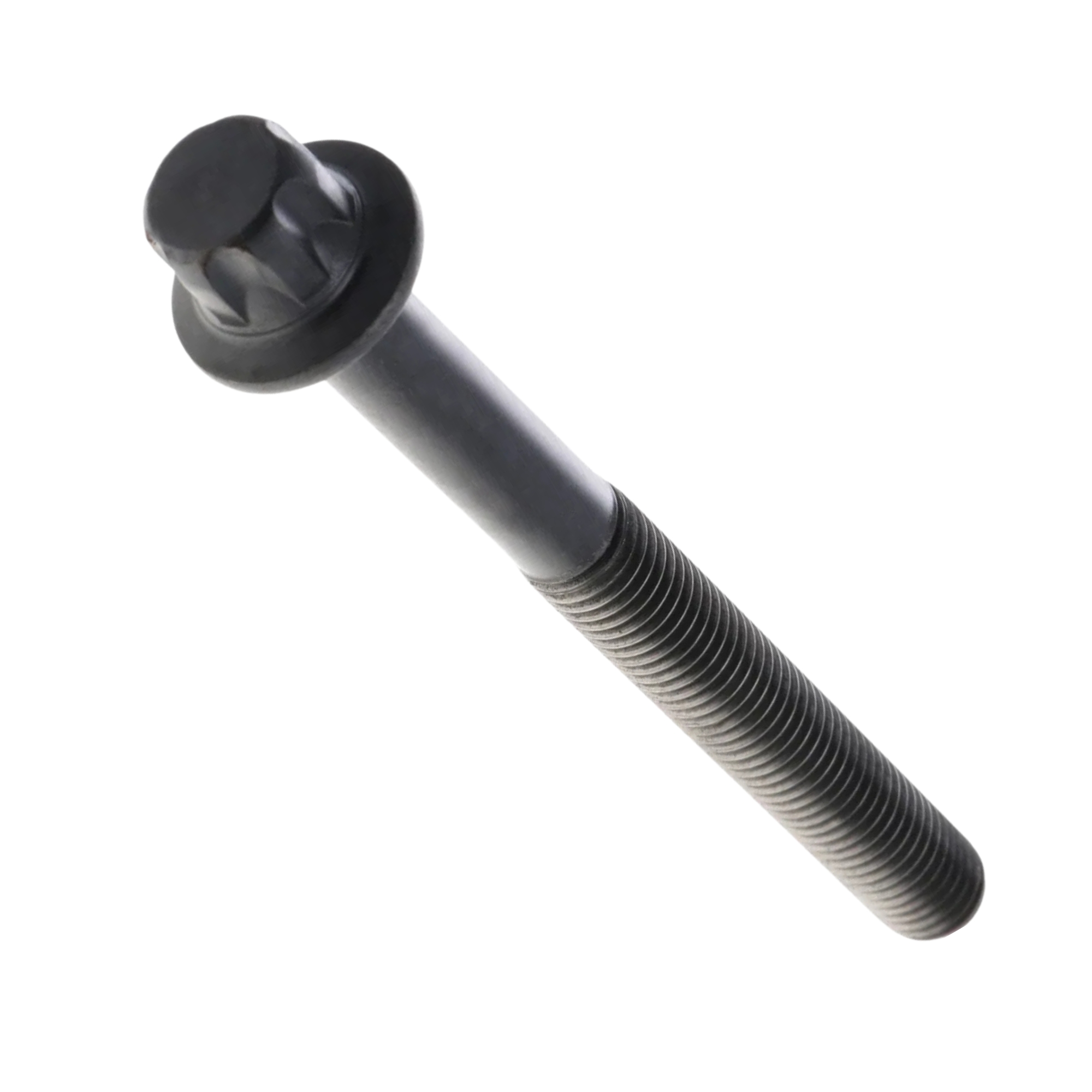 |  | |
| Tightening | Bolt screwed into the block, turning under torque | Nut alone turns, tightened in three passes |
| Block thread | Takes the rotation of the bolt at each assembly | Stud placed by hand, no effort |
| Positioning the caps | Cap to be held while screwing | Cap guided by the studs |
| Model | Engine code | Power | Years |
| Ford Capri Mk2 | NEE, NEN (2.0 OHC) | 101 hp | 1974-1978 |
| Ford Capri Mk3 | NEE, NEN (2.0 OHC) | 101 hp | 1978-1986 |
| Ford Cortina / Taunus TC1 | NEG, NER (2.0 OHC) | 98-101 hp | 1970-1976 |
| Ford Cortina / Taunus TC2 | NEG, NER (2.0 OHC) | 101 hp | 1976-1982 |
| Ford Escort RS2000 Mk1 / Mk2 | NEA, NE (2.0 OHC) | 100-110 hp | 1973-1980 |
| Ford Granada Mk2 | NEB, NEH, NEK (2.0 OHC) | 101-105 hp | 1977-1985 |
| Ford P100 (Sierra pick-up) | 2.0 OHC | 74 hp | 1988-1993 |
| Ford Sierra Mk1 | NES, NET, NEJ, NE5 (2.0 OHC) | 105-115 hp | 1982-1992 |
A Pinto built for competition, whether historic rally, track or drag, climbs in revs and power well beyond what Ford planned. The main caps then need a more secure clamp, and these studs provide it for an outlay well below that of a damaged block or crankshaft.