Product successfully added to your shopping cart
Quantity
Total
There are 0 items in your cart. There is 1 item in your cart.
Total products
Total shipping To be determined
Total

2.0L 8v - M10B20 with 121 series cylinder head
Manufacturers
2.0L 8v - M10B20 with 121 series cylinder head
Warning: Last items in stock!
New product
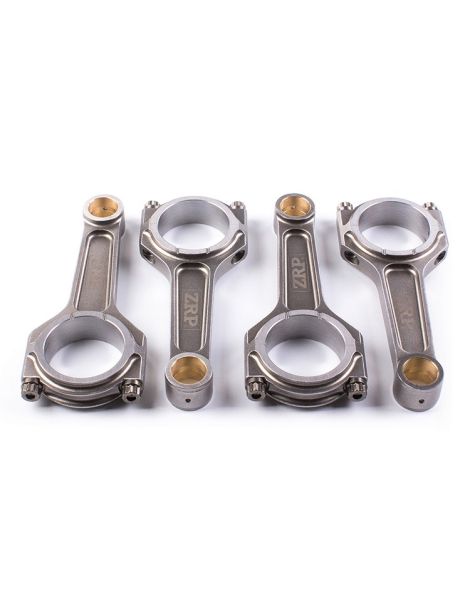
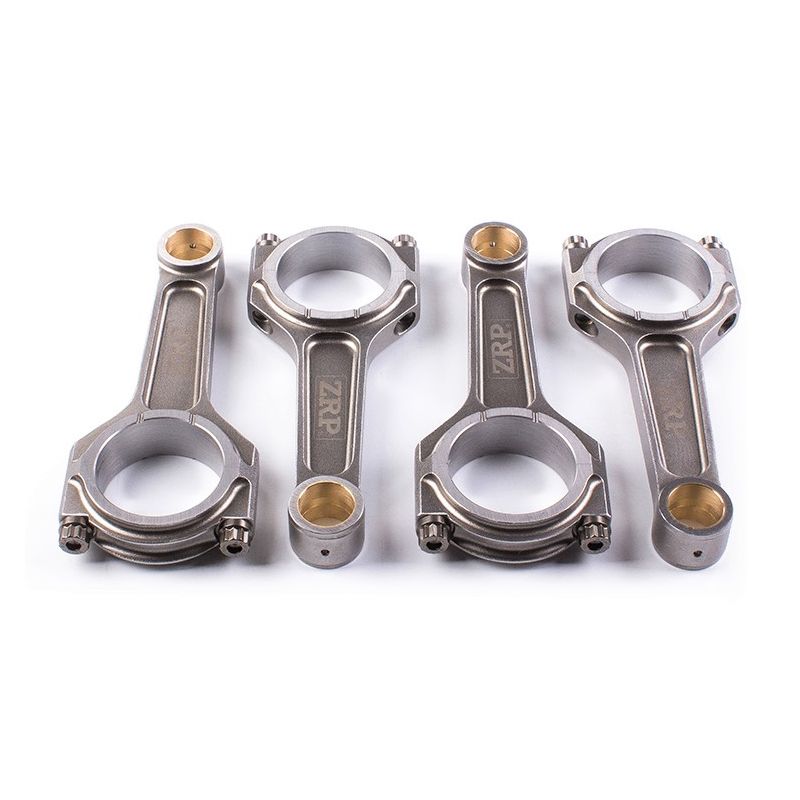
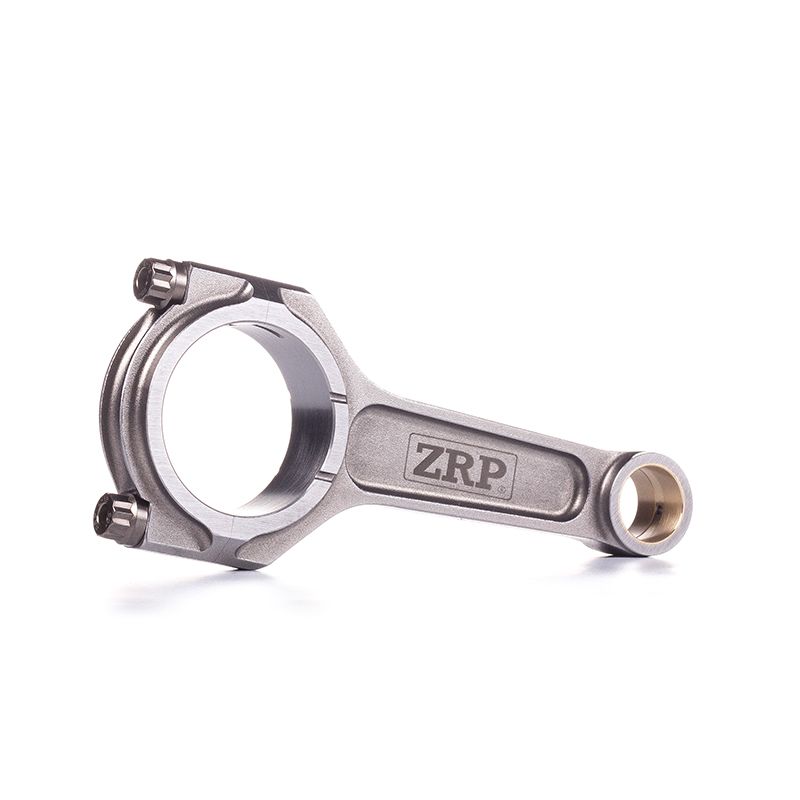
Set of 4 forged 4340-steel connecting rods for BMW 2.0L 8V M10B20.
The M10 is the four-cylinder that launched BMW's "Neue Klasse": introduced in 1962 on the BMW 1500, it brought a modern architecture with a cast-iron block, an aluminium-alloy cylinder head with hemispherical chambers and a chain-driven overhead camshaft, with two valves per cylinder. The M10B20 is its 2.0-litre version (1990 cc, 89 mm bore and 80 mm stroke), built from 1965 to 1982 and offered in many power outputs, from the carburettor naturally aspirated unit to the fuel-injected versions.
Underneath, the M10 runs on a forged-steel crankshaft with five main bearings, a sturdiness that explains its longevity and strong tuning potential. This very block served as the basis for the M12 Formula 1 engine: heavily reworked and turbocharged, it gave Nelson Piquet the 1983 world title with Brabham, ranking among the most powerful engines in the sport's history. On the fuel-injected 2002 tii and the 2002 Turbo, the M10B20 built a sporting reputation that tuners still keep alive today.
Machined from high-strength 4340 steel and then heat-treated, these forged connecting rods replace the M10B20's original rods to withstand the higher revs and cylinder pressures of a build without flinching. Forging aligns the metal's grain flow and removes casting porosity: the result is markedly higher fatigue strength and the safety margin that becomes essential as soon as power climbs.
Each set is inspected and balanced, then supplied with high-performance ARP bolts sized for the target torque. Paired with forged pistons, these rods form the basis of a reinforced bottom end, able to endure intensive use and competition.
| Reference | Brand | Profile | Bolts | Pin diameter OEM 22 mm | Small-end width | Big-end diameter OEM 52 mm | Big-end width | Center-to-center OEM 135 mm | Weight per rod |
|---|---|---|---|---|---|---|---|---|---|
| R-BMW-008-I | ZRP | I-Beam | ARP 2000-3/8"-38mm | 22 mm | 52 mm | 23.9 mm | 135 mm | 496 g | |
| R-BMW-008-I-L19 | ZRP | I-Beam | ARP L19-3/8"-38mm | 22 mm | 52 mm | 23.9 mm | 135 mm | 496 g |
| Connecting rod | Bolts | Tightening torque | Recommended stretch |
|---|---|---|---|
| ZRP (R-BMW-008-I) | ARP 2000 | 61 N·m | 0.140 – 0.152 mm |
| ZRP (R-BMW-008-I-L19) | ARP L19 | 67.8 N·m | 0.152 – 0.165 mm |
The stretch method involves a measurement in two steps: you first record the free length of each bolt, unloaded, then measure it again once tightened; the difference is the stretch, and it is that difference the bolt manufacturer brackets in the table above. Torque alone offers nothing equivalent, since it measures rotational effort and not tension: two bolts pulled to the same torque can end up at very different preloads if their threads are not in the same condition or if the lubricant is not the same. Hence the mandatory steps on the eight bolts of the M10B20: complete cleaning of the threads, ARP assembly lubricant as an even film on the thread and the bearing face, then progressive tightening in alternating stages so the preload is installed without distorting the cap. The values in the table, whether for ARP 2000 or ARP L19, apply exactly as published, with no transposition from one grade to the other. The ZRP instructions supplied with the kit have the final say.
| 4340 steel is a nickel-chromium-molybdenum alloy steel used in aerospace and motorsport alike. Forged then heat-treated (quench and temper), it offers excellent tensile strength, high fatigue resistance and real ductility. Compared with an original rod (often sintered/powder metal, optimised for series-production cost), a 4340 forged rod shows roughly +19% higher yield strength, +8% higher tensile strength and above all +19% to +37% higher fatigue strength, i.e. a fatigue life under cyclic loading several times longer. This is what makes forged 4340 the reference material as soon as boost and rpm climb. |
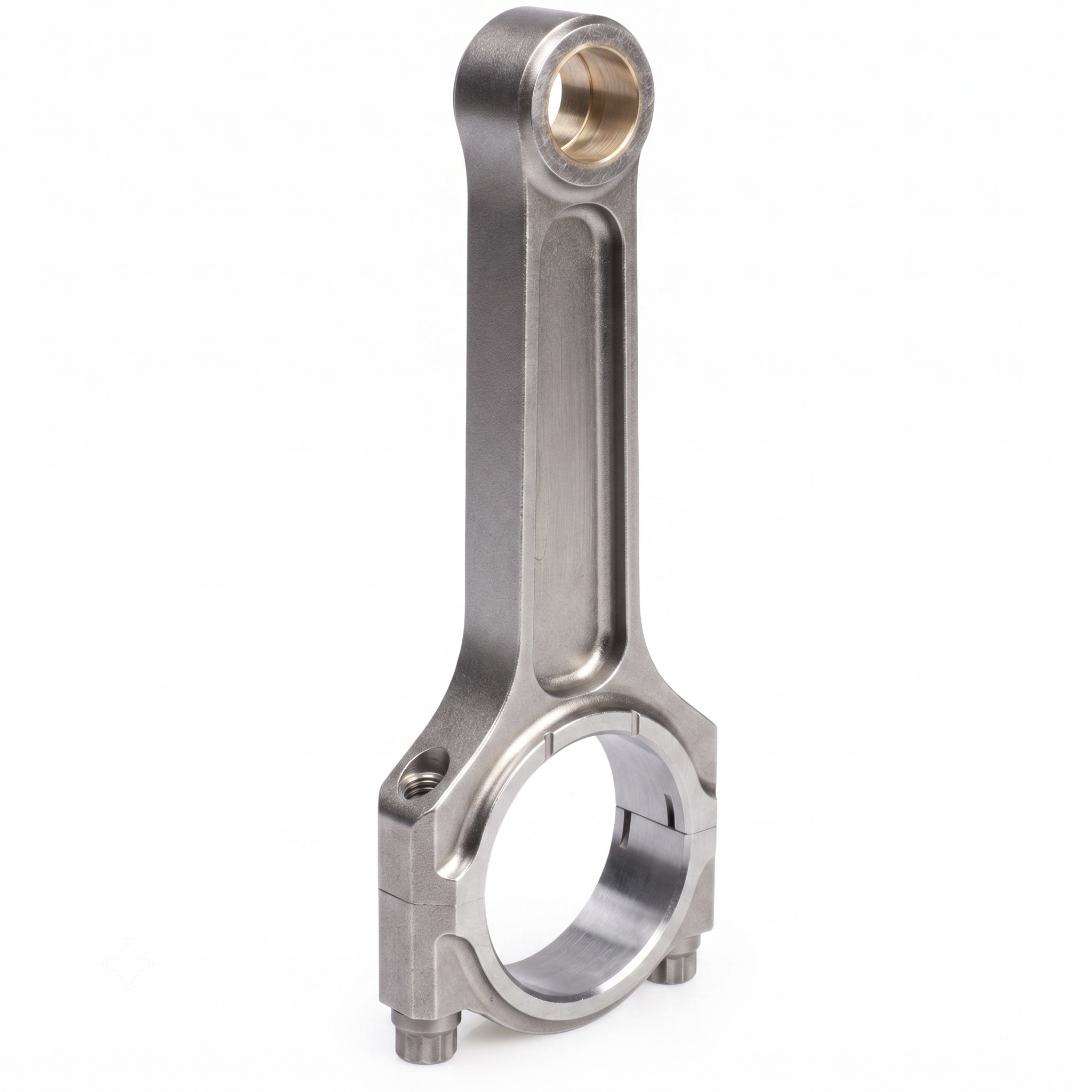 | I-Beam profile. With its slimmer central section, the I-beam rod favours light weight and an excellent stiffness-to-mass ratio. It is the most common profile, perfectly suited to M10B20 builds, from a reinforced engine to high power levels. |
On a rod bolt, geometry says almost nothing: it is the alloy grade, the cleanliness of the steel and the way the heat treatment is run that set the yield strength and the tensile strength, and it is the rolling of the threads after hardening that decides fatigue life, by work-hardening the thread root where cracks start. Manufacturing consistency completes the picture: without it, preload differs from one bolt to the next. This M10B20 takes its bolts in 3/8"-38 mm, in two grades; base the choice on target power and engine speed, then tighten by measured stretch.
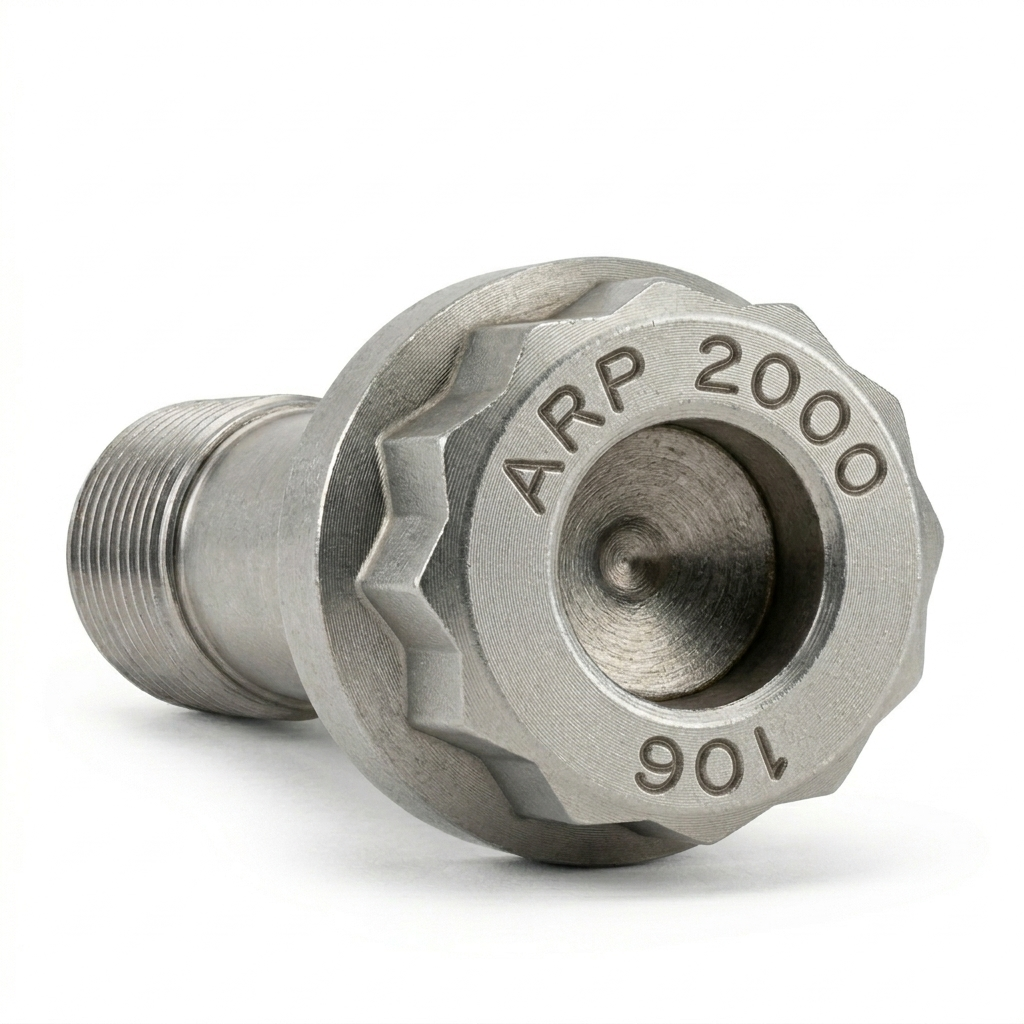 | ARP 2000 is a wrought low-alloy steel, through-hardened, with tensile strength around 220,000 psi, i.e. ~1,517 MPa. Its threads are rolled after heat treatment, which gives it very good cyclic fatigue endurance, and its composition copes with ambient humidity without precautions: no particular storage rule. The grade is rated up to 200 hp per cylinder in 3/8" and up to 8,500 rpm, which makes it the most common in circuit racing, trackdays, drift, rally, drag and hillclimb. On this M10B20 it equips the ZRP I-profile rod in 3/8"-38 mm. |
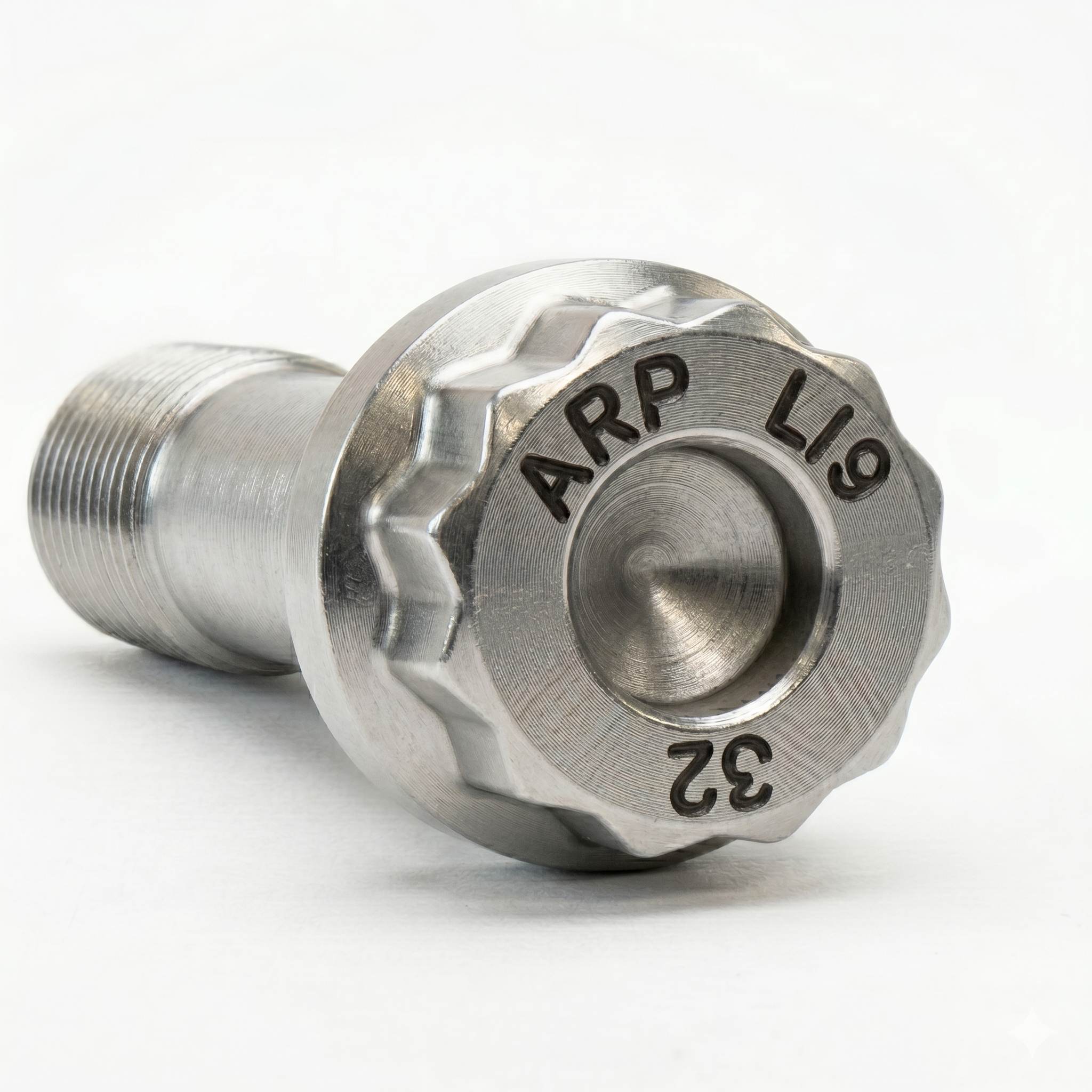 | L19 relies on a more heavily loaded alloy and on a more tightly controlled quench and temper cycle: tensile strength climbs to about 260,000 psi, i.e. ~1,793 MPa, for 250 hp per cylinder in 3/8" and up to 10,000 rpm. You come to it for very high boost pressure, sustained high engine speeds and high cylinder pressure, in other words big power in drag, drift, rally and circuit; here it is offered on the same ZRP I-profile rod, in 3/8"-38 mm. Its metallurgy has a price: sensitive to corrosion and to hydrogen embrittlement, L19 must be stored and fitted oiled, away from moisture. |
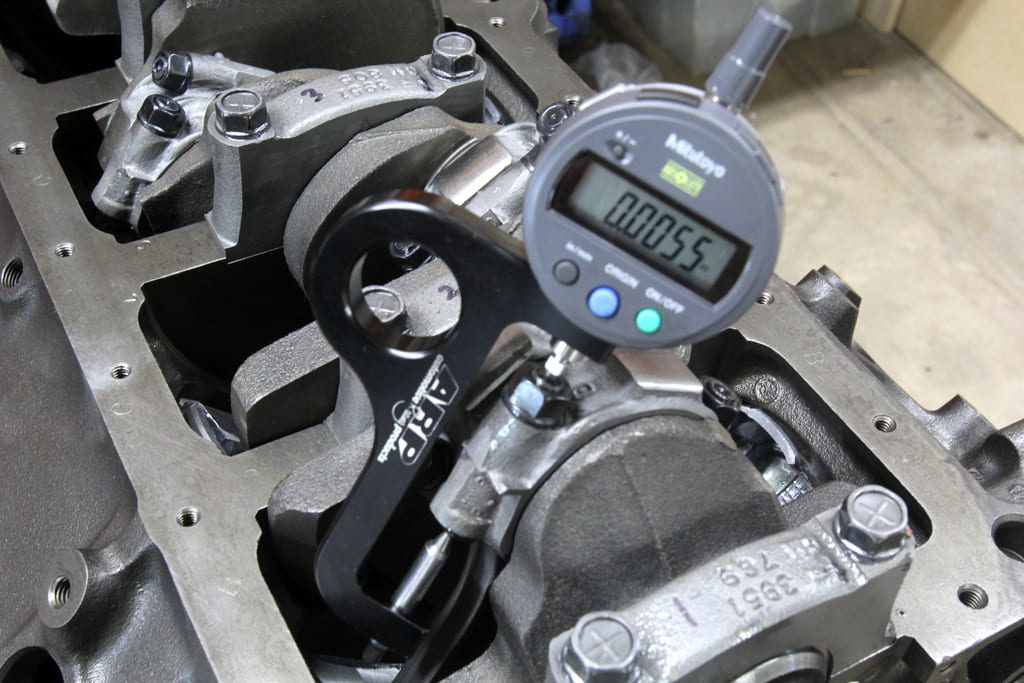
In addition to torque tightening, measuring rod-bolt stretch is the most reliable check for optimal preload. The check is done with the bolt fitted: place the gauge (dial indicator) on the two ends of the bolt and read its actual stretch, which must match the recommended value (see the torque & stretch table above). This method removes the friction variations inherent in torque tightening and secures the assembly on heavily stressed engines. |
 | ZRP, a Greek brand of high-performance forged connecting rods, designed by Alex Drakos in Athens. Each rod is forged from 4340 steel, precision-machined and balanced to ±1 g to stay reliable at high rpm. Available in I-beam or H-beam profile with ARP 2000 or L19 bolts, they are designed and inspected in Greece, and proven in rally, on circuit and in drift. |
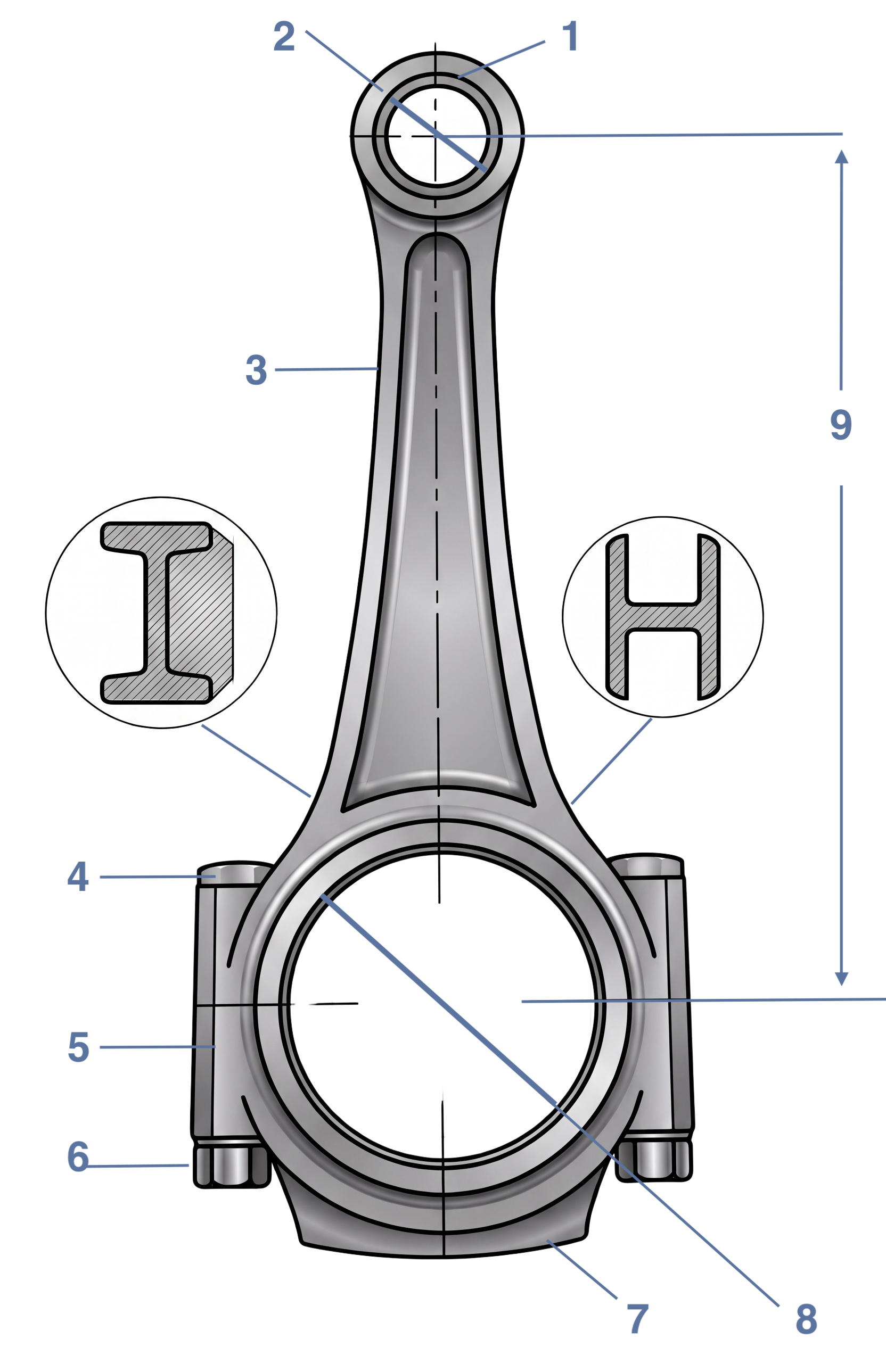 | 1) Small end 2) Small-end diameter 3) Rod beam 4) Rod bolt 5) Big end 6) Rod nut / bolt 7) Rod cap 8) Big-end diameter 9) Center-to-center |
These forged connecting rods fit the BMW models powered by the 2.0-litre M10B20 four-cylinder. The table below lists the relevant models and model years:
| Make | Model (chassis) | Engine code | Power | Years |
|---|---|---|---|---|
| BMW | 1500-2000 « Neue Klasse »: 2000, 2000 Ti, 2000 tilux, 2000 tii (115/116/118/121) | M10B20 | 100–137 hp | 1965–1972 |
| BMW | 1502-2002 (E10): 2002, 2002 Ti, 2002 tii, 2002 Turbo | M10B20 | 100–170 hp | 1967–1975 |
| BMW | 1502-2002 Convertible (E10): 2002 | M10B20 | 100 hp | 1971–1975 |
| BMW | 1502-2002 Touring (E6): 2002, 2002 tii | M10B20 | 100–130 hp | 1971–1975 |
| BMW | 2000 Coupé (120): 2000 C, 2000 CS | M10B20 | 101–135 hp | 1965–1970 |
| BMW | 3 Series (E21): 320, 320i | M10B20 | 109–125 hp | 1975–1982 |
| BMW | 5 Series (E12): 520, 520i | M10B20 | 115–131 hp | 1972–1979 |
OEM reference: 11 24 0 618 006 (set of 4 rods).
When an older bottom end reaches its limits (a tired rod, a failure, a build project), the instinct is to look for original parts. On a classic engine like the M10B20, these are getting scarce and expensive, without offering any extra margin against a power increase.
For a comparable budget, fitting 4340 forged connecting rods changes everything: the part is new, stronger than the original and built to handle torque and rpm. It's a lasting investment rather than a like-for-like repair.
For the same budget: more reliability, more potential and real peace of mind to drive hard. That's the whole point of reinforcing the M10B20 with forged rods as soon as the engine is opened up.